Tag Archives: Kathy Griffin
Readout and Video of President Trump Meeting with Mexican President Pena Nieto…
The upcoming NAFTA trade discussions between the U.S., Mexico and Canada will be more interesting, and far more consequential, than any trilateral trade discussion in our lifetime. We can anticipate dozens of congressional masks to drop each day as the tentacles of their financial interests and corporate donors will gain a level of sunlight never before seen.
For the first time in our lifetime the corporatist’s within the U.S. CoC lobby will be neutered, and Republicans owned by Wall Street will have no choice but to openly rail against America while embracing their friends in the MSM.
White House – President Donald J. Trump met today with President Enrique Peña Nieto of Mexico during the G20 Summit in Hamburg, Germany. President Trump emphasized the strong bilateral relationship that the United States enjoys with Mexico and noted the importance of renegotiating NAFTA to help workers in both countries.
President Trump thanked President Peña Nieto for Mexico’s partnership on the Central America Conference last month. The leaders also discussed regional challenges, including drug trafficking, illegal migration, and the crisis in Venezuela. (link)
Video Below
.
June Jobs Report – U.S. Jobs Growth 222,000 Surpassing Expectations – Wage Growth 2.5%
U.S. Jobs Growth exceeded expectations in June by adding 222,000 jobs. Well beyond the anticipated 170,000 original forecast. The government also revised up its estimate of job growth for April and May by a combined 47,000.
However, the economic dissonance is still evident within the fed analysis:
[The] cycle of limited wage gains and low prices has kept inflation in check, to the consternation of the Fed, which wants to see slightly higher inflation to justify its campaign to raise short-term rates. (link)
As we previously shared there’s a predictable inability of federal economists to understand what happens when executive administrative policy reverses course and establishes the benefit to Main Street, ie. the middle-class, over Wall Street. The feds cognitive dissonance is evidenced because modern economic theory cannot reconcile the space between two economies, Wall Street and Main Street.
The three driving costs of operations -and their subsequent outcomes- are: labor, material and energy. In this phase of economic re-footing, material costs are static and energy costs have dropped substantially. Labor costs are slightly increasing, but not yet as a direct result of increases in wage rates. The current phase shows increased use of labor hours as part-time roles are increased to full-time positions.
♦ For most companies – Within this phase wage rates will remain modestly increasing until company labor productivity is filled and expanded labor hiring is needed. Once the number of necessary hires begins, the upward pressure on wage rates will increase much faster. But that doesn’t come along until phase #2.
Low energy costs are keeping consumer prices down, and this will continue while the expanding number of labor hours used fills out within each organization. We previously shared that the old paradigm of inflation driving interest rate hikes would no longer apply in this new economic space. Wages will jump, bigly, but that comes after the expansion of current labor resources is no longer possible.
♦ Right now the economy is adding more hours than people – Shifting PT positions into FT jobs as the economy expands. Additionally, people who couldn’t find FT work, and those who didn’t take PT jobs, are now reentering the workforce with FT positions open. This makes the ‘unemployment’ rate increase to 4.4% (up from 4.3%), despite the fact that an additional 100k jobs were gained than would be needed to retain stasis. More people are simply looking for work again because more FT work is available.
Retail employment gains of 8,000 were noted despite several retail companies no longer doing business. In our analysis this is because gains are in the highly-consumable retail companies (food, fuel, entertainment and hospitality), and the durable goods retailers (cars, furniture, appliances etc.) are, predictably, remaining static.
[…] The June jobs report showed broad hiring across numerous industries. Health care posted the biggest job gain — 59,100 — despite uncertainty around health care legislation in Congress. Governments added an unusually high 35,000 positions, nearly all of them at the local level. Construction companies added 16,000, and mining, which includes oil and gas drilling, gained 8,000. (link)
When we reach Phase #2:
♦ Inflation on imported durable goods sold in America, while necessary, will ultimately be minimal during this initial period; and expand more significantly as time progresses and off-shored manufacturing finds less and less ways to be productive. Over time, durable good prices will increase – but it will come much later.
♦ Inflation on domestic consumable goods ‘may‘ indeed rise at a faster pace, depending on energy offsets. However, it can be expected that U.S. wage rates will respond faster, naturally faster, than any fiscal policy because inflation on fast-turn consumable goods became re-coupled to the ability of wage rates to afford them as a direct result of President Trump’s economic policies. (read more)
Mr Pinko Announces CNN Meme Contest…
To help counter the insufferable censorship, blackmail and Stazi tactics of CNN, Politopinion is providing an opportunity for meme producers to win prizes.
If you create a funny gif, video, or image meme (with the CNN logo) you can submit it to Mr. Pinko (directions here) and you’ll be entered into a contest to win a cash prize.
Details for how to submit your entries can be found HERE.
Have fun, join the freedom alliance, promote free speech and counter the insufferable corporate blackmail efforts by swarming the internet with CNN memes.
Wolverines !
CNN Threatens To Expose Non Compliant Citizen for Thinking Wrong Thoughts… #CNNblackmail
In an article identifying the originating source of the wrestling gif tweeted last week by President Donald Trump, CNN says they’ll keep his name private so long as the person remains compliant to the media thought police.
The direct threat is: “CNN reserves the right to publish his identity should any of that change.”
(Link to Article for Screengrab)
That would be a direct threat by CNN to dox the identity of a private individual if the citizen refuses to remain apologetic and compliant to the ideological dictates of the corporate CNN’s media outlook.
Got that comrades? Failure to remain a compliant citizen may render you subject to targeting by CNN corporate media.
Worth remembering. CNN has instituted a multi-level corporate approval process for all media articles. That means everyone within the media organization from top tier executives through legal departments and editors approved of this statement.
And people thought this meme was tongue in cheek. Turns out it was entirely accurate:
Trump Unfit for Office?
Armstrong Economics Blog/Politics
RE-Posted Jul 3, 2017 by Martin Armstrong
Trump is clearly his own worst enemy. As long as he feels he must lash out at anyone in the media who bashes him, he only gives more attention to what they are doing and it is to their benefit to now criticize him hoping he lashes out making them more famous. I agree, his comments are not presidential. Just ignore them and he might find there is nothing left to bash him about, Just do the damn job. His tweet read:
“I heard poorly rated @Morning_Joe speaks badly of me (don’t watch anymore). Then how come low I.Q. Crazy Mika, along with Psycho Joe, came to Mar-a-Lago 3 nights in a row around New Year’s Eve, and insisted on joining me. She was bleeding badly from a face-lift. I said no!”
House Minority Leader Nancy Pelosi and other Democratic leaders have been telling Democrats to stop calling for impeachment. Pelosi loves the Tweets that keep Trump in controversy after controversy where the 2018 election will be all about how he is unfit to be president because of his lashing-out.
But 25 House Democrats are now pushing an equally radical alternative to impeachment. They are now starting to back a bill that would create a congressional “oversight” commission that could declare the president incapacitated, leading to his removal from office under the 25th Amendment to the Constitution.
Rep. Jamie Raskin, D-Md., the chief sponsor of the bill, is gaining momentum and the strategy for 2018 will be that Trump is unfit for office and should be removed so vote for Democrats to get that job. Raskin said: “I assume every human being is allowed one or two errant and seemingly deranged tweets. The question is whether you have a sustained pattern of behavior that indicates something is seriously wrong.”
If Trump does not stop this lashing-out and act presidential, he will see the Republican support removing him as unfit, a far easier task than impeachment.
President Trump Remarks During ‘Celebrate Freedom Concert’ – 8:00pm Livestream..
President Trump delivers remarks at the Kennedy Center “Celebrate Freedom Concert” featuring President Donald Trump and Dr. Jeffress – ‘Celebrate Freedom’ Concert and Rally’ to commemorate Fourth of July Independence Day.
The concert is billed as a night of hope, celebration and commemoration. This unforgettable patriotic evening will feature music from a 500-voice First Baptist Dallas Choir and Orchestra, a tribute to our veterans from President Trump, and a timely word from Pastor Robert Jeffress. Anticipated start time 8:00pm EDT
UPDATE Video Added (Pastor Jeffers intro and President Donald Trump)
WH Livestream Link – Alternate Livestream #1 – Alternate Livestream #2
.
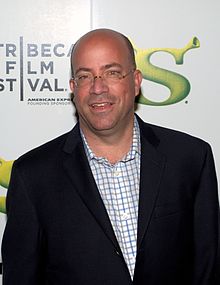
Jeff Zucker Should Stand Trial for Conspiring Against the United States For Corporate Profits – Enough is enough!
Armstrong Economics Blog/Press
Re-Posted Jul 2, 2017 by Martin Armstrong
Project Veritas, which CNN and others try bad mouthing, has caught CNN’s Supervising Producer admitting (1) they are on a witch-hunt against Trump, and (2) they constantly bash Trump with Russia putting the entire world at risk of war simply to make money. They treat their viewer as idiots who lack enough intelligence to distinguish the truth from propaganda. CNN has become the source for misrepresenting implicitly that Trump won only with Putin’s help.
The CEO of CNN, Jeff Zucker, is a very dangerous man who is violating federal law pursuing money and to hell with ethics, God, or the country. Trump has made CNN because he has been their number one story – relentlessly. Zucker has lost all credibility but he loves it and Time Warner is becoming a really dangerous propaganda corporation since Zucker is the true face of just how unethical Time Warner has become.
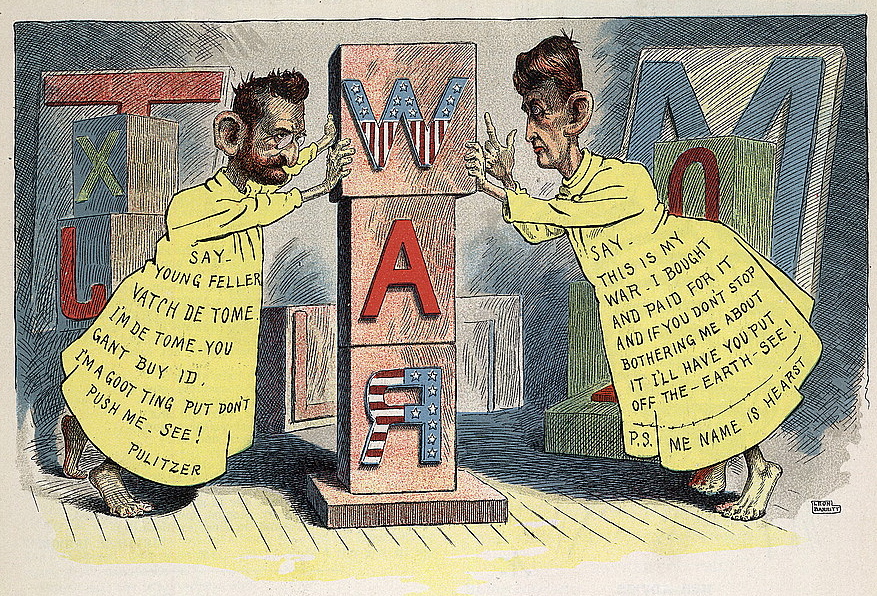
The New York Times wrote how Trump has made CNN and Jeff Zucker has the audacity to boast about their fake news bias: “We actually have a personality now that people either hate or love, whereas we used to be a little more milquetoast in their minds.” Zucker does not care about honor, dignity or ethics – just money. Forget the bankers, this is the guy who will kill your children to create a war all for ratings. Zucker is openly committing conspiracy against the country, the people, and brainwashing the viewers as the latest polls show from Gallup. Zucker is perhaps the most dangerous man in media for he will start World War III just to make a profit no different the Pulitzer and Hearst who started the Spanish American War with fake news.
Jeffrey Zucker is the CEO of CNN who has destroyed CNN as a credible news reporter to the American version of Pravada pouring out dangerous fake news and bias that is not just really disgusting, but threatens world stability. Low and behold, Zucker’s son, Andrew Zucker, at the age of just 15, served on the advisory board of Democratic politician Cory Booker’s startup tech firm. He was just 15 years old! All of the main news organizations, CNN, ABC, CBS, and NBC, are all linked at the very top to the Democrats. They are guaranteed to subject Americans and the world to political propaganda to further their own elite world to keep the money flowing as usual. But Project Veritas has exposed it is not necessarily a political agenda with Zucker, it is just GREED that tops the most dangerous corporate agenda and banks.
Of course, the CEO/Chairman of Time Warner Jeff Bewkes is well experienced in the filed. There is no question that is has personally approved of how CNN is bring run by Zucker and that clearly makes him a co-conspirator under federal law. Both men are recklessly putting the nation if not the entire world all to make a quick buck. Their conduct is unbelievable and what they are doing to society is illustrated by Gallup Polls.
CNN is a major threat to world peace and Zucker is the man who will create World War III just as Pulitzer created the Spanish American War. They news has focused constantly on Russia so they have caused their ratings to rise substantially but at tremendous cost to the stability of the world and to foreign policy. It is time for a Senate Investigation of CNN and the restoration of the Fairness Doctrine, which was a policy of the FCC introduced back in 1949, that required the holders of broadcast news to present controversial issues of public importance and to do so in a manner that was honest, equitable, and balanced. The FCC eliminated the Doctrine in 1987. The FCC then formally removed the language that implemented the Doctrine, in August 2011. The was the birth of FAKE NEWS in America and this MUST BE RESTORED AT ONCE.
William Randolph Hearst is famous for creating the Spanish American War for profit just as Jeff Zucker is doing with CNN & Russia. The most famous legendary communication on this subject proving how corrupt journalism can be was that with the famous artist and illustrator Frederick Remington. Remington, who had been sent to Cuba to cover the insurrection by Hearst, cabled to Hearst that there was no war to cover and requested to return home. Hearst allegedly replied with, “You furnish the pictures. I’ll furnish the war.” This is what Jeff Zucker is now doing to the world.
Even when Comey testified against Trump, they asked him about two stories – one on CNN and the other in the New York Times. Comey responded that both were FALSE. Three journalists at CNN resigned with probably golden parachute since the CEO of CNN,
CNN.com ran a story by reporter Thomas Frank which, according to a now-posted Editor’s Note, connected “Anthony Scaramucci with (congressional) investigations into the Russian Direct Investment Fund.” The story was false and CNN had to pretend they were being ethical for they really will do anything for money. Three journalists resigned over that and the Editor’s Note simply said: “That story did not meet CNN’s editorial standards and has been retracted.” Further, “Links to the story have been disabled. CNN apologizes to Mr. Scaramucci.”
18 U.S. Code § 2441 – War crimes
(d)Common Article 3 Violations.—
(F)Intentionally causing serious bodily injury.—
Jeff Zucker of CNN and CEO/Chairman of Time Warner and Jeff Bewkes should be arrested right now for conspiring to create international war by intentionally reporting propaganda he knows is not true and there is no connection between Trump and Putin to defeat Hillary. Zucker and Bewkes are conspiring to “[i]ntentionally cause[e] serious bodil injury” to countless people and should be put on trial to explain why his intentional fake news is not conspiring against the people of the United States. If I were President, this would be put before a Grand Jury immediately to let the people decide if he should be indicted right now.
Mopreover, the two are desperately trying to manipulate their stock higher with fake news and that is inside trading on a monumental scale. The revelation of this new report by Project Veritas clearly shows the two are guilty of securities fraud. “Insider trading” refers generally to buying or selling a security, in breach of a fiduciary duty or other relationship of trust and confidence, while in possession of material, nonpublic information about the security. Insider trading violations may also include “tipping” such information, securities trading by the person “tipped,” and securities trading by those who misappropriate such information. If any director of a public corporation knowingly engages in false or misleading information to manipulate their stock, that violates the law and both Zucker and Bewkes would face 25 years in prison. They have a fiduciary duty not to engage in fake news because they hold and create the image that they honor a relationship of trust with the people of the world. They can be charged criminally in Europe, USA, and Asia. If class-actions lawyers who pick-up the rug, they have defaulted shareholders desperately trying to get the stock back it its former highs.
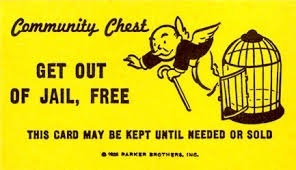
Zucker and Bewkes forgot they are running a PUBLIC CORPORATION! If someone pretended to have some proprietary system that gave value to a stock that was fake, it’s jail time! Why should CNN and Time Warner receive a Get-Out-Of-Jail free card. The Senate should demand a Special Prosecutor right now!
H.R. McMaster and Gary Cohn Brief Media on Upcoming Presidential Trip To Poland and Germany…
For the past three days we’ve been assembling a great deal of research on visible back-channel communication amid numerous nations and their economic teams. There are tectonic plates shifting just below the Geo-political surface, and we will be outlining many of them, along with the predictable economic outcomes (bigly), in the next few days.
In the interim, it’s useful to review the latest information from NatSec McMaster and NEC Cohen as it relates to the upcoming objectives from the next segment of foreign travel.
National Security Advisor General H.R. McMaster and Director of the National Economic Council Gary Cohn pre-brief the media on President Trump’s upcoming trip to Poland and Germany for the G20 Summit. An important read:
[Transcript] 1:21 P.M. EDT – AIDE: Hi. Just want to restate the ground rules. Today’s briefing is off camera, on the record, and the audio is not for broadcast. It is embargoed until the end of the briefing.
And with that, I will turn the podium over to —
Q Can you make this on — can you make the audio available? Because it puts radio at a disadvantage.
AIDE: It is off camera, not for broadcast. Those are the ground rules.
And now I’m going to turn it over to General H.R. McMaster and Gary Cohn. Thank you.
GENERAL MCMASTER: Good afternoon, everybody. Next Wednesday, President Trump will depart on the second foreign trip of his administration. He will travel first to Warsaw, Poland to meet that country’s leaders and speak to the Polish people. He will continue on to Hamburg, Germany for the G20 and for meetings with many world leaders.
While this trip is short, the agenda is packed. I’ll run through the objectives and the schedule, and then turn it over to Gary, who will walk you through the President’s agenda for the G20.
First of all, the primary objectives are three: To promote American prosperity, to protect American interests, and to provide American leadership. These three objectives tie together every engagement President Trump has with foreign leaders, whether here in the White House, as you saw with the strengthening of our strategic partnership with India during Prime Minister Modi’s visit on Monday and we’ll see tonight and tomorrow with the strengthening of our alliance with South Korea during President Moon’s visit.
Additional objectives for the trip include, first, to strengthen American alliances. America First, as Gary and I have stressed in the past, does not mean America alone. President Trump has demonstrated a commitment to American alliances because strong alliances further American security and American interests.
While there are no official NATO meetings on this trip, the President will meet with many NATO leaders, and he will reiterate both America’s commitment to NATO’s common defense and his expectation that all countries share responsibilities and burdens for that defense. We’ve seen countries strengthen their defense budgets in response to the President’s call. When we all do more, our alliance becomes stronger and our countries are all more secure.
Second is to reassert who we are. Traveling to Europe, especially to Central Europe, which had its identity forcibly submerged for so long, is a great way to demonstrate what binds us together not just as an alliance, but as people. America has been influenced by many nations, but we share Europe’s commitment to liberty and rule of law in particular.
Third is to continue to forge a common understanding of threats. We saw the President make great progress in Saudi Arabia on denying terrorists safe havens, cutting off their funding, and discrediting their perverted ideology. He’ll continue to build on that work while also addressing other threats, including attempts by revisionist powers to subvert the global order that undergirds our common security and economic prosperity.
The fourth is to develop a common approach to Russia. As the President has made clear, he’d like the United States and the entire West to develop a more constructive relationship with Russia. But he’s also made clear that we will do what is necessary to confront Russia’s destabilizing behavior.
Fifth is to expand economic opportunity for Americans. Did I skip — I think I skipped — no, okay. Again, I’ll let Gary cover most of this, but from a foreign policy perspective the President’s goal will be to make clear, even to our allies, that America cannot tolerate unfair trade and economic practices that disadvantage our workers and our industries. We’re prepared to act where necessary, but we hope to resolve our differences in ways that benefit all sides and are based on really a drive toward reciprocal trade and economic relationships.
The sixth is energy. We want to create robust, open and fair markets that drive economic growth and leave no countries hostage to energy-market manipulation. We are committed to the energy security of our allies and partners, and to the diversification of energy sources, supplies and routes. The President’s America First energy plan will help us achieve all of these objectives.
The seventh is environment and climate, which Gary will cover as well.
Now, just a brief look at the schedule. In Poland, the President will meet with President Duda, the leader of a staunch NATO ally and of a nation that remains one of America’s closest friends. He will speak to 12 Central European, Baltic, and Western Balkan leaders at the Three Seas Conference. His remarks will focus on infrastructure development and energy security, highlighting, for instance, the first shipments of American LNG into Poland earlier this month. He will also meet with Croatian President Grabar-Kitarović who is the co-host of the Three Seas Conference.
Then he will give a major speech to the Polish people at Krasiński Square, epicenter of the 1944 Warsaw uprising against the brutal Nazi occupation. He will praise Polish courage throughout history’s darkest hour, and celebrate Poland’s emergence as a European Power. And he will call on all nations to take inspiration from the spirit of the Poles as we confront today’s challenges. He will lay out a vision, not only for America’s future relationship with Europe, but the future of our transatlantic alliance and what that means for American security and American prosperity.
I’ll let Gary cover the details of the G20. I’ll just note that while in Hamburg, the President will meet with many world leaders, including Chancellor Merkel of Germany, the host of the G20, Prime Minister May of the United Kingdom, Prime Minister Abe of Japan, President Moon of South Korea, President Xi of China, President Putin of Russia, President Peña Nieto of Mexico, President Jokowi of Indonesia, and Prime Minister Lee of Singapore, among others.
With that, I’ll turn it over to Gary.
MR.COHN: Thank you. Thank you, H.R.
Let me go through the G20 quickly, because there’s a lot of overlap with what H.R. just talked about. I won’t go through the individual meetings but I’ll touch on the major broad themes here.
The President’s primary objectives of these meetings is to work with our partners to jumpstart the world economy. Economic growth around the world has been far too weak for far too long. It’s important that leading economies of the G7 take steps in their own countries to strengthen economic growth, but also to work together to address economic challenges that cross all of our borders.
Here at home, the President has embarked on a strong pro-growth agenda featuring deregulation, tax reform, and infrastructure investment. On the trip, he will support G20 countries continuing to proactively use all the tools at their disposal — monetary, fiscal, and structural — to strengthen growth in their countries. Importantly, the G20 also needs to do more to address global imbalances, especially from overcapacity in industrial sectors.
Which brings me to trade, and I’ll repeat something H.R. said: On trade, no less than on alliances, America First does not mean America alone. The goal of U.S. trade policy is to expand trade in a way that are free and fair. Insisting on fair trade is the best way to ensure the long-term strength of the international trading system. We look forward to engaging in free and fair trade with the G20 economies. The United States stands firm against all unfair trading practices, including massive distortions in the global steel market and other non-market practices that harm U.S. workers. We ask the G20 economies to join us in this effort and to take concrete actions to solve these problems. But let us be clear: We will act to ensure a level playing field for all.
On energy, the President remains committed to working with world leaders and private sectors on sound environmental policies and on innovative technologies. We have been mindful of the fact that, while renewables have a role to play, we cannot achieve the growth or anti-poverty agenda we want without strong contributions from clean fossil fuel technologies which, in the United States, is a global leader.
On climate, the President looks forward to discussing his decision to leave the Paris Agreement with the other G20 leaders. He’ll make clear that he has decided to leave the agreement because it was a bad deal for the United States, but that he is open to reengaging in the agreement or a new agreement if it makes sense for the American people.
Another focus of the G20 will be famine and other global crises. We are focused on the crisis in South Sudan, Nigeria, Yemen, and Somalia, and recently announced that the United States would provide more than $329 million in additional humanitarian assistance in this crisis — bringing the total U.S. humanitarian assistance here to nearly $1.2 billion in fiscal year 2017. The United States is one of the largest donors of humanitarian assistance here. The assistance we provide represents the best of Americans’ generosity and goodwill. It will also improve our national security by helping to stabilize insecure regions while building strong relations with nations and people around the world.
Finally, the United States is pleased that the G20 will have a focus on women’s economic empowerment. We believe that gender equality and women’s empowerment is vital in today’s labor market. We are advocating for more equality and equal access to the workplace, financial services, and the labor market with quality employment for women and men all throughout the world.
With that, General H.R. McMaster and myself are happy to take your questions.
Well, that was quick. (Laughter.)
Q Hey, Gary. A couple of questions for both of you. One on Russia and one on climate. Can you talk about the meeting with President Putin? What are the President’s objectives in that meeting? And will he bring up Russia’s interference in the 2016 election? Either of you.
GENERAL MCMASTER: Well, there’s no specific agenda. It’s really going to be whatever the President wants to talk about. And that’s — and he will talk with many other leaders during the conference as well.
Q And does he want to talk about election interference? Is that something he plans to bring up?
MR. COHN: We don’t have an agenda set up for these meetings right now. As you know, these meetings are a week away. We’re still finalizing schedules. So agendas for meetings have not been set up at this point.
Q Just on climate, I want to get you on that. Because Angela Merkel is now saying that she is not going to overlook tensions with the U.S. when it comes to the Paris Agreement. You noted just now, and the President has noted, he wants to renegotiate this Paris climate deal. In what concrete ways does he expect to do that, given what it took to get the deal in the first place?
MR. COHN: Well, look the President has been very clear on climate and on Paris. He cares very much about the climate. He cares about the environment. But he has to enter into a deal that’s fair for the American people, the American workers. He’s done everything he’s done based on job creation, economic growth in the United States.
Q Then what will he ask for?
MR. COHN: He’s going to ask for a fair and level playing field. We cannot be in a position where the United States is cutting and cutting emissions while other countries continue to grow until 2030. That doesn’t seem like it’s a fair and level playing field. We want a level playing field, just like everything else. We’re looking for fairness across the board in the agreement.
Q Can I ask you about the Russia meeting a little bit, to follow up on that? Do you see that as a full-fledged meeting, as a bilateral, like we’ve been reading that the President wants? Or is it just a pull-aside? What’s the format of the meeting?
MR. COHN: Well, look, in the G20 meetings as a whole, the world leaders are gathered. We will have pull-asides, we’ll have bilaterals. As I said, the schedule is being formalized right now. We would imagine that the countries that H.R. talked about, we would be planning on bilateral meetings. But they’re during the G20 meetings. So these are not long, long meetings. These are bilateral pull-asides during the G20.
Q I want to follow up. Gary, in that sense — because Merkel, May, Abe, Moon — they all fall into a category where the President has had meetings with them before. I would assume you would have a formal agenda. Putin is different from that. Is the Putin one going to be a separate bilateral — 10, 20, 30 minutes — not just something that is a chance encounter in the context of the G20? That’s what we’re trying to drive at, that it doesn’t fit into this other category. You have to —
GENERAL MCMASTER: Indonesia is in that.
MR. COHN: Indonesia is in it. Singapore is in there. There’s countries at the G20 that, yes, we have met with before, some we’ll meet with tonight for the first time, and there’s other that we will have a second or third meeting with, and they’re the countries that are important to us because of economic relationship, military relationship, a lot of different reasons for us having meetings with them. There will be a more formal schedule as we get closer. But I think you should assume that most of these countries we’re going to have sort of bilateral meetings set up in advance — probably not a formal agenda of what’s on the schedule, but a formal agenda of what time these meetings will happen in a bilateral situation.
Q — for Russia, as well?
MR. COHN: Yes, yes.
Q So the President has laid out to NATO countries some of the things they need to do vis-à-vis meeting their 2 percent GDP investment in defense. Does he have a similar set of things to ask Moscow, to ask Putin — to say, we need to see you do these trust-building measures before we can normalize relations?
GENERAL MCMASTER: Well, our relationship with Russia is not different from any other country in terms of us communicating to them, really, what our concerns are, where we see problems in the relationship, but also opportunities. Secretary Tillerson, obviously as he does with all countries in the world, has the lead for that and has been engaged in a broad, wide-ranging discussion about irritants, problems in the relationship, but also to explore opportunities — where we can work together in areas of common interest.
So it won’t be different from our discussions with any other country, really.
Q Given the assaults on press freedom by the ruling party in Poland, the Law and Justice Party, is the President concerned about assaults on a free press, and former communist countries backsliding as it were? And do you think that making this the first — making Warsaw the first stop on the President’s trip to Europe might send the wrong message, that he endorses such assaults on a free press?
GENERAL MCMASTER: I don’t think there’s a danger of that at all. I think Poland is a clear choice for a number of reasons. First of all, it’s one of our staunchest allies. It is a NATO ally that will meet and exceed its pledge to go over 2 percent from the Wales conference. It is in many ways a front-line NATO nation in connection with threats on the Eastern flank. It is a country that has partnered with us and had been a great ally during combat missions in Afghanistan and in Iraq, as well. And so this will be — the President will emphasize themes about the past, what Poland has gone through as a nation, what they’ve achieved to fight to be part of Europe. He’ll talk about what Poland is doing now and how our relationship can be strengthened in that context.
But what he’s really going to talk about I think is also the future — the future of America’s relationship with Poland, with Europe, the importance of transatlantic relationships generally. In the economic context, what Gary has talked about, which is free and fair trade, access to energy.
And so there are a lot of important things for us to emphasize in connection with the future of our relationship with Poland and with Europe.
Q Does any of that have to do with attacks on free press and free expression in Poland?
MR. COHN: So let me just answer the question in G20 terms as well, because it’s interesting — in the G7 as well as the G20, we go through these arduous communiqué writings. And we as Americans have fought very vigorously to protect intellectual property rights and to protect freedom of speech in Internet. And we’ll continue to do that. We’ll continue to defend that. We did it in the G7 communiqué; we’re going to do it in the G20 communiqué.
So that’s just where we stand.
You back — the young lady. Yeah, you.
Q Thank you.
MR. COHN: No, behind you. The young lady.
Q I wanted to ask you about this — the comments you made about steel. As you know, they were expecting an omnibus trade deficit report by the end of the week, and there’s also this ongoing 232 investigation by Commerce and Treasury. That seems to tee you up perfectly for a conversation with China and Japan about trade deficits. Do you plan on releasing that information ahead of the G20 and presenting it there?
And then, secondly, on LNG, if you could just talk about — will the President be offering or brokering any additional deals to backstop European needs in that respect to get them independent from Russia and a reliance on Russian energy?
MR. COHN: So I’m not sure when the Commerce Department is going to release their final report on the steel industry and what’s been going on there. They have been working on it for quite some period of time, so it’s in draft or final drafting forms. They will be delivering it to the White House at some point.
But the premise of that report will — we will use that as an opportunity to talk with many of our trading partners around the world. What’s going on in steel — I mentioned steel in my remarks specifically, because if you look at the G7 communiqué, there has been consensus among our G7 allies that there is overcapacity and there’s dumping in steel. So I think there’s uniformed consensus among all of our G7 allies that we do need to deal with the steel problem specifically.
On LNG, what the President is committed to do is the President is committed to have a deregulated environment here in the United States where LNG facilities can get licensed, we can license more pipeline systems so we can be in the business of exporting LNG. It’s not the President’s job to broker LNG supply contracts. It’s the President’s job to make sure that the U.S. authorizes facilities to be built in the United States because they need federal approval. And then once those facilities are built, hopefully those facilities enter into long-term supply contracts around the world. Because, uniquely, the rest of the world needs something we have, which is our huge supply of LNG.
Eamon, in the back.
Q Thanks, Gary. If you could, could you give us your sense of the state of the relationship between the United States and Germany right now? We’ve had a couple of smallish flash points recently. We see reports that Chancellor Merkel might be preparing to press the U.S. on Paris. We see this moment where Secretary Ross was cut off in mid-speech. How do you see the relationship right now between the United States and Germany?
GENERAL MCMASTER: Okay, the relationship with Germany is as strong as ever. And, of course, there are going to be differences in relations with any country, and we’ll talk frankly about those differences. The President enjoys those conversations.
But what we should remember about a relationship with Germany and other allies is that we agree on 95 — at least — percent of the key issues, and we’re cooperating every day on those issues. That cooperation, I think, is stronger than ever, and really our common concerns in security in economic development — in our relationships economically.
So I think that — to answer your question, the relationship is as strong as ever.
Q Do you see that as a snub of Secretary Ross?
Q Yes. In terms of —
MR. COHN: We’ll get you next.
GENERAL MCMASTER: We’ll get you next. Go ahead, sir.
MR. COHN: Go ahead.
Q So in terms of the North Korean question, what more do you think that the President and this administration can do to pressure China? It seems like you have come to the point where you’re realizing that China is not going to do more without more coercion, so what more can you do on that front?
And then a second question, with regards to Russia: Do you feel like the President is taking seriously the question of Russian meddling in the 2016 election? And do you think — and what has he done to actually address that issue, which a number of senior U.S. officials have raised as a threat on U.S. democracy?
GENERAL MCMASTER: So, first of all, on North Korea and China’s relationship with us and with others and working on the North Korea problem — there are really three key things that came out of the Mar-a-Lago summit that I think are critical for us to build on.
It shouldn’t really be about pressuring China, it should be about working with China in our common interests. The first big thing that came out of Mar-a-Lago was a recognition that a nuclear-armed North Korea with long-range missile capabilities is a threat not only to the United States, not only to South Korea and Japan, but also to China. And there was clear acknowledgement by both parties, the United States and in China on that.
The second is a recognition that while China’s political influence with the regime might be limited, that they have tremendous coercive power in connection with the economic relationship and the trade relationships with North Korea. So China acknowledged that there is a lot that they can do in connection with convincing the North Korean regime that it’s in their interest to denuclearize.
And the third is critical — is that we agreed on a joint objective of denuclearization of the Peninsula. That’s a solid basis to work together on. There’s a lot more to be done, however. The President has told all of us — he has said that he will not tolerate a North Korean regime that can target the United States, that can reach the United States with a nuclear weapon. He just won’t tolerate it.
So what we have is a commitment to deliver to him a broad range of options and to do our best to work with everyone, including China, on this. So it’s not a question of pressuring China. It’s a question of working with China to do more about this problem so it doesn’t get to everybody wants to avoid.
Q Are we doing enough?
GENERAL MCMASTER: Well, I mean, none of us are doing enough. I don’t think China is doing enough now because the problem is not resolved. So the question is, how much more must we do together to address this, short of a military solution. So that’s the kind of discussions that we’ll continue to have with Chinese leadership as we work together with them — not pressuring them — but working with them.
On the second point on Russia. The President has asked us to work together across all departments and agencies to do, really, three things: to confront Russia’s destabilizing behavior — whether it’s cyber threats, whether it’s political subversion here in Europe and elsewhere — in the Balkans now. So confront Russia’s destabilizing behavior and to come up with a strategy to do that.
The second is to deter Russia, right? Because the worse thing — nobody wants a major power war, right? And so what is it that we have to put in place to be able to deter conflict.
And then the third thing is to foster areas of cooperation. What are the areas that we can identify in which we can work together with Russia, which is clearly in both of our interests? And there are a lot of problems in the world that fall into that category. North Korea, for example, is one of them; the fight against transnational terrorist organizations is another. So the need to deescalate the Syrian civil war, to defeat ISIS there, and to end that humanitarian catastrophe.
And so these are areas of discussion, again being led extremely well by Secretary of State Tillerson, and that will continue to be the focus of our Russia policy and strategy.
Q Okay, thank you, sir. You mentioned that the President will be speaking with the President of Poland. Will he also meet with other leaders of Polish political scene? And this speech in Warsaw is really highly anticipated. So what is the main message the President wants to deliver to the people of Poland?
GENERAL MCMASTER: Yeah, the main message is that America is with you, America understands that its interests align with the interests of the Polish people, and we are determined to do our best to work together on our common priorities and our common interests.
Across the three areas — the three main themes that I mentioned at the beginning — which is, first, to protect our security — this is Polish security, American security, our common security; to promote prosperity in terms of economic growth and development, and economic growth and development in a way that protects the environment, that advances our interests in the economic energy realm. And the third is to provide American leadership — American leadership to help connect Poland broadly, to keep Poland connected to what they fought for for so long, which is to be part of Europe. And for American leadership to be associated with the Polish-American relationship, the American-European relationship, and transatlantic relations generally.
MR. COHN: And, yes, he’s speaking to other Polish leaders. I’ve got to run to Energy Week. I’m on a panel at 2:00. I can take one last question.
Right there.
Q Thank you, Mr. Cohn.
MR. COHN: You’re welcome, sir.
Q Very quickly, is the IMF going to come up at all when the meeting is held? During the IMF World Bank meeting earlier this year there was considerable discussion that there’s been nothing said from the administration about the IMF and whether the U.S. would continue the same policy which directly connects us to the bailout in Greece.
MR. COHN: Look, I don’t think the IMF directly will come up during the G20. The IMF will be there. They’re one of the participants at the G20. That said, I’m having discussions with IMF leadership, and we’ve got very amicable discussions with IMF going on.
Q Madam Lagarde?
MR. COHN: Yes. Okay, thank you, everyone.
GENERAL MCMASTER: Thanks, everybody.
Sarah Sanders – White House Press Briefing June 30th, 2017
White House Deputy Press Secretary Sarah Sanders conducts the press briefing for Friday June 30th. Audio and Transcript:
.
[Transcript] 2:30 P.M. EDT – MS. SANDERS: Good afternoon. Happy Friday. I have just a couple things I want to highlight here at the top before we get into questions. We had another bad Obamacare news piece come out today out of Ohio. Premier Health Plan is withdrawing from the state’s exchange, leaving 20 more counties with no insurance plans on the Obamacare exchange. That’s on top of the 14 bare counties in Nevada we talked about yesterday.
For the thousands of Americans now left with no choice when it comes to health insurance, these announcements are more than just words and numbers — it means that they will have to make tough choices when it comes to medical care for themselves and their families.
The President is determined to give these families a better option. News like this is why it’s so important we repeal this failed law before it collapses completely.
Earlier today, Agriculture Secretary Perry — I’m sorry, Perdue sliced a Nebraska prime rib at a ceremony in China, formally marking the return of American beef to the $2.5 billion Chinese market after a 13-year hiatus. I strongly encourage you all to take a look at the pictures of the Secretary and representatives from the American and Chinese industries standing around a pretty tasty-looking piece of prime rib, particularly going into this holiday weekend. This is great news for American ranchers who now have access to the $2.5 billion Chinese beef market.
Also this morning, the Department of Health and Human Services announced approximately $15 million that will be going to women, infants, and their families who have had or are at risk for lead exposure in Flint, Michigan.
President Trump promised during the campaign that he would address Flint’s water crisis quickly and effectively, and his Cabinet is hard at work keeping that promise to the people of Flint.
In the VA, Secretary Shulkin was in New York to unveil the LUKE bionic arm, the world’s most advanced commercial prosthetic that was made possible by VA research. The LUKE arm is the product of nearly eight years of testing and research, and represents the amazing advances in technology that are possible when the government works in partnership with the private sector to care for our nation’s heroes.
The LUKE arm has the potential to significantly benefit the lives of veterans and others with upper extremity amputations, and the Trump administration was proud to be part of its rollout today.
Finally, yesterday John Gizzi asked if the United States was sending a delegation to the funeral service of the former German chancellor on the 1st of July, and I wanted to give an update, as I said I would get back. We are sending an official delegation, which will be headed by the Director of National Intelligence, Dan Coats, who is the former United States Ambassador to Germany.
And with that, I’ll take your questions. And, folks, in honor of the Fourth of July, let’s try to save all our fireworks for Tuesday. (Laughter.)
John Roberts.
Q Sarah, the President tweeted this morning about healthcare.
MS. SANDERS: He did.
Q In which he said that if the senators can’t get a bill on repeal and replace together, then maybe the best idea would be — as Ben Sasse and Rand Paul have suggested — split them up into a repeal and then a replacement later. This really runs counter to what the President has been promoting all through the campaign and earlier this year where he insisted that the two things had to be done, if not simultaneously, at least very close to each other. What is the basis for his change in thinking on this particular point?
MS. SANDERS: The President hasn’t changed his thinking at all. I mean, he’s campaigned on, talked about since he was elected repealing and replacing Obamacare. We’re still fully committed to pushing through with the Senate at this point. But we’re looking at every possible option of repealing and replacing Obamacare. We are focused on doing that.
As I said earlier, there is another large amount of counties that now have no Obamacare provider, and so we’re continuing to work hard to repeal and replace Obamacare, and that hasn’t changed.
Q So how does it square this idea with repeal it now, replace it later with what you had said on repeated occasions before that these things needed to be done very close to each other in order to maintain continuity of coverage for many Americans?
MS. SANDERS: Again, we’re still focused on trying to push through where are, and we’re going to continue moving forward and making progress on that front and looking at repealing and replacing Obamacare. The bottom line is, we’re focused on the end product here, and that is to repeal and replace Obamacare with healthcare that works for all Americans.
Glenn.
Q Sarah, in terms of putting some more specifics on the replacement part, one of the issues that they’re having is you got 11 or 12 senators now who are not happy with what’s going on with Medicaid — they can deal with some of the repeal elements. Can you give us the most specific — you were asked about this a couple of days ago — the most specific articulation of what you want to see in terms of Medicaid? And do you agree with some of these senators who think what’s in the Senate bill, in terms of Medicaid phasing out, is, to point a phrase, too mean?
MS. SANDERS: I think the President, again, is very focused on protecting those who are currently in the program. That’s certainly a big priority for him, is making sure those people are protected and also adding additional resources. That’s part of the Senate bill as it currently stands. That’s something we would be most likely supportive of doing.
Q How about sort of the specifics outlined in the CBO about the potential for, you know, 18 million — what is it — 23 million total, 15 million by next year. Is that just too steep a drop-off for the President?
MS. SANDERS: I’m sorry?
Q In terms of the CBO articulation analysis of what would happen under Medicaid over the next three or four years, is that too steep a drop off in terms of Medicaid? Does the President have any objection to what was in the Senate bill with regards to Medicaid?
MS. SANDERS: I haven’t had a direct conversation about a specific number. Again, the priority is to protect everyone as best as possible and certainly those that are currently on the plan, and making sure that no one that is currently on that program gets taken off.
Q I’d like to follow up with that first. Where did the President actually get the idea of separating them? Was it through conversations with Senator Paul, or was it something that Senator Ben Sasse had said on the television program?
MS. SANDERS: I know people have been talking about this for quite some time. I don’t know where, specifically, it may have come from. But again, I’ve heard people talking about it for months. I don’t think it’s new.
Blake.
Q And then I wanted to ask about the Election Commission. Does the President have any thoughts on the fact that so many governors and other state officials have said they’re not going to comply with this request for public information for the Election Integrity Commission?
MS. SANDERS: I think that that’s mostly a political stunt. We’re asking — this is a commission that’s asking for publicly available data. And the fact that these governors wouldn’t be willing to turn that over — this is something that’s been part of the Commission’s discussion, which has bipartisan support, and none of the members raised any concern whatsoever.
Blake.
Q Thanks, Sarah. Let me expand upon the tweet that John had brought up. You just answered his question in part by saying we’re still focused on trying to push through where we are; the bottom line is we’re focused on the end product here. Is this potential splitting up of the bill, is that plan B at this point?
MS. SANDERS: Look, again, as I’ve said before earlier this week. We’re not focused on plan B, we’re focused on the overall process of repealing and replacing Obamacare. And the end result right now — we’re still very much focused on the direction we’re on.
Q And Ben Sasse said in his letter, and on television had mentioned, the first Monday coming back — which is either — I believe it’s July 10th — as to the date as to when they should do it. Does the White House ascribe to that date?
MS. SANDERS: No. As we’ve said before, we’re less focused on the timeline and, again, focused on making sure we get the best deal and healthcare plan possible.
Justin.
Q I wanted to ask about two separate policy things. The first one is steel. The President said today that he had secured some assurances from the Koreans on that. I’m wondering if those were actual changes that we might see to KORUS or other trade agreements, or if it’s more “we’ll look at it and get back to you” type of assurance. And then, broadly, if the report in — this morning was correct in that the President has determined he’s going to impose tariffs on steel.
MS. SANDERS: No, at this point the President has not made a final decision in regards to the tariffs issue.
Q And on Korea?
MS. SANDERS: On Korea, look, the President has been clear throughout the campaign and again during now, he’s looking for the best deal possible for American workers, specifically focused on reciprocal trade. And that is the primary focus of the conversations that he’s had.
Q And then I have one on food aid.
MS. SANDERS: Sorry, on what?
Q Food aid.
MS. SANDERS: Okay.
Q The President is moving to require all food aid to be sent on U.S. flag carriers, but it’s a policy that lawmakers on both sides of the aisle have actually been moving away towards. AEI, which is not a liberal group, said that it would make food aid costs 46 percent more, it may take 14 weeks longer to reach people, unlikely to create new U.S. jobs. We heard yesterday from senior administration officials about the President sees foreign aid as an important part of diplomacy and wants to cut costs here. So I’m just trying to figure out how this is not just kind of a bumper sticker strategy, but why this is actually a good idea for the United States.
MS. SANDER: I’m sorry, what was the last part?
Q Why this isn’t just a bumper sticker strategy of, you know, we’re putting it on U.S. ships, but why this actually makes sense from a policy standpoint.
MS. SANDERS: That’s something, honestly, I haven’t had a chance to dive into much, Justin. But I’d be happy to circle back with you later today.
Major.
Q Sarah, just to be clear, the preference of the White House is to go forward with the drafting of a repeal and replace in the Senate and see if that can pass. That’s the correct position of the White House, right?
MS. SANDERS: Correct, yes.
Q And so this idea of separating the two is only a backup, as an emergency, if this other process fails, correct?
MS. SANDERS: Look, I think we want —
Q The reason I ask —
MS. SANDERS: No, I understand.
Q Is because if you take — if you separate them, as you know, one is reconciliation and the other one isn’t, which makes it much more difficult, and for people as you’ve identified in Nevada and Ohio, repeal only takes care of one of their problems. It doesn’t deal with them being able to find new carriers or alternative plans as the replacement would. So I’m just trying to figure out how much of an idea this really is that we should be focusing on, or should this attention still be on repeal and replace as the primary White House focus.
MS. SANDERS: As I said earlier, the primary focus is repeal and replace through the current Senate legislation that is being discussed.
Q If you did separate them, it would complicate things. Not only legislatively —
MS. SANDERS: I didn’t say that that’s true.
Q What is — I’m asking.
MS. SANDERS: I think that’s something we would have to review if we went that direction. But at this point, again, we’re focused on the piece of legislation that does exist.
Q What does the President think about the idea of the cancellation of recess in August to focus on healthcare and other legislative ideas and agenda items? That’s something 10 Republican senators suggested today.
MS. SANDERS: Not cancelling the August recess?
Q Cancelling the recess, staying in town, and working on healthcare and the sort of issues — the debt ceiling, tax cuts. Would the President endorse that?
MS. SANDERS: I haven’t had a chance to have a conversation whether or not he wants to push Congress to cancel their recess. I think that the timeline and that is really something that’s up to Congress, not the White House.
Q On Chicago, with the ATF permanent taskforce there, is that a suggestion or a recognition that at least part of the problem in Chicago is a gun control problem or a firearms access control problem?
MS. SANDERS: I think that the problem there is pretty clear that it’s a crime problem. I think crime is probably driven more by morality than anything else. So I think that this is a law enforcement issue, and our focus is trying to add additional support.
We’ve talked to people on a local level and asked for their input on how we best can be helpful, and that’s exactly what we’re trying to do. That’s something the President talked about pretty extensively, and he’s focused on trying to help the people in Chicago.
Alex.
Q At his recent rally in Cedar Rapids, President Trump said the situation in the Middle East is worse than it was 16 years ago. Is he concerned about how long the war in Afghanistan is dragging on for?
MS. SANDERS: Look, I think he, as well as others, are always concerned about any war taking place. He is deferring as much as possible to the generals that he put in place, his national security team to do everything we can to limit those types of things, but at the same time protect Americans and certainly our national security.
Q Does he want to see Americans in a combat role there by, say, 2020?
MS. SANDERS: As we’ve said many times before, the President is never going to broadcast what plans he has or doesn’t have.
John Gizzi.
Q Thank you, Sarah. With all the furor and tumult in yesterday’s press conference — or press briefing, some have suggested that maybe it is time for the President to have another news conference and perhaps answer these questions himself, rather than subject spokespeople such as you and Sean to questions about recent controversy. Does he plan an actual news conference in the near future?
MS. SANDERS: I’m not sure if there’s one on the schedule. But if there is, I guarantee you this room will be the first group to be notified. (Laughter.)
Q The other thing is — my other question is: Has the President today read The New York Magazine article by Gabriel Sherman about the White House and its involvement with Joe Scarborough at all?
MS. SANDERS: I have no idea if he’s read that piece. Sorry, John, can’t answer that.
Noah.
Q Back to the question of trade, the President said today that he was negotiating with South Korea on the agreement. Has the KORUS agreement been reopened? And if it has been reopened, what’s the mechanism for that? And how much concern, if any, is there about impacting other relationships, security relationships with South Korea?
MS. SANDERS: At the direction of the President, Ambassador Lighthizer is calling a special joint committee meeting to start the process of renegotiating and amending the deal. And as always, and as we’ve said many times before, the President is committed to making sure he gets the best deal and a better deal if possible when it comes to trade. And that’s the current status of where they are.
Q Any impact on the cooperation over North Korean aggression with South Korea?
MS. SANDERS: I’m sorry?
Q What concern is there about an impact on the cooperation with South Korea on the military issues and security issues with North Korea?
MS. SANDERS: Are you asking if we’re concerned about an impact?
Q Yes. Yes, yes.
MS. SANDERS: I think the President laid out pretty clearly where he is on that in his statement earlier today.
John.
Q Thanks a lot, Sarah. I wanted to ask you about the travel ban. It’s the first full day that it’s gone into effect, and it’s scheduled to last for 90 days. And my question has to do with what are the next steps. If it lasts for 90 days, that takes you up to the end of September. Are there plans to extend the travel ban before this issue reaches the U.S. Supreme Court?
MS. SANDERS: As of right now, for any specifics about the implementation process and anything beyond that, I would encourage you to contact the Department of Homeland Security, as they’ll be doing the review and recommendation on that process.
And, guys, I’m sorry, I know I was running late, and I hate to end early, but I was notified by note here just —
Q Just two quick questions here.
MS. SANDERS: Hold on a second, I’m trying to finish a sentence — that the President is actually going to sign an executive order, and he’s going to do that in the next few minutes. And so I’m going to step away.
We will be available this afternoon to answer more questions.
Q On what?
MS. SANDERS: On the Space Council. And we’ll send out more details about that here in the next few minutes.
Thanks, guys.