President Trump is taking ‘splodey-head-making to new artistic levels of agitprop courtesy of Meme artist Carpe Donktum. Very Funny:
.
What really drives the fury of the left, and their allies in the media, is how President Trump has broken the stranglehold they had over pop culture. President Trump knows how to use funny and snarky agitprop to drive them bananas.
The moonbats simply cannot cope and President Trump supporters are laughing at the ridiculous reactions. Best President ever….
Fox News senior strategic analyst Gen. Jack Keane (Ret.) on the fallout from President Trump imposing new tariffs on Iran targeting the Supreme Leader and other top Iranian leaders and reports global telecom carriers were attacked by suspected Chinese hackers. FOX Business Network (FBN) is a financial news channel delivering real-time information across all platforms that impact both Main Street and Wall Street. Headquartered in New York — the business capital of the world — FBN launched in October 2007 and is the leading business network on television, topping CNBC in Business Day viewers for the second consecutive year. The network is available in more than 80 million homes in all markets across the United States. Owned by FOX, FBN has bureaus in Chicago, Los Angeles, Washington, D.C. and London.
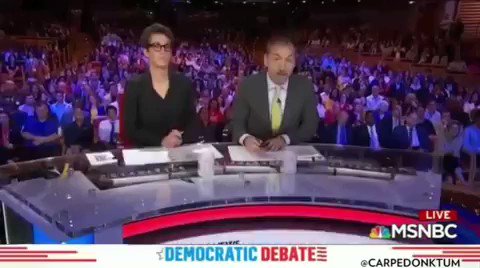
Due to the size of the field, the first Democrat presidential primary debate takes place over two nights: tonight Wednesday, June 26, and Thursday, June 27, in Miami.
NBC, MSNBC and Telemundo are hosting the debate and hold exclusive rights to broadcast from 9pm EST to 11 p.m EST on both nights.
The moderators for the debate are: NBC News’ Lester Holt, Savannah Guthrie and Chuck Todd; MSNBC’s Rachel Maddow, and Telemundo’s José Diaz-Balart.
The candidates for the first night are: Former Housing Secretary Julián Castro; Former Rep. Beto O’Rourke of Texas; Former Rep. John Delaney of Maryland; Mayor Bill de Blasio of New York City; Rep. Tim Ryan of Ohio; Rep. Tulsi Gabbard of Hawaii; Senator Amy Klobuchar of Minnesota; Senator Cory Booker of New Jersey; Senator Elizabeth Warren of Massachusetts; and Washington Governor Jay Inslee.
If you are a communist, socialist, communal activist; or if your hobbies include sitting around a campfire picking parasites off your friends; then grab your sustainable algae cakes and consider this an open discussion thread.
Or if you are just looking for a laugh by watching Moonbats howl, well, that’s OK too.
Chopper pressers are the best pressers. As President Trump departs the White House en route to Osaka Japan for the G20 summit, the president delivers answers questions from the press pool on current events. [Video and Partial Rough Transcript]
.
[partial rough transcript] President Trump – “I spoke with Nancy Pelosi and we had some conversations having to do with the bill for humanitarian aide at the border for the children. We’re moving along very well with the bipartisan bill in the senate, spoke to a lot of people and we’re doing very well, we’re very far along. The House is getting it together with the Senate to get something done. It’s humanitarian aide it’s very important, and I think a lot of people are starting to realize I was right when I said there was a the crisis at the border, it wasn’t a manufactured crisis.”
“I’m heading to Japan, Osaka, and were going to be meeting with a lot of people from different countries many of whom have been taking advantage of the United States, but not so much anymore, in fact not at all anymore.”
[In response to inaud. Q]: “The Mueller things never stops, there was no collusion … it never ends it goes on and on … the criminal activity was on the other side …. With the insurance policy by Strzok and his lover Page … At what point does it end? It’s a disgrace. No obstruction! No collusion! Now the democrats want a do over. They had a do over in the House, that didn’t work, we had a do over in the Senate, that didn’t work.”
Q: Who will you be meeting with at G20?
A: “I’m meeting with Russia, I’m meeting with China, I’m meeting with many countries … We’re meeting with China, just so you know China has been paying us billion sand billions of dollars, before I got here they never paid us 10 cents.
Q on Iran
A: Iran can do whatever they want, it’s fine, I have plenty of time. Iran is in economic distress, they’re in an economic disaster right now. Whatever they want is fine with me, I have all the time in the world. They could solve it quickly or they could solve it 10 years right now .. In the meantime they have very strong sanctions and they deserve those sanctions, they have to do what’s right for their people, but I don’t think they care for their people. They’re selfish and they’re stupid.
Q: Will you be meeting with Kim Jong Un?
A: I’ll be meeting with, uh, a lot of other people, not quite him, but I may be speaking to him in a different form. I’ll be going to South Korea after G20 and I’ll be there for about a day, we have a lot of meetings planned with a lot of different countries.
In the dynamic of President Trump confronting Chairman Xi over Chinese trade and manufacturing practices there are critical members of the U.S. team, each with a role to play. Commerce Secretary Wilbur Ross, U.S. Trade Rep. Robert Lighthizer and U.S. Treasury Secretary Steven Mnuchin are the most important members.
Secretary Ross explains the position of the U.S. team as they head to the G20. WATCH:
.
As we discussed yesterday, Chinese anxiety is off-the-charts. When China gets into this high-anxiety disposition, they immediately -predictably- drop the Panda mask, and lash-out with Red Dragon antagonisms. This is happening right now.
“There are some inappropriate activities underway by the Chinese. They must cease. If they do, if we make some redressing of the trade imbalance, then that’s a reasonable deal for both parties.” ~ Secretary Wilbur Ross
In previous administrations the economic/trade teams were filled with think-tank wonks and esoteric public officials. Their response to the Red Dragon was always from a position of inherent fear combined with political evaluations. This is the historic frame-of-reference for Beijing, a view of inherent weakness. This history also contributes to why China is perplexed by the Trump administration.
In the Trump administration the economic/trade teams are directed by dragon-slayers from the private sector. Business giants, billionaires, who are familiar with the granular details of negotiation and comfortable with adversarial battles where billions of dollars can make or break a deal. There is no position of structural fear or political ramification at the apex level of business dealing. The fights are on the merits of the position(s).
As President Trump has moved from negotiation to confrontation, Beijing’s leadership is starting to realize their opponent isn’t their typical weak U.S. government negotiators; nor is it the U.S. Chamber of Commerce who will cut the ‘deal’ for their Wall Street clients and DC lobbyists regardless of Main Street’s best interests.
As a direct consequence, the team around Chairman Xi have a much more difficult time trying to outwit the U.S. delegation. President Trump has brought “killers” from the U.S. corporate and business community, into the battle – to fight on behalf of America.
Megan Rapinoe is the co-captain of the U.S. women’s national soccer team and a rabid hater of President Trump. Ms. Rapinoe refuses to sing the U.S. national anthem; kneels during ceremonies to make her hatred for America visible; and grabs every microphone to tell the media about her politics in an effort to increase her resistance credentials.
The age-old axiom is: ‘be careful what you wish for, because you just might get it”. Today, President Trump brilliantly responded to Ms. Rapinoe. First, by calling out her arrogance in declaring victory before she even played the World Cup matches; and secondly, by inviting the entire team to the White House “win or lose”.
The pressure is now upon Ms. Rapinoe. That pressure overlays a preexisting, unstable and tenuous psychological condition related to her tribal self-identification and commercial aspirations. This dynamic is a recipe for implosion. It will not end well for her.
President Trump calls in to Maria Bartiromo for an extensive interview on multiple subjects. The president discusses his perspective on Mueller testifying; the state of the economy; the upcoming G20 talks with Chinese Chairman Xi Jinping and the status of the trade negotiations; the status of tariffs; and the U.S-Mexico border issues.
On China, President Trump doesn’t sound like he’s willing to make any concessions or retreat on any tariffs. “They want to make a deal more than I do”, he said.
President Trump signs an executive order designed to let patients see pricing information up front — before receiving health care services. Doctors, hospitals, and other providers would not only reveal their pricing in advance, but the now-secret amounts insurance companies pay them for those services. Could this TrumpCare transparency revolution trigger the reform that Republicans have been promising for years, or will it — as critics claim — create a “race to the top” sparking higher prices to consumers? Bill Whittle Now comes to you 20 times each month thanks to the Members who believe in free markets, rule of law, and individual liberty as the secret recipe for a happy society. They do their part by funding these messages, and they enjoy a private, Members-only forum where reasoned thought, civil dialogue and lots of laughter rule. Join us today at https://BillWhittle.com/register/
Earlier today President Trump signed an Executive order establishing a White House council on eliminating regulatory barriers to affordable housing [Details Here]. After explaining the XO President Trump answered questions from the pool:
[Transcript] – 2:07 P.M. EDT – THE PRESIDENT: Thank you very much. Appreciate you being here. I’d like to take a few moments to describe what we’re doing on numerous fronts, but we’re going to take a major step in our historic regulatory reduction campaign.
Today, we begin a bold new initiative to bring down the cost of housing for American families. So important.
In a few moments, I will sign an executive order launching the White House Council on Eliminating Regulatory Barriers to Affordable Housing.
I’m grateful to be joined by the chair of this new Council, Secretary Ben Carson. We’re also pleased to have with us Senators Tim Scott and Martha McSally. And here with us are Clyde from Congress — Clyde Holland; Greg Ugalde; Bonnie Roberts-Burke; Pastor Darryl Scott; and — you’re not a congressman yet, Pastor, but you could be if you wanted to, I can tell. Would you like to run for Congress? Because you’d win pretty easily, I think.
PASTOR SCOTT: A government job? I don’t know. (Laughter.)
THE PRESIDENT: But thank you for being here, Pastor.
PASTOR SCOTT: Thank you.
THE PRESIDENT: Kareem Lanier. All the people who really care so much about affordable housing — what it means and how important it is for our country.
Overregulation of housing and housing market is a primary cause of the rising housing costs across our country. Nationwide, it’s estimated that the regulations account for more than 25 percent of the cost of a new home. Think of that. So, regulation and unnecessary regulation is 25 percent the cost of a new home.
As a result, the supply of affordable housing cannot keep up with the demand. Today, over 37 million American households have to spend more than 30 percent of their income on housing.
So, what I’d like to do is ask Ben Carson, who’s really devoted a lot of his time and effort on this tremendous overregulation problem — I’d like to have Ben Carson, Secretary, to say a few words. Ben?
SECRETARY CARSON: My pleasure. Well, thank you, Mr. President. And thank you for your continued commitment to the people of America.
Today, I’m privileged to be here for the creation of the White House Council on Eliminating Barriers to Affordable Housing, which I have the great honor to chair.
The Council, which consists of members across eight federal agencies, will lead federal efforts to engage with state, local, and tribal leaders across the country to the remove obstacles that impede the production of more affordable homes, namely the enormous price tag of burdensome government regulations.
The President has given us a mission to break down barriers and to clear the path for the millions of Americans to pursue their American Dream. It’s a mission we proudly and enthusiastically accept.
As the President just said, more than 25 percent of the cost of a new home is the direct result of federal, state, and local regulations. And sometimes, the price tag is much higher than that.
President Trump’s decades of experience as a world-renowned builder and developer gives this administration’s leadership a unique set of insights when confronting the challenges of developing more housing.
Today’s announcement recognizes the need for federal policies to serve Americans of all income levels, including working-class Americans — like teachers, and nurses, and auto-mechanics, construction workers, policemen, firemen — whose struggles are sometimes forgotten.
And I would also like to thank President Trump and the leadership of this administration, many of whom are here today, for once again fulfilling that great promise that the forgotten men and women of America will be forgotten no longer.
I look forward to working alongside my fellow councilmembers in the months ahead as we use these efforts to continue to build the pillars of prosperity that support all the men and women of this country in their quest for that portion of the American Dream that includes a home. The home is the foundation of the community, which is the foundation of the nation. And we can do this if we all work together. Thank you.
THE PRESIDENT: Thank you very much. That’s very nice.
How about Tim Scott? Where’s Tim?
SENATOR SCOTT: Yes, sir.
THE PRESIDENT: Tim, do you want to say a few words, please?
SENATOR SCOTT: Mr. President, thank you for this executive order. There’s no doubt that a regulatory reset that is responsible will help more Americans who are credit-worthy achieve their goal, their aspiration, of having a part, a share, in this nation.
The American Dream so often is seen through the prism of homeownership. This executive order will accelerate the path of responsible homeownership and is proof positive that your conscientious, compassionate, conservative leadership is undeniably focused on the most vulnerable folks of our economic chain.
THE PRESIDENT: Very nice. Did you read that?
SENATOR SCOTT: No, sir.
MS. ROBERTS-BURKE: That was right off the top of his head.
THE PRESIDENT: Good. That was very good. Thank you, Tim.
SENATOR SCOTT: Yes, sir.
THE PRESIDENT: Martha?
SENATOR MCSALLY: President Trump, thank you so much for this executive order. In the first 90 days as a senator in Arizona, I visited all 15 counties. We’re a very diverse state and our economy is growing, but a top theme is affordable housing.
And there are many barriers to that, and so this group, coming together to cut across those barriers — federal, state, and local — to provide more opportunities at lower cost so everybody can meet their full potential, is really important for my constituents. And so I’m grateful for this administration.
THE PRESIDENT: Good. Thank you, Martha. Great job.
Pastor Scott.
PASTOR SCOTT: Mr. President, during the 2016 campaign, you stated that you would implement national policy to revitalize the urban communities of this great country and — well, all the communities, urban and rural — and I think is just a part — this dovetails on the Opportunity Zones and the things that are being done in those designated areas. And this makes it — makes the revitalization process that much more obtainable. So we thank you for it.
THE PRESIDENT: Thank you very much. And thank you for bringing up the word “Opportunity Zones” — the words — because Tim Scott had so much to do with that. And it’s far beyond our expectation. That’s a little different than what we’re talking about today, but while you bring up that term — it’s a beautiful term. Tim Scott came to see me a little while ago, toward the beginning, but not that long ago —
SENATOR SCOTT: Yes, sir.
THE PRESIDENT: And, Tim, I don’t mind if you say just a couple of things about what’s happened, because the Opportunity Zones have just taken off in this country.
SENATOR SCOTT: Yes, sir. Mr. President, because of your leadership, frankly, we have seen incredible growth in the Opportunity Zones.
Here’s just a couple of examples. I think it’s important for us to remember that, in Opportunity Zones, the average person is living in a place where the poverty rate is at 31 percent. Nationally, our poverty rate is at 12.5 percent. Because of your legislation that you signed, sir, we’ve seen an 8 percent increase in wages within the zones. We’ve seen a 20 percent increase in property values in the zones.
That’s really important for two reasons. Number one, over 50 percent of the folks in the zones own their property. So that means that we’re seeing net worth increase because of the Opportunity Zone legislation. So that’s really important.
Number two, the fact of the matter is, when you put more pressure on those zones, you attract more resources in it.
And from the Treasury’s perspective, we could see upwards of more than $50 billion descending upon these zones, creating opportunities and workforce housing that we’re talking about today. And that is an important part of the equation.
And that is brought to us by your leadership and your willingness to have the conversation about moving people in distressed communities forward. Thank you for saying yes to Opportunity Zone legislation.
THE PRESIDENT: Thank you. Thank you, Tim. You’ve been a great — you’ve been a great help. He’s been a great help. (Applause.)
Would anybody like to say something? And then we’ll sign up. Anybody? Would you like to say something?
MR. HOLLAND: Sure.
THE PRESIDENT: Please.
MR. HOLLAND: Clyde Holland. With respect to the National Multi Housing Council and Up for Growth, two areas we’ve been struggling to produce: apartments and the most affordable housing in America. We can’t thank you enough, Mr. President —
THE PRESIDENT: Thank you.
MR. HOLLAND: — for this help.
THE PRESIDENT: Thank you very much. I appreciate it, Clyde.
Yes, please.
MR. LANIER: Mr. President, thank you for this. And I’d like to thank you as well, Dr. Carson, for your leadership as well.
Coming from the inner city, coming from urban America, living within the confines of what it takes on the day-to-day, we don’t care about the costs and the regu- — we need the housing. And so it’s good that we have these barriers removed so that we can actually get access to these things.
When you’re a kid living in urban America, you don’t care who your President is, who your governor is, who your mayor is. You care about the things that are practical to you. And the things that really are practical is where am I going to lay my head at tonight and what am I going to eat when I get there.
And these things help more people in urban America get access to housing that is so needed. And so we thank you tremendously.
THE PRESIDENT: Thank you very much. I appreciate it.
MS. ROBERTS-BURKE: And I’d like to say, from the National Association of Realtors, and as a realtor, that I thank you very, very much. The American Dream is homeownership. We have the lowest percentage of homeownership that we’ve had in many, many years. And I think this is going to go a long way to increase that.
And thank you.
THE PRESIDENT: Thank you very much.
Please.
MR. UGALDE: Greg Ugalde. On behalf of the homebuilders, Mr. President, we are strongly behind this effort. The regulatory framework throughout the country needs to be focused on. It will help us with workforce development as well. And I think that this is tremendous. And we thank you for this.
THE PRESIDENT: Thank you very much. I appreciate it.
SECRETARY CARSON: I just want to add one other thing.
THE PRESIDENT: Yes, please, Ben.
SECRETARY CARSON: You know, the average net worth of a renter is $5,000. The average net worth of a homeowner is $200,000. That’s a 40-fold difference. And we talked so much about the income gap, the wealth gap in this country. A lot of it has to do with homeownership. And that’s why this is so important. But it has to be done the right way. It wasn’t done the right way, you know, a decade or more ago, and it led to a crisis.
So we have to learn from those situations, do it the right way. And it’s really about recognizing that our people are our most important resource. And we need to develop it, and the best place to develop those resources is a solid home environment.
THE PRESIDENT: That’s great, Ben. Thank you. (Applause.)
MS. ROLLINS: One quick thing, Mr. President: When you combine this with your criminal justice reform efforts; with the lowest unemployment because of your tax cuts and regulatory reform effort; with your fight for school choice so children have a real opportunity for an education; to Ivanka and your workforce– the Pledge to the American worker; all of that combined lifts all boats, but it lifts those at the bottom of the socioeconomic ladder the most. And that’s because of your leadership.
So we’re just so grateful to you.
THE PRESIDENT: Thank you.
MS. ROLLINS: Thank you.
THE PRESIDENT: Thank you for bringing up criminal justice reform. We got it passed. Nobody else could have gotten it passed. And we’re very proud of that. A lot of people worked very hard on that. And I see it’s a big part of the debates. And now they’re all saying, “It got passed, and it got passed by a Republican named Trump.” (Laughter.) And the Democrats don’t know quite how to handle that one.
But we did criminal justice reform — very comprehensive, also. And there were a lot of people — and the incredible thing about it was we had conservatives — very, very conservatives — and we had very, very liberal people supporting it. We had everybody. We had a great bipartisan group. And we had some people opposed to it, too. But we had, for the most part, tremendous support.
So thank you very much.
Larry Kudlow, do you want to just give a moment about how well our economy is doing? Because it looks like June could be one of the best months in the history of the stock market for June — for that month.
MR. KUDLOW: I know. It’s most extraordinary. And it’s a terrific sign about the future economy. Really a good sign. We had our correction in the spring; now we’ve gotten it back and then some.
And numbers coming out — production went way up in May. Consumer spending, retail sales, way up in May. We’re going to have a better Q2 than people initially thought. I think we’re on track for 3 percent economic growth or better. And to remind (inaudible): low tax rates, deregulation, opening up energy, trade reform, initiatives like this from Secretary Ben and others. This is what it takes. We’re opening doors for the whole — every nook and cranny of this economy is coming alive, sir.
THE PRESIDENT: Right.
MR. KUDLOW: If we stay on track with your policies, it’s going to be great news for America.
THE PRESIDENT: Number one in the world, too. If you look at Europe, they’re having difficulty. If you look at China and various parts of the world — Asia, other places — we’re beating everybody. And we’re going to keep it that way.
So I’m going to sign this. And, Ben, congratulations.
SECRETARY CARSON: Thank you.
THE PRESIDENT: You’ve been working on this for a long time. It’s a great thing. Thank you very much. (Applause.)
(The executive order is signed.)
(The President distributes pens to the participants.) Spread these around folks. Spread them around. (Laughter.) I don’t like signing one letter at a time. Doesn’t look too good — the end result.
Q Mr. President, are you personally concerned — Mr. President —
THE PRESIDENT: Wait until you hear this beauty.
Q Are you personally concerned about the conditions at these border facilities, where there are some reports —
THE PRESIDENT: Yes, I am. I’m very concerned. And they’re much better than they were under President Obama, by far. And we’re trying to get the Democrats to agree to really give us some humanitarian aid — humanitarian money. And that is a very fair question, and I appreciate that question.
But I’m very concerned. It’s in much better shape than it ever was. A lot of these young children come from places that you don’t even want to know about. The way they’ve lived — the way they’ve been — the way — the poverty that they grew up in.
But, with that, if we can get this bill signed, we’ll be able to do it. We have — you know, the Democrats don’t want to sign anything. And now, I think they’re going to probably sign this. From what I understand it’s — I call it “humanitarian aid.” This isn’t even about border.
At the same time, you see the numbers are way, way down. Mexico has been really helping us a lot. They have very strong immigration laws. They are moving 15,000 people or 16,000 people to our southern border. And they moved 16,000 troops to their southern border, which is pretty incredible.
And a lot of signs are coming out where the cartels and all of the bad folks — the “coyotes,” as they call them, and all of the bad people that are bringing young children and taking advantage horribly — it’s a form of slavery. It’s horrible what they are doing to young children. You understand. You’ve reported on it. A lot of that is stopping now because of what we’re doing and because of what’s happening on the border.
So I just want to thank Mexico. They’ve really done a great job. We appreciate what they’re doing. And hopefully, they can keep it up because it’s very important. They have very, very — Mexico has very, very powerful immigration laws. They can do things. Our laws are so bad.
What we would like to do — and I’ll do it right now officially, is ask the Democrats to give us help on asylum, help on all of the loopholes — the horrible loopholes that signed in over a period of years that don’t allow us to do what we should be able to do. We need the votes of Democrats.
And I think, very importantly, you know, because our economy — you heard Larry Kudlow — because our economy is so strong — it could be the strongest in the history of our country — people want to flow up to the United States. But you just can’t do it that way. You have to do it legally. But they’re — you have these massive numbers of people trying to get into the United States because of the economy, because we’ve done so good.
But that’s one of the problems. We’re doing well. Everybody wants to come in. Ten years ago, five years ago, four years ago, they didn’t want to come in. Today, they want to come in. But we can’t let that happen so we’re doing very, very — (inaudible).
And as far as the wall is concerned, the wall is heavily under construction. The Army Corps of Engineers is doing a great job. We’re doing a lot of wall right now and we expect to have 400 miles built by the end of next year. That’s a lot. And we’re building them in the right places. We’re building — we’re picking areas where we need it the most and it’s having a tremendous effect.
Q Did you ask your Customs and Border Protection head, John Sanders, to resign? Do you know why he is leaving his post?
THE PRESIDENT: No. I know there was going to be a change there. I’ve made changes — very good changes. We have — we’re moving some people around into different locations. The game has changed a lot because of what Mexico is doing. We’re able to do things that we wouldn’t have been able to do before.
The problem with our Border Patrol, who are phenomenal people, but they’re not allowed — because our laws are so bad with catch-and-release and all of the different things including chain migration, the visa lottery — the laws are so bad and the asylum rules and laws are so bad that our Border Patrol people, who are so incredible, aren’t allowed to do their jobs.
So because Mexico is, now, for the first time in 50 years, helping us — and we really appreciate it — we’re able to make certain changes that we wouldn’t have been able to make before.
Steve, did you have a question?
Q You had a back-and-forth with the leader of Iran this morning via tweet. What message did you send to him with your tweets this morning?
THE PRESIDENT: There is no message. You know, I’ll tell you what the message is: When they’re ready, they’ll have to let us know. When they’re ready, they’ll let us know. Very simple.
Q Ready to negotiate, you mean?
THE PRESIDENT: Ready to do whatever. Doesn’t make any difference. Whatever they want to do, I’m ready. Okay?
Q On the Middle East, Jared Kushner is in Bahrain right now —
THE PRESIDENT: Yes.
Q — releasing this economic component of your Middle East Peace Plan without the Israelis or Palestinian officials attending. So what’s your strategy going forward when there’s no buy-in from the parties in (inaudible)?
THE PRESIDENT: Well, we want to get support. And we have to get economic support because the Palestinians don’t have money. And we have to help the Palestinians with some money because they don’t have it. And one of the groups that you get are some of those countries in the Middle East that do have money.
So, they’re going to play a role in the peace plan and we’ll see what happens. We had a little bit of setback when the election from — in Israel, as you know, I guess the result is somewhat mixed because now they’re going to do it again. That’s another do-over, unfortunately, and — but we’ll see what happens. I mean, we’ll see what happens with that election, but it’s an early process, but we expect other people to help out.
Because, again, there’s no money. And some people don’t have money. And if they don’t have money, it’s going to be very hard. We want people to be able to live and live well.
Q Taking it back to the CBP — so does that mean you did not ask Sanders to resign?
THE PRESIDENT: I didn’t speak to him. I don’t think I’ve ever spoken to him, actually. No, we have some very good people running it. And you know, I don’t know anything about it. I hear he’s a very good man. I hear he’s a good person. I don’t know him. I don’t think I ever spoke to him.
Q And can you tell us about your decision to choose Stephanie Grisham as your new Press Secretary?
THE PRESIDENT: So Stephanie has been with me from the beginning, as most of you know. And then, over the last couple of years, she’s worked for the First Lady. Done a fantastic job. The First Lady loves her. I think she’s been, you know, just incredible. She’s very talented.
And I asked so many people, “Who do you like?” A lot of people wanted the job. You know, a lot of people wanted to do it. And I’d ask people, “Who do you like?” And so many people said, “Stephanie.” And she’s here. She knows everybody. She actually gets along with the media very well, as you know. A lot of the folks in the media like her very much. And I think she’s going to be fantastic. I think she’s going to do a great job.
So I offered her the job this morning and she accepted. And the First Lady is very happy for her. It’s a big job. It’s a very big job, but we think Stephanie is going to do a fantastic job. And Hogan is going to be with her. Hogan was one of the people that recommended her. Here’s Hogan. He recommended her very strongly. I said, “Hogan, who do you think?” He said, “Stephanie Grisham.” So —
Q Do you have an exit strategy for Iran if war does break out? How do you —
THE PRESIDENT: Say it.
Q Do you have an exit strategy for Iran if war does break out?
THE PRESIDENT: You’re not going to need an exit strategy. I don’t need exit strategies.
Q Mr. President, could you tell us about your letter to Chairman Kim?
THE PRESIDENT: Just a nice letter back and forth. He wrote me a beautiful on my birthday. It was my birthday, as you know, last week. He wrote me a beautiful letter. I thought it was very nice. And just two friendly letters. We get along very well.
Q No mention of another meeting?
THE PRESIDENT: Maybe there was. But we — you know, at some point, we’ll do that. Getting along very well. He’s not doing nuclear testing. When I took over, as you know — when I became President, they were testing — previous to that, they were testing so much and they were doing ballistic tests and nuclear tests. And we didn’t have all our prisoners back. We had a whole lot of things that were going wrong.
Now we have our hostages back, our prisoners back. They came back. We’ve had, as you know, the remains of the heroes — our great heroes from many years ago. That’s coming back, and coming back as they find them. And as they find the sites and graves, they’re sending them back.
The relationship is a far different relationship than it was during the Obama years, where — you were going to end up with a war. You were going to end up with a war in North Korea, that I can tell you. I’ll tell that to Tim Scott. Maybe you haven’t heard that, Tim. You understand.
You were going to end up — I tell you what, you were going to end up in a war in North Korea, and — if it kept going the way it was going, if you had that group continuing onward.
As far as Iran is concerned, the deal was a horrible deal. It was no good. It was no good. It ended in a very short period of time. We’re dealing about countries. It ended in a very short period of time. They would have had a clear path to a nuclear weapon. We’re not going to allow that to happen. You can’t do it.
And I’m all for Iran. I have so many people — Iranian friends. I come from New York. I have tremendous numbers of Iranian friends. They’re great people. They’re from Iran. They’re wonderful people. It’s too bad this is happening. They’re living badly right now. Their country is not doing well, economically, at all. That can be changed very quickly, very easily. But they have to get rid of the hostility from the leadership. And the leadership — I hope they stay. I hope they do a great job. But they should talk to us decently.
We’re all for them. We want it to be done properly. But the deal that was done by President Obama — $150 billion for nothing. He used the money for terror. They gave the money out to terrorists.
If you remember, John Kerry — they asked him that question: “Do you know the money is going to be used for terror?” He said, “Yes.” Essentially, he said at least some of it is going to be used — I mean, he knew about it. He actually said that some of the money may be used for terror. What kind of a deal is that?
Then they gave him $1.8 billion in cash — cash. Planeloads of cash. What kind of a deal is that?
And the biggest problem is they had bad testing. You weren’t able to see many of the sites. You saw that, Tim.
SENATOR SCOTT: Yes, sir.
THE PRESIDENT: You couldn’t go into the most important sites to test, to see. They were probably making this stuff for a long time. But with $150 billion going to them, they were doing very well. And $1.8 billion in cash. And you had no real right of testing. You couldn’t test properly.
And most importantly, the agreement ends in a very short period of time. So they had a path to nuclear weapons. We cannot allow Iran to have a path to nuclear weapons.
And, by the way, we have tremendous support, tremendous support. And people were very happy with what I did the other day by not doing something, okay? But we had tremendous and we have tremendous support. Nobody wants to see Iran have nuclear weapons.
Thank you very much everybody. Thank you. Thank you. Thank you very much.
Q Do you think they understood the message you were sending them last week? You decided not to strike —
THE PRESIDENT: I hope they understood the message. I decided not to strike. They shot down unmanned — as you know, an unmanned drone.
Q But do you think they take your threats seriously now, Mr. President?
THE PRESIDENT: I think everybody does. I think you do, too. Goodbye. (Laughter.)
Earlier today in the East Room of the White House U.S. President Donald Trump presented the nation’s highest honor for bravery to Staff Sergeant David Bellavia, U.S. Army [Video and Transcript Below]
.
[Transcript] – 3:36 P.M. EDT – THE PRESIDENT: Thank you very much. Please. Thank you, Chaplain, very much. It’s really beautiful.
Today, it’s my privilege to award the highest military honor to an American soldier who demonstrated exceptional courage to protect his men and defend our nation. Will you please join me in welcoming Staff Sergeant David Bellavia? David, thank you. (Applause.)
David is the first living recipient to earn the Congressional Medal of Honor for his bravery in the Iraq War. (Applause.)
We are honored to have with us distinguished leaders of our military. I want to recognize Acting Deputy Secretary of Defense David Norquist. David, thank you very much. And congratulations. Acting Secretary of the Army Ryan McCarthy. Come here, Ryan. Let me just say hello to you. (Laughter.) Congratulations. Just happened yesterday, so I have to congratulate. Congratulations. Vice Chairman of the Joint Chiefs of Staff General Paul Selva. Thank you, Paul. Army Chief of Staff General Mark Milley. Hi, Mark. And Sergeant Major of the Army Daniel Dailey. Thank you, Daniel, very much.
Thanks as well to members of Congress who join us: Representative Liz Cheney. Thanks, Liz. Chris Collins. Thanks, Chris. Dan Crenshaw. Tom Reed. Thank you. Thank you, Tom. I see you over there, Tom.
REPRESENTATIVE REED: (Inaudible.)
THE PRESIDENT: Thank you very much.
Joining David for this special ceremony is his wife Deanna and three children, Evan, Ayden, and Vivienne, along with his mother Marilyn, and his brothers Daniel and Rand. I want to thank you all for being here. A very special day for you and for all of us. For the nation, actually. Thank you. (Applause.)
David’s father William passed away in 2017. And though he’s no longer with us, we know that today he must be one of those proud dads. He’s looking down upon us from Heaven, and he’s very proud of his son and his son’s family. I have to say that. Thank you, David.
Finally, we are gratified to be joined by eight previous Medal of Honor recipients. And, I have to tell you, I’ve got to know just about all of them. You are forever with us. You inspire us. You are truly brave, great people. Thank you very much for being here. (Applause.) Brave people. Thank you.
David grew up in Western New York. He was the youngest of four children. As a boy, he would listen to stories from his grandfather, a World War Two veteran, and hero in his own right, who earned a Bronze Star in the Normandy campaign. I just came back from Normandy. That was something.
As David remembers, his grandfather’s stories were always “vivid with a source of pride.” And they were delivered very beautifully. There was a nobility and purpose in the infantry. And David saw that a very young age. “I wanted to be what my grandfather was,” David would often say. “I wanted to be part of this noble adventure.” Is that right? That’s a pretty good quote, would you say? Better say “yes,” otherwise I have a problem. (Laughter.)
In 1999, David followed the example of his grandfather, and joined the United States Army Infantry. Several months after the September 11th attack on our nation, David deployed, saying goodbye to his wife and his son, Evan. He served in Germany, Kosovo, and then in Iraq.
In November of 2004, after nearly a year of intense enemy combat in Iraq, David led his squad into battle to liberate the city of Fallujah and anti-Iraqi forces. That was a tough place. This operation was the bloodiest battle of the Iraq War.
For three days straight, David and his men kicked down doors, searched houses, and destroyed enemy weapons, never knowing where they would find a terrorist lurking next. And there were plenty of them.
The third day of battle was November 10th, David’s 29th birthday. That night, his squad was tasked with clearing 12 houses occupied by insurgents. A very dangerous operation. They entered house after house, and secured nine of the buildings.
Then came the 10th. That was a tough one. It was a three-story building surrounded by a nine-foot wall. As they entered the house and moved into the living room, two men were behind concrete barricades. They opened fire on David and everybody.
In the dark of night, shards of glass, brick, and plaster flew into the air, wounding multiple soldiers. The rounds of fire ripped holes into the wall separating the Americans from the terrorists. The wall was ripped to shreds. David knew they had to get out. David thought that they had had it. He leapt into the torrent of bullets, and fired back at the enemy without even thinking. The insurgents — he just took cover. David took over.
He provided suppressive fire while his men evacuated, rescuing his entire squad at the risk of his own life. Only when his men were all out did David exit the building. But the fighting was far from over. Militants on the roof fired down at them with round after deadly round. A Bradley Fighting Vehicle came to the scene to suppress the enemy and drove them further into the building.
Knowing that he would face almost certain death, David decided to go back inside the house and make sure that not a single terrorist escaped alive, or escaped in any way. He quickly encountered an insurgent who was about to fire a rocket-propelled grenade at his squad. David once again jumped into danger and killed him before he had a chance to launch that grenade.
Next, two more insurgents came out of hiding and fired at David. He returned fire, killing them both. Then, a third assailant burst out of a wardrobe — wearing a wardrobe — and opened fire. David shot and wounded the man, but he escaped up the stairs. Racing after him, David engaged in hand-to-hand combat and killed him too.
Bleeding and badly wounded, David had single-handedly defeated the forces who had attacked. Just then, yet another combatant jumped down from the third-story roof and attacked. David shot him, and the assailant fell off the balcony.
Alone, in the dark, David killed four insurgents and seriously wounded the fifth, saving his soldiers and facing down the enemies of civilization.
Here with us today are 32 American service members who fought with David in Iraq, including 12 who were with David on that very, very horrible and dangerous November night. Please stand. Please. (Applause.)
Did he do a good job?
PARTICIPANTS: Yes.
THE PRESIDENT: If not, you know, it’s not too late. (Laughter.)
Thank you very much for being here. We appreciate it very much.
Also with us are five families of David’s brothers-in-arms who made the supreme sacrifice. To the Gold Star families of Sean Sims, Steven Faulkenberg, Scott Lawson, JC Matteson, and Michael Carlson: Our entire nation expresses our love, loyalty, and everlasting gratitude. Please, stand. Please. (Applause.) Thank you very much for being here. Appreciate it. Thank you.
David often tells young people, “Americans don’t want to fight, but if someone picks a fight with us, we will always win. Because we don’t fight for awards or recognition. We fight for love of our country, our homeland, our family, and our unit — and that’s stronger than anything the enemy has.” So, thank you. And thank you to his family very much. Great family, David. Thank you.
David exemplifies the same warrior ethos that gave his grandfather and all the heroes of Normandy the strength to defeat evil exactly 75 years ago. I hear that his grandfather Joseph is now 99 years old and that today he’s watching this ceremony at his home in Jamestown, New York. A lot of people are watching, David.
America is blessed with the heroes and great people like Staff Sergeant Bellavia whose intrepid spirit and unwavering resolve defeats our enemies, protects our freedoms, and defends our great American flag.
David, today we honor your extraordinary courage, we salute your selfless service, and we thank you for carrying on the legacy of American valor that has always made our blessed nation the strongest and mightiest anywhere in the world. And we’re doing better today than we’ve ever done. Our country is stronger now, and we’re doing better economically than ever before. We’re setting records, and you fought for something that’s really good, and we appreciate it, David. We really appreciate it. Thank you.
And now I’m very pleased to ask the military aide to come forward while I present the Congressional Medal of Honor to Staff Sergeant David Bellavia. Please.
MILITARY AIDE: The President of the United States of America, authorized by Act of Congress, March 3rd, 1863, has awarded in the name of Congress the Medal of Honor to Staff Sergeant David G. Bellavia, United States Army, for conspicuous gallantry and intrepidity at the risk of his life above and beyond the call of duty.
Staff Sergeant David G. Bellavia distinguished himself by acts of gallantry and intrepidity above and beyond the call of duty on November 10, 2004, while serving as squad leader in support of Operation Phantom Fury in Fallujah, Iraq.
While clearing a house, a squad from Staff Sergeant Bellavia’s platoon became trapped within a room by intense enemy fire coming from a fortified position under the stairs leading to the second floor. Recognizing the immediate severity of the situation, and with disregard for his own safety, Staff Sergeant Bellavia retrieved an automatic weapon and entered the doorway of the house to engage the insurgents.
With enemy rounds impacting around him, Staff Sergeant Bellavia fired at the enemy position at a cyclic rate, providing covering fire that allowed the squad to break contact and exit the house.
A Bradley Fighting Vehicle was brought forward to suppress the enemy; however, due to high walls surrounding the house, it could not fire directly at the enemy position. Staff Sergeant Bellavia then re-entered the house and again came under intense enemy fire. He observed an enemy insurgent preparing to launch a rocket-propelled grenade at his platoon. Recognizing the grave danger the grenade posed to his fellow soldiers, Staff Sergeant Bellavia assaulted the enemy position, killing one insurgent and wounding another who ran to a different part of the house.
Staff Sergeant Bellavia, realizing he had an un-cleared, darkened room to his back, moved to clear it. As he entered, an insurgent came down the stairs firing at him. Simultaneously, the previously wounded insurgent reemerged and engaged Staff Sergeant Bellavia. Staff Sergeant Bellavia, entering further into the darkened room, returned fire and eliminated both insurgents. Staff Sergeant Bellavia then received enemy fire from another insurgent emerging from a closet in the darkened room.
Exchanging gunfire, Staff Sergeant Bellavia pursued the enemy up the stairs and eliminated him. Now on the second floor, Staff Sergeant Bellavia moved to a door that opened onto the roof. At this point, a fifth insurgent leapt from the third floor roof onto the second floor roof. Staff Sergeant Bellavia engaged the insurgent through a window, wounding him in the back and legs, and caused him to fall off the roof.
Acting on instinct to save the members of his platoon from an imminent threat, Staff Sergeant Bellavia ultimately cleared an entire enemy-filled house, destroyed four insurgents, and badly wounded a fifth. Staff Sergeant Bellavia’s bravery, complete disregard for his own safety, and unselfish and courageous actions are in keeping with the finest traditions of military service and reflect great credit upon himself and the United States Army.
I have created this site to help people have fun in the kitchen. I write about enjoying life both in and out of my kitchen. Life is short! Make the most of it and enjoy!
This is a library of News Events not reported by the Main Stream Media documenting & connecting the dots on How the Obama Marxist Liberal agenda is destroying America



 Centinel2012