President Donald Trump and First Lady Melania Trump attend day two of the 70th Anniversary NATO Summit in London, England. The U.K. is five hours ahead of U.S. Eastern Time.
Day two includes: a general session for all members of the NATO alliance; a luncheon by President Trump to thank those NATO members fulfilling their two-percent pledge to their own security; bilat meetings with Angela Merkel, Mette Frederiksen and Giuseppe Conte; a press conference, and then departure.
♦3:25am ET / 8:25am Local – THE PRESIDENT departs Winfield House Landing Zone en route to the Grove Landing Zone, London, UK
♦3:40am ET / 8:40am Local – THE PRESIDENT arrives at the Grove Landing Zone, London, UK
♦3:50am ET / 8:50am Local – THE PRESIDENT departs the Grove Landing Zone en route to The Grove, London, UK
♦3:55am ET / 8:55am Local – THE PRESIDENT arrives at The Grove, London, UK
♦4:20am ET / 9:20am Local – THE PRESIDENT participates in an Official Welcome with the Secretary General of the North Atlantic Treaty Organization, Jens Stoltenberg, and the Prime Minister of the United Kingdom of Great Britain and Northern Ireland, Boris Johnson, London, UK
♦5:00am ET / 10:00am Local – THE PRESIDENT participates in a North Atlantic Treaty Organization Plenary Session, London, UK
♦7:30am ET / 12:30pm Local – THE PRESIDENT participates in a bilateral meeting with the Chancellor of the Federal Republic of Germany, Angela Merkel, London, UK
♦8:15am ET / 1:15pm Local – THE PRESIDENT participates in a working lunch with the NATO two-percent club, London, UK
♦9:00am ET / 2:00pm Local – THE PRESIDENT participates in a bilateral pull-aside with the Prime Minister of the Kingdom of Denmark, Mette Frederiksen, London, UK
♦9:45am ET / 2:45pm Local – THE PRESIDENT participates in a bilateral pull-aside with the Prime Minister of the Italian Republic, Giuseppe Conte, London, UK
♦10:30am ET / 3:30pm Local – THE PRESIDENT participates in a press conference, London, UK
~ NATO Summit Concludes ~
♦11:20am ET / 4:20pm Local – THE PRESIDENT and THE FIRST LADY depart The Grove en route to the Grove Landing Zone, London, UK
♦11:25am ET / 4:25pm Local – THE PRESIDENT and THE FIRST LADY arrive at the Grove Landing Zone, London, UK
♦11:35am ET / 4:35pm Local – THE PRESIDENT and THE FIRST LADY depart the Grove Landing Zone en route to London Stansted, London, UK
♦11:55am ET / 4:55pm Local – THE PRESIDENT and THE FIRST LADY arrive at London Stansted Airport, London, UK
♦12:05pm ET / 5:05pm Local – THE PRESIDENT and THE FIRST LADY depart London, UK, en route to Washington, D.C., London, UK
♦8:20pm ET – THE PRESIDENT and THE FIRST LADY arrive at Joint Base Andrews, Joint Base Andrews
♦8:30pm ET – THE PRESIDENT and THE FIRST LADY depart Joint Base Andrews en route to the White House, Joint Base Andrews
♦8:40pm ET – THE PRESIDENT and THE FIRST LADY arrive at the White House, South Lawn, Washington DC
After a series of bilateral discussions and NATO meetings President Donald Trump and First Lady Melania Trump attended two diplomatic receptions in honor of the 70th anniversary of the NATO alliance.
President Trump and First Lady Melania arrive at Buckingham Palace for a reception hosted by Queen Elizabeth II:
More background video from Buckingham Palace reception:
.
After leaving Buckingham Palace the President and First Lady attended a second diplomatic reception at No. 10 Downing Street hosted by British Prime Minister Boris Johnson.
In the second bilateral NATO meeting of the day, U.S. President Donald Trump and Canadian Prime Minister Justin Trudeau hold a joint press availability.
Unfortunately for U.S-Canada relations, at the conclusion of their bilat Trudeau went to a NATO reception at No. 10 Downing Street and was caught on mic disparaging President Trump with French President Emmanuel Macron. [Video and Transcript Below]
.
[Transcript] – PRESIDENT TRUMP: Well, thank you very much, everybody. A question was asked just a little while ago about supporting the people protesting in Iran and are going through a very tough period. And we do support them totally and have supported them from the beginning.
The question was asked: “Do we support them” — I thought — “financially?” And we haven’t supported them. I don’t know that we’ve ever been actually asked to support them, financially. And I — you know, if somebody asked, maybe we would. But we support them very, very seriously. The people that are protesting in Iran, they’re looking for their freedom, and we are fully in support of them.
So I wanted to — just in case anybody had any questions. We haven’t been asked to support them, financially, which I assume that’s what the question was. But just to make sure everybody understood it.
It’s an honor to be with a friend of mine who just had a great election victory. Congratulations.
PRIME MINISTER TRUDEAU: Thank you, Donald.
PRESIDENT TRUMP: And done a very good job. And we actually have a very good relationship and a good relationship, in terms of our countries.
We’re working on the USMCA. We’re trying to get Nancy Pelosi to put it up for a vote. You know, if it gets put up for a vote, it passes. But, so far, she hasn’t decided to do that. It’s up to her. It’s actually — a single individual has the — the Speaker of the House — it’s that person’s decision, and she’s the Speaker of the House.
And it’s a great deal for Mexico and for Canada and for the United States. And it’s a lot of jobs for everybody, and it replaces a deal that’s really a lousy deal, a bad deal, for — I can tell you — I can’t refer to you, but I would say, for the United States, that the deal that we have right now is terrible — NAFTA. Terrible. Been a terrible deal for the United States.
So we look forward to being able to vote on — take the vote on USMCA. It’s been there for a long time. And at some point, perhaps the President of Mexico — we have a wonderful man there, you know. He really is. He’s been a wonderful man. They’ll get tired and the Prime Minister will get tired and he’ll say, “Look, let’s forget this deal.” And I could understand it if you did. It’s been sitting in Congress now for six or seven months. And it’s a great deal for everybody.
So, hopefully, they can get it done and get it done fast. And it’s one of the few transactions, I think, where all three countries benefit, really, as a unit against the world, if you look at it. It really is a unit against the world. And that’s the way we looked at it right from the beginning. So we hope that’s the case.
Again, congratulations. We’re going to be talking about a number of subjects, including additional trade to that, and the military and the military presence. And it’s great being at NATO. We had some real success, I think, and some very successful talks having to do with NATO.
As you know, a lot of the countries have stepped up and they’re putting in at least 130 [billion] — probably the exact number is $131 billion — more. And that’s great. And they have commitments for $400 billion. So it really has become a force.
And as we’ve discussed in the past, there’s going to be great flexibility shown now with NATO. We can go to other parts of the world, not just one focus; it’s a lot of focuses. And we need a lot of focuses. We need a lot of focus.
We’ll be looking at other forms of terror. We’ll be looking at other countries. We’ll be looking at countries that are aggressive, and not just one particular part of this world.
So, I think NATO has become a very big factor over the last two or three years. You’ve been involved. I’ve been involved. And a lot of good things have happened. And it’s great to have you here. Thank you very much. Thank you. Congratulations.
PRIME MINISTER TRUDEAU: Thank you. It’s a real pleasure to be sitting down with President Trump. The relationship between Canada and the United States is incredibly strong. I don’t think it’s ever been stronger.
Our work together on the USMCA, as we move forward towards ratification, has been really tremendous. It’s been — it’s been a great process working with — between your team and our team, working with the Mexicans, as well.
We know that we’re here for NATO — the 70th anniversary, extremely important. The American strength in ensuring that people are stepping up, in terms of their military investments, is certainly something we’ve recognized in Canada. We’re increasing our defense investments by 70 percent over these 10 years because we know that making sure that everyone is there to step up and deliver is really important.
We have an enhanced forward battle group in Latvia. We’re leading the command mission in Baghdad. Canadians are a strong part of this Alliance, and we’ll continue to be.
But this is just a great opportunity for me to sit down with the President and talk about the many issues in which we align and we work together.
(Speaks in French.)
PRESIDENT TRUMP: That sounded very good. (Laughter.) Any questions, please?
Q Yeah. Mr. President, climate change is a top priority for the Prime Minister here, as well as for President Macron earlier. We’ve not heard you talk about it on this trip, and it doesn’t appear to be on your agenda. Are you thinking about that issue? And why is it not —
PRESIDENT TRUMP: I think about it all the time, Phil. And, honestly, climate change is very important to me. And, you know, I’ve done many environmental impact statements over my life. And I believe in — I believe very strongly in very, very crystal clear, clean water and clean air. That’s a big part of climate change.
I also see what’s happening with our oceans, where certain countries are dumping unlimited loads of things in it. They float — they tend to float toward the United States. I see that happening, and nobody has ever seen anything like it, and it’s gotten worse.
But, no, it’s very important to me also. But I want clean air and clean water. That would be number one and number two. Very important.
Yes.
Q Are you concerned about rising sea levels at all, sir?
PRESIDENT TRUMP: You know, I’m concerned about everything. But I’m also concerned about nuclear proliferation, which I think is a very important topic, and it’s a topic that we’re going to discuss today.
I’m — you know, the whole situation with nuclear, to me, is very, very important, as we’ve been discussing today at the various meetings that we’ve had. I think that’s something that has to be taken care of and it has to be dealt with very strongly.
Okay?
Q Mr. President, are you happy with Canadian defense spending as it is right now?
PRESIDENT TRUMP: Say it?
Q Are you happy with Canadian defense spending as it is right now?
PRESIDENT TRUMP: Well, they’re moving up, and they’re moving up substantially. And they’re starting to do very well, economically. And that has something to do with it. And, yeah, they’re getting up to a level that’s getting to be very acceptable. They have been under the 2 percent, obviously, but they’re moving up. We discuss it. I’m satisfied with it.
Q Do you plan to discuss Huawei, Mr. President?
PRESIDENT TRUMP: Excuse me?
Q Do you plan to discuss Huawei?
PRESIDENT TRUMP: We’ll discuss that. Yes, we’ll discuss that. We’ll be discussing that, yes.
Q What’s your message to the Prime Minister about Huawei and using it in the next generation of cell phone networks in Canada?
PRESIDENT TRUMP: Well, we find a security problem with it. And, you know — and Canada is going to make a decision at some point. But we find — I just speak for the United States, and we have ability to do a lot of things. We’ve actually advanced very far on 5G — much further than anyone really knows. Ajit Pai has headed it up, and he’s very good. And we have a lot of — a lot of action going on, with respect to 5G.
We’re not using Huawei. And we’re — we’re really — some of the — some of our great companies are getting much involved with 5G right now.
But, no, we find a tremendous security problem with respect to Huawei.
Q Mr. President, on the nuclear issue: Your comments a little earlier about Russia — the governments of Russia and China trying to come to the table on some sort of agreement on nuclear nonproliferation — your description of those conversations that you’ve had with those leaders doesn’t really mesh with what they’ve said publicly. I was hoping you might be able to elaborate when was the last time you —
PRESIDENT TRUMP: Is not what they said publicly?
Q Yeah. Can you talk about when —
PRESIDENT TRUMP: Well, look, we’ve had — we’ve had discussions and we’ve also had communications. And I can tell you, on behalf of both, they’d like to see something done with it.
Now, does that mean they’ll agree to do some- — I’m the one that terminated the agreement. And I terminated it because they were not living it — up to it. And we don’t want to be living up to an agreement and they don’t. And so it wasn’t fair. But it was also a very obsolete agreement. You know, it covered things that, frankly, didn’t matter anymore.
We are looking at doing a new agreement with Russia, and we’re looking at doing a new agreement with China. And maybe the three of us will do it together. And they do want to do it.
I can tell you that, with China, we were at a trade meeting, and the subject — I broached the subject, and they were very excited about it. No, they’d like to do it.
We may do it with Russia first and then go to China, or we may to it altogether. Or it may not happen. I mean, to be honest with you, maybe it won’t happen. But we are spending a lot of money on nuclear. And we have new nuclear and we have tremendous renovations of our older capability.
And I have to tell you, I see the kind of damage that we’re talking about and the kind of power that we have, and it’s a very — it would be a very sad day if we ever had to use it. It’s a very good thing if we could do something to stop making that, fixing that. We’ll see what happens.
Now, there are other countries. But, in terms of the world, we’re number one, by far. Russia is number two. And China would be number three. China is not — you know, China will be pretty even over a period of four or five years.
But it’s a tremendous expense for them and for us — for everybody. The destructive capability is really unacceptable.
So we’ll see if we can do something. I think Russia and I think China would like to do it very much.
Q President Trump, on NATO spending, you called member countries and the Allied countries in the past “delinquent” for not meeting the 2 percent standard. Where would you put Canada in that, as they’re not —
PRESIDENT TRUMP: Slightly delinquent, I’d say — Canada. But they’ll be okay. I have confidence. Just slightly delinquent. But, no, some are major delinquent. Some are — some are way below 1 percent, and that’s unacceptable.
And then, if something happens, we’re supposed to protect them, and it’s not really fair. And it never has been fair. And they’re paying up — we are talking to Germany tomorrow. And they’re — they are starting to come along. They have to. They have to. Otherwise, if they don’t want to, I’ll have to do something with respect to trade.
Q So Canada is okay for now?
PRESIDENT TRUMP: And with trade, I have all the cards. We’ve built a — we have built something in the last three years that’s been incredible. You’ve seen it. We’re up $21 trillion, and China is down about $32 trillion.
And as you know, for years, I’ve been hearing that it was “2019.” “In 2019, China’s going to become the largest economy.” Well, that didn’t happen. We’re much larger than China now, because we’ve gone up and they’ve gone down. And they’ve had their worst year in 56 or 57 years now. By far, they’ve had the worst year that they’ve had, that they know of. And — and we don’t want that, frankly. But what they were doing was wrong. And I think they’re going to stop it. And they want to — and they want to make a deal very badly.
Yes.
Q On that question, would you commit — if there’s a country that’s “delinquent,” as you put it, in paying for their defense spending, will you commit, as President of the United States, to defend them if they were attacked?
PRESIDENT TRUMP: Well, you know, I’m going to be discussing that today. And it’s a very interesting question, isn’t it? And, you know, it also depends on what your definition of “delinquent” is.
For instance, if you have a country that’s paying only 1 percent — and you have some that are paying less than 1 percent, and they shouldn’t be — you have some that are paying less than 1 percent, and they’re wealthy countries, on top of everything. Now we go to a new year, and they don’t pay. And now we go to yet another year, and they don’t play. Well, now, I ask you: Do they have to pay for the back years? Okay?
Now, so why is it that they owe us for this year, but every time a new year comes out, they don’t have to pay? It’s wrong. It’s not right.
So, I mean, you have — I could say that you could go back 25 years. I won’t do that with Canada, of course. But, no, but you could go back — you can go back, you know, right from the beginning, where they were short of whatever goal it was at the time. It’s 2 percent now. Two percent is very low. It should be 4 percent. Two percent is very low. But you have some that are well short of that. But they were short of it last year, the year before, the year before, the year before, right? So they’re short all these years. Well, in theory, you don’t just say, “That’s okay. You don’t have to have ever pay.” I mean, they really owe all that money from the past. That’s the way I look at it.
If Germany, as an example, is paying 1 percent and they’re supposed to be paying 2 percent — you’re talking about billions of dollars — well, that means that last year, the year before, the year before — all of those years, they would owe us money.
You’re talking about — really, you’re talking about trillions of dollars. Nobody has ever brought that up. They just keep talking about the present. So if they’re short one year, and then you go into the new year, they never talk about the year that they didn’t pay. But they actually, in theory, owe us that money. It’s not fair. It’s not fair.
Q Mr. President, just regarding China. When you met the Prime Minister in June, you talked about being — or trying to help with the two prisoners that are Canadians, that are in China.
PRESIDENT TRUMP: Yeah.
Q Have you made any —
PRESIDENT TRUMP: Well, I have. And I think we’ve made progress. And I had mentioned that to President Xi, as you know, because it was a big subject at the time. And I just hope they’re be treated well. But I put in a very, very strong word for those two prisoners.
PRIME MINISTER TRUDEAU: There’s still more to do.
PRESIDENT TRUMP: Now, I haven’t spoken to him recently, to be honest with you. I don’t think he likes me so much anymore, but that’s okay.
Q So, Mr. President, Canada does not meet the 2 percent standard. Should it have a plan to meet the 2 percent standard?
PRESIDENT TRUMP: Well, we’ll put them on a payment plan, you know? We’ll put Canada on a payment plan, right? I’m sure the Prime Minister would love that.
What are you at? What — what is your number?
PRIME MINISTER TRUDEAU: The number we talk about is a 70 percent increase over these past years, including — and for the coming years — including significant investments in our fighter jets, significant investments in our naval fleets. We are increasing significantly our defense spending from previous governments that cut it.
PRESIDENT TRUMP: Okay, where are you now, in terms of your number?
PRIME MINISTER TRUDEAU: We’re at 1.35
AIDE: (Inaudible.)
PRESIDENT TRUMP: 1.3.
AIDE: 1.4
PRIME MINISTER TRUDEAU: 1.4. And we’re continuing to move forward.
PRESIDENT TRUMP: They’ll get there. They’re getting there. They’ve — they’ve — they know it’s important to do that. And their economy is doing well. They’ll get there quickly, I think.
And look, it’s to their benefit.
PRIME MINISTER TRUDEAU: And the President knows well, as well, that Canada has been there for every NATO deployment. We have consistently stepped up, sent our troops into harm’s way. We’re leading in Iraq. We’re leading in NATO — in Latvia. We continue to step up, like — like most of our Allies. There are some countries that, even though they might reach the 2 percent, don’t step up nearly as much. And I think it’s important to look at what is actually being done.
And the United States and all NATO Allies know that Canada is a solid, reliable partner. We’ll continue to defend NATO and defend our interests.
PRESIDENT TRUMP: And we do have tremendous coordination with radar, with all of the different things that, you know — technologically, we have tremendous coordination between Canada and the United States. So, that’s good.
Yes.
Q Mr. President, to turn back to impeachment, you met with Clinton advisor Mark Penn last month. What did you learn from that meeting? And what advice are you getting on impeachment?
PRESIDENT TRUMP: We are winning so big. We had our biggest fundraising month ever. We’ve had — last quarter was unbelievable. I have my best poll numbers that I’ve ever had.
The impeachment hoax is going nowhere. The Republican Party has never been so unified as it is right now. I have never seen anything like it.
You know, I used to tell you — I said: The one thing — the Republicans are better politicians, they have better policies. But the Democrats do stick together.
The Democrats like open borders. They like sanctuary cities. They like a lot of things that are not good. But they do stick together. Well, the Republican Party, on this whole impeachment hoax has been like glue, because they know it’s a hoax. It’s a way of hurting the Republican Party — beyond me. It’s a way of trying to hurt the Republican Party and a lot of great people.
And the — the people aren’t standing for it. And a lot of these Democrats went back over the weekend and over the last week and a half — you know, they talk about how — how much of an emergency everything is and then they go away for two weeks. They went back to their districts and they are getting hammered in their districts. I mean, I see what’s going on, especially the Trump districts where I won by a lot. I have districts where I won by a lot. You people know it better than anybody.
And we had a lot of great elections recently. We had the two big victories in North Carolina, I told you before. We had — in Kentucky, we won everything other than the governorship. And the governor I brought up almost 19 points. He won by just — he lost by just a few votes. And Louisiana was a long shot. It was less than 1 percent. He came up 12 or 14 points — a lot.
We’ve — and we won everything else. And we won everything else — and, by the way, in Mississippi, we won the governorship. Very close race. And it was tied going in two days before. I went up, we made a speech. We had a rally, and he won by a lot. And we have a wonderful governor in Mississippi, and everybody else won. So, other than the two races. But they both — both candidates went up a lot.
We have never had the spirit that we’ve had. I really believe — I think I can honestly say I don’t think we’ve ever had the spirit that we have right now in the Republican Party. And the impeachment hoax is what’s done it. So, that’s the way it is.
But you people — you know what? Honestly, I think you people know that better than I do. Please.
Q Mr. President, the Dow is down more than 400 points right now, in part over the comments you made earlier in this room about the China trade deal extending past 2020.
PRESIDENT TRUMP: That’s okay. Well, it’s up — let me tell you, we took it up — it was about at 16,000 or 15,000, and now it’s almost at 30,000. It’s going to be at 30,000.
No, I have to tell you, if it’s not going to be a good deal, I’m not signing a deal. It’s peanuts compared to what — we have picked up record numbers in our stock markets. So, that’s okay. I mean, that’s the way I feel. I have to make the right deal. I’m not going to make a deal that’s not going to be great for our country. And it can’t be an even deal. If it’s an even deal, it’s no good, because China — other Presidents and leaders of our country have really let us down because they let China get away with — get away with something that should have never been allowed to happen. Billions and billions of dollars a year were lost in dealing with China, by — by foolish people, or by people that didn’t care or by people that didn’t know how.
We rebuilt China. And I give China great credit. And I don’t even blame China because our people should have done what they did. But what they’ve done is — we’ve lost $150 billion, then $200 billion, then $400 billion to China. They rebuilt China with the money that they took out of the United States. And that’s where they were and that’s where it is. And now we’re taking in billions of dollars in tariffs. And, by the way, they’re eating it. You know, remember, you used to tell me how it will cost us — they’re eating that money because they don’t want to lose their supply chains. And I don’t want them to lose their supply chains, but if it happens, it happens.
And that’s where it is. They want to make a deal, but I like the deal that we have, and the deal that we have could get even better. And I could do it all by myself. So we’ll see what happens. We’re at a critical stage.
They’ve called us today and they’ve called us yesterday. We’re having ongoing discussions. And we’ll see what happens.
But if the stock market goes up or down — I don’t watch the stock market. I watch jobs. Jobs are what I watch. I watch making the proper deal.
We’ve been taken advantage of, the United States, by China for so many years at numbers that if you were doing this, you wouldn’t have believed it. I came in, I looked at numbers for — I mean, ever since the founding of the China’s entrance into the World Trade Organization, the WTO, the numbers are astronomical that we’ve given to China, because of Presidents that didn’t know, didn’t care, or weren’t smart. So that’s over.
As to whether or not we make a deal: They want to make a deal. We’ll see what happens.
Q Mr. President, a point of clarification on your answer earlier where you talked about the “delinquent” countries and whether you would commit to defending them if they were attacked. In your answer, does that signal that you’re wavering about Article 5 of the NATO Charter?
PRESIDENT TRUMP: It doesn’t signal anything.
Q Is that something you’re contemplating?
PRESIDENT TRUMP: It’s just that when a country is delinquent — they don’t pay — and then something happens — now, usually, we look at it as a group, and I think I have to look at it as a group, Phil. So I would look at it as a group. But I think it’s very unfair when a country doesn’t pay. So, most likely, I’d do something with respect to trade. But that’s one of the things we’ll be discussing today.
I have to look at it as a group. You can’t say, “Well, gee, this country sitting right in the middle is delinquent” — they’re not paid — and something happens to that country. I think it’s an unlikely circumstance, but I would do something having to do with trade much more so than what you’re suggesting.
Q Back to impeachment — back to impeachment for a second. Is it your belief now that there will be a Senate trial, sir?
PRESIDENT TRUMP: I have no idea. I think they’re making a mistake if they do that, but that’s okay. If they do it, they do it. I think it’s a disgrace. I think the Democrats should be ashamed of themselves.
If you look at impeachment — and the word “impeachment” — here, there was nothing wrong. Nothing done wrong. It was a perfect conversation with a very nice gentleman, the President of Ukraine. The conversation was perfect. It was two conversations; they were both perfect. They were transcribed. They were both perfect. And this is what you’re going to impeach the President of the United States on?
The Republicans have never been stronger, never been more unified. The Democrats have gone crazy.
And you know what? They have to be careful, because when the shoe is on the other foot, and some day — hopefully in a very long, distant future — you’ll have a Democrat President and you’ll have a Republican House, and they’ll do the same thing, because somebody picked an orange out of a refrigerator and you don’t like it, so let’s go and impeach him.
It’s no good. That’s not the way our country is supposed to be run.
Q Mr. President, have you selected a new site for the G7 Summit next year?
PRESIDENT TRUMP: We really have. And I think it’s been more or less announced. We’re going to do it at Camp David. And we’ll be doing some very special things at Camp David. It’s nearby. It’s close. We’re going to give very good access to the press. You’ll have great access.
And we’ll have a little bit of a Washington, I think, deliverance. We’re going to have — but it will be Camp David, which is a place that people like.
Q (Inaudible) that your decision to leave Syria and leave the Kurds will affect NATO Allies (inaudible) —
PRESIDENT TRUMP: No, not only have we not left the Kurds, we’re working with the Kurds. We have a very good relationship with the Kurds. And we’ve taken the oil. I’ve taken the oil. We should have done it in other locations, frankly, where we were. I can name four of them right now. But we’ve taken the oil. And that oil is what — what they lived off of. And that was going to be taken away from them, but now our great soldiers are right around the oil. We’re — we’ve got the oil.
But if we didn’t have it, they wouldn’t be able to survive. The Kurds wouldn’t be able to survive.
Q In the impeachment inquiry, you’ve maintained, in a number of these sessions today, that you’ve done nothing wrong in your conduct with Ukraine. Why won’t you permit the Secretary of State or the Acting White House Chief of Staff to testify on your behalf?
PRESIDENT TRUMP: Well, I would. I’d like them to testify. But these are very unfair hearings. And this gives these unfair, witch-hunt hearings — as an example, I just heard today, they get three constitutional lawyers — it’s all nonsense; they’re just wasting their time — and we get one. Okay, now nobody has to know anything about constitutional law, but they get three and we get one. Uh, that’s not sounding too good. But that’s the way it is.
For the hearings, we don’t get a lawyer. We don’t get any witnesses. We want Biden. We want the son, Hunter. Where is Hunter? We want the son. We want Schiff. We want to interview these people. Well, they said, “No, you can’t do it. We can’t do it.”
So when it’s fair — and it will be fair in the Senate. I would love to have Mike Pompeo. I’d love to have Mick. I’d love to have Rick Perry and many other people testify. But I don’t want them to testify when this is a total fix. You know what a fix is? This is a fix.
Just think of it: Tomorrow — I don’t think anybody is going to watch — I’m not going to watch, but I’m going to be doing this; it’s much more exciting. But you know what? Tomorrow — think of it — they get three constitutional lawyers and we get one. That’s not even smart, because it’s not going to matter. And they take three and they give us one. Who ever heard of anything like that?
No, but I want them to testify, but I want them to testify in the Senate where they’ll get a fair trial.
Q What do we want to learn from the Adam Schiff testimony?
PRESIDENT TRUMP: From which?
Q From Adam Schiff.
PRESIDENT TRUMP: I learn nothing from Adam Schiff. I think he’s a maniac.
Q What would you — what would you want to learn if he testifies?
PRESIDENT TRUMP: I think Adam Schiff is a deranged human being. I think he grew up with a complex, for lots of reasons that are obvious. I think he’s a very sick man and he lies. Adam Schiff made up my conversation with the President of Ukraine. And one of the reasons people keep talking about it is that’s what they saw.
We have a perfectly beautiful, three-to-four-page transcription, and then, in the other case, a two-page transcription of the conversation. But a lot of people didn’t read that. How many people call you — a friend of mine called up — a top person in New York called up, great friend of mine, very successful: “Gee, I didn’t like what was said.” I said, “Oh, where did you see it? Did you read it?” “No, I didn’t read it. I heard Adam Schiff give it.” I said, “Well, that’s not what was said.” And I sent him a copy of what was said. He said, “This is like — this is great. This isn’t what he said.”
This guy is sick. He made up the conversation. He lied. If he didn’t do that in the halls of Congress, he’d be thrown into jail. But he did it in the halls of Congress, and he’s given immunity. This is a sick person. He’s a liar.
And, by the way, Nancy Pelosi knew he was lying and she went on a show — Stephanopoulos — and she said he told the truth. So she was lying too.
These people are deranged.
Okay, anybody else?
Q Mr. Prime Minister, the President has suggested that Canada might pull out of USMCA if the U.S. Congress doesn’t ratify a deal. Have you ever made that suggestion directly to the President?
PRIME MINISTER TRUDEAU: We’ve had lots of great conversations about how we’re going to keep moving forward to benefit workers in all three of our countries and we are very confident that we’re going to be able to get there. I know Ambassador Lighthizer and Deputy Prime Minister Freeland and the Mexican negotiators are engaged very closely on this issue. We’ve very, very hopeful that we’re going to have good news — news, soon.
Q (Speaks in French.) (No translation provided.)
PRIME MINISTER TRUDEAU: (Speaks in French.) (No translation provided.)
Q Mr. Prime Minister, is it your plan to have discussions about Turkey and its role in NATO with your meeting with the President?
PRIME MINISTER TRUDEAU: I think there’s a range of discussions that we’re going to have during this meeting. I look forward to having an opportunity to chat with the President —
PRESIDENT TRUMP: That will come up in the meeting. Yeah.
PRIME MINISTER TRUDEAU: — on a range of things. But including — including the various challenges and reflections we have to have on how we move forward as NATO and how we make sure that we’re responding to the real challenges the world sees right now.
Q And do you have any plan to talk about the extradition of Meng Wanzhou?
PRIME MINISTER TRUDEAU: We will absolutely be bringing up — bringing up the issue of China and the detained Canadians.
PRESIDENT TRUMP: Okay? Thank you very much, everybody.
Here’s the video of Justin Trudeau and Emmanuel Macron disparaging U.S. President Donald Trump during a NATO diplomatic reception at No. 10 Downing St. with British Prime Minister Boris Johnson.
Ezra Levant
✔@ezralevant
Just like at the G7 meeting last year, Justin Trudeau was meek and obedient to Donald Trump when they were face to face. But the moment Trump left the room Trudeau bad-mouthed him. Here he is doing the same in London, mocking Canada’s greatest NATO ally.
Commerce Secretary Wilbur Ross appeared on CNBC earlier today to discuss the status of U.S-China trade discussions, the latest issues with tariffs on French goods, and the bigger picture issues within the EU that we previously discussed.
Ross highlights the additional tariffs on China scheduled for December 15th are currently still planned to take effect unless something substantial changes in the position of China. Additionally, and interestingly on the French and EU tariffs, Secretary Ross reminds the financial pundits of the $7.5 billion WTO authorized award against the EU that would be in addition to the $2.4 billion in tariffs now scheduled for French products.
.
Pay attention to what Ross says in that interview; the administration is being remarkably open and consistent. Given the adversarial position exhibited by French President Emmanuel Macron today; and against the backdrop of continual EU intransigence on trade reciprocity; I suspect once the USMCA is passed we are going to see a *severe* shift in tone within the U.S. trade position toward both China and the EU.
Germany will be hit hard on their export auto sector, and France will be hit hard on exported luxury goods. Then, depending on the outcome of Brexit and the unpredictable stupidity of U.K. political leadership, the U.K. could gain trade position – or the U.K. could join the group of designated EU losers who *will* see years of economic contraction.
The U.S. economy is strong; all the fundamentals are solid. However, the multinationals on Wall Street -invested overseas- are more exposed. There is nothing that China and the EU can do to stop the de-globalization process; and efforts to stimulate their economy, more quantitative easing (pumping money) while the global supply chains are being shifted, are futile… they need “structural reform.” The multinationals are holding cash, waiting to see how it plays out.
The more a nations’ economy is dependent on exports, the more exposure they have to the inherent downsides of de-globalization. U.S. companies that are invested in these nations will naturally see diminishing returns on investment over time; some rapidly. President Trump’s trade policy is controlling the speed of that investment contraction.
The exposure of the multinationals keeps the stock market twitchy, yet the Main Street USA economy is thriving.
China’s economy is dependent on selling products to the U.S. in order to receive dollars. China takes those dollars and then purchases industrial goods from Europe. If China gets less dollars they purchase less from Europe. In essence both China and the EU are dependent on receiving dollars from a maintained trade imbalance. President Trump has begun resetting that imbalance… that is the current status of the global economic flux.
So what is the “structural reform”? This is where the EU needs to accept their economic model will no longer work if the global economy is changed.
Specifically:
♦The EU has benefited from their one-way tariff system against U.S. industrial goods. They have also used non-tariff barriers to keep their position. Now they need to change their perspective and embrace reciprocity in new trade agreements; or else Trump will use the strength of the U.S. market to pummel them with tariffs.
♦The EU has used their one-sided tariff and trade system as a key part of their overly generous social and worker benefits. If they don’t change the level of social payments and begin to ‘structurally’ change their social benefits, again they will suffer when the one-sided financial benefits are removed. They won’t be able to afford their social system without the one-sided trade benefit.
♦The EU has over-regulated their industrial base and attached themselves to burdensome regulatory standards; specifically worsened by their Paris climate treaty and changes within their energy programs. The compliance standards in combination with the increased costs and less global income is a perfect storm for contracting economic growth.
These are the types of EU reforms that are needed in an era where President Trump has purposefully stalled the process of globalization and is resetting global supply chains. The Trump policies that bring massive amounts of wealth back into the United States has created the dynamic where the EU must adapt or contract.
In essence Titan Trump is engaged in a process of: (a) repatriating wealth (trade policy); (b) blocking exfiltration (main street policy); (c) creating new and modern economic alliances based on reciprocity (bilateral deals); and (d) dismantling the post WWII Marshal plan of global trade and one-way tariffs (de-globalization).
The primary hypocrite behind the self-serving European NATO position is French President Emmanuel Macron. With the background of massive new U.S. tariffs expected against French products President Macron comes for a bilateral meeting and press availability with U.S. President Donald Trump. [Video and Transcript Below]
.
[Transcript] – PRESIDENT TRUMP: Well, thank you very much. It’s great to be with President Macron of France. And we’ve had a fairly long relationship and a very good one. And we were just discussing certain things, and then we’re going to have a long conversation afterwards.
I want to, first of all, before we begin, I want to pay my respects to the great warriors that you lost in Mali — 13, and helicopters. It was very sad. I’ve gotten a report on it. We talked about it. And please give my condolences to the families and to France. And they’re great fighters. You’ve done a fantastic job in that whole area. It’s a tough area. So we appreciate it very much.
And we’ll be talking about a lot of things, including NATO and including trade. We do a lot of trade with France, and we have a minor dispute. I think we’ll probably be able to work it out. But we have a big trade relationship, and I’m sure that, within a short period of time, things will be looking very rosy, we hope.
And that’s usually the case with the two of us. We get it worked out. We’ve had a lot of good — a lot of good things. We’ve done a lot of good things together, as partners. Our countries have been partners in many good ventures, including some having to do with radical Islam and others. And it’s always worked out. So I look forward to our discussion.
We made a lot of progress in our first 25 minutes, and we intend to make a lot of progress in our next hour, maybe hour and a half.
So thank you very much, my friend.
PRESIDENT MACRON: (Speaks French.) (Translation inaudible.)
PRESIDENT TRUMP: Okay. Thank you very much.
Q President Trump, do you have a better understanding of what President Macron was saying about NATO?
PRESIDENT TRUMP: Well, we just began discussing NATO. And what I’m liking about NATO is that a lot of countries have stepped up, I think, really at my behest. And to — also, yourself, you’re close to the level. But they’ve stepped up and they’ve put up a lot of money. I told you, it was $130 million — $130 billion. And that’s a lot.
And they’re now stepping up again. It’s going to be $400 billion over a very short — we have commitments for $400 billion. And we just left the Secretary General. And he — he’s got some things that are very important. And I discussed with him the flexibility, so that we have it not just with one area of the world — you and I discuss this all the time — we have all areas of the world, because NATO is a lot different than it was. And now it’s certainly a lot different over the last three years.
So we have a lot of countries stepping up and putting up a lot of money. The number, as of this moment, is exactly $131 billion — that’s a year. And that’s a tremendous amount of money, but it’s not enough. And they also raise and have commitments for $400 billion.
So NATO, which was really heading in the wrong direction three years ago — it was heading down. If you look at a graph, it was to a point where I don’t think they could have gone on much longer. Now it’s actually very strong and getting stronger. Many people are committed to that 2 percent. And ultimately, I think the 2 percent will be raised.
And the President and I, I think, feel that we need more flexibility — and I think we both agree on that — so that we can use it for other things, not just looking at one specific country. You know, a lot of people say it was meant to look at, originally, the Soviet Union — now Russia. But we also have other things to look at, whether it’s radical Islamic terrorism, whether it’s the tremendous growth of China. There are a lot of other things.
So NATO is becoming different than it was, much bigger than it was, and much stronger than it was because people are now fulfilling their commitments. There are some countries that aren’t fulfilling their commitment, and those countries are going to be dealt with. Maybe I’ll deal with them from a trade standpoint. Maybe I’ll deal with them in a different way. I’ll work something out where they have to pay.
But, you know, we don’t want to have people delinquent. We don’t have — I don’t think it’s fair for us to be involved — including France, by the way — to be involved, and you have countries that aren’t paying their way. They — you know, they’re less than 1 percent. You have a couple that are less than 1 percent. Not fair.
So NATO has made a lot of progress over the last three years, and the word “flexibility” is very important. They’re not just looking at one area now; they’re looking at the world. And that’s very important. To me, it’s very important.
Please.
PRESIDENT MACRON: I know that my statements created some reactions and shake a little bit a lot of people. I do stand by it. And I have to say, when you look at what NATO is and should be: First of all, this is a burden share. And President Trump just reminded you of some figures and the fact that this is perfectly true that the U.S. over-invested, decade after decade, and it is number one, by far.
And I do share this statement. That’s why I’m a strong supporter of a stronger European component in NATO, which is exactly what we have done. So, in terms of cost sharing, we are investing 1.9 percent of our GDP. We are increasing our GDP. We will be at (inaudible).
But when we speak about NATO, it’s not just about money. We have to be respectful these are our soldiers. The first burden we share, the first cost we pay, is our soldiers’ lives. And I do believe that, in such circumstances, we do pay what we have to pay for collective security.
When I look at the situation in Syria, in Iraq, but as well as Sahel, France is definitely present. It’s my first point, is that we have, today, strategy clarifications to be done. It’s impossible just to say, “We have to put money, we have to put soldiers.” We have to be clear on the fundamentals of what NATO should be. And this is not the case today. What about peace in Europe? I want clarification about that.
After the decision of the end of the INF Treaty, we have to build something new. Because now this is a risk for Germany, France, and a lot of European countries to have new missiles coming from Russia, exposing us. We need such a clarification. And I want the European component to be part of the future negotiations of such a new INF Treaty.
When we speak about the enemy, I would say, of the Alliance, what is the objective? To protect our partners against external threats. And France will do it, and we will have full solidarity vis-à-vis eastern and northern states in Europe. But the common enemy today are the terrorist groups, as we mentioned. And I’m sorry to say that we don’t have the same definition of terrorism around the table.
When I look at Turkey, they now are fighting against those who fight with us, who fought with us, shoulder to shoulder, against ISIS. And sometimes they work with ISIS forces. This is an issue, and this is a strategic issue. If we just have discussion about what we pay, and we don’t have clear discussions about the situation, we are not serious; we are not serious for our soldiers, we are not serious for our people. This is the very reason of my statements.
I do believe we need strategic clarifications: How to build long-term peace in Europe. Who is the enemy today? And let’s be clear and work all together on that.
I know that we do share exactly the same view. Having less (inaudible) exposure of the U.S. means more European investment and more (inaudible) on the European side. I do agree. Being strict and very efficient against terrorist groups means having clear, clear definition of these groups and no ambiguity. I think we do that.
PRESIDENT TRUMP: Well, one thing I will also — I’d like to say that you’ve been really doing a great job in Africa, and you’ve been very much involved there, more than most. And that’s been fantastic. I appreciate you saying the United States, for decades, have been paying, really, way, way disproportionately too much for NATO. And you’d have other countries paying far too little that are very directly benefitted by it and by the United States involvement.
And we’re changing that around somewhat, and it’s very important. But we’re a very important player. I think, without us, NATO certainly is not the same thing, as we’ve discussed and discussed it at length. This morning, we discussed it with Secretary General Stoltenberg. But we’re behind you 100 percent. And all of the money that’s been raised and all of these countries that are all of the sudden putting up money, it’s a great thing to see.
But we do have a great — we really have a different objective, I think, right now. We’re looking at a much bigger picture. And that includes — well, it includes — you mentioned Iraq, but it really includes Iran, too. I think that if you look at what’s going on in Iran, they have massive riots. They’re having protests all over the country. And they’re killing a lot of people. Everybody knows that. That’s why they turned off their Internet systems, so nobody can find out.
But if the media would go there — and it’s, I think, very hard for the media to go there, frankly, right now. But they’re killing a lot of people.
But NATO has come a long way in three years, and it’s something that we’re very proud of, because we’re with them. NATO serves a fantastic function if everybody is involved. If they’re not involved — and I really believe that the President is very much involved and likes the idea of NATO, but he wants it also to be utilized properly. If it’s not utilized properly — we all agree, right? That’s no good.
So we’ve had a very good discussion. A lot of people — we’re meeting with a lot of countries later, as you know. And they’re really stepping up — for the most part, they’re all stepping up. We have one or two that aren’t, and we’ll have to deal with them in a different way.
Maybe we — as I said, we’ll deal with them on trade. We have a lot of power with respect to trade. They make a fortune with the United States, and then they don’t pay their bills. That’s no good. But NATO has come a long way in three years, and it’s become very powerful. I think very, very powerful. And it’s become, I think, a much fairer statement in terms of the United States, because we’re able to go down a little bit. We were paying 4 to 4.3 percent of the largest GDP ever. Nobody has ever had a GDP like we have right now. And nobody has come close. And other people were paying 1 percent; some people were paying less than 1 percent of a very small GDP. It’s not fair. And if they get attacked, we protect them. But it’s not fair. So a lot of changes have been made.
Phil, go ahead.
Q Yeah. Mr. President, what is your message to President Macron about America’s tech companies? And what will your process be in determining what additional products from France you might apply tariffs to?
PRESIDENT TRUMP: Right. Well, we’re working on that right now. We have discussed it. I think we’ll be able to work something out, I hope. And maybe not. Maybe we’ll do it through taxing. You know, we could work it out easily through taxing.
But the techs — you know, they’re American companies — the tech companies that you’re talking about. They’re not my favorite people because they’re not exactly for me, but that’s okay. I don’t care. They’re American companies. And we want to tax American companies, Phil. That’s important. We want to tax them. That’s not for somebody else to tax them.
And, as the President knows, we taxed wine and we have other taxes scheduled. But we’d rather not do that. But that’s the way it would work. So it’s either going to work out, or we’ll work out some mutually beneficial tax. And the tax will be substantial. And I’m not sure it’s going to come to that, but it might. It might.
Q Mr. President, has France committed to step up when it comes to taking back foreign fighters in Syria?
PRESIDENT TRUMP: Well, I haven’t asked that to the President today. I have over the period of time. We have a tremendous amount of captured fighters — ISIS fighters — over in Syria, and they’re all under lock and key. But many are from France, many are from Germany, many are from UK. They’re mostly from Europe. And some of the countries are agreeing.
I have not spoken to the President about that. Would you like some nice ISIS fighters? I can give them to you. You can take — you can take everyone you can.
PRESIDENT MACRON: Let’s be serious: The very large number of fighters you have on the ground are ISIS fighters coming from Syria, from Iraq, and the region. It is true that you have foreign fighters coming from Europe, but this is a tiny minority of the overall problem we have in the region.
And I think number-one priority — because it’s not yet finished — is to get rid of ISIS and these terrorist groups. This is our number-one priority. And it’s not yet done. I’m sorry to say that. Yes, you still have fighters in this region — in Syria, and now in Iraq — and more and more. And the whole destabilization of the region makes the situation more difficult to fix the situation against ISIS.
Second, some of these foreign fighters are being (inaudible) in Iraq because of the deeds, precisely, they act in this very region. And we will have a case-by-case approach. We have a humanitarian approach for children already organized, and we will have a case-by-case approach.
But, for me, the very first objective in the region is to finish war against ISIS. And don’t make any mistake: Your number-one problem are not the foreign fighters. This is the ISIS fighters in the region. And you have more and more of these fighters due to the situation today.
PRESIDENT TRUMP: This is why he’s a great politician, because that was one of the greatest non-answers I’ve ever heard — (laughter) — and that’s okay.
PRESIDENT MACRON: Because sometimes you can have some temptation from the U.S. side — I don’t say about President Trump, but could be the press — to say, “This is European responsibility.” I’m sorry to say that.
We have some of our people, but if you don’t look at the reality of the situation that is number one — not to be ambiguous with these groups — this is why we started to discuss about our relations with Turkey. But I think any ambiguity with Turkey vis-à-vis these groups is detrimental to everybody for the situation on the ground.
PRESIDENT TRUMP: France has actually taken back some fighters. But we have a lot of fighters. We’ve captured a lot of people. And we have captured 100 percent of the caliphate, but you know that that means that it’s still — they keep going and going.
We sent a small contingent in, and we wiped out another portion of ISIS. We don’t want to happen, to me, what happened with President Obama, where it re-formed and then it became stronger than it was in the first place. So we don’t want that to happen.
And, as I said before: We’ve taken the oil. We have the oil. So we have total control of the oil so that they’re not going to be able to use that.
They use that oil to really — to fuel up their wealth, to fuel up their money. That was their primary source of income. And they get contributions. So we have, now, lists of where these contributions come from, which is very important. You have people contributing, if you can believe it. Some of these people are wealthy people that make contributions. And we have lists of —
Well, we learned a lot. You know, when we got al-Baghdadi, that was a great get. And when we killed him, we have a lot of information that I’m revealing now for the first time, but we also got a lot of good information.
So a lot of things are happening. And France has been very helpful, I have to say that. They’ve been very, very helpful.
Okay? Go ahead. Any other questions, please?
Q (Speaks French.) (Translation inaudible.)
PRESIDENT MACRON: (Speaks French.) (Translation inaudible.)
PRESIDENT TRUMP: And I largely agree with that answer. I just have to say, though — you know, I came into a position where the European Union was making anywhere from 100 to 150 billion dollars a year in deficits to the United States. They were making it and we were losing it. And so we had to do something that is fair, not severe — I think fair. We’re losing tremendous amounts of money.
As you know, the European Union is very strong on barriers. Barriers — meaning, certain of our products can’t come in, including agricultural product. It just can’t come in. We can’t sell it. And yet, the European Union sells openly to the United States, and, generally, untaxed or taxed at a low level.
So these are problems that we’re talking about. These are problems that we’re working out. And, you know, the digital tax is the least of it. I inherited a situation where the European Union — which was formed, partially, for this reason; I guess, for a lot of reasons it was formed, but partially to make better or take advantage of the United States. And they’ve done that very brilliantly. And, frankly, it’s not right.
So, I’ve exposed it. A lot of people didn’t know it. And we’re doing things about it; we have no choice. Because the United States can’t continue to lose the kind of money that they’ve lost over the last — literally, since the formation of the European Union. And I think we’ll work something out.
They want to talk, as you know. The new head wants to talk, who is supposed to be a very respected woman, very highly respected. And I look forward to meeting her. They want to meet.
But we have a very unfair trade situation, where the U.S. loses a lot of money for many, many years with the European Union — billions and billions of dollars. I mean, to be specific, over $150 billion a year. So we don’t want to be doing that.
And we — we can make a deal. We could take a harsh approach. We could solve that problem instantaneously if we wanted to. But I don’t want to do that. These are friends of ours. These are people that we’ve had very extraordinary relationships with, and I do, personally. And I’m sure we can work something out.
Q You mentioned earlier the Iran protests. Does the United States support these protestors in Iran?
PRESIDENT TRUMP: I don’t want to comment on that. But the answer is “no.” But I don’t want to comment on that.
Q Mr. President, on Turkey, President Macron just said he wanted the United States to do more in terms of standing up to President Erdoğan and clarifying the terms of that relationship. Are you supportive of those efforts by other NATO Allies, or are you standing in the way of that?
PRESIDENT TRUMP: Well, I can only say we have a very good relationship with Turkey and with President Erdoğan — I do. I can’t speak for the President of France. I mean, I — we have a very good relationship.
We pulled our soldiers out and we said, “You can patrol your own border now. I don’t care who you do it with, but we’re not going to have soldiers patrolling the border that’s been fought over for 2,000 years.”
But we took our soldiers out. We put some of those soldiers around the oil, where we’ve captured the oil and taken the oil. And we have the oil. But we’ve — and we’ve brought some home, and we will be bringing some home. And we’ve sent some to other areas. Okay?
Q Sir —
PRESIDENT TRUMP: But we have a very good relationship with Turkey.
Q Mr. President —
PRESIDENT MACRON: And just, on Turkey, to be clear: We have a lot of cooperation with Turkey — on security, on trade, migration. And so there is a full-fledged agenda with the European Union and France.
I do respect all leaders, whatever they can say, even bad things about myself. I do respect, and I never (inaudible) anybody.
But now, it’s a question for this NATO Summit. I think we need clarification from the Turkish side. This is not us to qualify them in what they are doing. But I do believe at least we have two clarifications to be asked: How is it possible to be a member of the Alliance, to work with our office, to buy our materials, to be integrated, and to buy the S-400 from Russians? Technically, it is not possible.
These clarifications to be provided by the Turkish President, as far as he wants to be part.
Secondly, I understand, from Turkey, that they want to block all the declarations of this summit if we do not agree about their definition of terrorist organizations — qualifying YPG and the others as terrorist groups, which is not our definition.
These two points have to be clarified if they want to — to be a serious member of the Alliance. I think so.
PRESIDENT TRUMP: This is why we’re — this is really why we’re having meetings. Those are our points. And we’ll be discussing that with the President today.
Yes.
Q Mr. President, will you issue sanctions on Turkey over their purchase of the S-400 missile system?
PRESIDENT TRUMP: We’re looking at it now and we’re talking about it now. As you know, Turkey wanted to buy our Patriot system, and the Obama administration wouldn’t let them. And they only let them when they were ready to buy another system, which is not the same system.
But Turkey, for a long period of time, wanted very much to buy the Patriot system, which is our system, which is what NATO uses — which is a great system, which is the best system. But they wouldn’t sell it to Turkey.
So, you know, there are two sides to the story. I have to say this. But we will be discussing that with Turkey in a little while. We’ll be meeting with Turkey in a little while, and also tomorrow.
PRESIDENT MACRON: But to be clear about this point and to — for you to have them: The fuller view — they were discussing with the Europeans on SAMP/T, and we accepted to sell the SAMP/T to them. So these decisions is not you. And one of our (inaudible) explained, by the refusal of a few years ago of the Americans not to sell that Patriots. It’s their own decision, even having a European option, totally compliant with NATO. So they decided not to be compliant with NATO. (Inaudible.)
Q Sir — Mr. President, Prime Minister Johnson, I believe, is organizing some sort of discussion later today about the Syria conflict. Are you going to take part in that and meet with him? And if not, why?
PRESIDENT TRUMP: Are you talking about Ambassador Johnson?
Q Boris Johnson.
Q Boris Johnson, the Prime Minister.
PRESIDENT TRUMP: Oh, I thought you meant Woody Johnson.
Q No.
PRESIDENT TRUMP: And I said, “Boy, he’s really risen rapidly,” Woody. Where is Woody? Is he here? This is his house. I can’t believe he’s not here.
Yes, we’ll be meeting with Prime Minister Johnson in a little while. I’ll be seeing him later on. We’re going over to Number 10, which is a very exciting place to be, as you know. And we’ll be discussing a lot of different things.
Yes.
Q And one other related question: The London Bridge attack from a few days ago, do you have any comment here? Your first day in London —
PRESIDENT TRUMP: No, I don’t have a comment on the London Bridge attack, other than to say that I was very proud of those people that grabbed him and did such a good job, between the fire extinguishers and whatever else. It was an amazing job they did. And he was very violent; you could see that. I mean, this was captured very much on tape.
I think the — the way the — I think they were British citizens — the way they stepped up was incredible. That was really great.
So, a terrible thing. Terrible attack. A lot of people very badly hurt. I believe three or four killed. Is it four now, today? So, it’s terrible. It’s a terrible thing. And I know it’s an act of terrorism. It’s been declared an act of terrorism. Radical Islamic terrorism, by the way. And it’s very bad. Very bad.
But I think the way they stepped up, to me, that was something very special. Okay?
Q Mr. Trump, a question on Russia. Mr. Macron says that Russia shouldn’t be designated as an adversary of NATO. Do you agree with that? Do you think Russia is the enemy?
And, Mr. Macron, who is the enemy today?
PRESIDENT TRUMP: I don’t think he does feel that. I think we get along with Russia. I think we could get along with Russia. I think you feel we can get along with Russia. We’ve discussed that before.
But certainly, we have to be prepared. Whether it’s Russia or somebody else, we have to be prepared. But he and I have a pretty similar view on that. I think we feel that we can get along with Russia. And I think it’s a good thing to get along with Russia. And I campaigned on it. I mean, I’d go into big stadiums; people like it. And I think the Russian people would like to see it too. A lot of — a lot of good can come of it.
But the purpose of NATO is that, but the purpose of NATO can be much more. And that’s where we’re showing the flexibility over the last period of two years. Okay?
PRESIDENT MACRON: (Speak French.) (Translation is inaudible.)
Q (Speaks French.) (Translation is inaudible.)
PRESIDENT MACRON: (Speaks French.) (Translation is inaudible.)
Q (Speaks French.) (Translation is inaudible.)
PRESIDENT TRUMP: And I think the situation in Ukraine is very important. I think that the meetings coming up with Russia and Ukraine are very important. And there’s a possibility that some very big progress can be made. It’s very important for Ukraine. I think it’s very important from the standpoint of Russia, also, that they work out a treaty, they work out peace, because they’ve been fighting a long time. Too long. And I think there’s a really good chance that that will happen.
Also, with respect to nuclear weapons, I’ve spoken to President Putin and I’ve communicated with him. And we are — he very much wants to, and so do we, work out a treaty of some kind on nuclear weapons that will probably then include China at some point, and yourselves, by the way. But it will include China and some other countries.
But we intend to see if we can work something out to stop the proliferation, to stop what’s happening, because we are making a lot and we are renovating a lot. And, frankly, the whole situation with nuclear is not a good — it’s not a good situation. We ended the treaty because it wasn’t being adhered to by the other side. But they want to make a treaty, and so do we, and I think it would be a great thing. I think it’s one of the most important things we can do, frankly.
So, we’re going to be dealing with Russia on a treaty where we really — and we’re focused on nuclear and nuclear weapons — missiles — but nuclear weapons. And we think something can be worked out. We think they want to do it. We know they want to do it. And we want to do it also.
I spoke to China about it. They — during one of our trade negotiations, they were extremely excited about getting involved in that. So, some very good things can happen with respect to that. I think it’s very important. The whole nuclear situation — very, very important.
Okay? Thank you all very much. Thank you. Thank you.
President Trump begins the U.S. participation in the 2019 NATO Summit with a substantive one-on-one meeting with General Secretary Jens Stoltenberg. President Trump took numerous questions from the media. [Video and Transcript Below]
.
[Transcript] – PRESIDENT TRUMP: Well, thank you very much. It’s a great honor to be with Secretary General Stoltenberg of NATO. This is our first meeting, meaning my first meeting of this trip. But we’ve met many times.
I think he’s doing a fantastic job. I’m a big fan. His contract was extended; I was very happy about that. But you really are — you’re doing a fantastic job. We appreciate it.
I think the Secretary General will tell you that, through some work and some negotiation, we’ve increased the budget of countries other than the USA, because we’re paying far more than anybody else, and far more even as a percentage of GDP. But we’ve increased the numbers that other countries are paying, by $130 billion. It was going down for close to 20 years. If you look at a chart, it was like a rollercoaster down, nothing up. And that was going on for a long time. You wouldn’t have had a NATO if you kept going that way.
And now we’ve really increased it incredibly well, and I’m happy to have helped. But the Secretary has been looking to do that for a long time. And, I can tell you, he’s very happy about it.
And, just generally, we’re going to have a very big couple of days. I believe we’re going to have a tremendous couple of days, but very big, very important. We have tremendous spirit, as it pertains to NATO, I would say — except, perhaps, for one country. And we’ll be talking to that one country. We’ll see how it works out. And, actually, the one country has a couple of points, but those points are very devastating to NATO. But we’ll find out about that during the next two days.
And, with that, I’d like to introduce the Secretary General. Say a few words. Please.
SECRETARY GENERAL STOLTENBERG: Thank you so much, Mr. President. It’s good to see you again, and I’m looking forward to celebrate the 70th anniversary of our alliance together with all the other leaders, today and tomorrow.
We are making real progress, most importantly on the burden sharing. And your leadership on defense spending is having a real impact. Since 2016, Canada and European allies have added $130 billion more to the defense budgets, and this number will increase to 400 billion U.S. dollars by 2024.
This is unprecedented. This is making NATO stronger. And it shows that this Alliance is adapting, responding when the world is changing.
We will, of course, also address a wide range of other issues, including the fight against terrorism, arms control, our relationship with Russia, the rise of China. And NATO is the most successful alliance in history because we have been able to change when the world is changing. That’s exactly what we are doing again. And the fact is that we are doing more together in this Alliance now than we have done for many decades.
So, once again, thank you for your leadership and your strong commitment to NATO.
PRESIDENT TRUMP: I loved your statement that we’re able to change when the world is changing. And you do have to do that. Your original mission was somewhat different than it is now. Today, the world is a lot different than it was back then. But that’s a very profound statement, and it’s a statement that everybody has to understand. It’s very — to me, it’s very important.
Okay. Thank you very much, everybody.
Q Mr. President, you’re here in London. Are you going to be seeing Prime Minister Johnson?
PRESIDENT TRUMP: Yes.
Q And do you have any thoughts on the upcoming election?
PRESIDENT TRUMP: I have no thoughts on it. It’s going to be a very important election for this great country. But I have no thoughts on it. I will be meeting with him, yes.
Q When will that be?
PRESIDENT TRUMP: I don’t know. I have the schedule over here. I have — I have many meetings. I have meetings set up with lots of different countries.
Q What do you think about President Macron’s criticism about NATO, saying that it is “brain dead”?
PRESIDENT TRUMP: Who said that?
Q President Macron.
PRESIDENT TRUMP: I know. And then, Turkey responded by saying that he was brain dead, which was interesting.
Now, NATO serves a great purpose. It got to be unfair for the United States because the United States was paying a disproportionate amount. And I heard that President Macron said NATO is “brain dead.” I think that’s very insulting to a lot of different forces, including the man that does a very good job in running NATO.
No, it has a great purpose, especially with the fact that NATO is becoming much more flexible, in terms of what it looks at.
But I was very surprised. I’d like to ask you: What did you think? He made a statement about NATO being “brain dead.” What did you think?
SECRETARY GENERAL STOLTENBERG: Well, I — that’s not the case because, actually, NATO is active. NATO is agile. NATO is adapting. And we have just implemented the largest reinforcement of collective defense since the end of the Cold War, with high readiness of troops.
For the first time in our history, we have combat-ready troops in the eastern part of the Alliance. European allies and Canada are investing more also in high-end capabilities, and we are stepping up the fight against terrorism. And we are, as an Alliance, for the first time also addressing the security implications of the rise of China.
So the reality is that this Alliance has proven, once again, to be able to adapt, to change, responding to a changing world. So that’s the reason why we are a success: the ability to change when the world is changing.
PRESIDENT TRUMP: It’s a tough statement, though, when you make a statement like that. That is a very — a very, very nasty statement to, essentially, 28 — including them — 28 countries.
I think that — you know, you have a very high unemployment rate in France. France is not doing well, economically, at all. They’re starting to tax other people’s products, so therefore, we go and tax them. That’s just taking place right now, on technology, and we’re doing their wines and everything else.
And it’s — it’s a very tough statement to make when you have such difficulty in France. You look at what’s happened with the yellow vests, or you look at what’s going on during certain parts of their season. They’ve had a very rough year. And you just can’t go around making statements like that about NATO. It’s very disrespectful.
Q Mr. President, the Department of Justice Inspector General’s report is due out soon. And it’s been reported that the Attorney General disagrees with that conclusion. Do you agree with Attorney General Barr? Do you have any comments on that?
PRESIDENT TRUMP: Well, I just don’t know. Yeah, I just don’t know. I haven’t seen it. I purposefully stay out of it. We have a great Attorney General. He’s a very fair man. He’s a great gentleman.
He didn’t need this job. He took this job because he wanted to do something great for the country. As you know, he was a very successful man. Picked a great company to work — when he left, as you know, he picked a great company to work for. But this is a successful man. Didn’t need the job. He’s doing a great job.
I have not seen the report. Perhaps he’s read the report. I think he was quoted incorrectly. I do believe that, because I’m hearing their — the report is very powerful. But I’m hearing that by lots of different things — not from inside information; it’s really from outside information.
I think all we have to do is wait. Isn’t it going to be released on Monday — Monday or so? I think we have to read it and we have to see it. But I hear there’s a lot of devastating things in that report. But we’ll see what happens. Look, we have a few days to wait. We’ve been all waiting a long time.
I do think the big report to wait for is going to be the Durham report. That’s the one that people are really waiting for. And he’s highly respected. And we’re — and he’s worked very hard. And he’s worked long hours, I can tell you, and gone all over world. So we’ll see. But the Durham report is the report people are really looking forward to.
But this is a very important report. The IG report is a very important report. If what I read is correct — I read it in your newspaper — if what I read is correct, that would be a little disappointing. But it was just one asset — one aspect of the report. We’ll see what happens. We’ll see it. It’s coming out in a few days. I hear it’s devastating, but we’ll soon find out.
Q (Inaudible.)
PRESIDENT TRUMP: Yes?
Q How do you plan to bring NATO together at the summit?
PRESIDENT TRUMP: Well, I think the Secretary General has done a good job in bringing NATO together. You know, it’s been unfair because the United States is paying 4 percent, and some people could say 4.3 percent, of the largest GDP there is in the world, by far, because we’ve brought it to a level that nobody thought even possible. So we’re paying 4 to 4.3 percent, when Germany is paying 1 to 1.2 percent — at max, 1.2 percent — of a much smaller GDP. That’s not fair.
And it’s — look, it’s not — it’s not fair also when you have the European Union — many of these are the same countries — but you have the European Union treating the United States very, very unfairly on trade. The deficit, for many, many years — for decades — but the deficit, for many, many years, has been astronomical with the United States and Europe — in their favor. And I’m changing that, and I’m changing it fairly rapidly.
But it’s not — it’s not right to be taken advantage of on NATO, and also, then, to be taken advantage of on trade. And that’s what happens. And we can’t let that happen. So, we’re talking to the European Union, and we’re talking to various countries about NATO. But we’re talking to the European Union about trade. And they have to shape up; otherwise, things are going to get very tough.
SECRETARY GENERAL STOLTENBERG: But let me just add that NATO is the only place where North America and Europe meet every day, where we discuss, decide, and take actions together, responding to a wide range of different security threats and challenges. And we do that more now than we have done for many, many years.
And the reality is that — not least because it has been so clearly conveyed from President Trump that we need fair burden sharing — Allies are stepping up. And we are also modernizing this Alliance, responding to new challenges in cyber, in space. We will declare space as a new operational domain for NATO, something we never had before.
So it just highlights that, well, there are differences because we are 29 different countries from both sides of the Atlantic, with different political parties in power, with different history, different geography. But despite these differences, we have always been able to unite around our core task to protect and defend each other because we are stronger and safer together. And I’m absolutely certain that that will also be the case now.
PRESIDENT TRUMP: I would say — I would say that nobody needs NATO more than France. If you just look back over the last long period of time, nobody needs NATO more than France.
And, frankly, the one that benefits, really, the least is the United States. We benefit the least. We’re helping Europe. Europe unites and they go against a common foe. That may or may not be a foe; can’t tell you that. But there are other foes out there also.
But I think nobody needs it more than France. And that’s why I think that when France makes a statement like they made about NATO, that’s a very dangerous statement for them to make.
Q You mentioned the digital tax, sir. What would it take for you not to impose those tariffs on the French products?
PRESIDENT TRUMP: Well, look, I’m not in love with those companies — Facebook and Google and all of them, Twitter — although I guess I do pretty well with Twitter, on the other side. But I’m not necessarily in love with those companies. But they’re our companies. They’re American companies. I want to tax those companies. They’re not going to be taxed by France.
So France is going to put a tax on them. It was totally out of the blue. He just had the idea. Emmanuel had an idea: “Let’s tax those companies.” Well, they’re American companies. I’m not going to let people take advantage of American companies. Because if anyone is going to take advantage of the American companies, it’s going to us. It’s not going to be France.
And so we’re taxing — as you know, we’re taxing their wines and everything else. And we have a very, very big tax to put on them. Plus, we have a tax going on on Airbus, and that’ll be a good thing for Boeing. But we’re only going to do that if it’s necessary.
As you know, we won — in the World Trade Organization, we won seven and a half billion dollars. We never used to win before me, because, before me, the United States was a sucker for all of these different organizations. And now they realize — the World Trade Organization realizes that my attitude on them: If they don’t treat us fairly, well, I’ll tell you someday what will happen.
And we’ve been winning a lot of cases at the World Trade Organization. We virtually — very rarely did we ever win a case. They took advantage of the United States.
So that’s where it is. We won seven and a half billion dollars. And if France puts a tax on our companies — again, these are companies that are against — you know, they were against me, if I read the papers correctly. I don’t know why they were against me, but they were against me. They’re supposed to be very powerful. And yet, I won. So maybe they’re not so powerful.
But they’re American companies. I don’t want France taxing American companies. If they’re going to be taxed, it’s going to be the United States will tax them. Okay?
Q And why are you staying out of the British election, sir? Are you making a conscious decision —
PRESIDENT TRUMP: Because I don’t want to complicate it. I can — look, I’ve won a lot of elections for a lot of people. If you look, just over the last few months: two elections in North Carolina I won; I helped the governor of Kentucky. I mean, the press doesn’t write it, but they went up, supposedly, 17, 18, 19 points because of my — he lost by just a little bit. But I lifted him 19 points.
In Louisiana, I got them into a runoff. And after getting them into a runoff, he picked up 14 points because they thought he was going to lose to a popular governor — John Bel Edwards. Good guy. Popular governor. He almost won. He lost by less than a point.
But with the exception of those two races, where I had a huge impact because I raised them up almost to victory and they had no chance — with the exception of those two, I’ve won virtually every race that I’ve participated in.
But this is a different country. And, you know, I say often: In Germany, they like Obama. The reason they like Obama is because Obama gave the ship away. He allowed them to take everything. He gave them things that I wouldn’t do.
And I love Germany. I love this country. I love a lot of countries. But I’m representing the U.S. So they may not like me because I’m representing us. And I represent us strong. President Obama did not represent us strong. He gave everything away, and he shouldn’t have done that. And that’s why we’re still paying a price for what he did.
So I’ll stay out of the election. You know that I was a fan of Brexit. I called it the day before. I was opening up Turnberry the day before Brexit. You were there; many of you were there. I mean, I recognize that many of you were there. And they asked me whether or not Brexit would happen. I said “yes,” and everybody smiled and they laughed. And I said, “Yes, it’s going to happen, in my opinion.” It was just my opinion. The next day, they had the election, and I was right.
But I stay out of it. I think Boris is very capable, and I think he’ll do a good job.
Q How is your relationship with President Macron —
PRESIDENT TRUMP: Say it?
Q How is your relationship with President Macron, going into this meeting this afternoon?
PRESIDENT TRUMP: I think it’s fine. I’ve always had a good relationship with Emmanuel. And sometimes he’ll say things that he shouldn’t say. And I disagree with some of his policies with respect to France, but he’s got to do what he’s got to do. And sometimes I think he does things that are counterproductive for his own country.
Q Mr. President, could you work with a possible Prime Minister Corbyn? Or is that beyond your —
PRESIDENT TRUMP: Say it?
Q Would you be able to work with a possible Prime Minister Corbyn? Or is that —
PRESIDENT TRUMP: I can work with anybody. I’m a very easy person to work with, you know. You wouldn’t believe it. Look at this gentleman. When I came in, I was angry at NATO. And now I’ve raised $130 billion.
And, by the way, you’re talking annually. You know, you’re talking about a tremendous amount of money. You’re talking about —
Q And would you want to see —
PRESIDENT TRUMP: You’re talking about numbers that are astronomical. And yet, you still have many delinquent — you know, I call them “delinquent” when they’re not paid up in full.
And then, I asked the other question: When they don’t pay up in full, what happens to the past year? So let’s say Germany is at 1 percent and they stay at 1 percent and another 1. Well, does that mean it disappears over the last five years or if they haven’t paid? You know, nobody has ever asked that question.
It’s not a bad question for you to be asking. Because, you know, it’s not like, “Oh, gee. Let’s start a brand-new year.” A lot of countries haven’t paid. And you could make the case that they haven’t paid. They’re, really, delinquent for 25, 30 years. And then you add all that up, and NATO is a very rich system. You know that, right?
So, you know, they haven’t chosen to go that way. But when Germany is at 1 to 1.2 percent, and when they don’t pay up to the 2 — and, let me tell you, the 2 is a very low number. You know, it really should be 4. It shouldn’t be 2; it should be 4. But that’s the way it is.
Yeah. Please.
Q Mr. President, are you concerned at all that the impeachment inquiry back home — Congress is preparing to impeach you — that it weakens your position, as the President, here at NATO?
PRESIDENT TRUMP: I don’t think so. You know, I know most of the leaders. I get along with them.
It’s a hoax. The impeachment thing is a hoax. It’s turned out to be a hoax. It’s done for purely political gain. They’re going to see whether or not they can do something in 2020, because otherwise they’re going to lose.
It’s turning out — and you see it better than anybody. I read something in your paper the other day that it’s having a reverse effect, which some people thought it might have; I didn’t know.
But I can tell you, the districts where I won, and then they had an election in between mine — but they had an election and other people got in; Democrats got in — those districts are leaning very big toward me. Now, I wasn’t in the race in 2018. So it’s not really the same thing. And a lot of my voters say they’re not going to vote unless Trump is actually in the race.
But it’s really having a tremendous impact on — and a lot of Democrats, I hear, are very upset. They just got back from their district, and I hear they’re very upset.
The impeachment witch hunt — it’s really just a continuation of the hoax that’s been taking place for the last three years. And I think you know that.
Q And does it cast a cloud, though, as you’re trying to negotiate on behalf of the United States?
PRESIDENT TRUMP: Well, I would say this: I think it’s very unpatriotic of the Democrats to put on a performance where they do that. I do. I think it — I think it’s a bad thing for our country. Impeachment wasn’t supposed to be used that way. All you have to do is read the transcripts; you’ll see there was absolutely nothing done wrong. They had legal scholars looking at the transcripts the other day, and they say, “These are absolutely perfect. Trump is right when he uses the word.”
Those concept — those calls that we made — two of them — were absolutely perfect calls. And I think it’s a very bad thing for our country.
Does it cast a cloud? Well, if it does, then the Democrats have done a very great disservice to the country, which they have. They’ve wasted a lot of time. We’re trying to get prescription drugs reduced very substantially. We could do it easily. They don’t have any time to do anything. I call them the “Do Nothing Democrats.” They are hurting our country very badly.
Q Mr. President, will you meet with President Erdoğan here? And is there still —
PRESIDENT TRUMP: I may. I may. I have a very good relationship. I may. I — you know, it could be — I don’t know — I don’t know if it’s on the schedule. But if it isn’t, I would.
Q And is there still a place for Turkey in NATO after its invasion of Syria a couple weeks ago?
PRESIDENT TRUMP: Well, I’d have to ask the other countries. I mean, I have my own views, but I wouldn’t say it here.
Good relationship with Turkey. We left their border. We’ve been on their border long enough. They’re doing just fine on their border. We kept the oil. I kept the oil. The only people we have over there now — we have a few that — a small group that are fighting the remnants of ISIS because they’ve popped up again and we put them down.
We’ve defeated the ISIS caliphate. Nobody thought we could do that so quickly. I did it very quickly. When I came in, it was virtually 100 percent. And I knocked it down to 0. I knocked it down to 0. But it pops up every once in a while.
So we have a very small group there. And we’re — and we’re doing it with others, in all fairness. But, importantly, we kept the oil. And the oil is what fueled ISIS. That’s what fueled them. That’s what they — that’s what gave them the economic strength to do what they did.
And, of course, we killed al-Baghdadi. And we also killed his second. So that was very important, because he was trying to re-form ISIS.
Q Should the National Health Service be on the table on trade talks with the United Kingdom?
PRESIDENT TRUMP: Say it.
Q Should the National Health Service be on the table in trade talks with the United Kingdom?
PRESIDENT TRUMP: No, not at all. I have nothing to do with it. Never ever thought about it, honestly. We have enough —
Look, we are going to have a great healthcare system. We’re doing great healthcare work. We’ve got things really running well. And if we get — if we get elected — if we take the House, keep the Senate, keep the White House — we’ll have phenomenal healthcare.
But right now, we’ve made it very good. And we have 180 million people on plans that they absolutely love — private plans that they absolutely love.
But in this country — no, they have to work that out for themselves. We have absolutely — I don’t even know where that rumor started. We have absolutely nothing to do with it, and we wouldn’t want to. If you handed it to us on a silver platter, we want nothing to do with it.
Q There’s some talk of — among lawmakers — of censuring you, instead of impeachment. What do you think about that?
PRESIDENT TRUMP: Unacceptable. I did nothing wrong. I heard about it. Now they want to go to censure because they have no case for impeachment, so they want to go to censure. I don’t want them to go to censure. I did nothing — I don’t mind be censured if you do something wrong. I did nothing wrong.
I had a great conversation, very respectful conversation with the President — a good person, by the way — with the President of Ukraine. It was flawless. People have analyzed it from 15 different ways. It was flawless.
You know, there were many people on that line, including the Secretary of State. And one person — two people had a complaint. And you take a look at those two people, and you tell me. But many people — and I know there were many people on the line. I mean, there’s always a lot of people when you speak to a head of state. Not only our people, they had people also. Many people, probably.
No, I wouldn’t be happy with that at all. No. That’s — to me, it’s unacceptable. I did nothing wrong. You don’t censure somebody when they did nothing wrong.
They’re in search of a crime — that’s what they are. They’re what you call an “investigation in search of a crime.” There was no — not only wasn’t there a crime; it’s not even a word that should be used.
I had a very, very good conversation with the head of Ukraine. And, by the way, yesterday, he came out again and reaffirmed again that we had a very, very respectful, good conversation — that President Trump did nothing wrong. He doesn’t even really understand what’s going on over here. They look at us like, “Is this country crazy?” The Democrats have gone nuts. They’re crazy. And it’s very bad for our country.
Q Do you see a greater divide between the U.S. and Europe now, in NATO?
PRESIDENT TRUMP: Say it?
Q Do you see a greater divide in NATO between the U.S. and the rest of Europe?
PRESIDENT TRUMP: No, not with us, but I do see France breaking off. I’m looking at him and I’m saying, you know, he needs protection more than anybody, and I see him breaking off. So I’m a little surprised at that.
Q Is Turkey a dependable ally or dependable member of NATO? And when will you bring sanctions against them for —
PRESIDENT TRUMP: But the first part of your question, say it again.
Q Thank you. Is Turkey a dependable member of NATO? And when will you bring sanctions against them for buying Russian S-400 missiles?
PRESIDENT TRUMP: Well, it’s a country that I happen to have a good relationship with. We did a deal that everybody was very critical of and now they’re saying it works. And I read a couple of stories just two days ago that, “Wow, that deal that Trump did with Turkey” — because I want to get our soldiers out of there. I don’t want to be policing a border that’s been fought over for 2,000 years. I want to get them out, but I wanted to keep the oil. And now they’re saying, “That was a great deal that Trump made.” I took a lot of heat over that deal.
No, I think that, as far as I’m concerned, I like Turkey and I get along very well with the President. And I — you know, I would hope that he’s a very good member of NATO, or will be. But we’ll see what it is in the future.
Could I ask you that question?
SECRETARY GENERAL STOLTENBERG: Yes, but Turkey is an important NATO Ally — and you can just look at the map. They’re bordering Iraq and Syria — the only Ally that borders that part of the world. And Turkey has been enormously important in our joint efforts to fight ISIS/Daesh. We have been able to liberate, in the U.S.-led coalition to defeat ISIS, all the territory that ISIS controlled just a few months ago, and more than 8 million people that were under ISIS control. And we have done that not least by using infrastructure bases in Turkey. So, in the fight against ISIS, Turkey has played a key role.
Then, many allies have expressed a concern about Turkish military operation into northeast Syria. But following the agreement between the United States and Turkey, when Vice President Pence went to Ankara, we have seen that Turkey has stalled its military operations in northeast Syrian, and has seen a significant reduction in violence. And now we have to build on that and try to find a political solution to the crisis in Syria.
Let me also add, on the question about Europe and North America: Yes, there are differences, as there has always been, dating back to the Suez Crisis in ’56, all the way to the Iraq War in 2003. So it’s nothing new that 29 allies have different views on many different things: trade, climate change, and other things.
But again, the strength of NATO is that, despite these differences, we have proven again and again able to unite around our core task to protect and defend each other. And that’s exactly what they’re doing now. We are doing more together, North America and Europe, than have done for many decades.
So the paradox is that, despite so much, as I say, some political differences, we are always able to agree and unite around our core task to stay together.
PRESIDENT TRUMP: And I will say this: Three weeks ago, when we got al-Baghdadi, Turkey was very helpful. We flew over areas that were totally controlled by Turkey and the Turkish military. We say, “We’re coming.” They absolutely were very supportive, actually. We didn’t tell them what we were doing and where we were going. Turkey could not have been nicer, could not have been more supportive. And that’s important.
And I wanted to say that, in keeping the oil, ISIS was trying to, as you know, regain control of the oil. And we have total control of the oil. And, frankly, we had a lot of support from a lot of different people. But, right now, the only soldiers we have, essentially, in that area, are the soldiers keeping the oil. So we have the oil, and we can do with the oil what we want.
Q But Turkey bought Russian missiles. How is that being on the side of NATO?
PRESIDENT TRUMP: Well, they did. And they tried to buy ours, and the Obama administration said, “You can’t have them.” Okay?
Q Would you give them to them?
PRESIDENT TRUMP: The Obama administration said, “You can’t have the Patriots. You can’t — we’re not going to sell them to you.” And they said that a number of times. And then Turkey went out and bought the Russian missile. So we’ll see what happens. We’re still talking about it. But they wanted to buy the Patriots; they tried to buy the Patriots. I think most of you know that. And they were shut off from buying the Patriots. They were not allowed to buy it. So that puts him in a bind also.
SECRETARY GENERAL STOLTENBERG: But the Russian system will not be integrated into the Integrated NATO Air and Missile Defence Systems, because these Russian systems cannot work together with the rest of the NATO systems, of course.
And I welcome the fact that there are talks going on between the United States and Turkey, looking into some alternative systems — the Patriots — and also the fact that NATO actually augments — we have deployed — we augmented the Turkish air and missile defense system today with the deployment of Patriot batteries by NATO, in Turkey.
So we address this issue and we try to find a way to solve it because it’s now creating some problems internally in the Alliance.
PRESIDENT TRUMP: And, as you know, Turkey bought billions and billions — it was one of the largest orders of F-35s, which is the greatest fighter jet in the world. And all they’re going to do now is go to another country, whether it’s Russia or China. They don’t want to do that; they want to buy the best planes. But, you know, they’re making it very difficult for, in a way, themselves, but they’re also making it difficult in Washington for them to buy that plane.
But they want to buy. They have a very big order out. They’ve already put up billions of dollars; they’ve given it to Lockheed Martin.
Q Mr. President, have you made a decision as to whether you’ll have counsel present at future impeachment hearings?
PRESIDENT TRUMP: Say it?
Q Have you made a decision as to whether you’ll have White House counsel present at future impeachment hearings?
PRESIDENT TRUMP: I’m not even thinking about it. I’m only thinking about this: The impeachment hoax is going nowhere. We have tremendous support. In the history of the Republican Party, there has not been this support. We have 196 to nothing, in terms of votes in the Congress. And as far as I’m concerned, I hear the Senate is angry about — the Republican senators are very angry about what’s going on because they hurt our country. They’re hurting our country — the other side — very badly.
We have tremendous support. Probably the most united that our Party has ever been. I just had a 95 percent approval rating. It’s the highest in the history of the Republican Party. Ronald Reagan was 87; he’s second. The Party has never been this united — the Republican Party.
The impeachment is going nowhere. It is a waste of time. They’re wasting their time. And it’s a disgrace. It’s a disgrace to our country.
Q How will you convince the Republican senators to agree that your conduct with Ukraine was perfect and flawless? Because a number of them, as you know, have been critical of your conduct, even though they say (inaudible).
PRESIDENT TRUMP: Well, that’s only — the only people that are critical are people that haven’t read the conversation that I had. And in some cases, they haven’t read.
Are you okay back there? What happened? You getting into a fistfight or something?
Q Secretary Pompeo is causing trouble. (Laughs.)
Q I’m wondering if you think he should run for Senate.
PRESIDENT TRUMP: No — oh, oh. Oh, I thought you (inaudible) something. Who is that?
SECRETARY POMPEO: I’m right back here, sir.
PRESIDENT TRUMP: Oh, okay. I thought they got into a little fistfight back there. That’s happened a couple of times with you people.
No, I think the Republican Party is, right now, more united than they’ve ever been. When people read the — I always say, “Read the transcript.” I also say, “Take a look at what the President of Ukraine said.” And he said it numerous times, including, very powerfully, yesterday. Because that’s the only thing that really — that’s it. Then you have people heard third-hand, fourth-hand, second-hand.
No, we have tremendous support in the Republican Party. There never has been support like this. In fact, I would always complain that the Democrats, I think, are lousy politicians with horrible policy: open borders, sanctuary cities, high taxes — they want to raise your taxes. But they’ve always stuck together. I respect that. And the Republicans, I’ve always said, have better policy, but, historically, they haven’t stuck together the same way.
There has never been a time where the Republican Party has been more united. This is a witch hunt by the Democrats. It’s a continuation. It’s been going on now for three years. Actually, from before the election it’s been going on. You’ll probably see that after the report is released on Monday or Tuesday.
But this is just a witch hunt that’s very bad for our country. But I’ll tell you, it’s been very unifying for the Republicans and for my base.
Q And a point of clarification. In your opening remarks, you were very critical of one country but you didn’t name the country. What country were you talking about?
PRESIDENT TRUMP: I’d rather have you guess. You’re a very good reporter. I’d rather have you guess. I’ll probably agree with your assumptions.
Q Mr. President, would you like to see Secretary Pompeo run for Senate in Kansas?
PRESIDENT TRUMP: So, he’s a tremendous guy doing a tremendous job. And I would say this: If I thought we were going to lose that seat — because we shouldn’t lose that seat; it’s a great state; it’s a state that I won overwhelmingly, as you know; we shouldn’t lose that state — then I would sit down and talk to Mike. But you could never find anybody that could do a better job as Secretary of State.
But if we thought we were going to lose that, I would have a talk to Mike. If — Mike is — if you look at polling, Mike would walk away with that seat. If I thought there was a risk to losing that seat, I would say that I would sit down very seriously and talk to Mike, and find out how he feels about it.
He loves what he’s doing. He’s doing a great job, as you know.
Q Could I ask you about NATO? Why is China such an important subject for this NATO Summit? What threat do they pose?
PRESIDENT TRUMP: Well, China has become very powerful and much more so than in the past. They’ve done it, largely, with United States money, because our past Presidents allowed them to steal the cookie cutter. And that’s okay — I don’t begrudge China for that. I begrudge — I’m very disappointed in our past Presidents and leadership. They allowed this to happen. There’s no way it should’ve happened.
And, by the way, I’m doing very well in a deal with China, if I want to make it. If I want to make it. I don’t think it’s “if they want to make it”; it’s “if I want to make it.” And we’ll see what happens. But I’m doing very well, if I want to make a deal. I don’t know that I want to make it, but you’re going to find out pretty soon. We’ll surprise everybody.
SECRETARY GENERAL STOLTENBERG: But, as you know, historically, NATO has been focused on the Soviet Union and Russia, so it’s not something new that we now are also addressing the implications for our security by the rise of China. But we have to do that because China is now the second-largest defense spender in the world, after the United States.
They recently displayed a lot of new advanced military weapons systems, including new intercontinental ballistic missiles able to reach the whole of Europe and the United States; hypersonic weapons, gliders; and they also deployed hundreds of intermediate-range missiles that would have violated the INF Treaty if China had been part of that treaty.
It’s not about moving NATO into the South China Sea, but it’s about taking into account the fact that China is coming to closer to us. We see them in the Arctic. We see them in Africa. We see them investing heavily in European infrastructure. And, of course, we see China in cyberspace.
So the rise of China — there are some opportunities, but also some challenges, and we need to face them together. And I think it’s a good thing that Europe and North America do that together. Because, together, North America and Europe, we are 50 percent of world GDP and 50 percent of the world’s military might. So as long as we are together, we are bigger and stronger than any other potential adversary.
PRESIDENT TRUMP: And I think that’s important because it’s a very different NATO. I mean, this has become — I really think since I’ve joined, since I’ve come in — we have a very good relationship.
This used to be a NATO on one country. They didn’t even talk about anything else. And now, really, we are looking at all over the world, because they’re — you know, the world changes. Seventy years it is; it’s a long time. And the world has changed a lot. And I don’t think, frankly, before us, that NATO was changing at all with it. And NATO is really changing right now.
So it’s a different NATO. It’s covering a lot more territory. It’s covering hotspots. It’s covering a lot of things that were never even contemplated or thought of even five years ago. If you go back five years, they wouldn’t even be thinking about the things that we’re doing now.
So — and I’ve become a bigger fan of NATO because they’ve been so flexible. If they weren’t flexible, I think I would probably be not so happy. But they are very flexible, and this gentleman is doing a great job.
Okay?
Q Are you still — are you still planning to come to Germany?
PRESIDENT TRUMP: I will come to Germany, sure. I love Germany. I love the people of Germany.
Q Mr. President, why has North Korea continued its nuclear program despite your various meetings?
PRESIDENT TRUMP: Well, we’ll see. I have confidence in him. I like him. He likes me. We have a good relationship. We’ll see. We’ll see what happens. He definitely likes sending rockets up, doesn’t he? That’s why I call him “Rocket Man.”
Q Was that helpful do you think — calling him “Rocket Man”?
PRESIDENT TRUMP: But we have a very good — we have a very good relationship and we’ll see what happens. It may work out; it may not. But, in the meantime, it’s been a long time.
President Obama said it’s the number-one problem. And it would’ve been war; you’d be in a war right now if it weren’t for me. If I weren’t President, you’d be in a war right now in Asia, and who knows where there that leads. But that brings in —
Q Mr. President, you’ve met with —
PRESIDENT TRUMP: — that brings in a lot of other countries.
Q Mr. President, you’ve met with Kim Jong Un three times now, and yet he continues to build his nuclear program and test his missiles. So what more will it take?
PRESIDENT TRUMP: Well, you don’t know that. Number one, you don’t know that. And number two, very importantly, I have met and, in the meantime, we still have peace. We have peace. And at least, speaking for myself, I have a very good personal relationship, and he has with me. I’m possibly the only one he has that kind of relationship with in the world. They call it the “Hermit Kingdom.”
I know a lot about his “Hermit Kingdom,” but I have a very good relationship. If you would’ve listened to President Obama, we’d be in a World War Three right now. So we’ll see what happens.
Hey, look — we are more powerful, militarily, than we ever have been. And I will tell you, when I took over the United States military, when I became Commander-in-Chief, our military was depleted, our military was in trouble. You know that better than anybody. We had old planes; we had old everything. We didn’t have ammunition. Now we have the most powerful military we’ve ever had and we’re by far the most powerful country in the world. And, hopefully, we don’t have to use it, but if we do, we’ll use it. If we have to, we’ll do it.
But, you know, my relationship with Kim Jong Un is really good, but that doesn’t mean he won’t abide by the agreement we signed. You have to understand. You have to go and look at the first agreement that we signed. It said he will denuclearize. That’s what it said. I hope he lives up to the agreement, but we’re going to find out.
Now, in the meantime, we’re working with South Korea because it’s burden sharing. And we’re spending a tremendous amount of money to protect South Korea, and we think that it’s fair that they pay substantially more.
Last year, I asked them to pay more and they agreed. And nobody knows this — I’ll say it now, I think, for the first time — but they agreed to pay approximately $500 million a year or more for protection. That’s $500 million. Now we only had a month or two before the budget ended, so they said, “No, no, no.” And, you know, they’re very good businesspeople; you see how they do on trade. But they agreed to pay almost $500 million a year more. That got them up to a billion dollars — close to a billion dollars. That’s a lot of money. I did that with a number of phone calls and a meeting.
Now, we’re negotiating for them to pay more, because the United States is paying a lot of money to protect South Korea and we think it’s fair that they pay up and pay more. We have a very good relationship, but we think it’s fair that they pay more. I’m not sure if anybody knows. Did you know about the $500 million that they agreed to pay more?
Q No, sir. Can you tell us more about it? (Inaudible.)
PRESIDENT TRUMP: Yeah. I met with them six, seven months ago — maybe a little bit longer than that. And I said, “You’re not paying enough. It’s not fair.”
They were paying $500 — they were paying less than $500 million a year and it costs us billions. And I said, “It’s not fair. We do a great job. We have 32,000 soldiers there. It cost us, you know, many times what you’re paying. And you have to pay up.”
And they said — again, in a very good way, very fine negotiation. And they were very close to being at the end of their budget, and we agreed to $500 million more, almost — around $500 million. And that got them up to close to a billion dollars from $500 million — really less than $500 million, which has been that number for many, many years — decades. And I got $500 million more a year.
So, it’s $500 million a year. That’s a lot of money. But it’s still substantially less than it costs. So now we’re in a negotiation for them to pay more. And they can do that because they’re a very rich country.
Q And is it —
PRESIDENT TRUMP: Did — you didn’t know about that, did you?
Q No. That’s interesting. Do you —
PRESIDENT TRUMP: Good. I wonder if I’ll get a good story for that. I don’t think so.
Q Do you believe it’s in America’s —
PRESIDENT TRUMP: I don’t get — I don’t get good stories.
Q Is it in America’s national security interests to continue to have all of those troops in the Korean Peninsula in the region?
PRESIDENT TRUMP: It can be debated. I can go either way. I can make arguments both ways. But I think it’s — I do think this. I think if we’re going to do it, I think it’s — you know, they should burden share more fairly. It’s not fair for the United States to defend many countries — not only that country, but many countries where we — and they’re rich countries. I could tell you there’s five other countries that I’ve had the same conversations with.
You know, Saudi Arabia — we moved more troops there. And they’re paying us billions of dollars. Okay? You never heard of that before. You’ve never heard of that in your whole life. We moved troops and we paid nothing. And people took advantage and the world took advantage of us. But we do — we have a good relationship with Saudi Arabia, but they needed help. They were attacked. And, as you saw, we just moved a contingent of troops, and they’re paying us billions of dollars and they’re happy to do so.
The problem is nobody ever asked them to do it until I came along. Nobody ever asked. Obama didn’t ask. Bush didn’t ask. Clinton didn’t ask. Nobody asked. In fact, they said to me, “But nobody has ever asked us to do this.” I said, “I know, King, but I’m asking.”
And they’re paying us — they’ve already sent us billions of dollars. It’s already in the bank. So — and that’s right. And they’re happy to do it. But we never had a President who would ask. And it’s not right. So — and we have many other countries that were doing the same thing — wealthy countries.
Now, in some cases, you have countries that need help that don’t have money. They’re poor and there’s tremendous trauma. There’s tremendous problems and things going on that shouldn’t be going on. And that’s a different situation.
But we have wealthy countries — I’ve asked Japan. I said to Prime Minister Abe — a friend of mine, Shinzo. I said, “You have to — you have to help us out here. We’re paying a lot of money. You’re a wealthy nation. And we’re, you know, paying for your military, essentially. You have to help us out.” And he’s doing — he’s going to do a lot. They’re all going to do a lot. But they were never asked. Now they’re being asked.
Q Sir, do think you’ll be able to get a China trade deal by the end of the year?
PRESIDENT TRUMP: I think it’s a very important point. You understand. I mean, it’s a point nobody probably really knows about. I don’t talk about it, but this is the first time I’ve talked about it publicly. But, no, South Korea is paying us almost $500 million more. And now we’re starting a negotiation for millions of dollars.
Q In those recent talks with the King of Saudi Arabia that you just referenced —
PRESIDENT TRUMP: Yeah, very recent.
Q — did you bring up the murder of Jamal Khashoggi, the American?
PRESIDENT TRUMP: Well, we’ve had that discussion and we’ve had it many times. And they, you know — I mean, you know their position; you know my position, too. Yeah. It’s always — it’s brought up. But, you know, we — I also brought up — and I’ll bring it up right now — the fact that Iran is killing perhaps thousands and thousands of people, right now, as we speak. That’s why they cut off the Internet. So, they cut off the Internet so people can’t see what’s going on.
But thousands of people are being killed in Iran right now. And, frankly, I don’t know how you get in there; I don’t know how you do your business — but the press ought to get in there and see what’s going on because the word is that thousands of people are being killed in Iran that are protesting. And you’re hearing that, too. Not just —
Q Mr. President —
PRESIDENT TRUMP: Not just small numbers, which are bad; big numbers, which are really bad, and really big numbers.
Q Mr. President, is there something you want to do about that — about those killings in Iran? Is there anything more that you can do, that the United States can do?
PRESIDENT TRUMP: Well, I’d rather not say right now. But I think it’s a terrible thing that I think the world has to be watching. But many people are being killed. You’re hearing that, too. Many, many people are being killed in Iran right now for protesting — for the mere fact that they are protesting. It’s a terrible thing.
Q Harry Dunn’s family is demanding that the U.S. diplomat’s wife return to the UK. Will you do that?
PRESIDENT TRUMP: You’re talking about the woman who had the accident with the young man on the motorcycle?
Q Yes, sir.
PRESIDENT TRUMP: Well, you know, I had his parents up, and they’re lovely people. And I’ve spoken to the woman, who works for government, who has diplomatic immunity. And we’re trying to work something out.
Q Mr. President, on the China trade deal, sir? Do you think you’ll be able to get it by the end of the year? Is that your goal?
PRESIDENT TRUMP: Let me tell you, the China trade deal is dependent on one thing: Do I want to make it? Because we’re doing very well with China right now and we can do even better with the flick of a pen. And China is paying for it. And China has their worst year, by far, that they’ve had in 57 years. So, we’ll see what happens. But we’re doing very well, right now. And I gave the farmers, as you know, $28 billion and had a lot left over.
Because the farmers were targeted by China. I gave them $28 billion over a two-year period, and that got them whole. That was everything that China took out. I gave them from the tariffs that China paid us, and I had billions left over — many billions left over.
Q So you don’t really have a deadline?
PRESIDENT TRUMP: I have no deadline. No.
Q Mr. President, are you concerned about the —
PRESIDENT TRUMP: In some ways, I think it’s better to wait until after the election, you want to know the truth. I think, in some ways, it’s better to wait until after the election with China.
Q But why? Why is that, sir?
PRESIDENT TRUMP: But I — I’m not going to say that. I just think that. I’ll just tell you: In some ways, I like the idea of waiting until after the election for the China deal. But they want to make a deal now. And we’ll see whether or not the deal is going to be right. It’s got to be right.
Look, China has been ripping off the United States for many, many years. Again, because of leadership, or lack of leadership, or it wasn’t their thing. It’s like I told you about the military and the kind of money we’re taking in. And, you know, every one of these countries — these are rich countries I’m talking to. They would always say, “But nobody has ever asked us to do that.” Like, “Therefore, why should we do it now?”
I said, “Well, they haven’t because they were foolish, but I am.” And that’s where we are. And that’s why — with Saudi Arabia, with South Korea, with so many other countries — they’re paying a lot of money to the United States that they weren’t paying. And they will be paying a lot more.
Q Mr. President, do you think that Jeremy Corbyn needs to —
PRESIDENT TRUMP: That’s a big story. Right? That’s a big story, you.
Q A lot of big stories.
PRESIDENT TRUMP: I don’t know — I don’t how you can make that a bad one. But you’ll figure a way, right?
Q Do you think that Jeremy Corbyn needs to do more to denounce anti-Semitism?
PRESIDENT TRUMP: I know nothing about the gentleman, really — Jeremy Corbyn. Know nothing about him.
Q Do you have a comment on Prince Andrew stepping —
Q Mr. President, do you think that NATO should strengthen the dialogue with Russia? French President Emmanuel Macron is asking to talk more to Russia. Do you support him?
PRESIDENT TRUMP: I think NATO should always be in dialogue with Russia. I think you can have a very good relationship with Russia. I don’t think that there is any problem at all with the Secretary General speaking with Russia. I think it’s a very important thing to do.
SECRETARY GENERAL STOLTENBERG: And, actually, we are talking to Russia because I strongly also, as the President, believe in the importance of having dialogue with Russia. Russia is our biggest neighbor and Russia is here to stay, and we will strive for a better relationship with Russia. But we do that based on what we call the dual-track approach by NATO. We have to be strong and we have to provide a credible deterrence and defense, combined with dialogue.
So, for us, it is deterrence, defense, and dialogue, and that’s exactly what we are doing, especially when it comes to arms control. We need to avoid a new arms race. We need to avoid a new Cold War. A new arms race is dangerous. It is expensive. And therefore, we also very much that Russia has violated the INF Treaty, which banned all of the intermediate-range missiles in Europe.
The good thing is that NATO was able to respond in a unified way. We all agreed that Russia was in violation. We all supported the U.S. decision, because a treaty will not work if it’s only respected by one side.
And now we sit together again — North America, Europe, U.S., and the rest of the NATO Allies — and address how should we respond. We will respond in a coordinated way. Together, we will respond in a defensive way. But we have to make sure that we still provide credible deterrence and defense also in a world with more Russian missiles in Europe.
Arms control is something I know that the President is very focused on. I really would like to see progress on arms control with Russia. But also, in one way, we will have to find ways to include China. Because, in the future, China has to be part of the arms control efforts.
PRESIDENT TRUMP: And I have to say this: Russia wants to make a deal on arms control. And I terminated the deal because they weren’t living up to it. And it was an obsolete deal anyway. They weren’t living up to it.
But Russia wants to make a deal. As recently as, like, two weeks ago, Russia wants to make a deal very much on arms control and nuclear. And that’s smart. And so do we. We think it would be a good thing.
And we’ll also certainly bring in, as you know, China. And we may bring them in later, or we may bring them in now. But Russia wants to do something badly and so do we. It would be a great thing to do.
Q Mr. President, do you have a comment on Prince Andrew stepping down from his royal duties?
PRESIDENT TRUMP: On who?
Q Prince Andrew stepping down from his royal duties.
PRESIDENT TRUMP: No. I don’t know Prince Andrew. But it’s a — that’s a tough story. That’s a very tough story. I don’t know him. No.
Okay. Anybody else? Thank you. So we’ll see you during the next two days. Interesting, right? Huh? A lot of money. A lot of money. Okay. Bye, folks.
President Donald Trump and First Lady Melania Trump attend the 70th Anniversary NATO Summit in London, England. The U.K. is five hours ahead of U.S. Eastern Time. The President and First Lady are staying with Ambassador Woody Johnson at the Winfield House, the official Ambassadors residence.
The Day One schedule includes breakfast with NATO Secretary Jens Stoltenberg, two bilats with Emmanuel Macron (one private), a bilat with Justin Trudeau, and two diplomatic receptions: Buckingham Palace and No. 10 Downing Street.
♦4:10am ET / 9:10am Local – THE PRESIDENT participates in a 1:1 meeting with the Secretary-General of the North Atlantic Treaty Organization, Jens Stoltenberg, London, United Kingdom
♦4:30am ET / 9:30am Local – THE PRESIDENT participates in a working breakfast with the Secretary-General of the North Atlantic Treaty Organization, Jens Stoltenberg, London, United Kingdom
♦6:00am ET / 11:00am Local – THE PRESIDENT departs Winfield House en route to the InterContinental London Park Lane, London, United Kingdom
♦6:15am ET / 11:15am Local – THE PRESIDENT arrives at the InterContinental London Park Lane, London, United Kingdom
♦6:30am ET / 11:30am Local – THE PRESIDENT participates in a roundtable with supporters, London, United Kingdom
♦7:05am ET / 12:05pm Local – THE PRESIDENT departs the InterContinental London Park Lane en route to Winfield House, London, United Kingdom
♦7:20am ET / 12:20pm Local – THE PRESIDENT arrives at Winfield House, London, United Kingdom
♦9:00am ET / 2:00pm Local – THE PRESIDENT participates in a private ‘restricted’ bilateral meeting with the President of the French Republic, Emmanuel Macron, London, United Kingdom
♦9:20am ET / 2:20pm Local – THE PRESIDENT participates in an expanded bilateral meeting with the President of the French Republic, Emmanuel Macron, London, United Kingdom
♦10:30am ET / 3:30pm Local – THE PRESIDENT participates in an expanded bilateral meeting with the Prime Minister of Canada, Justin Trudeau, London, United Kingdom
♦11:55am ET / 4:55pm Local – THE PRESIDENT and THE FIRST LADY depart Winfield House en route to Clarence House, London, United Kingdom
♦12:10pm ET / 5:10pm Local – THE PRESIDENT and THE FIRST LADY arrive at Clarence House, London, United Kingdom
♦12:15pm ET / 5:15pm Local – THE PRESIDENT and THE FIRST LADY have tea with H.R.H. The Prince of Wales and H.R.H. The Duchess of Cornwall, London, United Kingdom
♦12:50pm ET / 5:50pm Local – THE PRESIDENT and THE FIRST LADY depart Clarence House en route to Buckingham Palace, London, United Kingdom
♦1:00pm ET / 6:00pm Local – THE PRESIDENT and THE FIRST LADY attend a North Atlantic Treaty Organization Leaders’ Reception hosted by Her Majesty The Queen, London, United Kingdom
♦2:35pm ET / 7:35pm Local – THE PRESIDENT and THE FIRST LADY depart Buckingham Palace en route to No. 10 Downing Street,
London, United Kingdom
♦2:40pm ET / 7:40pm Local – THE PRESIDENT and THE FIRST LADY arrive at No. 10 Downing Street, London, United Kingdom
♦2:45pm ET / 7:45pm Local – THE PRESIDENT and THE FIRST LADY attend a North Atlantic Treaty Organization Leaders’ Reception hosted by the Prime Minister of the United Kingdom of Great Britain and Northern Ireland, Boris Johnson, London, United Kingdom
♦4:05pm ET / 9:05pm Local – THE PRESIDENT and THE FIRST LADY depart No. 10 Downing Street en route to Winfield House, London, United Kingdom
♦4:30pm ET / 9:30pm Local – THE PRESIDENT and THE FIRST LADY arrive at Winfield House, London, United Kingdom
Major business leader, Bob Johnson, the founder of Black Entertainment TV (BET), tells CNBC that the 2020 presidential election is Donald Trump’s to lose. No one can dominate the news cycle like Trump, and the Democratic presidential candidates have moved to far from the center to appeal to the super-majority of Black voters the Democrats require in order to win the White House, Johnson says. Bill Whittle Now with Scott Ott comes to you 20 times each month thanks to the Members who pay for these productions. Watch the full archive at https://BillWhittle.com – Listen to our shows on the go with your podcast app: http://bit.ly/BWN-Podcasts – Watch us now on Amazon’s Fire TV by downloading the Bill Whittle Network app. – Ask your Amazon smart device, “Alexa, play Bill Whittle Network on TuneIn radio.” – We’re on Bitchute too: http://bit.ly/BWN-Bitchute
The synergy, flow and timing of the U.S. trade and economic team is just a marvel; a brilliant assembly of perfectly in-tune economic and trade professionals.
As President Trump touched down in the U.K. to attend the two-day NATO summit, United States Trade Representative Robert Lighthizer announces the completion of a Section 301 review of France’s Digital Services Tax (DST).
After determining the value of the French tax on U.S. internet services at $2.4 billion; Lighthizer announces a 100% countervailing duty on a carefully selected $2.4 billion in French imports.
Obviously the agenda for the bilateral NATO meeting between U.S. President Trump and French President Emmanuel Macron just changed. LOL, you have to love Team USA.
Oh, but wait, wait… it gets better….
We have to remember, THIS $2.4 billion U.S. tariff against France would be on top of the $7.5 billion (per year) countervailing duty recently won from the Airbus subsidy case in the WTO…. and by law France cannot retaliate.
Oh my, President Trump strolls into the NATO bilat with Macron while holding a $10 billion legally justified countervailing tariff position. How’d ya like ‘dem grapes?
Remember those stunts Macron pulled at the G20 meeting in France when he first showed up unannounced at the hotel for lunch to discuss “climate issues“; and then invited the Iranian Foreign Minister to a goofy external bilat; trying to set-up/pressure POTUS?
Oh comeuppance thy time is now.
Washington, DC – The U.S. Trade Representative has completed the first segment of its investigation under section 301 of the Trade Act of 1974 and concluded that France’s Digital Services Tax (DST) discriminates against U.S. companies, is inconsistent with prevailing principles of international tax policy, and is unusually burdensome for affected U.S. companies.
Specifically, USTR’s investigation found that the French DST discriminates against U.S. digital companies, such as Google, Apple, Facebook, and Amazon. In addition, the French DST is inconsistent with prevailing tax principles on account of its retroactivity, its application to revenue rather than income, its extraterritorial application, and its purpose of penalizing particular U.S. technology companies. A report available on USTR’s website sets out the findings of the investigation.
“USTR’s decision today sends a clear signal that the United States will take action against digital tax regimes that discriminate or otherwise impose undue burdens on U.S. companies,” Ambassador Robert Lighthizer said. “Indeed, USTR is exploring whether to open Section 301 investigations into the digital services taxes of Austria, Italy, and Turkey. The USTR is focused on countering the growing protectionism of EU member states, which unfairly targets U.S. companies, whether through digital services taxes or other efforts that target leading U.S. digital services companies.”
USTR is issuing a Federal Register notice explaining that, for the reasons set forth in the report, the French DST is unreasonable, discriminatory, and burdens U.S. commerce. The notice solicits comments from the public on USTR’s proposed action, which includes additional duties of up to 100 percent on certain French products.
The notice also seeks comment on the option of imposing fees or restrictions on French services. The list of French products subject to potential duties includes 63 tariff subheadings with an approximate trade value of $2.4 billion. The value of any U.S. action through either duties or fees may take into account the level of harm to the U.S. economy resulting from the DST. (more)
Macron: “No matter what I try, he just keeps winning”…
May: “Oh, Emmanuel you don’t have to tell me. If you only knew”…
Macron: “What is this, this mysterious power, he has?”..
May: “I hear they call it MAGA something-or-other”…
Macron: …{{{heavy sigh}}}
May: “You need to call Justin now. He’s picking us off one by one”…
Chopper pressers are the best pressers. Earlier today President Trump paused to talk to the press pool prior to departing the White House for the NATO summit in the U.K. [Video and Rough Transcript Below]
.
[Rough Pool Transcript] – President Trump … we’re fighting for the American people. It has not been a fair situation for us because we pay far too much as you know. Secretary Stoltenberg said we were responsible — I was responsible — for getting over $130 billion extra from other countries that we protect, that weren’t paying. They were delinquent. So we’ll be talking about that. We’ll be talking about a lot of things.
We are leading the world now on the economy, and we have been almost since I became president. But we are substantially ahead of anybody else. Nobody’s even close. You know that very well. And I look forward to having a number of very, very productive days for our country. We’ll be working hard. Do you have a question?
[Inaudible question about Hong Kong and China deal]
Well it doesn’t make it better but we’ll see what happens.
[Inaudible question about Wednesday’s impeachment hearing]
So the Democrats, the radical-left Democrats, the do-nothing Democrats, decided when I’m going to NATO — this was set up a year ago — that when I’m going to NATO, that was the exact time. This is one of the most important journeys that we make as president. And for them to be doing this and saying this and putting an impeachment on the table, which is a hoax to start off with. If you notice, there was breaking news today.
The Ukrainian president came out and said very strongly that President Trump did absolutely nothing wrong. That should be case over. But he just came out a little while ago and said President Trump did absolutely nothing wrong and that should end everything. But it will never end it because they want to do what they want to do. They’re getting killed in their own districts. I think it’s going to be a tremendous boon for the Republicans.
Republicans have never, ever been so committed as they are right now and so United. So it’s really a great thing in some ways but in other ways it’s a disgrace. It’s a disgrace for our country.
[Inaudible question about Afghanistan trip]
I loved going to Afghanistan. It was great meeting with — as you know, we had some good meetings with a lot of people including Ghani, you know that, right? And he was terrific. It was great meeting with him. But my trip to Afghanistan was very successful. Now we’re going to London and it will be NATO, and we’re meeting with a lot of countries, and they’re going to have to do a little more burden-sharing.
QUESTION: Is a China trade deal still possible this year?
The Chinese are always negotiating … [unclear words] … we are, and frankly I could be other places that I could do all by myself and be even happier, and you understand what that means. But the Chinese want to make a deal. We’ll see what happens.
[Inaudible question about his Brazil tariff tweet]
Well, Brazil has really discounted — if you take a look at what’s happened with their currency, they’ve devalued their currency very substantially by 10 percent. Argentina also. And I gave them a big break on tariffs but now I’m taking that break off because it’s very unfair to our manufacturers and very unfair to our farmers. Our steel companies will be very happy, and our farmers will be very happy.
QUESTION: Why don’t you send one of your lawyers to represent your point of view before the House impeachment inquiry?
Because the whole thing is a hoax. Everybody knows it. All you have to do is look at the words of the Ukrainian president that he just issued, and you know it’s a hoax. It’s an absolute disgrace what they’re doing to our country. Thank you. Thank you very much.
I have created this site to help people have fun in the kitchen. I write about enjoying life both in and out of my kitchen. Life is short! Make the most of it and enjoy!
This is a library of News Events not reported by the Main Stream Media documenting & connecting the dots on How the Obama Marxist Liberal agenda is destroying America


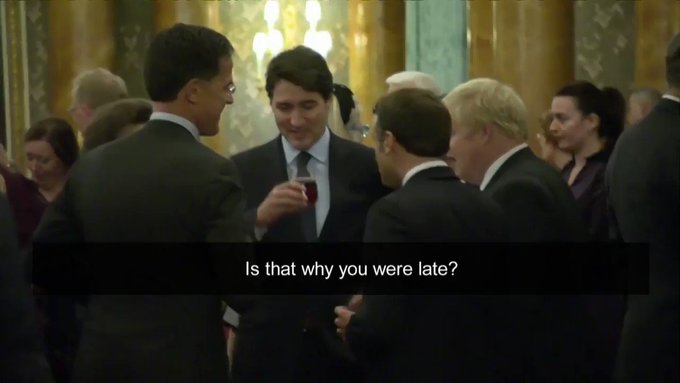


 Centinel2012