China Halts Refiners from Exporting Diesel and Gasoline


Posted originally on CTH on March 5, 2026 | Sundance 

An interesting reaction from Beijing highlights an evaluation of risk from the lack of oil flowing from Iran.

According to most evaluated data, China was buying more than 80% of Iran’s shipped oil. That’s according to data from 2025 as analyzed by Kpler and published in January by Reuters.

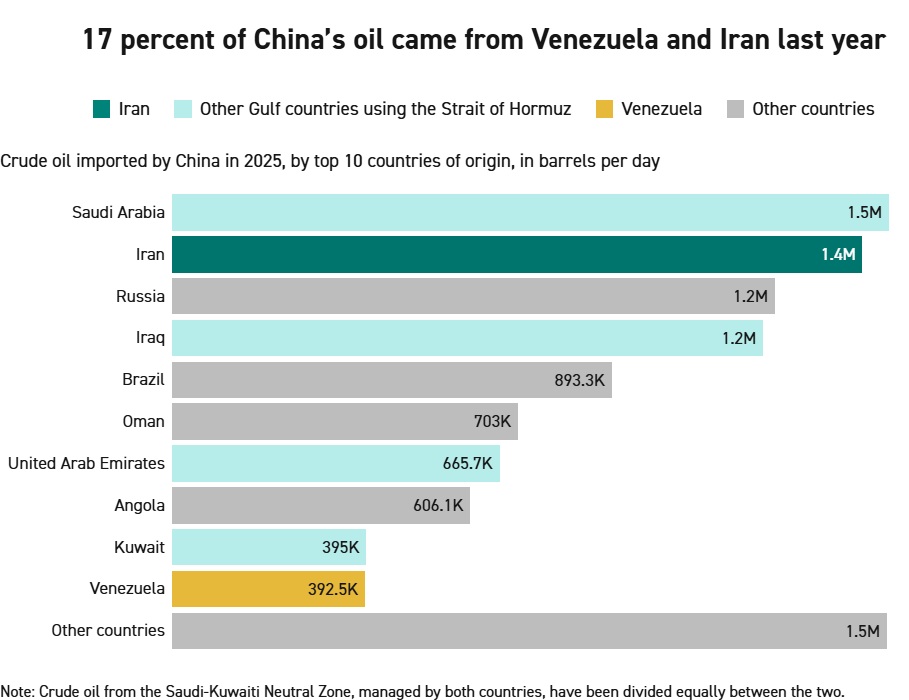
Iranian oil always had limited buyers due to U.S. sanctions. However, China purchased on average 1.38 million barrels per day of Iranian oil last year, according to Kpler. That represented about 13.4% of the total 10.27 million bpd of oil it imported by sea.

With President Trump previously cutting of discounted oil from Venezuela, two things unfolded.  First, the Venezuela oil was no longer sold with non-petrodollar currencies; Venezuela oil is now being sold on the standard oil market.  Secondly, with the Venezuela oil disrupted China would become even more dependent on Iranian oil shipments if they wanted to retain the discounted rate.

How big is the financial difference?  According to Reuters, “Iranian Light crude has traded at around $8 to $10 a barrel below ICE Brent on a delivered basis to China since December.” … “That means Chinese refiners save about $8 to $10 a barrel if they buy Iranian Light rather than non-sanctioned oil.”

Additionally, as noted before Operation Epic Fury began, “Iran has a record amount of oil on the water, equivalent to around 50 days of output, as China has bought less because of sanctions and Tehran seeks to protect its supplies from the risk of U.S. strikes, Kpler said.”

Buying discounted oil from Venezuela, Iran and Russia resulted in billions of dollars saved by China.  The only production venue not currently disrupted would be purchases from Moscow.  This increases the dependency, but the purchase price may no longer carry any discounted value, at least not at the previous rate.

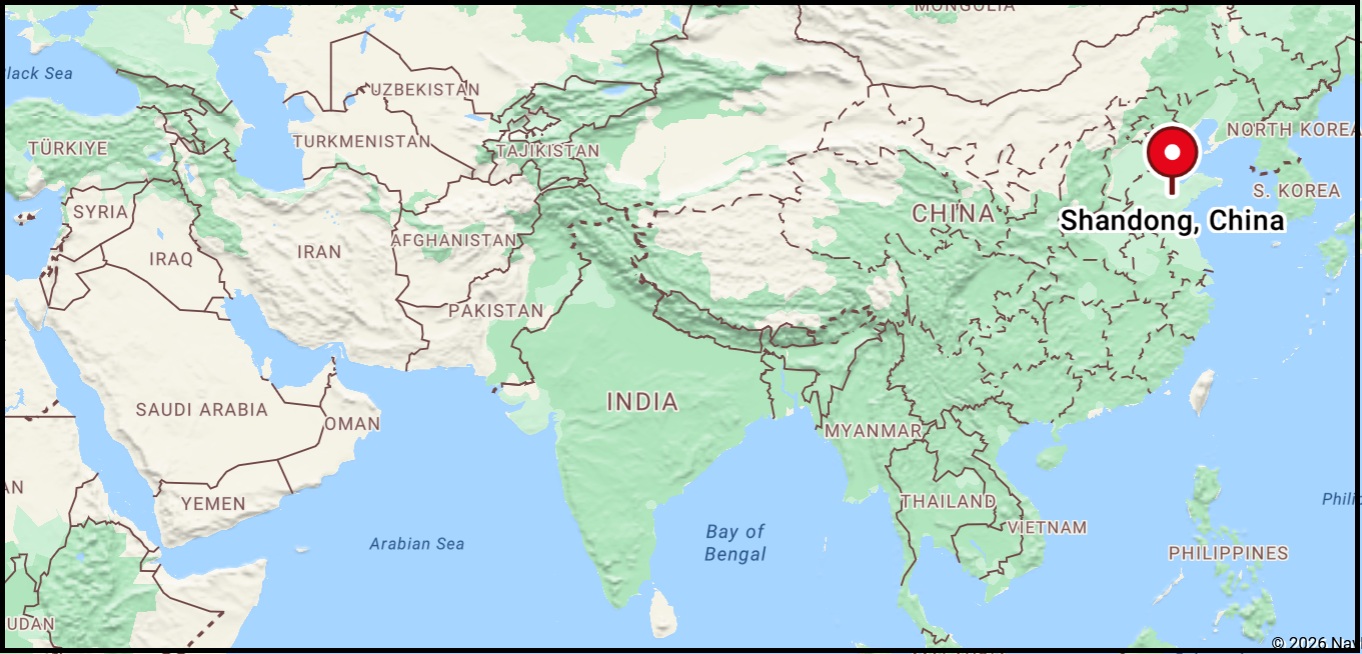
India was purchasing a significant amount of Russian oil for its own refinery use and sale back into the global market. China and India would now be bidding for what is likely a more valuable Russian export.  No more discounts put the “teapot” refining operations in Shandong, China, into a squeeze. This also highlights the decision by China to limit refined exports.

[VIA NBC] – China’s government has told the country’s largest oil refiners to suspend exports of diesel and gasoline as an escalating conflict in the Persian Gulf disrupts the arrival of crude from one of the world’s largest producing regions.

Officials from the National Development and Reform Commission, the country’s top economic planner, met refinery executives and verbally called for a temporary suspension of refined product shipments that would begin immediately, according to people familiar with the matter. They asked not to be named, as the discussions are not public.

The refiners were asked to stop signing new contracts and to negotiate the cancellation of already-agreed shipments. The people said. An exception was made for jet and bunker fuel held in bonded storage and supplies to Hong Kong and Macau, they added.

[…] China has a vast refining sector, but much of its production is funnelled to serve domestic demand, meaning it is not a critical supplier. Across Asia, it ranks third for seaborne exports, behind South Korea and Singapore. However, Beijing’s precautionary curbs reflect efforts across the import-dependent region to prioritise domestic needs as the crisis in the Middle East deepens. (read more)

President Trump Announces U.S. Insurance Underwriting for “All Maritime Trade Flowing Through the Gulf” Along with U.S. Military Escorts


Posted originally on CTH on March 3, 2026 | Sundance

♦ First blow, the Trump tariffs hit Beijing hardest. ♦ Second blow, the Beijing tentacle on the Panama Canal is severed.  ♦ Third blow, global tariff threats changed the risk dynamic for southeast Asia countries who acted as transnational shippers for China. ♦ Fourth blow, cheap sanctioned oil from Venezuela was cut-off. ♦ Now, the fifth blow; cheap, sanctioned Iranian oil is disrupted.

As noted by Politico: Following USA military strikes, “ships have begun to avoid the Strait of Hormuz off the coast of Iran — a critical shipping lane for Gulf nations to export oil to Asia. China in 2025 received about half of its imported oil from the six Gulf countries that rely on the strait. Other large crude oil producers in the region — including Saudi Arabia, Iraq and the United Arab Emirates — transport almost all their crude exports through the geographic bottleneck.

[SOURCE]

It’s not just a factor of oil flow, but also the price that China will ultimately end up having to pay.  Beijing was buying oil from Venezuela, Iran and Russia at steep discounts because their purchases were skirting western sanctions.

With Iranian oil production now no longer a market option, China will seek to replace their needs with more Russian alternative. However, that diversion means the oil India was purchasing from Russia will come at a higher price, and the refined final product that was exported by India will arrive to the European Union carrying an additional cost.

Simultaneously, Vladimir Putin was asked about Russia’s lack of military support to Iran in response to the U.S. military action, to wit the Russian president noted the technical terms of their joint military agreements did not include Russia’s immediate involvement.  In shorthand, Russia is busy and is not getting involved.

Russia was/is partially dependent on receiving military supplies from Iran in exchange for oil transfers.  The military component is reported to include drones from Iran for use in the Ukraine conflict.  Now that exchange profile is shuttered.

Taking Iran’s malign influence off the geopolitical chessboard is beginning to surface in major challenges to the BRICS assembly (Brazil, Russia, India, China, South Africa).  Russia, China and India are impacted directly.

The BRICS nations were skirting western oil sanctions by trading the commodity outside the petrodollar structure.  However, President Trump now controls the flow of oil from Venezuela, and his administration controls the currency in which it is sold.

With Iranian oil removed from the non-petro supply chain, the only remaining non-petro oil producer is Russia – who is simultaneously hit with a loss in military hardware support.  China may end up as a larger oil customer to Russia, but at what price and in what payment structure.

With global oil supplies in a state of flux, and with the USA in control of the oil flow from Venezuela, North America is certainly in the best position for minimal energy disruption.

Asia is heavily dependent on oil flows through the Strait of Hormuz, and the majority of Europe has already shut themselves off from Russian oil production, putting themselves in a position of dependency to the global markets.  The short-term ramifications of this oil disruption hit China, Southeast Asia, Japan and Europe particularly hard.

“OPEC+ countries affirmed on Sunday that they would boost oil production starting in April by 206,000 barrels daily — a modest increase intended to dampen the war’s effect on prices down the road. The majority of the increase would come from Saudi Arabia and Russia.” {SOURCE}

All of a sudden, this happens: Zelenskyy not to be trusted?

“Ukraine is under pressure to let the EU inspect a damaged pipeline carrying Russian oil to Hungary and Slovakia, as the two pro-Kremlin countries accuse Kyiv of overstating the impact of an attack by Moscow — despite what Ukrainian officials say is evidence of extensive destruction,” the report said.

According to five diplomats and EU officials who spoke to the FT, even pro‑Ukrainian governments within the European Union and the European Commission have also asked Ukraine to permit a delegation to inspect the pipeline. Two sources told the newspaper that European Commission President Ursula von der Leyen requested access for EU experts during her visit to Kyiv on Feb. 24, the fourth anniversary of Russia’s full-scale invasion. The request, according to the sources, was refused.

As tensions escalated, the EU’s ambassador to Ukraine, Katarina Mathernova, reportedly asked through the presidential office for permission to inspect the damaged pipeline herself or to allow visits by other EU diplomats. Those requests were denied for security reasons, the sources said.” (link)

T

Iran Conflict – Oil Disruption Hits Key BRICS Members Hard


Posted originally on CTH on March 3, 2026 | Sundance

Consider the severe economic body blows to China in the past 14 months.

♦ First blow, the Trump tariffs hit Beijing hardest. ♦ Second blow, the Beijing tentacle on the Panama Canal is severed.  ♦ Third blow, global tariff threats changed the risk dynamic for southeast Asia countries who acted as transnational shippers for China. ♦ Fourth blow, cheap sanctioned oil from Venezuela was cut-off. ♦ Now, the fifth blow; cheap, sanctioned Iranian oil is disrupted.

As noted by Politico: Following USA military strikes, “ships have begun to avoid the Strait of Hormuz off the coast of Iran — a critical shipping lane for Gulf nations to export oil to Asia. China in 2025 received about half of its imported oil from the six Gulf countries that rely on the strait. Other large crude oil producers in the region — including Saudi Arabia, Iraq and the United Arab Emirates — transport almost all their crude exports through the geographic bottleneck.

[SOURCE]

It’s not just a factor of oil flow, but also the price that China will ultimately end up having to pay.  Beijing was buying oil from Venezuela, Iran and Russia at steep discounts because their purchases were skirting western sanctions.

With Iranian oil production now no longer a market option, China will seek to replace their needs with more Russian alternative. However, that diversion means the oil India was purchasing from Russia will come at a higher price, and the refined final product that was exported by India will arrive to the European Union carrying an additional cost.

Simultaneously, Vladimir Putin was asked about Russia’s lack of military support to Iran in response to the U.S. military action, to wit the Russian president noted the technical terms of their joint military agreements did not include Russia’s immediate involvement.  In shorthand, Russia is busy and is not getting involved.

Russia was/is partially dependent on receiving military supplies from Iran in exchange for oil transfers.  The military component is reported to include drones from Iran for use in the Ukraine conflict.  Now that exchange profile is shuttered.

Taking Iran’s malign influence off the geopolitical chessboard is beginning to surface in major challenges to the BRICS assembly (Brazil, Russia, India, China, South Africa).  Russia, China and India are impacted directly.

The BRICS nations were skirting western oil sanctions by trading the commodity outside the petrodollar structure.  However, President Trump now controls the flow of oil from Venezuela, and his administration controls the currency in which it is sold.

With Iranian oil removed from the non-petro supply chain, the only remaining non-petro oil producer is Russia – who is simultaneously hit with a loss in military hardware support.  China may end up as a larger oil customer to Russia, but at what price and in what payment structure.

With global oil supplies in a state of flux, and with the USA in control of the oil flow from Venezuela, North America is certainly in the best position for minimal energy disruption.

Asia is heavily dependent on oil flows through the Strait of Hormuz, and the majority of Europe has already shut themselves off from Russian oil production, putting themselves in a position of dependency to the global markets.  The short-term ramifications of this oil disruption hit China, Southeast Asia, Japan and Europe particularly hard.

“OPEC+ countries affirmed on Sunday that they would boost oil production starting in April by 206,000 barrels daily — a modest increase intended to dampen the war’s effect on prices down the road. The majority of the increase would come from Saudi Arabia and Russia.” {SOURCE}

All of a sudden, this happens: Zelenskyy not to be trusted?

“Ukraine is under pressure to let the EU inspect a damaged pipeline carrying Russian oil to Hungary and Slovakia, as the two pro-Kremlin countries accuse Kyiv of overstating the impact of an attack by Moscow — despite what Ukrainian officials say is evidence of extensive destruction,” the report said.

According to five diplomats and EU officials who spoke to the FT, even pro‑Ukrainian governments within the European Union and the European Commission have also asked Ukraine to permit a delegation to inspect the pipeline. Two sources told the newspaper that European Commission President Ursula von der Leyen requested access for EU experts during her visit to Kyiv on Feb. 24, the fourth anniversary of Russia’s full-scale invasion. The request, according to the sources, was refused.

As tensions escalated, the EU’s ambassador to Ukraine, Katarina Mathernova, reportedly asked through the presidential office for permission to inspect the damaged pipeline herself or to allow visits by other EU diplomats. Those requests were denied for security reasons, the sources said.” (link)

Giddy Up – USTR Jamieson Greer and Mexican Secretary of Economy Marcelo Ebrard Begin Formal Trade Negotiations


Posted originally on CTH on January 28, 2026 | Sundance 

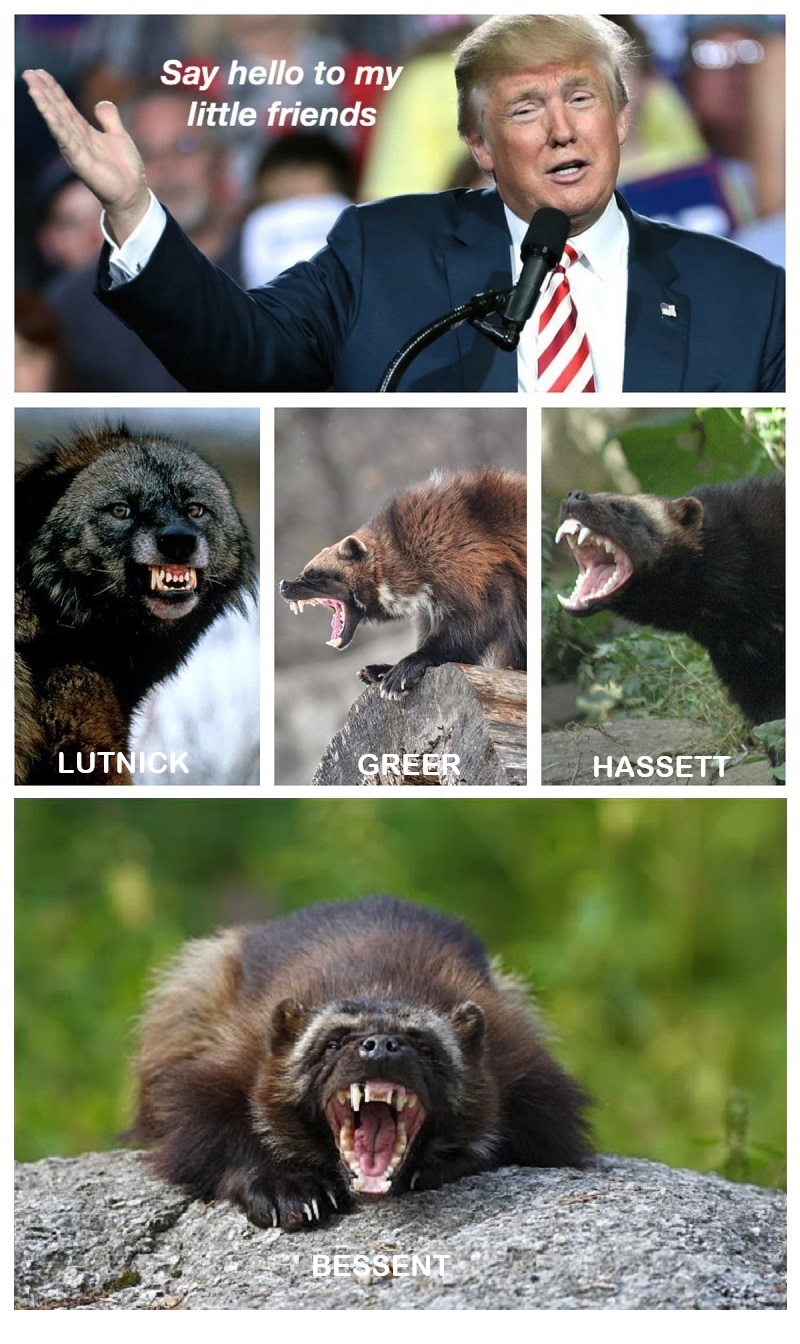
Here we go.  If you’ve been under the Treehouse branches for more than a few months, it is now officially time to pull up a rock take a front row seat and enjoy the show.  Don’t draw attention to yourself; however, please do bring your favorite beverage, relax and watch what no one else will admit is happening.  The 2026 operation to exit the USMCA is officially underway.

While the Snow Mexicans are gnashing their teeth talking about feelings and various shiny things, United States Trade Representative Jamieson Greer is meeting today with Mexican Secretary of Economy Marcelo Ebrard to strategize the best approach for a U.S-Mexican bilateral free trade agreement.

Please remember, in order to fully appreciate the moment, we must allow all negotiation pretenses to remain in place, giving the illusion of something that will no longer be present when the end goal is reached.

Jan 28 (Reuters) – U.S. Trade Representative Jamieson Greer and Mexican Secretary of Economy Marcelo Ebrard agreed during a meeting on Wednesday to begin formal discussions on possible reforms to the United States-Mexico-Canada trade agreement, Greer’s office said.

Possible reforms include stronger rules of origin for key industrial goods, more collaboration on critical minerals, increasing efforts to defend workers and producers, and efforts to combat dumping of manufactured goods, the USTR’s office said in a statement. (LINK)

As we noted at the end of last year, splitting the USMCA into two bilateral trade deals, one for Mexico and one for Canada, will be one of the most interesting and long-term economically significant moves in U.S. trade history.  It is going to be a lot of fun to watch these negotiations, and the pre-positioning gives us a preview of what is to come.

Mexico is doing everything almost perfectly in preparation for their bilateral deal.  Canada is doing exactly the opposite and positioning themselves for the worst possible outcome of a deal with the USA.  The disparity in approaches is so different, even now it is remarkable to watch.

President Trump is establishing an entirely new economic, trade and finance system. The era of the Marshal Plan is over; it has been factually deconstructed in the past 12 months.

Canadians and Europeans are desperately trying to offset the ramifications, hold on to their economic benefits and find a new mechanism to afford the domestic indulgences now eliminated by President Trump.

Needing alternatives for their economies, the EU and Canada are looking to India and China respectively as a financial offset.  Meanwhile, so far, Mexico is playing it smarter….

The India-EU Trade Deal


Posted originally on Jan 28, 2026 by Martin Armstrong |  

euindia

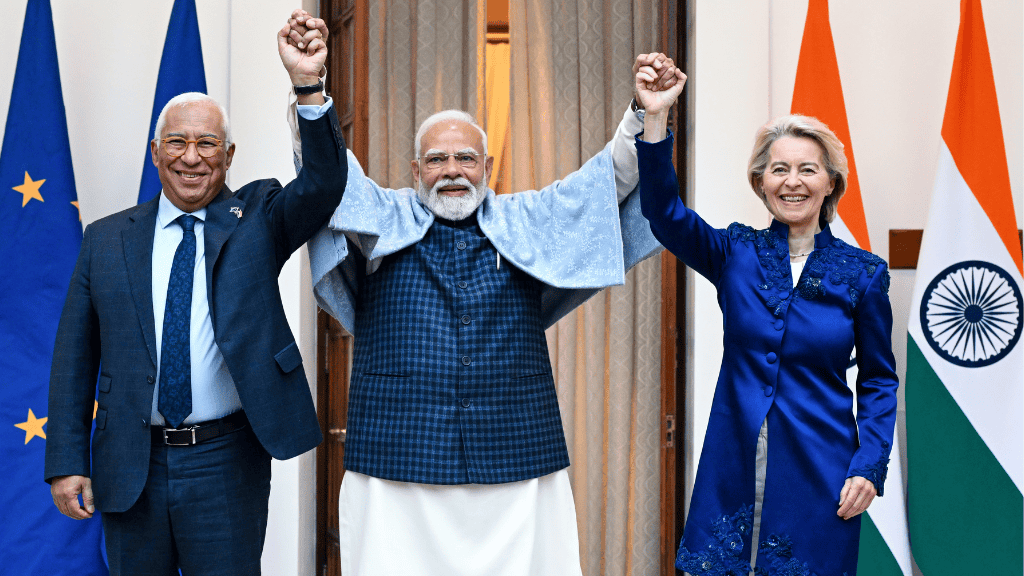
Deemed the “mother of all deals” by Commission President Ursula von der Leyen, India and the European Union signed a historic trade agreement that will permit near free trade between the two economies. The EU plans to phase out tariffs on Indian goods by up to 95% over a multi-year period. India will begin phasing out tariffs on EU-dominated imports. The proposed India–EU trade agreement is being promoted as a strategic breakthrough, but in reality it reflects Europe’s growing isolation rather than strength.

Total services between the two economies have been rapidly increasing from the €26 billion spent in 2023 to the estimated €120 billion today. Reduced restrictions will permit services to continue expanding. The EU primarily imports machinery and electrical equipment, chemicals, and transport equipment to India.

The EU has angered its top trading partner in the process. “The U.S. has made much bigger sacrifices than Europeans have. We have put 25% tariffs on India for buying Russian oil. Guess what happened last week? The Europeans signed a trade deal with India,” US Treasury Secretary Bessent told ABC News Sunday.

China came out earlier in the week to publicly praise its relations with India. India’s neutrality politically has caused it to become indispensable in the global marketplace. Most nations turned to India to bypass Russian energy sanctions, and now, they are turning to India to bypass tariffs and political uncertainty.

From India’s perspective, this deal is about leverage, not partnership. India gains access where it wants it, while carefully protecting its domestic industries. Europe, meanwhile, is trying to replace what it lost with Russia and China by pivoting to India without changing the policies that caused the damage in the first place. Europe’s problem is not a lack of trade agreements. The problem is that confidence in government is collapsing, and capital follows confidence.

Non-tariff barriers, regulatory obstacles, carbon taxes, ESG compliance, and digital rules are all designed to protect Europe’s internal market while demanding open access abroad. India noted that these areas have made preliminary discussions extremely difficult. You cannot tax, regulate, sanction, and militarize your economy and then expect trade deals to reverse capital flight.

The Economic Confidence Model has consistently warned that Europe would fracture economically before it ever unified politically. The EU can now sell in India, but so can other economies that may have a competitive advantage due to a lack of regulatory and political pressures from a centralized control powerhouse. India has come out on top yet again.

Big Picture: President Trump and Trade Using the Art of the Self-Fulfilling Prophecy


Posted originally on CTH on January 27, 2026 | Sundance

People might be interested in the recent stories of Canadian Premier Doug Ford and his reversal of position on Chinese EV production. Ontario Premier Ford now welcomes Chinese EVs into Canada.

Or people might be interested in the recent story of the EU announcing a historic trade deal with India. The European Union is now looking to find new markets to replace the U.S., while simultaneously agreeing to establish a new immigration/recruitment process to accept massive numbers of Indian migrants.

Yes, Canada reverses their position on trade with China, that’s odd. And somehow the EU immediately forgets their demands for India to stop buying Russian oil or face EU sanctions, another oddity.  This is like watching someone you don’t like, get engaged to your smelly, fat ex-girlfriend. [Matthew 15:14]

Canada and the EU take trade and economic positions seemingly against U.S. interests. Simultaneously Mexico modifies all their trade positions to come into alignment with the USA. Yesterday, Mexican President Claudia Sheinbaum announced Mexico will no longer ship oil to Cuba.

What’s going on?

Well, to really understand what is happening you need to look at President Trump’s responses to all of the individual issues outlined above and take a much bigger picture view.  President Trump is the master of the ‘self-fulfilling prophecy.’

♦ CANADA – When President Trump was asked about Prime Minister Mark Carney creating a new trade agreement with China, President Trump responded that he didn’t care – it was irrelevant to him.  Yet, simultaneously inside the USMCA President Trump has the power to veto any trade agreement between Mexico or Canada and a non-member nation.

So, why didn’t President Trump care?  Easy, because in President Trump’s mind there’s not going to be a USMCA; so, he really doesn’t care if Canada runs to violate it.  In real terms, Canada doing bilateral deals with other countries, especially deals potentially detrimental to the USA, only strengthens his position on dissolving the USMCA.

If Canada violates the terms and spirit of the USMCA, it makes dispatch of the unliked trade agreement even easier.  Canada is helping President Trump remove the congressional justification they could use to block him.  If Canada is violating the USMCA (CUSMA), Congress is kneecapped from interference.

Provoking Canada into a trade position, that puts them at a disadvantage trying to stop the dissolution of the CUSMA, stops Congress from opposing the fracture, and then opens the door to a bilateral trade agreement, is creating a self-fulfilling prophecy that is entirely controlled by President Donald Trump.

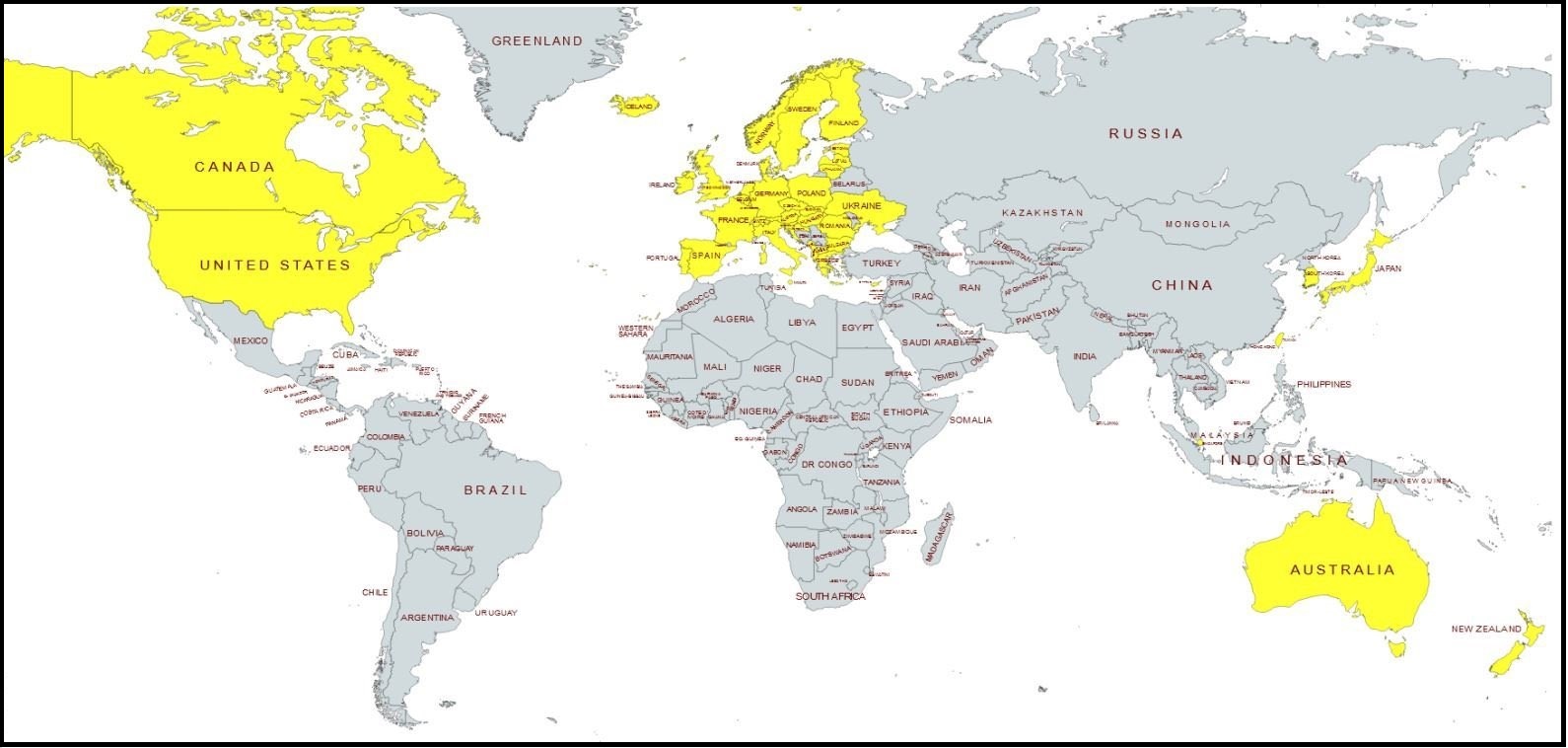
[I pointed this out on the ‘Russian Sanctions’ map four years ago for a reason.] 

♦ EUROPE – In the last few months, the EU has been pressuring President Trump to join them in putting sanctions against India for purchasing Russian oil.  Suddenly, all those Russian energy issues are dropped, and the EU signs a trade agreement with India.  Again, just like with Canada, President Trump doesn’t care; he’s working on a much bigger objective.

Both Canada and Europe are independently, out of necessity, taking action that takes apart the trade and economic system they created.  At the core of the old trade system both Canada and Europe were exploiting the USA, exfiltrating wealth and skimming the independent entrepreneurial innovation that originates from within the U.S. economic system.

That necessary exploitation happened because the USA is innovative (freedom-based capitalism), while the CA/EU system is built on government control mechanisms.  The CA/EU energy policy is just one impactful example of their pontificating inability to be insightful when it comes to consequences.  The EU and Canada are now stuck looking for markets that will do the dirty jobs, provide them with core components, while simultaneously looking for markets for their finished products.

On the other side of the approach is President Trump, working to expand U.S. industrial dirty job capacity, create our own core components, then create finished goods entirely on our own.  A complete revitalization of the U.S. industrial and manufacturing base.  Our U.S. GDP is currently expected to grow north of 5%.  This is not happening by accident.

Additionally, EU Commission President Ursula von der Leyen is not bragging about importing Indian IT workers in a vacuum.  If the EU cannot skim off the IT capabilities of America, they have to find another Braintrust to tap.  Just like the innovative dependencies of China, the EU is intellectually frigid; compliance is ingrained in their academia.  Within the USA, we still have foundational disposition of ‘screw you‘ in our DNA.

Look at the advancements of Artificial Intelligence, or AI. All of the growth in that tech sector is being led by America. President Trump is taking every approach to ensure we remain the world’s dominant power in AI development. As much as Elon Musk’s quirks and quasi-friendly politics annoys me personally, strategically, on the technology side, it’s good to see him chumming around with President Trump; at least that’s what I tell myself.

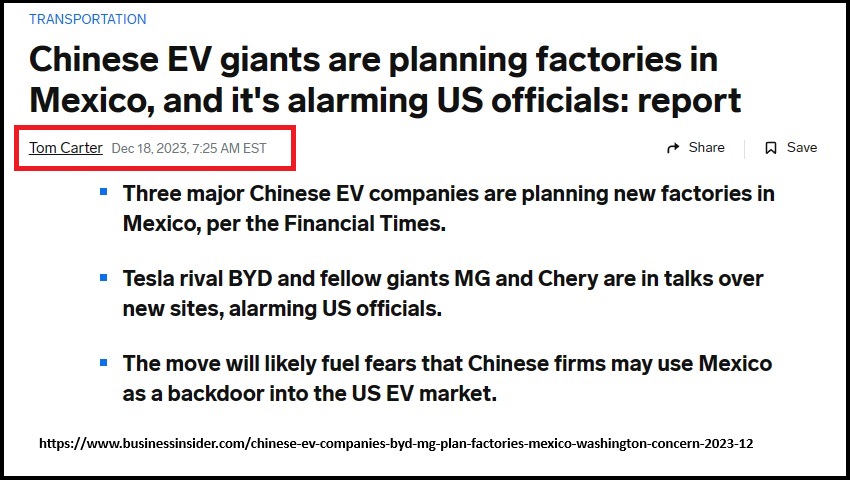
♦ MEXICO – This is where it gets really, super interesting.  You might remember that China was set to invest between $5 billion and $10 billion (total) in Mexico for EV auto manufacturing.  In December of 2023, three Chinese auto manufacturers, MG, BYD, and Chery, announced they were going to spend billions building new EV manufacturing plants.  Each Chinese manufacturer was initially going to spend between $1.5 to $2.0 billion.  By March 2024, the reasoning was evident – Biden was supporting it.

When President Trump won the November 2024 election, all of those Chinese investments and plans inside Mexico were cancelled.

As we noted at the end of last year, splitting the USMCA into two bilateral trade deals, one for Mexico and one for Canada, will be one of the most interesting and long-term economically significant moves in U.S. trade history.  It is going to be a lot of fun to watch these negotiations, and the pre-positioning gives us a preview of what is to come.  Mexico is doing everything almost perfectly in preparation for their bilateral deal, including their stopping of oil shipments to Cuba.

This alignment follows the Mexican government passing a sweeping set of tariffs against Chinese imports. The Mexican government, led by Sheinbaum, made moves throughout 2025 to stay in alignment with a favorable U.S. trade agreement.  Meanwhile, the Canadian government, led by Mark Carney, has been more antagonistic and positioning Canada to lose badly.

♦ SUMMARY: Some people have construed the bilateral trade preference of President Trump to be the elimination of globalism in favor of nationalism in trade agreements. While the outcome of Trump’s approach indeed aligns with that theme, it is not specifically the objective of President Trump to eliminate global trade, but rather to focus on specific interests in trade that benefit the unique nature of each party involved.

Canada can embrace China, and Europe can embrace India; in the bigger picture it really doesn’t matter.  These relationships only create dependencies which are the natural outcome of globalism.  From President Trump’s position, what really matters is what happens within our borders and how the United States economy is positioned.  This is President Trump’s singular focus.

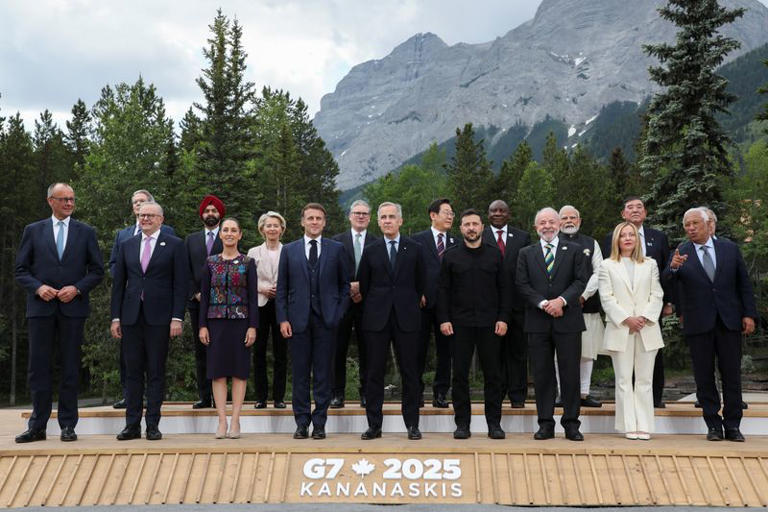
Do you remember President Trump leaving the 2025 G7 meeting in Canada early? The final day invitation list brought Australia, Mexico, Ukraine, South Korea, South Africa, India, the United Nations and the World Bank into the G7.  President Donald Trump smartly exited the G7 assembly a day early, he departed before that crowd of interests arrived.  The world leaders came because the process to keep USA wealth inside the USA is against their interests.  That’s why they came, and that’s why President Trump left.

Globalism, in its economic construct, is a series of dependencies. However, the opposite is also true. If nations are not dependent, they are sovereign – able to exist without the need for support from other nations and systems. If nations are sovereign, then globalism is no longer needed. If each nation of the world is operating according to its individual best interests, the position of Donald Trump, then what happens to the governing elite who set up the system of interdependencies?

“G7”?

India Allegedly Halts Russian Gas Imports


Posted originally on Nov 18, 2025 by Martin Armstrong |  

Oil Production Crude Energy 1

India has caved to US demands to stop buying Russian oil, allegedly. The White House reported that Prime Minister Narendra Modi committed to halting purchases, but India’s government has not confirmed these claims or made any public declaration.

Indian Union Minister of Petroleum and Natural Gas, Hardeep Singh Puri, confirmed India’s commitment to purchase more oil from the US, which will now supply the nation with 10% of all liquefied petroleum gas (LPG) imports. This marks the first structured contract for US LPG in India. State-owned oil companies have signed a short 1-year deal to import 2.2 million tonnes of LPG from the Gulf Coast.

The deal is mutually beneficial. Hardeep Singh Puri worded the agreement as almost a favor to the US. India does not produce enough petroleum to meet domestic needs and relies heavily on imports. LPG Mont Belvieu is up to 20% cheaper from the US than Saudi Arabia or the UAE. At $673/MT, the US is offering a bargain compared to global prices. LPG can be highly volatile, and many view this as a sign of energy stability from the US. India will still diversify its imports to avoid complete US dependency.

https://platform.twitter.com/embed/Tweet.html?dnt=true&embedId=twitter-widget-0&features=e30%3D&frame=false&hideCard=false&hideThread=false&id=1990264405108670828&lang=en&origin=https%3A%2F%2Fwww.armstrongeconomics.com%2Fworld-news%2Fworld-trade%2Findia-allegedly-halts-russian-gas-imports%2F&sessionId=be4591f711408a570a51ff36cbd5a5df59f63a98&theme=light&widgetsVersion=2615f7e52b7e0%3A1702314776716&width=500px

The US will begin to sanction Russian oil companies Lukoil and Rosneft on November 21, 2025. Reliance Industries and other major state-run Indian companies have sharply increased their purchases of Russian oil in the weeks leading up to sanctions.

US-India trade has been volatile since August, when President Trump placed a 50% tariff on Indian goods, downplaying the nation’s role as a trade partner, and chalking up half of the reciprocal tariff price to India’s reliance on Russian energy. Indian Commerce Minister Piyush Goyal has attempted to smooth over relations, agreeing to increase US imports in the coming years. “And being close friends, natural partners, our energy security goals will have a very high element of US involvement,” the Indian minister had said.

The BRICS member has been playing a delicate balancing act with the US and Russia since 2022. Perhaps no other nation has profited more from this war in the short term than India, which has used its neutrality to its advantage. It remains to be seen whether India will permanently halt Russian gas imports, but for now, the US is appeased with the current deal.

President Trump Participates in Swearing-In Ceremony for Ambassador Sergio Gor – Media Q&A


Posted originally on CTH on November 10, 2025 | Sundance 

Earlier today President Donald Trump participated in an oval office swearing in ceremony for US Ambassador to India, Sergio Gor.  Ambassador Gor was sworn in by Vice-President JD Vance (prompted) and then President Trump took questions from the assembled press pool (13:41).  WATCH: 

.

The Four Powers Aligning


Posted originally on Oct 15, 2024 By Martin Armstrong 

Kim Jong un Rocket

COMMENT: Marty, you have been spot on. North Korea, China, and Iran are banning together with Russia. What you have laid out is basic common sense. The ancient saying the enemy of my enemy is my friend. I don’t understand how common sense seems to be no so common certainly among our journalists who appear to be promoting war all the time.

Gerry

REPLY: The news is now touting that North Korea has sent troops to fight alongside Russia in Ukraine. When we do this, they are labelled “advisers” not troops. They are helping to operate the launchers for North Korean ballistic missile systems that Pyongyang has supplied to Moscow. There are also Brits there as “advisers” assisting in the same targeting of UK weapons. This is how the media flips things. If North Korean is sending “troops” then that justifies America sending in troops rather than just advisers who provide the target data to strike inside Russia and Russian ships in the Black Sea.

North Korea has been preparing for war with the South constructing a border wall and they are completely severing road and rail ties with the South. Kim Jong Un for the first time openly rejected the goal of an eventual reconciliation or reunification between the two countries. He now sees the South as the enemy. That is a significant departure. This is a project that is preparing for another Korean War and as I have warned, a coordinated attack with China vs Taiwan, Russia takes out Kiev, and Iran sends troops to attack Israel, and you begin to see that these four powers can overwhelm Western forces.

Our Neocons are out of their minds. The mere fact that Dick Cheney is supporting Kamala is confirmation alone this election is all about World War III.  They have staged a coup under Biden of Foreign Policy and this is why they are all supporting Kamala. The presumed the average American is just too stupid to pay attention while the guys are cheering sport and women are protesting abortion, they slide World War III into play on the most dangerous level in human history. NEVER do they consider perhaps they might be wrong and they lost once again as they have lost EVERY war since World War II.

The New G8


Armstrong Economics Blog/Politics Re-Posted Jun 16, 2022 by Martin Armstrong

Russia has created a new alliance that many are calling the “new G8.” Russia was expelled from the original Group of Eight in March 2014, following the annexation of Crimea. Russia stated that it did not care about the snub. “All the economic and financial questions are decided in G20, and G8 has the purpose of existence as the forum of dialogue between the leading Western countries and Russia,” Russian Foreign Minister Sergey Lavrov stated. There is no dialogue between the major Western superpowers in Russia at this point in time. Former President Obama’s ambassador to Russia, Michael McFaul, went as far as saying that the West must insure Russia has “no real allies.”

Due to backfiring sanctions, Russia certainly does have allies and has created a new G8 for good measure. Vyacheslav Volodin, head of the State Duma, stated the following:

“The economies of the United States, Japan, Germany, Britain, France, Italy, and Canada continue to collapse under the pressure of sanctions against Russia.

The breakup of existing economic relations by Washington and its allies has led to the formation of new points of growth in the world.

The group of eight countries that do not take part in the sanctions wars – China, India, Russia, Indonesia, Brazil, Mexico, Iran, Turkey – is 24.4 per cent ahead of the old group in terms of GDP per capita.”

Volodin said that the seven named countries are interested in developing “mutually beneficial relations with Russia,” and have already seen economic progress despite ongoing sanctions. Putin has also said that he would like to collaborate with emerging economies such as certain African nations that are “still sleeping, but about to wake up.”

The plan to divorce Russia from the world economy has backfired. Russia is increasing its international partnerships and trade as a direct result of the policies aimed at isolating it from the world.