In Shakespeare’s play Julius Caesar, Mark Antony says in Act 3, Scene 1, line 273: “Cry ‘Havoc!’, and let slip the dogs of war”. What is truly astonishing is how the Democrats and CNN hate Trump so much they are praising Kim Jung Un and made him the hero an are actually saying he is more responsible than Trump. This is really just unbelievable how partisan politics has come to this.
The agenda of the Democrats and CNN is rather startling. They are supporting North Korea – not the United States. I do not think this has ever happened in the history of this nation. Democrat Congressman Keith Ellison of Minnesota, who is the deputy chair of the Democratic National Committee, said that Kim Jong Un is more responsible than Trump.
“You have this guy making bellicose threats against somebody else who has very little to lose over there. Kim Jong-un, the world always thought he was not a responsible leader well he’s acting more responsible than this guy is. And what I’m telling you is once you start seeing missile launches, you’re going to see—the time for cranking up the anti-war machine is right now. So if you don’t want to get caught, deer-in-the-headlights, start calling for diplomacy in North Korea immediately.”
If anyone is going to start a war, it will be the Democrats and CNN who keep putting politics ahead of the national security of the country and the world. North Korea’s threat to launch four intermediate-range ballistic missiles into the ocean near Guam I have stated would be a huge risk for North Korea. This will mark the first combat test of the most sophisticated missile defense systems of the United States and its Asian allies known as the Terminal High Altitude Area Defense system, or Thaad. You can bet both Russia and China are hoping Kim is that stupid because they would love to see a test of this system live.
The launches would take just 17 minutes to reach their targets as the Hwasong-12 missile has a maximum range of 3,000 miles. North Korea’s Hwasong-12 missiles might fail, or the United States or its allies could destroy them even on the launchpad once they go hot. True, United States might also decide to do nothing and let the missiles splash harmlessly into the sea, but that would waste a fantastic opportunity to show the world the system is ready.
If Kim’s Hwasong-12s do make it off the ground, then the focus on stopping them will rely on hitting them on the way down, known as the “terminal” phase, rather than on their way up known as the “boost phase.” They are a liquid-fueled missile with a maximum range of 3,000 miles, but they reach a maximum altitude of about 470 miles. The velocity exceeds the speed of sound many times within just one minute. This is why it is impossible to shoot it down during the “boost phase.”
Once the Hwasong-12’s booster burns out ending the “boost phase” reaching the edges of the Earth’s atmosphere, it ceases to accelerate. This is the tricky part of the missile’s trajectory is called “midcourse.” This is actually the most difficult time for an interception, because a it can release decoy balloons that are hard to distinguish from the real thing. The United States and its Allies have SM-3 missiles designed for ballistic missile defense, which can hit intermediate-range missiles in midcourse.
However, to use an SM-3 IIA against missile targets in space requires the SM-3 to be closer to Guam not Japan or South Korea. The primary existing system to stop intercontinental ballistic missiles is deployed to protect the continental United States known as Ground-Based Midcourse Defense, which is based in Alaska and California. This would not be able to stop a missile targeting Guam. This system has not really been successful in all attempts.
Therefore, Kim could target the mid-Pacific. If the USA has an SM-3 to launch in that region that could target the “Terminal Phase”, then Kim could look very stupid. This is a high stakes game of politics with no real risk of life but ego.
Zogby Analytics is out with a new survey of 1,300 “Likely Voters” and shows President Trump’s approval numbers are climbing and now around 45%. However, the interesting aspect of the survey is the groups showing the highest gains in approval.
It won’t surprise you to discover the strongest gains in support for President Trump can be found amid the middle-class and working population of the U.S. Those who are benefiting the most from Trump’s America-First Main Street economic policy are the constituent group with the largest gains in support.
♦Trump’s approval numbers have moved up slightly, especially among his base and a few other sub-groups not known for their support of the president.
♦When it comes to party, President Trump’s numbers are steady among Republican likely voters; he has a 76% approval/22% disapproval rating among Republicans, which is almost identical from our July poll. Among Independents, Trumps numbers have improved nearly seven points to 40% approval/50% disapproval. The president’s numbers are still down among Independents from a few months ago.
♦Trump’s numbers improved with Asian American voters surveyed; Trump’s approval stands at 43% approve and 55% who disapprove.
♦Trump saw one the biggest improvements among any sub-group with Hispanics; his approval increased 11% to 42% approval versus 55% who disapprove of Trump’s job as president.
♦When it comes to where voters live, large city voters-population >100k (39% approve/58% disapprove) and small city voters (44% approve/51% disapprove) are more likely to disapprove of President Trump. Small City voters (population less than 100k) were the largest increase in approval for Trum among sub-groups, with a 12% gain in approval since July. Trump does slightly better in the suburbs–47% approve/48% disapprove and he remains popular in the rural areas with 50% approve/44% disapprove.
♦Trump also continues to get higher marks among married voters-53% approve/43% disapprove versus single voters-31%approve/61% disapprove; homeowners-50% approve/47% disapprove versus renters-35% approve/59% disapprove, while NASCAR fans-58% approve/37% disapprove and Weekly Walmart shoppers-55% approve/43% disapprove.
♦Trump’s numbers also increased significantly among union voters from 43% approval to 51% approval in August. (full poll link)
These results don’t look good for the Democrat opposition party who see the largest part of their historic constituency benefiting immensely from President Trump. It is no wonder the DNC and Democrat Leadership are now trying to steal President Trump’s middle-class economic platform.
Apparently CTH and Asian expert Gordon Chang are on the same intellectual page in analysis of the ongoing North Korea issues. In this interview Mr. Chang outlines the dynamic between U.S. President Trump, North Korean President Kim Yong-un and Chinese President Xi Jinping.
Gordon Chang also agrees that mounting economic pressure on China will be the pathway to getting the DPRK into line.
.
The North Korean commentariat today has all been centered around a “response” to a precipitous strike by the United States. As previously outlined by Secretary Tillerson, via the “four no’s”, and backed up by the entire U.S. policy team, there is no intent on the U.S. to initiate a North Korean regime change. That leverage approach is China’s to utilize; while we hold China accountable.
When we initially read this article yesterday our review began with an earnest and sincere effort to understand the concerns amid the career bureaucrats in the U.S. State Department; and also to understand the overall cultural climate that would need Secretary Tillerson’s Deputy Secretary of State John Sullivan to spend an inordinate amount of time trying to calm these officials….
WASHINGTON (Reuters) – The No. 2 U.S. diplomat on Tuesday sought to allay concerns among the State Department’s rank-and-file employees over possible layoffs and perceptions of a lack of firm direction under the administration of President Donald Trump. (more)
…After all, this has to be about the eleventyth time either Secretary Tillerson or Deputy Sullivan has addressed these ‘climate assessment’ issues. It was less than a week prior to this latest effort by Sullivan when Tillerson himself was talking to the department.
I mean seriously, how much “talking to‘ could one organization need? These are obviously some seriously needy people. Then again, we’ve long discussed the overall liberal perspectives within the department; so the most entrenched liberalism inside government is definitively inside the Department of State.
These are, as we have always accepted, generational and career liberals.
The State Department is the furthest left of an entire governmental enterprise that is based on upward personnel evaluations the further an individual moves left ideologically.
To encapsulate, the article within Reuters winds through layers of internal employee concerns and ends with the following paragraph:
[…] In response to a question from an employee about State Department efforts for gay and lesbian couples posted abroad, Sullivan told employees he would do everything he can to make sure everyone is treated fairly, a remark that drew strong applause, one of the officials said. (link)
Nevermind.
Just close the entire department and start over.
It’s hopeless.
I cannot fathom the level of patience Secretary Rex Tillerson must possess to come from a private sector based on excellence and accountability, and yet work within such a dysfunctional snowflake culture of mediocrity and blame-casting.
I have warned in the Cycle of War reports that for whatever reason, August is always the number one period where war tends to begin. Indeed, the world is holding its breath as fears rise with the crisis over North Korea potentially escalating in to global war after Donald Trump and Kim Jong-un made threats to trade missile strikes. The two key dates on our war model with North Korea to watch are August 12/13, 2017 and September 11/12, 2017. We must be on guard for these are the prime periods where a confrontation could emerge.
Pyongyang’s volatile dictator Kim Jong-un has warned he was ‘carefully examining‘ plans to make ‘an enveloping fire’ around the US island of Guam which is home to about 163,000 people and an important American military base. He made these comments following Donald Trump’s apocalyptic warning that North Korea faces ‘fire and fury like the world has never seen‘ over its nuclear program.
The US then released images of supersonic bombers flying over the Korean peninsula.Then Kim Jong-un said the training mission ‘proves that the U.S. imperialists are nuclear war maniacs‘. Kim, loves to boast that his intercontinental rockets can reach the west coast of America declaring that the US would ‘pay dearly‘ for UN sanctions it successfully imposed with the support for the first time of China and Russia. In fact, Trump has managed to do what no president has done before – get the cooperation of both China and Russia. Nixon opened the door to China as a counter-measure against Russia – the old divide and conquer tactic. But Trump has pulled off a real politic coup globally despite CNN and Congress.
Beijing has joined Trump and staged ‘large-scale‘ military exercises with dozens of warships, fighter jets and submarines adjacent to the Korean Peninsula on Monday. They have also moved 150,000 troops to its border with North Korea. Meanwhile, Russia moved military equipment including helicopters and combat vehicles to its southern frontier with North Korea. Putin has displayed its own massive military strength at a war games event in Siberia with a huge Navy Day parade in Vladivostok – about 100 miles from North Korean territory.
So why are these two dates coming up on our computer? The division of Korea between North and South Korea was the result of the allied victory in World War II in 1945, ending the Empire of Japan’s 35-year rule of Korea. The United States and the Soviet Union occupied the country, with the boundary between their zones of control along the 38th parallel. The United States supported the South, and the Soviet Union supported the North, and each government claimed sovereignty over the whole Korean peninsula. American troops occupy southern Korea, while the Soviet Union occupies the north, with the dividing line being the 38th parallel of latitude, which was established on September 8th, 1945 (1945,68). This arrangement proves to be the indirect beginning of a divided Korea which will lead to the Korean War in 1950.
The Korean War (1950–1953) left the two Koreas separated by the Korean Demilitarized Zone (DMZ) in the later part of the Cold War and beyond. However, the collapse of the Soviet Union in 1991 deprived North Korea of its main source of economic aid. Without Soviet aid, North Korea’s economy went into an economic free-fall in 1992 pretty much in line with the Economic Confidence Model calculated from the birth of the 38th Parallel.
At our Hong Kong WEC I went through the markets are illustrated that August would be the key turning point. The computer need not comprehend the fundamentals. It interlaces everything globally to product the result for turning points. This is just a time we need to be on guard about market reactions. (see private Blog Post later today)
During a Monday Rotary Club meeting in Kentucky senate Majority Leader Mitch McConnell took questions from audience members who asked McConnell to explain why Republican lawmakers have been unable to deliver major legislative accomplishments for the president.
Senator McConnell responded by saying President Trump’s expectations are too high.
“I’d ask for a show of hands, but I know everybody’s saying, ‘been there, haven’t done anything,’ which I find extremely irritating — and I’m going to tell you why. A Congress goes on for two years. Part of the reason I think that the storyline is that we haven’t done much is because, in part, the president and others have set these early timelines about things need to be done by a certain point.”
“Our new president, of course, has not been in this line of work before, and I think had excessive expectations about how quickly things happen in the Democratic process.”
Fortunately, this ridiculously elitist and arrogant establishment tone will likely not play well. This, along with a host of other ridiculous comments and realities could doom Luther Strange in the upcoming Alabama special election. Luther Strange is the loyal Decepticon favorite of Mitch McConnell and Karl Rove. Mo Brooks and Roy Moore are more aligned with President Trump.
We’ll see. The red dragon has a tendency to say one thing publicly and manipulate another thing privately. However, the baseline for China to take the role of Big Panda is the reception of Secretary Rex Tillerson’s “Four No” remarks on North Korea during his State Department briefing.
TILLERSON”S FOUR NO’S: The United States does not seek •regime change, •the collapse of the regime, •an accelerated reunification of the peninsula or •an excuse to send the U.S. military into North Korea.
So long as the ‘four-no’s’ remain visible and discussed in the international dialogue, the options for China are to comply or to be called out as a deceiving enabler. The economic consequences for China to break the sanctions are looming and severely consequential.
BEIJING (Reuters) – China will pay the biggest price from the new United Nations sanctions against North Korea because of its close economic relationship with the country, but will always enforce the resolutions, Chinese Foreign Minister Wang Yi said.
The United Nations Security Council unanimously imposed new sanctions on North Korea on Saturday that could slash its $3 billion annual export revenue by a third.
Speaking at a regional security forum in Manila on Monday, Wang said the new resolution showed China and the international community’s opposition to North Korea’s continued missile tests, the foreign ministry said in a statement on Tuesday.
“Owing to China’s traditional economic ties with North Korea, it will mainly be China paying the price for implementing the resolution,” the statement cited Wang as saying.
“But in order to protect the international non-proliferation system and regional peace and stability, China will as before fully and strictly properly implement the entire contents of the relevant resolution.”
China has repeatedly said it is committed to enforcing increasingly tough U.N. resolutions on North Korea, though it has also said what it terms “normal” trade and ordinary North Koreans should not be affected.
The latest U.N. resolution bans North Korean exports of coal, iron, iron ore, lead, lead ore and seafood. It also prohibits countries from increasing the numbers of North Korean laborers currently working abroad, bans new joint ventures with North Korea and any new investment in current joint ventures.
Wang said that apart from the new sanctions, the resolution also made clear that the six party talks process, a stalled dialogue mechanism with North Korea that also includes Russia and Japan, should be restarted.
That was promise that all Security Council members made, including China, Russia and the United States, and which ought to be carried out, Wang added. (read more)
The latest quarterly poll of small business owners shows an overall confidence index of +106, the highest level in a decade. This 3rd quarter results is a full 11 points higher than the Quarter 2 confidence level that was also high.
This indicates growing optimism in the most important economic index for MAGAnomics, Main Street. President Trump continues to focus economic policy away from Wall Street and toward Main Street, with removal of burdensome regulations and improvements to capital access and national economic interests.
WASHINGTON, D.C. — Small-business owners’ optimism about their business situation has edged up in the past quarter to a new 10-year high. The Wells Fargo/Gallup Small Business Index for the third quarter is at +106, up 11 points since Quarter 2 and the highest since +113 measured in the second quarter of 2007. Index scores between the first and third quarters of 2016 ranged between 64 and 68.
These results are based on July 10-14 interviewing with a random sample of small-business owners nationwide. Owners are asked to evaluate both their present business situation and expectations about their business going forward.
Small business owners are more positive about the future than about their current circumstances, a pattern that has generally been the case historically. But, the overall increase in the index this quarter is mainly the result of an uptick in present situation ratings, rather than expectations about the future. The present situation score rose from +36 in the second quarter to +45 in the third quarter, while the future expectations score this quarter remained essentially constant — +61 compared to +59 last quarter. Both of these measures are as high as they have been since 2007. (read more)
Following his reelection victory in 2012 President Obama removed the bidding process from section 8 housing; instead Obama’s HUD initiated grants to their hand-selected organizations. After years of lost lawsuits the HUD bidding process is set to return.
WASHINGTON DC – […] Section 8 housing is a federal program that pays rental assistance to landlords to help low-income people acquire affordable housing.
Because HUD had problems administering the program, in 1995 it started to contract out the management of Section 8 housing units through a competitive bidding process. However, in March of 2012, HUD suddenly shifted away from the competitive bidding process, and began using funding mechanisms which were more like grants.
Contractors who had previously gained HUD’s business under the bidding process appealed to the Government Accountability Office in 2012, just months after HUD changed course. And by August of that year, the GAO ruled that HUD’s actions were “unreasonable and in disregard of applicable statutory guidance.”
Undeterred, HUD pressed forward with their choice, which then made them the target of a lawsuit. From that point, HUD lost an embarrassing string of rulings which culminated in the U.S. Supreme Court denying to hear an appeal from the agency in April of 2015.
Despite all those rulings, HUD didn’t budge. But the Trump administration is now set to return to the previous methods. (read more)
Special Presidential Envoy for the Global Coalition to Defeat ISIS Brett McGurk follows up on the “around the globe” update speech delivered by Secretary of State Rex Tillerson. With this update McGurk explains the current status of the D-ISIS campaign in Syria and Iraq. (additional emphasis regionally) WATCH:
.
[Transcript] MS NAUERT: Good to see you back. I know, it’s Friday late in the day, summertime. So you all get good camper awards for coming in today. Thank you so much for being here on this Friday. We have our Special Presidential Envoy to the Global Coalition to Defeat ISIS, Brett McGurk, who’s here with us. I know you heard from Brett just a couple weeks ago at the end of the ISIS – D-ISIS coalition meeting here in Washington. And so Brett wanted to come in today to provide you all with an update as to where things stand in the campaign.
So without further ado, Brett’s here with that.
MR MCGURK: Thank you. Okay, thanks everybody for coming. I thought what I’d do today – you heard from the Secretary for a kind of trip around the world six months in here since he arrived about everything going on in the world and the activity here at the State Department. And what I thought I’d do is drill in a little bit more on what he discussed about the very important – one of our key priorities here at the department, about the campaign against ISIS.
So I want to focus on the overall campaign, as a global campaign, but dive in a little bit to the so-called “caliphate” in Iraq and Syria and kind of bring you into what we’re doing every day and how it’s working interagency throughout our government, and particularly our diplomats here at the State Department.
A few topline points – I think this is important – if you go back to when ISIS really arrived on the international scene back in 2014, we had 40,000 foreign fighters from 110 countries around the world pouring into Syria and Iraq. They controlled what was effectively a quasi-state. They were able to mass and maneuver force all around Iraq and Syria, taking entire cities, controlling millions of people under their domain. Since that time, they have lost about 70,000 square kilometers of territory in Iraq and Syria. About 78 percent of the territory they used to hold in Iraq, they can no longer operate in, and about 58 percent of the territory they used to hold in Syria, they can no longer operate in.
Importantly, of all that territory that they have lost, they have not regained. When our coalition supports elements on the ground to retake territory from ISIS, they have never been able to reclaim that territory. So this is not a campaign in which you go and you clear, you can’t hold, and they come back. They have never been able to retake any of this ground and we’re going to make sure that that continues. Importantly – not just territory, but even more important, people. Five – almost 5 million people who had been living under ISIS are no longer living under ISIS. They have been liberated by coalition-enabled operations on the ground.
Also critically important, a few years ago you saw migrants and refugees pouring out of this part of the world. We have now reversed that flow. In Iraq alone, about 2 million people have returned to their homes in areas that have been cleared from ISIS. These are areas used to be under the control of this terrorist group. Now, you have people actually returning to their homes – 2 million people. That is almost unprecedented in a conflict like this in terms of getting returnees back, and it’s due to a lot of the work that the Secretary mentioned here at the podium the other day about our stabilization and humanitarian effort that goes in parallel with any military campaign.
The force we’re working with, the Iraqi Security Forces – we have trained as a coalition 100,000 members of the Iraqi Security Forces in total. They have never lost a battle. This was an Iraqi Security Force that had almost collapsed. Those forces, those units that we have trained as a coalition have never lost a battle.
In Syria, when it comes to the campaign against ISIS, we are working primarily with the Syrian Democratic Forces. That’s a force of now about 50,000 – it’s about half Arab, half Kurd. They also have never lost a battle. Not only have they never lost a battle, the training courses – and I’ve been to Syria about six times now, three times over the past six months – our training courses on the ground in Syria are full. As we move into areas, particularly among the Arab – Sunni Arab population, our training classes are full because these people want to get back to their homes and kick ISIS out of their areas. So our training classes are full; they’ve never lost a battle.
Also very importantly, elements of what we call the vetted Syrian opposition have particularly in a part of Syria, which I’ll look to – point to on the map, supported by the Turkish forces an area known as the Euphrates Shield zone, also very effectively cleared ISIS out of key terrain that they had held.
Here’s what’s really important: Over the last six months, we have dramatically accelerated this campaign, and you heard about some of this from Secretary Tillerson. Nearly 30 percent of all the territory that has been retaken from ISIS – about 20,000 square kilometers – has actually happened in the last six months.
As you know, the campaign against Mosul is now finished and in Raqqa, which I’ll talk to in more detail, about 45 percent of Raqqa is now cleared. This is due to some key changes that were put in place very early on – three changes – initiatives from President Trump, and I’ll just highlight four of them.
Number one, and very importantly, this makes a tremendous difference on the ground: the delegation of tactical authority from the White House, from Washington, down through the chain of command to our commanders on the ground. That has made a fairly tremendous difference in our ability to actually seize opportunities from ISIS, and I’ll talk about one of those in some detail.
Second, you’ve heard Secretary Mattis talk about it’s a campaign of annihilation. We make sure that before we do a military operation, we actually surround the enemy so that foreign fighters in particular cannot escape. Every foreign fighter that made its way into Syria and Iraq, we want to make sure that they can never make their way out of Syria and Iraq.
Third, from day one we look to how we can increase our burden-sharing from the coalition. And that is why, as the Secretary mentioned when he was here earlier this week, one of his first initiatives was to call on all members of our coalition. And it’s now 73 members of our coalition, 69 countries, four international organizations, one of the largest coalitions in history. And he had all of those members here in March to talk about this next accelerated phase of the campaign, and we raised in that session alone about $2 billion, which really came in critical needs, particularly for the post-Mosul phase and the humanitarian aspect of taking care of the IDPs from Mosul.
Finally, the whole-of-government effort to make sure that we’re working as a government hand-in-glove with our colleagues in Treasury, the Department of Defense, here at the State Department, and within in the NSC to make sure that we’re taking advantage of opportunities, working not just in Iraq and Syria, but also to sever the financial connections and propaganda networks that continue to fuel terrorist groups like this.
So let me go in some detail, and I’ll turn to the map. The map has about nine numbers on it, some of which I’ll spend a little more time on than others. But I’ll start with the yellow – little yellow circle, yellow gumball number one. That, of course, is Raqqa.
About six months ago, ISIS was planning major attacks in Raqqa. They were planning major attacks against the United States, against our partners, and they were doing it in Raqqa using infrastructure of a major city. Today in Raqqa, ISIS is fighting for every last block, and trying to defend blocks that they are about to lose. They are fighting for their own survival. It is a fundamentally transformed situation.
The Raqqa operation to seize Raqqa launched on June 6th, and as of today, as I mentioned, the SDF has seized about 45 percent of Raqqa. And there was a very detailed briefing at DOD yesterday from Colonel Dillon, who was on the ground in Iraq, talking about the details of this operation.
The two axes of advance from east to west are actually about to connect. They could connect now, but they have to clear some high-rise buildings before they join forces at a roadway. And that’ll really help accelerate the second phase of the operation to clear the rest of the city.
We estimate there’s about 2,000 ISIS fighters left in Raqqa. I’m always hesitant to give numbers like that, because it’s – this is an inexact science. We think there’s about 2,000 ISIS fighters left in Raqqa, and they will – they most likely will die in Raqqa. UN estimates now – there’s about 25,000 civilians on the ground in Raqqa. It could be higher, but that is a UN estimate. And what’s really happening in Raqqa – similar to what we saw in Mosul but on a smaller scale – the ISIS fighters on the ground are using these civilians as their own shields, as their own hostages.
They are using snipers to kill civilians who are trying to escape. They’re trying to put suicide bombers in columns of displaced people as they try to get out – the similar tactics we’ve seen from this barbaric terrorist organization in other cities.
The campaign to seize Raqqa was enabled by an operation that came a few months ago in the city of Tabqa, and that’s just to the left of the west of the yellow gumball one. So Tabqa is right there just near Tabqa Dam, right on – where the Euphrates kind of curves. And I want to highlight Tabqa because it was critical to setting the conditions for the success we’re now seeing in Raqqa and to really basically tightening the noose around ISIS. And I don’t think it could’ve happened absent this delegation of authorities that I talked about.
So – and I saw – I happened to see this up close because I was in Syria in March, in the town of Ayn Issa, which is there on the map just north of Raqqa. And we met with some of the local commanders who were sensing what was happening with ISIS, and they told our military commander, General Steve Townsend, who’s done an extraordinary job over the last year, that they sense there’s an opportunity to catch ISIS by surprise in the city of Tabqa and at the Tabqa Dam, and there’s an airfield there called the Tabqa Airport. And they said, all we need is we need you to help us get across this body of water – it’s about an 8-kilometer body of water – at night, drop us behind ISIS lines, and then we can take it from there, basically catching ISIS by surprise and seizing these three very strategic areas.
This was very important to close the noose on ISIS because ISIS was using this area to get personnel and equipment in and out of Raqqa. It was pretty audacious. It required us to put these fighters on helicopters, crossing about eight kilometers of water at night. These fighters are incredibly brave. Most of them have never been on a helicopter. It was also very complicated because it was hard to tell exactly what was on the other side of the water because we had never really been that far south.
General Townsend and our commanders approved this operation really within a period of days. It launched. It took about six weeks to finish, but the forces that we were talking about were right. They actually know the local area. They caught ISIS by surprise. They were able to cease Tabqa, Tabqa Dam, and the airport, and we really saw ISIS go into a bit of a reeling effect after that.
We saw a lot of their fighters trying to flee and their defenses in Raqqa begin to degrade a little bit. So it was a really critical operation, and it was done because authority’s been delegated down to seize opportunities like that. It was a really important moment in this overall campaign.
We also have had to work very closely, as forces converge in this area as the Secretary mentioned, with – despite all of our tensions with Russia, we also look for areas where we have to find a way to work together, and I think Syria exemplifies that.
This is particularly true in Tabqa because regime forces – Syrian regime forces are very close to the area that our forces are operating in, and we actually had an incident on June 18th in which our forces shot down a Syrian jet that violated an agreement that we had on the ground of where they could go and where they could not go.
Since then, we have drawn what we call a deconfliction line with the Russians to help accelerate the campaign in Raqqa and to basically make clear where their forces will be and where our forces will be. This has held extremely well. This is now in place.
Our military personnel speak with the Russians every day, and we, of course, have diplomatic consultations on issues like this far less frequently but whenever we need to. And the Secretary, of course, is speaking with Foreign Minister Lavrov from time to time, and he’ll see him soon at the ASEAN conference coming up later this weekend. So a very important deconfliction line with the Russians has helped us enable and accelerate the pressure on ISIS in Raqqa.
Now, what gets less attention – this is very non-glamorous work but very critical work, and the Secretary specifically mentioned some of what our diplomats are doing on the ground to make sure that in the wake of the military campaign we are doing all we can on the humanitarian and stabilization side as our forces move into Raqqa. So let me kind of describe that a little bit, and I’ll give you some facts. I don’t want to delve too much into facts, but it’s important to get a sense of really what’s going on, and I’ve gone in and have seen this with my own eyes a few times.
So as IDPs come out of areas that have been controlled by ISIS – these are people who have been living under ISIS for the last three years – we are seeing almost all of the IDPs flow north into the lines of the force we’re working with. They are not flowing west into regime areas; they are not leaving to go stay with ISIS in the east; they are not flowing south into the desert. They are all coming into the areas of the Syrian Democratic Forces. Total now IDPs from this environment, not just Raqqa city but the surroundings – about 324,000 IDPs. We track this every single day.
As of this morning, about 146,000 are in prepared sites and camps, about 177 or so thousand in communities. And what we see in Syria, as the population comes out from areas where the fighting is ongoing, they sit in transit camps. And as the areas are cleared, as they’re de-mined, the population then returns. We have seen this now repeatedly this pattern, which is a pretty good pattern.
I was in Syria in March, again, near this town of Ayn Issa just north of Raqqa, and we frankly saw thousands of IDPs sleeping on the side of the road, living in dirt, in situations that were totally, totally unacceptable. This area at the time was really almost inaccessible to the UN. This was before the Tabqa operation had finished, so the UN really had no way to get in there and it was a really unacceptable situation.
So we accelerated the deployment of some of our experts and diplomats here from the State Department and from USAID to get key people on the ground who could help enable NGOs to address this situation. And when I returned to Syria in May, just a fundamentally different picture on the exact same road. Before and after pictures – I think I even put a tweet out about some of the before and after pictures.
Two months earlier, thousands of people sleeping in dirt on the side of the road; two months later, very well-maintained camps, people in transit camps, and people being taken care of. That is due to the work that our diplomats and our military civil affairs people do on the ground every day, and they’re doing an extraordinary job.
So where are we today? Our experts working on the ground, we have finalized a day-after-liberation plan for Raqqa. It will plan for up to 50,000 people in Raqqa. As I mentioned, based on the UN estimates we think that figure is lower, but we’re going to plan for the very worst case. As I mentioned, the UN has now gained road access, so they’re delivering a fairly large number of supplies. World Food Program, ICRC, and a number of other NGOs are operating in these areas.
So I think the Secretary mentioned we’ve pre-positioned supplies so we’re ready for the day after ISIS in Raqqa. And just to give you what – to tell you what that means, we have food ready for about 447,000 people. We have tents and shelters for an additional 50,000 people. We have medical treatment facilities for about over 200,000 people. Water sanitation, hygiene – all these things are getting pre-positioned to be ready for the day after ISIS.
How are we doing this with so few people on the ground? Number one, we have the right people on the ground. So our humanitarian expert who’s in Syria, he was just back here in Washington for consultations. His name is Al Dwyer from USAID; he has led almost every major international response around the world, just an incredibly dedicated public servant. And he’s doing a great job, and he has connections with all of these NGOs on the ground.
We’re also working with the Raqqa Civilian Council, which is a group of civilians from the area. They’re based in Ayn Issa. This is a temporary structure. They are committed to having an election in Raqqa by May of next year. But it’s also a necessary structure because we need local people on the ground to help us deliver and facilitate aid. And the RCC alone has coordinated the delivery of 830 metric tons of humanitarian aid to areas all around Raqqa, and they’re very instrumental in planning the day-after activities.
In terms of stabilization, I just want to really emphasize what the Secretary said here from this podium earlier this week. We are committed to stabilization, and that word is very important. This is not reconstruction; it’s not nation building. Stabilization is demining. That means setting the conditions for people to return to their homes. ISIS leaves landmines everywhere so that people can’t return. We are committed to help to do all we can by training locals to help demine critical infrastructure sites in critical places to allow people to come home.
Stabilization also means rubble removal so that trucks and equipment can get into areas of need. It means basic electricity, sewage, water, the basic essentials to allow populations to come back to their home. And we have found – learning some lessons from Iraq which I’ll get to – that this focus on the basic elements of stabilization is a critical enabler for allowing people to come back to their home – to their homes.
Now, sometimes we meet with local councils and they say, “We really want you, the United States, to help us with the – you’re going to run the hospitals, aren’t you? You’re going to run our school system.” And no, we’re not – we’re not doing that. We’ve learned some lessons and we’re not very good at that, and also that is not our responsibility. We will do basic stabilization.
When it comes to things like schools, if a local council says to us, “There are five schools in the area and they’ve been totally wired with explosive devices and landmines. Will you please help us there?” Yes, that is something that we will do. If they need desks or chairs or chalkboards or something, we can usually help find contractors from the local area to do that.
And so I’ll give you an example in Tabqa. The Tabqa Civilian Council, which we’re also working with, these are local people from Tabqa. I met them. Not long ago, they were all living under ISIS, and now they are working very hard to try to restore life to their community. And they have told us about a number of schools that are actually wired to explode, so we are now helping to get deminers into the area to clear those schools. About five have already been finished. And we’re going to do all we possibly can to have as many schools as ready in Tabqa for the opening of the school year on September 15th. But again, in terms of school curriculums, teachers, all this, this is the responsibility of the Syrians on the ground and the Iraqis on the ground, not us.
In Raqqa we have about 400 of these critical infrastructure sites that we’ve identified for the day after for immediate demining. About 100 of these sites are really the priorities. We’re also getting contributions from our coalition. I think we announced here when we had the coalition conference two weeks ago two very unique and proactive funding mechanisms focused on Syria. One, the Syria Recovery Trust Fund, which is now operating – which is now able to operate in this area. And second, a donor consortium which is very project-specific. As we identify the projects for stabilization, we can match them with coalition contributors.
So that’s Raqqa. It’s ongoing. This will take time. This will be a very difficult battle. Just because 45 percent of the city is cleared in two months does not mean this will be finished in two – in another two months. That’s not how these things go. Sometimes they go faster. Sometimes they go a lot slower than you might anticipate. And I would anticipate in the center of the city ISIS will put up a very difficult fight with suicide vests and everything we’ve seen them do in other places.
Let me jump quickly to number two, the yellow gumball number two, and I’ll go a little faster with some of these. This is the area known as the Middle Euphrates Valley. A lot – some ISIS leaders, as they saw the writing on the wall in Raqqa, tried to flee before the noose was tightened and surrounded – before our forces really surrounded Raqqa, and they fled to some very small dusty towns in this area of the Euphrates River. A town called Mayadin is one of them and some other very small areas in this, what we call the Middle Euphrates Valley.
I would just say any ISIS leader in these little small towns needs to have a very good life insurance policy, because unlike when they’re living in a – what these guys used to do is they live in civilian apartment buildings with hundreds of people in the structure, which obviously makes it impossible for us to target them, because we’re not going to target a civilian structure.
When they’re living in small towns and dusty villages, not only is it very different for them – this is not the glamorous, so-called caliphate they expected to find – it’s also a lot easier for us to find them. So in the last six weeks alone, I think our DOD announced just yesterday about 13 key leaders and associates have been targeted and eliminated in this area, and that is only going to continue.
This area of the country also, I cannot emphasize enough, extremely complex. And that is why deconfliction arrangements with the Russians will also be increasingly important as we operate in this area. It’s a complex battle space. These deconfliction arrangements are important, and that is why we’re so focused on that.
Number three yellow gumball, this is a little garrison known as Tanf. We are training a force there to fight ISIS in the Middle Euphrates Valley, because the force we are training there is from the Middle Euphrates Valley. And that training continues, and that is a very important mission in terms of our overall counter-ISIS campaign.
This area also became fairly tense in mid-June with some – I don’t know if I’d call it misunderstandings, but some perhaps misunderstandings from forces operating in the area that led to some airstrikes from our military forces. Since then, the situation has calmed down considerably.
We have worked out deconfliction arrangements which have been working quite well, and we’re going to try to make sure that those stay in place. This is a very important piece of Syria connected with our critical ally Jordan and our critical ally Iraq, and we want to make sure that ISIS cannot fill space in this area because it incorporates critical road networks, which I’ll talk to when I discuss Iraq briefly.
The fourth yellow gumball, that is the southwest. This is very important because, a little separate from the counter-ISIS campaign, but it’s a key enabler for trying to remove this little red blotch, which is ISIS. This is an ISIS cell right near the yellow circle number four. It’s an ISIS cell. They’re known as the Jaysh Khalid bin Al-Walid. They are an ISIS affiliate. When they move into an area and capture a village, which they did there a few months ago, they do what ISIS does: they capture locals, they do gruesome beheadings, and terrorize the local population. We are determined to remove that cell from the southwest.
And importantly, as you know, we concluded with the Jordanians – and the Jordanians were a critical driver of this process, our critical ally Jordan – a ceasefire in the southwest with Jordan and Russia. And that ceasefire was concluded on July 9th. It was finalized in Hamburg between President Trump and President Putin, and it went into effect on July 11th. So we’re well into the third week of it now, and the results have been quite promising thus far. The fighting has largely stopped.
There’s a couple reasons for this. Unlike some other ceasefires that have been tried in Syria, this ceasefire was a result of months of negotiation with the Jordanians, who really know the terrain, and with the Russians, who were there representing effectively the Syrian regime. Painstaking negotiation, what we call the line of contact, meter by meter throughout the southwest and throughout Dara’a City, so everybody understood where they could go and where they could not go. And that map was initialed by all three parties, and the ceasefire went into effect on July 11th.
We’re now seeing civilians beginning to return to this area, which is very promising, and beginning to see landmines being removed as the fighting has stopped. So we’re working very hard to make sure that that ceasefire remains in effect, and so far it’s promising.
We also, if you look at the last six months in Syria and you look at the data that the UN puts out, it’s actually interesting to just look at the trend data that the UN puts out in terms of IDPs and refugee flows. This is from UNHCR. In the last six months in this calendar year, about 440,000 IDPs in Syria have actually returned to their homes. That’s a statistic you normally don’t see in six-month increments. And 31,000 Syrian refugees, meaning Syrians who fled outside of Syria, have also now returned to their homes in the first six months of this year.
So again, the reverse of the migrant refugee outflow – that’s an important indicator and something, obviously, we want to continue; very much in our interests and the interests of our critical partners in this part of the world, particularly Jordan, Lebanon, and Turkey, and, of course, our partners in Europe.
Back up on Syria writ large – the Secretary spoke with this and I can delve into it a little bit more. If you think about really two phases in Syria, right now this is phase one. We want to defeat ISIS. We have to defeat ISIS because ISIS is trying to plan major attacks against us and our partners, as I mentioned, and they’re still trying to do that.
So long as ISIS is holding territory, pretending to hold this caliphate with people under its domain, the long-term political settlement in Syria goes increasingly out of reach, and our first priority is to protect our homeland. So number one, defeat ISIS. In parallel in phase one, want to de-escalate the overall violence in Syria through a combination of de-escalation – deconfliction arrangements and de-escalation areas such as the ceasefire we’ve reached in the southwest. So we’re in phase one right now: defeat ISIS, de-escalate the overall situation.
In parallel in Geneva, very important talks about a future constitutional process, about a future internationally monitored elections in which all Syrians, including the diaspora, can vote. That is a condition that is enshrined in a UN Security Council resolution, 2254, and we are determined to getting to that point. So as the Secretary discussed, defeat ISIS, get de-escalation arrangements in place, quiet down the overall situation, which sets the conditions for an ultimate political solution, political settlement of the civil war. And at the end of that process – and we can’t put a timeline on it, but at the end of that process, we do not envision Bashar al-Assad being in control of Syria from Damascus. Whether that is through a constitutional process or an election or some combination, that is very important, and some people asked us, well, why do you say that?
Look, it’s just reality. Syria – by World Bank estimates, about – more than $200 billion to reconstruct Syria. It’s probably many multiples of that, and the international community is not going to come to the aid of Syria until there is a credible political horizon that can lead to a credible transition in Damascus. That is the reality. So we are working through this two-phase structure and are very committed to that roadmap that is outlined in UN Security Council Resolution 2254.
Let me just jump over to Iraq, and I’ll start with the yellow gumball number five. The number five is just to the west now of Tal Afar, and I have it there because Mosul – as you know, the battle of Mosul has now completed, but since the battle has completed, again, the less glamorous but just as important phase of stabilization and humanitarian support is very much underway. And again, this is very important.
The reason we brought almost 70 countries here to the State Department in March was to make sure we had the resources necessary for the post-ISIS phase in Mosul. In total in Mosul, we saw 940,000 – the scale of Mosul compared to Raqqa is just – it’s really hardly – not even comparable. Raqqa, as I mentioned, we think there’s about 25,000 civilians in Raqqa; Mosul is a city of about 1.5 million people. Displaced from Mosul total – about 940,000 Moslawis were displaced from the fighting, but most importantly, all of them received aid.
This is almost, again, unprecedented in terms of a humanitarian response. You did not see thousands of people stranded. All of them received aid and assistance, and this was because of the planning that went into the humanitarian response plan together with the military plan.
Of the $2 billion that was raised in March – that’s about 500 million or so from the U.S. – again, the ratio that we’ve mentioned before, we try to make sure that it’s about three or four to one in terms of coalition contributions to U.S. contributions when it comes to stabilization and humanitarian response, and that’s a ratio we are looking to grow over the coming weeks. Currently in Mosul about 838,000 people remain displaced. We’ve had returnees of about 240,000.
We’re working very hard now in west Mosul – when I say “we,” I mean the Government of Iraq, our coalition, the United Nations, and the people of Nineveh Province – on stabilization projects. So in west Mosul, where the damage is far more extensive than east Mosul, engineers – part of our stabilization program funded in part by our coalition – they’ve assessed about 200 schools, 20 electrical substations, seven sewage treatment plants, hospitals, police stations, again, de-mining, making sure they’re refurbished to set the conditions for people to return.
The model is east Mosul, where the battle ended about six months ago, and we already have – about 350,000 children are back in school and the population has really returned. And if you talk to people who have walked the streets of east Mosul, I think they come back with that – with that story, seeing it with their own eyes. A lot of problems, to say the least, but we’re seeing people return to their homes and we’re seeing life return.
Long-term reconstruction, as the Secretary mentioned. We’re focused on the immediate stabilization. Long-term reconstruction is not – again, don’t look to the United States to fit the bill for long-term reconstruction. This is an international problem. ISIS is a challenge for the entire world.
That is why we built a coalition of 74 partners, one of the largest coalitions in history, and I also give great credit to the Iraqi Government because they are looking to fund – how to fund their long-term reconstruction needs. They have a standby arrangement with the IMF, and they just passed a very difficult budget amendment through their parliament. This is the kind of the difficult stuff that doesn’t get much attention, but that really pays dividends down the road. That releases another nearly a billion dollars from the IMF.
They, the Iraqi Government, unveiled their – what they call 2030 vision to the World Bank a couple weeks ago about reforms that they are committed to to help fuel their international financing of their reconstruction. And Kuwait, His Highness, the Emir Sheikh Sabah, has announced that Kuwait will host a long-term reconstruction conference for Iraq probably in the early part of next year. So those are obviously efforts that we will support.
When it comes to the next phase of the ISIS campaign in Tal Afar, that will probably be the next battle. It’ll happen at a time of the choosing of the Government of Iraq. We estimate there’s about 1,000 ISIS fighters or so in Tal Afar among 20 to 40,000 civilians. So somewhat similar to Raqqa; a little bit smaller, but it’ll be very difficult.
This has been a hub for ISIS for three years, it has been the home for many of their leaders, it has been a place where terrible atrocities were committed against not only Sunni Muslims, Shia Muslims, Yezidis. In this terrible fulcrum of ISIS atrocities, many of them happened in Tal Afar. This will be very, very hard. The Iraqis are committed to liberating the people of Tal Afar, and we are committed to supporting them at a time of their choosing.
Yellow gumball number six – this is Hawija. We estimate about 1,000 ISIS fighters in there. Again, numbers are hard to – sometimes hard to go by. About 50,000 or so civilians in that pocket of territory – 50 to 80,000 if you kind of look at the environs. This will also be a very complex operation and this – similar to Mosul, this will have to involve cooperation between the Kurdish Peshmerga, Iraqi Security Forces, and forces local to the area. And Secretary Tillerson spoke actually over the last couple days with Prime Minister Abadi and with President Barzani of the Kurdistan region about some of these next steps and about our position on some very important issues that Iraq is confronting.
Go quickly to the number seven. That is al-Qaim. That has also been a heartland of ISIS. We will support the Iraqi Security Forces as they clear that and restore sovereignty to their border with legitimate Iraqi Security Forces, and we’re of course preparing for that. Number eight – I’ll just do eight and nine quickly.
Eight and nine are important because this is kind of the phase after ISIS, and we’re asked a lot about what comes after ISIS. So number eight, this is the main border crossing between Iraq and Jordan. It’s about a billion dollars a month commerce route – very important for our key ally of Jordan, of course very important for Iraq, the Government of Iraq, and also Anbar province.
The Iraqis and the Jordanians have been working now to set the conditions to open that highway, and we hope that can happen fairly soon, and I give them great credit for what they’re putting in place. To get that open, that billion dollar a month commerce route, that’s very important for the future of this region and obviously something that we are supporting both governments, encouraging them to move forward on that.
And number nine, the Arar border crossing with Saudi Arabia, this is a border crossing that has been closed since 1990. Multiple U.S. administrations have encouraged an opening between Iraq and Saudi Arabia. Those doors have remained closed, really for decades, but we achieved a breakthrough.
The Iraqis and the Saudis, an initiative that they really launched on their own, a breakthrough between Baghdad and Riyadh, which had now led to an – not only exchanges of visits, but exchanges of key ministers and talking now about opening that key border crossing for the first time since 1990. Again, a critical commerce route, and that’s how you can kind of see the post-ISIS situation come into shape. That’s very important, which is why I wanted to include the nine on the map.
Let me just say briefly, beyond Iraq and Syria, why is it so important? Because this is the so-called caliphate. The caliphate is what drew so many of these foreign fighters to join ISIS and what makes it a global network. They try to fund their so-called affiliates around the world from the resources that they pick up in Iraq and Syria. We have dramatically targeted and degraded their ability to resource themselves. We’ve dramatically degraded their ability to get foreign fighters into Syria. It’s almost impossible for them to do that now. And we are working to sever all of their financial connections.
I thought I’d highlight, just finally, a way that we work throughout our interagency, which again doesn’t get – sometimes doesn’t get as much attention. The Treasury Department has a very robust program for finding who in the organization of ISIS is a leader, who is handling money, and making sure we designate those people so that they can never have any access to the international financial system. And some of our colleagues, now recently confirmed officials at the Treasury Department – Sigal Mandelker, Marshall Billingslea – have done a great job in this.
And what’s really important, and when you see a ISIS list of designees, that means they’ll never have access to the financial system. Whatever we know of their finances are frozen. A lot of these guys living in the Euphrates Valley probably never expect to have access to the international financial system. But if their name – if you’re in ISIS and your name shows up on a Treasury designation list, you’re not just being targeted by the Treasury Department. So that is why there is a very close correlation between announcing a designee and then eliminating these people from the battlefield. And even since June of this year, three critical financial facilitators from ISIS have been killed in coalition airstrikes in that Euphrates Valley area.
I think you’re all fairly familiar with what we’re doing – counter-messaging, working with our partners in the region, counter-foreign fighters. We talked about that before when I was here a couple weeks ago, so I won’t go too deeply into that.
I would just conclude where I started on this map of the caliphate, rapidly shrinking – 30 percent of their territorial losses in the last six months alone, 20,000 square kilometers in the last six months alone. That is due to some changes we have made in the campaign, and we are going to continue to accelerate the pressure on ISIS until this entire organization collapses and they cannot hold any physical territory from which they can threaten us.
So with that, I think I have time for a few questions.
QUESTION: Thank you, Mr. McGurk. Just one question. You said that the United States is – don’t look at the United States for long-term reconstruction, you’ll be engaged in just stabilizing the areas that are retaken. So what does that mean for your partnership with the Peshmerga or with the Kurds? Does that mean your partnership is about to come to an end, because it seems to me that most of the areas that are predominantly Kurdish have been retaken and also kind of stabilized?
MR MCGURK: Let me be very clear of what I mean. So in terms of our military partnership, our training, our equipping relationships – the Iraqi Government has a budget and their military force is about $10 billion, and they actually look to the United States to be their primary supplier. They’re buying our F-16s. They’re buying our equipment. That’s something that we very much intend to continue. Our training relationship with the Peshmerga in coordination with the Government of Iraq is also something that is historic and that I think would intend to continue.
When it comes to the long-term reconstruction of these areas, that is not something the U.S. can do on its own, nor is it something we should do on our own. That is why we built an international coalition of 74 members to help, and that’s why the World Bank, the International Monetary Fund, and other international financial institutions – it’s very important for them to be engaged here and critically important for the future of Iraq for the GCC to be engaged. That’s why we’re very encouraged by the reconstruction conference that the Kuwaitis have announced that they will host.
So we have an important role. We recognize our role as the United States of America. But it is not the U.S. alone, because ISIS is a threat to the whole world.
QUESTION: Hi, Brett. Just a few questions. First of all, can you tell us whether the overall deterioration in Russian relations with America have had any impact on your coordination in Syria? I know the Secretary said you were still working on it, but have you felt any impact?
And then you said that you got this deconfliction line or ceasefire line in the south but deconfliction arrangements in other areas. Are there any other areas where that might shift to more of a – an agreement, or is that something that we – that you’d see after Raqqa is finished?
And then I have one other question, but I can come back to you after that.
MR MCGURK: So it’s a great question. So no, so far we’ve not seen an effect on our engagement with the Russians when it comes to Syria. And most of those engagements, as I mentioned, are professional military-to-military engagements, literally airmen talking to airmen to make sure we don’t – we avoid accidents.
The second part of your question is also very important. So the southwest, that is the one area where we’ve reached kind of a – it’s a political agreement about a ceasefire, and with that agreement is not just a deconfliction line with a ceasefire between the two sides, it also talks about political arrangements in the area, making sure opposition arrangements can actually remain intact. You’re kind of freezing everything in place. It’s a very detailed arrangement. So it’s an actual ceasefire arrangement with the Russians. That is the only part of the country that we have come to such an arrangement.
If there are other opportunities – to build on the military-to-military talks that have gone very well, if there are other opportunities to reach those types of arrangements to help settle down Syria in an interim phase, we’re very much open to that. And so obviously, that’s something that we’ll be talking to the Russians about, but so far the southwest is really – is the only place that we have locked in place this ceasefire.
♦QUESTION: Just to follow up on that, the – there have been reports that the CIA has stopped funding for the – its program to fund the Syrian opposition that’s fighting Assad. Is that – you said the opposition was frozen in place. Does that mean that the people you’ve – I’m just wondering how the – what’s happening to them? Are they protected in this arrangement if you’re no longer supporting them?
MR MCGURK: Yeah, so I can’t – well, it’s – I’m not going to talk about any of that. I can just say the agreement that we reached with Russia has a very detailed ceasefire line. The Russians have put their monitors on the northern side of the line in Syrian regime territory to help monitor regime violations, and so far the fighting has entirely stopped. And as we begin to see people return to their homes, you begin to see an increase of humanitarian aid. That is when you can get into a self-sustaining – self-sustaining cycle, which is what we’re working towards.
♦QUESTION: As part of the post-ISIS political system, the kind of changes that all this fighting is bringing about politically, for the Kurds the key issue is the independence referendum. What’s your position on that? Are the Iraqi elections a factor in your considerations?
MR MCGURK: Again, I think we’ve spoken to this. We are – we do not believe this referendum is a good idea. It is ill-timed. It is not well-prepared, I mentioned Hawija alone where critical engagements against ISIS still have to take place with full cooperation from the Peshmerga and the Iraqi Security Forces, and it could have potentially catastrophic consequences. So obviously, we’re in very detailed discussions with the Iraqi leaders over this, and that’s one reason Secretary Tillerson made a couple of important calls over the last couple days.
♦QUESTION: Is the question – is the question a question of timing or of the referendum itself?
MR MCGURK: Look, we’re focused right now on this referendum that Kurdish authorities have said they want to hold on September 25th. It’s something the U.S. Government is – firmly, firmly opposes.
Elise?
♦QUESTION: Did you say – when you talk about the numbers that are left in Iraq and Syria, how many of the ones that have left the area do you think are dead versus kind of fleed the region? Where do you see them – the bulk of them going? Are they going more to Libya, are they going to Europe, and how do you think that’s – once you consider ISIS kind of defeated in Raqqa and Iraq, what’s the benchmark for that and how do you see the next kind of iteration of the coalition in terms of once you consider ISIS quote/unquote “defeated?”
MR MCGURK: So it’s a great question and, look, until the – until we – and we worked very closely with Turkey to help seal the entire border. So there’s east of the Euphrates River where we did a lot on the Syrian side of the border, there’s west of the Euphrates River where the Turkish operation, Euphrates Shield, not only liberated Jarabulus and al-Rai, which were two key border crossings, but also retook the town of Dabiq, which was like the spiritual – the spiritual kind of – in ISIS propaganda, they believe the final battle would happen in Dabiq. It was this kind of calling for people from all around the world, and they actually changed their magazine after that operation from Dabiq to Rumiyah. In any event, that was a very important operation in Euphrates Shield.
Since the border has been sealed, ISIS fighters are not getting in and they’re also not getting out. I can’t guarantee that in ones and twosies they can’t find a smuggling route, but they were coming by the thousands and it’s down at least by 90 percent, and we are not finding ISIS fighters being able to leave Syria. Not too long ago, what they would do is plan a terrorist attack in Raqqa, they would train a unit – kind of a terrorist combat unit – they would then infiltrate out, they would hang out in Manbij, they would then infiltrate out and go conduct an attack such as in Paris or in the Brussels airport. That’s what they used to do, and they were developing that capacity. They cannot do that anymore.
So what are we doing? We’re building a database of who these people are as we find names on the battlefield, and we have a very robust, through our coalition intelligence gathering – we call it sensitive site exploitation – if we find a cell phone, an address book, we vet the names, we find out who they are, we share them with host nations. So if it’s a French name, we’ll share it with French authorities. And we’ve built a database now of almost 19,000 names which are now all in an INTERPOL database so that any member of our coalition, any member of INTERPOL has access to that database, so that if there’s somebody that fought in Syria and happened to have gotten out and in a routine border stop or routine search, routine traffic stop, they can actually be identified.
So the next phase of the coalition is obviously a little less emphasis on the ground operations in Iraq and Syria, because those ultimately will conclude. Although we have some time to go, they ultimately will conclude. It is information sharing – that is the critical enabler to helping us protect our homelands against these people.
And that’s one reason this coalition – we heard it when we all gathered here a couple weeks ago – it’s strong, will remain intact, and continues to grow. We just added four African countries to the coalition about three weeks ago, because this is a global network, and as we make – as we succeed against these networks, more and more countries want to come join and be part of this.
Yes, sir.
♦QUESTION: Mr. McGurk, I have a few questions. First of all, as you know, the Special Forces – U.S. Special Forces Commander General Thomas at Aspen talk said the U.S. urged YPG to rebrand itself to avoid Turkish concerns and give the group a voice in Syria’s future. And he added that, in a quote, that’s how “McGurk was able to keep them in the conversation.” So is this rebranding itself, is this your idea?
And secondly, any plan on going into Deir ez-Zor once Raqqa is cleared?
And lastly, is YPG going to return from the lands which belongs to Arabs once everything is settled down? Thank you.
MR MCGURK: Okay, so General Thomas has done an incredible job from day one of this campaign, going all the way back to the battle of Kobani, and you might remember Kobani surrounded by thousands of ISIS fighters. Had Kobani fallen, the whole border would have been gone to ISIS. And it was some of our friends in Iraq – our Kurdish friends in Iraq – who actually put us in touch with some of the Kurdish fighters in Kobani at the time to develop some contacts, allowed us to get some military equipment to them. And then we worked very closely with Turkey – I was a part of this; I was in Ankara – to open a corridor for the Iraqi Kurdish Peshmerga to come into Kobani to help turn the tide of that battle. It was a historic moment, and over the course of the battle of Kobani, we killed 6,000 ISIS fighters. It was the first time they lost a battle and it really was the turning point.
So after that battle, when we met some of the fighters from Kobani and we said, look, how are we going to really take the fight to ISIS in some of these other areas? We have to recruit Arabs into the force. And so you have to have an umbrella that embraces the Arab component of the force, with the key principle being – it’s our key principle in Syria – as areas are liberated from ISIS, they should return to the local people from those areas.
That’s first and foremost our priority. So therefore we had to have an umbrella that would bring in as many people as possible – Kurds, Arabs, Christians, Syriacs, all these guys – working together as a cohesive force, not working together as different units, which is not militarily effective. And so General Thomas was a part of that, and it’s actually been very effective. Again, as I said, all of our training classes are full. They’re full of Sunni Arabs, they’re full of Christians, they’re full of people from these areas who want to liberate their towns. So I think overall it has been successful.
Deir ez-Zor. Deir ez-Zor is on the map. It’s just to the northwest of yellow gumball number two. What makes Deir ez-Zor complicated, it is a – it’s a city with an airfield in which Syrian army forces have been surrounded and besieged by ISIS for almost three years. They have some thousands of their own fighters in there. Some of their best units are in there surrounded by ISIS. And Syrian army forces are determined to break the siege of Deir ez-Zor. I think just look at what the Russian – there was a Russian general who gave a briefing a few weeks ago, talked about that operation. They’re about 140 kilometers away now. They have a pretty long ways to go. I think it’s a decent assumption that over time – it’s going to take them some time – they will probably succeed in that mission, but how much further they go from there is something that remains to be seen and is why we’ll be in fairly detailed discussions with the Russians through military channels on that.
♦QUESTION: Thank you. After ISIS is defeated, do you think that Kurdistan will be a U.S. strategic ally?
MR MCGURK: So our strategic ally are our friends in Iraq. We support the Government of Iraq. We support a unified federal – a unified federal Iraq that is strong and that is prosperous and that is at peace with itself and with its neighbors. So obviously, we have deep relations in the Kurdistan Region – in Erbil, in Sulaymaniyah, with all the Kurdish parties – and I think that is something that goes back many, many decades and is something that will continue. But we’ll also continue working, of course, through the Government of Iraq, within the Iraqi constitutional system, to support a unified and federal Iraq.
♦QUESTION: A couple of questions. First, have you sorted out your differences with Turkey regarding last week’s panel? There was statements from the State Department. And in that panel, you kept mentioning Idlib as a safe haven for al-Qaida in Syria. And it’s not on this map, obviously, but when you are done with these nine points on this map, does the coalition have any plans for Idlib in the future?
And the last question is regarding Bashiqa in Iraq. As far as I know, when there was this problem about the Turkish presence in Bashiqa, and you guys brokered some sort of a deal between Baghdad and Ankara, and the condition was that Mosul will be liberated. Since we are there, can you confirm that Turkish presence is coming to an end, and are there still Turkish troops in that region? Thank you.
MR MCGURK: A lot of complex questions there – (laughter) – if you know these issues. Yeah. So I did a 90-minute panel and about 30 seconds of the panel got some attention. I think it was very badly mischaracterized. I think we’ve spoken to this, as I mentioned, and I mentioned in most of my public remarks we have worked very closely with Turkey to help seal the border. I mentioned in the battle of Kobani working with the Turks to open up that corridor for the Kurdish Peshmerga and the Euphrates Shield Operation. All these things are very important.
At the same time, this problem of foreign fighters is a problem for all of us. So 40,000 foreign fighters that came to join ISIS came from 110 countries all around the world. They came through Turkey. And that is a problem. This is very important. That’s not just a problem for Turkey. That’s a problem for these – what we call the source countries too. So if you have 4,000 people coming from Tunisia, 4,000 coming from Saudi Arabia, the Tunisians, the Saudis, all these countries have to do work to make sure that they do all they can to stop the people traveling. And through our coalition, through our coalition working group on foreign fighters, we’ve done an awful lot to help close down those routes. I give the Saudis tremendous credit. I give the Turks tremendous credit in working on this problem.
Idlib province is a serious problem. It is a haven now for al-Qaida. And I think what my remarks reflected is that this is a problem, as we’ve done when it comes to ISIS, that we have to work together with Turkey and with our other partners to deal with this problem. So – and I think over the coming weeks we’ll be having those conversations.
On the question of – you asked about Bashiqa. What was your second question in between?
♦QUESTION: It was Bashiqa.
MR MCGURK: Yeah. So Bashiqa is an issue between the Government of Iraq and the Government of Turkey. It is our position that we want the Government of Iraq and the Government to have very strong ties. I think Prime Minister Abadi has had a number of phone calls with Prime Minister Yildirim and with President Erdogan, very constructive calls, and I am confident that we can get this issue worked out in a way that helps improve the relations between both of these important allies and that therefore helps improve stability in this important part of the world.
QUESTION: So —
MS NAUERT: Let’s do your last question.
MR MCGURK: Yeah, thanks.
MS NAUERT: Thanks, Brett. Let’s move on.
♦QUESTION: (Inaudible) today the Syrian Observatory for Human Rights reported that negotiations are taking place between coalition force, U.S. forces, and a Syrian opposition force called Maghawir al-Thawra to create a national army in the southern side of Hasakah city. Can you comment on this? And if it’s the case, why did the U.S. withdraw arms from the Free Syrian Army?
Another question, please. Do you know the Lebanese army is about to launch an operation against ISIS? Does the coalition intends to lend air support to the Lebanese army in its fight against ISIS?
MR MCGURK: Many things there I just – I’m not going to comment on, including a report from the Syrian Observatory which I haven’t seen. And when it comes to Lebanon, we had a very successful visit from Prime Minister Hariri here. And he had public remarks with President Trump, and I think I’d let those remarks stand on their own. But Lebanon is a critical ally that we want to see succeed.
♦QUESTION: Can I – I had to leave for a second.
MR MCGURK: Matt.
♦QUESTION: Can I – just you – someone probably already answered this. And if you have already answered it, then don’t bother; I’ll just look at the transcript. Did someone ask you about what the Secretary said about stabilization, rebuild the basic – or not rebuild but restore basic utilities and then —
MR MCGURK: Yeah, Matt. I went into that in some detail.
♦QUESTION: No, no, no. Then Iran. If that’s what you’re going to do, why are you confident that you’re not leaving a vacuum that the Iranians will exploit? If you’ve answered it, don’t —
MR MCGURK: So I didn’t get into an Iranian element, but I think our focus, don’t – don’t dismiss the importance of stabilization. What stabilization means is setting the conditions for people to return to their homes. It means water, electricity, sewage, rubble removal, demining. And what we find is that as people return to their homes – in Anbar province alone, for example, you have a million people who were displaced from ISIS who are now back in areas that used to be under control of ISIS. These are fairly sophisticated people in some of these areas. You see life return to the streets. You see the markets full. You see the schools open.
And so as you help with stabilization, you see the elements set in place for people to return. And I mean, all I can say is the numbers speak for themselves. Two million Iraqis who were displaced are back in areas that used to be controlled by ISIS. So —
♦QUESTION: I get that. But you’re seeing the Iranian influence vastly greater now, are you not?
MR MCGURK: You’re seeing the Iranians kind of flood the market with some of their products and things. And I think the long-term bet – and it’s something we’re talking with the Iraqis about – we have GE doing multibillion dollar – these are all private deals, not done by the U.S. Government – private deals about long-term electricity generation in Baghdad. That’s being done by General Electric. We have some of the best American oil firms helping to regenerate some of the fields in the south, helping to capture flare gas and export it to Kuwait – the kind of things that make a tremendous, tremendous difference. That’s being done by American firms.
♦QUESTION: And you see that in Syria, too?
MR MCGURK: Again, Syria long term – long-term reconstruction of Syria is really dependent upon getting a credible political horizon on the table. As I mentioned, Matt – I think you might have stepped out – until there is that credible political horizon, the international community is not just going to – will not be coming to the aid of – to reconstruct Syria. That’s just the reality.
QUESTION: Thanks.
MS NAUERT: Thanks, everybody. Have a great weekend.
I have created this site to help people have fun in the kitchen. I write about enjoying life both in and out of my kitchen. Life is short! Make the most of it and enjoy!
This is a library of News Events not reported by the Main Stream Media documenting & connecting the dots on How the Obama Marxist Liberal agenda is destroying America

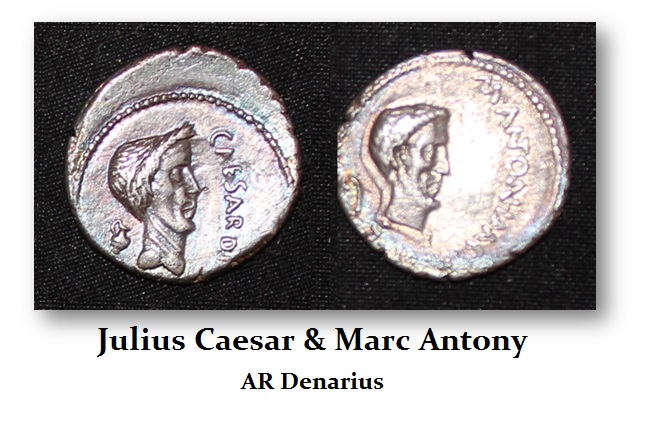
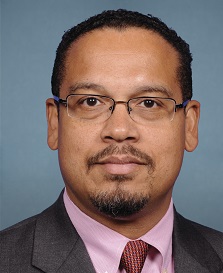
 Once the Hwasong-12’s booster burns out ending the “boost phase” reaching the edges of the Earth’s atmosphere, it ceases to accelerate. This is the tricky part of the missile’s trajectory is called “midcourse.” This is actually the most difficult time for an interception, because a it can release decoy balloons that are hard to distinguish from the real thing. The United States and its Allies have SM-3 missiles designed for ballistic missile defense, which can hit intermediate-range missiles in midcourse.


 Centinel2012