
June 29, 2019
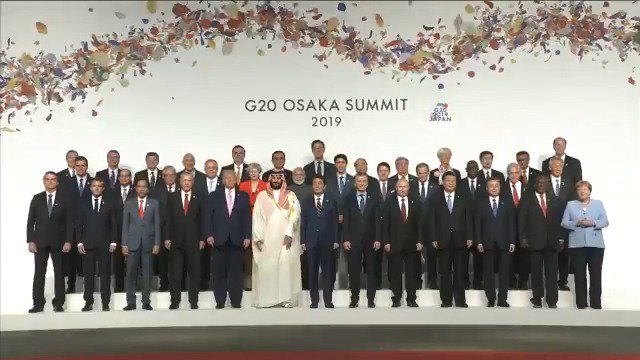
The ‘People’s President’ Donald Trump delivered comments and held a lengthy press conference at the conclusion of the G20 summit prior to traveling to South Korea.
There were hundreds of international media in the audience and President Trump answered deliberate and clarifying questions from a variety of foreign and domestic journalists for well over an hour. The President was comfortable taking all questions, and was in complete command -often humorous- over all content and subject matter.
Here’s the transcript – Warning: It’s a long read (14,000 words)

THE PRESIDENT: Thank you. Thank you very much. Appreciate it. It’s been a really great period of time. I’ll be leaving now, as you know, for South Korea. Some of you will be coming with us.
I understand that we may be meeting with Chairman King — Kim. And we’ll find out. We spoke with the people. Kim Jong Un was very receptive. He responded. And so, we’ll see. Because tomorrow we’re going to the DMZ. I said, “While I’m there, I’ll shake his hand.” We get along. There’s been no nuclear tests. There’s been no long-range ballistic tests. Gave us back our hostages, which was great. And a lot of good things are happening over there.
So I let him know we’ll be there, and we’ll see. I mean, I don’t — I can’t tell you exactly, but they did respond very favorably.
I want to thank everyone for being here today. That’s a lot of press. A lot of press is outside, too. They’re less happy than you are. But the G20 Summit has been fantastic. Prime Minister Abe has done an incredible job, as he always does. And he hosted it very beautifully.
You know where it’s going to be next year, I think. Do most of you know where it’s going to be next year? It’s going to be in a very great part of the world. And we’ll be announcing exactly what’s happening. But this was a really good summit and really well done — so professionally done.
This marks my third visit to Japan as President. Melania and I are — we’ve just left Tokyo a short while ago, as you know — a very short while ago — where we were the first state guests to their Majesties the Emperor and Empress of Japan. And that was thrilling. First time in 202 years that an event like that took place, so that was quite exciting.
And I’m thrilled to be back. I always like being back in Japan. We’ve had a great relationship. We’ve never been closer to Japan than we are right now. Over the past two days, leaders from the world’s largest economies have convened here at Osaka, which is a tremendous city. You fly over and you say, “Does it ever stop?” It’s big. It’s beautiful. It’s clean. And it’s really a — the job they do with industrial manufacturing and lots of other things is really incredible.
We had a very productive conversation with a number of the leaders — not only nations but business leaders here in Japan. And together, we put together a lot of ideas and a lot of challenges for the future that we’ll be able to meet and get things going very well.
Our meetings also touched on women’s economic empowerment. You probably saw that Ivanka Trump was — she’s done a fantastic job, and also a fantastic job in getting jobs for a lot of people within our country — almost 10 million people. The importance of resilient and secure infrastructure, we discussed that at great length. The need to uphold the rule of law. And the critical importance of achieving a future for international trade that works all of the time for all of the people.
In addition to the working sessions — we had a lot of working sessions; many of you were at the working sessions — I had tremendous bilateral meetings with many of the heads of state. And just some of them are Australia, Japan, India, Germany, Russia, Brazil, Saudi Arabia, China, Turkey, UK. And I met with Mexico also — with the representatives of Mexico who have done an incredible job. They’ve really stepped up to the plate. I appreciate it and I want to thank them.
They have 6,000 troops at their southern border, by Guatemala, and it’s very hard to come in now. And they have — they just ordered — really, it was somewhat of a surprise — 16,000 troops at our southern border. Their immigration laws are very strong. Ours are a disaster. Ours are a disgrace to our country. We have loopholes and asylum that — we could fix the asylum very quickly. We could get rid of and fix the loopholes, but we could get rid of the loopholes, and we would have absolutely no problem at the border. But if you watch the debates — if you call them debates, or whatever they were — they don’t really — I think they want open borders, I guess — even though, four years ago, they wanted walls to be built.
I heard we just had another judge rule against us on a section of wall, and that’s a disgrace. We’ll appeal it right away. Ninth Circuit, as usual. They go right into that Ninth Circuit. The good news: I put a lot of judges in, and a number of them are in the Ninth Circuit now. And it’s very unfair. It’s very unfair when a judge can do what they do, where a judge in a certain area can close down a country. But we also had a big victory last week with the wall. We had a judge in D.C. who gave us a very big victory.
So we’re building a lot of wall. But we had a ruling just yesterday, late, from a judge in the Ninth Circuit, again. So we’re immediately appealing it, and we think we’ll win the appeal. There was no reason that that should’ve happened. And a lot of wall is being built, and, again, Mexico is doing a real job. Our Border Patrol, they’ve done incredible work. And ICE is — they’re just special people. Law enforcement, generally, is just — is special.
So, with that, I just want to say that these meetings have been great. The one that I guess most people are interested in is China. We had a great meeting. President Xi. And we’ve known each for as long as I’m President. And many of you were at the event in China a year ago, when — I’ve never seen anything like it. The — it was beautiful. We talked about it; we dinner last night, President Xi and a number of us. And it was something really incredible, in Beijing. The red carpet was rolled out for all of us — for this country, for our country.
And we had a great meeting, and we will be continuing to negotiate. And I promised that, for at least the time being, we’re not going to be lifting tariffs on China. We won’t be adding an additional tremendous amount of — we have, I guess, $350 billion left, which could be taxed or it could be tariffed. And we’re not doing that. We’re going to work with China on where we left off, to see if we can make a deal.
China is going to start — they’re going to be consulting with us, and they’re going to start spending money, even during the negotiation, to our farmers, our great farmers in the Midwest. I call them the “great patriots” because that’s what they are. They’re patriots. And China is going to be buying a tremendous amount of food and agricultural product, and they’re going to start that very soon, almost immediately. We’re going to give them lists of things that we’d like them to buy.
Our farmers are going to be a tremendous beneficiary. You know, if you look at farmers — for 15 years, before I came into the — into this position, farms and farmers have had a hard time. If you look at that graph, it was — it was down, fairly steeply down. And a lot of it was because NAFTA was a terrible deal.
And we have — I spoke with Nancy Pelosi last night about the USMCA — that’s Mexico and Canada. And it’s now before them, and they’ll have to make a decision. But that’s one that the farmers love, the manufacturers love, the unions love. It’s a great deal for this country. And NAFTA was, I think, one of the worst trade deals ever made.
Maybe the WTO was worse. The WTO, from the time that happened in ’95 — from the time that happened, China became like a rocket ship. It was pretty much flat-lined, and then, all of a sudden, they joined the WTO and they became — they went — I mean, they went through the roof. And very much to our liability, it’s — we lost tremendous amounts of money over the — from that time. I mean, we just lost tremendous amounts. It was a terrible deal, the WTO — world trade.
And if you look at NAFTA, NAFTA has been a disaster for our country. The USMCA is a great deal for our country. I think Canada is happy, but they’re not happy like we’re happy, but they’re very happy. It’s a good deal for Canada, a good deal for Mexico. They want it. Mexico just approved it in full. Canada is waiting for us to approve it.
I was with the Prime Minister — just left him a little while ago — and they’re thrilled with the deal, and we’re thrilled. Everybody wants it. And hopefully it will be a bipartisan deal. I view that. I told that to Nancy Pelosi. I said, “View this as a bipartisan deal,” because a lot of the Democrats want it, especially, I would say, the farmers, but, really, the industrial areas also. The unions — we’ve got things on wages and we’ve got things on the environment that few people have ever been able to get into an agreement. And it’s a very big deal. It’s a very big deal. And it’s a great deal. Tremendous support.
So they have to put it up for a vote. And I think you’ll get a great vote in the House and you’ll get a great vote in the Senate. And you’ll have a tremendous trade deal between the United States and Canada and Mexico. And it’s going to be something very special.
So we spend a lot of time with a lot of countries. We do business with a lot of them. Australia is an example. With Japan, we’re negotiating with them because they send us millions of cars and we send them wheat. Doesn’t work. But what happens is Japan is — you probably saw some of the things they’re doing — but they’re opening up many car companies and factories and plants throughout our country, especially in Michigan. We have a lot of activity in Ohio. Beyond Japan activity, we have a lot of activity now where companies are coming back to our country. We’re the hot show. We’re the hottest show in town. We’re the hottest show in the world right now. Our economy is the best.
One thing that every leader — virtually every leader that I dealt with said is that, “Congratulations. It’s incredible what’s happened to the American economy.” We’re the best economy in the world. And it’s something. And it started from Election Day. I put it out yesterday because we took a tremendous boost from — the day after I got elected, the stock market went crazy, from that point until essentially now. I think we hit, in certain of the markets, we hit the all-time high again for many, many times. I can’t tell you what it was, but many, many times we broke the record.
And we’re — you know, our stock market is great. Our jobs are great. We have the best job numbers, essentially, we’ve ever had. In some categories, definitely we’ve ever had. The minimum, you could say, is in 51 years, but it’s really more than that, and now it’s going to be more than that.
African American, Asian American — you saw that — Hispanic American: the best numbers in history — the history of our country. We have the lowest unemployment numbers. Best numbers. And many others too. Blue-collar workers are doing fantastic. They’re the biggest beneficiary of the tax cuts, the blue collar.
Blue collar. You know, we talk about for the rich; it’s really for everybody. And it’s also for big companies where they’re moving here. And remember who owns the stocks. Because the people that own the stock, it’s not the big companies; it’s the people with 401(k)s whose numbers are at 60 percent and 70 percent and 42 percent, and all different numbers that are tremendously high — where the other spouse thinks that the spouse that’s investing in the 401(k) is a super genius. But those 401(k)s are very high.
And if you listen to what I’ve been listening to — and we’re not going to devote anytime to it — but with that kind of an attitude, their 401(k)s are going to crash and the market would crash because, with what they want to do, you would crash the market, and the amount of wealth that would be lost would be incredible.
But I’d rather wait until later in the campaign to say that because, to be honest with you, I want them to go and take these policies and bring them up. I don’t want them to change them anytime soon. Let them go have a good time. But it’s been very interesting to watch what’s happening. Actually, I found it very interesting.
So, with that, we’ll take a few questions and then I’m heading out to South Korea. And I may or may not see Kim Jong Un. But we’ll be heading out to South Korea; spend about a day and a half there with President Moon, who is a really good guy. He was here too, as you know. I saw him. I met with him also. And we’ll see what happens.
Please, John.

Q Mr. President, thank you so much for joining us here.
THE PRESIDENT: Yes.
Q We all appreciate it. It’s always good to have a chance to ask questions of you directly. Can you tell us a little more about how this China deal may work going forward? Because Chinese officials have told Fox News that they will not make any concessions until all of the tariffs have been lifted. They also want relief on Huawei. They want it taken off the black list. They might want you to stop pursuing extradition of Meng Wanzhou. Can you tell us how you see all of this unfolding?
And if you do meet Kim Jong Un at the DMZ tomorrow, would you step across the border into North Korea?
THE PRESIDENT: Sure, I would. I would. I’d feel very comfortable doing that. I would have no problem.
With respect to China, basically we agreed today that we were going to continue the negotiation — which I ended a while back — and we’re going to continue the negotiation. We agreed that I would not be putting tariffs on the $325 billion that I would have the ability to put on if I wanted; that — where, you know, we’re fairly advanced, depending where you want to look at and where you want to start. Pretty advanced.
We discussed — we did discuss numerous other things. We mentioned Huawei. I said, “We’ll have to save that until the very end. We’ll have to see.”
One of the things I will allow, however, is — a lot of people are surprised — we send and we sell to Huawei a tremendous amount of product that goes into the various things that they make. And I said that that’s okay, that we will keep selling that product. These are American companies, John, that make product. And that’s very complex, by the way. Highly scientific.
And in some cases, we’re the ones that do it and we’re the only ones that do it. We’re the only ones with the technology. What we’ve done in Silicon Valley is incredible actually. And nobody has been able to compete with it. And I’ve agreed — and pretty easily — I’ve agreed to allow them to continue to sell that product so American companies will continue. And they were having a problem. The companies were not exactly happy that they couldn’t sell because they had nothing to do with whatever was potentially happening with respect to Huawei. So I did do that.
We talked about education and students. Somebody was saying it was harder for a Chinese students to come in. And that’s something that if it were — it somebody viewed it that way, I don’t. We want to have Chinese students come and use our great schools, our great universities. They’ve been great students and tremendous assets. But we did discuss it. It was brought up as a point, and I said that will be just like anybody else, just like any other nation.
And we’re actually going to a point where, you know, we’re looking that if you graduate from a college, because our great companies — we talk about Silicon Valley and other places — we have a problem in this — in our country that you graduate number one in your class from the best school in the country, and they say you have to leave; we can’t keep them. And we’re going to make it — we’re going to call it the “smart person’s waiver.” But we’re going to make it so that they can not only stay but maybe they have access to green cards. We want to keep these people here. We have to keep — yeah, go ahead, John.
Q But are you concerned that — as they did before — China took it most of the way down the road and then say —
THE PRESIDENT: Sure.
Q — we’re going to pull back (inaudible)?
THE PRESIDENT: That could happen. But we’re holding on tariffs and they’re going to buy farm product. So, you know — so — but that could happen, John.
This doesn’t mean there’s going to be a deal, but they would like to make a deal. I can tell you that. And if we could make a deal, it would be a very historic event. You know, we’ve never really had a deal with China. We have — we’ve had tremendous deficits. Tremendous amounts of money was put into China — $500 billion a year. And I mean, you know, not just surplus and deficit. I’m talking about real, hard cash. And it should have never, ever been allowed to have happened for all of our Presidents over the last number of years.
Go ahead, please.
Q Yes, Mr. President, Steve Herman from the Voice of America. After your discussions with Prime Minister Abe here, are you still thinking about withdrawing from the U.S.-Japan Security Treaty? And what did the Prime Minister say to you about that?
THE PRESIDENT: No, I’m not thinking about that at all. I’m just saying that it’s an unfair agreement. And I’ve told him that for the last six months. I said, “Look, if somebody attacks Japan, we go after them and we are in a battle — full force in effect.” We are locked in a battle and committed to fight for Japan. If somebody should attack the United States, they don’t have to do that. That’s unfair.
That’s the kind of deals we made. That’s — every deal is like that. I mean it’s almost like we had people that they didn’t either care or they were stupid. But that’s the kind of deals we have. That’s just typical.
But I have been — I told him — I said we’re going to have to change it. Because — look, nobody is going to attack us, I hope. But, you know, should that happen — it’s far more likely that it could be the other way — but should that happen, somebody attacks us, if we’re helping them, they’re going to have help us. And he knows that. And he’s going to have no problem with that.
Yes, please.
Q Thank you, Mr. President. I actually have a Russia question but I wanted to quickly clarify: Is Meng Wanzhou’s case also going to need to wait until the very end? Or is it possible the U.S. would drop the extradition effort?
THE PRESIDENT: When what? On what?
Q Ms. Meng from Huawei. The top financial (inaudible).
THE PRESIDENT: We didn’t discuss Ms. Meng. We didn’t — that was not discussed. We did discuss Huawei but we didn’t discuss her situation.
Q Okay. Thank you.
On Russia, respectfully, it seemed like maybe you didn’t really mean it when you said yesterday, “Don’t meddle in our elections, Mr. President.” And then you guys both started laughing.
THE PRESIDENT: Well, I did say it. You’re to have to take a look at the words. I did say it. And we had a discussion. We had a great — actually, we had a great discussion, President Putin and myself. I thought it was really a tremendous discussion.
I think they’d like to do trade with the United States. And they have great product. They have great land. They have very rich land. And a lot of oil, a lot of minerals, and the kind of things that we like. And I can see trade going out with Russia. We could do fantastically well. We do very little trade with Russia, which is ridiculous, frankly. So I could see some very positive things happening.
Yeah, but as per your question though, I did say it and I did discuss it a little bit after that too.
Yeah, please.
Q Thank you, Mr. President. Yesterday, former President Jimmy Carter suggested that your presidency is illegitimate and that you only got the White House with help from Russia. Your reaction to that, sir?
THE PRESIDENT: Russia. Russia. Russia. Isn’t it crazy?
Okay, Jimmy Carter — look, he was a nice man. He was a terrible President. He’s a Democrat. And it’s a typical talking point. He’s loyal to the Democrats, and I guess you should be.
But as everybody now understands, I won not because of Russia, not because of anybody but myself. I went out — I campaigned better, smarter, harder than Hillary Clinton. I went to Wisconsin. I went to Michigan the night of the vote. I had 32,000 people at 1 o’clock in the morning on Election Day. I won Michigan. I won Wisconsin. I won Pennsylvania. I won states that traditionally haven’t been won by a Republican. For many years haven’t been won by a Republican.
And this had nothing to do with anybody but the fact that I worked harder and much smarter than Hillary Clinton did.
Now, I’ll say this: Jimmy Carter — I was surprised that he would make a statement. I saw it. It was not a big thing but I saw the statement. And it’s — you know, a lot of Democrats like to make that statement.
He’s been trashed within his own Party. He’s been badly trashed. I felt badly for him because if you look over the years, his Party has virtually — he’s like the forgotten President. And I understand why they say that. He was not a good President. Look at what happened with Iran. That was a disaster. What Iran did to him — they tied him up in knots. The reason Ronald Reagan probably because President. So, you know, it’s a democrat talking point.
Yeah, please. Go ahead. Jim.
Q Yes. Mr. President, if I could follow up on the question about your comments with Vladimir Putin —
THE PRESIDENT: Sure.
Q — about Russia meddling. You did seem to be joking there with the Russian President. Are we taking that to be wrong?
THE PRESIDENT: No.
Q And what is it with your coziness with some of these dictators and autocrats at these summits? With Mohammad Bin Salman, the Crown Prince of Saudi Arabia, when you were asked about the case of Jamal Khashoggi, you did not respond to that question in front of the Saudi Crown Prince.
THE PRESIDENT: I don’t know that anybody asked me.
Q Were you afraid of offending him on that subject?
THE PRESIDENT: No, not at all. I don’t really care about offending people. I sort of thought you’d know that. (Laughter.)
Q Well, you passed up an opportunity there.
THE PRESIDENT: And, by the way, congratulations. I understand your book — is it doing well?
Q It’s doing very well, Mr. President.
THE PRESIDENT: Really?
Q I’ll get you an autographed copy.
THE PRESIDENT: Good. Send it. I want to see it.
Q Yes, sir. Yeah.
THE PRESIDENT: Send me a copy.

No, I get along with everybody — except you people, actually. I get along with a lot of people. I have a tremendous relationship with President Xi. Nobody else would have the deal that we have. We’re getting tens of billions of dollars from China coming in. A lot of things are happening. And despite that, we’re moving along towards something that could be very historic.
But I get along with President Putin. I get along with Mohammad from Saudi Arabia. Look, I spoke to Saudi Arabia when the oil prices, a year ago, were getting very high. And I wasn’t so nice. And I said, “You got to get some more oil into the system because what’s happening is no good.” And they did. And the people are driving at, you know, very low numbers right now. You haven’t seen. In the old days, you’d have spikes where the gasoline went to $5 and more, and it wasn’t so good.
But I also get along with people that would be perceived as being very nice. You have a lot of very nice leaders of countries. I was with —
Q But, Mr. President, isn’t —
THE PRESIDENT: I was with — wait a minute. I was with Prime Minister May today. I was with so many. You take a look. New head of Australia. Look at Japan — Abe. Prime Minister Abe is a fine — they’re all fine, as far as I’m concerned. Some are stronger than others. Some are tougher than others. And a lot of people —
Q Mr. President, but if I may, though, Mr. President, on the case of Jamal Khashoggi, you have a lot of journalists in this room who object to what appears to be the Saudi government’s complicity and perhaps orchestration of the assassination and dismembering of a journalist.
THE PRESIDENT: Yeah.
Q And when you were given the opportunity to call Mohammad Bin Salman out on that, you did not do it. Did you do it privately? And do you agree that it is despicable for a government to kill a journalist in that fashion?
THE PRESIDENT: Yes, I do. I think it’s horrible. Or anybody else, by the way.
Q Yeah.
THE PRESIDENT: But I think it’s horrible. And, if you look, and look into Saudi Arabia and you see what’s happening, 13 people or so have been prosecuted. Others are being prosecuted. They’ve taken it very, very seriously, and they will continue to. And I’ve let everybody know I’m not — I’m very unhappy about that whole event.
But if you look at what’s going on — and right now, within Saudi Arabia, they’re prosecuting additional people. There’s a lot of things happening. At the same time, I will also say — and nobody said — nobody, so far, has pointed directly a finger at the future King of Saudi Arabia. I will say I spoke to his father, Jim. I spoke to his father at great length.
They’ve been a terrific ally. They’re creating millions of jobs in this country. They’re ordering equipment, not only military equipment, but $400 billion worth of — and, actually, even more than that over a period time — worth of different things. And with that being said, I’m extremely angry and unhappy about a thing like that taking place. But, as of this moment, more than 13 people are being prosecuted. And I hear the number is going to be going up. But it’s a good question.
Yes, please.
Q Thank you, Mr. President. I’m Ching-Yi Chan with Shanghai Media Group. It’s very good to note that you averted the further escalation of trade tension with China. And can you share some details of your interaction with President Xi this time?
And also, if I may, another quick question on North Korea. Do you think it’s possible that there will be a third one-on-one summit with Chairman Kim —
THE PRESIDENT: Oh, sure.
Q — within this year?
THE PRESIDENT: Oh, it might happen tomorrow. I mean, to be honest. We won’t call it a summit. We’ll call it a handshake, if it does happen. I don’t know that it will, but it could happen. I know I think he’d like to do it, and I wouldn’t mind doing it at all. I’m going to be — I’m literally visiting the DMZ.
And so — but I will — as per your question about President Xi, he’s a brilliant leader, he’s a brilliant man. And you know better than I, he’s probably considered to be one of the great leaders in 200 years, in China. And we just have a very — he’s strong; he’s tough. But he’s good. We have a very good relationship. And I said, you know, “We can’t have it where the United States loses this kind of money for the privilege of building up China. It has to be a fair deal.” And he understands that.
But, as he said, “Nobody ever came to us.” It’s true. No other President came to him. This would’ve — my presidency could be a lot easier, not only for that, but for many other reasons. It’d be a lot easier. But I don’t want it to be easy. It’s a point in time. I have a chance to do things that nobody else has ever done.
So we’re making a deal with China, or we’re attempting. And if we don’t, we’ll go back into — you know, we have a tremendous ripe field of tremendous money that would be coming into our country. But I have a feeling that over a period of time — and, again, I’m not rushed, and I told him that I want to get the deal right. It’s extremely — I wouldn’t even say complicated, but very intricate.
But, in the meantime, I think our farmers are going to end up being the great beneficiary. And what I did with the farmers — because they did lose a certain amount of money — I went to Sonny Perdue, who is our Secretary of Agriculture. I said, “Sonny, how much money — in the best year — did China spend on our farms, in our farms, buying?” He said, “The best year, about $16 billion.” I said, “Okay, well, we’re taking in much more than that now every year in tariffs.”
And I took $16 billion out of those tariffs, and — essentially out of those tariffs — and we’re distributing it among farmers who have been hurt because they have been used as a pawn so that China could get a good deal.
But, in the end, the farmers are going to be the biggest beneficiary. But I’ve made up for the fact that China was, you know, targeting our farmers. Because they know the farmers like me, and I like them. I love them. And they sort of love me, I guess, when you get right down to it. And it was $16 billion — billion. That’s a lot of money. But I took it out the tariff money essentially, and we are in the process of distributing it.
The farmers could not be happier, other than — they’re unusual. I had them around a table, many of the farmers, and — about five weeks ago — and they said, “We don’t want money. We want just a level playing field.” I said, “You’re right.” Most groups want money. They’ll take — any way you want to give it to them they’ll take.
The farmers are in a class by themselves in so many ways. They don’t want subsidies. They don’t want a handout. All they want to do is have a level playing field. They’re unbelievable people, and as I said, they’re unbelievable patriots.
Jon.
Q Thank you, Mr. President. First a quick follow-up. You’ve made this very public invitation to Kim Jong Un. Will it be a bad sign if he doesn’t show up?
THE PRESIDENT: No. Of course, I thought of that because I know if he didn’t, everybody is going to say, “Oh, he was stood up by Chairman Kim.” No, I understood that. It’s very hard to — he follows my Twitter.
Q He does?
THE PRESIDENT: And it’s very hard —
Q He follows you on Twitter?
THE PRESIDENT: I guess so, because we got a call very quickly. (Laughter.) A lot of people follow it.
But, you know, they’ve contacted us and they’d like to see if they can do something. And we’re not talking about for, you know, extended. Just a quick hello.
And we get along. I get along with him and I get along with other people. Like, you know, for instance, on Jim’s question, it’s a fair question, but I really have great relationships with everybody.
I think — you know, I said a long time ago that maybe I’ll be a sleeper on foreign policy. And if you look at what’s happened on foreign policy — now, we are working on Iran and we’ll see what happens. I think they’d like to make a deal. I think they’d be very smart to want to make a deal, but we’re going to see what happens. I’m okay. I have all the time in the world.
They’re doing very poorly. They were doing — they were very brutal when I first came in. Eighteen sites of confliction, meaning, where they were behind. But I think on foreign policy, if you look at what’s happening — and the other thing that’s happening is we’re not being taken for suckers anymore.
I mean, we have countries where we’d lose on defending them, because we defend a tremendous percentage of the world. And they don’t pay us for it. And then, on top of it, we lose money with that same country on trade. And it’s all changing. And they understand it’s changing. And they expect it to change. They can’t believe.
Honestly, like I’d ask Prime Minister Abe — I said, “How did this happen, where you send us billions and billions of dollars’ worth of cars and other things, and we send you practically nothing?” He said, “Nobody ever complained.” Same thing with China. I said, “You know, you send a car to us. We charge you essentially nothing. It’s 2.5 percent, but basically you don’t have to — there are ways around that. So you send a car to us, and you pay nothing. We send a car to you, made in the United States, and we have to pay 45 percent tariff. How did that happen? He said, “We just kept lifting it, lifting it, lifting it.” I mean, they’re being honest with me. “We just kept lifting it, and nobody called.” But I call. I call.
Go ahead, Jon.
Q And I want to ask you about the debate. You clearly saw at least some of the Democratic debate.
THE PRESIDENT: Yeah.
Q I’m sure you saw the exchange between Joe Biden and Kamala Harris —
THE PRESIDENT: I did.
Q — on the issue of federal busing — federally mandated busing. Biden thought that was a bad policy. He tried to stop it. Kamala Harris said it was an important part of desegregation, including in her own experience.
Where do you stand on that issue of federally mandated busing?
THE PRESIDENT: Well, first of all, before I get into that, I thought that she was given too much credit. He didn’t do well, certainly, and maybe the facts weren’t necessarily on his side. I think she was given too much credit for what she did. It wasn’t that outstanding. And I think probably he was hit harder than he should’ve been hit — Biden. I thought he was hit actually harder.
And as far as that, I will tell you in about four weeks, because we’re coming out with certain policy that’s going to be very interesting and very surprising, I think, to a lot of people.
Jennifer, do you have a question?
Q But do you think Kamala Harris would be a tough opponent for you, given what you saw in that debate?
THE PRESIDENT: You never know who’s going to be tough. You never know. One that you think is going to be tough turns out to be not much. And sometimes you think one — and I’ve seen it. Because, look, I had 17 — we had, actually, a total of 18. A lot of people think 17. Governor of Virginia — remember? Add the Governor of Virginia. Wasn’t there long — previous governor.
But of the 18, you know, many were — all their lives, they wanted to be politicians. I never thought about being a politician until about two days before I decided to run. A little before that, but not too much before.
And they — you know, you looked at some of them, they’re very talented. You look at their résumés, it’s like great. And, sometimes, the ones that I thought would be the toughest were not the toughest at all. I mean, I could write a book. I should write a book.
But some of the people that I did in the Republican — because we had sort of a similar thing. We had 18 instead of — I guess they have 24 or 25. But some of the ones that I thought would be absolutely — absolutely, without question, the toughest, turned out — I didn’t they were tough at all. Others that a lot of people said weren’t tough, they were tough.
I think she was given far too much credit for what she did. That was so out of the can what she said. That thing was right out of a box. And I thought that he didn’t respond great. I wouldn’t say it was — this was not Winston Churchill we’re dealing with, okay? But it wasn’t — it wasn’t, I don’t think, nearly as bad as they portended it to be.
Jennifer, go ahead.
Q Thank you, Mr. President.
THE PRESIDENT: Thank you.
Q Could I clarify your negotiations and what you agreed to with China on Huawei?
THE PRESIDENT: Sure.
Q Did you agree that Huawei can sell to the U.S. or that U.S. companies can sell to Huawei?
THE PRESIDENT: U.S. companies can sell their equipment to Huawei. I’m talking about equipment where there is no great national emergency problem with it. But the U.S. companies can sell their equipment. So we have a lot of the great companies in, Silicon Valley and based in different parts of the country, that make extremely complex equipment. We’re letting them sell to Huawei.
Q And then, on Turkey, sir, will Turkey face sanctions if it goes ahead with the S-400 purchases?
THE PRESIDENT: Okay, so Turkey is an interesting case — because there’s another one, Jim, that I get along with very well, and he’s a tough cookie, okay? Right? President Erdogan. He’s tough, but I get along with him. And maybe that’s a bad thing, but I think it’s a really good thing. Because, frankly, he wanted to wipe out — he has a big problem with the Kurds, as everyone knows. And he had a 65,000-man army at the border, and he was going to wipe out the Kurds, who helped us with ISIS. We took out the caliphate. We have 100 percent of the caliphate.
And I called him and I asked him not to do it. They are, I guess, natural enemies of his or Turkey’s. And he hasn’t done it. They were lined up to go out and wipe out the people that we just defeated the ISIS caliphate with, and I said, “You can’t do that.” You can’t do it. And he didn’t do it.
So I have a relationship. But let me tell you — so he goes out during the Obama administration; he wants to buy our Patriot missile. Right? They wouldn’t sell it to him. He wants to buy — even though he’s a member of NATO, and, in theory, he could be an ally if he respected the President, and he’s got a big army, and he’s — you know, they’re fighters. Turkey is — big fighters. And we’re working on Idlib Province together because he doesn’t want to see 3 million people killed, and neither do I — in Syria. But — and I mentioned that. That was another thing I mentioned, folks, to President Putin. I said, “Please, take it easy with Idlib.” Because, you know, they’ve been encircling that.
I think if I didn’t put out a statement six months ago, that would’ve been catastrophic. But they have 30,000 terrorists in Idlib Province. You have 3 million people. And, you know, getting terrorists is okay, but you don’t want to kill 3 million people or a million people to get the terrorists.
So, anyway — so we get along great. But what happened with Turkey — and I will tell you when it’s fair and when it’s not fair. He wanted to buy the Patriot missile. President Obama’s group said no. He kept wanting to buy it. They kept saying no, no, no. Couldn’t buy it. Now, he needed it for defense. He needed it. So he then went to Russia and he bought the S-400. Made a deal to buy it because he couldn’t get it. They wouldn’t allow him to buy it. They wouldn’t allow it. This administration, meaning this administration previous to mine, would not let him buy it.
So he goes out, he goes to Russia, and he makes a deal for the S-400. And let’s assume it’s not nearly as good, but he made a deal. He paid them money — a lot of money. Put up a lot of money. And he bought it. As soon as he bought it, people went back to him, from our country, and they said, “Listen, we don’t want you to use that system,” because it’s not the NATO system, et cetera, et cetera — you know all the reasons. “We don’t want you to use that system. Do us a favor — we’ll sell you the Patriot.” He said, “It’s too late. I already bought it.” There was nothing he could do; he already bought it.
In the meantime, he bought over a hundred F-35s, the greatest fighter jet in the world. It’s stealth. You can’t see it. It’s real hard to beat something when you can’t see it. But he bought over a hundred. I think he bought 116. But he bought over a hundred. A lot. And there’s options for more. And now he wants delivery. He’s paid a tremendous amount of money, up front to Lockheed — our company, our jobs, everything. And now they’re saying he’s using the S-400 system, which is incompatible with our system, and if you use the S-400 system, Russia and other people can gain access into the genius of the F-35.
But, honestly, I’m all for our country, but he got treated very unfairly. He was told you can’t buy it, you can’t buy it. You know, it’s the old secret when you can’t have something, all of a sudden, he ends up going and getting something else, and then they were — they said — first they said, “We’ll sell it to you. You can have it in four years.” Then they said, “We’ll get it to you immediately.” But he said, “I can’t do it. I bought. I’ve spent a fortune on buying another system” — similar system — from Russia. The problem is he already bought the planes. And the planes aren’t compatible from our standpoint. Not from the standpoint of compatibility, but from our standpoint, national security wise.
So it’s a mess. It’s a mess. And honestly, it’s not really Erdoğan’s fault. So now we have breaking news. “Donald Trump loves Turkey. He loves Turkey. Donald Trump is on the side of Turkey instead of the United…” No, I’m not.
Q You don’t seem like you want to go ahead with —
THE PRESIDENT: I love our country, but I have to tell you, President Erdoğan, who has done — he gave me our pastor back. Pastor Brunson. Nobody else could get him back. Remember? They couldn’t get him back. President Obama, he was in jail for 35 years. He was going to be in jail forever. Pastor Brunson, he was an innocent man.
I called him. And after a very short period of time, Pastor Brunson was standing in the Oval Office, with me. And he was back. So, you know, he’s been — from my standpoint — and he’s a tough guy. Okay? When you talk about tough. He’s tough. But I get along with him.
I think he was unfairly treated, where you were told you can’t have it, and then after he bought another system, we said, “We’ll sell it to you. We’ll give it to you right away.” But he couldn’t use it then. But by that time, he had already bought the plane.
So, it’s a complicated deal. We’re working on it. We’ll see what we can do.

Q Can I ask you one last quick thing on China?
THE PRESIDENT: Yes, go. Please.
Q So, there was a negotiation on Huawei, welcoming students, holding off on tariffs. So it sounds like China has agreed to buy more ag, but is this a lopsided agreement or what more did China agree to?
THE PRESIDENT: No, we agreed — on China, this is actually a good question. I did agree to allow our companies — you know, jobs — I like our companies selling things to other people. So I allowed that to happen. Very complex things. Not easy. This is not things that are easy to make. Very few companies are able to do it.
But a tremendous amount of money. Our companies were very upset. You know, these companies are great companies. You know all of them. But they weren’t exactly happy with it. But we’re allowing that because that was a national security — we’re allowing them to sell.
But we agreed to leave that until the end. Huawei is a complicated situation. We agreed to leave that — we’re leaving Huawei toward the end. We’re going to see. We’ll see where we go with the trade agreement.
Yes, please.
Q Thank you. I have a question about the border, but I just wanted to follow up quickly on the question about busing. Do you see it as a viable way of integrating schools? Does that relate to the policy that you’re going to unveil?
THE PRESIDENT: Well, it has been something that they’ve done for a long period of time. I mean, you know, there aren’t that many ways you’re going to get people to schools. So this is something that’s been done. In some cases, it’s been done with a hammer instead of velvet glove. And, you know, that’s part of it.
But this has been certainly a thing that’s been used over the — I think if Vice President Biden had answered the question somewhat differently, it would’ve been a lot — it would’ve been a different result. Because they really did hit him hard on that one. So — but it is certainly a primary method of getting people to schools.
Q And is it — does it relate to the policy that you’re going to unveil that you just floated?
THE PRESIDENT: It relates to everything we’re doing. And you’ll be hearing about it in — over the next couple of months.
Q Over the next couple of months? Okay. And I want to ask you about the border. It seems like there is officially a week to go until the ICE raids begin under that deadline that you imposed.
THE PRESIDENT: Yeah.
Q Given that you have a July 4th recess, is it realistic to think that you’re going to get a deal to actually reform the asylum laws?
THE PRESIDENT: No, because we could do it in — we could do it — you know, I say to people — I used to say 45 minutes; I say 15. But we could do it quickly. We could do it in a day. We could do it in an hour.
We could reform asylum very quickly. We could get rid of the loopholes very quickly. These are horrible loopholes.
And the reason that Mexico is so good — because they do have very, very tough immigration. They don’t have the kind of things and the kind of stupidity that we have. I mean, where somebody touches one foot on our sand and we now have to bring them into a court. We then have to register them. We then have to catch and release them. And they go and they live in our country. Then they’re supposed to come back in three years for a court case, and about 2 percent come back, as you know. I mean, you know it just as well as anybody, I really think. Maybe better than most.
But the fact is they come back — but nobody comes back. Two percent come back. It’s a horrible system.
Now, what we’re doing is they come in illegally and we’re bringing them out legally. But at the request of some, you know, very good Democrats, they asked me if I could hold it. And I did for a couple of weeks. And we have a week left. But other than the fact that we did get, in a very bipartisan way, we got — and I appreciate Speaker Pelosi because she really worked with us. It was humanitarian money.
I mean, they didn’t have any money. And we’re running — don’t forget, nobody has ever had this problem before. We’re running hospitals; we’re running so many different things for the kids. And the kids are brought up because, under the laws, the kids are used — legally used to get other people to come in.
If you have a child, it’s much easier to come into our country. It’s easy anyway. But if you have a child, it’s much easier. So we have these kids who have been absolutely abused. Horribly abused. And we could stop that with a minor change in the law. It’s a terrible thing that they’re not doing it.
So here’s what’s happening. So I said, “All right, let’s see if you can give that to us.” Now, in the meantime, we did — we just got it approved last night, so we have the $4.5 billion in humanitarian aid. Right? And that’s good. So we have that.
But we can have that number go way down if we stop people from coming up. For instance, if we had walls up and if we had it hard, the father and the beautiful daughter who drowned — and, you know, the Rio Grande is a very tough — you know, that has moments where it can be very calm and then all of a sudden it becomes totally violent and people get swept away.
But if they thought it was hard to get in, they wouldn’t be coming up. They wouldn’t be coming up. And so many lives would be saved.
So, essentially, if they would change the laws — and I said, “It would take us an hour, but let’s give you two weeks.” At the end of the second week, we’ll be removing people — legally removing. In other words —
Q So you’re still planning for that deadline? That deadline is still in place, which is now a week from now?
THE PRESIDENT: Oh, yeah. Unless we do something pretty miraculous. But the Democrats, it seems to me, they want to have open borders. And for the life of me, I cannot figure that out. It’s one thing, because I want people to come into our country. We need them because we have all these companies coming in. You know, we have Foxconn in Wisconsin. We have so many companies coming in. Auto companies. Just today, I was with President Abe; he told me another auto company is going to build a big plant. They need people. So, I’m all for that.
The only problem is that they have to come in through a process. They have to come in legally. It’s also very unfair. You have millions of people on line for years trying to get into a country. They take tests. They study. They know a lot about our country. They read. They do — they have to go through a very complicated process. And these people have worked hard. They’ve been on line for seven, eight, nine years, and then somebody walks in and they’re, you know, “Welcome to the United States.” It’s really — honestly, it’s very unfair.
But, yeah, we will be removing large numbers of people. People have to understand: Yes, the laws are —
Q In a week?
THE PRESIDENT: Yeah. Starting in a week, after — you know, sometime after July 4th.
Q So the deal that was just passed does nothing to make you want to step back from that raid?
THE PRESIDENT: Well, that’s different. That’s humanitarian — no, that’s a different — that’s humanitarian. We needed that just to take care — because we’re running now hospitals. I mean, the Border Patrol — these are incredible people — they’re doing what they — you know, nobody ever thought they were going to be doing this.
And people are coming up — the reason people are coming up is because we’re doing so well as a country. In past years, we weren’t doing well. In past years, Mexico was doing better. You know, they took 32 percent of our car business. They were doing better than we were doing in the past. Now we’re the hot country in the world and people are coming up because they want a piece of that action.
And the other reason children are coming up is because we had a separation policy. Okay? Under President Obama, we had separation. President Obama built those cells. They were in 2014. They were built. They all said, “Oh, look how horrible.” Then it turned out that it was built by President Obama. And I’m not blaming anybody. I’m not blaming him.
I just say this: They had a separation policy. Right? I ended it. But when I ended it, I put out a statement: I think it’s going to bring more children up because you’re ending it. You’re saying now the child can stay with the parent. So, I said, ending it is nice in one way but in terms of what we’re doing, it makes it even tougher.
But the really bad thing is the cartels — and I really think that Mexico — because, you know, they did 6,000; now they’re doing 16,000 on our border — I think that Mexico is looking to swamp the cartels. And those kind of numbers will do it. It would be a great thing. What Mexico is doing for us is great.
By the way, without the tariffs, they wouldn’t have done it for us. We’ve been after — we’ve been after them for many years to do it.
But they have really, so far — it’s only a week — the numbers are way down. And, so far, a lot of good things have happened.
Yes, sir. Please. Yes, please. In the second row.
Q Thank you, Mr. President. Two questions about Iran.
THE PRESIDENT: Would you like me to leave now or? Here’s the thing: I can stay — we can do this for a long time. My only problem is this: I don’t need stories, “He stayed up there too long.” If I stay up there quickly, they say, “Why did he not give us more time?” If I stay up for two hours, they’ll say, “He stayed up too long.”
I mean, if you promise you’re not going to say — I say because everybody has got a hand up, and if you want, I’ll go on. Should I go on or should I not go on? What you do you think?
Q Go on.
Q At least one more.
THE PRESIDENT: Okay, and you’re not going to say, “He went on too long?”
Q At least one more.
THE PRESIDENT: Because we have time. You know, I have a flight that actually leaves pretty much when I want it to. (Laughter.) Okay, let’s go.
Q Thank you, Mr. President. Two questions about Iran. A week ago, you called off a strike because you were concerned it would kill Iranians.
THE PRESIDENT: Disproportionately, absolutely.
Q Disproportionately. Did the military leaders provide you with any alternative? You know, some derelict oil rig that could have been hit to —
THE PRESIDENT: No, no, no —
Q — to make a point?
THE PRESIDENT: — Oh, I had many alt- — oh, yeah I have — I’ll bet I have 50 alternatives. I have many alternatives. Yeah. I mean, you know what — you don’t know what the sites were. You said “oil rig.” You don’t know what the sites were. But I had many alternatives. No, no, military leaders did a great job.
When we chose and designated certain areas that we were thinking about, I said, “How many people are going to die?” I mean, I’m talking about on the other side. That means a lot to me too, okay? “How many people are going to die?” They said, “Probably about 150.” You don’t know, could be much worse than that. Could be less too, I guess, but it could be much more than that, because this is heavy stuff going in.
And we would have been 100 percent — we have the greatest military in the world. I deal with them all the time. These people are incredible people. Lethal. And hopefully we don’t have to use it much.
I mean, we’ve spent — if you look at the numbers — $716 billion this year. We had planes that were so old that we didn’t — now we have brand new F-35s. We have brand new Super Hornets and F-18s. And — I mean, the equipment we have is incredible.
The Army now has beautiful new things. Everything is — we have a military that’s really great. Hopefully, we don’t have to use it very much.
But, no, they came in, and they said this, and I asked them a question. And they came back a short time later and they said, “About 150 people.” I said, “That’s really disproportionate. I don’t like it.”
Q My second question is that, here at the G20 Summit, what can you tell us: Has the ball been moved in any particular direction towards easing the tensions with Iran in some of the meetings that you’ve had?
THE PRESIDENT: Well, I have had a lot of countries come up to me. France has come up. If you look at President Macron — good guy — he came up to me. He said, “You know, I do a lot of business” — meaning, France does a lot of business with Iran.
I would love to go see them. It’s all right. Anybody can see them. I don’t mind talking. I think talking is great. I’m not going to say, “Oh, don’t talk to them. Don’t talk to them.”
I do think John Kerry should not have been talking to them. I think that’s delaying this process a lot. I think he violated the Logan Act, actually. But I think John Kerry, speaking to Iran a lot, maybe saying things like, “Gee, you know, if you wait another 15 months, maybe Trump will lose the election and then you can deal with a person that’s a lot easier than Trump. You’ll deal with a stiff that will give you everything you want.” And that makes it a little tougher for me to make a deal, but that’s okay.
Yeah, please. Go.
Q Mr. President, during the week, you tweeted out your displeasure with the Supreme Court’s decision on census and you suggested you may seek to delay —
THE PRESIDENT: Yeah, I think it’s very unfortunate.
Q Are you, in fact, going to try to delay the census?
THE PRESIDENT: Well, we’re looking at that legally, because they’re asking us to do a census. And, you know, the census — it was shocking to me. I figured it would be, you know, not expensive to do a census. It’s billions of dollars. You know that, right? Billions. Billions.
They go knock on doors of every house in the country and they get everything. They’re not allowed to ask whether or not somebody is a citizen of the United States? How horrible and ridiculous is that?
So we are looking at that. Yeah. Sure.
Q Do you know if you have the legal authority to do that?
THE PRESIDENT: Because it wasn’t a real decision that, “Boom, this is the way it is.” It was like, “Now.” Right? “Now.”
It depends on — it depends on what happens, I guess. It was a very strange decision. It was a very, very sad decision. Not in terms of voting. Not in terms of — just a very sad because it was so convoluted. It was — to get to that decision, had to be very, very hard.
Q Well, justices said that your guys were playing politics when deciding not to count non-citizens.
THE PRESIDENT: Hey, who’s really playing politics, okay? Check it out. You tell me who’s playing politics.
Yeah, go ahead. Please.
Q Thanks, Mr. President. I think I heard you mention earlier —
THE PRESIDENT: You’re?
Q Geoff Earle with Daily Mail. It’s been a while.
I think I heard you mention that with Vladimir Putin you had said you spoke about election interference privately as well. Did you give — did you speak to him in a sterner tone? Did you tell him there —
THE PRESIDENT: No. I just —
Q — would be serious consequences?
THE PRESIDENT: We talked about it. Hey, we talked about it.
You know we’ve talked about it before. You know he denies it totally, by the way. Just to — I mean, how many times can you get somebody to deny something? But he has, in the past, denied it. He’s denied it also publicly.
But we talked about it. We talked about a lot of other things. I tell you, we talked about something that I think is very important, and that’s putting a cap on what he’s buying and we’re buying, from a nuclear standpoint — and other — arms control. We talked a lot about arms control. And I think he’d like to see arms control and so would we. I think it makes a lot of sense.
Q What was the context in which you —
THE PRESIDENT: Yeah, go ahead.
Q Did you raise what was in the Mueller Report? Did you, sort of, articulate to him —
THE PRESIDENT: Oh, the Mueller Report was a very —
Q — that you thought that things (inaudible)?
THE PRESIDENT: — good report. I mean, it was a good report.
I had 18 people that hated me. I had Mueller who was totally conflicted and, obviously, didn’t like me. We had — he was totally conflicted. And yet, no obstruction, no collusion. And, you know, that was good report.
Yes, please.
Q Thank you, Mr. President.
THE PRESIDENT: And, you know, the Democrats want a do-over or five. They want to get it right. They’re working to get it right. They want a do-over or five.
Yes, please.
Q Edward Szall with TruNews. President Trump, your administration just unveiled the economic portion of the “deal of the century.” My question to you is: Why were no Palestinians members of the White House peace plan committee?
THE PRESIDENT: Well, they are a very important part of it but they don’t really have to be. We’re just getting started.
We have — and, as you know, we have a very good — David Friedman, a great gentleman. One of the most successful lawyers in New York, who loves Israel — David Friedman. Jason Greenblatt, who worked for me and my company — great, great lawyer. Great talent. Jared Kushner. And with me being President, if you don’t get that deal done it, will never happen. We’ll have to see what happens.
But I think the Palestinians basically — I’m not sure — I know they want to make a deal but they want to be a little bit cute and that’s okay. I fully understand where they’re coming from.
As you know, I’ve ended the money to — that was — we were paying them $550 million a year, and I ended that money because a year ago I heard they were saying nasty things. I said, “Wait a minute. We’re trying to make a deal. We’re trying to help them and they’re saying these nasty things? We’re not going to pay.”
Now, if a deal is made, we would go back on a humanitarian basis. Not so different from the border. Because you see the problems and what’s going on. It’s terrible.
But I think we have a very good chance of making a deal, and a lot of people think that’s probably the toughest deal of all. And it may very well be the toughest deal of all. A lot of people think it can’t be made. I mean, over the years, a lot of people would say, “That’s a deal that can’t be made no matter what.”
But, you know, hey, I like to — we’re going to try. But I really believe that — I went to other negotiators from past years. For many, many years they’ve been trying to make this deal. And I said, “Did you ever take the money away?” Because they were always very hostile. And they said, “No, we wouldn’t do that. That’s inappropriate.” “Why is it inappropriate? I mean, they’re saying bad things. Why is it inappropriate?”
And what I’ve done is said, “Look, as long — if you’re not negotiating and if you don’t want to make peace, we’re not going to pay you.” So let’s see what happens.
I think they want to make a deal, and I’ve had a very good relationship with some of their leaders. And obviously I’ve had a good relationship with Israel.
Now, the transaction was thrown up in the air a little bit because of what happened with Bibi Netanyahu’s election. They thought he won and then, all of a sudden, they couldn’t put together the coalition. And now they’re back to campaigning again. So that was something that came up that — who would have expected that. Maybe something will happen faster, but you know, that’s going to be going on for about three months.
There’s a good chance we could — there’s a chance. I don’t want to even say “good chance” on that one because people say it’s the hardest deal. I’ve heard — when I was young, I’d say, “What do you think of this?” They’d say, “Oh, that’s tougher than Israel and the Palestinians making a deal.” They used to use that as like the metaphor. They used to use that as the excuse for a deal that was very tough to make. So it’s probably about the toughest deal to make.
I actually think that there’s a good chance.
Yes, sir. Please, go ahead. Yeah. White shirt. No, the gentleman behind you. Yeah. Okay, go ahead. We’ll get to you.
Q Thank you.
THE PRESIDENT: Go ahead. That’s the man I’m looking at.
Q Demetri Sevastopulo, Financial Times. Can I just ask, first, one clarification?
THE PRESIDENT: Sure.
Q Are you saying you’re taking Huawei off the Commerce Department entity list?
THE PRESIDENT: No, not at all. No, no. We’re going to be talking about Huawei, but we are going to be supplying equipment from our companies. Our companies make billions and billions of dollars’ worth of equipment. But we are not discussing Huawei with President Xi yet. I want to see — before we start getting into that, I want to see where we end up. We have to — we have a national security problem, which to me is paramount. Very important.
Q But are you taking Huawei off the Commerce Department entity list?
THE PRESIDENT: We’re talking about that. We have a meeting on that tomorrow or Tuesday.
Q And my question is, you talk a lot about the economic and the trade practices of China, and you’re very critical. You don’t talk so much about the national security concerns about China.
THE PRESIDENT: Well, that’s not —
Q What do you worry about China (inaudible)?
THE PRESIDENT: It goes without — I think that goes without saying. I mean, look what I’ve done. Look what — who’s done what I’ve done? I took ZTE off, if you remember. I was the one; I did that. That was a personal deal. And then President Xi called me. And he asked me for a personal favor, which I considered to be very important. He’s a leader of a major country. And it was very important to him, having to do with where the employees are located and his relationship to that area. And it was 85,000 employees. And they were almost out of business. And he agreed to pay $1.2 billion penalty and some other things, including a board change and including some management changes, et cetera. ZTE, which is a — you know, much smaller than Huawei, but it’s very big. And they paid us a billion-two. $1.2 billion.
I mean, part of the problem is then the Democrats go out and say — if I got $200 trillion, they’d say, “This was terrible. What a terrible deal.” Because that’s the way politics is. It’s, sort of, sad.
But, you know, we got $1.2 billion. And we closed it; we opened it. And we had certain changes made, as you know. They made changes to the board. They changed the board. They made management changes. And they paid a lot of money. And they also have to buy American product. Buying American product is very important to me. It’s a big — it’s a big thing.
Q Can I just ask you to clarify —
THE PRESIDENT: Yeah. Go ahead, blue. Blue shirt.
Q Stefan Niemann with ARD —
THE PRESIDENT: Are we going to continue onward?
Q Yeah.
THE PRESIDENT: Yes?
Q Yes.
THE PRESIDENT: Does anybody say “no”? Huh?
Q Thank you. Stefan Niemann with ARD German Television. One question —
THE PRESIDENT: We just left Angela.
Q I know.
THE PRESIDENT: She’s another friend of mine. People don’t think so.
Q And you called her a fantastic woman.
THE PRESIDENT: We have a great relationship. I hope you know that.
Q Yes. We will not forget that.
THE PRESIDENT: We spent a lot of time together, too.
Q You praised this G20 Summit as extremely successful, yet it was a “G19 against one” summit, if we look at climate change. Why is it that you still think ignoring the dangers of climate change is in the interest of the American (inaudible)?
THE PRESIDENT: I don’t ignore it. So we have the best numbers that we’ve ever had recently. And I’m not looking to put our companies out of business. I’m not looking to create a standard that is so high that we’re going to lose 20, 25 percent of our production. I’m not willing to do that. We have the cleanest water we’ve ever had. We have the cleanest air. You saw the reports come out recently. We have the cleanest air we’ve ever had. But I’m not willing to sacrifice the tremendous power of what we’ve built up over a long period of time, and what I’ve enhanced and revived. I’m not — I’m just not willing to do that.
And they understand where I stand. And, you know, I’m not necessarily sure I agree. I can tell you, I’m not sure that I agree with certain countries, what they’re doing. Because I think they’re losing a lot of the power of what they can do with factories and with — and I’m not talking about political power, although that comes with it — I’m talking about the powering of a plant. It doesn’t always work with a windmill. When the wind goes off, the plant isn’t working. It doesn’t always work with solar, because solar is just not strong enough.
And a lot of them want to go to wind, which has caused a lot of problems. And, you know, the problem with wind is, in the United States, we’re subsidizing these wind towers all over the place because wind doesn’t work — for the most part, doesn’t work without subsidy. And I don’t want to be subsidizing things that don’t have to be subsidized.
The United States is paying tremendous amounts of money on subsidies for wind. I don’t like it. I don’t like it. I don’t want to do that.
We’ll take a few more. Go ahead. Go ahead.
Q Thank you, sir. Two questions on Iran, please.
THE PRESIDENT: One.
Q One question on Iran. (Laughter.) Okay. Well, Iran —
THE PRESIDENT: Pick the better one, please.
Q Will do, sir. Iran says that it will be on the verge of violating the threshold for uranium enrichment in the JCPOA as soon as, potentially, next week. What will be your response when that happens?
THE PRESIDENT: You’ll see.
Q Okay. Can I have a follow-up?
THE PRESIDENT: That’s all I can do. That’s all I can do. No. But that’s all I can do.
Q Just —
THE PRESIDENT: I can only say, “You’ll see.” We cannot let Iran have a nuclear weapon. Just can’t do it.
Please.
Q Thank you, Mr. President. Celia Mendoza from VOA Latin America. You met yesterday with President Putin, and in the readout it says that you touched the subject of Venezuela.
THE PRESIDENT: Yeah.
Q But can you expand a little bit of what was said during the meeting about Venezuela? And also —
THE PRESIDENT: Well, first of all, we’re following Venezuela very closely. It’s a catastrophe. It’s what socialism can do. I use it all the time. I mean, it’s what socialism can do. It was one of the richest countries 20 years ago. It’s got among the largest oil reserves in the world. And they don’t have food. They don’t have water. It’s really, actually, incredible. I discuss it with — I’ve discussed it with almost every leader this weekend. We discuss Venezuela because we don’t ever want that to happen to us or their countries.
Okay, go ahead.
Q You mentioned that change of regime takes time, and then in Venezuela it has proven —
THE PRESIDENT: Oh, sure, it takes time.
Q But do you think that it’s a possibility —
THE PRESIDENT: The problem is so many people leaving Venezuela; it’s like going to be a ghost town. It’s a very bad thing that’s happening in Venezuela. Nobody has seen anything quite like it, actually — especially from the standpoint that they were so wealthy.
They’ve gone — I know so many people from Venezuela living in Miami. They’re incredible people. They’re incredible, incredible — a lot of them live in Doral, Miami. It’s — they call it “Little Venezuela.” I know them so well. These are people that are hard workers, warm. They’re just incredible.
And to see what’s happening to Venezuela is heartbreaking. It’s really heartbreaking.
Q Mr. President, do you think that it is a time for change the strategy? And do you still believe that Juan Guaidó is the person to lead the country? You have backed him up —
THE PRESIDENT: Sure. You have a lot of strategies. I have five different strategies. I could change any moment.
But, in the meantime, we’re helping them from the standpoint of aid. We’re getting as much aid as we can. I think they’re making a big mistake because they’re not making the aid very easy, as you know. You know, they’re not making it easy to get to people. But people are starving to death, and their water — they have no water. They have no water. They have oil but they don’t have any water.
No, we have a lot of things in store if we have to do that. We don’t want to do anything but — you know, we don’t want to get involved to the extent that you may be thinking. But we have a lot of alternatives. We have five different alternatives for Venezuela. And we’ll see what happens. It’s doing very poorly.
And Maduro is doing very poorly, obviously. It’s not — it’s just not working. Just not working.
Yes, ma’am. Go ahead.
Q Anita Kumar with Politico. I just wanted to —
THE PRESIDENT: So from where are you?
Q Politico. Anita Kumar. Politico. I just wanted to follow up on the questions that were asked — Jim asked about —
THE PRESIDENT: Question. Question. Question.
Q — question — about the Crown Prince that you met with earlier today. I didn’t hear you answer the question: Did you raise the killing of Jamal Khashoggi with him?
THE PRESIDENT: I asked, yes.
Q And what was the response?
THE PRESIDENT: I asked him what was happening, and he was telling me that — I think he said 13, but could be more — and I think he said more are in the works — that there are large numbers of people being prosecuted. He’s very angry about it. He’s very unhappy about it.
And I did mention it to him very strongly, and he answered very strongly. But they’re prosecuting large numbers of people. That was a bad event.
Okay.
Q And, sir —
THE PRESIDENT: Yeah, go ahead, please.
Q — can I just follow up? You mentioned — you mentioned that the intelligence community — you mentioned that no one had pointed the finger at him, but actually, the CIA did — the intelligence community.
THE PRESIDENT: I cannot comment on intelligence community. I just — I’m not — probably, I guess I’m allowed to do what I want to do in terms of that, right?
We can declassify, unlike Hillary Clinton. She decided to just give it out. We can declassify.
The truth is that I just don’t want to talk about intelligence.
But I will say this: A lot of people are being prosecuted and they’re taking it very seriously over there. And they’ve done a great job in Saudi Arabia from the standpoint of women and from — a lot of different things are happening in Saudi Arabia.
One of the other things — very important with Saudi Arabia: that not only are they an ally, not only have they spent tremendous amounts of money coming into our country — and they have been a good ally, and they have actually bought tremendous amounts of military equipment that we use and that we’re able to use — but they’re also very much now changed their ways as to financing terror, which I can’t say for a lot of other countries.
If you look at Iran, if you look at other countries in that area, they’re financing terror.
Now, it’s harder for Iran because Iran doesn’t have the money they used to have. And they were given $150 billion. They were given $1.8 billion in cash.
But Saudi Arabia has come a long way. I’ll tell you, in terms of reform, Saudi Arabia really has come a long way.
Yeah, please — in the gold. Yeah, you. Right.
Q Thank you very much, Mr. President. I’m (inaudible) with China’s (inaudible) Media Business News Organization in China. Just a little bit of follow-up on Huawei: You say you’re going to discuss Huawei’s entity listing soon. Is it possible — would you say it’s a possibility that Huawei is going to be removed from the list?
THE PRESIDENT: Is it going to what?
Q Removed from the entity list. Is it possible?
THE PRESIDENT: I don’t want to talk about it now. I mean, we’re looking at that very carefully. Huawei is very much in play, in terms of our country and in terms of intelligence and the intelligence community. We know a lot about Huawei. But I don’t want to mention that right now. I just think it’s inappropriate.
I will say that we’re not making it — other than what I told you already, we’re not making it a big subject. We’re going to save that for later.
Q Okay. And another question on the big picture of U.S.-China relations: What do you think the U.S. and China should see each other? Are we strategic partners? Are we competitors? Are we enemies? What are we?
THE PRESIDENT: No. I think we’re going to be strategic partners. I think we can help each other. I think, in the end, we can — if the right deal is structured, we can be great for each other.
If China would open up — you’re opening up a tremendous — you know, the largest market in the world. And, right now, China is not open to the United States, but we’re open to China. That should have never really been allowed to happen.
Okay. Yes, please.
Q Thank you, Mr. President. On Russia, are you planning to go to Moscow next spring, as President Putin invited you?
THE PRESIDENT: Yes.
Q And do you agree with him that Western-style liberalism, as has been defined over the post-war period, is now obsolete and no longer relevant to today’s world?
THE PRESIDENT: Well, I haven’t heard him say that. But he did invite me to Russia for the defeat of Nazis — that’s a big thing — defeat of Nazis. You know, Russia lost, he said, 25 million people. I had actually heard 50 million people. But he said yesterday that Russia, fighting the Nazis, they lost 25 million people. You would know better than anybody, Peter.
But it was a tremendous — you know, they suffered greatly. And they’re having a 75th, you could really say, celebration of the defeat of the Nazis. And he invited me, and I said I would give it very serious consideration. That was a — Russia went through a lot. They lost, I guess, far more than anybody, fighting the Nazis, in terms of people. And he did invite me, and I said we would get back. But we will give that very serious consideration.
Okay? Thank you, Peter.
Q His comments to the Financial Times, right before arriving here, was that Western-style liberalism is obsolete. I know you probably haven’t read the interview. Do you think that’s true?
THE PRESIDENT: Well, again, he may feel that way. I mean, he sees what’s going on. And I guess, if you look at what’s happening in Los Angeles, where it’s so sad to look; and what’s happening in San Francisco and a couple of other cities which are run by an extraordinary group of liberal people — I don’t know what they’re thinking.
But he does see things that are happening in the United States that would — would probably preclude him from saying how wonderful it is.
At the same time, he congratulated me, as every other — every other leader of every country did for what we’ve done economically, because we probably have the strongest economy we’ve ever had. And that’s a real positive.
But I’m very embarrassed by what I see in some of our cities, where the politicians are either afraid to do something about it, or they think it’s votes, or — I don’t know what. Peter, I don’t know what they’re thinking.
But when you look at Los Angeles, when you look at San Francisco, when you look at some of the other cities — and not a lot, not a lot, but you don’t want it to spread. And, at a certain point, I think the federal government, maybe, has to get involved. We can’t let that continue to happen to our cities.
Ladies and gentlemen, thank you very much. I’ll see some of you in South Korea — maybe at the DMZ. But this has been an honor. Thank you all very much. Thank you. (Applause.)




 Centinel2012