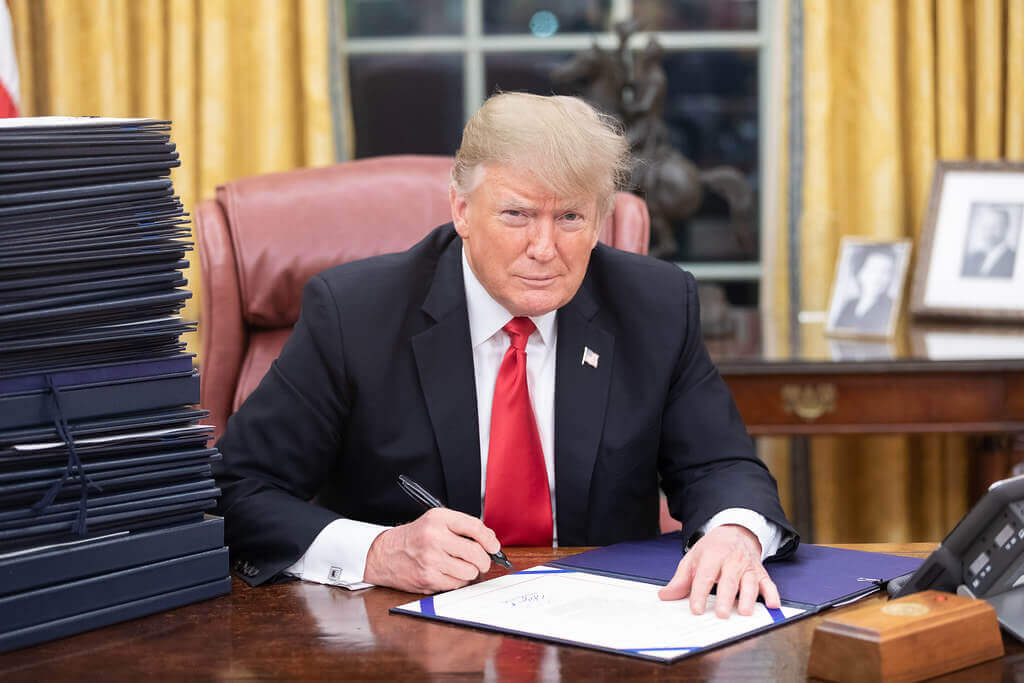
President Trump Signs Executive Order “Requesting a Plan for Declassification” of JFK, MLK, and RFK Assassination Files


Posted originally on the CTH on January 24, 2025 | Sundance 

It will be interesting to watch how this unfolds with new Intelligence Community heads moving into position to support or shape the request.

This specific Executive Order [SEE HERE] approach runs counter to my personal, albeit controversial, opinion on how the declassification of sensitive documents should be handled in order to deliver the highest level of transparency. However, this approach does keep the lawyers in charge of the executive office in legal control of the mechanics.  The order essentially requires the nation’s security organizations to create plans to release the records.

Within the video, the first two executive orders are related to David Sacks and the Crypto/AI positions of the Trump administration. The rest of the Executive Orders are AVAILABLE HERE.  Full Press Conference:

.

Don’t get your hopes up.  In my humble opinion this declassification request approach leads to nothing. Perhaps I will be wrong. I hope so, but prior experience shows big initial headlines and empty results.

FIRST, look at the XO:

By the authority vested in me as President by the Constitution and the laws of the United States of America, it is hereby ordered as follows:

Section 1.  Policy and Purpose.  More than 50 years after the assassinations of President John F. Kennedy, Senator Robert F. Kennedy, and the Reverend Dr. Martin Luther King, Jr., the Federal Government has not released to the public all of its records related to those events.  Their families and the American people deserve transparency and truth.  It is in the national interest to finally release all records related to these assassinations without delay.

The President John F. Kennedy Assassination Records Collection Act of 1992 required all records related to the assassination of President Kennedy to be publicly disclosed in full by October 26, 2017, unless the President certifies that:  (i) continued postponement is made necessary by an identifiable harm to the military defense, intelligence operations, law enforcement, or conduct of foreign relations; and (ii) the identifiable harm is of such gravity that it outweighs the public interest in disclosure.  President John F. Kennedy Assassination Records Collection Act of 1992, section 5(g)(2)(D), Public Law 102-526, 106 Stat. 3443, 3448–49, codified at 44 U.S.C. 2107 note.

I previously accepted proposed redactions from executive departments and agencies (agencies) in 2017 and 2018, but ordered the continued re-evaluation of those remaining redactions.  See Temporary Certification for Certain Records Related to the Assassination of President John F. Kennedy, 82 Fed. Reg. 50,307–08 (Oct. 31, 2017); Certification for Certain Records Related to the Assassination of President John F. Kennedy, 83 Fed. Reg. 19, 157–58 (Apr. 26, 2018).  In the Presidential Memorandum of April 26, 2018, I also ordered agencies to re-review each of those redactions over the next 3 years and disclose information that no longer warrants continued withholding under the standard set forth in section 5(g)(2)(D) of the President John F. Kennedy Assassination Records Collection Act of 1992.

President Biden issued subsequent certifications with respect to these records in 2021, 2022, and 2023, which gave agencies additional time to review the records and withhold information from public disclosure.  See Temporary Certification Regarding Disclosure of Information in Certain Records Related to the Assassination of President John F. Kennedy, 86 Fed. Reg. 59,599 (Oct. 22, 2021); Certifications Regarding Disclosure of Information in Certain Records Related to the Assassination of President John F. Kennedy, 87 Fed. Reg. 77,967 (Dec. 15, 2022); Certification Regarding Disclosure of Information in Certain Records Related to the Assassination of President John F. Kennedy, 88 Fed. Reg. 43,247 (June 30, 2023).

I have now determined that the continued redaction and withholding of information from records pertaining to the assassination of President John F. Kennedy is not consistent with the public interest and the release of these records is long overdue.  And although no Act of Congress directs the release of information pertaining to the assassinations of Senator Robert F. Kennedy and the Reverend Dr. Martin Luther King, Jr., I have determined that the release of all records in the Federal Government’s possession pertaining to each of those assassinations is also in the public interest.

     Sec. 2.  Declassification and Disclosure.  (a)  Within 15 days of the date of this order, the Director of National Intelligence and the Attorney General shall, in coordination with the Assistant to the President for National Security Affairs and the Counsel to the President, present a plan to the President for the full and complete release of records relating to the assassination of President John F. Kennedy.

     (b)  Within 45 days of the date of this order, the Director of National Intelligence and the Attorney General shall, in coordination with the Assistant to the President for National Security Affairs and the Counsel to the President, review records related to the assassinations of Senator Robert F. Kennedy and the Reverend Dr. Martin Luther King, Jr., and present a plan to the President for the full and complete release of these records.

     Sec. 3.  General Provisions.  (a)  Nothing in this order shall be construed to impair or otherwise affect:

(i)   the authority granted by law to an executive department or agency, or the head thereof; or

(ii)  the functions of the Director of the Office of Management and Budget relating to budgetary, administrative, or legislative proposals.

     (b)  This order shall be implemented consistent with applicable law and subject to the availability of appropriations.

     (c)  This order is not intended to, and does not, create any right or benefit, substantive or procedural, enforceable at law or in equity by any party against the United States, its departments, agencies, or entities, its officers, employees, or agents, or any other person. [LINK]

Here’s the alternative, controversial approach:

Dear Mr. President and White House counsel:

Understanding the ordinary process of declassifying documents is a request and authorization to the executive officers and stakeholders of classified information; and understanding the current authorization is not ordinary because the intelligence community stakeholders are averse to the interests of the office of the president; here is a process to cut through the chaff and countermeasures.

The background here is that any unilateral declassification request, demand or authorization by President Trump puts him opposition to a variety of corrupt interests.

As a direct result the executive office of the president will be facing legal action, likely from unified democrats and republicans in the legislative branch.  With that accepted, here is the most strategic approach.

In anticipation of litigation:

President Trump informs the Office of the Director of National Intelligence, Tulsi Gabbard, that he wishes to have a full intelligence briefing on the following documents (more may be added), all documents are to be presented without a single redaction:

The full and complete records relating to the assassination of President John F. Kennedy.

The full and complete records relating to the assassination of Senator Robert F. Kennedy and the Reverend Dr. Martin Luther King, Jr.

The President selects a date for this briefing and through direct orders to his chief of staff, Susie Wiles and National Security Advisor, Mike Waltz, informs the Office of the Director of National Intelligence, Tulsi Gabbard, to advise and coordinate with all executive branch intelligence officials, who were/are stakeholders in the compartmented intelligence products as described above, of their request be present for the briefing.

The White House counsel’s office is not to be informed of the intent or purpose of the meeting; however, the Presidents’ White House counsel is requested to attend. Further, all of the compartmented intelligence is to be collectively assembled by the ODNI (Gabbard) into one volume of a singular Presidential Daily Briefing (PDB) although each set might be file boxes.  There are to be eighteen printed copies of the PDB material assembled and secured for the briefing, post haste.

Additionally, the office of the president personally informs the ODNI (Gabbard) of the executives’ request to invite for the briefing each member of the legislative branch Intelligence Community oversight known as the Gang-of-Eight.

Immediately after the briefing by the executive level (cabinet) department officials, while remaining in a closed and classified session, the full and comprehensive content of this collective intelligence product will be discussed with the full assembly of the U.S. Legislative Branch Intelligence Oversight known as the Gang of Eight.

Therefore, National Security Advisor Mike Waltz is instructed to coordinate with the ODNI (Gabbard) for the attendance of the Gang of Eight: Speaker Mike Johnson, Minority leader Hakeem Jeffries, HPSCI Chairman Rick Crawford, HPSCI Ranking Member Jim Himes, Senate Majority Leader John Thune, Senate Minority Leader Chuck Schumer, SSCI Chairman Tom Cotton and SSCI Vice-Chair Mark Warner. [Topic “TBD”]

In order to facilitate the briefing. Each member of the participating group will be provided with one full printed copy of the material assembled by the ODNI during the briefing.

[Each of the participants carries the prerequisite clearances, legal and constitutional authority to engage with the classified documents according to their position and status. Only the executive can assemble the product for Go8 review and feedback]

At the conclusion of the briefing; and after hearing from, and engagement with, each of the participating members of the executive intelligence offices and duly authorized legislative oversight representatives; and after listening to their opinion as to the subject material discussed; the president announces to the fully assembled leadership of both the Executive branch (cabinet) and Legislative branch (Go8), it is his opinion the National Interests of the United States can best be served with the American people having a full, transparent and honest review of the material assembled and discussed.

The President, no-one elseonly the President, [with his affirmed constitutional power and protection – as acting within his official duty] then collects the printed portfolios [or boxes] as they were distributed to the participants, exits the briefing, and walks directly into the James Brady press briefing room within the White House; handing each of the awaiting twelve members of the national media a copy of the briefing material to be published on behalf of the American people.

At exactly the same time as President Trump enters the briefing room, one copy of the assembled portfolio is hand delivered, by President Trump only, to White House communications director with instructions to scan and release the content to the public through the White House website.

Done.

The American people are aware…

Senate Majority Leader John Thune Interview About Supporting President Trump Agenda


Posted originally on the CTH on January 24, 2025 | Sundance 

Senate Majority Leader John Thune is maintaining his pro-Trump agenda position into day #4 of the administration.  Thune appears with the insufferable Sean Hannity to discuss his recent meetings with President Trump and Speaker Johnson, as well as the plans and forecast for legislative support of the American First agenda.

.

President Trump Removes Diplomatic Security Service from Mike Pompeo Detail


Posted originally on the CTH on January 23, 2025 | Sundance

According to the New York Times, President Trump has removed the security detail from Mike Pompeo and Brian Hook, in addition to previous removals for John Bolton.  The protective detail came from the U.S. State Dept under the Diplomatic Security Service.

NYT –  President Trump revoked security protection for his former secretary of state, Mike Pompeo, and a former top aide, Brian Hook, despite warnings from the Biden administration that both men faced ongoing threats from Iran because of actions they took on Mr. Trump’s behalf, four people with knowledge of the matter said on Thursday.

Mr. Pompeo and Mr. Hook had been part of an aggressive posture against Iran during the first Trump presidency, most notably the drone strike that killed the powerful Iranian general Qassim Suleimani in early 2020.

Mr. Trump also remains under threat because of that action, and his advisers have regularly stressed the seriousness of the situation in the years between his two terms in office.

Mr. Pompeo and Mr. Hook had their security details, which were believed to be provided by the State Department, pulled on Tuesday, one of the people briefed on the matter said. A day before, Mr. Trump pulled the U.S. Secret Service detail of John R. Bolton, who was Mr. Trump’s third national security adviser and also faces threats. (more)

♦ Mike Pompeo used his position of influence to install Senator Dan Coats as Director of National Intelligence during the first administration, with the mission objective to hamstring President Trump and ensure the “six ways from Sunday” group could lead the internal attacks.

ODNI Dan Coats operated to block all declassification efforts of President Trump during the first administration until he was ultimately fired, too late, and replaced by Acting DNI Ric Grenell; later replaced by DNI John Ratcliffe.

♦ Mike Pompeo misled President Trump about issues of national intelligence, blocked any information adverse to the interests of the “six ways from Sunday” group, and operated a stealth mission to destroy the presidency.  That agenda included lying to President Trump about military engagements, CIA activity, foreign missions and organizing military attacks without the approval of the Commander in chief.

While doing this, Mike Pompeo attempted to organize a covert assassination effort against Julian Assange, and later worked with the corrupt interests inside the Robert Mueller team and DOJ-NSD to exfiltrate Assange from the Ecuadorian embassy in London (joint black-ops mission with GCHQ) with hopes to finish the Assange operation in prison. {GO DEEP}

Additionally, for CONTEXT – […] (3) Joint Chief Chairman Milley, and SoS Mike Pompeo traveled to Mar-a-Lago in December 2019, where they informed President Trump of military strikes in Syria and Iraq *after* they took place. [Background Here] [Background Here]. President Trump made Esper, Milley and Pompeo hold a press conference without Trump supporting them; then President Trump remained silent on the issue for days.

It seemed like CTH was alone in noticing the issues with the Pentagon and suspicions of Secretary of State Mike Pompeo, Defense Secretary Mark Esper and Joint Chiefs of Staff Chairman Mark Milley. However, a few days after the Mar-a-Lago incident, Col Douglas Macgregor expressed his own suspicions about the U.S. military attack in Iraq and Syria that paralleled our gut reaction. Macgregor stated he believed President Trump was being intentionally and “skillfully, misinformed”[GO DEEP]

President Trump Speech to World Economic Forum – 11:00am Livestream


Posted originally on the CTH on January 23, 2025 | Sundance

The World Economic Forum (WEF) is holding their annual meeting in Davos again.  No doubt the #1 topic of conversation in every session is the impact of President Donald Trump upon the global order supported by the WEF agenda.

President Trump will be delivering remarks to the WEF audience, live via teleconference video from the White House.  President Trump will also take some questions from the attendees. The President’s highly anticipated remarks are scheduled at 11:00am EST with livestream links below.

.

1,500 U.S. Troops Arrive in First Wave of Southern Border Security and Logistics


Posted originally on the CTH on January 23, 2025 | Sundance

President Trump ordered the U.S. Defense Department to make “homeland security a core mission of the agency.”  In one of the first actions to support an executive order on border security, the Pentagon sends an additional 1,500 active-duty troops to support Customs and Border Patrol.

(Via Reuters) – […] The additional troops include 500 Marines, as well as Army helicopter crews and intelligence analysts. They will join 2,200 active-duty troops and thousands of National Guard that were on the border prior to Trump’s inauguration this week.

A separate official, speaking on the condition of anonymity, said there had been informal discussions about sending as many as 10,000 troops over time. But, officials cautioned, a final figure had not been determined, and troop numbers would depend on several factors, including impact on military readiness and what the Department for Homeland Security requests.

[…]  Acting Defense Secretary Robert Salesses said the U.S. military would help provide flights for Department of Homeland Security-led deportations of more than 5,000 immigrants held by U.S. authorities in El Paso, Texas, and San Diego, California.

“DHS will provide in-flight law enforcement and the State Department will obtain the requisite diplomatic clearances,” Salesses said. (read more)

Secretary Rubio’s First Trip: Panama, Guatemala, El Salvador, Costa Rica and the Dominican Republic


Posted originally on the CTH on January 23, 2025 | Sundance 

Newly confirmed Secretary of State Marco Rubio has outlined his plans for his first foreign trip on behalf of President Trump.

In keeping with the #1 priority of U.S. border security and western hemisphere focus, Secretary Rubio will be heading to Panama, Guatemala, El Salvador, Costa Rica and the Dominican Republic.  Obviously, the strategic national interest of the Panama Canal will be at the forefront of the visit; however, the visit to Guatemala and El Salvador will likely focus on their role in the transit of illegal aliens to the U.S. southern border.

President Trump has taken a very strong approach in his prior remarks about the central and south American nations being responsible to control migration.  There are numerous Non-Governmental Organizations and U.N agencies operating in Central America who direct and support the illegal migration flow.

This will be a test of Rubio’s capability to transfer President Trump’s open statements about repatriation of unlawful border crossers back into the nations of origin.  Undoubtably, Rubio will carry the economic weapons of trade and tariffs in his discussions with leaders in the region.

WASHINGTON DC – Secretary of State Marco Rubio is set to visit Panama — the country whose canal President Donald Trump has suggested he’d seize — as early as next week, according to three U.S. officials briefed on the plan.

The Rubio trip — scheduled to run from late January to early February — also includes Guatemala, El Salvador, Costa Rica and the Dominican Republic, the officials said.

The trip is expected to be Rubio’s first foreign travel as secretary of State, said one former official who was also briefed on the plan. All were granted anonymity as they weren’t authorized to discuss travel plans publicly.

All of the individuals also stressed that the travel plans are tentative.

Late Wednesday, State Department spokesperson Tammy Bruce confirmed the overall travel plan and said Rubio was choosing to prioritize the Western Hemisphere because “it’s where we live.”

“We won’t continue to ignore the region as other administrations have,” Bruce said. “Engaging with our neighbors is a vital element in addressing migration, supply chains and economic growth, which are key to Secretary Rubio’s pursuit of foreign policy focused on making America strong, prosperous, and safe.” (more)

Realignment – NSA Mike Waltz Suspends all National Security Council Detailees Pending Review and Reapplication


Posted originally on the CTH on January 23, 2025 | Sundance 

As CTH previously noted, much of the success in breaking up the Intelligence Community silo operations will fall on the shoulders of National Security Advisor, Mike Waltz.

In fact, the structure of the intelligence information system currently under construction in the Trump White House depends on Waltz successfully organizing the new system. {GO DEEP}

In following the roadmap for the optimal outcome, NSA Mike Waltz has suspended all aides to the National Security Council pending a review of their alignment with the Trump administration.  Again, a good and necessary move.

That said, Mike Waltz is likely to make a few mistakes along the road to a rapid reorganization and anyone who does not have trust issues given the nature of what we have witnessed within the IC manipulation of government, would not be honest.  However, Waltz is -so far- following a sequential process that will position the National Security Council for the optimal outcome.

The downside to these early moves is that the SSCI is watching this restructuring while simultaneously pending the nomination hearings of DNI Tulsi Gabbard who would also play a vital role in the information flow if the NSC is to get the best information to work with.  A historic review of the Senate Select Committee on Intelligence shows they support the status quo IC and simultaneously hold power over the IC confirmation positions.

WASHINGTON (AP) — President Donald Trump’s national security adviser on Wednesday sidelined about 160 National Security Council aides, sending them home while the administration reviews staffing and tries to align it with Trump’s agenda.

The career government employees, commonly referred to as detailees, were summoned Wednesday for an all-staff call and told they will be expected to be available to the council’s senior directors but would not need to report to the White House. The council provides national security and foreign policy advice to the president.

Brian McCormack, chief of staff to national security adviser Mike Waltz, delivered the news in a two-minute phone call, telling the detailees they “are directed to be on call and report to the office only if contacted by the NSC leadership.”

“As anyone who has had the privilege of working here in the White House knows, it’s a tremendous honor to support the executive office of the president and the presidency itself,” said McCormack, according to a recording of the call obtained by The Associated Press. “We also know that every president is entitled to have a staff and the advisers that they need to implement the goals that the American people elected him to pursue.” (read more)

Embedded within the NSC are going to be operatives against the foreign policy interest of President Trump.  Mike Waltz is trying to ferret them out.

Keep this in mind as the next few weeks unfold, because no doubt those IC embeds who are removed are going to leak shaped information in an effort to weaken President Trump and Mike Waltz.  In essence, on matters of national security policy, watch what President Trump says and does and not what the leakers, ‘sources familiar with the matter‘, might say.

Removing the tentacles of the deep state is an undertaking that requires prudent discernment, and the absence of emotion as the process unfolds.

President Trump is not going to be in deep the weeds with these NSC folks, that’s the job for Mike Waltz.  President Trump is going to set policy goals and strategic interest priorities with people he assigns to specific areas. It is the responsibility of NSA Waltz to ensure no opposition in the National Security Council, and an honest plan to support those objectives.

President Trump Restructures the National Security Council and Removes IC Influence


Posted originally on the CTH on January 21, 2025 | Sundance

People have asked why we focus so much sunlight and attention toward the network silos that operate the Intelligence Community (IC) and as an outcome the national security focus of government.  The answer is simple, as Mary McCord herself admitted publicly, the IC are the background approver for every weaponized approach of government, including the DOJ.

With that in mind, CTH has painstakingly made the case –with details and receipts– for a process of removing the IC silos from influence over the Office of The President.  The Chief Executive must control all elements of national security policy and implementation.

Thankfully, the Supreme Court recently affirmed the plenary power of the executive branch, and the unitary power of the President in controlling every system within that branch of government.

That ruling (presidential immunity) further bolstered the solution we have continuously proposed. The IC silos must be decoupled from the Executive office definitions of national security, until such a time as the IC institutions can be bought to heel.

The most effective way to confront a rogue, hostile and corrupt IC apparatus is to take away their power.  The best way to remove their power is to use their primary weapon, their silo structure, against them.

Turn each silo into an irrelevant echo-chamber by using the White House National Security Council as their replacement.  Regardless of what triggers the various IC silo embeds try to pull (CIA, NSA, FBI, DIA, etc.) let them shoot blanks by removing their power over policy and process.

If the IC is isolated from influence, eventually the Legislative Branch, specifically the Senate Select Committee on Intelligence and the House Permanent Select Committee on Intelligence, will realize the ‘Seven Ways from Sunday’ group no longer hold power.  The IC becomes a crew stomping their feet while no one pays attention.

This approach would be affected by restructuring the President’s National Security Council (NSC), the National Security Advisor (NSA Mike Waltz) and working with the Office of the Director of National Intelligence (DNI Tulsi Gabbard), in a synergistic process.   The IC become simply information functionaries. The Nat Sec Council then validates and defines the information, creates the definitions of national security interest, and initiates the guidance to President Trump, who ultimately triggers any action.

Until yesterday there were only a few subtle signs that this ‘silo isolation’ approach was being accepted as the most effective optimal solution to the problem within the intelligence apparatus. However, yesterday President Trump signed an Executive Order [SEE HERE] doing exactly the type of restructuring that is needed.

The XO is technical and deep in the weeds, but this is the process that has the greatest likelihood of success.

SUBJECT: Organization of the National Security Council and Subcommittees

By the authority vested in me as President by the Constitution and the laws of the United States of America, I hereby direct the following:

As President, my highest priority and responsibility is to ensure the safety and security of the United States and its people. The national and homeland security threats facing the United States are complex and rapidly evolving. These issues often do not fit neatly into the categories that single departments and agencies are designed to optimally address, a fact recognized and exploited by our strategic competitors and adversaries in their adoption of whole-of-government and even whole-of-society approaches.

The United States Government’s decision-making structures and processes to address national security challenges must therefore be equally adaptive and comprehensive. They must be able to competently design and execute cooperative and integrated interagency solutions to address these problems, and protect and advance the national interests of the United States. Therefore, to advise and assist me in this endeavor, I hereby direct that my system for national security policy development, decision-making, implementation, and monitoring shall be organized as set forth in this Memorandum. This Memorandum prevails over any prior orders, directives, memoranda, or other Presidential guidance related to the organization of the National Security Council (NSC or Council).

A. The National Security Council and Supporting Staff

1. Functions, Responsibilities, and Chairs.

(a) Functions and Responsibilities. The National Security Act of 1947, as amended (the Act), established the NSC to advise the President with respect to the integration of domestic, foreign, and military policies relating to national security. The Homeland Security Council (HSC) has the distinct purpose of advising the President on matters pertaining to homeland security. The NSC shall convene as the HSC on topic areas agreed to in advance by the Assistant to the President for National Security Affairs (National Security Advisor) and the Assistant to the President for Homeland Security (Homeland Security Advisor). Along with its subordinate committees and staff, the NSC shall be the President’s principal means for coordinating Executive departments and agencies in the development and implementation of national and homeland security policies, strategies, activities, and functions, their integration across departments and agencies within their purview, and for long-term strategic planning.

(b) Chairs. The President will chair the NSC. When the President is absent from a meeting of the Council, he may appoint a Cabinet-level official to chair.

2. NSC Staffing Responsibilities of the National Security Advisor.

(a) Role of the National Security Advisor. The National Security Advisor shall be responsible, as appropriate and at the President’s direction, for determining the agenda for the NSC, ensuring that the necessary papers are prepared, and recording and communicating Council actions and Presidential decisions in a timely manner.

(b) Role of the Homeland Security Advisor. When convened as the HSC, the duties referenced in subsection (2)(a) shall be the responsibility of the Homeland Security Advisor.

3. Designating NSC Members, Attendees, and Invitees.

(a) Membership. The NSC membership consists of the statutory members set forth in section 101(c)(1) of the Act (50 U.S.C. 3021(c)(1)):

The President;
The Vice President;
The Secretary of State;
The Secretary of the Treasury;
The Secretary of Defense;
The Secretary of Energy;
The Director of the Office of Pandemic Preparedness and Response Policy;
and additional members hereby designated by the President pursuant to section 101(c)(1) of the Act:

The Attorney General;
The Secretary of the Interior;
Chief of Staff to the President (White House Chief of Staff); and
The National Security Advisor.
When the NSC convenes as the HSC, members shall also include:

The Secretary of Homeland Security; and
13) The Homeland Security Advisor.

(b) NSC Meeting Attendees. The National Security Advisor retains the discretion to determine the attendee list for all meetings of the NSC, including by requesting the attendance of any senior official of the Executive Branch. The Homeland Security Advisor retains this same discretion when the NSC convenes as the HSC. This discretion shall be exercised based on the policy relevance of attendees to the issues being considered, the need for secrecy on sensitive matters, staffing requirements, and other considerations.

As regular practice, the National Security Advisor and Homeland Security Advisor shall include as additional non-voting attendees:

The Director of National Intelligence (non-voting advisor);
The Assistant to the President and Principal Deputy National Security Advisor (non-voting advisor and principal notetaker) or, when convening as the HSC, the Deputy Homeland Security Advisor (non-voting advisor and principal notetaker);
The Chairman of the Joint Chiefs of Staff (non-voting advisor); and
The Director of the Central Intelligence Agency (non-voting advisor).
(c) NSC Regular Invitees. Unless specifically restricted, these officials are invited to attend any NSC and HSC meeting as non-voting advisors:

The Assistant to the President and Counsel to the President;
The Assistant to the President and Deputy Chief of Staff for Policy;
The Assistant to the President for Policy; and
The Deputy Counsel to the President for National Security Affairs and Legal Counsel to the National Security Advisor.
4. Right to Propose Agenda Items.

Any NSC member attending a meeting in a voting capacity may propose, in advance and in accordance with a timeline set by the National Security Advisor or his designee, agenda items for their consideration.[1] The National Security Advisor will determine whether to include these items on the agenda. The Homeland Security Advisor shall have this same discretion when the Council is convened as the HSC.

5. The National Security Council Staff.

(a) Staff Fusion. There is a single NSC staff within the Executive Office of the President (EOP) that serves both the NSC on national security matters and the HSC when the Council is considering homeland security matters. The staff is headed by a single Executive Secretary, in accordance with section 101(e)(1) of the National Security Act of 1947 (50 U.S.C. 3021(e)(1)) and section 905 of the Homeland Security Act of 2002 (6 U.S.C. 495).

(b) Purpose. The purposes of the National Security Advisor and subordinate staff are to

(i) advise and assist the President in the course of conducting activities that relate to or affect the carrying out of the President’s constitutional, statutory, or other official or ceremonial duties pertaining to national or homeland security, pursuant to the Presidential Records Act of 1978, as amended;[2]

(ii) advise and assist the other members of the NSC (and the NSC when convening as the HSC), and others in the White House;

(iii) help the President plan and set priorities, in accordance with section II of the Message of the President in the Reorganization Plan No. 1 of 1977;

(iv) advise and make recommendations to the President with respect to, and establish, integrated domestic, foreign, and military policies and procedures for the departments, agencies, and functions of the Government relating to national and homeland security, pursuant to sections 2 and 101(b)(1) of the Act (50 U.S.C. 3002, 3021(b)(1));

(v) coordinate, facilitate, monitor, oversee, and review Administration policies and their implementation with respect to national security, and make resulting recommendations to the President;

(vi) help the President resolve major conflicts among departments and agencies with regard to national security, in accordance with section II of the Message of the President in the Reorganization Plan No. 1 of 1977.

(c) Fair, Balanced, and Thorough Processes. In accordance with sections I and II of the Message of the President in the Reorganization Plan No. 1 of 1977, the NSC staff shall ensure that the processes it organizes, coordinates, and manages fairly and thoroughly gather the facts, intelligence, and other relevant information necessary to NSC decisions; fully analyze the issues; consider a full range of views and options; assess the prospects, risks, costs, and implications of each option; and distill these options for the President, other NSC principals, and senior officials participating in the subsidiary committees of the NSC or HSC, in a fair, balanced, and organized way. The National Security Advisor and subordinate NSC staff shall represent the views and differences of NSC principals and other senior officials to the President with accuracy and fidelity.

(d) Policy Development. In accordance with sections I and II of the Message of the President in the Reorganization Plan No. 1 of 1977,[8] the NSC staff shall facilitate the development and refinement of interagency policy options, and develop additional options besides those proposed by departments and agencies as necessary, both to complement, supplement, and enhance their work, and to offer the President and other NSC principals and other senior officials a sufficiently broad menu of operationally feasible options for consideration, deliberation, and decision.

B. The Principals Committee

1. Principals Committee Establishment.

(a) (i) Functions and Responsibilities. The Principals Committee (PC) shall continue to serve as the Cabinet-level senior interagency forum for considering policy issues that affect the national security interests of the United States. The PC shall develop options and recommendations for the President on national security and homeland security matters requiring the President’s attention, and with the Committee’s full consensus shall set priorities, issue policy guidance, and facilitate coordination and integration on national security policy and implementation issues as appropriate that do not require Presidential attention.[9] Issues involving matters that are statutorily authorized for decision by a principal, or delegated to a principal by the President, can be coordinated and decided by the principals without requiring Presidential attention.

(ii) Voting and NSC Referral. Consensus is reached when all voting (i.e., non-advisory) attendees present either vote affirmatively for the same decisional option or formally abstain, and all such votes shall be recorded and minuted. Issues for which the Committee fails to reach consensus shall be referred to the NSC for decision, with a formal nonconcurrence required by at least one non-advisory attendee present for such a referral. Whether an issue requires Presidential attention, and the Committee attendees’ positions on the issue itself, shall be separately polled. If a voting attendee does not concur with the determination that Presidential consideration is not required, the issue shall be referred, along with the results of the PC’s deliberation on the issue itself and its recommendations, to deliberation by the NSC.

(b) Role of the National Security Advisor. The PC shall be convened and chaired by the National Security Advisor. The Chair shall determine the agenda, location, and meeting materials, in consultation with the appropriate attendees.

(c) Substitute Chairs. At his sole discretion, the National Security Advisor may delegate authority to convene and chair or co-chair the PC to an appropriate attendee of the NSC or EOP policy council senior official. The Homeland Security Advisor, who is Chair when the PC considers matters that would be raised to the NSC convening as the HSC, may similarly delegate such duties.

(d) Right to Propose Agenda Items. Any PC member attending in a voting capacity may propose, in advance and in accordance with a timeline set by the Chair, agenda items for consideration by the PC. The Chair will determine which, if any, shall be included.

2. Executive Secretary Responsibilities and Process.

(a) Responsibilities. The Executive Secretary shall ensure that the necessary papers are prepared, serve as executive secretary of the PC, and shall record and communicate accurately, and in a timely manner, the Committee’s conclusions and decisions, what was not decided, and any responsibilities for implementation by departments and agencies or taskings to the Deputies Committee or subsidiary policy coordination committees that have been agreed or assigned, if appropriate.[10] The Executive Secretary shall generally be assisted in these tasks by the senior directors and other NSC staff by the senior directors and other NSC staff.

(b) Dispute Resolution Process. If a PC voting attendee disputes that the conclusions or decisions of the PC were correctly minuted, this must be communicated in writing to the Executive Secretary and the National Security Advisor (and any substitute Chair if appropriate) within three business days, although those officials may allow additional time if exigent or extenuating circumstances require it. If resolution of the dispute cannot be achieved, and any necessary amended report of the PC proceedings was issued within a week of the dispute being communicated, the disputing attendee may appeal the matter to the White House Chief of Staff or, should that official so designate, to the White House Deputy Chief of Staff for Policy, whose decision shall be final.

3. Principals Committee Attendees and Invitees.

(a) Principals Committee Attendees.

(i) The National Security Advisor retains the discretion to determine the attendee list for all PC meetings on national security. The Homeland Security Advisor retains this same discretion when chairing the PC. This discretion shall be exercised based on the policy relevance of attendees to the issues being considered, the need for secrecy on sensitive matters, staffing needs, and other considerations. As regular practice, the National Security Advisor and Homeland Security Advisor shall include as additional non-voting attendees:

1) The Director of National Intelligence;

2) The Chairman of the Joint Chiefs of Staff;

3) The Director of the Central Intelligence Agency;

4) The Principal Deputy National Security Advisor;

5) the National Security Advisor to the Vice President; and

6) The Executive Secretary (principal notetaker).

(ii) PC Regular Invitees. Unless specifically restricted, these officials are invited to attend any PC meeting as non-voting advisors:

The Assistant to the President and Counselor to the President;
The Assistant to the President and Deputy Chief of Staff for Policy;
The Assistant to the President for Policy; and
The Deputy Counsel to the President for National Security Affairs and Legal Counsel to the National Security Advisor.
(iii) Staffing Invitees. At the discretion of the Chair, staff members of the NSC or other appropriate EOP policy councils may be invited to attend specific PC meetings to assist the Executive Secretary in the performance of their executive secretary duties.

C. The Deputies Committee

1. Deputies Committee Establishment.

(a) Functions and Responsibilities. The Deputies Committee (DC) shall continue to serve as the senior sub-Cabinet interagency forum for consideration of and, where appropriate, decision making on, policy issues that affect the national security interests of the United States. The DC shall review and monitor the work of the interagency national security process, including the interagency groups established pursuant to section D below. The DC shall work to ensure that issues brought before the NSC, the NSC when convening as the HSC, and the PC have been properly analyzed and prepared for decision. The DC shall also focus significant attention on monitoring the implementation of these policies and decisions and shall conduct periodic reviews of the Administration’s major national security and foreign policy initiatives.

(b) Role of the Principal Deputy National Security Advisor. The DC shall be convened and chaired by the Principal Deputy National Security Advisor. The Chair shall determine the location, agenda, and meeting materials in consultation with the DC attendees.

(c) Substitute Chairs. At his sole discretion, the Principal Deputy National Security Advisor may delegate authority to convene and chair or co-chair the DC to an appropriate regular attendee of the DC or other appropriate EOP official. The Deputy Assistant to the President for Homeland Security (Deputy Homeland Security Advisor) shall chair meetings when considering issues that would be raised when the NSC is convened as the HSC. The Deputy Homeland Security Advisor has similar delegatory authority.

(d) Right to Propose Agenda Items. Any DC member attending in a voting capacity may propose, in advance and in accordance with a timeline set by the Chair, agenda items for consideration by the DC. The Chair will determine which, if any, shall be included.

2. Executive Secretary Responsibilities and Process.

(a) General. The Executive Secretary shall ensure that the necessary papers are prepared, and shall record and communicate accurately, and in a timely manner, the Committee’s conclusions and decisions, what was not decided, and any responsibilities for implementation by departments and agencies or taskings to subsidiary policy coordination committees that have been agreed or assigned, if appropriate. The Executive Secretary shall generally be assisted in this task by the senior directors and other NSC staff.

(b) Dispute Resolution Process. If a DC voting attendee disputes that the conclusions or decisions of the DC were correctly minuted, this must be communicated in writing to the Executive Secretary and the Principal Deputy National Security Advisor or the Deputy Homeland Security Advisor, as relevant, within three business days, although those officials may allow additional time if exigent or extenuating circumstances require it. If resolution of the dispute cannot be achieved, and any necessary amended report of the PC proceedings issued within a week of the dispute being communicated, the disputing attendee may appeal the matter to the White House Chief of Staff, or should that official so designate, the White House Deputy Chief of Staff for Policy, whose decision shall be final.

3. Designating Deputies Committee Regular Attendees and Invitees.

(a) Deputies Committee Attendees. The Principal Deputy National Security Advisor retains the discretion to determine the attendee list for all DC meetings.

The Deputy Homeland Security Advisor retains this same discretion when chairing DC meetings. This discretion shall be exercised based on the policy relevance of attendees to the issues being considered, the need for secrecy on sensitive matters, staffing needs, and other considerations.

As regular practice, the Principal Deputy National Security Advisor shall include as DC attendees:

The Deputy Secretary of State;
The Deputy Secretary of the Treasury;
The Deputy Secretary of Defense;
The Deputy Attorney General;
The Deputy Secretary of Energy;
The Deputy Director of National Intelligence (non-voting advisor);
The Vice Chairman of the Joint Chiefs of Staff (non-voting advisor);
The Deputy Director of the Central Intelligence Agency (non-voting advisor);
The Executive Secretary of the NSC (non-voting advisor and principal notetaker); and
The National Security Advisor to the Vice President.
When homeland security issues are on the DC agenda, the DC’s regular attendees will also include:

11) The Deputy Secretary of Homeland Security; and

12) The Deputy Homeland Security Advisor (chair).

(b) DC Regular Invitees. These officials are invited to attend any DC meeting:

The Deputy Director of the Office of Management and Budget; and
The Deputy Assistant to the President and Senior Policy Strategist.
D. Policy Coordination Committees

Management of the development and implementation of national security policies by multiple Executive departments and agencies typically shall be accomplished by Policy Coordination Committees (PCCs), with participation primarily occurring at the Assistant Secretary level. As the main day-to-day fora for interagency coordination and integration of national security policies, PCCs shall develop and provide policy options and analyses for consideration by higher echelon committees of the national security system. PCCs shall ensure timely responses to, and implementation and monitoring of, decisions, directives, objectives, instructions, inquiries, tasking, and policy guidance of and by the President, National Security Advisor, and the higher-echelon committees of the national security system.

PCCs shall be established at the direction of the National Security Advisor or Homeland Security Advisor, in consultation with the White House Chief of Staff or her designee. Members of the NSC staff will chair the PCCs.

PCCs shall review, coordinate, integrate, and monitor the implementation of Presidential decisions in their respective national security and homeland security policy areas. The Chair of each PCC, in consultation with the Executive Secretary, shall invite representatives of departments and agencies to attend meetings of the PCC where appropriate. The Chair of each PCC, with the agreement of the Executive Secretary, may establish subordinate working groups to assist that PCC in the performance of its duties.

Interagency Policy Committees (IPCs) chartered under the aegis of the process established by National Security Memorandum-2 (NSM–2) may continue to be operated as PCCs by the NSC staff until renewed or discontinued by the National Security Advisor.

E. General

(a) The President and the Vice President may attend any meeting of any entity established by or under this directive.

(b) This document is part of a series of National Security Policy Memoranda, which have replaced both National Security Memoranda and National Security Study Memoranda as the instrument for communicating relevant Presidential decisions. This directive shall supersede all other existing Presidential directives and guidance on the organization or support of the NSC and the HSC where they conflict, including National Security Memorandum–2 of February 4, 2021 (Memorandum on Renewing the National Security Council System), which is hereby revoked. This document shall be interpreted in concert with any Presidential directives governing other policy councils and offices in the EOP mentioned herein, and with any Presidential directives signed hereafter that implement this document or those Presidential directives.

[SOURCE]

This process hinges upon the execution of National Security Advisor Mike Waltz.

We will watch closely.

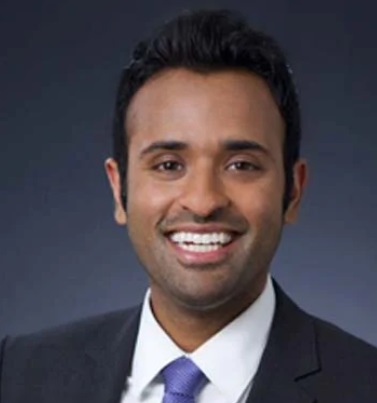
Vivek Ramaswamy Drops Out of DOGE, Likely to Run for Ohio Governor


Posted originally on the CTH on January 23, 2025 | Sundance

Not since Ted Cruz’s GOP nomination speech in 2016 had a political figure self-emolliated with such tone-deaf stupidity as Vivek Ramaswamy when he blamed American culture for the justification for why we need to import H1B tech workers.   It’s been all downhill for him from that apex.

On the day before President Trump’s inauguration, Ramaswamy announced he would be departing from the Dept of Govt Efficiency which he was tasked to lead with Elon Musk.

Normally, at this point we would say farewell and then forget about the guy. However, there are now numerous reports Ramaswamy intends to run for Ohio governor.  That would be a hot mess.

If Ramaswamy would win the GOP primary, which is debatable, he would be setting up Ohio for a democrat candidate to win in the general election.  The reality of things as they stand now is that a large percentage of the GOP base will not support Ramaswamy given his controversial remarks in support of H1B visas.

Vivek can continue trying to clean up his commentary, but he ends up in no better position than Ted Cruz and his “vote your values” nonsense at the convention.  There are certain times in a political career where success or failure is defined in a moment.  Ramaswamy, created a hot mess all around him for everyone with his H1B statements and protestations.

Elon Musk was quick to notice the toxic nature of the pro=H1B position and has been walking backwards ever since.  According to Politico, it was Elon Musk who wanted Ramaswamy to exit due to the public mess and distraction he created.  [LINK] Whether that is true or not, we don’t know.  However, it does seem possible.

WASHINGTON – […] On Monday, shortly after Trump’s inauguration, Ramaswamy wrote on X, formerly Twitter: “It was my honor to help support the creation of DOGE. I’m confident that Elon & team will succeed in streamlining government.”

Amid reports that the business owner may launch a gubernatorial campaign in Ohio, political commentators have linked his departure from DOGE to his potential plans to run for office. In his statement on Monday, Ramaswamy said, “I’ll have more to say very soon about my future plans in Ohio.”

Ramaswamy made the statement in response to a post by Taylor Popielarz, in which the Spectrum News national political reporter said, citing a source familiar with the matter, that Ramaswamy left “because he is announcing his run for governor of Ohio early next week and it became clear he couldn’t campaign and lead DOGE at the same time.”

The source who spoke to Popielarz added that Ramaswamy’s relationship with Musk was still good and that “Vivek will be cheering on DOGE.” (read more)

President Trump Appoints Sean Curran as Director of Secret Service


Posted originally on the CTH on January 23, 2025 | Sundance 

Many people know Sean Curran from the photograph in Butler Pennsylvania as he covered President Trump during the assassination attempt.

I’m not sure what experience Curran has in large organization leadership; however, in keeping with a very Trumpian theme where the people closest to the work are moved into positions of strongest influence, this appointment makes sense.

“It is my great honor to appoint Sean Curran as the next Director of the United States Secret Service. Sean is a Great Patriot, who has protected my family over the past few years, and that is why I trust him to lead the Brave Men and Women of the United States Secret Service.

Sean has 23 years of Law Enforcement experience, starting his career in Secret Service in 2001, as a Special Agent in the Newark Field Office, where he conducted protection, intelligence, investigations, recruitment, and logistics support for the district. During my First Term, Sean served as the Assistant Special Agent in Charge of the Presidential Protective Division, with direct oversight and responsibility of multiple protectees, and enhanced security plans for my residences.

Sean has distinguished himself as a brilliant leader, who is capable of directing and leading operational security plans for some of the most complex Special Security Events in the History of our Country, and the World. He proved his fearless courage when he risked his own life to help save mine from an assassin’s bullet in Butler, Pennsylvania. I have complete and total confidence in Sean to make the United States Secret Service stronger than ever before.

Thank you Sean, and Congratulations!”

A president deserves a protective detail he trusts.