Posted originally on Jun 16, 2025 by Martin Armstrong
Pope Leo XIV hosted Argentina’s President Javier Milei at the Vatican. The head of a Catholic nation, Milei, clashed with former Pope Francis on social reforms, with Milei publicly bashing the pope and the Vatican. This did not sit well with the people of Argentina, and despite being the first Argentine pope, Pope Francis never returned to his homeland during his 12-year papacy.
Pope Leo XIV announced that he plans to visit Argentina in the near future. President Milei presented the pope with two books before their departure: “The Fatal Conceit” by Friedrich Hayek and a Spanish book by Libertarian economist Jesus Huerta de Soto. The latter advocates for free markets, private ownership, and voluntary cooperation. The author emphasizes non-coercive methods for giving compared to state interventions. Friedrich Hayek believes that society cannot be controlled through centralized planning. Fatal conceit is the belief that reason alone can control a society, yet no human has the ability to control society or the economy.
The Catholic Church has never embraced the concept of socialism. The pope’s namesake, Leo XIII’s 1891 book Rerum Novarum, condemned centralized control while supporting worker rights. The poor are to be protected and served from one’s own goodwill. The church believes that denying people the right to own private property threatens the family unit.
There is a reason that the far left hates Christianity and Catholicism. Joe Biden went as far as to order the FBI to spy on Catholics during his regime. Marxist philosophy is anti-Christian and anti-family. Friedrich Engels, a pioneer of Marxism, argued that the nuclear family was merely a “unit of consumption.” He advocated polygamous group marriage and the abolishment of private property and generational wealth.
Hillary Clinton recently admitted that she fears a return to the nuclear family. “It’s all in there,” Clinton said of the debunked project 2025, “The return to the nuclear family, the return to being a Christian nation, return to producing a lot of children, which is sort of odd since the people who produce a lot of children are immigrants.”
Father Mike, a popular online sensation for the younger generation of Catholics, has come out to explain that the Catholic Church does NOT support socialism. He acknowledged that both Christians and Socialists believed in giving to the poor, however, there is a key difference. “’The Christian says ‘Where can I give my stuff to help the people in needs?’ And the socialist says, ‘Where can I take someone else’s stuff and help the people in need?’”
“One is charity and one if theft,” the priest explained, calling socialism “genuinely evil.”
The Vatican has famously clashed with governments over its stance on immigration, taking the “Welcome the stranger” stance. The Catechism stated that developed nations are “obliged, to the extent they are able, to welcome the foreigner in search of the security and means of livelihood which he cannot find in his country of origin.”
Yet, the church does not believe that governments should usurp all power, as we see in socialism and communism. Why does it matter what the Vatican believes? Well, the Catholic Church is one of the most powerful and influential institutions in the world, with over 1.4 billion followers across every continent. The pope is not only a spiritual leader but a global diplomat whom heads of state treat with respect (besides Milei regarding the late Pope Francis). It is no coincidence that the church is asking influencers like Father Mike to expose the cruelties of socialism at this particular moment.
Posted originally on Jun 16, 2025 by Martin Armstrong
A billion-dollar company went bankrupt nearly overnight when it was revealed that their AI software was simply a group of 700 Indians in a data center providing users with responses. Builder.ai was valued at $1.5 billion and attracted major investors such as Microsoft.
The company engaged in what is known as “round-tripping” with VerSe Innovation, an Indian social media firm, where each company billed the other for similar amounts in order to inflate sales. Investors were misled, as they believed the company was performing well.
Builder.ai declared their 2024 revenue to be $220 million, which was later revised to $55 million. In 2023, they initially claimed to gross $180 in sales, but later revised this to $45 million. The company’s AI service “Natasha” was said to be a revolutionary development in AI. It turns out that Natasha was barely functional, and 700 Indian engineers performed most of the coding.
The company is facing insolvency hearings in jurisdictions across India, the US, and the UK. The company now has significant outstanding debts for unpaid cloud services, owing Microsoft $30 million and Amazon $85 million.
We are amid an AI start-up boom where countless companies are claiming to offer real AI services. This is a cautionary tale, as not all startups are operating on real AI platforms. Builder.ai was able to deceive even Microsoft. Proceed with caution.
Posted originally on Jun 16, 2025 by Martin Armstrong
COMMENT: Mr. Armstrong, I attended your 2011 conference in Philadelphia. I was dragged there by a friend. You mentioned the war cycle resurfacing in 2014, and I didn’t believe it. I have read your criticism of Ukraine, and now Israel has not been trying to get Trump to attack Iran. You are correct, Zelensky is trying to get NATO to strike Russia first, claiming they are planning to invade the Baltic using a military drill in Belarus. Between the Neocons, Zelensky, and now Israel, all trying to get the US into war, any doubt I had about your models was ill-founded. You have paid with years of your life trying to help society. As is often said, no good deed goes unpunished.
You have demonstrated that there is a cycle to everything. I was told you are not married because you never found your companion, like Milton Friedman, whom you envied, is what I heard. Perhaps you will one day find that person who understands and appreciates your calling in life.
Thank you for your courage and endurance.
WP
ANSWER: Thank you for the cartoon of Milton and Rose. Milton had a very special relationship with Rose, who, by the way, was born in Ukraine when it was the Russian Empire before the USSR. They met in school and had the same interests – economics. I seriously doubt I would ever find such a person; it’s getting too late in life anyway.
I believe that Zelensky is such a piece of shit, he is beyond description. He is a traitor to Ukraine for he was pretending to be Christian and was a NeoNazi. He became Jewish ONLY after he became president to hide the fact that he was a NeoNazi.
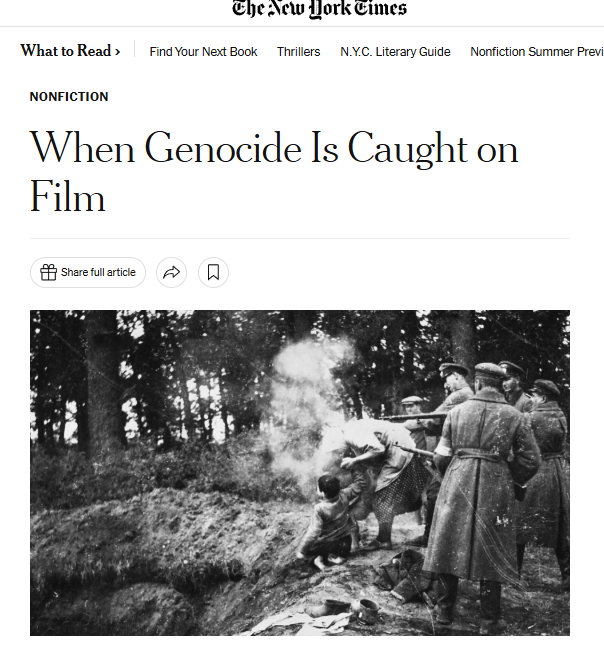
The New York Times even published this piece about Ukrainian Nazis how they killed here a Jewish mother holding the hand of her child. They killed her, but threw the child in the grave because they did not waste bullets on children. They cut the babies out of pregnant women and sewed a live cat into the womb. What the Ukrainians were doing even horrified the German Nazis. the CIA protected the Ukrainian Nazis only because they hated Russians as well. That is where we are today with the press cheering every blow against Russia and refusing to look at the facts.
The Ukrainisn NeoNazi’s hated anyone who was NOT Ukrainian. They carried out genocide against Poles, Hungarians, and Russians as well as Jews. Like George Soros who pretend to be Christian to also hide from the Nazis, Zelensky was the same.
Here is Zelensky before becoming president, joking about confiscating the assets of Jews and Russians. He became a Jew only to hide his past.
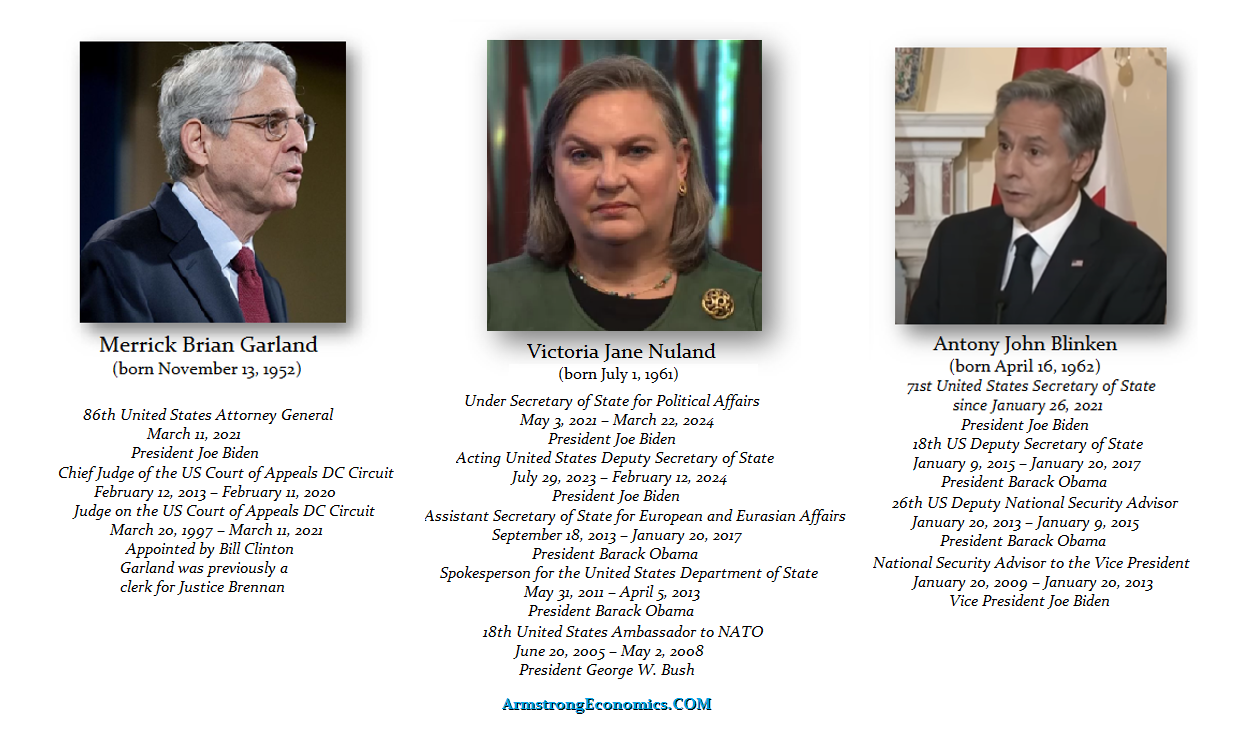
Biden’s Neocons were all Ukrainian Jews claiming that their families were persecuted by Russians. So all three supported Ukrainian NeoNazis all because they hated Russins. Garland brought all sorts of charges against Trump, trying to prevent him from taking office because he was anti-war.
This ethnic hatred produced World War I when a Serbian assassinated the heir to the throne of Austria. This hatred will bring us into World War III. The hatred is surfacing everywhere. I do not see a way out – sorry.
Posted originally on Jun 15, 2025 by Martin Armstrong
QUESTION: Thank you, sir, for everything you do. You just wrote: “A major conflict can weaken a regional power or create a power vacuum. ” Being from the region, the fall of Saddam resulted in such a power vacuum, and we saw sectarian violence and the rise of ISIS. If Iran were to collapse, would this not create a nightmare in the Middle East? What is being reported is that Israel also wanted to assassinate the Supreme Leader, Ayatollah Ali Khamenei. I think you said that killing the head of state is bad in war. I don’t remember where you said that. I think it was regarding Zelensky trying to kill Putin.
RV
ANSWER: Mr Trump’s policy to keep America out of foreign entanglements is being strained to the breaking point. If Iran’s regime were to fall, indeed, a corresponding power vacuum would emerge and could make the entire region extremely dangerous. This could drag the US into battle, but not with formal governments, but with ethnic clans. It would be difficult for America to remain neutral as rival powers also rushed to take advantage, assuming they stood by and did not prevent the fall of Iran. You don’t need much imagination to contemplate what would erupt also between shite, sunni, and even kurds in addition to the anti-Israel and anti-American sentiment that would erupt.
Just over two decades ago, when Iraq’s government was toppled, as the world celebrated, a power vacuum emerged. Then came immense, bloody upheaval. Terrorist groups, rather than national states, would not leave the Middle East in peace, but utter chaos. The West has been involved in Iran’s government for a long time. It was Mossadegh, who became Prime Minister of Iran, who nationalized the Iranian oil industry, expelling APOC/British interests. In 1953, CIA/MI6 Coup (Operation Ajax) orchestrated a coup to overthrow Mossadegh because he was leaning toward communism. This is precisely on our war model target, 72 years later, bringing us to 2025. This is highly dangerous.
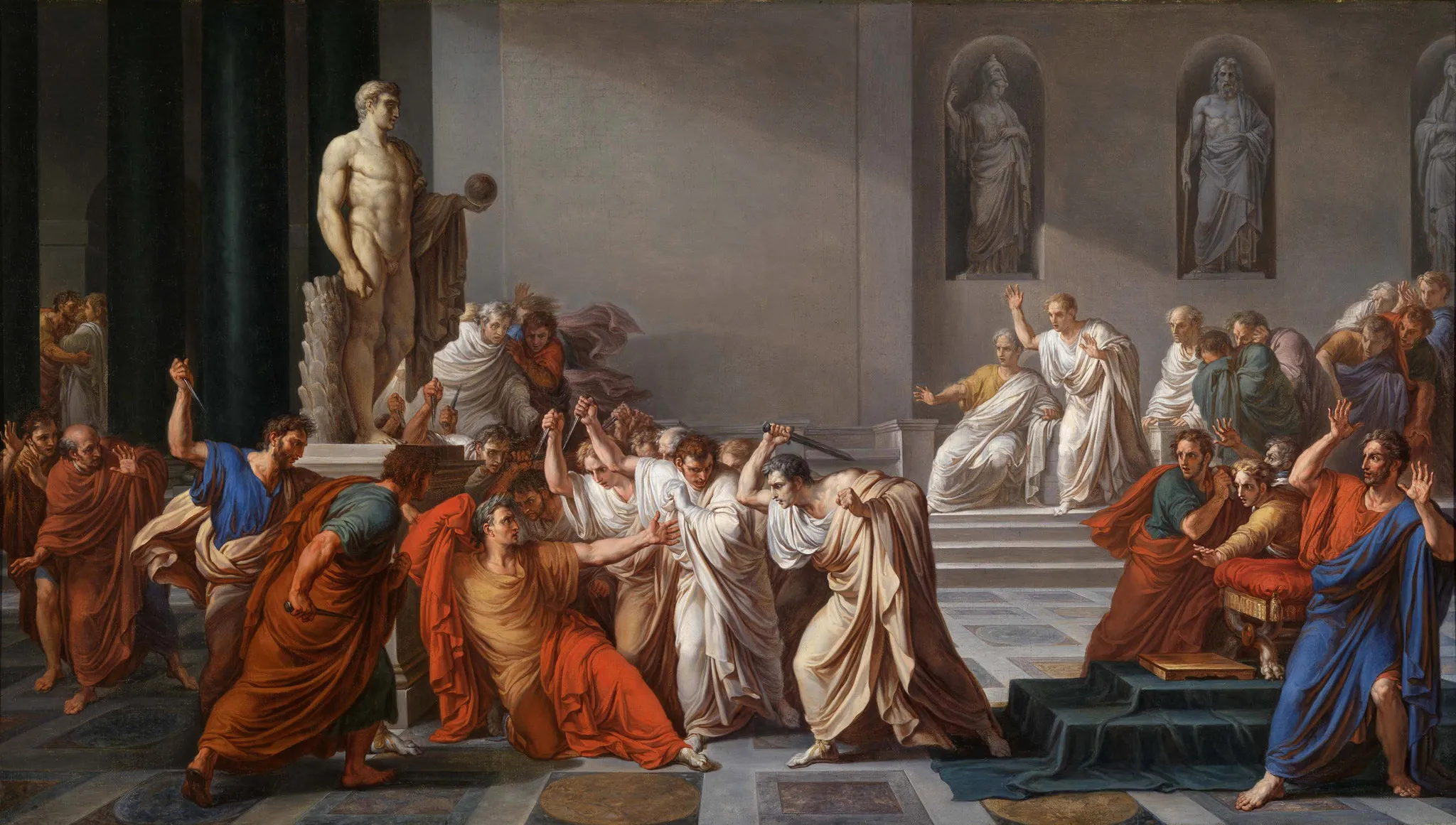
The assassination of a head of state during wartime carries severe, often catastrophic dangers that frequently backfire strategically, politically, and morally. Killing the Supreme Leader will transform him into a martyr, which would most likely unify fractured populations and harden resistance against Israel and the West. For example, the assassination of Archduke Franz Ferdinand ignited WWI. Such assassinations often lead to surges in public support after the fact. The same took place with the assassination of Julius Caesar, stabbing him 23 times.
The assassination of the Supreme Leader would only result in a power vacuum and unintended consequences, resulting in global chaos. This could easily be taken as a religious war. Removing centralized authority can also fragment command structures, leading to warlordism, civil conflict, or extremist takeovers (e.g., Libya post-Gaddafi). This complicates peace efforts and the delivery of humanitarian aid. There would be nobody to negotiate peace with.
Such acts often provoke extreme retaliation—chemical, nuclear, or indiscriminate attacks. In 1942, Hitler ordered brutal reprisals after Reinhard Heydrich’s assassination, including the Lidice massacre, which was a brutal Nazi war crime committed during World War II in retaliation for the assassination (Operation Anthropoid) of the high-ranking SS official and key architect of the Holocaust on May 27, 1942. The retaliation took place on June 10, 1942. Lidice was a village in Nazi-occupied Czechoslovakia (now Czech Republic). Although Lidice had no proven connection to the attack, Nazis linked it to resistance activity based of coerced intelligence and all buildings were systematically demolished with explosives. The ruins were bulldozed, and the land was even salted to prevent regrowth as the Romans did to Carthage. Some 173 men (ages 15+) were executed on-site, while 19 women were sent to concentration camps and later executed. Some 198 women and children were sent to Ravensbrück concentration camp; most died from abuse, starvation, or gassing. 82 children were forcibly “Germanized” (given to SS families) or murdered in gas vans at Chełmno extermination camp. Only 17 survived the war. Lidice became a symbol of Nazi brutality and a rallying cry for resistance.
Removing the head of state cuts off all possible Diplomatic Pathways, which is why the neocons advise against communication with the enemy. Eliminating a leader destroys potential negotiation channels. Figures like Slobodan Milošević (Yugoslavia) were ultimately tried for war crimes—an option removed by assassination.
Perceived “tyrannicide” only fuels propaganda, recruiting insurgents against the assassin state. The U.S. killing of Qasem Soleimani (2020) intensified anti-American sentiment and Iranian proxy attacks. This does violate ethical and legal precedents. Both Zelensky and Israel would also violate all international norms (UN Charter Article 2(4) on sovereignty). This sets a highly dangerous precedent for extrajudicial killings, which in the end eroded global stability and removed all the rules of war, resulting in barbarism.
Unintended Successors Replacement leaders may be more radical. Assassinating Julius Caesar ended the Republic and ushered in his heir, Augustus (27BC-14AD), as the first Roman emperor. Be careful for what you wish for, for you can end up with exactly what you are trying to prevent. Indeed, decapitation rarely ends wars—it typically prolongs or intensifies them. Stable resolutions require systemic change (e.g., institutions, treaties), not isolated strikes. As Sun Tzu warned: “Kill one, terrorize ten thousand.” The true cost is measured in cycles of vengeance and instability.
Israel’s targeted assassinations of the leadership in Iran may have the opposite effect. High-level families have been airlifted to Russia, anticipating Israel’s actions. Mohammad Pakpour, the newly appointed commander of Iran’s Islamic Revolutionary Guard Corps (IRGC), issued a stark warning in response to Israel’s strikes that killed former IRGC leader Hossein Salami. Pakpour vowed retaliation, saying, “In retribution for the blood of our fallen commanders, scientists and citizens, the gates of hell will soon be opened upon this child-killing regime.”
Israel has been trying to drag the US into this conflict just as Zelensky tried with Trump, but is now attempting to get NATO to also do a “re-emptive” strike against Moscow. Israel cannot eradicate Iran’s nuclear facilities, and that is dependent on bringing the US into the conflict. That is a huge gamble for Tel Aviv given the number of critics of US interventionism among the top ranks of Trump’s advisers. The American people are tired of endless wars. The US president himself has attempted to make reversing US interventionism a key part of his legacy.
Israel’s actions are already harming world economic interests by pushing global oil prices up and complicating relations with the Gulf states that have much to lose if the conflict disrupts shipping through the Strait of Hormuz.
Posted originally on Jun 15, 2025 by Martin Armstrong
QUESTION: Lindsey Graham is up for election, and his polls are down to 34%. Do you support him, or would you vote Democrat? And where do you stand on the Big Beautiful Bill? You have been silent.
LK
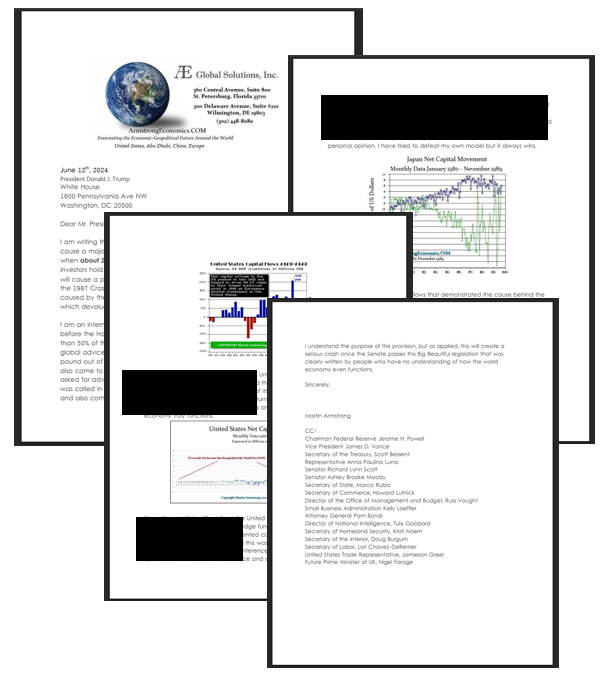
ANSWER: I do not support Lindsey Graham. If there were no other choice, yes, I would even consider voting for a Democrat. He is a dangerous Neocon in my book. Look, I have criticized Trump for threatening China publicly in trade. There are some conversations you cannot have in public. I have been silent publicly on this Big Beautiful Bill, but not behind the curtain. I have delivered my warnings, albeit too late for the House. I was just too busy with the world in total chaos. Needless to say, I will publish my objections in due course. But I cannot reveal some criticism in public if I am also trying to effect change behind the curtain. I’m too well-read to be cavalier about certain things if I’m serious about helping.
Posted originally on Jun 15, 2025 by Martin Armstrong
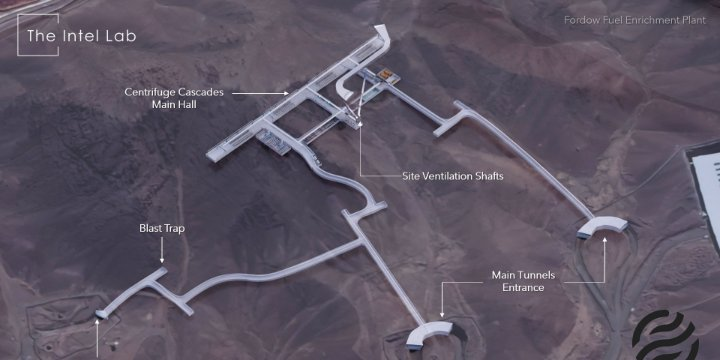
Israel has asked the Trump administration over the past 48 hours to join the war with Iran to eliminate its nuclear program, according to two Israeli officials. Israel has admitted that it cannot destroy Iran’s nuclear facility, and only the USA has the power to do that. Israel simply lacks the bunker buster bombs and large bomber aircraft needed to destroy Iran’s Fordow uranium enrichment site. As shown here, it is built into a mountain and deep underground.
This is a reconstructed image purporting to show a central secret Iranian nuclear facility, based in part on information acquired by Israel’s Mossad in a famed 2018 operation. The website of the intelligence firm the Intel Lab has stated that the images of the Fordow Fuel Enrichment Plant codenamed Al Ghadir were three-dimensional reconstructions put together with an analyst with the code name @Orion__int on Twitter. The firm said they are based on the Israeli-acquired and public documents, as well as photographs and video images. “This multi-disciplinary effort is based on Civil Engineering knowledge, Nuclear Fuel Enrichment Cycle basics, Intelligence Analysis, and advanced skills in realistic modeling and rendering,”the Intel Lab said.
The Trump administration has so far distanced itself from Israel’s operation and argued that it would be illegitimate for Iran to retaliate by striking U.S. targets. The problem here is that any direct UNPROVOKED attack on Iran will bring the US into conflict with both China and Russia. Directly attacking Iran, even if the U.S. involvement is limited to bombing a single site, would pull the U.S. directly into the war, and this could lead to WWIII.
The hard reality is that if the Fordow nuclear facility remains operational, assuming there is an end to this operation, it means that Israel will have failed in its goal to “eliminate” Iran’s nuclear program after all of this. What they may have inspired is that North Korea becomes the proxy to just hand a nuke to Iran.
Posted originally on Jun 15, 2025 by Martin Armstrong
Is War a Contagion?
World War I is certainly a classic case of war emerging as a contagion. The assassination of Archduke Franz Ferdinand triggered a chain reaction of alliances pulling countries into the conflict. That seems like contagion through formal treaties. Yet, there is also the spread of revolutions. The American Revolution saw Washington being inaugurated in 1789, while the French Revolution erupted. Then in 1848, another revolution in France inspired uprisings across Europe. The 1848 revolutions are another example of how ideas and uprisings spread from one nation to another. This is more about ideological influence rather than direct conflict spread.
But not all wars spread. Some stay localized. The Iran-Iraq War in the 80s didn’t escalate beyond the two countries. So why is that? Factors such as alliances, geography, or international intervention can contribute to conflicts. Economic interdependence is another point. Countries tied by trade might avoid war because it’s costly. That has been my point that sanctions promote war, whereas free trade inspires cooperation. Sanctions have not worked on Russia, and they have only galvanized Iran and North Korea. They deter peace and build a wall between hardened adversaries. The European Community is often cited as an example of how economic ties can reduce conflicts. Still, it then formalized a centralized government that imposed centralized laws on migrants, which has divided countries by ignoring their concerns for law and order. But does that always work? Maybe not, but it’s a factor.
Then there’s nationalism and ethnic ties. Yugoslavia’s breakup led to multiple wars because ethnic groups in neighboring areas were affected. That’s contagion through shared identities and tensions spilling over. NATO intervened and bombed Serbia simply because they were pro-Russian. NATO refused to honor the Minsk Agreement in Ukraine because the Donbas was pro-Russian, demonstrating that NATO is by no means impartial or ethical.
The United Nations is just as much a failure as the League of Nations, largely due to internal biases and ethical corruption. The Cold War involved proxy wars but avoided direct superpower clashes, maintaining a semblance of containment for image purposes. Every war that the US got itself into, thanks to the Neocons since World War II, has always been about Russia.
They might also be looking for ways to prevent war contagion. Highlighting factors such as diplomacy, economic ties, and international cooperation could be beneficial. Emphasizing that while contagion happens, it’s not inevitable, and there are mechanisms to stop it.
In conclusion, war can spread like a contagion under certain conditions, but various factors can contain it only to a point. The idea that war spreads like a contagion holds significant weight in historical analysis, although it’s not a universal or an inevitable law. Several mechanisms demonstrate how conflict can leap from one nation to another, and that MUST be our concern right now between Israel vs Iran, when Iran is by no means standing alone, and the confrontation by the West is in motion against Russia, China, and North Korea, providing incentives to support Iran.
Alliance Systems & Entangling Commitments, as in NATO, are more of a threat of creating a global war contagion than a deterrence. Treaties (defensive, offensive, or mutual aid) can draw neutral countries into a conflict when one signatory is attacked. This is arguably the most direct form of contagion and the very design of NATO. World War I is the quintessential example of how NATO threatens the very future of Europe and the world. The assassination of Archduke Franz Ferdinand triggered Austria-Hungary’s ultimatum to Serbia. Russia mobilized to support Serbia, Germany mobilized to support Austria-Hungary and declared war on Russia, France mobilized to help Russia, Germany invaded Belgium to attack France, pulling in Britain due to its guarantee of Belgian neutrality. A localized Balkan conflict engulfed Europe and its surrounding regions within weeks. The EU hopes to drag the United States and Canada into their dream war with Russia, which has no benefit to Canada or the United States other than making Bill Gates jump for joy by reducing the population.
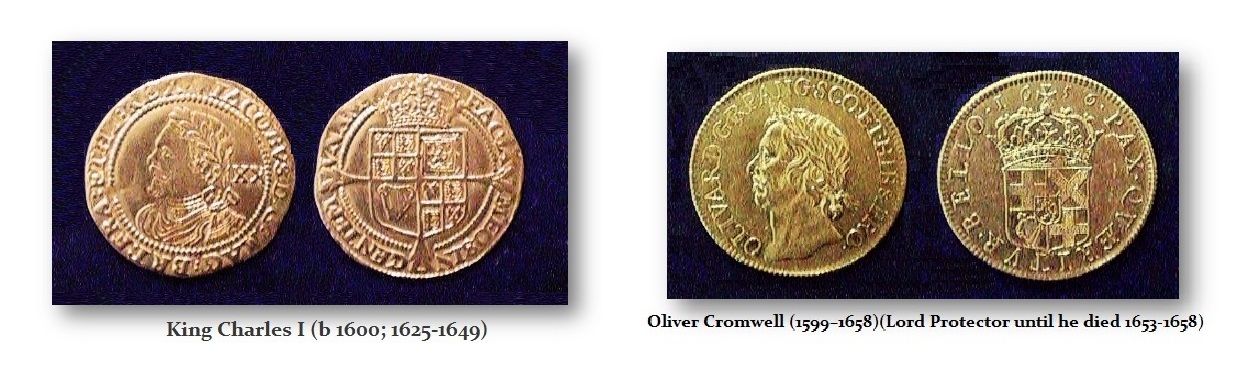
The Ideological or Revolutionary element like overthrowing monarchy, communism against capitalism, Protestant vs Catholic, or Sunni vs Shite, or Islam vs Jeudiam. Successful revolutions or ideological movements can inspire and directly support similar uprisings in neighboring or ideologically aligned countries. Fear of such a spread can also trigger preemptive interventions. Countless examples can be found in the American and French Revolutions, the Cold War, the Revolutions of 1848, and the various religious wars, from pagan vs. Christian to the Protestant Reformation against Catholics, which even led to the English Civil War. The coinage of England displayed the image of Cromwell wearing a laurel wreath (The king is dead, long live the King).
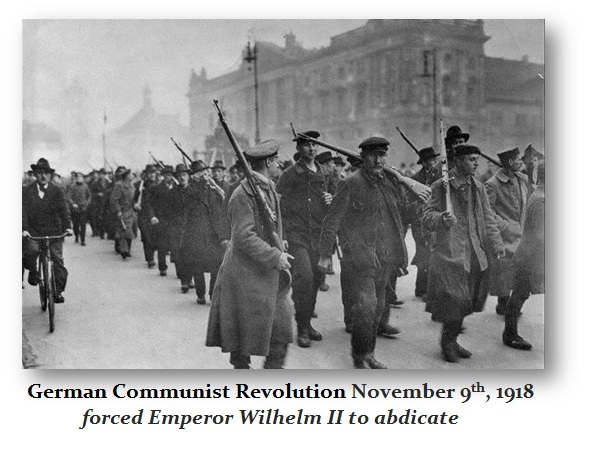
Even the rise of Marxism with the 1917 Russian Revolution inspired the German Revolution in 1918, which overthrew the government and ushered in the Weimar Republic. That, too, ended in hyperinflation.
Spillover Effects:
Active conflicts create destabilizing forces that inevitably cross borders. Look at the Refugee Crisis. Mass displacement strains resources and can alter demographics/politics in neighboring states. Allowing immigration during an economic decline will always spark civil unrest, which can result in revolution and the overthrow of governments.
Rebels, terrorists, or militias may use neighboring territory as safe havens, drawing those countries into the conflict. That has always been a common practice, as in Vietnam. The Vietnam War (1955-1975) spilled over significantly into neighboring countries, primarily due to the Ho Chi Minh Trail (a vital North Vietnamese supply route) and US efforts to disrupt it, along with political instability in the region. Thailand was a crucial US ally and provided major airbases for US operations over Vietnam, Laos, and Cambodia.
Economic Disruption has also played a key role. Trade routes are severed, markets collapse, and resources become scarce, affecting neighboring countries. This has often resulted in border skirmishes, accidental incursions, or attacks on shared ethnic groups, which can ignite new fronts.
The Syrian Civil War spilled significantly into Iraq and impacted Lebanon, Jordan, and Turkey through refugees, Kurdish issues, and ISIS operations. The Rwandan Genocide spilled into Zaire (DRC), contributing directly to the devastating First and Second Congo Wars.
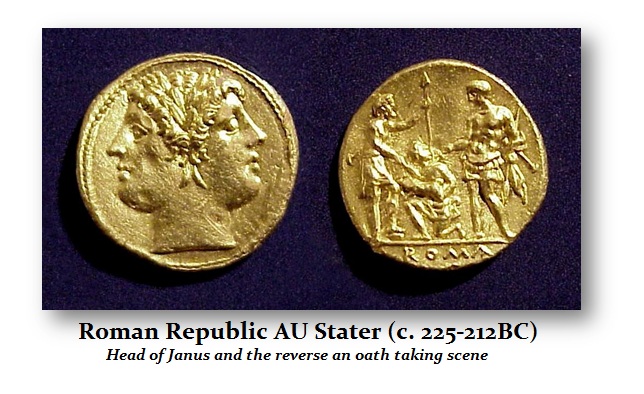
Even in ancient times, one need only look at the Punic Wars between Rome and Carthage. While Rome and Carthage were the principal antagonists, the Punic Wars were truly Mediterranean-wide conflicts. They involved extensive campaigns across multiple continents (Europe, Africa), drew in major regional powers (Macedon, Syracuse, Numidia), forced countless smaller tribes and cities to choose sides, and reshaped the political map far beyond the immediate territories of the two main rivals. The “spillover” was fundamental to the nature and scale of these wars. Rome issued its first gold coin to impress other Italian city-states to side with them.
The Danger of Victory – Power Vacuums:
A major conflict can weaken a regional power or create a power vacuum. This is what NATO and the EU are doing, sacrificing Ukraine to reduce Russia in hopes of conquest. Here, the EU is deliberately promoting war against Russia to create an opportunity to settle old scores, grab territory, and expand its influence, believing that Europe can rise again to its former glory.
During World War II, Italy’s invasion of Greece and the Soviet Union’s invasion of Finland were opportunistic moves made while the major powers (Germany, France/UK) were focused elsewhere. The collapse of the Ottoman Empire created power vacuums that drew in multiple regional and European powers, who carved up the Middle East.
Nationalism & Ethnic Kin:
Conflict involving a specific ethnic group can ignite tensions or interventionist desires in neighboring states where the same group lives (or where a rival group lives). Hitler invaded Poland because the carving up of Germany after World War I left the Germans stranded in Poland.
The breakup of Yugoslavia saw conflicts spread partly due to the presence of Serb populations in Croatia and Bosnia, drawing in Serbia, and Croat/Bosniak populations drawing in support from Croatia. Albanian populations in Kosovo and Macedonia are also linked to conflicts. This is the core issue in Ukraine since the Donbas and Crimea are ethnic Russians, not Ukrainians, but the EU and US Neocons do not care because they want war with Russia.
Religious Conflict:
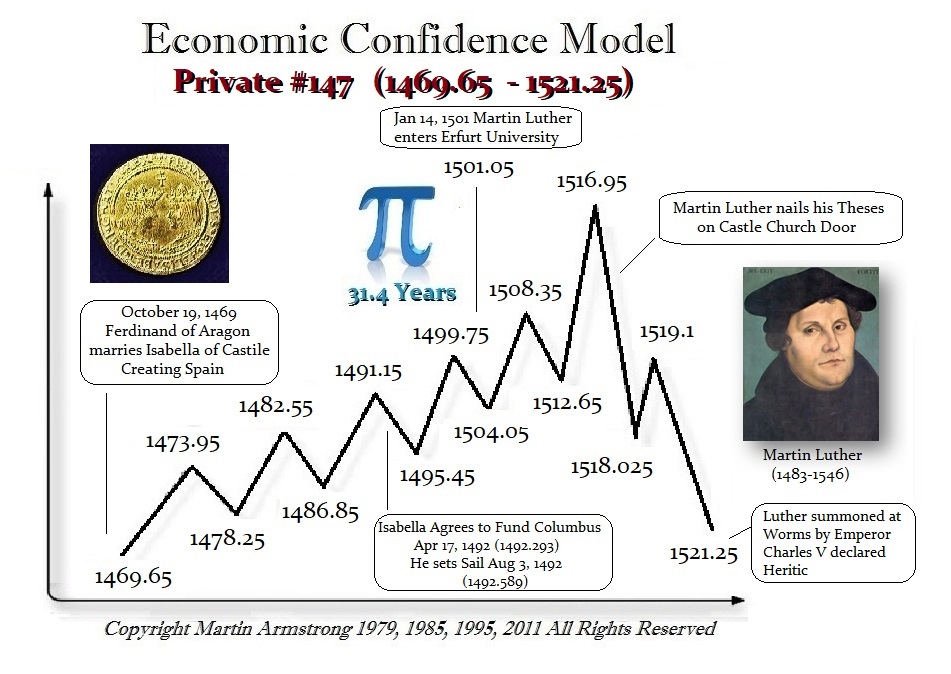
The most significant danger that we have currently is that this war between Iran and Israel is perceived as a religious war. With the massive influx of Muslims into Europe, the danger is that we see major civil unrest in all the major cities throughout Europe as this war is seen through ethnic/religious lines. We find that religion becomes the excuse for civil unrest and war when the economy turns down. We saw that with the Protestant Reformation, once the ECM turned down from 1516.95.
The Protestant Reformation spread through a powerful combination of technological innovation, political ambition, social discontent, religious fervor, and adaptable ideas. It is widely believed that the invention of the printing press facilitated this movement, as Johannes Gutenberg’s invention (c. 1440) revolutionized communication, allowing for the mass distribution of ideas. Pamphlets, sermons, cartoons (often crude and effective), and crucially, Martin Luther’s 95 Theses and subsequent writings were printed cheaply and in massive quantities.
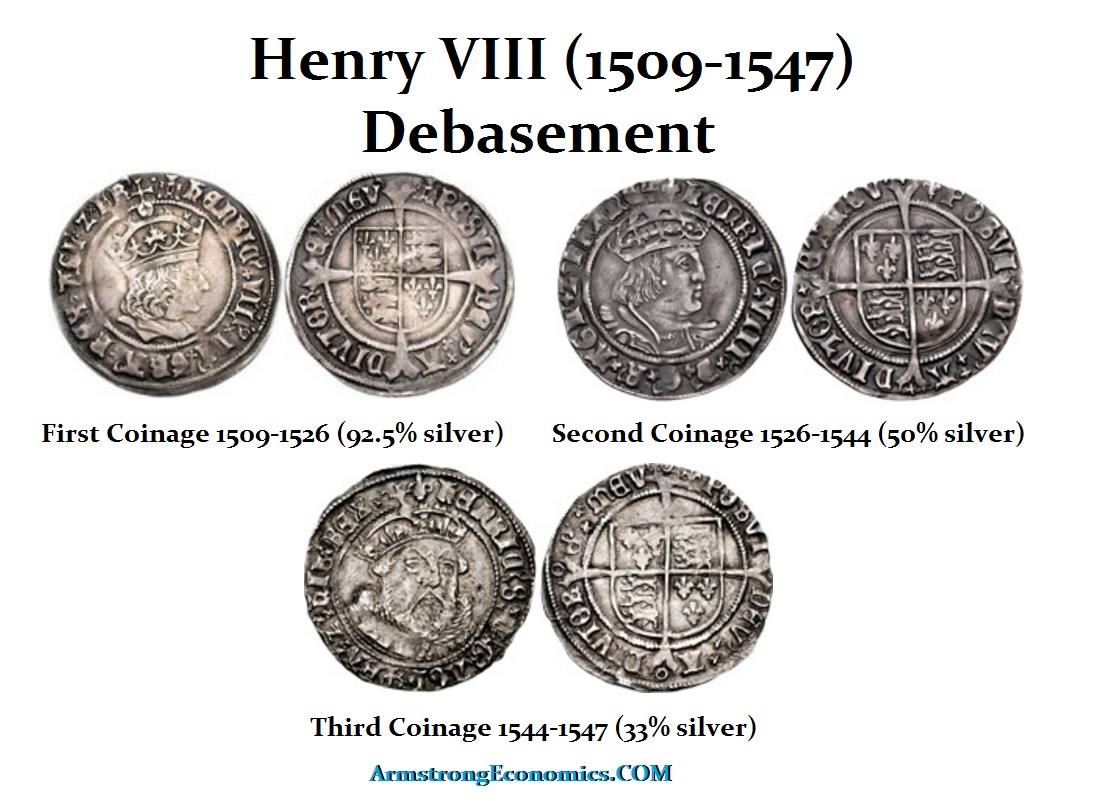
Translations of the Bible into German (Luther), English (Tyndale), French, and other languages also finally allowed laypeople direct access to scripture, bypassing the Latin-literate clergy and fueling critiques of Church practices. Luther’s German Bible became a bestseller. Many rulers in the Holy Roman Empire saw the Reformation as an opportunity to seize Church lands and wealth as the economy was turning down very hard. Kings like Henry VIII of England were dead broke and debasing their coinage. The Reformation rhetoric that called for a break with Rome prevented his bankruptcy. Gustav Vasa of Sweden used the Reformation to consolidate national power, confiscate Church property, and reduce papal influence. The powerful merchant cities, such as Strasbourg, Zurich, Geneva, and Nuremberg, often embraced reform, which was also profitable. They now controlled local churches, ended payments to Rome, and aligned with the rising merchant classes who favored reform and banking. Urban settings were also hotbeds for the exchange of new ideas. This is where history draws the beginning of capitalism, as Christians could not become bankers, rejecting the Sin of Usury.
Luther’s ideas provided the compelling religious message that resonated with existing grievances. Ambitious rulers and city councils provided the essential political protection and institutionalization. Other reformers adapted the message to different contexts, ensuring its relevance across diverse regions. Social and economic discontent created fertile ground. Together, these factors created an unstoppable wave that permanently fractured Western Christendom.
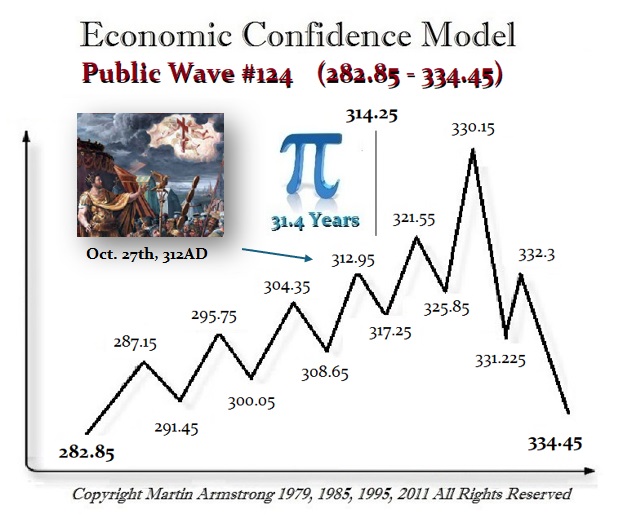
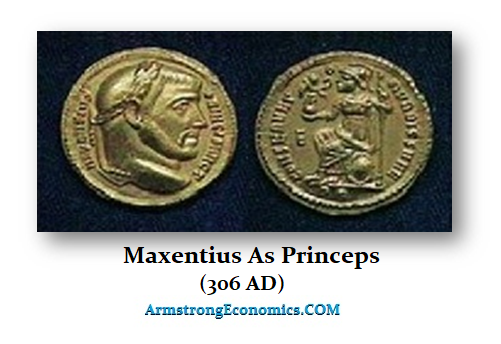
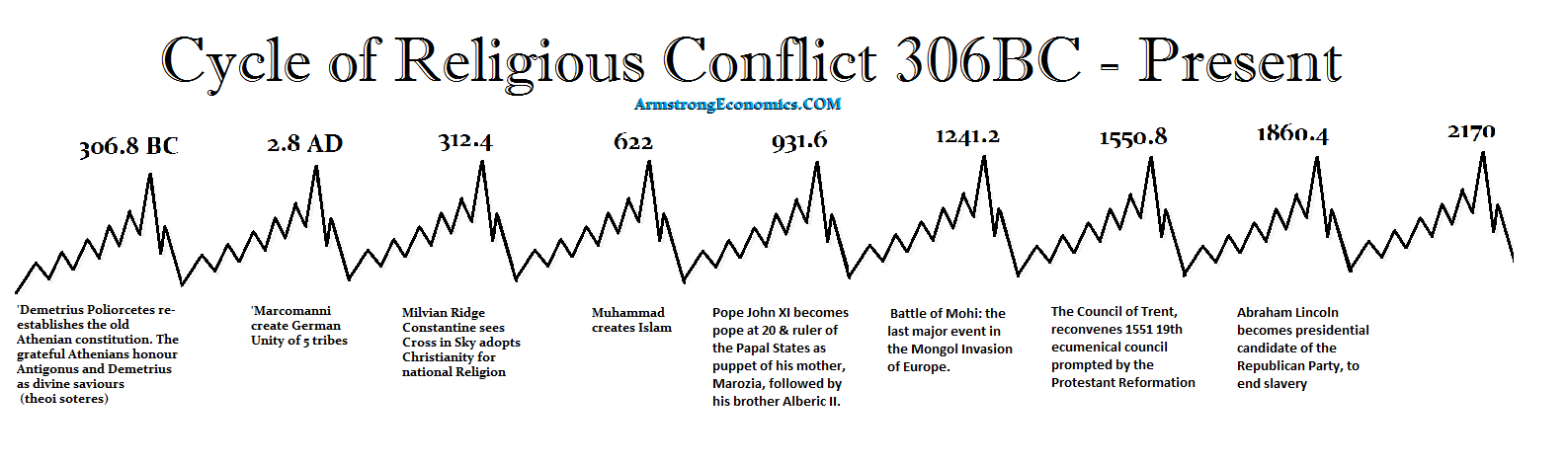
We see the same incentives behind Constantine claiming he saw a vision in the sky and painted a cross on the shield of his legions, who were outnumbered 2:1, because the legions of Magentius were Christian. Magnentius built the first Christian church in Rome. With his victory, Constantine entered Rome on October 29th, 312 AD, and staged a grand entrance into the city. Constantine did everything possible to pretend it was a widespread jubilation, but the people did not trust him.
The fall hid Maxentius’ scepter to deprive Constantine of his glorious victory. Constantine ordered Maxentius’ body to be fished out of the Tiber River, where he had drowned, and decapitated the corpse, parading his head on a pike through the streets of Rome for all to see. Constantine was not baptized until his deathbed. He continued to issue pagan coinage, not Christian.
Constantine certainly did not patronize Christianity alone. After gaining victory in the Battle of the Milvian Bridge in 312 AD, he constructed in 315 AD a triumphal arch that still stands by the Colosseum. —The Arch of Constantine. The arch is decorated with images of the goddess Victoria. At the time of its dedication, sacrifices were made to gods such as Apollo, Diana, and Hercules. Absent from the Arch are any depictions of Christian symbolism whatsoever.
This is the ONLY coin that Constantine issued with any Christian symbol. This was issued briefly once, in 327-328 AD, and is quite rare. All his other coins are standard Pagan type issues, even years after his victory at the Battle of the Milvian Bridge, which took place between the Roman Emperors Constantine I and Maxentius on October 28, 312 AD.
Constantine’s approach to pagan temple wealth was complex and not a simple confiscation. He “redirected” significant resources from pagan institutions to support mainly his own projects. Constantine did not issue a blanket decree stripping all pagan temples of their wealth across the empire. Many temples continued to function, especially in the West, during his reign. He did seize temple wealth famously using their treasures (gold, statues, precious materials) stripped from major pagan temples in the Eastern provinces (Greece, Asia Minor) to fund and adorn his new capital, Constantinople. This was presented as a transfer of imperial glory, not purely religious plunder, but it undeniably drained wealth from pagan centers. The temples in the West escaped and continued to practice compared to those in the East.
Local vs Spreading Conflicts:
A war is UNLIKELY to spread when the issues are purely local and do not involve ethnic differences that extend to surrounding nations. This includes religion. The Iran-Iraq War (1980-1988) remained largely bilateral despite its scale and regional impact. The Falklands War was also contained. The same can be said of the English Civil War (which reached a pivotal point with the execution of King Charles I in January 1649), which did not directly spread as a large-scale military conflict to other sovereign nations like France, Spain, or the Dutch Republic. However, it significantly impacted and involved other parts of the British Isles and had international repercussions:
War & Contagions:
War demonstrably can and has spread from country to country through mechanisms resembling contagion, like a disease. This has often been facilitated, particularly through alliances, ideological spillover, physical spillover effects, opportunism, and ethnic or nationalist ties. Our greatest threat with this war between Iran and Israel is that this becomes religious and spreads, especially in Europe, as a clash between Islam and Judaism, as well as Christianity, from the militants who have flooded into Europe.
Posted originally on Jun 14, 2025 by Martin Armstrong
Neither side is listening to international calls to back down. Prime Minister Benjamin Netanyahu of Israel said on Saturday that Israeli strikes had “paved a path to Tehran” and that the Israeli air force would soon be seen flying over the Iranian capital. Speaking to the nation in a video, just hours after several barrages of Iranian missiles sent millions of Israelis into bomb shelters and killed three people, Netanyahu said, “We will strike every site and every target of the ayatollahs’ regime.”
He added: “What they have felt until now is nothing compared to what they will feel from the might of our forces in the coming days.”
The half-cycle turning point was 2015.2 on our models for the confrontation of religions, which coincided with the very issue we face today. That marked the relations between Iran and Israel, which became a major and highly contentious issue in 2015, primarily due to the finalization and signing of the Iran nuclear deal (JCPOA – Joint Comprehensive Plan of Action). The JCPOA Negotiations and Signing (Finalized July 14, 2015) was an agreement between Iran and the P5+1 (the US, UK, France, Russia, China, and Germany) aimed at curbing Iran’s nuclear program in exchange for sanctions relief. Israel, under Prime Minister Benjamin Netanyahu, was vehemently and vocally opposed to the deal. This is not the big one on a religious front, but increased conflicts and tensions will mark the second half of this 309.6-year cycle.
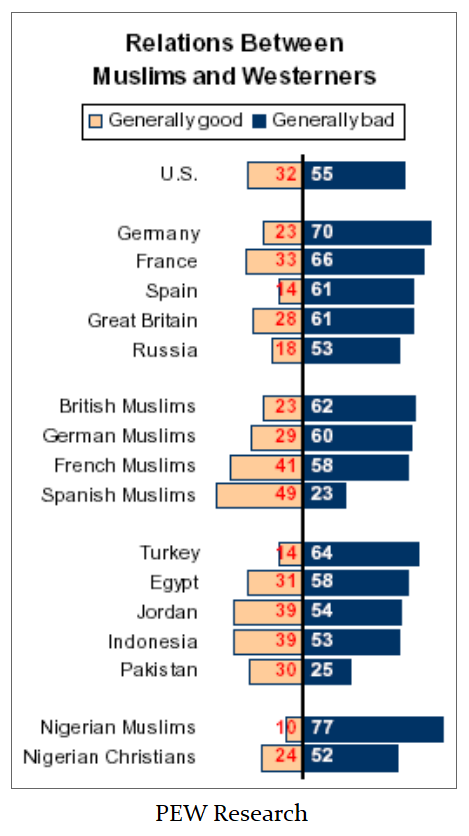
This conflict is expanding, and Europe is at extreme risk of civil unrest in just about all major cities, as many will see this as the West vs Islam. Here is the PEW Research on this confrontation between the West and Islam. The real problem is that terrorism creates the FALSE image that this is all Muslims vs Non-Muslims, Jewish or Christian. A small group can alter the image of a majority. Prosecutors in New York would ensure that a black youth charged with gun possession would get an all black jury. The problem was that the Black community was biased against these Black people, seeing that their actions created discrimination against all Black people. The militant Arabs will do this in Europe, making the false image that this is all Muslim vs non-Muslim.
This conflict will likely escalate, and some may turn it into a religious issue. We must understand what is unfolding here. The image on a religious front is more than 50% in Germany, France, Britain, and Spain.
I have created this site to help people have fun in the kitchen. I write about enjoying life both in and out of my kitchen. Life is short! Make the most of it and enjoy!
This is a library of News Events not reported by the Main Stream Media documenting & connecting the dots on How the Obama Marxist Liberal agenda is destroying America









 Centinel2012