
“When the U.S. sanctions were violated, we enforced them. When UN sanctions are violated, we’re going to do everything we can to enforce them as well”

Re-Posted from the Canada Free Press By Joseph A. Klein, CFP United Nations Columnist —— Bio and Archives—August 25, 2020
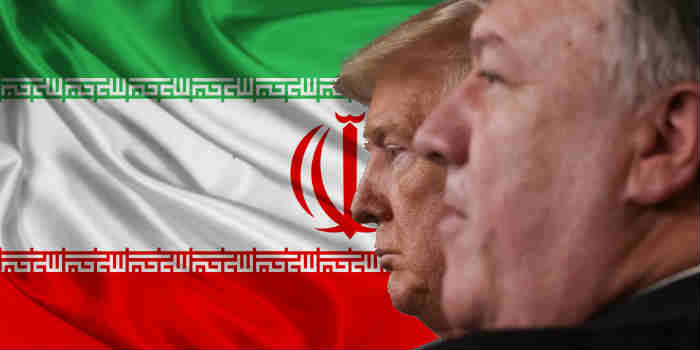
The United Nations Security Council disgracefully rejected the U.S. initiative to extend the UN arms embargo against the Iranian regime beyond its current expiration this October. As the U.S. Ambassador to the UN Kelly Craft said at the time on August 14th, “the United States stands sickened – but not surprised – as the clear majority of Council members gave the green light to Iran to buy and sell all manner of conventional weapons. History will easily trace the path of leadership in this era, and unfortunately it will not go through the UN Security Council.”
Iranian Defense Minister General Amir Hatami made the Iranian regime’s malevolent intentions crystal clear. “We have made it known that we are ready to provide high-quality and appropriately-priced weapons and equipment to countries that need this,” he said on August 18th.
Iran: World’s leading sponsor of terrorism
Ambassador Craft promised that the United States would not give up trying to prevent the world’s leading sponsor of terrorism from gaining unfettered access to the global arms market.
UN Security Council Resolution 2231, which endorsed the disastrous nuclear deal with Iran known as the Joint Comprehensive Plan of Action (JCPOA), lifted various nuclear-related UN sanctions against Iran that had been imposed in previous Security Council resolutions. The Security Council took this major UN sanctions relief step upfront in contemplation of the Iranian regime’s continuing compliance with its commitments under the JCPOA. Resolution 2231 provided a mechanism for those previous resolutions, with their accompanying prohibitions imposed on Iran, to “snap back” in the event of Iran’s breach of the JCPOA.
Iran has committed multiple material breaches of its JCPOA commitments relating not only to arms transfers and missile tests, but also to its core nuclear-related commitments regarding nuclear enrichment levels and access for international inspections. As one of the original participants in the process leading up to the full implementation of the JCPOA in reliance on Iran’s commitments, the United States has every right to initiate snapback of the provisions of previous Security Council resolutions that had been in place prior to January 2016, regardless of whether the U.S. has the support of other countries that are parties to the JCPOA or otherwise.
On August 20th, Secretary of State Mike Pompeo personally delivered letters to both UN Secretary General Guterres and to the president of the Security Council initiating the snapback process, leading to the restoration of virtually all UN sanctions on Iran lifted under UN Security Council Resolution 2231. “America will not appease,” Secretary Pompeo told reporters at UN headquarters in New York. “America will lead.”
U.S. has not violated any legally binding obligations imposed by Resolution 2231
The snapback is supposed to take effect in 30 days from notification of an issue involving “significant non-performance of commitments under the JCPOA,” according to the process outlined in Resolution 2231, unless a Security Council member or the President of the Security Council introduces a draft resolution beforehand that is passed to extend the sanctions relief on Iran. Such a draft resolution would not pass, however, as long as President Trump remains in office. The United States would be able to veto such a draft resolution, allowing the snapback to proceed into effect automatically.
Opposition to the U.S. initiative from China and Russia is to be expected. It is disappointing to say the least, however, that the Western European permanent members of the Security Council, France and the United Kingdom, have also come out publicly against the U.S. on invoking the snapback process. Then again, Western European countries are not known for their moral courage when potentially lucrative commercial deals are at stake.
The critics of the U.S. snapback initiative claim that the U.S. has no authority to invoke it after withdrawing from the JCPOA. The critics are wrong. The JCPOA itself is a non-binding political document that was not even signed. Security Council Resolution 2231’s endorsement of the JCPOA does not convert a non-binding political document into a legally binding agreement. If the U.S. decided, as it did for national security reasons, to reimpose its own unilateral sanctions, the U.S. has not violated any legally binding obligations imposed by Resolution 2231. However, what Resolution 2231 did do is to legally condition the lifting of United Nations sanctions that the Security Council had previously imposed on Iran upon Iran’s meeting of its JCPOA commitments.
The United States is identified in Resolution 2231 as one of the “JCPOA Participants.” The U.S.’s “participant” status under Resolution 2231 derives solely from its original active participation in the negotiation, finalization and implementation of the JCPOA. Resolution 2231 sets no other qualifications or conditions on the original or continuing eligibility of such specifically identified JCPOA Participants to initiate a snapback.
Attempt by China, other UN Security Council members to change the explicit text of Resolution 2231 with hollow declarations is meritless
The U.S. could have vetoed Resolution 2231 because of the provisions lifting the previous UN sanctions but did not do so in reliance upon Iran’s commitments to abide by the terms of the JCPOA. Absent an amendment to the resolution to delete the United States as a JCPOA participant state after President Trump withdrew the U.S. from the nuclear deal in May 2018, which the Security Council never adopted, the U.S. maintains its original standing to initiate a snapback.
In short, the snapback provisions of Resolution 2231 are keyed to Iran’s JCPOA non-performance, not to the performance or non-performance of any other JCPOA Participant.
“[T]he United States” and any other “JCPOA participant State” may initiate snapback. Operative paragraph 11 of Resolution 2231 sets out the requirements for initiating snapback. Those requirements are that (i) a “JCPOA participant State” (ii) notify the UN Security Council (iii) of an issue it believes constitutes “significant non-performance” of commitments under the JCPOA. That has been done, and the snapback clock is ticking.
The attempt by China and other UN Security Council members to change the explicit text of Resolution 2231 with hollow declarations is meritless. China and Russia also attempted to enlist the current president of the Security Council in essentially ignoring the U.S. notification, as if somehow that would make the notification disappear or render it null and void. Indonesia’s UN Ambassador Dian Triansyah Djani, Security Council president for August, went along with the scheme. In his capacity as Security Council president, he said that he was “not in the position to take further action” on the U.S. snapback notification. Ambassador Djani said that there was no consensus in the Council supporting the U.S.’s move. Ambassador Djani should go back and read Resolution 2231 in detail. While a consensus may be desirable, no consensus is required for the snapback to take effect.
Simply ignoring the U.S. notification as if it did not happen will have no legal effect in stopping the snapback from taking effect
Dmitry Polyanskiy, Russia’s First Deputy Permanent Representative to the UN, tweeted what he viewed to be the result of the Security Council president’s decision to take no action: “It means, there is NO SNAPBACK.”
Wrong! The president of the Security Council does not have authority under Resolution 2231 to decide on whether the United States’ snapback notification is valid or not. He is authorized to introduce a draft resolution for a vote by the Security Council to keep the sanctions relief provisions of Resolution 2231 in place, which the United States can then veto. Simply ignoring the U.S. notification as if it did not happen will have no legal effect in stopping the snapback from taking effect.
When asked by reporters at the UN about sanctions enforcement, Secretary Pompeo would not get ahead of President Trump’s decision. “But you just need look no further than the history of the last two and a half years,” Pompeo said. “When the U.S. sanctions were violated, we enforced them. When UN sanctions are violated, we’re going to do everything we can to enforce them as well.”





 Centinel2012