Rebranding Kim Jong-un Will Likely Be a Key Part of The Strategy…


Almost everyone understands the term “re branding”. Don’t laugh when you consider the possibility of re-branding Kim Jong-un; and more importantly, as an outcome, the entire geopolitical architecture of North Korea.  Rebranding takes time. This type of re branding takes silent and subtle persuasion.

It’s not a short term process, but look for indicators like this to ever-so-slowly morph. China’s Xi Jinping seeding ploughshares over missiles needs careful and controlled fertilization.

Business suits replacing General’s uniforms would be very good for the people of North Korea. Ultimately that’s an honorable goal.

We’re talking about massive amounts of distrust and psychological misinformation to overcome – because China previously benefited from using/supporting North Korea as a hostile proxy province toward the collective enemy.   That historic approach and use of N-Korea was the winning hand for China.

President Trump has changed the dynamic.

The winning economic hand for China, specifically Chairman/President Xi Jinping now rests on being able to change the direction of the DPRK and Kim Jong-un.

Kim Jong-un’s sense of self and disposition has been defined by rockets, military and such.  His personal currency is ‘loyalty’ and how ‘loved’ he perceives himself to be in the eyes of his audience.

In order for China to generate enough influence (toward the larger objective of shifting away from militaristic endeavors) Chairman Xi Jinping will now need to shift emphasis on what generates Kim Jong-un’s currency.  Loyalty and love must be achieved by alternate methods.  Seeds must be planted, fertilized and nurtured.

Turning rockets into ploughshares is a good strategy.

[…]  “Here in Seoul, architectural wonders like the Sixty-Three Building and the Lotte World Tower — very beautiful — grace the sky and house the workers of many growing industries.

Your citizens now help to feed the hungry, fight terrorism, and solve problems all over the world. And in a few months, you will host the world and you will do a magnificent job at the 23rd Olympic Winter Games. Good luck. (Applause.)

The Korean miracle extends exactly as far as the armies of free nations advanced in 1953 — 24 miles to the north. There, it stops; it all comes to an end. Dead stop. The flourishing ends, and the prison state of North Korea sadly begins.

Workers in North Korea labor grueling hours in unbearable conditions for almost no pay. Recently, the entire working population was ordered to work for 70 days straight, or else pay for a day of rest.

Families live in homes without plumbing, and fewer than half have electricity. Parents bribe teachers in hopes of saving their sons and daughters from forced labor. More than a million North Koreans died of famine in the 1990s, and more continue to die of hunger today.

Among children under the age of five, nearly 30 percent of afflicted — and are afflicted by stunted growth due to malnutrition. And yet, in 2012 and 2013, the regime spent an estimated $200 million — or almost half the money that it allocated to improve living standards for its people — to instead build even more monuments, towers, and statues to glorify its dictators.

What remains of the meager harvest of the North Korean economy is distributed according to perceived loyalty to a twisted regime. Far from valuing its people as equal citizens, this cruel dictatorship measures them, scores them, and ranks them based on the most arbitrary indications of their allegiance to the state.

Those who score the highest in loyalty may live in the capital city. Those who score the lowest starve. A small infraction by one citizen, such as accidently staining a picture of the tyrant printed in a discarded newspaper, can wreck the social credit rank of his entire family for many decades.

An estimated 100,000 North Koreans suffer in gulags, toiling in forced labor, and enduring torture, starvation, rape, and murder on a constant basis.

In one known instance, a 9-year-old boy was imprisoned for 10 years because his grandfather was accused of treason. In another, a student was beaten in school for forgetting a single detail about the life of Kim Jong-un.

Soldiers have kidnapped foreigners and forced them to work as language tutors for North Korean spies.

In the part of Korea that was a stronghold for Christianity before the war, Christians and other people of faith who are found praying or holding a religious book of any kind are now detained, tortured, and in many cases, even executed.

North Korean women are forced to abort babies that are considered ethnically inferior. And if these babies are born, the newborns are murdered.

One womans baby born to a Chinese father was taken away in a bucket. The guards said it did not deserve to live because it was impure.

So why would China feel an obligation to help North Korea?

The horror of life in North Korea is so complete that citizens pay bribes to government officials to have themselves exported aboard as slaves. They would rather be slaves than live in North Korea.

To attempt to flee is a crime punishable by death. One person who escaped remarked, “When I think about it now, I was not a human being. I was more like an animal. Only after leaving North Korea did I realize what life was supposed to be.”

And so, on this peninsula, we have watched the results of a tragic experiment in a laboratory of history. It is a tale of one people, but two Koreas. One Korea in which the people took control of their lives and their country, and chose a future of freedom and justice, of civilization, and incredible achievement. And another Korea in which leaders imprison their people under the banner of tyranny, fascism, and oppression. The result of this experiment are in, and they are totally conclusive.

When the Korean War began in 1950, the two Koreas were approximately equal in GDP per capita. But by the 1990s, South Koreas wealth had surpassed North Korea’s by more than 10 times. And today, the Souths economy is over 40 times larger. You started the same a short while ago, and now you’re 40 times larger. You’re doing something right.

Considering the misery wrought by the North Korean dictatorship, it is no surprise that it has been forced to take increasingly desperate measures to prevent its people from understanding this brutal contrast.

Because the regime fears the truth above all else, it forbids virtually all contact with the outside world. Not just my speech today, but even the most commonplace facts of South Korean life are forbidden knowledge to the North Korean people. Western and South Korean music is banned. Possession of foreign media is a crime punishable by death. Citizens spy on fellow citizens, their homes are subject to search at any time, and their every action is subject to surveillance. In place of a vibrant society, the people of North Korea are bombarded by state propaganda practically every waking hour of the day.

North Korea is a country ruled as a cult. At the center of this military cult is a deranged belief in the leaders destiny to rule as parent protector over a conquered Korean Peninsula and an enslaved Korean people.

The more successful South Korea becomes, the more decisively you discredit the dark fantasy at the heart of the Kim regime.

In this way, the very existence of a thriving South Korean republic threatens the very survival of the North Korean dictatorship.

This city and this assembly are living proof that a free and independent Korea not only can, but does stand strong, sovereign, and proud among the nations of the world. (Applause.)

Here, the strength of the nation does not come from the false glory of a tyrant. It comes from the true and powerful glory of a strong and great people — the people of the Republic of Korea — a Korean people who are free to live, to flourish, to worship, to love, to build, and to grow their own destiny.

In this Republic, the people have done what no dictator ever could — you took, with the help of the United States, responsibility for yourselves and ownership of your future. You had a dream — a Korean dream — and you built that dream into a great reality.

In so doing, you performed the miracle on the Hahn that we see all around us, from the stunning skyline of Seoul to the plains and peaks of this beautiful landscape. You have done it freely, you have done it happily, and you have done it in your own very beautiful way.

This reality — this wonderful place — your success is the greatest cause of anxiety, alarm, and even panic to the North Korean regime. That is why the Kim regime seeks conflict abroad — to distract from total failure that they suffer at home.

Since the so-called armistice, there have been hundreds of North Korean attacks on Americans and South Koreans. These attacks have included the capture and torture of the brave American soldiers of the USS Pueblo, repeated assaults on American helicopters, and the 1969 drowning [downing] of a U.S. surveillance plane that killed 31 American servicemen. The regime has made numerous lethal incursions in South Korea, attempted to assassinate senior leaders, attacked South Korean ships, and tortured Otto Warmbier, ultimately leading to that fine young man’s death.

All the while, the regime has pursued nuclear weapons with the deluded hope that it could blackmail its way to the ultimate objective. And that objective we are not going to let it have. We are not going to let it have. All of Korea is under that spell, divided in half. South Korea will never allow what’s going on in North Korea to continue to happen.

The North Korean regime has pursued its nuclear and ballistic missile programs in defiance of every assurance, agreement, and commitment it has made to the United States and its allies. It’s broken all of those commitments. After promising to freeze its plutonium program in 1994, it repeated [reaped] the benefits of the deal and then — and then immediately continued its illicit nuclear activities.

In 2005, after years of diplomacy, the dictatorship agreed to ultimately abandon its nuclear programs and return to the Treaty on Non-Proliferation. But it never did. And worse, it tested the very weapons it said it was going to give up. In 2009, the United States gave negotiations yet another chance, and offered North Korea the open hand of engagement. The regime responded by sinking a South Korean Navy ship, killing 46 Korean sailors. To this day, it continues to launch missiles over the sovereign territory of Japan and all other neighbors, test nuclear devices, and develop ICBMs to threaten the United States itself. The regime has interpreted Americas past restraint as weakness. This would be a fatal miscalculation. This is a very different administration than the United States has had in the past.

Today, I hope I speak not only for our countries, but for all civilized nations, when I say to the North: Do not underestimate us, and do not try us. We will defend our common security, our shared prosperity, and our sacred liberty.

We did not choose to draw here, on this peninsula — (applause) — this magnificent peninsula — the thin line of civilization that runs around the world and down through time. But here it was drawn, and here it remains to this day. It is the line between peace and war, between decency and depravity, between law and tyranny, between hope and total despair. It is a line that has been drawn many times, in many places, throughout history. To hold that line is a choice free nations have always had to make. We have learned together the high cost of weakness and the high stakes of its defense.

America’s men and women in uniform have given their lives in the fight against Nazism, imperialism, Communism and terrorism.

America does not seek conflict or confrontation, but we will never run from it. History is filled with discarded regimes that have foolishly tested Americas resolve.

Anyone who doubts the strength or determination of the United States should look to our past, and you will doubt it no longer. We will not permit America or our allies to be blackmailed or attacked. We will not allow American cities to be threatened with destruction. We will not be intimidated. And we will not let the worst atrocities in history be repeated here, on this ground, we fought and died so hard to secure. (Applause.)

That is why I have come here, to the heart of a free and flourishing Korea, with a message for the peace-loving nations of the world: The time for excuses is over. Now is the time for strength. If you want peace, you must stand strong at all times. (Applause.) The world cannot tolerate the menace of a rogue regime that threatens with nuclear devastation.

All responsible nations must join forces to isolate the brutal regime of North Korea — to deny it and any form — any form of it. You cannot support, you cannot supply, you cannot accept. We call on every nation, including China and Russia, to fully implement U.N. Security Council resolutions, downgrade diplomatic relations with the regime, and sever all ties of trade and technology.

[…] It is our responsibility and our duty to confront this danger together — because the longer we wait, the greater the danger grows, and the fewer the options become. (Applause.) And to those nations that choose to ignore this threat, or, worse still, to enable it, the weight of this crisis is on your conscience.

I also have come here to this peninsula to deliver a message directly to the leader of the North Korean dictatorship: The weapons you are acquiring are not making you safer. They are putting your regime in grave danger. Every step you take down this dark path increases the peril you face.

North Korea is not the paradise your grandfather envisioned. It is a hell that no person deserves. Yet, despite every crime you have committed against God and man, you are ready to offer, and we will do that — we will offer a path to a much better future. It begins with an end to the aggression of your regime, a stop to your development of ballistic missiles, and complete, verifiable, and total denuclearization. (Applause.)

A sky-top view of this peninsula shows a nation of dazzling light in the South and a mass of impenetrable darkness in the North. We seek a future of light, prosperity, and peace. But we are only prepared to discuss this brighter path for North Korea if its leaders cease their threats and dismantle their nuclear program.

The sinister regime of North Korea is right about only one thing: The Korean people do have a glorious destiny, but they could not be more wrong about what that destiny looks like. The destiny of the Korean people is not to suffer in the bondage of oppression, but to thrive in the glory of freedom. (Applause.)

What South Koreans have achieved on this peninsula is more than a victory for your nation. It is a victory for every nation that believes in the human spirit. And it is our hope that, someday soon, all of your brothers and sisters of the North will be able to enjoy the fullest of life intended by God.

~ U.S. President Donald Trump (Nov 8, 2017)

This speech was delivered in Seoul, South Korea.  However, the most important audience was in Beijing China.

Rush Limbaugh is Wrong – Alabama is Not McConnell -vs- Bannon, It’s Bigger…


CTH has attempted to stay away from talking about the Alabama ‘clown show‘, all of it, since we made our position clear long before the primary run-off race.  Play stupid games, win stupid prizes etc.

My concern with the Alabama mess was a very simple MAGA issue: riding horses to polling stations does not establish a connection to the man or woman who hit the necessary alarm clock at 5:15am to pay the bills.  Those are MAGA people. That’s the essence of the Trump coalition.

The MAGA coalition I know has never been predisposed to racism, sexism, nativism, or any other kind of “ism” or “ist”, because we’ve never been not busy. It takes time to give a rats-ass about bathroom police, social justice etc. Time and energy for that, who has it?

The current position of the epic fiasco was/is entirely predictable…. warnings, deaf ears, blah-blah-blah; water under the bridge.  That said, the current race to the exits by all of the fly-by-nights (populist wallflowers) is embarrassing to see play out.

Factually, I feel sorry for Mr. and Mrs. Roy Moore… However, I don’t have a smidgen of sympathy for the noob-right financial opportunists: Steve Bannon, Laura Ingraham, Sebastian Gorka et al, or the political Roberts-The-Bruce: Ted Cruz, Mike Lee etc. Heck, I’m still waiting for the ‘Use El Chappo Money to Build The Wall‘ bill…  I digress.

So why engage now?  Well, today Rush Limbaugh weighs in in using the customary (passive aggressive/mamet principle) approach to frame the argument as: “The Roy Moore Soap Opera is Really About McConnell -vs- Bannon”.   No, no it’s not.

I understand the frame of reference, why Limbaugh views it that way, but that’s not an accurate assessment.

The UniParty is against Roy Moore, not just simply Mitch McConnell and the professional political apparatus within the GOP elitist class.  Things are not what they were in 2014.

In 2014 such a Limbaugh framework would be accurate (though the GOPe cat had his tongue back then).  Indeed, during the 2014 Thad Cochran -vs- Chris McDaniel race the current perspective of Limbaugh would have been accurate.  But that was then, this is now 2017.

In 2014 there were billions worth of personal and party indulgences at stake; in 2017 there are trillions of UniParty indulgences at stake.

In 2014 Mitch McConnell was trying to use Thad Cochran to defeat the Tea party.  In 2017 the entire apparatus of the DC system is trying to use Alabama to defeat the existential risk that is Donald Trump.

If ‘political strategist’ Steve Bannon, or ‘political thinker’ Rush Limbaugh, were half as smart as they say they are, they’d chip in buy a vowel, get a clue and see that.

This is no longer small enough for individual personalities, this is a much bigger zero-sum outcome battle albeit with useful side-benefits in smacking Bannon’s ego down to size etc.  Which, in all honesty, speaking as a person on the same side while watching the idiots on our team giving the enemy ammunition, would not be a bad thing – AT ALL.

Domestic DC battles are to billions what multinational UniParty battles are to trillions.   Alabama is bigger than McConnell or Bannon.  Alabama is now as much about NAFTA, China, renegotiated trade deals, geopolitical alliances and Saudi Arabia, and the trillions swirling around via multinational corporate interests.

The swamp is engaged, self-aware and the deep-state part is self actuated now.  Instructions are no longer needed.  Each cell can operate independently to protect itself from any confrontation.  Thus the arguments are bigger; every angle is weighed as does it improve position, or does it weaken position… way-points are transparent. Globalists don’t need to give direction in feet or inches, the battle is much bigger, more broad – the decisions are about “generalized direction”.

Example: NAFTA Round #5 (Mexico) begins this week:  “lest trade disputes create friction with NAFTA-supporting Republican lawmakers.”

Example: “Republicans” control all senate hearings:

Example: Remember when the Senate voted unanimously to block President Trump from making recess appointments?   That rule required “unanimity”, a single Republican senator could block the Senate from handcuffing President Trump.  Not a single Republican broke ranks.

The professional political class in DC, the UniParty, is not confronting Steve Bannon though he’d probably like to make money off that outlook. The united political apparatus is confronting something far more consequential than the annoyance that Bannon represents; they are confronting the framework of ‘America First’.

That bigger dynamic is what’s adverse to their interests.  Bannon is an annoying gnat.

When you accept that difference you are then prepared to ask yourself the question(s):

♦What would/will the professional apparatus do to protect their interests?

♦How far are they willing to go to oppose anything that appears adverse to those interests?

“Christmas Yearbooks”?

Written in two sets of handwriting?

Using two different inks?

Uh huh.

Go read about a republican operative named Harvey Leroy “Lee” Atwater, and how he trained a young protege’ named Karl Christian Rove in political warfare against other republicans.

Remember, from the Uniparty’s perspective they have nothing to lose in Alabama by getting caught making crap up.  They were going to lose the race anyway…. so why not pull out the black arts.   It’s simply how they roll.

ps. Friends in Alabama, you must fight like an insurgency.

Breaking: Chairman Xi Jinping Special Envoy to Visit DPRK Friday…


Chairman Xi is sending his CPC special envoy, Song Tao, to North Korea.

Song Tao, special envoy of General Secretary of the Communist Party of China (CPC) Central Committee Xi Jinping, will leave for the Democratic People’s Republic of Korea (DPRK) on Friday.  (Story Here)

This is President/Chairman Xi Jinping, now fully empowered by the communist party in Beijing, sending the party apparatus to talk to Kim Jong-un.  Previously these instructions would have come from Beijing’s old guard.  However, Chairman Xi now commands all power over the communist government; he doesn’t need their approval any longer.

Remember, Beijing quietly removed the 71-year-old veteran diplomat, Wu Dawei, from the position of negotiator toward the DPRK, and replaced him with 58-year-old Kong Xuanyou back in August.

Kong Xuanyou is a long time Chinese diplomat in charge of Asian affairs and he speaks Korean.  He is positioned to lead the Chinese negotiations with the DPRK.  Kong is the name we need to look for AFTER emissary Song Tao delivers the communist message to Kim Jong-un of North Korea.

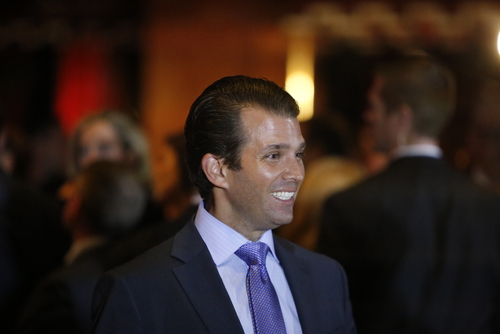
Is Trump Jr Being Set up By his Own Lawyers?


One of the most interesting events is how the Democrats and Muller have gone after Trump, Jr. for meeting with a Russian lawyer last year. The Russian lawyer who met with Donald Trump Jr. at Trump Tower said the president’s oldest son told her the U.S. government would review a 2012 law punishing Russian human rights abusers if Donald Trump won the presidency, according to a report. So what is this really about? It’s called the Maginsky Act.

I have written before that the Maginsky Act was a political payback for Bill Browder.  The claim of Browder that his Russian tax attorney Sergei Magnitsky was imprisoned and died before trial was trying to fight corruption in Russia is far from the truth with his  Hermitage Capital. This is the very operation that Safra and crew wanted me to invest $10 billion in and it was all about making money – not fighting political corruption.

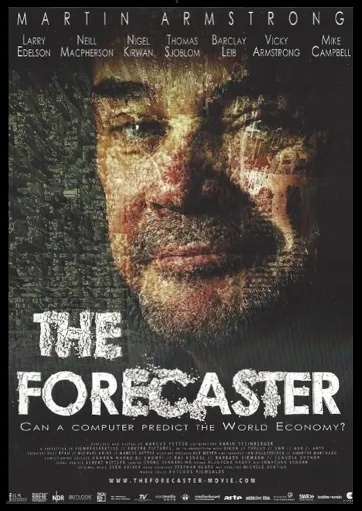
The documentary film about me and this incident, the Forecaster, was banned in the United States. NetFlix at first agreed to air the film and then management killed the deal. The distributor in the USA and Switzerland paid for the rights and then refused to show the film in theaters. That entire thing was about blackmailing Yeltsin to take over Russia. Talk about manipulating elections – nobody will talk the truth about this matter and you would think that Trump Jr.’s lawyers would be on the phone with me. No way! That leaves a HUGE question in my mind whether Trump, Jr.’s lawyers are really defending him or are they just pretending?

Putin seized all the assets of Hermitage Capital and Browder fought in Congress to get the Magnitsky Act passed to try to seize assets to get his money back. I always found it very strange that here the object was to influence the election of the president of Russia by blackmail, and the Congress passes the Magnitsky Act as if it was human rights because of some attorney who dies in a prison in Russia. Something is seriously missing. The fact that Trump Jr.’s lawyers are not bringing this out, which would really go to the heart of all this Russian nonsense, makes me wonder who is pulling the strings behind the curtain to set-up Trump, Jr

Sunday Talks: Maria Bartiromo and Senator Blunt Discuss Senate Tax Bill…


When Senator Blunt rises from the darkest and deepest part of the swamp to talk about senate Tax legislation (always written by the biggest K-St donors) you know the sausage is rotten.  Decepticon Blunt is only visible when the little people are conscripted to wash the cigar residue from the Senate’s Corinthian leather.

Senators: Blunt, Cornyn, McConnell, Hatch, Portman, Thune, McCain, Cochran, Murkowski, Graham and Corker will NEVER allow the income tax position of common-folk to supersede their corporate porkulous-minded financial interests.

CTH needed to be patient to see the architecture, and see if they retained their traditional approach at swamp constructs,… Now it’s visible, I can guarantee you this bill is destined to fail.  Maria Bartiromo knows it… she knows, and she’s playing the game; but you can see it behind her eyes… she knows.

.

Accepting that Donald Trump has exceptionally keen instincts, he had to know -in advance- where this was headed. The only purpose this bill serves is ammunition within the ‘big ugly’ to showcase, yet again, the corruption and ineptitude of the GOPe wing of the UniParty and how they are mere salespeople for their financiers on Wall Street/K-Street.

Forget tax reform; like the budget and O-care, it’s a moot point to discuss now.

President Trump needed three things from congress. Only Three Things:

¹♦Approval of his budget reducing $1 trillion in federal spending. – They failed.
²♦The repeal of and replacement of ObamaCare. They failed.
³♦Tax reform to generate middle-class tax cuts and international corporate competitiveness. – They failed.

It’s a big club, and we ain’t in it.


The *ACTUAL* 2016 FBI Report on “Russian Hacking” Does Not Show What Media Claim It Does…


Last year against the backdrop of President Obama’s sanctions announcement against Russia, we closely reviewed the “Russian Malicious Cyber Activity – Joint Analysis Report”. This December 2016 intelligence report (actual document below) is the report where the media talking points “17 intelligence agencies agreed” and the Russian “hacking of the election” began.

The report was released to coincide with President Obama kicking out Russian diplomats as punishment for the content therein.  Everyone talks about this report, yet almost no-one talking about it has actually read it.  WE HAVE.

President Obama’s administration released the ‘Joint Analysis Report’ which various politicians and media claimed to outline details of Russia’s involvement hacking into targeted data, computer systems, and political networks during the election.

Except it doesn’t.

Not even a little.

The “Russian Malicious Cyber Activity – Joint Analysis Report” (full pdf below) is pure nonsense. It outlines nothing more than vague and disingenuous typical hacking activity that is no more substantive than any other hacking report on any other foreign actor.

This report might as well be blaming Nigerian fraud phone solicitors for targeting U.S. phone numbers.  Just because your grandma didn’t actually win that Nigerian national lottery doesn’t mean the Nigerian government, or representative of the Nigerian government were targeting grandma.

This FBI report is, well, quite simply, pure nonsense, that’s why NSA Director Admiral Mike Rogers refused to endorse it.

[…] “And then you hear it’s 17 agencies. Well, it’s three. And one is Brennan and one is whatever. I mean, give me a break. They’re political hacks.”

“So you look at it — I mean, you have Brennan, you have Clapper, and you have Comey. Comey is proven now to be a liar and he’s proven to be a leaker.”

“So you look at that, and you have President Putin very strongly, vehemently says he had nothing to do with that. Now, you’re not going to get into an argument. You’re going to start talking about Syria and the Ukraine.”

~ President Donald Trump

But don’t take my word for it, read it yourself.

Here’s the “report“:

https://www.scribd.com/embeds/335307016/content?start_page=1&view_mode=&access_key=key-qvjYK3gLD9WdgOskmgoe

.

What the report does well is using technical terminology to describe common cyber activity.  Example: “ATPT29” sounds looming, but really is Olaf, the imaginary round faced chubby guy probably working from his kitchen table; and “ATPT28” is his unemployed socially isolated buddy living in Mom’s basement down the street.  But when put into technical terms they sound more alarming…. more colluding or something.

This paragraph is priceless in it’s humorous and disingenuous gobble-speak:

Both groups have historically targeted government organizations, think tanks, universities, and corporations around the world. APT29 has been observed crafting targeted spearphishing campaigns leveraging web links to a malicious dropper; once executed, the code delivers Remote Access Tools (RATs) and evades detection using a range of techniques.

APT28 is known for leveraging domains that closely mimic those of targeted organizations and tricking potential victims into entering legitimate credentials. APT28 actors relied heavily on shortened URLs in their spearphishing email campaigns. Once APT28 and APT29 have access to victims, both groups exfiltrate and analyze information to gain intelligence value.

These groups use this information to craft highly targeted spearphishing campaigns. These actors set up operational infrastructure to obfuscate their source infrastructure, host domains and malware for targeting organizations, establish command and control nodes, and harvest credentials and other valuable information from their targets.

(*note the emphasis I placed in the quote)

All that nonsense is saying is a general explanation for how hacking, any hacking, is generally carried out. This entire FBI report is nothing more than a generalized, albeit techno-worded, explanation for how Nigerians, Indians, or in this case Russians, attempt to gain your email passwords etc., nothing more.

However, what was alarming to consider was how far the various radical political ideologues, and the media, were willing to go to create a straw-man crisis for political benefit.  Secondly how terribly diminished the integrity of the executive office of the U.S. presidency actually became amid this level of ridiculous propaganda.

There’s no doubt the intended outcome was to create internal confusion and begin selling a narrative to undermine the incoming President-elect Trump administration.  No-one expected him to win; Trump’s victory sent a shockwave through the DC system the professional political class were reacting to.

Trump was a threat, an existential threat to their entire livelihood, and Trump won.  Now the outgoing administration was in a state of panic; and the outlier co-dependent agents from that administration were similarly apoplectic with fear.

The outgoing administration needed to create something, some narrative, to block Trump from upending their entire political system.  They sold this ridiculous Russian Narrative to a gullible U.S. left-wing electorate, because the Obama administration -writ large- knew media would help them and millions of people who will buy into these fabrications.

Consider the December 2016 example from a Yahoo News article:

[…] The US intelligence community has concluded that a hack-and-release of Democratic Party and Clinton staff emails was designed to put Trump — a political neophyte who has praised Putin — into the Oval Office. (link)

There was, and still is, absolutely no evidence the DNC was “hacked” (WikiLeaks claims the information was an inside job of “leaking”), and even John Podesta admitted himself he was a victim of an ordinary “phishing” password change scam.

Does hacking exist, of course it does. Do hackers exist in every country connected by the internet, of course they do. Do state governments participate in hacking offense and defense, again – yes, of course they do. And yes, the FBI and U.S. intelligence community act purposefully against all participants they can catch.

But what does that reality have to do with allegations that hostile Russian hackers attempted to gain entry into the DNC or John Podesta?  Those were, and are, two entirely different issues which the Obama administration conflated simply for political and ideological purposes.

Here is an example of that conflated outcome… this is how the narrative was pitched. Again, consider the Yaho0 media paragraph (above) against the headline which accompanied the content:

afp-yahoo-tweet-2

It’s been almost a year, and to this date there is no-more evidence of Russian interference in the 2016 election than there was a year ago.  Well, other than some ridiculous claims about Russian bots on Twitter (that did nothing), purchased Facebook advertising (to help Clinton), and CNN claiming that Pokemon Go was part of the Russian conspiracy.

This is ridiculous.

There is no evidence, even from the origin of the Joint Analysis Report, that Russia had any involvement or influence whatsoever in the 2016 election.

Yet there is mounting evidence the Clinton campaign were creating a Russian Conspiracy Narrative to try and undermine candidate Trump – but it wouldn’t work because the Trump people kept refusing to participate in the set-up.

Transcript: President Trump Impromptu Presser Aboard Air-Force-One…


In the flight between Da Nang (APEC Summit) and Hanoi, Vietnam, for the official U.S. State visit, President Trump took questions from the traveling press pool and held an impromptu presser aboard Air-Force-One.

[TRANSCRIPT]  PRESIDENT TRUMP: Everybody okay? Everybody happy? Everybody healthy? Two more days — no problem.

It’s been a — I think it’s been a great trip. In certain ways, it’s been very epic. I think things have happened that have been really amazing. Prime Minister Abe came up to me just at the end, and he said that since you left South Korea and Japan, that those two countries are now getting along much, much better. That’s from Prime Minister Abe — that there’s been a real bonding between South Korea and Japan. So that was great.

And we had a time in China. You were there. Were most of you there? Jennifer?

♦Q We all were, sir.

PRESIDENT TRUMP: They say in the history of people coming to China, there’s been nothing like that. And I believe it.  Did you see the show? Did most of you see the show or part of the show afterwards? It was incredible.

♦Q We saw the opera but not the —

PRESIDENT TRUMP: The opera was great too, but the following night — that was the first time that theater has been used at the Forbidden City in over a hundred years. You know that. They prepared the theater for that — the first time in over a hundred years.

No, it was an amazing — we have an amazing feeling toward each other. And he’s for China; I’m for USA. You know, it’s one of those things. But we have a great feeling.

So it’s been really very incredible. And then today was excellent. Today was a different kind of a thing. It’s a conference.

And then tonight they’re having a state dinner in Hanoi. And we then go to the Philippines, which was a rough trip the last time. That was a rough presidential trip, but this won’t be. And we’re staying the extra day because they have the two conferences; they have first day and they have the second day. And the second day, a lot of people say is very important. And I said, you know what, if I’m there, I should do it.

But it’s gone really well. I’ve really enjoyed it. Developed some new friendships — some really good friendships. But the three countries we’ve stopped in, the original three are — they’re really in our camp, and we’re in their camp.

♦Q How were your discussions with Vladimir Putin? Did you discuss Syria? And apparently they’ve issued a joint statement that —

PRESIDENT TRUMP: We issued a joint statement. We’re going to be — have you seen the statement yet?

MS. SANDERS: It’s going out — it’s on the way.

PRESIDENT TRUMP: So I think it’ll go out. You’ll see it in a little while.

MS. SANDERS: It may be out, now that you guys — now that we’re in the air.

PRESIDENT TRUMP: It’s going to save tremendous numbers of lives. And we did that very quickly. We agreed very quickly. 

As you know, we saw each other last night just for a picture, and that was the first time. And then today we had a roundtable with numerous countries. You have a list of the countries, obviously. Right? You have a list.

And we spoke intermittently during that roundtable. We seem to have a very good feeling for each other and a good relationship considering we don’t know each other well. I think it’s a very good relationship.

We had two or three very short conversations because of the meeting, the fact that we’re at a meeting. But during those conversations, we talked about Syria and de-conflicting, et cetera. You know, we have areas where troops are facing — our troops — I mean, their troops are facing our troops and there’s nothing in between.

And we issued a statement — a joint statement. It was just approved, and I think people are going to be extremely happy with it and also very impressed with it.

♦Q Did Russia’s attempts to meddle in U.S. elections come up in the conversation?

PRESIDENT TRUMP: He said he didn’t meddle. He said he didn’t meddle. I asked him again. You can only ask so many times. But I just asked him again, and he said he absolutely did not meddle in our election. He did not do what they’re saying he did. And he said —

♦Q Do you believe him?

PRESIDENT TRUMP: Well, look, I can’t stand there and argue with him. I’d rather have him get out of Syria, to be honest with you. I’d rather have him — you know, work with him on the Ukraine than standing and arguing about whether or not — because that whole thing was set up by the Democrats. 

I mean, they ought to look at Podesta. They ought to look at all of the things that they’ve done with the phony dossier. Those are the big events. Those are the big events.

But Putin said he did not do what they said he did. And, you know, there are those that say, if he did do it, he wouldn’t have gotten caught, all right? Which is a very interesting statement. But we have a — you know, we have a good feeling toward getting things done.

If we had a relationship with Russia, that would be a good thing. In fact, it would be a great thing, not a bad thing. Because he could really help us in North Korea. We have a big problem with North Korea. And China is helping us. And because of the lack of a relationship that we have with Russia because of this artificial thing that’s happening with this Democratic-inspired thing, we could really be helped a lot, tremendously, with Russia having to do with North Korea.

And, you know, you’re talking about millions and millions of lives. This isn’t baby stuff. This is the real deal. And if Russia helped us, in addition to China, that problem would go away a lot faster.

♦Q How did you bring up the issue of election meddling? Did you ask him a question?

PRESIDENT TRUMP: He just — every time he sees me, he says, “I didn’t do that.” And I believe — I really believe that when he tells me that, he means it. But he says, “I didn’t do that.” I think he’s very insulted by it, if you want to know the truth. 

Don’t forget, all he said is he never did that, he didn’t do that. I think he’s very insulted by it, which is not a good thing for our country. Because again, if we had a relationship with Russia, North Korea — which is our single biggest problem right now — North Korea, it would be helped a lot. I think I’m doing very well with respect to China. They’ve cut off financing; they’ve cut off bank lines; they’ve cut off lots of oil and lots of other things, lots of trade. And it’s having a big impact. But Russia, on the other hand, may be making up the difference. And if they are, that’s not a good thing.

So having a relationship with Russia would be a great thing — not a good thing — it would be a great thing, especially as it relates to North Korea.

And I’ll say this, Hillary had her stupid reset button that she spelled the word wrong, but she doesn’t have what it takes to have that kind of a relationship where you could call or you could do something and they would pull back from North Korea, or they’d pull back from Syria, or maybe pull back from Ukraine. I mean, if we could solve the Ukraine problem —

But this is really an artificial barrier that’s put in front of us for solving problems with Russia, and he says that very strongly. He really seems to be insulted by it, and he says he didn’t do it. So —

♦Q (Inaudible) do you believe him —

PRESIDENT TRUMP: Excuse me?

♦Q Even if he (inaudible) one-on-one, do you believe him?

PRESIDENT TRUMP: I think that he is very, very strong in the fact that he didn’t do it. And then you look, and you look at what’s going on with Podesta, and you look at what’s going on with the server from the DNC and why didn’t the FBI take it, why did they leave it; why did a third party look at the server and not the FBI — if you look at all of this stuff, and you say, what’s going on here? 

And then you hear it’s 17 agencies. Well, it’s three. And one is Brennan and one is whatever. I mean, give me a break. They’re political hacks.

So you look at it — I mean, you have Brennan, you have Clapper, and you have Comey. Comey is proven now to be a liar and he’s proven to be a leaker.

So you look at that, and you have President Putin very strongly, vehemently says he had nothing to do with that. Now, you’re not going to get into an argument. You’re going to start talking about Syria and the Ukraine.

♦Q You seem to have a fairly warm relationship with a number of —

PRESIDENT TRUMP: I do.

♦Q — totalitarian or authoritarian leaders —

PRESIDENT TRUMP: And others.

♦Q And others. So, Putin, Xi, leader of the Philippines. Do you think you — what do you think — do you think you understand them in a certain way or relate to them in a way that other Presidents haven’t?

PRESIDENT TRUMP: I dont know. They had a story today in one of the papers about China. China likes me. China likes me. And I get along with them; I get along with others too.

I get along very well with Angela. You people don’t write that. I actually get along really well with Angela. You know, they had that handshaking event. I was with her for a long time before that. And somebody shouts out, “shake her hand, shake her hand.” And I didn’t hear them. So by not shaking her hand, they said — I have a great relationship with her. I have a great relationship with Theresa May. I have a great relationship with Justin Trudeau, who I just left.

I think I — I’ll be honest with you, I think I have a great relationship with every single one of them. Every person in that room today — you had what, 15, or so, or 18? Asia Pacific —

♦Q Well, 21 including you.

PRESIDENT TRUMP: Everyone in that room, I have a good relationship. They’re very different people, but everyone. And I do have a very good relationship with Xi, obviously. It’s the biggest state — it’s the biggest state entrance and the biggest state dinner they’ve ever had, by far, in China. He called it a state-plus. Like he said it — he actually said, state-plus-plus, which is very interesting. 

But he’s — you know, look, again, he’s a strong person. He’s a very smart person. I like him a lot; he likes me. But, you know, we represent two very different countries. But we get along very well. And that’s a good thing that we along; that’s not a bad thing.

And on trade, you know, it was — most of the news covered it fairly. Some didn’t. When I said it’s not your fault — because I was saying how China has been hurting us on trade for many decades, for many years — and it really is. It’s not his fault. We should have been doing that. But we didn’t do it. It’s the fault of the administrations that preceded me. And we’re not going to do that anymore; we’re going to be very tough on trade. And he understands that.

♦Q In the past, American presidents have felt the obligation to raise issues about human rights abuses. Do you feel like that’s an obligation and that’s something that you feel is important to do?

PRESIDENT TRUMP: Well, I do. But I also raise issues on many other things. I mean, I have an obligation — we lost, last year, with China, depending on the way you do your numbers, because you can do them a numbers of way — anywhere from $350 [billion] to $504 billion. That’s with one country. Im going to fix that. And I’ve got to fix what we have with Mexico, who was there today too, who I also have a very good relationship with. And I have a great relationship with France. Some of you were in France with me, with the Eiffel Tower dinner. We have a great relationship with Emmanuel.

So I think that’s the thing. I’ve actually been getting — I always said it, I think — I said, I think one of my strong suits is going to be foreign affairs. And we’re actually getting very good marks having to do with foreign affairs. There’s nobody that I can think of that I don’t have a very good relationship with.

But when we can — I mean, you’ll be seeing the release that’s put out. But we can save many, many, many lives by making a deal with Russia having to do with Syria, and then ultimately getting Syria solved and getting Ukraine solved and doing other things, having a good relationship with Russia is a great, great thing.

And this artificial Democratic hit job gets in the way. It gets in the way. And that’s a shame because people will die because of it. And it’s a pure hit job. And it’s artificially induced. And it’s a shame. But anyway.

♦Q If we could ask you about Roy Moore. Is it time to pitch him overboard?

PRESIDENT TRUMP: Well, again, I’ve been with you folks, so I haven’t gotten to see too much. And believe it or not, even when I’m in Washington and New York, I do not watch much television. I know they like to say — people that don’t know me, they like to say I watch television. People with fake sources — you know, fake reporters, fake sources. But I don’t get to watch much television, primarily because of documents. I’m reading documents a lot, and different things. 

I actually read much more — I read you people much more than I watch television. But anyway — but so I have not seen very much about him, about it. And, you know, I put out a statement yesterday that he’ll do the right thing, that — he was interviewed.

♦Q But four women have come forward and accused him of inappropriately touching them, basically making advances when they were underage, including a 14-year-old. I mean, at what point — and you said, “if he did it.” But at what point do you decide if he did it? It’s right now their word against his.

PRESIDENT TRUMP: Honestly, I’d have to look at it and I’d have to see. Because again, Im dealing with the President of China, the President of Russia, I’m dealing with the folks over here. So I haven’t devoted — I haven’t been able to devote very much time to it. 

And I’ve been at — I mean, you people are just as strong as me. You’re following me all over the place. I mean, we are going to lots of meetings, right? And, by the way, anybody that took the bet, pick up your money, okay? And the hard stuff was that. Really hard.

♦Q What was the bet again?

PRESIDENT TRUMP: Well, a lot of people said it’s almost physically impossible for someone to go through 12 days. 

What I didn’t want to do was come back because I would have had to come back. And we would have been on this plane again in five weeks from now exactly to do four days. We were going to do four days and four days. And this way we did twelve, and we hit the big conferences, which is a big asset. So anyway.

♦Q So you’re not yet prepared to say that Roy Moore should —

PRESIDENT TRUMP: I will see it when — I mean, I basically put out a statement which was obvious. So I’ll stick with statement for now, but I’ll have further comment as we go down the road. I have to get back into the country to see what’s happening. 

♦Q Is there one thing that you were pressing President Xi on that you can say you’re going to take away, where he changed his mind or agreed to something that you’re looking to do specifically on North Korea?

PRESIDENT TRUMP: President Xi made a statement. If you read his statement yesterday — were you all there when he was speaking and made the statement in the big room — the Great Room?

He made a statement that he’s committed to stopping the nuclearization of North Korea. That’s a big statement. He made that statement, and a lot of people didn’t — they didn’t pick that up. I don’t think it was — because it was part of the speech. And somehow a lot people — to me, that was a very big statement. I even looked up — because Im sitting waiting to speak — and I said, wow, that’s a big statement. He made that statement in his speech yesterday or the day before, when he made — you know, when we were speaking together. He put a statement out, Sarah, that said he’s committed to making that happen. That’s a big statement. 

You know, he was, through this process — he’s the most powerful Chinese leader since Mao Zedong. Some people say more powerful than Mao. With that being said, I really believe he’s a good person, he’s a good man, he wants to do right, he’s representing his people. He’s strong, he’s very strong. But you know, you look at some of what you saw was very impressive. It was very impressive.

♦Q What’s the next thing you’d like to see him do on Korea?

PRESIDENT TRUMP: Oh, I’d like to have him ratchet it up, and I think he’s doing that. We had a long talk about it.

♦Q But ratchet it up with what?

PRESIDENT TRUMP: And I was with him for hours. You know, I was with him — like I sat with him. You were there at the beginning of that evening, right? Of the —

♦Q No.

PRESIDENT TRUMP: Oh, really?

♦Q I wasn’t pool.

PRESIDENT TRUMP: Well, I was sitting with him. We were together for hours. And the day before, we were together for hours. And we get along very well. You know, it’s easy to be with him for hours. Whereas, if you don’t have chemistry, you people know, you can’t be with somebody for two minutes. And we talked a lot about North Korea. We talked about a lot of things. We talked a lot about North Korea. 

No, I think he’s going to ratchet it up. I did not speak to President Putin about it because we just had these little segments that we were talking about Syria. But President Putin would be tremendously helpful — tremendously helpful — if I had Russia and China helping us with North Korea, I think that would solve it. But this artificial barrier gets in the way. I call it the “artificial Democrat barrier.” It gets in the way, which is a shame.

♦Q So you didn’t have time to ask Putin specific things on North Korea?

PRESIDENT TRUMP: I wasn’t able to — because I really didn’t, Jennifer. I really just — we did, like, little snippets in between. We didn’t have a planned meeting. We spoke, but we didn’t have a planned meeting.

♦Q Where did you leave it with President Putin? Are you looking for another meeting? Him coming to the U.S.? Or are you —

PRESIDENT TRUMP: We’ll have a meeting. I think we have the potential to have a very good relationship. I dont know him like I know President Xi because I’ve spent a lot of time with President Xi, but I think we have the potential to have a very, very good relationship. I have it with Abe. I have it with Abe. Very good.

♦Q Did you see Abe fall at the sand trap?

PRESIDENT TRUMP: I didn’t. I say this: If that was him, he is one of the greatest gymnasts because the way he — (laughter) — it was like a perfect — I never saw anything like that. 

No, wasn’t it amazing? And he was standing up. I told him — I said, I’m not going to ask — because it was shot from a helicopter. I said, I will not ask if that’s you, but if it was, I’m very impressed because you’re better than any gymnast I’ve ever seen.

♦Q What do you mean by “artificial Democratic barrier”? I mean, you and Putin can’t warm up because of this investigation? Or what —

PRESIDENT TRUMP: There’s an artificial barrier that puts in the way by the Democrats. It’s a fake barrier. There was no collusion. Everybody knows there was no collusion. I mean, you speak to these people — I saw Dianne Feinstein the other day and I respect her. She was on television the other day saying there’s no collusion. The Democrats — the Republicans come out screaming it, but the Democrats come out, and they say, “No, there’s no collusion.” There is no collusion. There’s nothing. 

And I think it’s a shame that something like that can destroy a very important potential relationship between two countries that are very important countries. Russia could really help us. And the Democrats wanted to have a good relationship with Russia, but they couldn’t do it because they didn’t have the talent to do it. They didn’t have the chemistry to do it. They didn’t have what it takes to do it. You know, there is a talent to that.

But I think Putin and I — President Putin and I would have a great relationship, and that would be great for both countries. And it would take a lot of the danger out because we’re really — you know, this is a dangerous time. This isn’t small stuff. This is a very dangerous time. And having a great relationship, or even a good relationship, with the President of Russia — Hillary tried it, and she failed. Nobody mentions that. They act like, you know — it’s so terrible. She did that reset button; it was a joke. But she tried and she failed.

Obama tried and he failed. Couldn’t have it, because he didn’t have chemistry. They didn’t have the right chemistry. And you know what? I understand that, because there are some people I don’t have chemistry with. Let’s see, some of you are right here. (Laughter.) There are some people I don’t — you know, sometimes if you don’t have chemistry with somebody, you don’t.

But Obama did not have the right chemistry with Putin. And Hillary was way over her head.

MS. SANDERS: Let’s take one more and then let them have lunch.

♦Q Were you able to get any commitments — when it comes to the trade balance, some of the issues you talk about like intellectual property theft — did he make any commitments there to make changes?

THE PRESIDENT: You know, the intellectual property — you’re talking about $300 billion a year. It’s tremendous. We talked about it. But I said, we’re friends, but this is a different administration than you’ve had for the last 30 years. For the last 30 years, China — and, in all fairness, and other countries. Look, we have a $71 billion trade deficit with Mexico. We have a $70 billion trade deficit with Japan. We have a $30 billion trade deficit with South Korea. I could go through a whole list. There are few countries we have a surplus with, and those countries it’s like a two-dollar surplus. It’s disgraceful.

And I don’t blame any of those countries. I blame the people that we had representing us who didn’t know what they were doing. Because they should have never let it happen.

♦Q I’d like to ask a question on AT&T and CNN. Do you want AT&T to sell CNN for the —

THE PRESIDENT: Well, I didn’t make the decision. That was made by a man who’s actually a very respected person — a very, very respected person.

I did make a comment in the past as to what I think. I do feel that you should have as many news outlets as you can, especially since so many of them are fake. This way, at least you can get your word out. But I do believe you should have as many news outlets as you can.

Now, with that being said, I didn’t make a statement on it, but I made that statement long before at the very early part. So we’ll see how that — it will probably end up being maybe litigation, maybe not. We’ll see how it all plays out.

♦Q Did you talk to Xi about opening China to Twitter and other social media?

THE PRESIDENT: About what?

♦Q Opening China to Twitter.

THE PRESIDENT: I mentioned it very briefly. Honestly, it wasn’t number one on my list. Number one on my list with him was North Korea and trade. Those are the two I really spoke. I mentioned it, you know, briefly, but we’ll talk. I’m going to have plenty of time to talk. He’ll come here next time. 

This all started in Florida, and it’s a great feeling to have that kind of a relationship where you can really help your country. Because we can really help our country, and he can really help his country.

But we’re going to be very tough on trade. This is not going to be like it was in the past. I did tell him that. This is not going to be the old days. This is a whole different thing going on.

And, you know, it’s not acceptable what’s been happening with trade, generally. China, yes — but generally. And I can think of almost no examples where it’s good. It’s all bad. We had the worst negotiators, whether it’s the Iran deal or any other thing. We had the worst — our trade deals are so bad. Last year, we lost $800 billion, right? Yeah. $800 [billion], approximately. Check it. But approximately $800 billion on trade. Why?

♦Q You put your own guys in there now. So what did you get from him?

THE PRESIDENT: I have a great team. Bob Lighthizer. Bob Lighthizer is — he’s going to town. And he works with me. He works with me. But Bob is going to town.

So I hope you’re all enjoying yourselves. Tonight we’re going to Hanoi.

♦Q Any highlights from APEC? Do you have any asks for the other countries?

THE PRESIDENT: I think the APEC was just — good, very collegial.

♦Q Did anyone ask you for specific things?

THE PRESIDENT: No, but I told them we’re going to have much tougher trade policies now, because, you know, they have barriers. We don’t. I’m not only talking about tariffs. They have non-tariff barriers, and we don’t. I said, you got to remove them.

Good to be with you. Good to be with you.

We’ll talk to you —

♦Q Thank you for coming back.

THE PRESIDENT: I’ll see you in Hanoi. Are you all going up?

♦Q Yes, sir.

♦Q We are.

END 4:01 P.M. ICT

Responding to Trump APEC Speech: USTR Lighthizer Statement of Intent for US-Indo-Pacific Trade…


Just love this guy. Remember to teach your kids, grand-kids, family etc. about the unknown wolverine, the third musketeer, United States Trade Rep. Robert Lighthizer.

Da Nang, Vietnam – United States Trade Representative Robert Lighthizer today released the following statement in response to President Trump’s speech on trade between the United States and the Indo-Pacific region, at the Asia Pacific Economic Cooperation (APEC) CEO Summit (emphasis mine):

“The President spoke loud and clear: the era of trade compromised by massive state intervention, subsidies, closed markets and mercantilism is ending. Free, fair and reciprocal trade that leads to market outcomes and greater prosperity is on the horizon.

“President Trump understands that too many nations talk about free trade abroad, only to shield their economies behind tariff and non-tariff barriers at home. The United States will no longer allow these actions to continue, and we are willing to use our economic leverage to pursue truly fair and balanced trade.

“I look forward to doing as the President instructed me and to pursue policies that will improve the lives of our workers, farmers and ranchers.” (link)


President Trump Meets Russia’s President Putin During APEC Summit Group Photo….


The international leaders attending the Asia-Pacific Economic Cooperation (APEC) CEO Summit in Da Nag, Vietnam gathered for their customary group photograph.

Justin from Canada was positioned next to Japanese Prime Minister Shinzo Abe and Australian PM Turnbull by the host nation (after a big controversy over TPP); U.S. President Trump was positioned next to Russian President Vladimir Putin.

President Trump Throws Down Gauntlet on Trade at APEC CEO Summit Speech in Vietnam…


President Donald Trump delivered an defiant opening speech at the 2017 Asia-Pacific Economic Cooperation (APEC) CEO Summit in Da Nag, Vietnam earlier today. Speaking to an Asia-Pacific audience consisting of over 400 top corporate CEO’s, international leaders, and key heads-of-state from the region, President Trump outlined his expectation for trade relationships with ALL member states.

Trump began by walking through a list of the primary regional nations, praising each for their history and culture and then highlighting their modern success and advancement in economics and trade.  Then President Trump shifted to economics and national security; delivering a strong and deliberate message that the era of unfair trade practices, and one-sided trade deals, with the U.S. was over.

…”We can no longer tolerate these chronic trade abuses, and we will not tolerate them. […] that is why I am here today. […] The current trade imbalance is not acceptable. […] From this day forward, we will compete on a fair and equal basis. We are not going to let the United States be taken advantage of anymore.”…

As noted by a tuned-in observer of the tone in delivery.  President Trump’s delivery to the audience was as bold and defiant as his presentation at the Al Smith dinner in 2016.  No punches were pulled, no ambiguity in motive. Trump dropped the atomic sledgehammer of economic truth upon the increasingly nervous audience. It was spectacular.  WATCH:

.

[TRANSCRIPT] PRESIDENT TRUMP: What an honor it is to be here in Vietnam — in the very heart of the Indo-Pacific — to address the people and business leaders of this region.

This has already been a remarkable week for the United States in this wonderful part of the world. Starting from Hawaii, Melania and I traveled to Japan, South Korea, and China, and now to Vietnam, to be here with all of you today.

Before we begin, I want to address all those affected by Typhoon Damrey. Americans are praying for you and for your recovery in the months ahead. Our hearts are united with the Vietnamese people suffering in the aftermath of this terrible storm.

This trip comes at an exciting time for America. A new optimism has swept all across our country. Economic growth has reached 3.2 percent, and going higher. Unemployment is at its lowest level in 17 years. The stock market is at an all-time high. And the whole world is lifted by Americas renewal.

Everywhere Ive traveled on this journey, Ive had the pleasure of sharing the good news from America. But even more, I’ve had the honor of sharing our vision for a free and open Indo-Pacific — a place where sovereign and independent nations, with diverse cultures and many different dreams, can all prosper side-by-side, and thrive in freedom and in peace.

I am so thrilled to be here today at APEC, because this organization was founded to help achieve that very purpose. America stands as a proud member of the community of nations who make a home on the Pacific. We have been an active partner in this region since we first won independence ourselves.

In 1784, the first American ship sailed to China from the newly independent United States. It went loaded with goods to sell in Asia, and it came back full of porcelain and tea. Our first president, George Washington himself, owned a set of tableware from that ship.

In 1804, Thomas Jefferson sent the explorers, Lewis and Clark, on an expedition to our Pacific Coast. They were the first of the millions of Americans who ventured west to live out Americas manifest destiny across our vast continent.

In 1817, our Congress approved the first full-time Pacific development [deployment] of an American warship. That initial naval presence soon grew into a squadron, and then a fleet, to guarantee freedom of navigation for the growing number of ships, braving the high seas to reach markets in the Philippines, Singapore, and in India.

In 1818, we began our relationship with the Kingdom of Thailand, and 15 years later our two countries signed a treaty of friendship and commerce — our first with an Asian nation.

In the next century, when imperialist powers threatened this region, the United States pushed back at great cost to ourselves. We understood that security and prosperity depended on it.

We have been friends, partners, and allies in the Indo-Pacific for a long, long time, and we will be friends, partners, and allies for a long time to come.

As old friends in the region, no one has been more delighted than America to witness, to help, and to share in the extraordinary progress you have made over the last half-century.

What the countries and economies represented here today have built in this part of the world is nothing short of miraculous. The story of this region in recent decades is the story of what is possible when people take ownership of their future.

Few would have imagined just a generation ago that leaders of these nations would come together here in Da Nang to deepen our friendships, expand our partnerships, and celebrate the amazing achievements of our people.

This city was once home to an American military base, in a country where many Americans and Vietnamese lost their lives in a very bloody war.

Today, we are no longer enemies; we are friends. And this port city is bustling with ships from around the world. Engineering marvels, like the Dragon Bridge, welcome the millions who come to visit Da Nangs stunning beaches, shining lights, and ancient charms.

In the early 1990s, nearly half of Vietnam survived on just a few dollars a day, and one in four did not have any electricity. Today, an opening Vietnamese economy is one of the fastest-growing economies on Earth. It has already increased more than 30 times over, and the Vietnamese students rank among the best students in the world. (Applause.) And that is very impressive.

This is the same story of incredible transformation that we have seen across the region. Indonesians for decades have been building domestic and democratic institutions to govern their vast chain of more than 13,000 islands. Since the 1990s, Indonesia’s people have lifted themselves from poverty to become one of the fastest-growing nations of the G20. Today, it is the third-largest democracy on Earth.

The Philippines has emerged as a proud nation of strong and devout families. For 11 consecutive years, the World Economic Forum has ranked the Philippines first among Asian countries in closing the gender gap and embracing women leaders in business and in politics. (Applause.)

The Kingdom of Thailand has become an upper middle-income country in less than a generation. Its majestic capital of Bangkok is now the most visited city on Earth. And that is very impressive. Not too many people here are from Thailand. (Applause.)

Malaysia has rapidly developed through recent decades, and it is now ranked as one of the best places in the world to do business.

In Singapore, citizens born to parents who survived on $500 dollars a day [year] are now among the highest earners in the world — a transformation made possible by the vision of Lee Kwan Yews vision of honest governance and the rule of law. (Applause.) And his great son is now doing an amazing job.

As I recently observed in South Korea, the people of that Republic took a poor country ravaged by war, and in just a few decades turned it into one of the wealthiest democracies on Earth. Today, South Koreans enjoy higher incomes than the citizens of many European Union countries. It was great spending time with President Moon.

Everyone knows of China’s impressive achievements over the past several decades.

During this period — and it was a period of great market reforms — large parts of China experienced rapid economic growth, jobs boomed, and more than 800 million citizens rose out of poverty. I just left China this morning and had a really productive meeting and a wonderful time with our gracious host, President Xi.

And, as I saw on my first stop of this trip, in Japan we see a dynamic democracy in a land of industrial, technological, and cultural wonders. In fewer than 60 years, that island nation has produced 24 Nobel Prize winners for achievements in physics, chemistry, medicine, literature, and the promotion of peace. (Applause.) President Abe and I agree on so much.

In the broader region, countries outside of APEC are also making great strides in this new chapter for the Indo-Pacific.

India is celebrating the 70th anniversary of its independence. It is a sovereign democracy, as well as — think of this — over 1 billion people. It’s the largest democracy in the world. (Applause.) Since India opened its economy, it has achieved astounding growth and a new world of opportunity for its expanding middle class. And Prime Minister Modi has been working to bring that vast country, and all of its people, together as one. And he is working at it very, very successfully, indeed.

As we can see, in more and more places throughout this region, citizens of sovereign and independent nations have taken greater control of their destinies and unlocked the potential of their people.

They’ve pursued visions of justice and accountability, promoted private property and the rule of law, and embraced systems that value hard work and individual enterprise.

They built businesses, they built cities, they built entire countries from the ground up. Many of you in this room have taken part in these great, uplifting national projects of building. They have been your projects from inception to completion, from dreams to reality.

With your help, this entire region has emerged — and it is still emerging — as a beautiful constellation of nations, each its own bright star, satellites to none — and each one, a people, a culture, a way of life, and a home.

Those of you who have lived through these transformations understand better than anyone the value of what you have achieved. You also understand that your home is your legacy, and you must always protect it.

In the process of your economic development, you’ve sought commerce and trade with other nations, and forged partnerships based on mutual respect and directed toward mutual gain.

Today, I am here to offer a renewed partnership with America to work together to strengthen the bonds of friendship and commerce between all of the nations of the Indo-Pacific, and together, to promote our prosperity and security.

At the core of this partnership, we seek robust trade relationships rooted in the principles of fairness and reciprocity. When the United States enters into a trading relationship with other countries or other peoples, we will, from now on, expect that our partners will faithfully follow the rules just like we do. We expect that markets will be open to an equal degree on both sides, and that private industry, not government planners, will direct investment.

Unfortunately, for too long and in too many places, the opposite has happened. For many years, the United States systematically opened our economy with few conditions. We lowered or ended tariffs, reduced trade barriers, and allowed foreign goods to flow freely into our country.

But while we lowered market barriers, other countries didn’t open their markets to us.

AUDIENCE MEMBER: (Inaudible.)

PRESIDENT TRUMP: Funny. They must have been one of the beneficiaries.

(Applause.) What country do you come from, sir?

Countries were embraced by the World Trade Organization, even if they did not abide by its stated principles. Simply put, we have not been treated fairly by the World Trade Organization. Organizations like the WTO can only function properly when all members follow the rules and respect the sovereign rights of every member. We cannot achieve open markets if we do not ensure fair market access. In the end, unfair trade undermines us all.

The United States promoted private enterprise, innovation, and industry. Other countries used government-run industrial planning and state-owned enterprises.

We adhered to WTO principles on protecting intellectual property and ensuring fair and equal market access. They engaged in product dumping, subsidized goods, currency manipulation, and predatory industrial policies.

They ignored the rules to gain advantage over those who followed the rules, causing enormous distortions in commerce and threatening the foundations of international trade itself.

Such practices, along with our collective failure to respond to them, hurt many people in our country and also in other countries. Jobs, factories, and industries were stripped out of the United States and out of many countries in addition. And many opportunities for mutually beneficial investments were lost because people could not trust the system.

We can no longer tolerate these chronic trade abuses, and we will not tolerate them. Despite years of broken promises, we were told that someday soon everyone would behave fairly and responsibly. People in America and throughout the Indo-Pacific region have waited for that day to come. But it never has, and that is why I am here today — to speak frankly about our challenges and work toward a brighter future for all of us.

I recently had an excellent trip to China, where I spoke openly and directly with President Xi about China’s unfair trade practices and the enormous trade deficits they have produced with the United States. I expressed our strong desire to work with China to achieve a trading relationship that is conducted on a truly fair and equal basis.

The current trade imbalance is not acceptable. I do not blame China or any other country, of which there are many, for taking advantage of the United States on trade. If their representatives are able to get away with it, they are just doing their jobs. I wish previous administrations in my country saw what was happening and did something about it. They did not, but I will.

From this day forward, we will compete on a fair and equal basis. We are not going to let the United States be taken advantage of anymore. I am always going to put America first the same way that I expect all of you in this room to put your countries first. (Applause.)

The United States is prepared to work with each of the leaders in this room today to achieve mutually beneficial commerce that is in the interest of both your countries and mine. That is the message I am here to deliver.

I will make bilateral trade agreements with any Indo-Pacific nation that wants to be our partner and that will abide by the principles of fair and reciprocal trade. What we will no longer do is enter into large agreements that tie our hands, surrender our sovereignty, and make meaningful enforcement practically impossible.

Instead, we will deal on a basis of mutual respect and mutual benefit. We will respect your independence and your sovereignty. We want you to be strong, prosperous, and self-reliant, rooted in your history, and branching out toward the future. That is how we will thrive and grow together, in partnerships of real and lasting value.

But for this — and I call it the Indo-Pacific dream — if it’s going to be realized, we must ensure that all play by the rules, which they do not right now. Those who do will be our closest economic partners. Those who do not can be certain that the United States will no longer turn a blind eye to violations, cheating, or economic aggression. Those days are over.

We will no longer tolerate the audacious theft of intellectual property. We will confront the destructive practices of forcing businesses to surrender their technology to the state, and forcing them into joint ventures in exchange for market access.

We will address the massive subsidizing of industries through colossal state-owned enterprises that put private competitors out of business — happening all the time.

We will not remain silent as American companies are targeted by state-affiliated actors for economic gain, whether through cyberattacks, corporate espionage, or other anti-competitive practices. We will encourage all nations to speak out loudly when the principles of fairness and reciprocity are violated.

We know it is in Americas interests to have partners throughout this region that are thriving, prosperous, and dependent on no one. We will not make decisions for the purpose of power or patronage. We will never ask our partners to surrender their sovereignty, privacy, and intellectual property, or to limit contracts to state-owned suppliers.

We will find opportunities for our private sector to work with yours and to create jobs and wealth for us all. We seek strong partners, not weak partners. We seek strong neighbors, not weak neighbors. Above all, we seek friendship, and we dont dream of domination.

For this reason, we are also refocusing our existing development efforts. We are calling on the World Bank and the Asian Development Bank to direct their efforts toward high-quality infrastructure investment that promotes economic growth.

The United States will also do its part. We are also committed to reforming our development finance institutions so that they better incentivize private sector investment in your economies, and provide strong alternatives to state-directed initiatives that come with many strings attached.

The United States has been reminded time and time again in recent years that economic security is not merely related to national security. Economic security is national security. It is vital — (applause) — to our national strength.

We also know that we will not have lasting prosperity if we do not confront grave threats to security, sovereignty, and stability facing our world today.

Earlier this week, I addressed the National Assembly in Seoul, South Korea and urged every responsible nation to stand united in declaring that every single step the North Korean regime takes toward more weapons is a step it takes into greater and greater danger. The future of this region and its beautiful people must not be held hostage to a dictators twisted fantasies of violent conquest and nuclear blackmail.

In addition, we must uphold principles that have benefited all of us, like respect for the rule of law — (applause) — individual rights, and freedom of navigation and overflight, including open shipping lanes. Three principles and these principles — (applause) — create stability and build trust, security, and prosperity among like-minded nations.

We must also deal decisively with other threats to our security and the future of our children, such as criminal cartels, human smuggling, drugs, corruption, cyber-crime, and territorial expansion. As I have said many times before: All civilized people must come together to drive out terrorists and extremists from our societies, stripping them of funding, territory, and ideological support. We must stop radical Islamic terrorism.

So let us work together for a peaceful, prosperous, and free Indo-Pacific. I am confident that, together, every problem we have spoken about today can be solved and every challenge we face can be overcome.

If we succeed in this effort, if we seize the opportunities before us and ground our partnerships firmly in the interests of our own people, then together we will achieve everything we dream for our nations and for our children.

We will be blessed with a world of strong, sovereign, and independent nations, thriving in peace and commerce with others. They will be places where we can build our homes and where families, businesses, and people can flourish and grow.

If we do this, will we look at the globe half a century from now, and we will marvel at the beautiful constellation of nations — each different, each unique, and each shining brightly and proudly throughout this region of the world. And just as when we look at the stars in the night sky, the distance of time will make most of the challenges we have and that we spoke of today seem very, very small.

What will not seem small — what is not small — will be the big choices that all of our nations will have to make to keep their stars glowing very, very brightly.

In America, like every nation that has won and defended its sovereignty, we understand that we have nothing so precious as our birthright, our treasured independence, and our freedom.

That knowledge has guided us throughout American history. It has inspired us to sacrifice and innovate. And it is why today, hundreds of years after our victory in the American Revolution, we still remember the words of an American founder and our second President of the United States, John Adams. As an old man, just before his death, this great patriot was asked to offer his thoughts on the 50th anniversary of glorious American freedom. He replied with the words: independence forever.

It’s a sentiment that burns in the heart of every patriot and every nation. Our hosts here in Vietnam have known this sentiment not just for 200 years, but for nearly 2,000 years. (Applause.) It was around 40 AD when two Vietnamese sisters, the Trung Sisters, first awakened the spirit of the people of this land. It was then that, for the first time, the people of Vietnam stood for your independence and your pride.

Today, the patriots and heroes — (applause) — of our histories hold the answers to the great questions of our future and our time.

They remind us of who we are and what we are called to do.

Together, we have it in our power to lift our people and our world to new heights — heights that have never been attained,

So let us choose a future of patriotism, prosperity, and pride. Let us choose wealth and freedom over poverty and servitude. Let us choose a free and open Indo-Pacific.

Finally, let us never forget the world has many places — (applause) — many dreams, and many roads. But in all of the world, there is no place like home.

And so, for family, for country, for freedom, for history, and for the glory of God, protect your home, defend your home, and love your home today and for all time. (Applause.)

Thank you. God Bless You. God Bless the Pacific region. And God Bless the United States of America.

Thank you very much. Thank you. (Applause.)

BOOM !

[…] “We will no longer tolerate the audacious theft of intellectual property. We will confront the destructive practices of forcing businesses to surrender their technology to the state, and forcing them into joint ventures in exchange for market access.”…

Moments later….

Remember Wilbur Ross and the Commerce Department 301 Investigation of China?