Posted originally on Jan 30, 2026 by Martin Armstrong |
Cycles are often systemic, predictable, and, as I have long argued, often the result of policy distortions interacting with underlying structural forces. The latest data showing where the cost of living is rising fastest in the United States is a textbook example of how centralized, urban-centric policies can create persistent price pressures and distort economic incentives.
According to a new study by Plasma, the cities where the cost of living is rising fastest are:
New York City
San Diego, California
San Francisco, California
Los Angeles, California
Seattle, Washington
Boston, Massachusetts
Philadelphia, Pennsylvania
San Jose, California
Chicago, Illinois
Baltimore, Maryland
All of these metros are either solidly Democratic blue or dominated by policies implemented by progressive leadership. Broader evidence shows higher costs in blue states and blue cities due to higher regulation, taxes, and constrained housing supply.
While red and purple cities also experience price pressures, the magnitude is markedly different. Berkley conducted a study to determine why costs rise rapidly in blue-driven areas. Data show blue stated and the cities within them exhibit higher cost structures compared to their red and purple counterparts, particularly in housing. Berkley noted that the trend of higher costs in blue states has been a 15-year trend in the making. “A combination of high demand for housing and restrictions on supply that lead to shortage drive high housing costs in blue states,” the study notes.
The study looks at Regional Price Parities (RPP) data, produced by the U.S. Bureau of Economic Analysis (BEA) annually to determine national pricing levels. Each element of RPP, from housing, utilities, goods, and services, is distinctly higher in blue states. Utilities, as of 2023, were 45% more expensive in blue states, while housing jumped 52% higher than purple or red areas.
Blue states have greater levels of regulation-driven housing shortages. “Environmental regulations and policies promoting clean energy likely play a role,” the study admits. Zoning restrictions have prevented blue areas from creating enough housing to meet demand.
Urban centers like New York, San Francisco, and Boston are global magnets for capital and labor. The concentration of finance, tech, and high-skill jobs amplifies price pressure. Higher demand leads to higher costs, which leads higher wage demands and overall price levels. But policies will not permit the market to operate freely, and areas are reserved for government-approved housing. Government makes it increasingly difficult to build housing that they cannot control and monitor. Interventions like rent controls and mandates further distorts supply.
These areas also have massive budget shortfalls. New York City’s self-proclaimed socialist mayor Mamdani admitted that high earners will need to pay more in taxes to meet budget deficits. That plan has never worked and only successfully leads to capital flight. The drastic difference in pricing between blue and red or purple cities and states shows how policy and policed markets can distort pricing.
Posted originally on Dec 30, 2025 by Martin Armstrong |
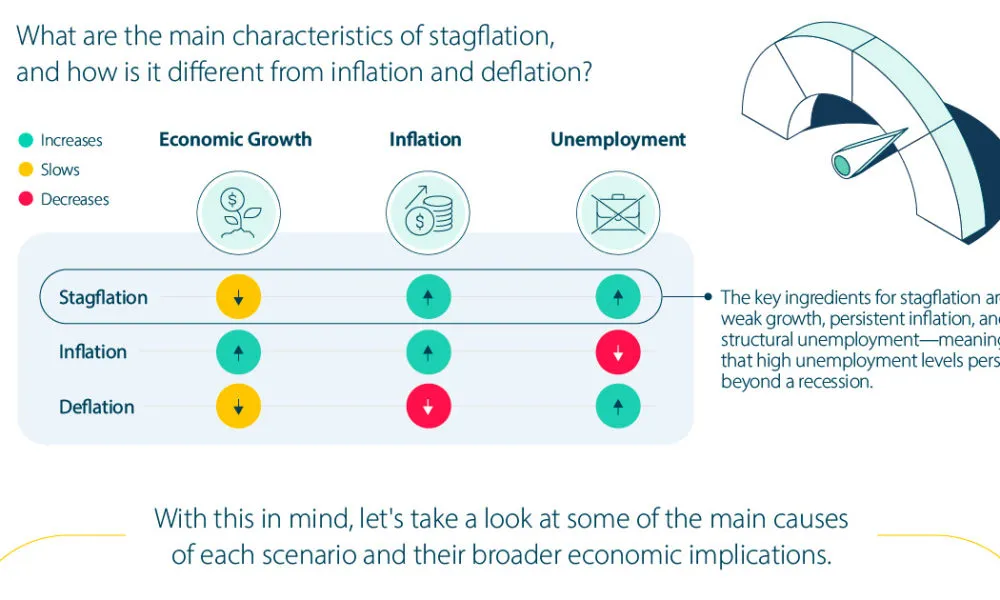
Some people have a tough time understanding that we are in a massive deflationary spiral; they think that rising prices mean it is inflation and not deflation. Then they mistake stagflation for deflation and wonder why people are spending more on less. They only see prices, not disposable income, and, indeed, not economic growth or unemployment.
Prices rose sharply following the OPEC oil price hikes of the 1970s. Still, the sharp rise in energy prices crowded out other forms of spending, resulting in rising prices that had nothing to do with a speculative economic expansion, and a deflationary contraction they called STAGFLATION occurred, with rising prices and declining economic growth.
If you want to raise NET DISPOSABLE INCOME, lower taxes! Raising wages, as the Democratas believe corporations should do, will cause people to move to higher tax brackets, and soon, all benefits will come into play with these socialistic programs. As always, nobody in government talks about reducing government waste and corruption. The very people who are using these social programs are still paying taxes to the state and federal government.
Household income will soon be defined as everyone living in the same house – kids and all. Perhaps you will have to pitch a tent and make the kids sleep outside with the dog to avoid “household” income tax increases. Deflation is not the lowering of prices; it is the lowering of economic activity that can also include STAGFLATION, which occurs when prices rise but there is no economic growth.
Now, stagflation is not exactly the same as deflation, where the price of goods and services declines. For example, before World War II, the US experienced a massive deflationary environment in which GDP fell by 30% between the crash of 1929 and 1933. A quarter of Americans were unemployed. Imagine 1 in 4 eligible workers on the sidelines. Prices plummeted, and consumers were not spending because they had very little, if anything, to spend. Panics erupted, and people hoarded; the Second World War brought America out of that economic downfall. The public confidence wave began after World War II, because people believed their change in fortune was due to government policies (i.e., FDR’s New Deal) and war victory.
During periods of stagflation, the prices of goods and services increase while buying power decreases. Consumers end up spending more on less. As we are seeing now, for example, retail salesof items such as clothing have declined, but people are spending more on gas, shelter, and groceries. People feel as if they are earning less despite wage increases because their buying power has been drastically reduced. Companies will suffer as consumers spend less, and this has led to workforce reductions. Unemployment during the OPEC crisis of the 1970s was not nearly as severe, but it rose to 7.2% by 1980. Inflation went from around 1% in 1964 to 14% in 1980, and GDP growth went from 5.8% to -0.3% during that same period.
So be very careful. If you only look at prices rising and ignore the fact that your disposable income is declining, you will be in for a very rude awakening. Unemployment will continue to rise in 2026, with the computer anticipating figures surpassing 6%. The trend was set in motion long before automation and AI. Companies simply will not hire when they expect a continued contraction. The ability to borrow at a lower rate is not enticing because those same companies do not want to take on more debt than they already owe. We will not see another Great Depression by any means, but the “soft landing” is merely rhetoric intended to lift confidence.
Posted originally on Dec 11, 2025 by Martin Armstrong |
The Federal Reserve was divided this December; hawkish members of the FOMC were outnumbered, and the central bank approved its third consecutive cut of 2025. “We’re in the high end of the range of neutral,” Federal Reserve Chairman Jerome Powell added. “It″s so happened that we’ve cut three times. We have we haven’t made any decision about January, but as I said, we think we’re well positioned to wait and see how the economy performs.”
“The discussions we have are as good as any we’ve had in my 14 years at the Fed, very thoughtful, respectful, and you just have people who have strong views, and we come together and we reach a place where we can make a decision,” Powell said.
The ultimate 9-3 vote has brought the overnight rate down to 3.5%-3.75%. Governor Stephen Miran, appointed by Trump, naturally requested a steeper 0.5% reduction. Presidents Jeffrey Schmid of Kansas City and Austan Goolsbee of Chicago were the only members in favor of holding. Miran voted to hold rates during the past three FOMC meetings, but his time at the central bank comes to an end in January. Schmid voted “no” for the second consecutive time.
Of the 19 participants, four issued “soft dissents” expressing disagreement with the decision. Only 12 members have the right to vote on the final outcome. Remember that the president appoints the Board of Governors with Senate approval. Donald Trump sees rates through the eyes of a borrower and mistakenly believes bringing rates down to 0 would lead to business expansion and lower inflation. Trump now has the ability to replace members with candidates who support his dovish stance.
Inflation is driven by fiscal policy, not monetary policy. Congress can run deficits until the sun burns out, and the Fed has no authority to stop them. You can raise or lower interest rates all you want, for it will not change the fact that government spending has blown past anything sustainable. When you borrow without end, servicing that debt becomes a greater share of national income, and that is where the real inflationary pressure comes from. It has nothing to do with whether a handful of hawks around a conference table want 25 bps more. Once FDR hijacked the system and consolidated power in Washington, the Fed became an accessory to fiscal irresponsibility.
The system broke when the government swapped corporate paper for sovereign debt. Once the Fed became the buyer of last resort for federal spending, inflation became a political problem and not a monetary one.
Posted originally on Oct 9, 2025 by Martin Armstrong |
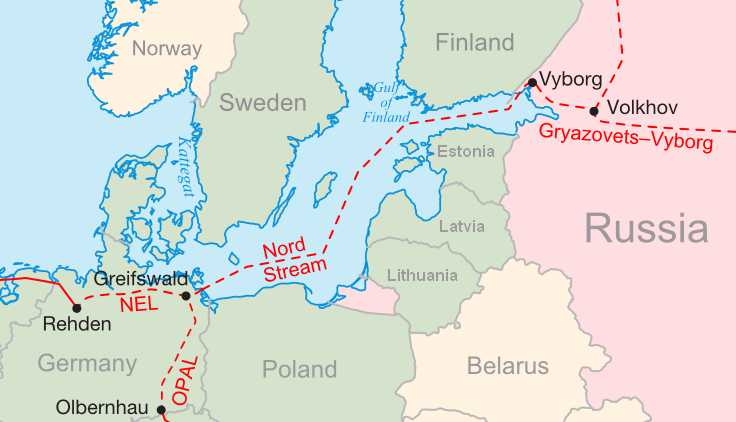
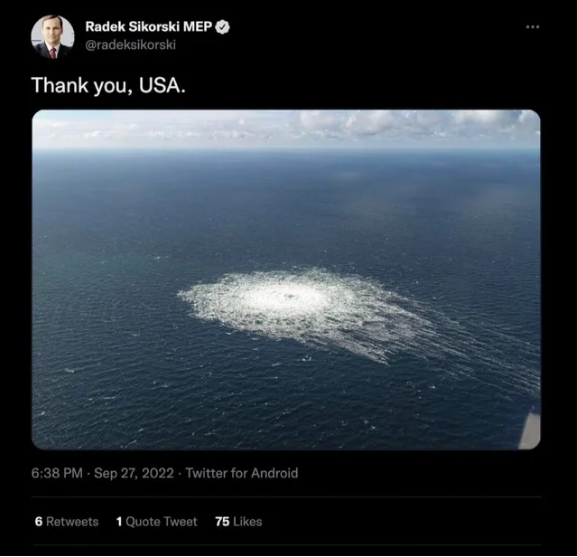
Polish Prime Minister Donald Tusk believes the man who allegedly destroyed the Nord Stream pipeline did his country a great service. Tusk is considering breaking international law by harboring the fugitive who is wanted by the German government. The man, of course, will be the scapegoat for the incident. More telling is Warsaw’s response, rooted in old geopolitical tensions and willful ignorance of how drastically the explosion hurt their own economy.
“The problem of Europe, Ukraine, Lithuania, and Poland is not that Nord Stream 2 was blown up, but that it was built,” Tusk said. “It is certainly not in the interest of Poland to hand over this citizen to a foreign country.” Poland will hold the man in its custody for an additional 40 days, during which it will consider Germany’s demand that he be extradited for prosecution.
“Russia, with money from some European states and German and (Anglo-) Dutch companies, built Nord Stream 2 against the vital interests not only of our states, but of all of Europe, and there can be no ambiguity about that,” Tusk concluded.
Poland has always been caught between Germany and Russia. From the Polish partitions in the 18th century to Soviet domination in the 20th, the Polish political class views any direct German-Russian cooperation as an existential threat. Poland initially protested the pipeline because it felt that Germany was attempting to remove Eastern Europe’s main bargaining chip with Moscow — energy transportation. They invested in LNG terminals, aligned with US energy interests, and positioned themselves as the eastern front against both Russian and EU central control.
The European Union and the euro could never erase generations of geopolitical hatred and scars. Warsaw simply sees Berlin as the lesser of two evils when it comes to Moscow. Tusk’s comments are a deliberate attempt to create friction with Germany and undermine the power they continue to hold over Poland as the economic center of the EU.
One bad apple spoils the bunch, and in the case of Europe, one bad economy will do the trick. Europe was reliant on Russian energy for many years prior to the war. Poland was purchasing 95.5% of its oil from Russia in 2012; the figure declined to 63.1% by 2021 before the war. Yet, Tusk is condemning former German Chancellor Angela Merkel for agreeing to the Nord Stream pipeline. Energy prices spiked by 30% after the pipeline demolition, fueling valid fears of energy shortages across the continent.
The pipeline itself may have been a Russian majority asset, but the infrastructure projects and joint ventures sprouting from the pipeline benefited Europe. European firms, including Wintershall Dea (Germany), E.ON (PEG Infrastruktur, Germany), Gasunie (Netherlands), and ENGIE (France), collectively held 49% of the Nord Stream AG operating company, while Gazprom itself retained 51%.
By now, the world knows that Western intelligence agencies deliberately targeted the pipeline in an act of war. The man detained would be considered a terrorist if these charges were factual. Perhaps they do not want to conduct a fake investigation or trial that would raise suspicions. Tusk needs to look down and realize he’s been shot in the foot with the destruction of this pipeline that ALL of Europe, not merely Germany, benefited from.
Posted originally on CTH on October 8, 2025 | Sundance
Thankfully, people in Washington DC are finally starting to realize the full scale of the Obama surveillance system. All of the evidence and datapoints -released and yet to surface- flow in one direction. Even the professionally reluctant are starting to admit.
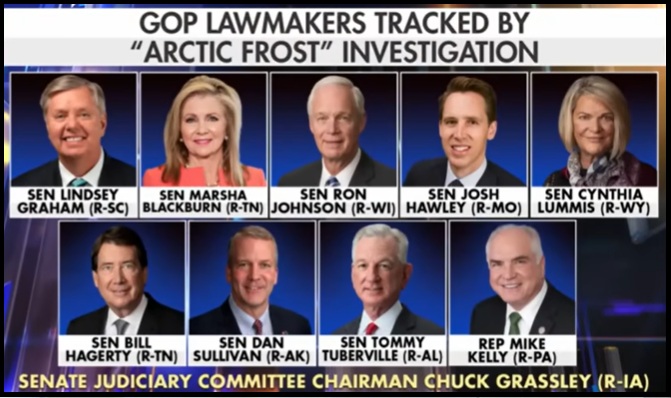
What Obama, Biden, Comey, Crossfire Hurricane, Robert Mueller, Arctic Frost and Jack Smith were doing, was using their offices -and govt systems- to watch their opposition, spy on them, then take action based on the results.
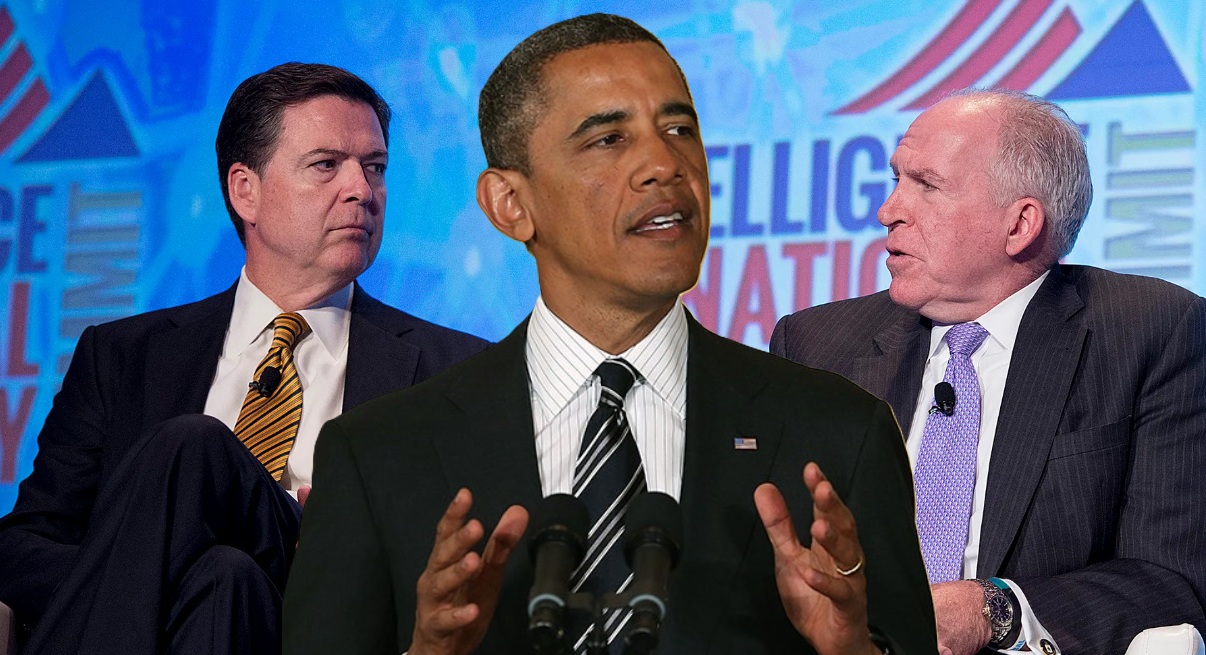
Friend of the Treehouse John Spiropoulos put together a series of videos explaining how President Obama, FBI Director James Comey and CIA Director John Brennan constructed a coverup to hide their political surveillance operation. Today, the 5th segment is wrapped into a total video containing all segments in the series.
From the perspective of Obama, Comey and Brennan, expanding Hillary Clinton’s Trump-Russia collusion narrative was the key element to hide the activity of the administration prior to the November 2016 election. That’s the motive for the FBI and CIA to collaborate on the agenda after the shocking outcome of the 2016 election result; but pay close attention to the activity of the primary “at risk” official, James Comey.
The December ’16 Joint Analysis Report (JAR), and the January ’17 Intelligence Community Assessment (ICA), were fabricated to enhance a spying coverup. Spiropoulos has taken the time to put the deconstruction of the ICA into a simple to follow video format.
From a risk management perspective, initially the surveillance and spying operation was a low-risk endeavor. Obama held power and was going to hand off operations to Hillary. The Clinton administration would retain the officials who were doing the surveillance/spying, and no one would ever know.
Donald Trump was not expected to win the election. When he did, all of the participants were suddenly at risk. President Obama and every member of his cabinet involved in the spying operations, then used Clinton’s “Russiagate” smear to cover up Obama’s “Spygate” activity.
The IRS was used to identify targets 2010 through 2012, until discovered in April ’12. Suddenly, President Obama has a problem. President Obama then sends his Chief of Staff, Jack Lew, to run the IRS and block discoveries around the IRS weaponization.
♦ From 2012 through April 2016, the Obama administration was spying on their political opposition using the FBI to conduct surveillance through their access to the NSA database.
♦ In April 2016, NSA Director Admiral Mike Rogers was alerted by the NSA compliance officer who noted the uptick in database access activity by the FBI searching the Republican primary candidate field.
♦ Post April 2016, the Obama administration had a problem. Enter FBI operation “Crossfire Hurricane,” July 2016, in an effort to remove the political risk.
♦ October 2016, the FBI rushes a FISA application through the FISC, circumventing the missing ‘Woods File’, with the Chris Steele dossier as evidence.
♦ October 2016, NSA Director Rogers sends the first official notification of the FBI using the NSA database to the oversight body, the FISA Court.
♦ December 2016, worried about Trump now discovering the NSA database spying, the Obama administration wraps the Clinton smear into official policy, blaming the Russians and validating Crossfire Hurricane. That’s where the Intelligence Community Assessment becomes critical.
♦ May 2017, needing to extend the coverup of the FBI activity, special counsel Robert Mueller then takes over Crossfire Hurricane. All FBI evidence and personnel transfers to Mueller.
♦ April 2019, Robert Mueller operation wraps up, prior activity coverup shifts to Impeachment process.
♦ July 2019, John Durham kicks in extending DOJ/FBI control through 2020 election.
♦ Fall 2020, mail-in ballots triggered to facilitate 2020 election outcome.
♦ January 2021, FBI triggers Operation Arctic Frost, targeting Trump supporters and 2020 election researchers. FBI again using NSA database search queries to identify targeting.
♦ March 2021, FBI Arctic Frost results fed to J6 Committee and DHS. TSA trigger “Quiet Skies” targeting via results from Arctic Frost.
♦ August 2022, FBI raid on Mar-a-Lago to retrieve any evidence Donald Trump might have of FBI spying and surveillance activity.
♦ September 2023, Jack Smith targets congressional members who had contact with President Trump.
It’s one long continuum of coverup activity within Main Justice and the FBI, supported by all other various agencies who operate in support. What are they covering up? The 2012 through 2016 political spying operation within the Obama administration, as carried out by the same Main Justice and FBI operations.
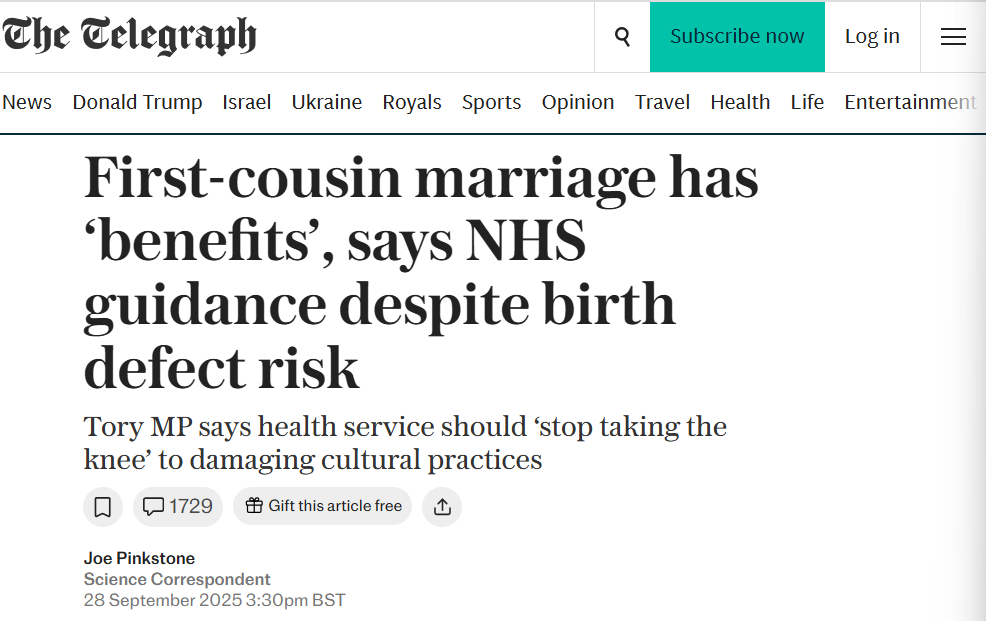
The once-trusted national health agency stated that the benefits of inbreeding outweigh the disadvantages due to “stronger extended family support systems and economic advantages.”
“Genetic counseling, awareness-raising initiatives and public health campaigns are all important tools to help families make informed decisions without stigmatizing certain communities and cultural traditions,” the NHS added. The nation would prefer to permit inbreeding and create a population with irreparable deformities than to “stigmatize certain communities.” Tax-payers should fund “genetic counseling” since science, logic, and basic morals have no place in the UK in 2025.
“In the general population, a child’s chance of being born with a genetic condition is around two to three percent; this increases to four to six percent in children of first cousins. Hence, most children of first cousins are healthy,” the article also claimed. Inbreeding conditions include deafness, thalassemia, hemophilia, cystic fibrosis, congenital heart disease, and more. Since both parents share a common ancestor (grandparents), their children have a 25% change of inheriting any recessive mutation.
Joe Rogan recently shared that around 70% of the Pakistani community living in the United Kingdom are married to a blood relative. The statistic was not sensationalized for views. The Journal of Medical Genetics published a study decades ago indicating that the rate of first-cousin marriage among Pakistanis living in the UK was 55%. The rate is likely higher now due to the unprecedented population uptick.
Illegal? No. Immoral? Studies indicate that incestual marriage is far more common in people with lower education and income. Siblings conspire to arrange these marriages without the consent of their children. Young girls are commonly forced into incestuous marriages to support their families financially. None of this coincides with Western values or morals.
The fact that the nation’s top health organization would encourage these unions is deeply concerning. The genetic risks are well-known in the scientific community. Children of cousin marriages have a 400% higher chance of living with an IQ below 70 compared to children of non-related parents. The risk of a stillborn during pregnancy is also significantly higher. The NHS has lost any remaining shred of credibility or dignity.
British Health Secretary Wes Streeting has called for an apology on the issue of the NHS report. “The first I heard of this was when I saw that report. I asked immediately, ‘What on earth is going on here and what are they playing at?’ The advice has been taken down, but why was it ever there in the first place? Medical science and evidence are clear,” Streeting told LBC radio. “First-cousin marriages are high risk and unsafe, we see the genetic defects it causes, the harm that it causes,” Streeting added.
The NHS has been forced to apologize after public backlash. Yet, this is the same agency that declared that breastmilk from trans individuals or “chestfeeding liquid” was safe for newborn babies. Is promoting child marriage the next step to cultural pandering? The world has witnessed a once great kingdom commit societal and cultural suicide—it’s over.
Posted originally on CTH on October 3, 2025 | Sundance
Vladimir Putin delivers a speech during the 22nd annual meeting of the Valdai International Discussion Club. Within his full remarks [Available Here] President Putin notes the ongoing efforts of the EU to provoke expanded conflict.
Russian President Vladimir Putin– […] They’ve made a lot of noise many times, threatening us with a complete blockade. They’ve even said openly, without hesitation, that they want to make the Russian people suffer. That’s the word they chose. They’ve drawn up plans, each more fantastical than the last one. I think the time has come to calm down, to take a look around, to get their bearings, and to start building relations in a completely different way.
We also understand that the polycentric world is highly dynamic. It appears fragile and unstable because it is impossible to permanently fix the state of affairs or determine the balance of power for the long term. After all, there are many participants in these processes, and their forces are asymmetrical and complexly composed. Each has its own advantageous aspects and competitive strengths, which in every case create a unique combination and composition.
Today’s world is an exceptionally complex, multifaceted system. To properly describe and comprehend it, simple laws of logic, cause-and-effect relationships, and the patterns arising from them are insufficient. What is needed here is a philosophy of complexity – something akin to quantum mechanics, which is wiser and, in some ways, more complex than classical physics.
Yet it is precisely due to this complexity of the world that the overall capacity for agreement, in my view, nevertheless tends to increase. After all, linear unilateral solutions are impossible, while nonlinear and multilateral solutions require very serious, professional, impartial, creative, and at times unconventional diplomacy.
Therefore, I am convinced that we will witness a kind of renaissance, a revival of high diplomatic art. Its essence lies in the ability to engage in dialogue and reach agreements – both with neighbours and like-minded partners, and – no less important but more challenging – with opponents.
It is precisely in this spirit – the spirit of 21st century diplomacy – that new institutions are developing. These include the expanding BRICS community, organisations of major regions such as the Shanghai Cooperation Organisation, Eurasian organisations, and more compact yet no less important regional associations. Many such groups are emerging worldwide – I will not list them all, as you are aware of them.
All these new structures are different, but they are united by one crucial quality: they do not operate on the principle of hierarchy or subordination to a single dominant power. They are not against anyone; they are for themselves. Let me reiterate: the modern world needs agreements, not the imposition of anyone’s will. Hegemony – of any kind – simply cannot and will not cope with the scale of the challenges.
Ensuring international security under these circumstances is an extremely urgent issue with many variables. The growing number of players with different goals, political cultures, and distinctive traditions create a complex global environment that makes developing approaches to ensuring security a much more tangled and difficult task to tackle. At the same time, it opens up new opportunities for all of us.
Bloc-based ambitions pre-programmed to exacerbate confrontation have, without a doubt, become a meaningless anachronism. We see, for example, how diligently our European neighbours are trying to patch up and plaster over the cracks running through the building of Europe. Yet, they want to overcome division and shore up the shaky unity they once used to boast of, not by effectively addressing domestic issues, but by inflating the image of an enemy. It is an old trick, but the point is that people in those countries see and understand everything. That is why they take to the streets despite the external escalation and the ongoing search for an enemy, as I mentioned earlier.
They are recreating an image of an old enemy, the one they created centuries ago which is Russia. Most people in Europe find it hard to understand why they should be so afraid of Russia that in order to oppose it they must tighten their belts even more, abandon their own interests, just give them up, and pursue policies that are clearly detrimental to themselves. Yet, the ruling elites of united Europe continue to whip up hysteria. They claim that war with the Russians is almost at the doorstep. They repeat this nonsense, this mantra, over and over again.
Frankly, when I sometimes watch and listen to what they are saying, I think they cannot possibly believe this. They cannot believe when they are saying that Russia is about to attack NATO. It is simply impossible to believe that. And yet they are making their own people believe it. So, what kind of people are they? They are either entirely incompetent, if they genuinely believe it, because believing such nonsense is just inconceivable, or simply dishonest, because they do not believe it themselves but are trying to convince their citizens that this is true. What other options are there?
Frankly, I am tempted to say: calm down, sleep peacefully, and deal with your own problems. Look at what is happening in the streets of European cities, what is going on with the economy, the industry, European culture and identity, massive debts and the growing crisis of social security systems, uncontrolled migration, and rampant violence – including political violence – the radicalisation of leftist, ultra-liberal, racist, and other marginal groups.
Take note of how Europe is sliding to the periphery of global competition. We know perfectly well how groundless are the threats about Russia’s so-called aggressive plans with which Europe frightens itself. I have just mentioned this. But self-suggestion is a dangerous thing. And we simply cannot ignore what is happening; we have no right to do so, for the sake of our own security, to reiterate, for the sake of our defence and safety.
That is why we are closely monitoring the growing militarisation of Europe. Is it just rhetoric, or is it time for us to respond? We hear, and you are aware of this as well, that the Federal Republic of Germany is saying its army must once again become the strongest in Europe. Well, alright, we are listening carefully and following everything to see what exactly is meant by that.
I believe no one has any doubt that Russia’s response will not be long in coming. To put it mildly, the reply to these threats will be highly convincing. And it will indeed be a reply – we ourselves have never initiated military confrontation. It is senseless, unnecessary, and simply absurd; it distracts from real problems and challenges. Sooner or later, societies will inevitably hold their leaders and elites to account for ignoring their hopes, aspirations, and needs.
However, if anyone still feels tempted to challenge us militarily – as we say in Russia, freedom is for the free – let them try. Russia has proven time and again: when threats arise to our security, to the peace and tranquillity of our citizens, to our sovereignty and the very foundations of our statehood, we respond swiftly.
There is no need for provocation. There has not been a single instance where this ultimately ended well for the provocateur. And no exceptions should be expected in the future – there will be none.
Our history has demonstrated that weakness is unacceptable, as it creates temptation – the illusion that force can be used to settle any issue with us. Russia will never show weakness or indecision. Let this be remembered by those who resent the very fact of our existence, those who nurture dreams of inflicting upon us this so-called strategic defeat. By the way, many of those who actively spoke of this, as we say in Russia, “Some are no longer here, and others are far away.” Where are these figures now?
There are so many objective problems in the world – stemming from natural, technological, or social factors – that expending energy and resources on artificial, often fabricated contradictions is impermissible, wasteful, and simply foolish.
International security has now become such a multifaceted and indivisible phenomenon that no geopolitical value-based division can fracture it. Only meticulous, comprehensive work involving diverse partners and grounded in creative approaches can solve the complex equations of 21st-century security. Within this framework, there are no more or less important or crucial elements – everything must be addressed holistically.
Our country has consistently championed – and continues to champion – the principle of indivisible security. I have said it many times: the security of some cannot be ensured at the expense of others. Otherwise, there is no security at all – for anyone. Establishing this principle has proven unsuccessful. The euphoria and unchecked thirst for power among those who saw themselves as victors after the Cold War – as I have repeatedly stated – led to attempts to impose unilateral, subjective notions of security upon everyone.
This, in fact, became the true root cause of not only the Ukrainian conflict but also many other acute crises of the late 20th century and the first decade of the 21st century. As a result – just as we warned – no one today feels truly secure. It is time to return to fundamentals and correct past mistakes.
However, indivisible security today, compared to the late 1980s and early 1990s, is an even more complex phenomenon. It is no longer solely about military and political balance and mutual interest considerations.
The safety of humanity depends on its ability to respond to challenges posed by natural disasters, man-made catastrophes, technological development, and rapid social, demographic, and informational processes.
All this is interconnected and changes occur largely by themselves, frequently, I have already said it, unpredictably, following their own internal logic and rules, and sometimes, I will dare say, even beyond the people’s will and expectations.
[…] Something else is also known well. Those who encouraged, incited, and armed Ukraine, who goaded it into antagonising Russia, who for decades nurtured rampant nationalism and neo-Nazism in that country, frankly – pardon me the bluntness – did not give a hoot about Russia’s or, for that matter, Ukraine’s interests. They do not feel anything for the Ukrainian people. For them – globalists and expansionists in the West and their minions in Kiev – they are expendable material. The results of such reckless adventurism are in plain sight, and there is nothing to discuss.
Another question arises: could it have turned out differently? We also know, and I return to what President Trump once said. He said that if he had been in office back then, this could have been avoided. I agree with that. Indeed, it could have been avoided if our work with the Biden administration had been organised differently; if Ukraine had not been turned into a destructive weapon in someone else’s hands; if NATO had not been used for this purpose as it advanced to our borders; and if Ukraine had ultimately preserved its independence, its genuine sovereignty.
There is one more question. How should bilateral Russian-Ukrainian issues, which were the natural outcome of the breakup of a vast country and of complex geopolitical transformations, have been resolved? By the way, I believe that the dissolution of the Soviet Union was linked to the position of Russia’s then leadership, which sought to rid itself of ideological confrontation in hopes that now, with communism gone, we will be brothers. Nothing of the sort followed. Other factors in the form of geopolitical interests came into play. It turned out that ideological differences were not the real issue.
So, how should such problems be resolved in a polycentric world? How would the situation in Ukraine have been addressed? I think that if there had been multipolarity, different poles would have tried the Ukraine conflict on for size, so to speak. They would measure it against their own potential hotbeds of tension and fractures in their own regions. In that case, a collective solution would have been far more responsible and balanced.
The settlement would have relied on the understanding that all participants in this challenging situation have their own interests grounded in objective and subjective circumstances which simply cannot be ignored. The desire of all countries to ensure security and progress is legitimate. Without a doubt, this applies to Ukraine, Russia, and all our neighbours. The countries of the region should have the leading voice in shaping a regional system. They have the greatest chance of agreeing on a model of interaction that is acceptable to everyone, because the matter concerns them directly. It represents their vital interest.
For other countries, the situation in Ukraine is merely a playing card in a different, much larger, game, a game of their own, which usually has little to do with the actual problems of the countries involved, including this particular one. It is merely an excuse and a means to achieve their own geopolitical goals, to expand their area of control, and to make some money off the war. That is why they brought NATO infrastructure right up to our doorstep, and have for years been looking with a straight face at the tragedy of Donbass, and at what was essentially a genocide and extermination of the Russian people on our own historic land, a process that began in 2014 on the heels of a bloody coup in Ukraine.
In contrast to such conduct demonstrated by Europe and, until recently, by the United States under the previous administration, stand the actions of countries belonging to the global majority. They refuse to take sides and genuinely strive to help establish a just peace. We are grateful to all states that have sincerely exerted efforts in recent years to find a way out of the situation. These include our partners – the BRICS founders: China, India, Brazil and South Africa. This includes Belarus and, incidentally, North Korea. These are our friends in the Arab and Islamic world – above all, Saudi Arabia, the United Arab Emirates, Qatar, Egypt, Turkiye and Iran. In Europe, these include Serbia, Hungary and Slovakia. And there are many such countries across Africa and Latin America.
Regrettably, hostilities have not yet ceased. However, the responsibility for this lies not with the majority for failing to stop them, but with the minority, primarily Europe, which continually escalates the conflict – and in my view, no other objective is even discernible there today. Nevertheless, I believe goodwill will prevail, and in this regard, there is not the slightest doubt: I believe changes are occurring in Ukraine as well, albeit gradually – we see this. However much people’s minds may have been manipulated, shifts are nevertheless taking place in public consciousness, and indeed across the overwhelming majority of nations worldwide. (read more)
I have created this site to help people have fun in the kitchen. I write about enjoying life both in and out of my kitchen. Life is short! Make the most of it and enjoy!
This is a library of News Events not reported by the Main Stream Media documenting & connecting the dots on How the Obama Marxist Liberal agenda is destroying America