
Armstrong Economics Blog/Ancient History
Re-Posted Mar 26, 2019 by Martin Armstrong
QUESTION: Mr. Armstrong; I assume you would know the answer. Is it true that the women in ancient times were more like Hillary seeking power compared to modern times?
JF
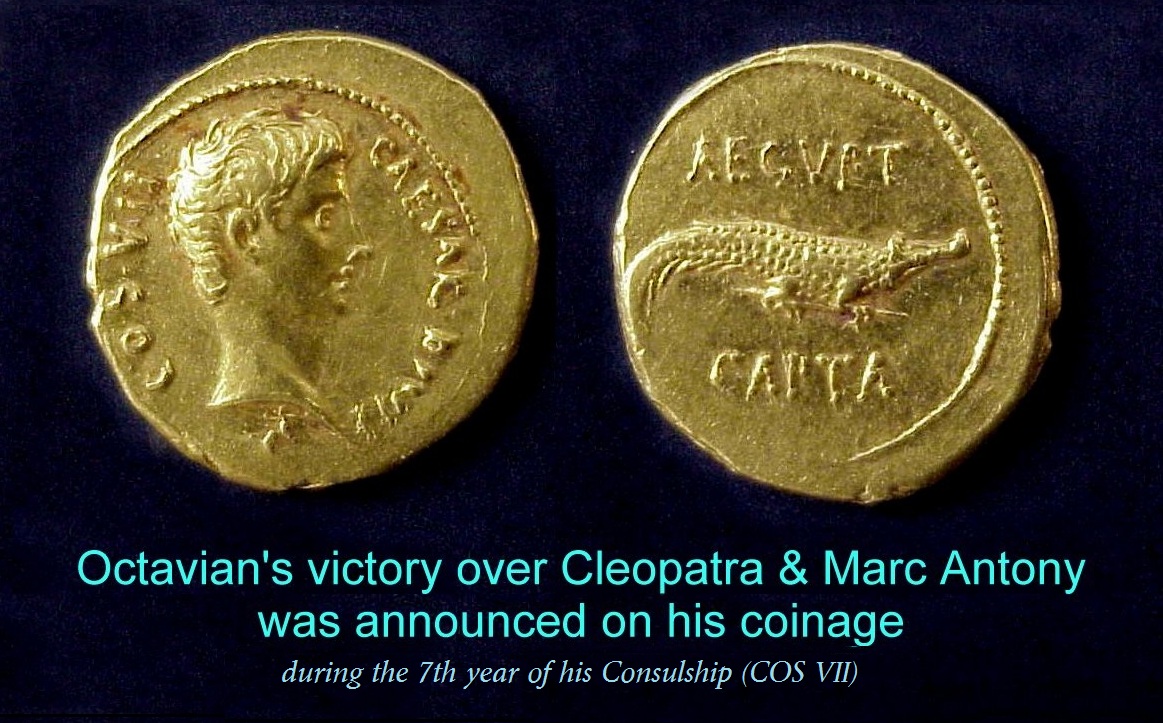
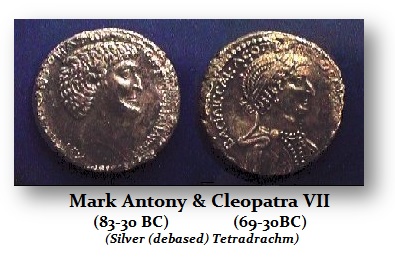
ANSWER: Yes, I have heard this assertion before. It is only partially true. Unquestionably, the first woman of Eastern culture to act politically was none other than Cleopatra VII. She loved Julius Caesar and bore his son in hopes of taking over Rome. When Caesar was assassinated, she fled Rome back to Egypt. She then seduced Marc Antony. That did not end well and Octavian defeated them as it was portraryed as one of the epic love stories which was probably more for political advantages as is the case with Hillary and Bill who now live separately.
However, it was not appropriate for Octavian to boast a victory over a Roman such as Marc Antony, and yet it was also inappropriate to drag a woman through the streets as being conquered. It was not out of the question that that Octavian had Cleopatra killed for this difficulty. The coinage he issued avoided proclaiming victory over Antony and Cleopatra personally and simply claimed he defeated Egypt.
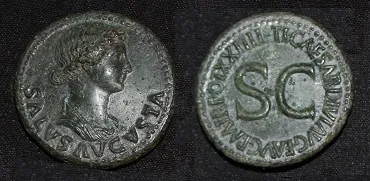
There appears to be a cultural difference in history between the Eastern area of the Roman Empire and that of the West. The women in the East historically appear to be much more dominant in politics than in the West, where perhaps the saying originated, “Behind every great man stands a great woman supporting him.” I recommend an old BBC series to watch called “I Claudius.” It was a fantastic series that revolved around the Julio-Claudian family that was really driven by the intrigue of Augustus‘ wife- Liva. The series shows how she killed off the heir of her husband, Augustus, so her son, Tiberius, would become emperor. She was said to have more bodies than Hillary is alleged to have orchestrated. The difference was that Liva did not seek to be emperor, where Hillary stuck with Bill to make a run for president.
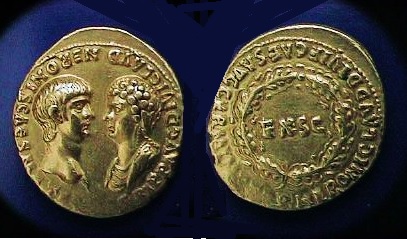
 There was also Agrippina, Jr., who most likely orchestrated the assassination of Britannicus, the son of Emperor Claudius, so her son would become Emperor Nero. Where Livia’s portrait appears on coinage, it is always in the form of a goddess rather than in her own name. In the case of Agrippina, Jr, she is the first woman to be pictured on Roman coinage in her own name. Here she is pictured with her son Nero facing him as she ruled the empire. Eventually, she was so manipulative that Nero was blamed by the people for the murder of Britannicus. Nero eventually turned against her and had her killed.
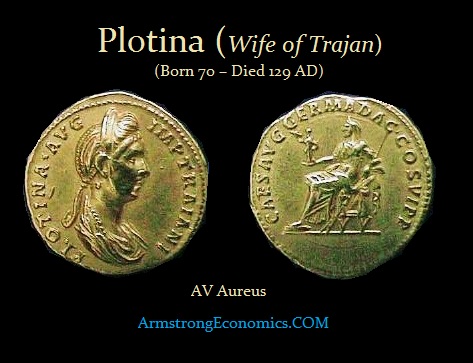 Women seem to have remained behind the throne following Agrippina Jr. certainly in advising but also acting more like a first lady would. The next woman in the middle of a scandal was the wife of Emperor Trajan – Plotina. A letter Trajan was said to have composed on his deathbed appeared in Rome with Plotina’s signature on it, in which he adopted Hadrian naming him successor to the Empire. This raised suspicion that it was crafted by Plotina who was fond of Hadrian.
We do not really encounter the outright politically dominant women until the late 2nd century and they are from the East. It is not just one woman, but a number of them that began to manipulate politics and take more of an open role. The first is Julia Domna who was the wife of Septimus Severus and the mother of Caracalla.
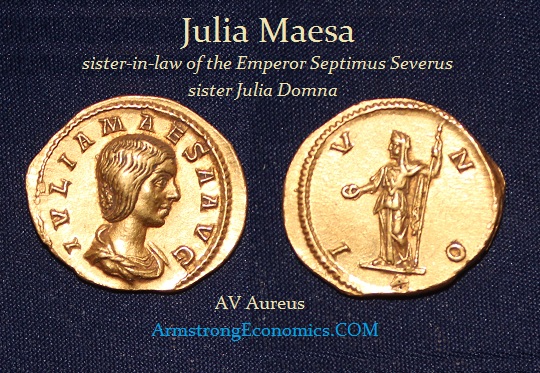
It was the women of Julia Domna’s family that really dominated politics under 235 AD. Julia Maesawas the sister of Julia Domna and sister-in-law of the Emperor Septimus Severus. Julia Maesa bore two daughters, Julia Soaemias and Julia Mamaea, the mothers of the Emperors Elagabalus and Severus Alexander respectively. Julia lived in Rome with her sister during the reign of Caracalla. Following Caracalla’s assassination and Macrinus’ rise to the throne, Julia was permitted to retire to her home at Emesa in 217 AD. This act of mercy on the part of Macrinus would later prove to be a fatal mistake. Once back in Syria, Julia Maesa masterminded the conspiracy in the provinces that led to the fall of Macrinus and the elevation of her grandson Elagabalus to the throne of the Roman Empire in 218 AD. When Elagabalus was murdered, his mother went with him and they dragged their bodies through the streets of Rome in celebration. Julia Mamaea was the mother of Severus Alexander. She was murdered when her son was assassinated. She was the last of this line of Eastern women to rule.
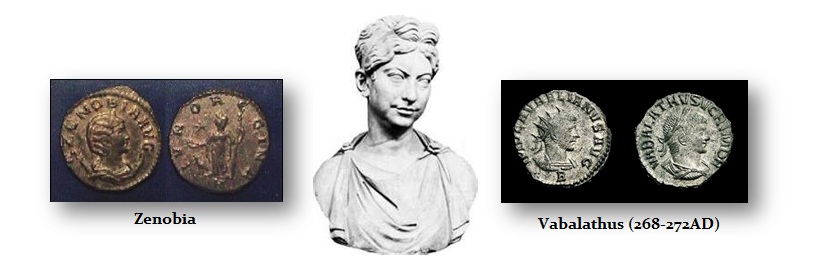
There was Zenobia, also of the East located in Syria. She led a rebellion and split off the Eastern provinces from Rome. She raised her son to the rank of emperor, but she was the dominant political figure and issued coins proclaiming she was effectively the Empress. Because she was a woman, when she was conquered by Aurelian she was allowed to retire. There was a cultural issue that it did not appear to be appropriate for a man to conquer a woman and execute her.
In 479 AD, the emperor Zeno’s mother-in-law, the meddlesome dowager empress Verina, the wife of Leo I, managed to convince her other son-in-law Marcian, son of the late western emperor Anthemius, to a raise a revolt. It collapsed due to the quick reaction of Zeno’s Isaurian general Illus, and Verina’s complicity in both it and in an attempted assassination of Illus was quite plain. She was then given to Illus to be imprisoned in Dalisandus in Isauria. By 484 AD, however, the situation had changed: Illus was reported to be intriguing against the emperor, and not only refused the empress Ariadne’s request that her mother be released, but had the audacity (in Ariadne’s opinion) to avoid being assassinated by her agents (who seem to have been as incompetent as her mother’s had been five years earlier).
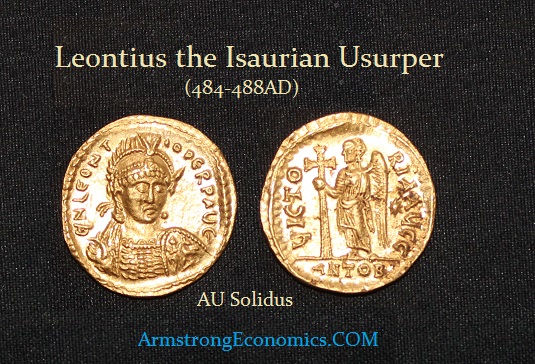
Illus withdrew to his native Isauria, and Zenothen sent the patrician Leontius with orders to obtain Verina’s release. The unexpected result of this was that Leontius made peace between Verina and Illus, and after Illusbrought her in full regalia to Tarsus, she crowned Leontius emperor on July 19th, 484 AD. She attempted to convince the provincial forces to go over to him by stressing her legitimate right as empress to crown an emperor, but after a very short occupation of Antioch the rebels were tossed out again, and in September were heavily defeated by Zeno’s army under John the Scythian. The survivors fled to the virtually impregnable fortress of Cherris in Isauria where they remained bottled up until their capture and execution in 488 AD (Verina herself had already died in late 484 AD).
Whenever possible, rebels like Leontius and Illus would have wanted their own coinage, both to underscore their legitimacy as rulers, as well as to pay the troops they so desperately needed. The capture of Antioch provided them with a mint, though one which was not accustomed to gold coinage, and they must have immediately begun turning all available gold into coins bearing the name and titles of Leontius as emperor. The fact that the obverse legend is in the dative case, rather than the expected nominative, shows that it was meant to be seen as an acclimation issue.
The dies for Leontius’ solidi were cut with great rapidity by relatively unskilled craftsmen (the legends can be slightly garbled, Greek U’s are used rather than Latin, etc.). Traditionally, Leontius is thought to have only held Antioch for 12 days but it has been suggested by others that the coronation of Leontius took place in March and that his occupation of Antioch lasted two months.
In any event, thanks to Verina, Leontius’ gold coinage is among the rarest of Roman issues. Few coins have survived simply due to the collapse of the rebellion and the demonetization of any usurper’s coinage. It was tradition to recall all the coinage of a usurper and melt them down. There are in fact only four known examples with each struck from a different pair of dies makes the original abundance of the coinage fairly clear. With this number of dies, it implies that the coinage issue could have easily produced 400 lbs of gold coins to pay the troops. The discovery of these coins confirms both the location and the fact that they were culled out of circulation. The coin illustrated here is from a 19th century Levantine hoard of several hundred solidi of Zeno and Leo I, suggesting that the hoarder did not notice the image of the usurper.
USA Happiness Falls in Latest Report: Finland and Nordics Lead the World

Published on Mar 22, 2019
3-in-5 Millennials Can’t Sleep, Stressed Over Smartphone Anxiety
Published on Mar 22, 2019
Geezer Candidate Cage Match: Are Biden, Sanders, Trump & Warren Too Old?
Published on Mar 21, 2019
Sketchy Cesar Sayoc Pleads Guilty to Federal Charges of Mailing “pipe bombs”…
March 21, 2019
 Everything about last year’s headline story just two-weeks before the mid-term election was weird; including the refusal of the FBI to state what ‘specifically’ was the material suspect Cesar Sayoc was accused of using to create his Acme looking pipe bombs.
You might remember: FBI Director Christopher Wray outlined during his remarks that the devices consisted of PVC pipe, clocks, batteries, wiring and “energetic material that can become combustible when subjected to heat or friction”.
The FBI director went out of his way to state: “these were not hoax devices.” The DOJ then moved to seal all court filings and the case against the nut continued behind the curtain of ‘national security’. Suspect Cesar Sayoc was scheduled to go on trial this summer on charges relating to the pipe bombs. However, today he entered a guilty plea before a federal judge in New York.
(Via Washington Post) Cesar Sayoc, the Florida man accused of mailing explosive devices to more than a dozen politicians and media figures who have been critical of President Trump, pleaded guilty Thursday in federal court.
Sayoc, 57, was arrested and charged in October after a series of possible explosive devices were sent to former president Barack Obama, former secretary of state Hillary Clinton and the news network CNN, among others. Officials said he sent a total of 16 devices to 13 people across the country.
On Thursday, he appeared in a Manhattan court room and read from a brief written statement in a quiet, raspy voice. Sayoc acknowledging that he created the devices and sent them in the mail.
“I knew these actions were wrong. I’m extremely sorry,” Sayoc said. He briefly lost his composure at one point while speaking, prompting his attorneys to rub his back.
Responding to a question from U.S. District Judge Jed S. Rakoff, Sayoc said: “I was aware of the risk that they would explode.”
Sayoc’s guilty plea had been anticipated since his court docket showed last week that a pretrial conference scheduled for Thursday had been changed to a “plea” hearing. He had previously pleaded not guilty. (read more)


Thoroughly-Modern Bernie: Sanders Campaign Hires Women…in 2019!
How All-Powerful Captain Marvel Disempowers Women for Feminism
The $20 Gold Coins Walmart Refused to Accept as $20
Armstrong Economics Blog/Gold
Re-Posted Mar 21, 2019 by Martin Armstrong
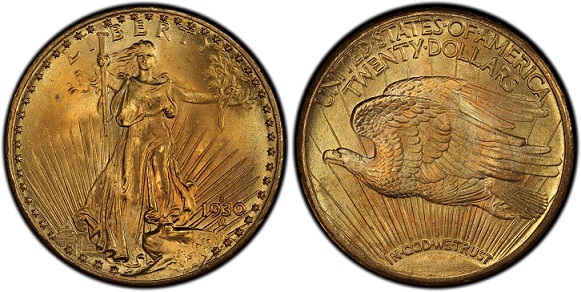
As time passes, the newer generations lack any understanding of gold standards or even the events of 1971. There are many people who judge the future of gold based upon their belief that it is money. However, like religion, human society is fragmented and certainly neither of one faith nor one political party. While there are YouTube videos showing people preferred a chocolate bar to a bar of silver, it always comes down to what we believe. The younger generations do not even remember silver coins no less the role of gold. This is producing some interesting events.
A woman took a handful of $20 gold coins to pay for groceries at Walmart. They would not accept them, even at $20. She was told to take them to a bank to exchange them for real money. She did and the teller gave her the face value. The incident sparked a hunt for the woman since a $20 gold coin was worth about $1,000 instead of $20. Here we have a woman who had no idea that the gold coins were worth more, a Walmart clerk who refused to accept them for $20, and a bank teller who at least gave her $20 each. A very interesting problem which would have been much worse if it involved bullion bars.
Devin Nunes Explains His $250 Million Lawsuit Against Twitter…
March 18, 2019
HPSCI ranking member Devin Nunes appears on Fox News with Sean Hannity to discuss the lawsuit he filed today against Twitter and some users.

Representative Devin Nunes Files Major Lawsuit Against Twitter for ‘Smears’ and ‘Shadowbans’…
March 18, 2019
House Intelligence Committee ranking member Devin Nunes has filed a $250 million lawsuit against Twitter as a media platform curator.
(Via Fox News) California GOP Rep. Devin Nunes filed a major lawsuit seeking $250 million in compensatory damages and $350,000 in punitive damages against Twitter and a handful of its users on Monday, accusing the social media site of “shadow-banning conservatives” including himself to influence the 2018 elections, systematically censoring opposing viewpoints and totally “ignoring” lawful complaints of repeated abusive behavior.
In a complaint filed in Virginia state court on Monday, obtained by Fox News, Nunes charged that Twitter wanted to derail his work on the House Intelligence Committee, which he chaired until 2019, as he probed alleged and apparent surveillance abuses by the government. Nunes said Twitter was guilty of “knowingly hosting and monetizing content that is clearly abusive, hateful and defamatory – providing both a voice and financial incentive to the defamers – thereby facilitating defamation on its platform.”
The lawsuit alleges defamation, conspiracy, and negligence, and seeks not only damages, but also an injunction compelling Twitter to turn over the identities behind numerous accounts he says have harassed and defamed him. The lawsuit is separate from Nunes’ work on the House Intelligence Committee, where he is now the ranking member. (read more)
 Roger Simon@rogerlsimonDISCLOSURE IS GOING TO BE VERY INTERESTING> Nunes sues Twitter, some users, seeks over $250M alleging anti-conservative ‘shadow bans,’ smearshttps://www.foxnews.com/politics/nunes-files-bombshell-defamation-suit-against-twitter-seeks-250m-for-anti-conservative-shadow-bans-smears …
Nunes sues Twitter, some users, seeks over $250M alleging anti-conservative ‘shadow bans,’ smears
California GOP Rep. Devin Nunes filed a major lawsuit seeking $250 million in compensatory damages and $350,000 in punitive damages against Twitter and a handful of its users on Monday, accusing the…
foxnews.com

 Centinel2012