Earlier today House Intelligence Chairman Devin Nunes appeared on Fox and Friends to discuss the ongoing criticism from Democrats and the media as the HPSCI continues investigating how DOJ and FBI officials corrupted their offices. WATCH:
.


Earlier today House Intelligence Chairman Devin Nunes appeared on Fox and Friends to discuss the ongoing criticism from Democrats and the media as the HPSCI continues investigating how DOJ and FBI officials corrupted their offices. WATCH:
.
The biggest of all BIGGER story aspects to the HPSCI Memo, in all coverage, has been overlooked by all Main Stream Media. The Department of Justice FBI FISA request was for “Title I” surveillance authority. This is not some innocuous request for metadata exploration – the FBI said American citizen Carter Page was a “foreign agent of a hostile foreign government”; the FBI was calling Carter Page a spy.
“Title I” FISA surveillance of U.S. citizens is the most intrusive, exhaustive and far reaching type of search, seizure and surveillance authority, permitting the FBI to look at every scintilla of Mr. Page’s life. All communication, travel and contact can be opened and reviewed. All aspects of any of Mr. Page’s engagements are subject to being secretly monitored. This is an entirely different level of surveillance authority, the highest possible, and has nothing to do with FISA-702 search queries (Title VII) of U.S. persons.
To present a methaphor, under Title I FISA authority, Carter Page was essentially ‘patient zero’ in an Ebola pandemic. Labeling him as a foreign agent allowed the FBI to look at every single person he came in contact with; and every single aspect of their lives and their activities in growing and concentric circles; without limits to current time or historic review.
The “Title I” designation as a foreign agent applied retroactively to any action taken by Mr. Page, and auto-generates an exponential list of other people he came in contact with. Each of those people, groups or organizations could now have their communication reviewed, unmasked and analyzed by the DOJ/FBI with the same surveillance authority granted upon the target, Mr. Page.

Because the consequences of this type of surveillance are so comprehensive; and because the severity to the immediate loss of constitutional protection (privacy and liberty) is so stark; the U.S. Government -through the FISA court- intentionally makes it very difficult to gain FISA Title I surveillance authority over a U.S. citizen.
Sharyl Attkisson picks up from there with her deep dive into exactly what protections are in place, and the extraordinarily high-bar the DOJ needs to pass in order to gain Title I surveillance authority.
The point is: There are strict rules requiring that each and every fact presented in an FBI request to electronically spy on a U.S. citizen be extreme-vetted for accuracy — and presented to the court only if verified.
There’s no dispute that at least some, if not a great deal, of information in the anti-Trump “Steele dossier” was unverified or false. Former FBI director James Comey testified as much himself before a Senate committee in June 2017. Comey repeatedly referred to “salacious” and “unverified” material in the dossier, which turned out to be paid political opposition research against Donald Trump funded first by Republicans, then by the Democratic National Committee and the Hillary Clinton campaign.
Presentation of any such unverified material to the Federal Intelligence Surveillance Act (FISA) court to justify a wiretap would appear to violate crucial procedural rules, called “Woods Procedures,” designed to protect U.S. citizens.
Yet Comey allegedly signed three of the FISA applications on behalf of the FBI. Deputy Director Andrew McCabe reportedly signed one and former Attorney General Sally Yates, then-Acting Deputy Attorney General Dana Boente and Deputy Attorney General Rod Rosenstein each reportedly signed one or more. (read more)
To think that unverified claims, gossip, media reports and generally salacious political opposition research, could be included in an application to remove an American’s right to privacy and liberty is really the BIGGER story being clouded in this discussion.
….And keep in mind, amid all of this exhaustive FBI surveillance and DOJ national security division digging into every aspect of his life, Mr. Carter Page has never been accused of any crime, wrongdoing, or subsequent criminal conduct.
It appears the entire reason to label Mr. Page as a Title One “foreign agent” was so the DOJ National Security Division and FBI Counterintelligence Division, could use Mr. Page’s short contact with the Trump campaign as an excuse to monitor everyone else within the campaign before, during and after the election.


 First, the essential problem with NAFTA was an evolution over time. In its current form NAFTA became an exploited doorway into the coveted U.S. market. Asian economic interests, large multinational corporations, invested in Mexico and Canada as a way to work around any direct trade deals with the U.S.
By shipping parts to Mexico and/or Canada; and by deploying satellite manufacturing and assembly facilities in Canada and/or Mexico; China, Asia and to a lesser extent EU corporations exploited a loophole. Through a process of building, assembling or manufacturing their products in Mexico/Canada those foreign corporations can skirt U.S. trade tariffs and direct U.S. trade agreements. The finished foreign products entered the U.S. under NAFTA rules.
Why deal with the U.S. when you can just deal with Mexico, and use NAFTA rules to ship your product directly into the U.S. market?
This exploitative approach, a backdoor to the U.S. market, was the primary reason for massive foreign investment in Canada and Mexico; it was also the primary reason why candidate Donald Trump, now President Donald Trump, wanted to shut down that loophole and renegotiate NAFTA.
This loophole was the primary reason for U.S. manufacturers to relocate operations to Mexico. Corporations within the U.S. Auto-Sector could enhance profits by building in Mexico or Canada using parts imported from Asia/China. The labor factor was not as big a part of the overall cost consideration as cheaper parts and imported raw materials.
If you understand the reason why U.S. companies benefited from those moves, you can begin to understand if the U.S. was going to remain inside NAFTA President Trump would have remained engaged in TPP.
As soon as President Trump withdrew from TPP the problem with the Canada and Mexico loophole grew. All corporations from TPP nations would now have an option to exploit the same NAFTA loophole.
Why ship directly to the U.S., or manufacturer inside the U.S., when you could just assemble in Mexico and Canada and use NAFTA to bring your products to the ultimate goal, the massive U.S. market?
From the POTUS Trump position, NAFTA always came down to two options:
Option #1 – renegotiate the NAFTA trade agreement to eliminate the loopholes. That would require Canada and Mexico to agree to very specific rules put into the agreement by the U.S. that would remove the ability of third-party nations to exploit the current trade loophole. Essentially the U.S. rules would be structured around removing any profit motive with regard to building in Canada or Mexico and shipping into the U.S.
Canada and Mexico would have to agree to those rules; the goal of the rules would be to stop third-party nations from exploiting NAFTA. The problem in this option is the exploitation of NAFTA currently benefits Canada and Mexico. It is against their interests to remove it. Knowing it was against their interests President Trump never thought it was likely Canada or Mexico would ever agree. But he was willing to explore and find out.
Option #2 – Exit NAFTA. And subsequently deal with Canada and Mexico individually with structured trade agreements about their imports. Canada and Mexico could do as they please, but each U.S. bi-lateral trade agreement would be written with language removing the aforementioned cost-benefit-analysis to third-party countries (same as in option #1.)
All nuanced trade-sector issues put aside, the larger issue is always how third-party nations will seek to gain access to the U.S. market through Canada and Mexico. [It is the NAFTA exploitation loophole which has severely damaged the U.S. manufacturing base.]
 This is not direct ‘protectionism’, it is simply smart and fair trade.
Unfortunately, the U.S. CoC, funded by massive multinational corporations, is spending hundreds of millions on lobbying congress to keep the NAFTA loophole open.
The U.S. has to look upstream, deep into the trade agreements made by Mexico and Canada with third-parties, because it is possible for other nations to skirt direct trade with the U.S. and move their products through Canada and Mexico into the U.S.
Additionally, with Canada now joining TPP it has become impossible for the U.S. to remain in NAFTA and simultaneously conduct trade negotiations with TPP nations.
EXAMPLE: If the U.S. remained in NAFTA all TPP nations would engage in trade discussion knowing there was a Canadian and/or Mexican option to gain access to the U.S. market. Therefore, despite the size of our market, we could never negotiate a better trade agreement than the deal existing between Canada, Mexico and their TPP partner nations.
President Trump, Commerce Secretary Wilbur Ross and U.S. Trade Representative Lighthizer well understand this structural problem. ONLY Trump, Ross, Mnuchin and Lighthizer are willing to confront this problem. If Trump had lost the election, Clinton would have joined the multinationals and U.S. workers would have suffered greatly.
Lastly, the issue of Canada and Mexico making trade agreements with other nations (especially China), while brokering their NAFTA position with the U.S. as a strategic part of those agreements, is a serious issue that cannot adequately be resolved while the U.S. remains connected to NAFTA.
At the conclusion of Round #6, this was the direct issue at the heart of a very frustrated U.S.T.R. Lighthizer’s strongly worded response to Canada:
[…] In another proposal, Canada reserved the right to treat the United States and Mexico even worse than other countries if they enter into future agreements. Those other countries may, in fact, even include China, if there is an agreement between China and [Canada]. This proposal, I think if the United States had made it, would be dubbed a “poison pill.” We did not make it, though. Obviously, this is unacceptable to us, and my guess is it is to the Mexican side also. (read full remarks)
So you see, if you just look at the pure economics of the options, and you remember that President Trump is constitutionally antithetical to anyone having influence over U.S. interests other than the American people inside the United States, you can clearly see there is only one-way this entire process ends.
President Trump will end NAFTA.
Withdrawal is not a matter of “if“, it is simply a matter of “when”.
The economic reality drives the “if”, the political reality drives the “when”.
POTUS Trump knows the multinational corporations and multinational banks will trigger their CoC purchased politicians in Washington DC as soon as Trump announces. The GOPe Republicans and Corporatist Democrats will launch everything they have against him in a public relations effort to stop the exit. There are trillions at stake.
As the tax reform benefits gain a foothold, American workers are realizing they are getting more money in their paychecks; and as the U.S. economy continues to gain momentum, that’s the backdrop for President Trump making the announcement. Best Guess: likely around the end of February, beginning of March.
Plan your affairs accordingly.

QUESTION: Can Mueller indict Trump? You seem to be astute when it comes to constitutional law.
KE
ANSWER: During the Clinton era, we had independent counsel Kenneth Starr. Because Starr was an independent counsel, the argument was that he could indict Bill Clinton. Because of that legal question, the statue which authorized the creation of independent counsel was allowed to expire. Granted, some argue that there is nothing in the Constitution that would bar a federal grand jury from returning criminal charges against a sitting president for committing a serious felony. I am not entirely convinced that the absence of specific prohibition is an endorsement of the existence of such a power.
“When a statute limits a thing to be done in a particular mode, it includes a negative of any other mode.” Raleigh & Gaston R. Co. v. Reid, 13 Wall. 269, 270 (1872). In this case, those who support indicting Trump argue that there is no prohibition and therefore that opens the door to indict. The Constitution expressly states that any trial of a President must be in the Senate. That would preclude the normal channels of criminal law including a Grand Jury.
Nevertheless, the criminal prosecution of anyone must be clearly defined and specified in advance by statute to provide notice that if you do this then that will result. “An indefinite criminal statute creates an opportunity for the misuse of government power” US v Handakas, 286 F3d 92, 107-108 (2nd Cir 2002).
In Clinton v. Jones, 520 U.S. 681 (1997), the Supreme Court did NOT decide two important questions:
In the Clinton v Jones case, the lower court ruled that the District Court’s discretionary decision to stay the trial was the “functional equivalent” of a grant of temporary immunity. 72 F. 3d, at 1361, n. 9. They ruled that there was no constitutionally entitled immunity. The Supreme Court did not decide that question but it commented: “we think the issue is more difficult than the opinion of the Court of Appeals suggests.”
The Supreme Court previously held that a sitting President is subject to judicial process in appropriate circumstances. Thomas Jefferson disagreed with then Chief Justice Marshall, who presided over the treason trial of Aaron Burr and ruled that a subpoena duces tecum could be directed to the President. US v. Burr, 25 F. Cas. 30 (No. 14,692d) (CC Va. 1807). The Supreme Court upheld that precedent ruling that President Nixon was obligated to comply with a subpoena commanding him to produce certain tape recordings of his conversations with his aides, US v. Nixon, 418 U. S. 683 (1974).
Turning to the question of whether the Constitution bars indictment of a sitting president, there is no previous case that is directly on point. If we look at the debates of the Framers we can see that they did provide for a trial on a felony but only by Congress. They expressly stated: “Senate shall have the sole Power.” That would preclude any Grand Jury indictment.
The Constitution, Article II, Section 4:
The President, Vice President and all civil Officers of the United States, shall be removed from Office on Impeachment for, and Conviction of, Treason, Bribery, or other high Crimes and Misdemeanors.
The Constitution, Article I, Section 3:
The Senate shall have the sole Power to try all Impeachments. When sitting for that Purpose, they shall be on Oath or Affirmation. When the President of the United States is tried, the Chief Justice shall preside: And no Person shall be convicted without the Concurrence of two-thirds of the Members present.
Judgment in Cases of Impeachments shall not extend further than to removal from Office, and disqualification to hold and enjoy any Office of honor, Trust, or Profit under the United States, but the Party convicted shall nevertheless be liable and subject to Indictment, Trial, Judgment, and Punishment, according to Law.
The Constitution does not provide blanket immunity for a sitting President. Members of Congress enjoy “privilege from arrest” in civil cases when going to and from Congress and may not be criminally prosecuted for “any speech or debate” in Congress. Clearly, the President can be subpoenaed for the production of evidence and he can be deposed in a civil suit. However, there is more than just a subtle difference between Starr investigating Clinton and Mueller going after Trump. When Clinton was nearing vacating office, the Justice Department’s Office of Legal Counsel ruled that the President could NOT be indicted. This actually restrains Mueller right now.
There is a significant difference between the Clinton prosecution and the immediate action to try to bring down Trump for the bureaucrats. Starr served as independent counsel under a statute that expired. Special counsel Robert Mueller serves directly under Justice Department regulations put in place after the independent counsel law expired. The difference is that Clinton could not fire Starr and Starr could indict Clinton, but that was probably unconstitutional. Mueller’s power is under the Department of Justice and that means he is NOT independent and Trump could fire anyone who tried to indict him. The precedent of more than 100 years makes it very clear that that the President retains complete authority to control federal criminal prosecutions. Legally, Trump could fire Mueller but then Congress would probably act to impeach Trump.
Regulations that Mueller must comply with make it clear that he must obey “the rules, regulations, procedures, practices, and policies of the Department of Justice.” He can be removed for “good cause, including violation of Departmental policies.” Therefore, Mueller cannot indict Trump based upon internal rules alone.
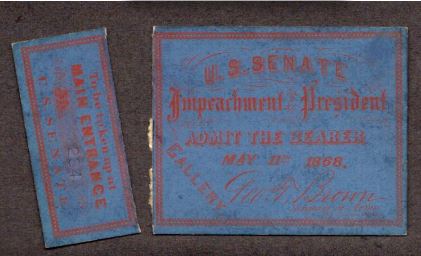
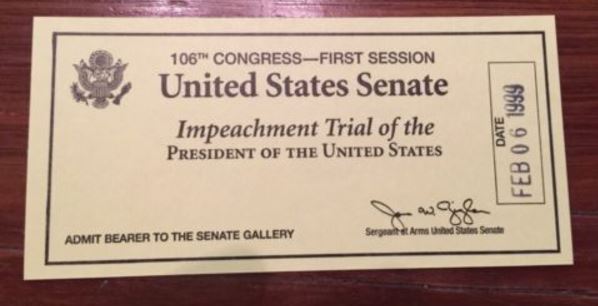
In my “opinion” we have the internal rules that prohibit Mueller from indicting Trump. However, my reading of the Constitution and the debated behind Article II, Section 4 and Article I, Section 3, means that Mueller at best can only recommend impeachment to Congress and it is their EXCLUSIVE domain to impeach and put a President on trial. They cannot imprisonment him and their power is limited to removing him from office.
This would be my legal argument against Mueller if he dared to try to indict Trump. He is a power hungry and vindictive person out to protect the FBI and the rest of the bureaucrats and that makes him very dangerous.
 Oh dear, Prime Minister Rainbow Sparkle-Socks is issuing threats now.
“We aren’t going to take any old deal,” Trudeau said Friday at a town hall in Nanaimo, British Columbia. “Canada is willing to walk away from Nafta if the United States proposes a bad deal.
We won’t be pushed around.” (link)
The backdrop is important context here. Prime Minister Twinkles has been watching Trump, Ross, Mnuchin and Lighthizer closely. Two months ago Twinkles attempted to launch economic leverage by entering direct trade discussions with China; but there’s a problem – Twinkles actually believes Beijing is ‘playful panda’. PM Rainbow-brite doesn’t grasp that Playful Panda is a mask. [Wrong place for leverage.]
Trudeau is willing to open his door to Chairman Xi without realizing once inside Beijing will hold open the door for arriving goods, and shuttle out the Canadian manufacturers. Attachment to China is a one-way proposition; and China only indulged Canada from the context of using the Canadian NAFTA door, as a tariff workaround to gain entry to the U.S. market.
 If Trump shuts the NAFTA door, the entire dynamic changes for China and Prince Rainbow Sparkles will discover he’s in bed with the dragon. As Wilbur Ross would say: “how’s that trade leverage working out for you?”
Think about it.
Take your time.
Now,…. simultaneous to this really bad panda trade-planning strategy, Canada has committed to the new and improved “Comprehensive and Progressive TPP” (CPTPP) without realizing that Japanese PM Shizo Abe has played the same hand as Chairman Xi Jinping; it was too easy.
The same reason China let Trudeau talk trade is the same reason ASEAN players were willing to make concessions to get Canada in TPP. The Asian manufacturing markets are all looking for doors to the U.S. market; they don’t particularly care about Canadian “Comprehensive and Progressive” politically correct market share.
Canada jumped into deals with China and ASEAN economies as protection from U.S. NAFTA withdrawal. However, the benefits to trade relations with Canada (for China and ASEAN economies) only exists so long as NAFTA is in place.
Without NAFTA China will shift terms to Canada; and the “Comprehensive and Progressive” TPP concessions (CPTPP) will evaporate.
So who needs NAFTA more as a result: Canada or the U.S.?
Wait, huh… wha?…
Yep. Canada went toward China and TPP as leverage in NAFTA negotiations. The problem is that move ultimately made Canada’s position weaker in NAFTA negotiations with Team U.S.A. because Beijing/ASEAN primarily entertain Canada as a NAFTA access route.
(Bloomberg) Canadian Prime Minister Justin Trudeau made some of his most aggressive comments to date on dealing with U.S. demands to rework the North American Free Trade Agreement, adding he still thinks he can get the right deal for his country.
“We aren’t going to take any old deal,” Trudeau said Friday at a town hall in Nanaimo, British Columbia. “Canada is willing to walk away from Nafta if the United States proposes a bad deal. We won’t be pushed around.”
His comments come days after U.S. President Donald Trump threatened to get tough on trade, though he didn’t single out Nafta, in his State of the Union address. The latest round of Nafta talks wrapped up in Montreal on Monday, with all sides saying there had been progress, while acknowledging significant gaps remain on some issues.
Trudeau said the 24-year-old pact has been good for both Canada and the U.S. and a reworked deal could still be reached. “Canceling it would be extremely harmful and disruptive to people in the United States,” Trudeau said.
“We are going to keep negotiating in good faith,” he added. “We are confident we are going to be able to get to the right deal for Canada, not just any deal.” (read more)

The biggest of all BIGGER story aspects to the HPSCI Memo, in the downstream coverage, has been entirely overlooked by all Main Stream Media. The Department of Justice FBI FISA request was for “Title I” surveillance authority. This is not some innocuous request for metadata exploration – the FBI said American citizen Carter Page was a “foreign agent of a hostile foreign government”; the FBI was calling Carter Page a spy.
“Title I” FISA surveillance of U.S. citizens is the most intrusive, exhaustive and far reaching type of search, seizure and surveillance authority, permitting the FBI to look at every scintilla of Mr. Page’s life. All communication, travel and contact can be opened and reviewed. All aspects of any of Mr. Page’s engagements are subject to being secretly monitored. This is an entirely different level of surveillance authority, the highest possible, and has nothing to do with FISA-702 search queries (Title VII) of U.S. persons.
To present a methaphor, under Title I FISA authority, Carter Page was essentially ‘patient zero’ in an Ebola pandemic. Labeling him as a foreign agent allowed the FBI to look at every single person he came in contact with; and every single aspect of their lives and their activities in growing and concentric circles; without limits to current time or historic review.
The “Title I” designation as a foreign agent applied retroactively to any action taken by Mr. Page, and auto-generates an exponential list of other people he came in contact with. Each of those people, groups or organizations could now have their communication reviewed, unmasked and analyzed by the DOJ/FBI with the same surveillance authority granted upon the target, Mr. Page.
Because the consequences of this type of surveillance are so comprehensive; and because the severity to the immediate loss of constitutional protection (privacy and liberty) is so stark; the U.S. Government -through the FISA court- intentionally makes it very difficult to gain such Title I designated authority over a U.S. citizen.
Sharyl Attkisson picks up from there with her deep dive into exactly what protections are in place, and the extraordinarily high-bar the DOJ needs to pass in order to gain Title I surveillance authority.
The point is: There are strict rules requiring that each and every fact presented in an FBI request to electronically spy on a U.S. citizen be extreme-vetted for accuracy — and presented to the court only if verified.
There’s no dispute that at least some, if not a great deal, of information in the anti-Trump “Steele dossier” was unverified or false. Former FBI director James Comey testified as much himself before a Senate committee in June 2017. Comey repeatedly referred to “salacious” and “unverified” material in the dossier, which turned out to be paid political opposition research against Donald Trump funded first by Republicans, then by the Democratic National Committee and the Hillary Clinton campaign.
Presentation of any such unverified material to the Federal Intelligence Surveillance Act (FISA) court to justify a wiretap would appear to violate crucial procedural rules, called “Woods Procedures,” designed to protect U.S. citizens.
Yet Comey allegedly signed three of the FISA applications on behalf of the FBI. Deputy Director Andrew McCabe reportedly signed one and former Attorney General Sally Yates, then-Acting Deputy Attorney General Dana Boente and Deputy Attorney General Rod Rosenstein each reportedly signed one or more. (read more)
To think that unverified claims, gossip, media reports, and generally salacious political opposition research could be included in an application to remove an Americans’ right to privacy and liberty is really the BIGGER story being clouded in this entire discussion.
….And keep in mind, amid all of this exhaustive FBI surveillance and DOJ national security division digging into every aspect of his life, Mr. Carter Page has never been accused of any crime, wrongdoing, or subsequent criminal conduct.
It appears the entire reason to label Mr. Page as a Title One “foreign agent” was so the DOJ National Security Division and FBI Counterintelligence Division, could use Mr. Page’s short contact with the Trump campaign as an excuse to monitor everyone else within the campaign before, during and after the election.
After announcing an intent to retire from congress & find a role for himself within the Justice System, congressman Trey Gowdy waxes philosophically about politics having infected the highest ranks of that system. In this role Gowdy is attempting to forward-position himself as the heir apparent to Robert Mueller. The positioning is transparent: The Institutions Must Be saved.
Gowdy has, as a survival instinct, split himself away from accepting what those institutions represent today – and how they have been manipulated. Instead Mr. Gowdy replaces current reality by projecting his vision of the institutional intent as formed by his own moral compass. Unfortunately, corruption is fully metastasized within the upper-ranks. Curative approaches will not work; culling is needed.
The FBI FISA abuses are symptomatic; they are not the disease itself. Chairman Nunes, Chairman Goodlatte and Chairman Grassley have accepted the pathology reports (Horowitz) and are working on a curative treatment. Gowdy cannot bring himself to believe the scope of the pathology within his beloved institutions. Mueller is of the same ideological mind as Gowdy from the position of having created the system that must now be deconstructed and rebuilt anew.
.

If we look upon this Gowdy interview, and his framework of Robert Mueller, from the perspective of Alec Guinness in Bridge On The River Kwai things make sense.
As a prisoner of war, Guinness builds a bridge for the Japanese enemy. He doesn’t want to help the enemy, but he’s proud of the purpose the bridge building has given to his men. He is a proud man and if he builds a good bridge his men will be treated better.
WATCH: (In this scene, Guinness splits)
.
While building the bridge, Guinness allows himself to forget the fact it will be used by the enemy to advance against his own interests; the bridge means something to Guinness that causes him to lose sight of its intended purpose. WATCH:
.
Gowdy/Mueller are essentially Major Guinness and the corrupted political Justice system is the bridge.
No amount of moral intention will stop the bridge from being used for Machiavellian purpose so long as the bridge is allowed to remain available and operational for the enemy.
Eventually, at the very last minute, Major Guinness realizes that…
.

.
Hopefully, in time, Gowdy will realize the err in his view. It’s not his fault, he’s never had a father role and he’s latching on to institutions as stability mechanisms.
A very well-centered kitchen counsel appears to know they need to keep wobbly Gowdy away from the most important discussions and plans.
Following up to earlier interviews with James Kallstrom, former Assistant Director of the FBI, and Representative John Ratcliffe (R-TX) who has reviewed the underlying FISA application documents, Maria Bartiromo interviews Representative Peter King.
Representative Peter King discusses his disgust with former FBI Director James Gowdy.

Following up to earlier interviews with James Kallstrom, former Assistant Director of the FBI, and Representative John Ratcliffe (R-TX) who has reviewed the underlying FISA application documents, Maria Bartiromo interviews Representative Peter King.
Representative Peter King discusses his disgust with former FBI Director James Gowdy.
I have created this site to help people have fun in the kitchen. I write about enjoying life both in and out of my kitchen. Life is short! Make the most of it and enjoy!
De Oppresso Liber
A group of Americans united by our commitment to Freedom, Constitutional Governance, and Civic Duty.
Share the truth at whatever cost.
De Oppresso Liber
Uncensored updates on world events, economics, the environment and medicine
De Oppresso Liber
This is a library of News Events not reported by the Main Stream Media documenting & connecting the dots on How the Obama Marxist Liberal agenda is destroying America
Australia's Front Line | Since 2011
See what War is like and how it affects our Warriors
Nwo News, End Time, Deep State, World News, No Fake News
De Oppresso Liber
Politics | Talk | Opinion - Contact Info: stellasplace@wowway.com
Exposition and Encouragement
The Physician Wellness Movement and Illegitimate Authority: The Need for Revolt and Reconstruction
Real Estate Lending


