Posted originally on Jun 29, 2025 by Martin Armstrong

COMMENT: Marty,
After reading AJP Taylor’s History of WW1 (an esteemed English historian), I realized that your statement about the Lusitania bringing the USA into WW1 is rather inaccurate: the Lusitania was sunk in May 1915; USA entered WW1 in April 1917, essentially two years later.
The real impetus was the unrestricted submarine warfare declared by Germany, which targeted US corporate profits that impelled the US to declare war on Germany, as Germany declared unrestricted submarine warfare in February 1917. Initially, this was a great success for Germany, but through the introduction of convoys, it failed dramatically, especially as it instigated the US ago enter WW1.
Hope you’re doing well,
LB
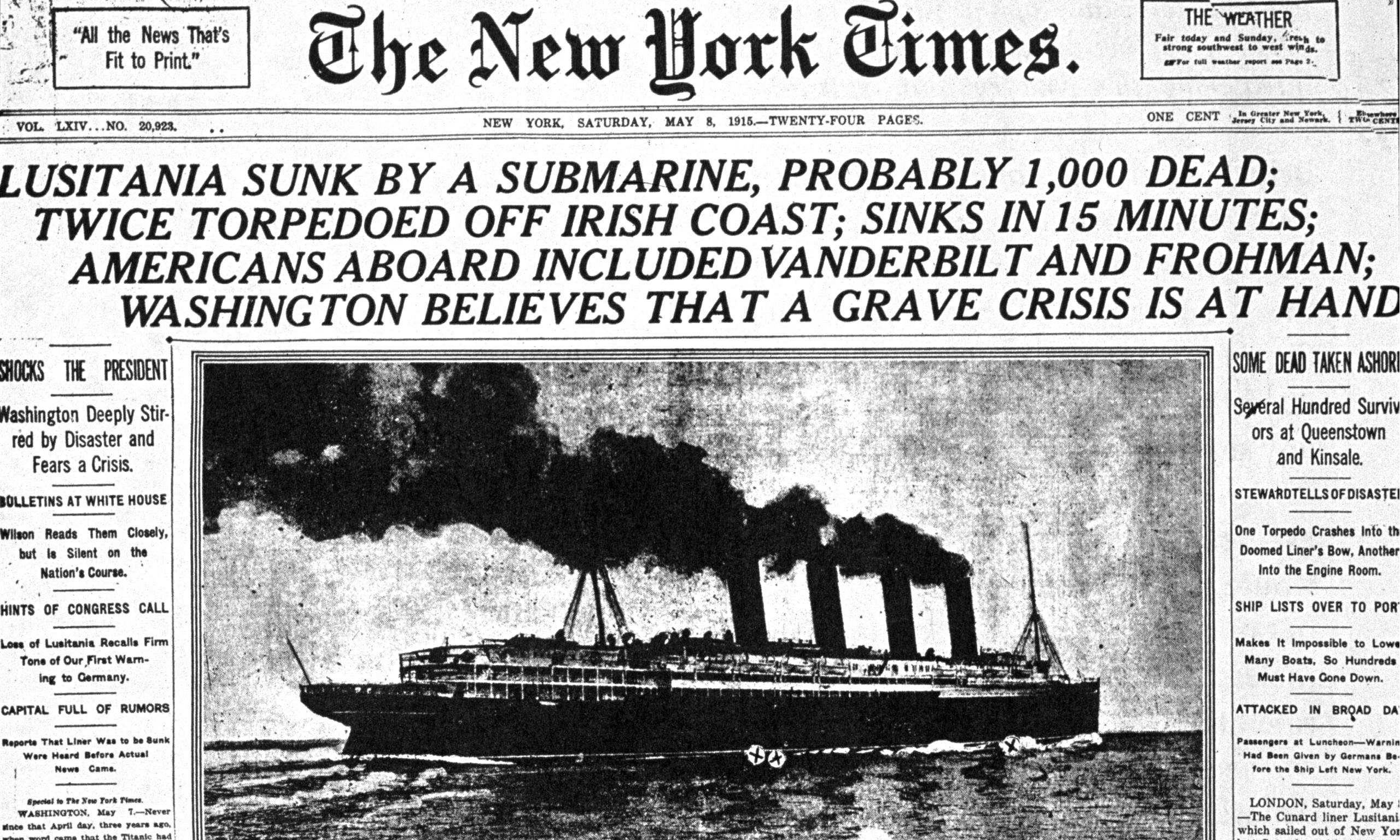
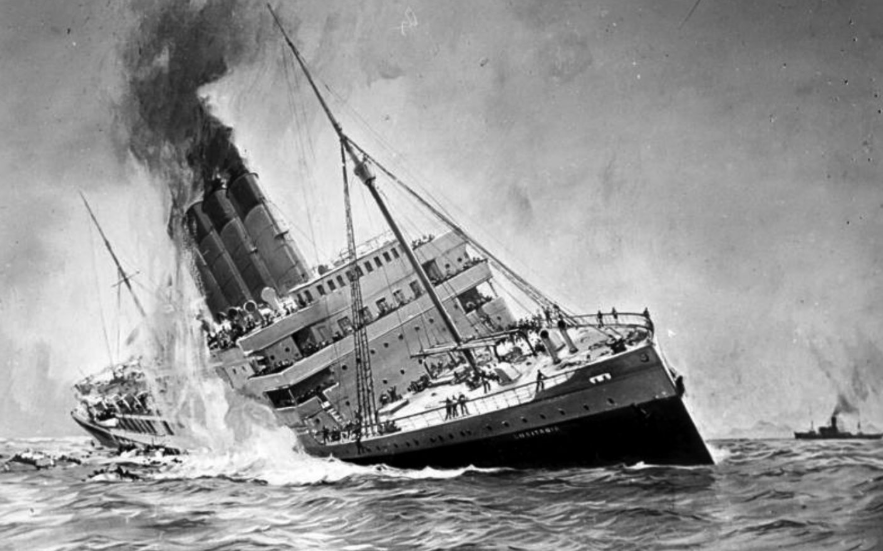
REPLY: In all analyses, you can never reduce anything to a single cause and effect. The sinking of the RMS Lusitania on May 7th, 1915, by a German U-boat was a major event during World War I, but it did not immediately cause the U.S. to enter the war. However, it significantly turned American public opinion against Germany and contributed to the U.S. eventually joining the conflict in 1917. Claiming that it was the unrestricted submarine warfare by Germany in 1917 that instigated the war downplays the role of the Lusitania and the likelihood of those in the Deep State who sought war back then, counter to President Wilson’s neutrality position.
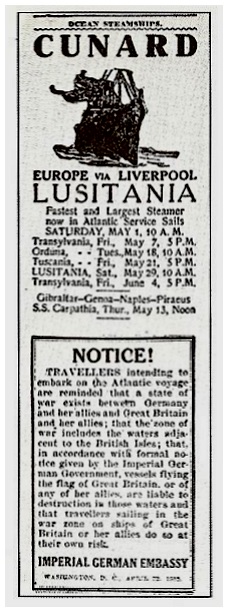
The Lusitania was a British passenger ship carrying 128 Americans (out of 1,198 total deaths). The attack provoked outrage in the U.S., but President Woodrow Wilson initially sought a diplomatic response rather than war. Germany argued the ship was carrying munitions (which was true, though it was primarily a passenger liner). The US was using civilians as cover for arms transfer to Britain when they pretended to be neutral. As shown here, the Germans even took an advertisement in the NY newspaper warning people not to sail on the Lusitania. Following international pressure, Germany temporarily halted unrestricted submarine warfare in 1915 to avoid further provoking the U.S.
Zimmermann Telegram & Final Push to War (1917):
The resumption of unrestricted submarine warfare in February 1917 (sinking U.S. ships) and the Zimmermann Telegram (a secret German proposal for Mexico to ally against the U.S.) were the final triggers for U.S. entry into WWI in April 1917.
The Lusitania was a significant factor in shifting U.S. opinion against Germany because it was carrying civilians. Still, it was not the sole reason for the United States’ entry into the war. The combination of continued submarine attacks and the Zimmermann Telegram ultimately led to the U.S. declaring war in 1917.
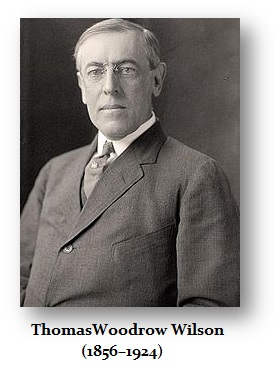
My main point about the Lusitania is that it was a Neocon quasi-false flag. After years of denying the German claims, the government lied as always to get us into every war. The CIA and Pentagon did not exist during the Lusitania incident. The relevant U.S. agencies were the State, Navy, and War Departments. These departments, particularly the State Department under William Jennings Bryan (1860–1925), were aware of and concerned about the British practice of carrying munitions on passenger ships.
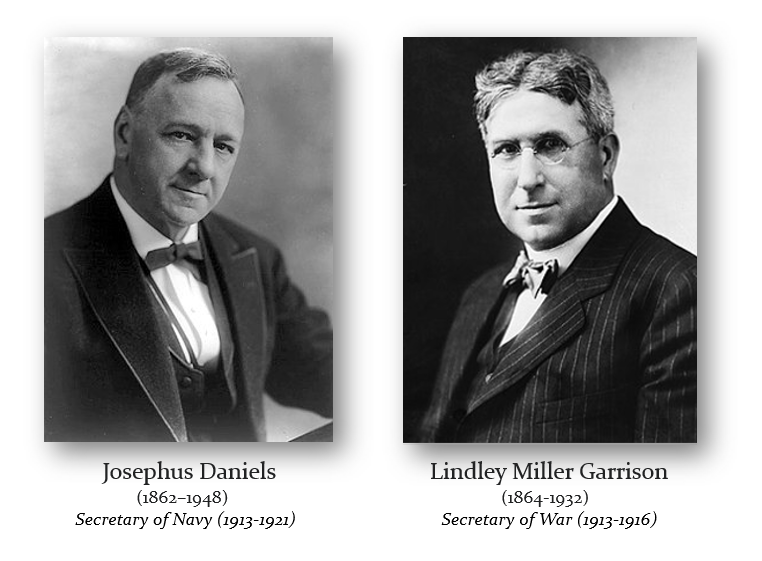
The two members of Wilson’s Cabinet who were in a position over the question of war were the Secretary of the Navy, Josephus Daniels (1862-1948), who was the last member of the cabinet to advocate for war in 1917, and the Secretary of War, Lindley Garrison (1764-1932), the Neocon who was replaced after the Lusitania. There is no evidence that Secretary of War Lindley Garrison authorized or had any direct involvement in the munitions shipment aboard the Lusitania. His department (War) was responsible for the Army, not naval shipping or maritime commerce.
The decision to load munitions on passenger liners like the Lusitania was a British Admiralty policy aimed at utilizing fast liners for vital war supplies while maintaining passenger service to generate revenue and improve public perception, thereby covering up their shipments. US covert involvement was limited to customs oversight and the controversial policy of allowing passengers on ships carrying munitions.
Garrison was a strong advocate for military preparedness before and after the sinking of the Lusitania. He advocated for building up the U.S. Army and National Guard to be ready for potential threats. His “Preparedness Movement” gained momentum after the Lusitania, much like Homeland Security was born from the WTC 911 attack. While Wilson pushed for neutrality and diplomatic responses even after the sinking, Garrison’s Neocon views clashed with Wilson and congressional leaders who felt his plans were too ambitious or militaristic. Garrison was compelled to resign in February 1916 primarily over disagreements with Wilson and Congress regarding the scale and control of military expansion. He had wanted a standing army of 140,000, which he called the Continental Army Plan, vs. strengthening the National Guard. The sinking of the Lusitania hardened attitudes towards Germany among many Americans.
While the sinking of the Lusitania caused massive outrage, shifted public opinion significantly against Germany, and led to demands for a strong diplomatic or even military response, it set in motion the calls to enter war and blamed the Germans as they hid the covert use of civilians to disguise the US violating its pretended neutrality position. By itself, it was not the final act to compel the US to enter the war. Secretary of War Garrison was pushing for a standing army. Garrison advocated for intervention using military force overseas, clashing with Wilson. This surfaced regarding Mexico. Garrison advocated for American intervention in the Mexican Revolution to restore order. In 1916, Garrison supported a plan for expanding the US military, which he referred to as the Continental Army Plan. Garrison’s proposal would establish a standing army of 140,000 and a national, volunteer reserve force of 400,000 men. Garrison encountered opposition from those who believed his plan went too far in establishing a large standing army. Allies in Congress convinced Wilson to back an alternative strategy which emphasized not Garrison’s national volunteer force, but a continued role for the states’ National Guard. Garrison resigned in February 1916 over these differences. Garrison’s public stance was that of a Neocon. He left office nearly a full year before the US actually declared war in April 1917.
While the U.S. government publicly downplayed the munitions cargo initially to maintain moral outrage against Germany, there’s no credible evidence, as always, that U.S. departments lied to President Wilson about its existence. Secretary Bryan claimed he actively warned Wilson because he believed munitions were present and made the ship a target. With the Germans taking out newspaper advertisements warning against sailing on the Lusitania, it is hard to imagine that there were no conversations, even at the Presidential level.
There was no specific Senate or House investigation focused solely on whether President Woodrow Wilson knew about the munitions aboard the RMS Lusitania before it was sunk in 1915. However, the issue was examined within broader contexts by other official U.S. bodies and touched upon in congressional hearings. Just as the investigations into whether FDR knew in advance about Pearl Harbor, no such committee will EVER admit the wrongdoing by the President that took the country into war.
Congress did not even launch a formal investigation specifically targeting Wilson’s foreknowledge of the Lusitania’s cargo. While there was significant public debate and congressional interest in the sinking and its role in pushing the U.S. toward war, no committee was empaneled with the primary purpose of investigating the President’s prior awareness of the munitions. They too, conspired to cover up the foreknowledge.
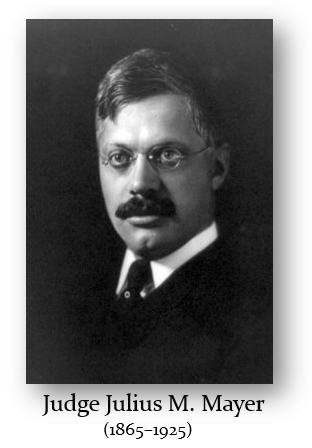
The Mayer Arbitration (1915) was formed shortly after the sinking. The U.S. government initiated an investigation led by federal judge Julius Mayer, who was from the Second Circuit in New York City. He had presided over cases dealing with the Titanic. While primarily focused on establishing facts for potential legal claims against Germany, the investigation confirmed the Lusitania was carrying small-arms ammunition, claiming that they were non-explosive rifle cartridges and artillery shell casings (shrapnel shells without explosive charges). This information became part of the official record, meaning the government (including the administration) knew about the munitions after the sinking, but the investigation didn’t address what Wilson knew beforehand.
In the US, there were 67 claims for compensation filed against Cunard, which were all heard together in 1918 before the United States District Court for the Southern District of New York. Judge Julius Mayer as well. In the Titanic case, he had ruled in favour of the shipping company. Mayer had a reputation for being pro-government in matters of national interest. The two sides agreed before the jury trial that no question would be raised regarding whether Lusitania had been armed or carrying troops or ammunition as part of the cover-up. Evidence produced by the British was presented only behind closed doors. The Defence of the Realm Act was invoked to protect British witnesses, ensuring that the truth would not be heard.
The decision was rendered on August 23rd, 1918, and Mayer’s judgement was that “the cause of the sinking was the illegal act of the Imperial German Government”, that two torpedoes had been involved, that the captain had acted properly, and emergency procedures had been up to the standard then expected. He ruled that further claims for compensation should be addressed to the German government (which eventually paid $2.5 million in 1925).
After WWI, this U.S.-German commission handled claims arising from the war, including those related to the Lusitania. Its findings (1923) explicitly stated that the presence of non-explosive munitions did not deprive the Lusitania’s passengers of their neutral rights or justify the attack without warning. Crucially, it found no evidence that the ship carried high explosives (like the German government claimed). Again, this established the nature of the cargo officially but didn’t investigate Wilson’s prior knowledge.
The Senate Foreign Relations Committee held hearings in 1916 on broader issues of preparedness and neutrality, leading up to the war. While the Lusitania was discussed, the focus was not on Wilson’s foreknowledge of its specific cargo. Critics of the administration questioned why Americans were allowed to travel on belligerent ships carrying contraband. Still, the hearings did not yield evidence or conclusions regarding Wilson’s personal knowledge before May 7, 1915.
Only during the 1030s, the Senate Special Committee Investigating the Munitions Industry (Nye Committee) investigated the arms industry and its influence on U.S. entry into World War I. It extensively documented the shipment of war materials (including those on the Lusitania) by U.S. companies to the Allies, often facilitated by the State Department despite U.S. neutrality. While it highlighted Wilson’s administration’s general awareness of and involvement in the arms trade with the Allies, it did not specifically focus on whether Wilson knew the Lusitania specifically carried munitions on that voyage before it sailed.
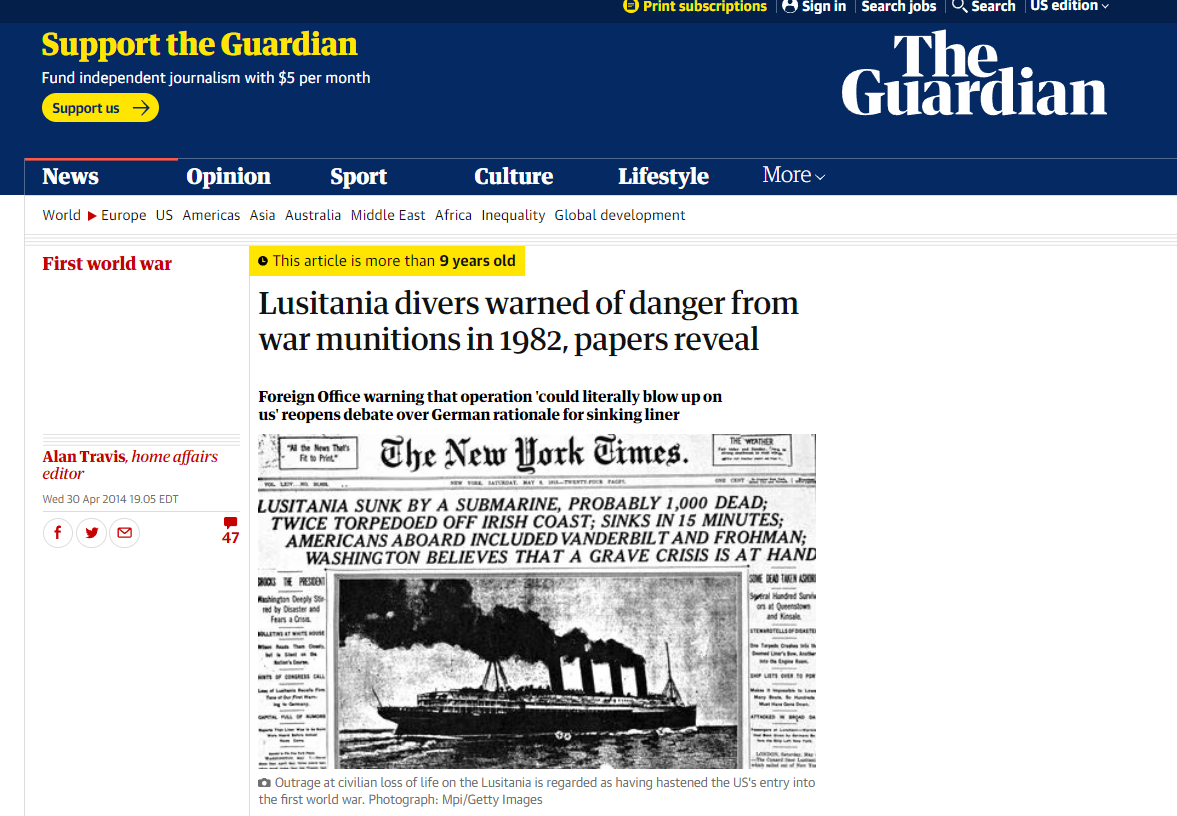
The U.S. government, particularly the State Department and Customs officials, was generally aware that British liners, such as the Lusitania, sometimes carried small arms and non-explosive munitions under the guise of passenger service, exploiting loopholes in neutrality rules. The government did everything it could to claim that President Wilson had no credible evidence that he received specific, advance warning about the exact nature and quantity of the munitions loaded onto the Lusitania for its final voyage before it sailed from New York. This was even though the German Embassy in Washington did place newspaper ads warning passengers that ships flying the British flag in the war zone were subject to destruction, but this was a general warning, not specific intelligence about the Lusitania’s cargo.
Wilson’s public stance after the sinking focused relentlessly on the illegality of attacking a passenger vessel without warning and the loss of civilian life, deliberately downplaying the munitions issue to maintain the moral high ground against Germany. While the fact that the Lusitania carried munitions was established by U.S. investigations after the sinking, and the broader policy of allowing munitions shipments to the Allies was controversial and later scrutinized (notably by the Nye Committee), there was never a dedicated Senate or House investigation specifically targeting President Wilson’s personal foreknowledge of the Lusitania’s cargo before its fateful voyage. Historians generally agree he likely knew such ships could carry contraband, but lacked specific, timely intelligence about the Lusitania’s final manifest.
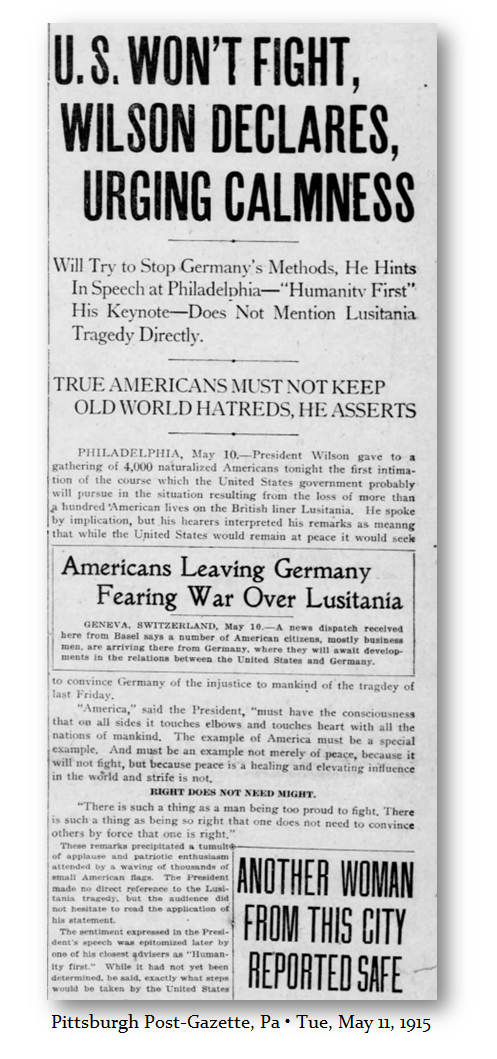
Wilson was acutely aware of the deep public divisions and his own desire to avoid war if possible. He pursued a diplomatic path. His demands to Germany were extreme, pushing the US and Germany to the brink of war. Germany, wanting to avoid US entry at that time, eventually offered concessions and temporarily scaled back unrestricted submarine warfare (though it resumed in 1917). It is UNLIKELY that Wilson deliberately sought a false flag to enter World War I. Nevertheless, nobody wanted to look too closely at the actors in the State Department and the War Department who were eager to take the US into war against Germany.
Wilson was president between March 4th, 1913, and March 4th, 1921. Newton D. Baker (1871-1937), who had played an essential role in Woodrow Wilson’s nomination in the Democratic National Convention of 1912, was appointed Secretary of War by President Wilson, replacing Garrison. He remained in the Cabinet to the end of Wilson’s term of office. Although he was, as he himself said, so much of a pacifist that “he would fight for peace,” he soon submitted to Congress a plan for universal military conscription. He efficiently presided over the mobilization of more than four million men during World War I.
The press was divided back then and not entirely under the control of the Neocons, as they are today, pushing for World War III. Congress, while angry, largely followed President Wilson’s lead in pursuing a diplomatic solution first. The event marked a significant step towards war, erasing the pretense of neutrality and laying the groundwork for intervention. However, the actual, decisive push for war came nearly two years later, primarily driven by the resumption of unrestricted submarine warfare and the Zimmermann Telegram in early 1917.
I was unaware until this interview the July 1st digital services tax that Canada is going to apply to U.S. tech companies is retroactive in application. Over a billion dollars will be due on Monday as a result of Canada’s targeting. Duplicitous Snow Mexicans.
Treasury Secretary Scott Bessent outlines the details of what Canada did and why President Trump is responding so forcefully. Bessent also explains that the EU doesn’t have a digital services tax, but some European countries do. President Trump is factoring in those targeted tariffs against our tech industry as he seeks to execute new trade agreements with the EU. WATCH:
Following the event at the State Department, President Donald Trump hosts the representatives from Congo and Rwanda following their historic peace agreement ending 30-years of bloody conflict. WATCH:
UPDATE: Video Added
.
.
.
.
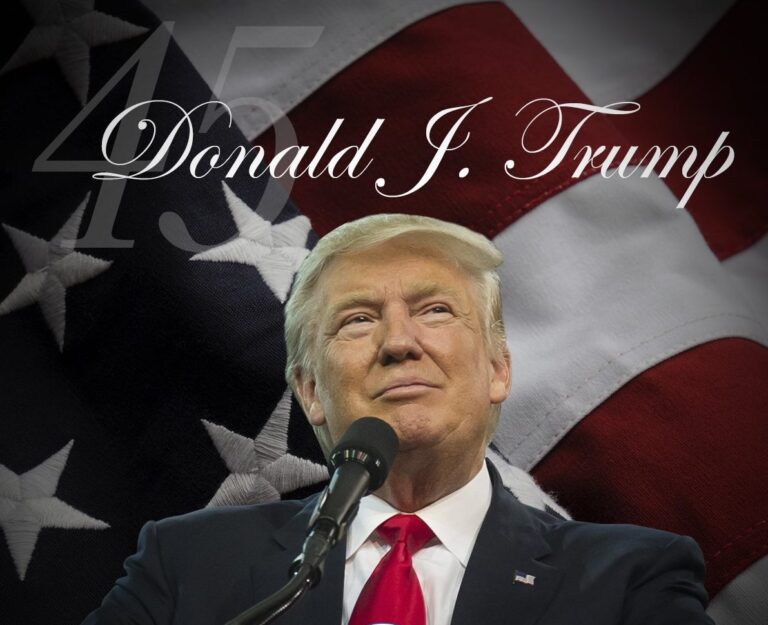
Secretary of State Marco Rubio hosted officials from the Democratic Republic of Congo and Rwanda at the State Department for a peace agreement signing ceremony. The 30-year war between Congo and Rwanda is finally coming to an end, thanks in large part to the efforts of Qatar, U.S. President Donald Trump and U.S. Secretary Marco Rubio. WATCH:
.

Secretary of State Marco Rubio hosted officials from the Democratic Republic of Congo and Rwanda at the State Department for a peace agreement signing ceremony. The 30-year war between Congo and Rwanda is finally coming to an end, thanks in large part to the efforts of Qatar, U.S. President Donald Trump and U.S. Secretary Marco Rubio. WATCH:
.
“Peace is the prize” ~ U.S. President Donald J Trump
President Donald Trump was joined by Attorney General Pam Bondi and Deputy Attorney General Todd Blanche to celebrate the recent Supreme Court ruling, make remarks and answer questions from the media. Livestream Ongoing.
.
.
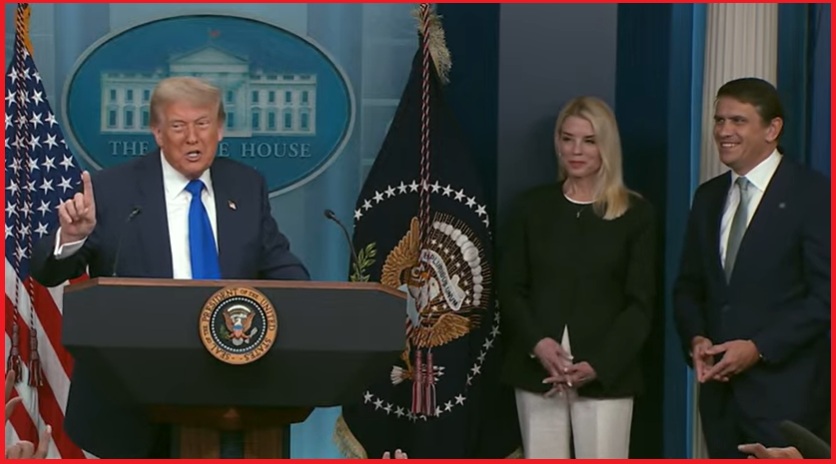
In very simple terms, the Supreme Court ruled today (6-3) that federal judges can only grant relief to the individuals or groups who brought a particular lawsuit and may not extend those decisions to protect other individuals without going through the process of converting a lawsuit into a class action, a type of litigation that requires challengers to clear procedural hurdles. This effectively ends the issue of nationwide injunctions. [SCOTUS Ruling HERE]
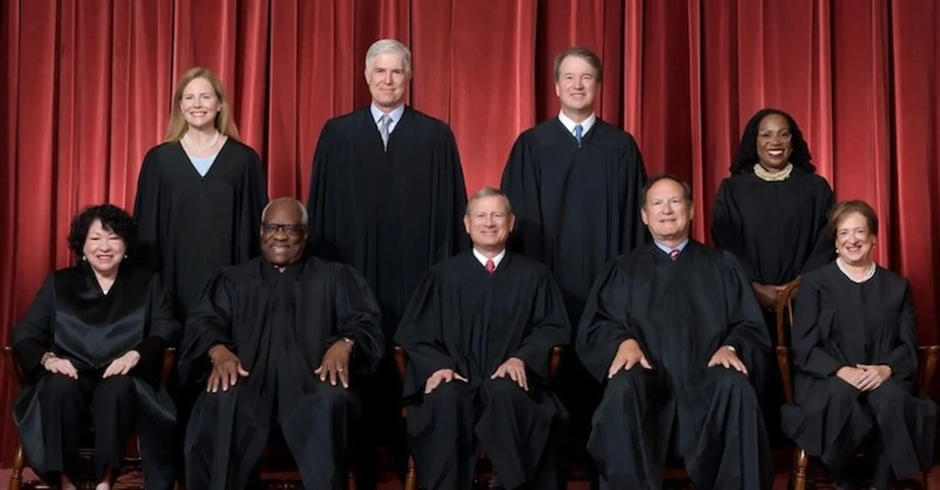
The Supreme Court did not rule on the merits of the end to birthright citizenship for children of illegal aliens. However, the Trump administration and DOJ are very happy.
“Today, the Supreme Court instructed district courts to STOP the endless barrage of nationwide injunctions against President Trump,” Attorney General Pam Bondi said in a post on Twitter. “This Department of Justice will continue to zealously defend POTUS’s policies and his authority to implement them.”
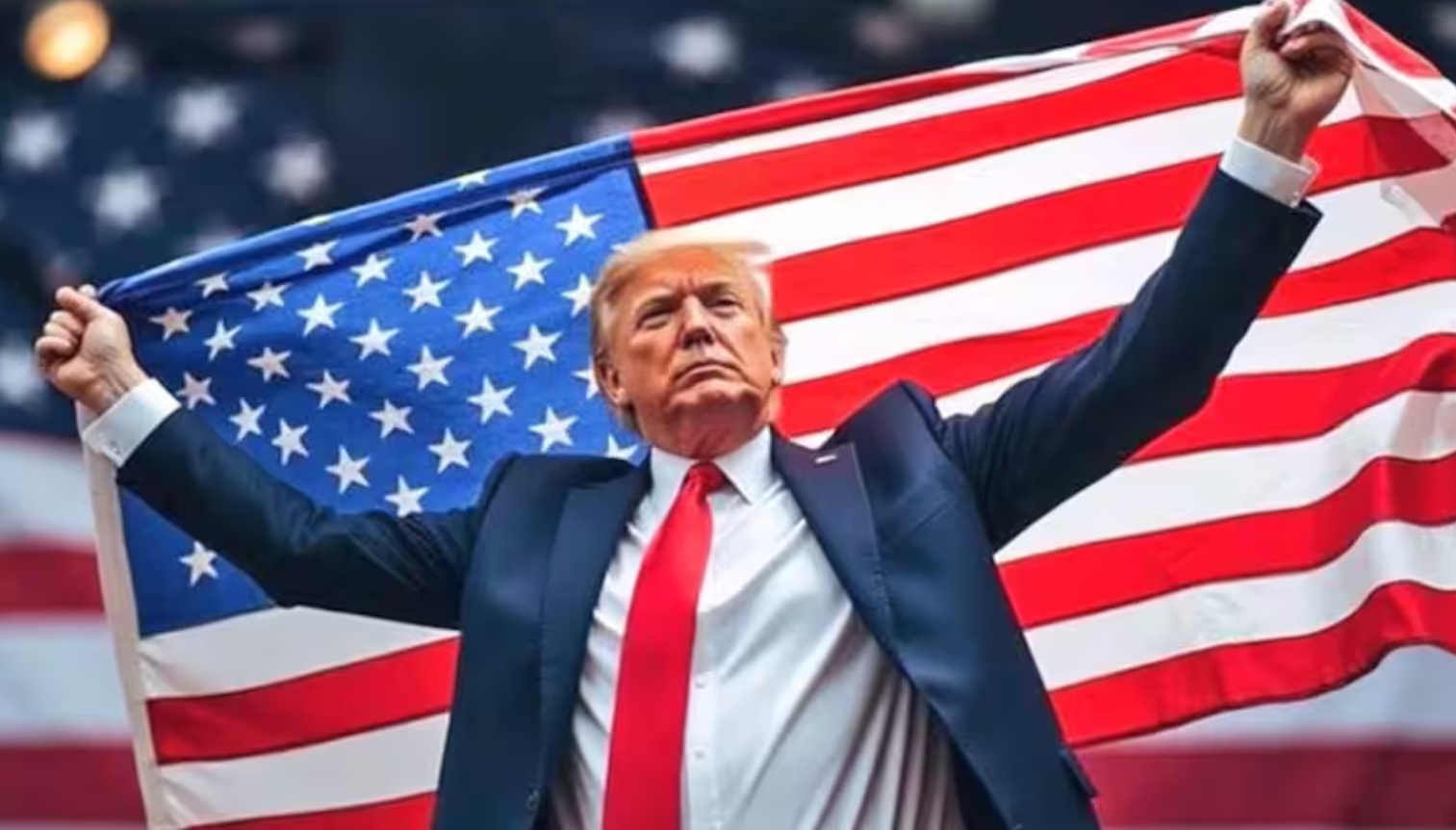
Things are getting very interesting as the clock ticks toward the end of the USMCA trade agreement.
Almost no one is watching the USMCA element because it quietly exists only in the background of events. However, pay close attention to the ancillary stories because they will eventually merge with the end of the USMCA and two bilateral trade agreements between the U.S-Canada and the U.S. and Mexico later this year.
NATO funding and Canadian economic independence, and by extension the EU and China, comes into the northern agreement. Border security and Mexican economic independence, and by extension immigration and China, comes into the southern agreement. The strength of MAGAnomic policy flows directly through both.

In the quiet sphere, a few days ago Treasury Secretary Scott Bessent, a key player in the trade program, announced sanctions against three Mexican financial organizations that underline the influence of the Mexican cartels and the Mexican government. [Treasury Announcement Here]
“The U.S. Department of the Treasury’s Financial Crimes Enforcement Network (FinCEN) issued orders identifying three Mexico-based financial institutions—CIBanco S.A., Institution de Banca Multiple (CIBanco) [ORDER HERE], Intercam Banco S.A., Institución de Banca Multiple (Intercam) [ORDER HERE], and Vector Casa de Bolsa, S.A. de C.V. (Vector) [ORDER HERE]—as being of primary money laundering concern in connection with illicit opioid trafficking, and prohibit, respectively, certain transmittals of funds involving CIBanco, Intercam, and Vector. These orders are the first actions by FinCEN pursuant to the Fentanyl Sanctions Act and the FEND Off Fentanyl Act, which provide Treasury with additional authorities to target money laundering associated with the trafficking of fentanyl and other synthetic opioids, including by cartels”. (more)
Mexican President Claudia Sheinbaum is furious. “The Treasury Department hasn’t provided a single piece of evidence to show that any money laundering was taking place,” she said. “We aren’t going to cover for anyone, there isn’t impunity here. They have to be able to demonstrate that there was actually money laundering, not with words, but with strong evidence.”
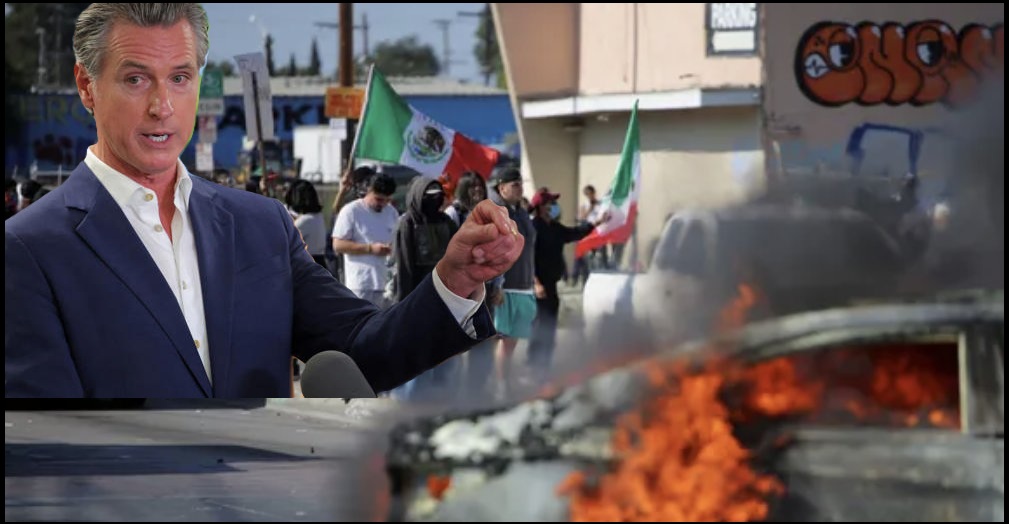
Secretary Scott Bessent has provided all of the evidence above in the three orders. However, this U.S. Treasury action is going to cause a massive disruption to the financial system used by Mexican officials to remain in power. This is the key point.
Remember, the Customs and Border Patrol enforcement action in Los Angeles was not about deporting illegal aliens. The origination of the chaos in Los Angeles centered around the ‘customs” aspect of the CBP as they targeted local businesses that were operating as money laundering outfits for drug and human trafficking into the USA.
Again, for emphasis, the subsequent riots that took place in Los Angeles were NOT originated by deportation operations involving ICE; they originated from CBP and FBI operations involving Mexican money laundering. The ICE operations came as an outcome of encounters with illegal aliens who were working inside the Los Angeles businesses that were under investigation.
[…] Sheinbaum said they were notified by American officials of the accusations ahead of the Wednesday announcement, and that Mexican financial regulators carried out their own investigations into the institutions.
They found “administrative infractions,” she said, but nothing close to the accusations being levied by Treasury officials.
In the orders blocking transactions between the three institutions and American banks, the Trump administration alleged that the three companies facilitated millions of dollars in transfers with Chinese companies, which it said were used to buy chemicals to produce fentanyl. The Treasury Department said the institutions had facilitated transfers to U.S. banks, but officials would not name which U.S. institutions were implicated nor provide more details.
Sheinbaum countered that their own investigation simply showed that institutions had strong relationships with Chinese clients and banks, which she said was more of an indicator that the two countries share a robust trade relationship. (more)
But wait, it gets better…
As CPB and FBI make moves on the network, not only does Treasury come into play with a follow-up of blocking financial transactions for the money launderers, Secretary of State Marco Rubio comes in to target anyone associated with the process.
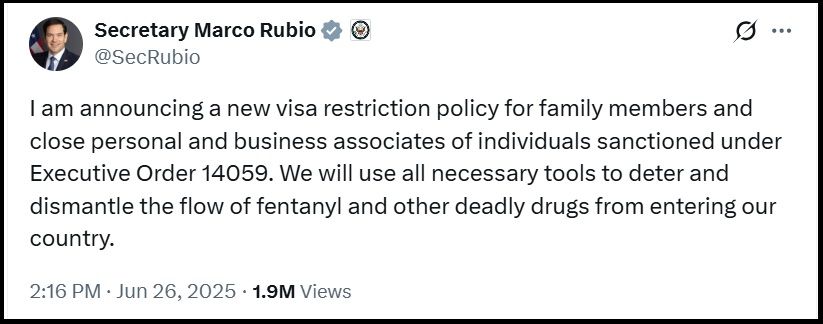
[Tweet Link – Executive Order 14059 LINK]
BESSENT: …”Combating drug cartels and stopping the flow of deadly drugs into the United States is one of the Trump Administration’s highest priorities. In January 2025, President Trump issued an Executive Order creating a process by which certain cartels and other organizations would be designated as Foreign Terrorist Organizations (FTOs) and/or Specially Designated Global Terrorists (SDGTs). Accordingly, in February, the U.S. Departments of the Treasury and State designated eight organizations, including six major Mexico-based drug cartels, as FTOs and SDGTs, including the CJNG, Gulf Cartel, and Sinaloa Cartel. Today’s actions complement these designations, as a further step to deny individuals and entities associated with cartels access to the U.S. financial system.” (more)
Can you see how this is coming together.
The cartels are designated terrorist organizations. The Chinese supply chains are designated as ‘global terrorists.’ The countries that facilitate these transactions are Mexico (primary) and Canada (secondary). This coordinated multi-agency operation directly targeting the heart of the issue… follow the money… ends up as booster fuel for the elimination of the USMCA.
The politicians, bankers, brokers and families of the bankers, brokers and close persons who are identified in the Treasury’s Financial Crimes Enforcement Network (FinCen) are then subject to visa removals, restrictions and other punitive mechanisms available to the State Dept. This could include President Claudia Sheinbaum herself, if identified as a co-conspirator.
All of this is happening simultaneous to massive drops in the amount of remittances from the USA to Mexico as illegal aliens are trying to avoid any documented paper trail of their personage inside the United States. Tens of billions are being lost.
China is being hit. The Mexican cartels are being hit. The Mexican government is being hit. The Mexican financial system is being hit. Mexican politicians are being hit. Mexican illegal aliens inside the USA are being hit. Mexican money launderers are being hit…. and by extension all of those who benefit from the funding therein, including the DNC, CIA and corrupt U.S. politicians are at risk.
Follow the money. It’s always about the economics of the thing…
Yeah, President Claudia Sheinbaum is going bananas.
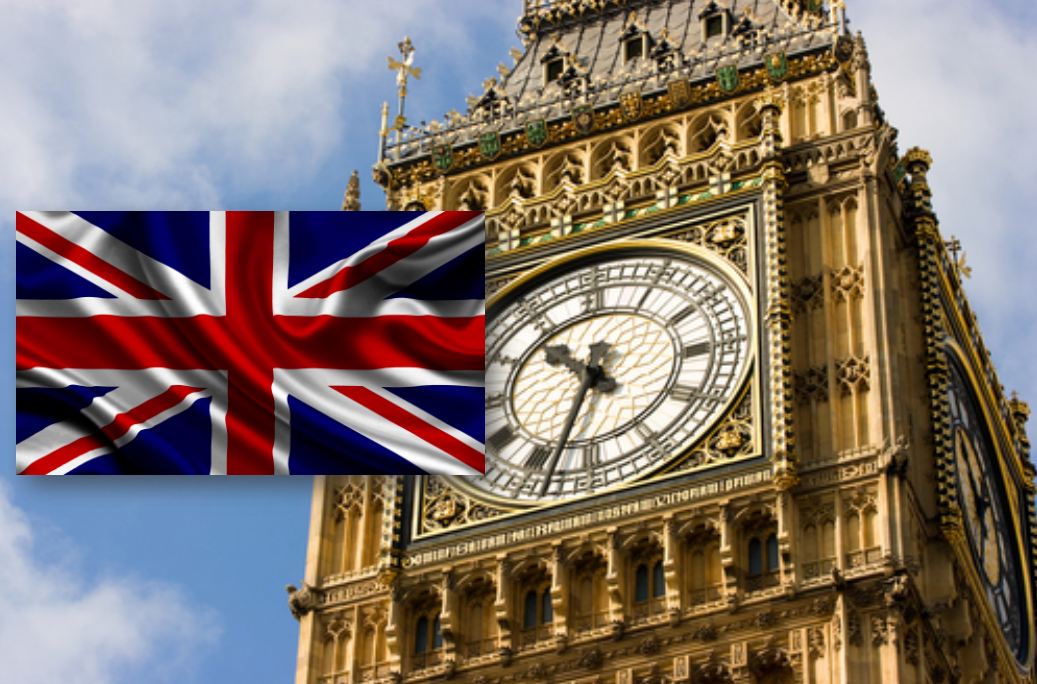
The UK government has warned that the nation must “actively prepare for the possibility of the UK coming under direct threat, potentially in a wartime scenario”, following a tense 12-day war between Iran and Israel, which threatened to spill over at any moment. The UK has also acknowledged, as has the US Department of Homeland Security, that domestic terrorism is likely because of the Iran-Israel War, but also war with Russia. The UK government said that “confrontation with those who are threatening security,” with Russia’s war in Ukraine described as “the most obvious and pressing example of this.” They added “Iranian hostile activity on British soil” is to be expected and that they will attempt to disrupt critical supply lines and energy infrastructure.
I have created this site to help people have fun in the kitchen. I write about enjoying life both in and out of my kitchen. Life is short! Make the most of it and enjoy!
De Oppresso Liber
A group of Americans united by our commitment to Freedom, Constitutional Governance, and Civic Duty.
Share the truth at whatever cost.
De Oppresso Liber
Uncensored updates on world events, economics, the environment and medicine
De Oppresso Liber
This is a library of News Events not reported by the Main Stream Media documenting & connecting the dots on How the Obama Marxist Liberal agenda is destroying America
Australia's Front Line | Since 2011
See what War is like and how it affects our Warriors
Nwo News, End Time, Deep State, World News, No Fake News
De Oppresso Liber
Politics | Talk | Opinion - Contact Info: stellasplace@wowway.com
Exposition and Encouragement
The Physician Wellness Movement and Illegitimate Authority: The Need for Revolt and Reconstruction
Real Estate Lending

