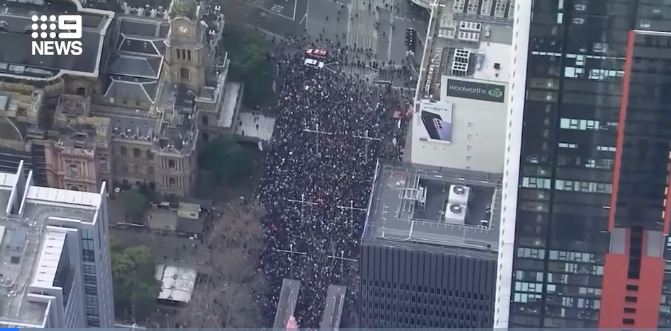
Protests against COVID Restrictions Engulfing Europe


Armstrong Economics Blog/Civil Unrest Re-Posted Jul 25, 2021 by Martin Armstrong

Freedom Protests in Milian, Italy Today


Armstrong Economics Blog/Civil Unrest Re-Posted Jul 24, 2021 by Martin Armstrong

You Thought You Were Free? (Revised)


Armstrong Economics Blog/Tyranny Re-Posted Jul 24, 2021 by Martin Armstrong

Civil Unrest in Australia


Armstrong Economics Blog/Uncategorized Re-Posted Jul 24, 2021 by Martin Armstrong

COMMENT: Marty; I do not know why you do not have the Noble Prize except for the fact that they are the establishment and what you have done with Socrates is beyond what anyone else has ever been able to forecast. Your model that said we would face civil unrest and then international war is coming to life.  Here is Australia as in Europe, people are starting to wake up.

My God. Thank you for everything.

SF

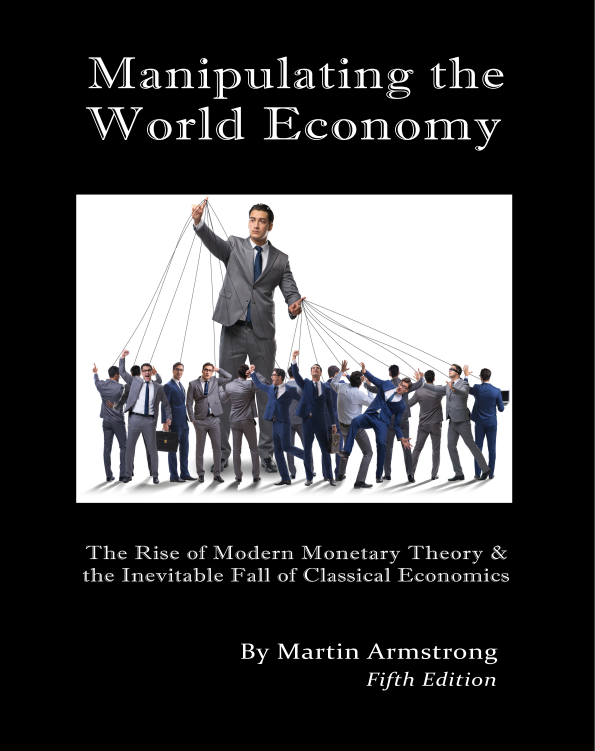
REPLY: Nobody can forecasts these types of events years in advance from a personal gut feeling of claim “I think” which is typical. These forecasts are merely the failure of our entire approach to manipulating the world economy. I did add about 70 pages to what is now the 5th edition on sale in Amazon and Barnes & Noble. You cannot see the future without understanding the past. I know there are people selling this for $300 on EBay. But they are $110 on Amazon and $125 on Barnes and Noble. We do not do the pricing. The publisher and stores do that.

Rubber & the Shipping Crisis


Armstrong Economics Blog/Agriculture Re-Posted Jul 15, 2021 by Martin Armstrong

People may not realize that 90% of all physical trade is moved by container ships. Because of COVID-19, the disruption in the supply chain has created a shortage in containers never seen before. Because companies could not ship their good during the lockdowns, the attempt to catch up has led to a massive shortage of containers. The Suez Canal block only exasperated the crisis.

Some believe a major crisis unfolding in rubber, which some now believe has been deliberately created to reduce global warming by preventing tires from arriving for cars. Rubber is used far beyond just tires. Nevertheless, rubber producers face climate change restrictions, activists who would love to see them shut down completely, a destructive fungus, and then the continued politicization of COVID-19. In Japanese yen terms, the high in rubber took place on an annual closing basis back in 2010 with the intraday high in 2011. We saw a 10-year decline with the historic low forming last year, which ended up creating an outside reversal to the upside. From a long-term perspective, rubber looks to be poised for a broader rally into the years ahead. Short-term, there has been overhead resistance