Inflation has hurt everyone. It is no surprise that a recent poll by Rasmussen Reports indicates that US voters are now prioritizing economic growth of equality. The latest survey found that 64% of voters favor policies that contribute to economic growth, while only 27% said they prioritized economic fairness. In 2019, before the last election, only 50% of respondents to the same poll believed that growth mattered more than equality.
Voters have not indicated that they would prioritize economic growth so strongly since 2013, when the US was emerging from the Great Recession. The US economy was strong under Trump; inflation was low, the market was high, and unemployment was low. The coronavirus turned the entire world upside down, and it seems that many associated that economic downturn with the Trump Administration rather than lockdowns. Biden ran on the Build Back Better platform filled with empty promises of free handouts. He prolonged lockdowns, artificially lowering employment data, and then claimed his administration created jobs once the lockdowns were lifted.
The mask has fallen, and Americans are realizing that their quality of life is steeply declining due to the cost of living. Biden and Harris discuss transexuals more than the economy and have only exacerbated the problems we face by opening our borders and sending a blank check to Ukraine. Fairness sounded nice on paper, but then Biden began robbing the middle class through taxation, and the people realized that Build Back Better was merely a trojan horse for socialism. The majority wants America to be a strong capitalistic nation again.
Posted originally on the CTH on June 6, 2023 | Sundance
Memorial Day customarily kicks off summer and the beer beverage industry generally looks forward to the enhanced sales that come from summer. However, if the recently published reports of Anheuser-Busch sales are accurate, which includes a stunning 60% sales drop during the holiday, the brand position of Bud Light is in freefall.
While the impacts do have a regional trend based on consumer boycotts and patterns, when the Daily Mail reports, “numbers are suffering primarily due to a decline in Bud Light sales that reached as high as a 60 percent drop off over the week that ended on Memorial Day,” we can be certain the executive offices of A/B are watching closely. The feedback from wholesalers and distributors to the parent company must be something beyond alarm.
Worse still, the forward-looking data trend doesn’t offer any hope. Things are getting worse for the parent company.
(Daily Mail) – […] For the week ending May 20, Bud Light sales across the US fell nearly 26 percent compared to the same period last year. For the week ending May 6, in-store sales plummeted 23.6 percent. And the week before that, ending April 29, sales dropped by 23.3 percent.
This follows declines in sales for the week ending April 22, which saw a 21.4 percent decline. Seven days earlier, the dip has been 17 percent, according to NielsenIQ data provided to Dailymail.com by Bump Williams Consultancy.
The data – showing that US sales of Bud Light are dropping by as much as 20 percent each week – is being uniformly viewed by industry experts as a negative trend that may not reverse itself anytime soon.
Beer Business Daily editor Harry Schuhmacher told Fox News Digital that the ‘whole industry is in shock’. (read more)
It is safe to say the Bud Light brand is now firmly connected to the image of transgender ideology. As a result, it would appear that anyone who holds a Bud Light beverage is essentially identifying themselves as a transvestite pickle-puffer, and that could potentially draw considerable side-eyes from anyone in a public place outside the region of San Francisco, California.
As further noted by the New York Post, “Demand for Bud Light over the crucial Memorial Day weekend — the official kickoff of the summer beer buying season — was lukewarm with many store shelves still holding cases of the once mighty beer, Williams said after a spot check of local stores. At least one store was trying to unload a 24-pack of Bud Light for just $3.49, according to Beer Business Daily.”
Anheuser-Busch InBev CEO Michel Doukeris reportedly addressed the ongoing boycott’s impact on delivery drivers, salespeople, and wholesalers on a recent earnings call. It is a little bit odd to see A/B positioning themselves as victims of their customers.
“This situation has impacted our people and especially our frontline workers: The delivery drivers, sales representatives, our wholesalers, Bud owners and servers,” Doukeris said, according to ABC News. “These people are the fabric of our business. They are our neighbors, family members, and friends. They are in every community in America. We’ve been doing everything we can to support our teams.”
It would appear that Anheuser-Busch the corporation, are refusing to accept or acknowledge their responsibility in creating this crisis for their brand. The brand image issue was not forced upon them. These were decisions made by the marketing division of the company, and now they place blame for the consequences on their customers.
Every time, in every story, in every print and broadcast update, as the ongoing events are told or written – every visual aide that accompanies the news includes that weird guy with the Bud Light beer in his hand. This is now a bizarre marketing self-fulfilling prophecy. The articles and news telling updates to the story are now optically affirming the Bud Light brand as a beverage exclusively for transgenders.
This level of ongoing public relations failure is something for the record books. I wonder if Target Inc is paying attention.
QUESTION: Mr. Armstrong, I have a question about Blackrock buying up all these homes. It seems that the Dodd-Frank bill empowered Blackrock to buy up all of these homes and rent them out. Was this all rigged for their benefit?
Thank you for being a rare light of truth in these dark times.
ED
ANSWER: Dodd-Frank Title XIV establishes minimum standards for all mortgage products. It was a very clever piece of legislation that I would suspect Blackrock had a hand in creating. It prevents making a home mortgage loan unless they reasonably determine that the borrower can repay the loan based on the borrower’s credit history, current income, expected income, and other factors. The solution was to stiffen regulations to trap people into being perpetual renters and in reality shuts them down from ever owning a home. This has created the marketplace for Blackrock. It would be one hell of a coincidence that this provision came from a politician who did not understand the economy. It has the fingerprints of something much more sinister.
The Dodd-Frank Act effectively legislated that banks cannot allow a low-income person to own a home. Obama claimed that to make sure that a crisis like this never happens again, he signed the Dodd-Frank Wall Street Reform and Consumer Protection Act into law which was indeed the most far-reaching Wall Street reform in history. It was pitched that the Dodd-Frank legislation would prevent the excessive risk-taking that led to the financial crisis. Yet it did so by outlawing home ownership for the low-income and trapping them as perpetual rental clients for Blackrock. That was very convenient. Quite a few hands were in the cookie jar on this one. The wording was discriminatory for the potential home buyer rather than targeting the practices of the banks who made the mortgages and resold them. The better way would be to penalize the original mortgage lender for their lack of fiduciary duty than to codify restrictions on the consumer.
Posted originally on the CTH on June 5, 2023 | Sundance
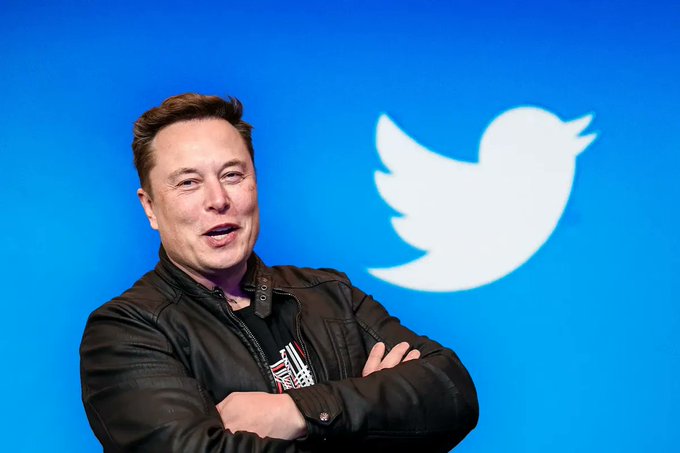
The New York Times has gained insider information on the current advertising revenue for the social media platform Twitter. [Article Here] Ignoring the nonsense narrative engineering and just focusing on the data itself, the revenue side for Twitter is half what we previously estimated. This makes the overlay for decisions on platform content even more stark.
According to the data, ad revenue for the month of April was a lackluster $88 million. That’s a pace of just over $1 billion a year. With a pre-Musk operating expense of $4.5 billion, and pre-Musk revenue at $4 billion cited by the Twitter owner as the backdrop, here’s the outlook.
Assuming post Musk labor cost reductions saved $500 million, a decline in revenue to $1 billion/yr would be a $3.0 billion deficit, to wit you would need to add the $1.5 billion in debt service as part of the investor buyout structure.
That puts Twitter into a $4.5 billion loss ballpark per year.
(New York Times) – Twitter’s U.S. advertising revenue for the five weeks from April 1 to the first week of May was $88 million, down 59 percent from a year earlier, according to an internal presentation obtained by The New York Times. (read more)
$1 billion per year in advertising revenue is a whopping 75% loss from the claimed $4 billion in revenue before the Musk purchase. Perhaps the Fidelity estimate of company value at $15 billion is closer to reality.
If the value of Twitter has dropped to the $15 billion level, that means almost all of the $30 billion in personal equity Musk put into the company has been lost.
Current investor debt is $12.5 billion, with $1.5 billion in debt service/yr. A valuation of $15 billion would only leave Musk with around $2.5 billion in equity position. If the valuation is accurate, Musk personally would have lost around $27.5 billion in this Twitter platform purchase.
The last time I outlined the Twitter financial position, several people took exception to the data as shared. However, the data is from Elon Musk himself, and I will again post the video at the bottom of the article.
Revenue is now Elon Musk’s #1 priority. All other platform decisions are going through the prism of financial viability.
Twitter CEO Elon Musk has provided some convincing commentary about his willingness to forgo revenue in order to retain “free speech.” However, more recently he has qualified that outlook by saying, “Freedom of speech is not the same as freedom of reach.” Musk noting Twitter will block, remove, censor, shadow ban, deboost, downrank and stop content from amplifying based on the determination of those in charge of Twitter content.
This controlled “freedom of reach” perspective, which is really shadow-banning in practice, is generally accepted and now admitted. Against this backdrop, it becomes important to understand the priorities of the platform to understand the guidelines of the platform. Within this context the financials are key to understanding what elements are included within “approved content.” {GO DEEP}
Twitter is now a private company, therefore understanding the financials of Twitter is a little more challenging than when they were required to post their financial statements publicly. However, Elon Musk gave an interview with the Babylon Bee yesterday and revealed some of the internal financial challenges. [VIDEO HERE] I am going to summarize the status of the Twitter financial position according to what Musk himself revealed.
♦ Twitter was initially purchased by Musk and his investors for around $44 billion. The company now estimates its value around $20 billion. Last week, the mutual funds giant Fidelity, which owns shares in Twitter, valued the company at $15 billion. Bottom line, Musk grossly overpaid.
♦ Musk put roughly $30 billions of his own net worth into the purchase and financed the rest.
♦ Current outstanding debt on the financing for the purchase is around $12.5 billion. Per Musk statement.
♦ Current debt service, interest on the loans (from investors), is roughly $1.5 billion/yr. $120.5 million per month for debt service. Per Musk statement.
♦ Previous revenue (when public) was roughly $4 billion/yr. Twitter was generally breaking even.
♦ Advertising revenue, as a result of changes in industry in combination with concerns about Twitter, are “half” what they were during the acquisition phase, per Musk statement. That puts current advertising revenue around $2 billion/yr. Per NYT report that’s now $1 billion/yr.
♦ Per conversation, current status of Twitter is -$3 billion/yr and could be as high as -$4 to 5 billion/yr.
The NYT revenue leak now makes the top side of this scale make sense. If $4 billion in revenue was generally the breakeven point (before acquisition), and now they have $2 billion $1 billion in revenue and $1.5 billion in additional debt service [as they trim operational costs (including labor) to offset].
♦♦ For the bottom line to be an operational loss of $3 to $5 billion (est) per year, Twitter is generally losing around $300 million per month.
♦ There is only so much Tesla stock Musk can sell to support Twitter. He has limits. Per conversation.
♦ Twitter has around $1 billion in liquid cash available. Per conversation. With a burn rate of $300+ million a month.
Twitter is in locked contracts with AWS and Google cloud services through 2025 at roughly $300 million per year for both [AWS $100 million, Goog $200 million].
Twitter Blue subscriptions are around 180,000 users, paying $11/mo. That’s around $2 million a month; pittance in comparison to what he needs.
There’s your prism for platform content!
Elon Musk needs revenue desperately.
Twitter urgently needs advertising revenue.
Without revenue or acquisition of another platform (with assets) to offset the current status of Twitter, it is only a matter of time before some form of bankruptcy. [Note, Twitter investors are backstopped with Tesla/SpaceX as collateral against default.]
The tightrope… Elon Musk must appease the Google advertising control agents and adhere to content rules and regulation (DEI etc.) in order to maximize his revenue. That’s where Linda Yaccarino comes in as a critical player.
Bottom line, Musk has to make decisions through one prism, THE ECONOMICS. Musk’s decision-making, pro freedom or not, is constrained by this financial dependency. Hence, a lot of the platform censorship elements remain (including some personnel) and now the outreach to appoint Google/WEF approved Linda Yaccarino in an effort to enhance the revenue.
When you are perplexed about Musk decision making…. THERE’S YOUR ANSWER.
The recent relationship between Elon Musk and the Rupert Murdoch media enterprise, now makes even more sense.
Women are being forced out of athletics. Facts over feelings, but biological males are athletically superior to women. Numerous successful female athletes have been forced into early retirement due to men competing as women. The men who compete against women would be considered mediocre in the men’s categories but are breaking records as women.
Men have 10X the testosterone of women. Those who are taking estrogen still have an advantage. A male athlete has more muscle mass than a female athlete, allowing them to have a higher capacity for hypertrophy. Men have a higher basal metabolic rate as well, allowing them to lose weight quicker and that muscle mass to body weight ratio enables them to be faster on their feet. Male athletes have 4% to 12% body fat, compared to female athletes, who have 12% to 23%. Women have smaller hearts (physically) than men, and their hearts must pump faster during exercise. Women also have fewer red blood cells than men, enabling them to absorb oxygen at a higher rate. Men are larger overall, with wider chests and longer limbs. Male athletes clearly have an advantage, which is why no one expected women to compete against men until the trans agenda exploded in our faces.
Duke compared top athletes in their field and found that men clearly have the advantage. “Just in the single year 2017, Olympic, World, and U.S. Champion Tori Bowie’s 100 meters lifetime best of 10.78 was beaten 15,000 times by men and boys. (Yes, that’s the right number of zeros.) The same is true of Olympic, World, and U.S. Champion Allyson Felix’s 400 meters lifetime best of 49.26. Just in the single year 2017, men and boys around the world outperformed her more than 15,000 times.” The researchers noted that the difference has nothing to do with training. Men are superior at sports because they have an androgenized body. Women will always come second to biological males in strength, endurance, and speed.
Biological men are destroying women’s sports. We all know of the case of Lia Thomas who beat 12-time All-American champion Riley Gaines. Lia is 6’1 and towers over her teammates who do not even feel comfortable sharing a locker room with a biological male. Thomas ranked in the mid 500s while competing as man, and then began to shatter records after switching to the female category. These trans athletes are creating new records that women physically cannot beat, diminishing the achievements of women in sports.
The Democrats fully support men competing with women. The Protection of Women and Girls in Sports Act passed in a 219-203 vote in April, with all Republicans voting “yes” and all Democrats voting “no.” “We should rename it the ‘cancel kids trans hate’ bill,” Rep. Pramila Jayapal (D-Wash) stated. Why are the Democrats attempting to turn this into a social issue? Facts over feelings – men excel at sports and should not be permitted to compete as women.
Posted originally on the CTH on June 1, 2023 | Sundance
Twitter CEO Elon Musk has provided some convincing commentary about his willingness to forgo revenue in order to retain “free speech.” However, more recently he has qualified that outlook by saying, “Freedom of speech is not the same as freedom of reach.” Musk noting Twitter will block, remove, censor, shadow ban, deboost, downrank and stop content from amplifying based on the determination of those in charge of Twitter content.
This controlled “freedom of reach” perspective, which is really shadow-banning in practice, is generally accepted and now admitted. Against this backdrop, it becomes important to understand the priorities of the platform to understand the guidelines of the platform. Within this context the financials are key to understanding what elements are included within “approved content.” {GO DEEP}
Twitter is now a private company, therefore understanding the financials of Twitter is a little more challenging than when they were required to post their financial statements publicly. However, Elon Musk gave an interview with the Babylon Bee yesterday and revealed some of the internal financial challenges. [VIDEO HERE] I am going to summarize the status of the Twitter financial position according to what Musk himself revealed.
♦ Twitter was initially purchased by Musk and his investors for around $44 billion. The company now estimates its value around $20 billion. Musk overpaid.
♦ Musk put roughly $30 billions of his own net worth into the purchase and financed the rest.
♦ Current outstanding debt on the financing for the purchase is around $12.5 billion. Per Musk statement.
♦ Current debt service, interest on the loans (from investors), is roughly $1.5 billion/yr. $120.5 million per month for debt service. Per Musk statement.
♦ Previous revenue (when public) was roughly $4 billion/yr. Twitter was generally breaking even.
♦ Advertising revenue, as a result of changes in industry in combination with concerns about Twitter, are “half” what they were during the acquisition phase, per Musk statement. That puts current advertising revenue around $2 billion/yr.
♦ Per conversation, current status of Twitter is -$3 billion/yr and could be as high as -$4 to 5 billion/yr. This makes complete sense if $4 billion in revenue was generally the breakeven point (before acquisition), and now they have $2 billion in revenue and $1.5 billion in additional debt service [as they trim operational costs (including labor) to offset].
♦♦ For the bottom line to be an operational loss of $3 to $5 billion (est) per year, Twitter is generally losing around $300 million per month.
♦ There is only so much Tesla stock Musk can sell to support Twitter. He has limits. Per conversation.
♦ Twitter has around $100 million/mo in liquid cash available. Per conversation.
Twitter is in locked contracts with AWS and Google cloud services through 2025 at roughly $300 million per year for both [AWS $100 million, Goog $200 million].
There’s your prism for platform content!
Elon Musk needs revenue desperately.
Twitter urgently needs advertising revenue.
Without revenue or acquisition of another platform (with assets) to offset the current status of Twitter, it is only a matter of time before bankruptcy. [Note, Twitter investors are backstopped with Tesla/SpaceX as collateral against default.]
The tightrope… Elon Musk must appease the Google advertising control agents and adhere to content rules and regulation (DEI etc.) in order to maximize his revenue. That’s where Linda Yaccarino comes in as a critical player.
Bottom line, Musk has to make decisions through one prism, THE ECONOMICS. Musk’s decision-making, pro freedom or not, is constrained by this financial dependency. Hence, a lot of the platform censorship elements remain (including some personnel) and now the outreach to appoint Google/WEF approved Linda Yaccarino in an effort to enhance the revenue.
When you are perplexed about Musk decision making…. THERE’S YOUR ANSWER.
ANY company engaging in WOKE should be brought to court for what they are doing is patently UNCONSTITUTIONAL and lawyers should start to wake up and bring class action lawsuits against Target, Budweiser, and North Face as well as every other company engaged in this activity of promoting transgenderism has rendered college degrees irrelevant. If you check a box, no qualification or experience is required.
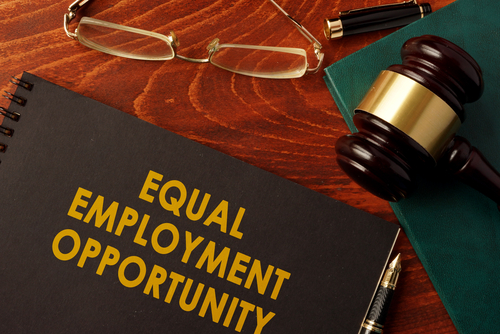
This claim that WOKE is somehow establishing EQUALITY is total nonsense. Gays are now being discriminated against as part of this propaganda movement behind Transgender. When companies make targeted racial composition goals for their employees, they have to engage in discrimination to achieve those goals. That is discrimination to not hire a white person who is more qualified because the White House wants a black girl – not even a black man as its spokesperson.
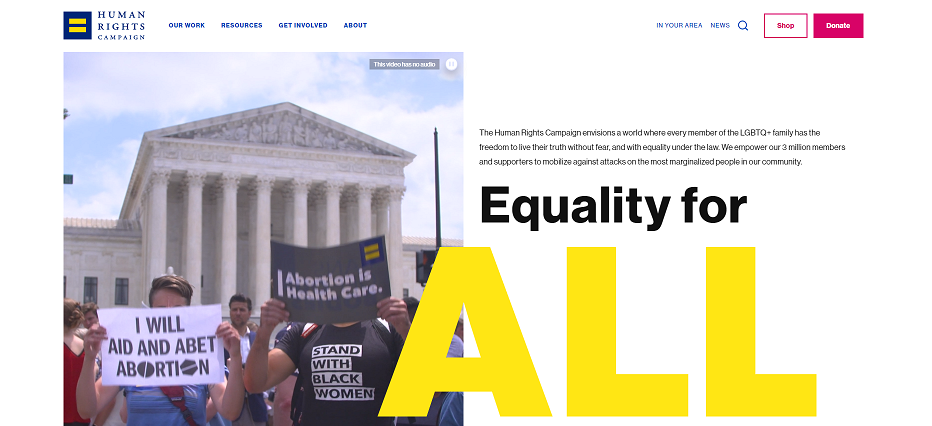
Hiring people based on race and gender is UNCONSTITUTIONAL. It is outright discrimination and whatever job is open should go to the most qualified – not to check some box of this discriminatory and unethical Human Rights Campaign (HRC). Here you have a pretend organization claiming it stands for human rights advocating abortion and ignoring any human rights of the unborn. They are a front for propaganda that is to actually divide the nation and deliberately target religious issues such as abortion and seek to give low “grades” to Christian beliefs.
The worst kept secret in corporate HR departments across the country is this thinking that they MUST deny employment based on qualification and instead check boxes to satisfy this unethical organization masquerading as human rights. If we are really talking about EQUALITY, then the most qualified person should get the job. In our company, we have every race, creed, and nationality from Asia to Europe. We hire based on qualification – not race or religion.
Human Rights Campaign (HRC) should be brought to court for they are denying qualified people employment. Not that they are claiming to be about Human Rights when they are openly engaging in the violation of our Civil Rights. Any company with an HR department engaged in checking boxes should be hauled into court on a class action for unconstitutional civil rights violations. This is the ONLY way to stop this agenda from pretending to be about equality when it is really about discrimination.
I have created this site to help people have fun in the kitchen. I write about enjoying life both in and out of my kitchen. Life is short! Make the most of it and enjoy!
This is a library of News Events not reported by the Main Stream Media documenting & connecting the dots on How the Obama Marxist Liberal agenda is destroying America









 Centinel2012