
Mathematics & Dark Age
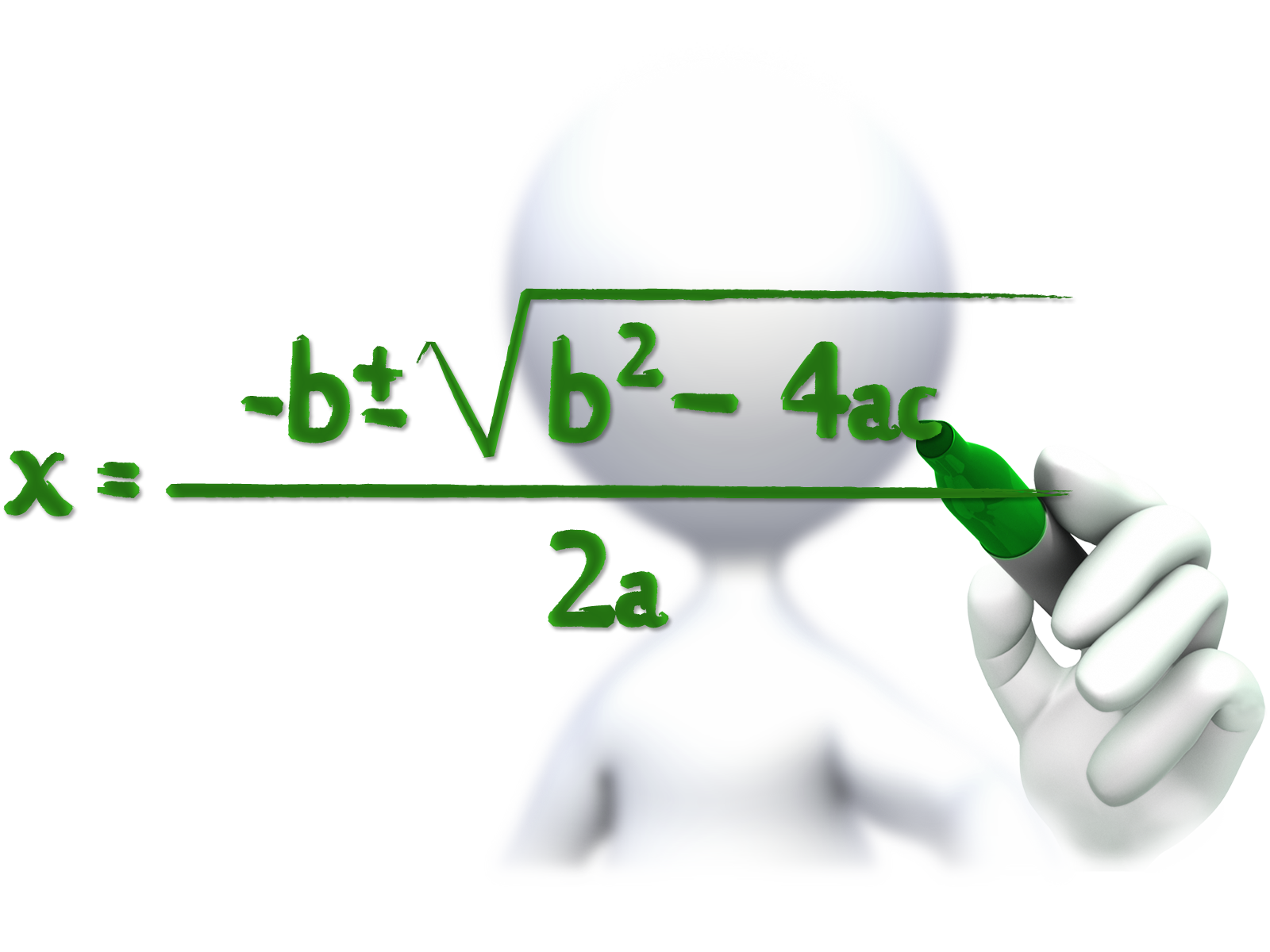
We tend to judge far too much by our own times. What cannot be overlooked was the lack of mathematics following the dark age. When numbers were Roman numerals, bookkeeping and any calculation was not supportive of international accounting. Interesting enough was where pornography enabled the video streaming it was gambling that gave birth to mathematics. Vices often inspire innovation.

It was the publication in 1202 of “Liber Abaci” (Book of Abacus) by Leonardo Pisano or Bonacci (1l70-l240AD) of Pisa known to most as Fibonacci. When Fibonacci published his Liber Abaci that introduced Hindu-Arabic numerals, this method that allowed calculations was not taught in schools and was unknown in Christian circles except among a very small group of intellectuals who had access to translations of the Arab mathematician al-Khwarizmi (780-850 AD).
Fibonacci’s Liber Abaci introduced vital concepts that enable banking to emerge. The first seven chapters dealt with notation introducing the idea of a place value whereas the position of a figure determines where it is a unit such as 10, 100, 1000 and so on. He also introduced the use of numerals in arithmetical calculations. These techniques were ground-breaking for a culture that lost its identity with the fall of Rome. Fibonacci then illustrates practical problems how to calculate profit margin, moneychanging, barter, conversion of weights and measures, partnerships, and last but not least interest. He even introduced some geometry and algebra. This work was so earth-shattering, it became the topic of discussion and caught the attention of Holy Roman Emperor Frederick II (1215-1250)(King of Sicily 1198-1250).
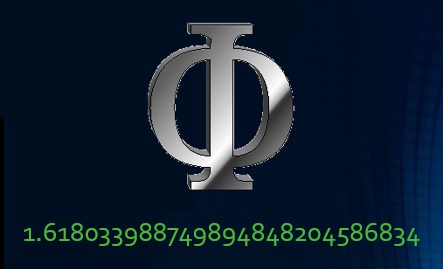
Fibonacci solved the problems submitted to him as a test where the third problem x3+2×2+10x=20 (modern notation), he solved using the Babylonian method based upon sexagesimal fractions (base 60), which when translated into modern decimals is 1.3688081075. Fibonacci is strangely best known for his sequence derived from a pair of multiplying rabbits (1, I, 2, 3, 5, 8, 13, 21, 34, 55 .•. ) where the progression follows what has become known as the “golden ratio” 1.6180 that was discovered by the University of Glascow mathematician Robert Simson in 1753.
The Arabs and the Jews were always highly educated and were not victims of superstition of the times. Thus, the knowledge of mathematics was highly restricted to these groups back then. Jews were not just moneylenders, but they had also been captains of ships where Christians were ignorant of mathematics. Therefore, Fibonacci opened the door for capitalism by first creating a knowledge base of mathematics introducing the decimal system to Europe. Finally, the secrets of mathematics were starting to resurface from the Dark Ages.
If we did go into a Dark Age, knowledge seems to evaporate. The question remains, what knowledge will evaporate this time if we go back that far?
 Centinel2012