Posted originally on the CTH on February 27, 2023 | Sundance
Everyone here knows my inherent dislike for CPAC in general. Too stuffy, too corporate, too much establishment politicking and not scruffy and scrappy enough – except when Andrew was there. That said, it’s cool that James O’Keefe will be attending CPAC because it gives the attendees an opportunity to boost him up, show the resounding support he has from the regulars -outside corporate stuff- and charge up O’Keefe’s internal warrior energy. Good stuff.
Matt Schlapp made the announcement on Steve Bannon’s War Room earlier today {Direct Rumble Link} – WATCH:
“No weapon formed against you shall prosper.” CTH Stands With O’Keefe!
Posted originally on the CTH on February 26, 2023 | Sundance
The first time I saw Ms. Emily Kohrs doing her gleeful and bizarre interview with MSNBC, the first thing that came to mind was Isaiah 54:17: “No weapon formed against you shall prosper, and you will refute every tongue that accuses you.” Indeed, a providence again visible as a shield over Donald J Trump. Yes, this is a spiritual battle.
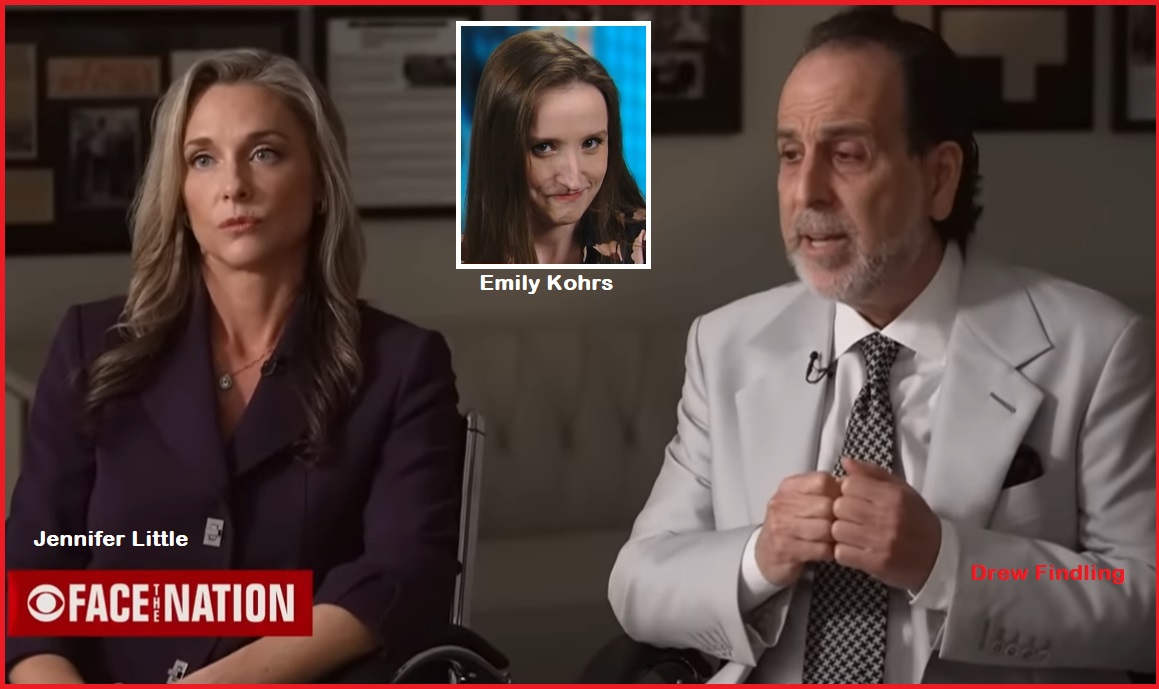
On CBS Face the Nation today, Trump attorney’s Drew Findling and Jennifer Little discuss the media tour by Georgia special grand jury foreperson Emily Kohrs, and how the background of the prosecution itself became visible in the overly ambitious statements from Ms Kohrs. WATCH:
[Transcript] – MARGARET BRENNAN: The investigation of former President Trump in Fulton County, Georgia, took a strange turn last week. And Mr. Trump’s lawyers now argue it could impact a possible trial. At the center of the controversy, Emily Kohrs, the forewoman for the special grand jury that investigated alleged election interference in Georgia by Trump and his allies. Kohrs gave several interviews in which she hinted that more than a dozen key players, perhaps even the former president, might have been recommended for indictments.
Now, special grand juries can’t indict, but that recommendation could prompt the district attorney to create a criminal grand jury. The judge overseeing the case told CNN last week that although the deliberations are confidential, quote, what witnesses said, what you put in the report, those are not off limits to those on the jury.
The attorneys for President Trump in the Georgia case had not given an interview to any TV network, but the Kohrs media tour prompted them to talk to our Robert Costa.
EMILY KOHRS, FOREWOMAN FOR THE SPECIAL GRAND JURY: I kind of wanted to subpoena the former president because I got to swear everybody in. And so I thought it would be really cool to get 60 seconds with President Trump.
UNIDENTIFIED FEMALE: Did you recommend charges against Donald Trump?
EMILY KOHRS: I really don’t want to share something that the judge made a conscious decision not to share.
ROBERT COSTA (voice over): Could Emily Kohrs’ public disclosures jeopardize the case that could be brought by Fulton County District Attorney Fani Willis? Kohrs is part of a special purpose grand jury that heard months of testimony from more than 75 witnesses about alleged Republican efforts to pressure state officials, like Secretary of State Brad Raffensperger to overturn President Biden’s victory in Georgia.
DONALD TRUMP (Former U.S. President): Look, Brad, I’ve got to get — I have to find 12,000 votes, and I have them.
ROBERT COSTA: Kohrs suggested the special grand jury submitted a report to Willis last month that recommended multiple indictments on a range of charges. But Willis has yet to decide whether or not to convene a criminal grand jury that could issue indictment against some Trump allies and even the former president himself.
Drew Findley and Jennifer Little head up the former president’s legal team in the Georgia case. They say that Emily Kohrs’ media tour has tainted any attempt by District Attorney Willis to move toward charging Trump.
ROBERT COSTA (on camera): What are your options?
DREW FINDLING (Defense Attorney, Former President Trump): Are the results of that special purpose grand jury to be crumbled up like a piece of paper and thrown into a waste paper basket? Our options are, can this district attorney’s office continue to be part of this case? We have to legally research all of those issues.
ROBERT COSTA: Have you lost confidence in the district attorney?
DREW FINDLING: We’ve lost 100 percent confidence in this process. We feel this process has been compromised.
ROBERT COSTA (voice over): Emily Kohrs, they say, is not to blame.
DREW FINDLING: This 30-year-old foreperson to us has actually provided us a lens and made us aware that every suspicion we had as to this questionable process was, in fact, a reality.
ROBERT COSTA (on camera): But she didn’t break any rules, though, right? She may have break – broken a norm, but the grand jury was over by the time she went on this media tour, as you put it.
DREW FINDLING: Yes.
ROBERT COSTA: So, what did she do wrong, in your view, legally?
DREW FINDLING: We have no chagrin towards this foreperson. And it looks like they lost perspective over keeping separation between prosecuting attorneys and the members of this grand jury. There cannot be a relationship. When the foreperson uses the word “we,” that lets you know there’s a relationship there. When she says in interviews certain battles were not worth us battling, it’s not the special purpose grand jury that’s litigating, it’s the district attorney’s office.
ROBERT COSTA: She said, it wouldn’t be worth the battle they decided to call your client in, former President Trump in as a witness. That’s the public statement she made.
DREW FINDLING: And – and – right. And – and who knows what that is based on.
ROBERT COSTA: He wasn’t called in the special grand jury part of this investigation. Did that surprise you? And if he was called, would you have fought that subpoena?
JENNIFER LITTLE (Defense Attorney, Former President Trump): I’m not going to speak to what our legal decisions would have been. But it was surprising. And particularly once we heard the reasons why he wasn’t called, when we had our foreperson of this grand jury speaking about how excited and cool it would have been to be able to look at Donald Trump, the former president of the United States, for 60 seconds, but that they just determined that given the resources and the other witnesses that they had heard of, that they just didn’t need to have any more evidence at that point. It’s concerning that that was the level of diligence that was shown in that decision. And it was surprising, frankly.
ROBERT COSTA (voice over): If former President Trump is indicted, Willis can certainly expect a legal battle from Trump’s lawyers.
JENNIFER LITTLE: We absolutely do not believe that our client did anything wrong. And if any indictments were to come down, those are faulty indictments, we will absolutely fight anything tooth and nail.
ROBERT COSTA: Willis and the district attorney’s office declined to comment.
Posted originally on the CTH on February 25, 2023 | Sundance
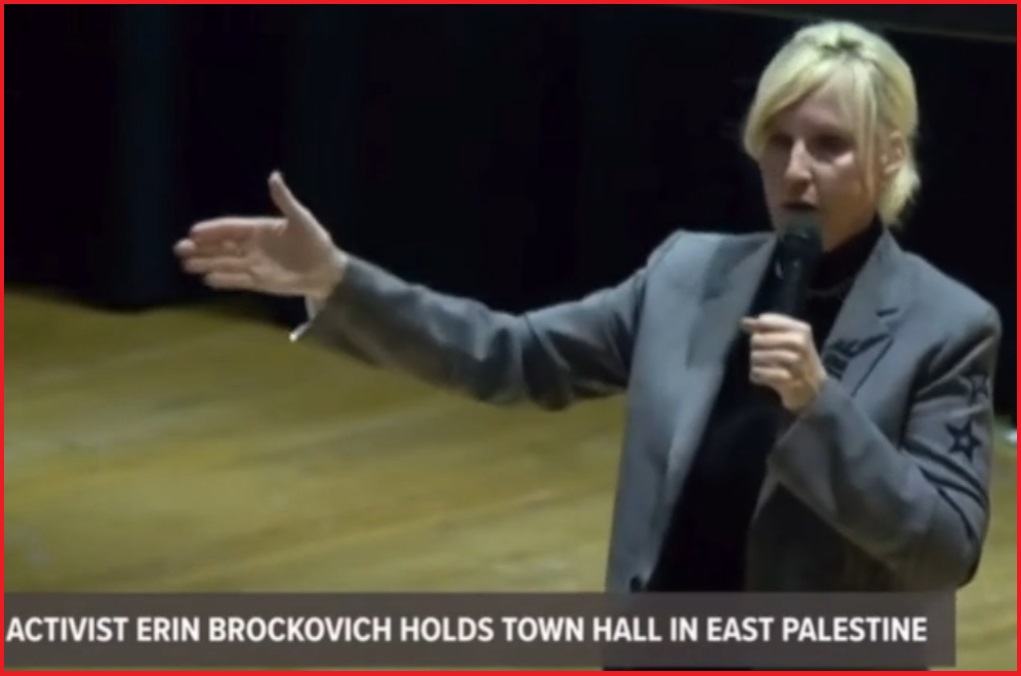
One of the most well-known people who faced down big chemical corporations and won, is activist Erin Brockovich. Yesterday she traveled to East Palestine, Ohio, to meet and discuss the issues of the 2/3/23 chemical spill with residents at a Town Hall meeting. {Direct Rumble Link}
Ms. Brockovich delivered a message to the audience about relying on their instincts, seeing the issues as they are and not as the officials would present them to be. Brockovich’s words are grounded in a different type of advice, the advice of trusting the natural God given gifts of discernment that we carry. She’s right, and it is very unusual to see a high-profile person emphasize this aspect. WATCH:
Mrs. Eric Brockovich essentially says, ignore “trust us”, and instead “trust yourselves.” That’s quite an empowering message being delivered to the community of East Palestine, Ohio.
COMMENT: Marty, you understand markets and the legal system. You were right again. The Supreme Court rejected the Brunson case.
KQ
REPLY: As I wrote before, this was an interesting argument, but it will be even more
“earth-shattering if the Supreme Court actually takes the case and rules on the validity of taking an oath of office.”
How can you support, and defend, the Constitution against all enemies, foreign and domestic if you refuse to even investigate the claim?
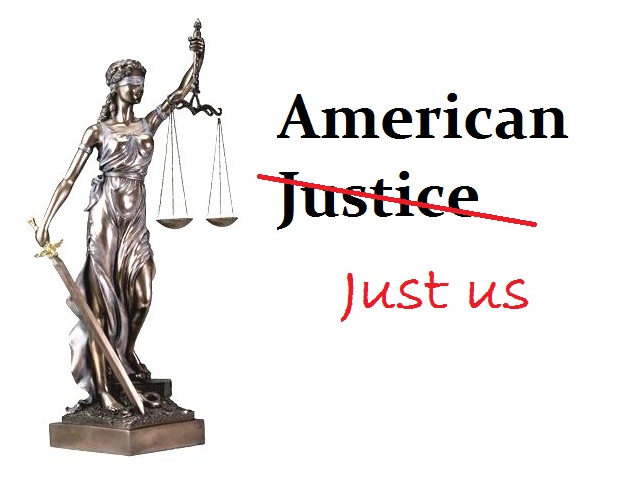
Here is the real monumental problem. Does the Supreme Court act constitutionally or has it denied citizens the right to be heard as declared by the Constitution itself? This is why they fight to stack the Supreme Court because the law is just not the law. The real issue is the Judiciary Act of 1925 and the court itself.
I specialized, not just in history, but also in the rise and fall of nations. Historically, a collapse in the rule of law is a key element in the fall of nations. I studied law intensely and some lawyers will often call me on constitutional questions. Why? When you go to law school, you spend very little time on the Constitution. The bulk of law concerns statutory law which is everything written and passed by Congress from civil rights to Obamacare. Very few cases end up challenging the constitutionality of a statute. Instead, they merely challenge the unconstitutional acts of government agents such as police and politicians.
The Supreme Court held that the Constitution is negative, meaning it is a restraint upon government, in Harris v. McRae, 448 U.S. 297 (1980). That means citizens cannot demand that government create any social program for there is no such Marxist component to the Constitution that people assume exists. There is no government obligation to pay for an abortion or a heart transplant.
I am going to make a statement here I have made to Constitutional lawyers that make their eyes pop out. The Supreme Court has no Constitutional right or permission to exercise “discretion” to hear a case. They must hear every case presented to them for that is dictated by the Constitution and cannot be circumvented by a statute written by Congress or by its own rule-making practice. No statute or rule can negate the constitution as defined by the Supremacy Clause (Article VI, Paragraph 2).
The Supreme Court receives approximately 7,000-8,000 petitions for a writ of certiorarieach term (year). The court grants and hears oral arguments in about 80 cases per year in a country of over 300 million. That is outrageous and this practice denies the people the constitutional guarantee of a tripartite government (3 branches) with each branch acting as a check and balance against the others. Let’s review what the structure of government crafted by the Founding Fathers created.
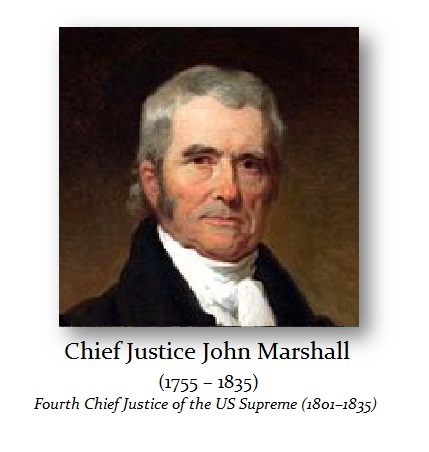
Chief Justice Marshall was held in the landmark case Marbury v Madison, 5 US 137 (1 Cranch) (1803) in which he declared the role of the Judiciary branch. “It is emphatically the province and duty of the judicial department to say what the law is.” When the nation began, the Supreme Court justices rode on “circuits.” Each justice heard cases in their assigned circuits around the country for there were no circuit courts with federal judges. Article III, Section I, of the Constitution expressly states:
“The judicial power of the United States, shall be vested in one Supreme Court, and in such inferior courts as the Congress may from time to time ordain and establish.”
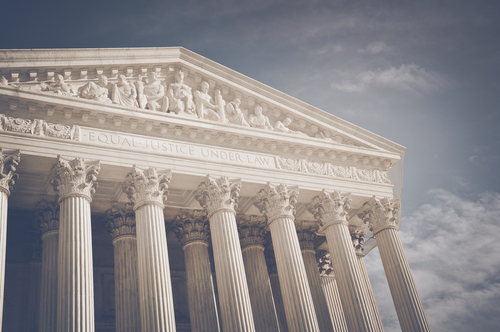
The Constitution guaranteed the Supreme Court. It gave the option to Congress to create inferior federal courts around the country, but this was by no means mandatory. The implications of this are quite profound for it means that Congress can close all the federal inferior district and appellate courts, but it cannot close the Supreme Court. The tripartite structure of government requires the Supreme Court – not inferior courts. Justice Reynolds explained this succinctly:
“The accepted doctrine is that the lower federal courts were created by the acts of Congress and their powers and duties depend upon the acts which called them into existence, or subsequent ones which extend or limit.”
Your constitutional right to be heard is being DENIED. That right is being circumvented by demanding you go to a district court judge, then appeal to that circuit court, and then apply to be heard as one of the 7,000+ petitions when they only accept 80. What if a child could not speak to his or her father and would only communicate with them through some nanny? Is there a relationship bond between the father and the child? Of course not.
Inferior courts are under no obligation to apply even a uniform legal code. Each has its own rules and precedents that are unique to each circuit. The law as practiced in New York is different than as practiced in California, Texas, or Florida. It is not all the same! There is no guarantee of EQUAL PROTECTION OF THE LAW when these circuit courts are free to do as they like. The media never writes about this and does not find it strange that we have no unified rule of law in the United States. You have to get to the Supreme Court and they are supposed to take such cases to establish the law nationally when it differs among the circuits.
Chief Justice Marshall also held in 1821 a very important decision holding:
“If the constitution does not confer on the court, or on the federal judiciary, the power sought to be exercised, it is in vain that the act of Congress purports to confer it…”
Congress reduced the power of the Supreme Court by eliminating the constitutional status of the court by enabling them to decide to hear cases at their “discretion,” but that is totally unconstitutional for no statute can amend the Constitution. Any statute or rule created by Congress cannot circumvent the Constitution – PERIOD!
The Constitution ONLY created the Supreme Court. Congress created the statutory inferior court which can be closed at any time because they were NOT created by the Constitution. Therefore, it is blatantly UNCONSTITUTIONAL for the Judiciary Act of 1925 to reduce the Supreme Court to one of discretion. That is a constructive amendment to the constitution which in itself is an act of outright rebellion.
I have created this site to help people have fun in the kitchen. I write about enjoying life both in and out of my kitchen. Life is short! Make the most of it and enjoy!
This is a library of News Events not reported by the Main Stream Media documenting & connecting the dots on How the Obama Marxist Liberal agenda is destroying America




 Centinel2012