Posted originally on Apr 10, 2025 by Martin Armstrong
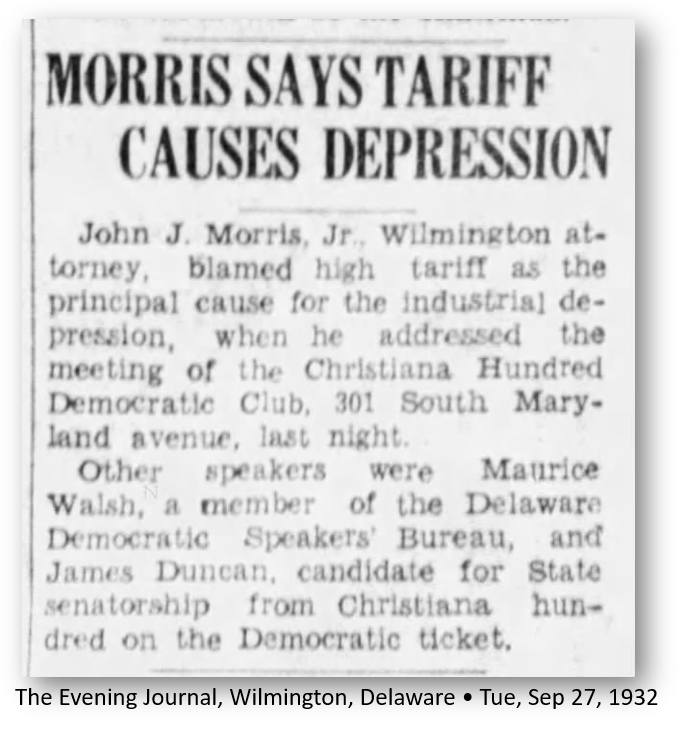
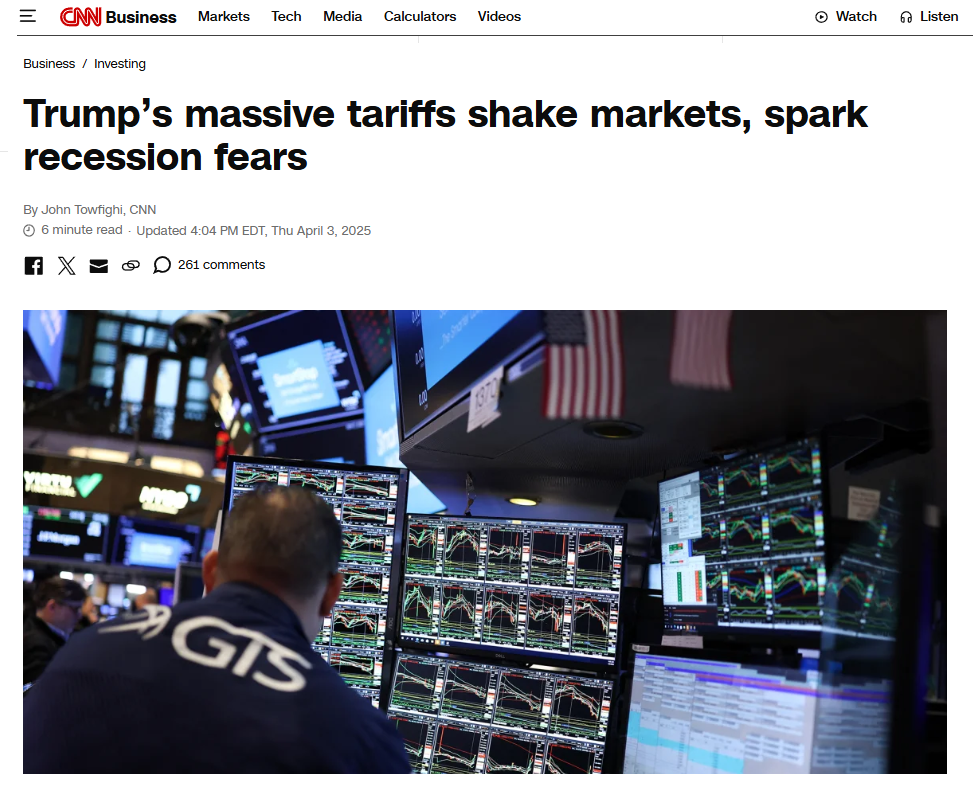
Bloomberg has actually come out as proclaimed: “With the Nasdaq 100 already in a bear market, soon it may be the S&P 500’s turn.” All we hear are hysterical forecasts, all emotionally charged because the number one thing they taught in economics class was the Democratic propaganda from the 1932 election – Tariffs & Protectionism caused the Great Depression, and Free Trade is prosperity. Bill Clinton tried that with China, and the Democrats cheered him. It expanded GDP, but it wiped out jobs and even whole towns in China.
Here is a meme on TikTok about making America Great Again. Is this our Competitive Advantage?
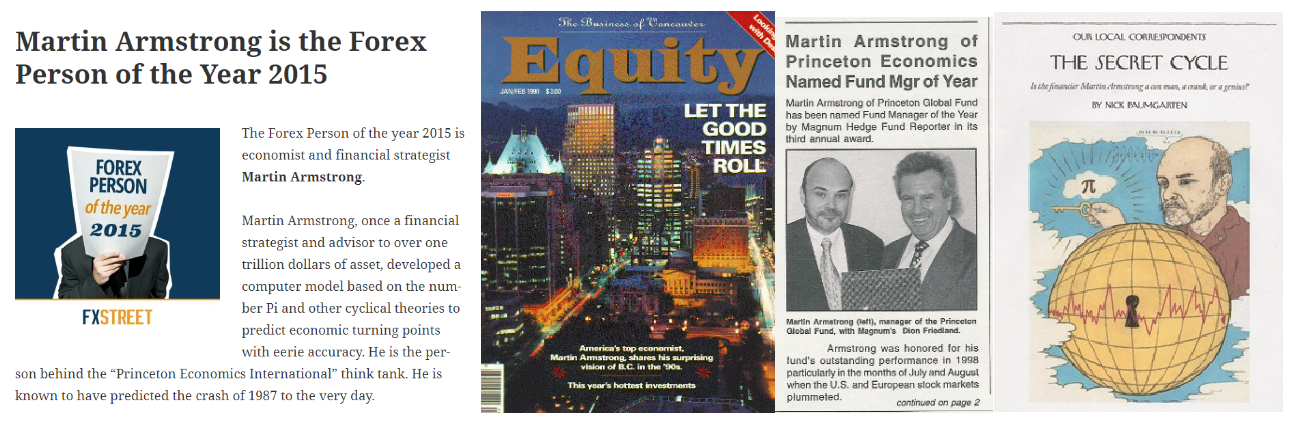
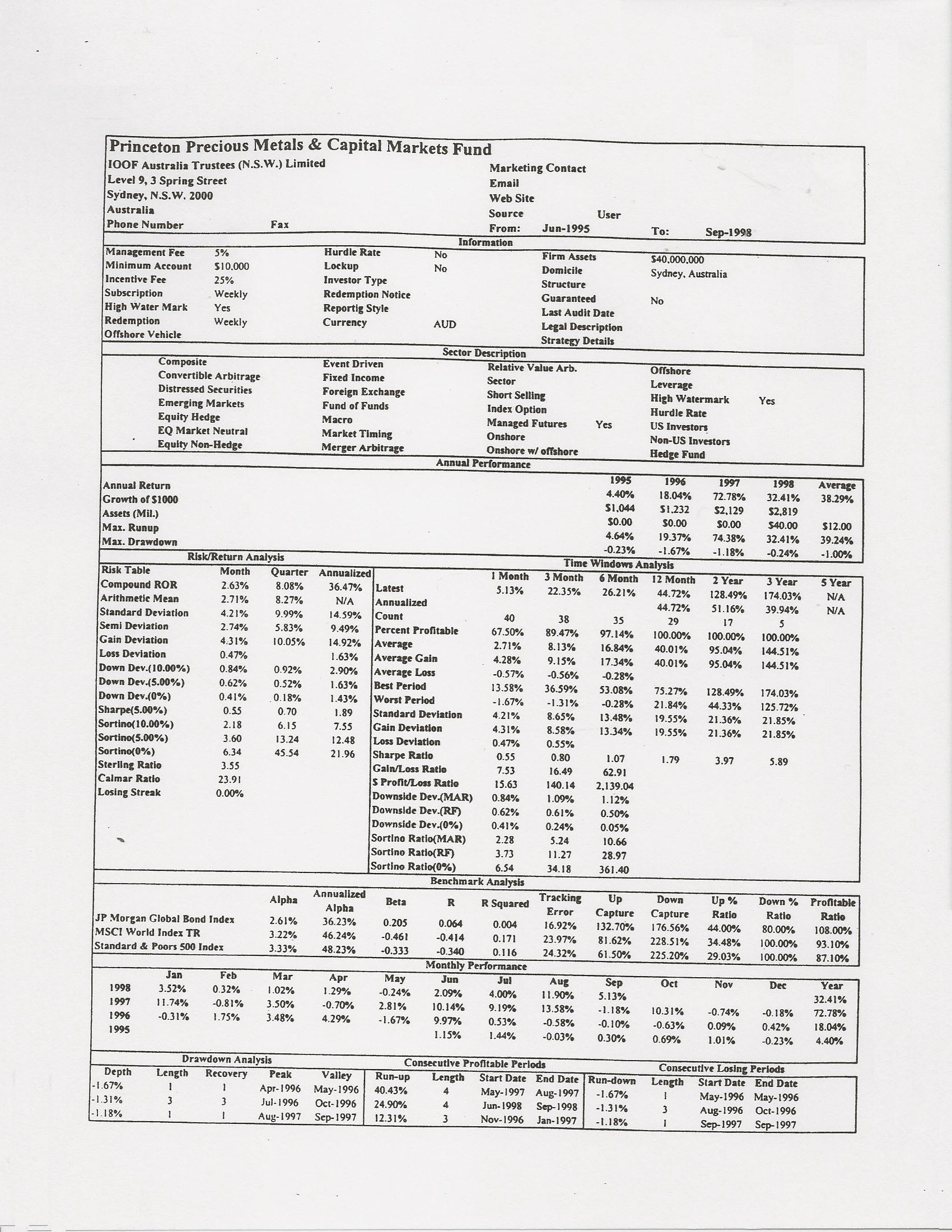
I have traded billions and advised on trillions. I managed the only onshore hedge fund for Deutsche Bank – here is the track record. My worst drawdown in a month was 0.41% – unmatched by anyone. I have been in the trenches and traded head-to-head with Soros, Bacon, Goldman Sachs, Phibro et al. I know why capital moves and have testified before the House Ways and Means Committee even on that subject. I do not speak from “theory” or “I think” bullshit from pretend analysts who are spouting out emotional forecasts which confirms that they are NOT an analyst. I have been named hedge fund manager of the year, FOREX Person of the Year, the discoverer of the Secret Cycle, and economist of the decade, among many other things – including the SOB by bankers, or alternatively that MFer.
I am appalled by these people, who the media are parading on TV all hysterical, claiming tariffs will end the bull market if not civilization, and the media loves it because they get to hate Trump for something new, other than Putin’s Puppet or SIGNALgate that they can’t seem to get people interested in. Telling them they will lose everything in a 401K, there goes Social Security, and your house will fall to zero because you did not vote for Hillary or Kamala. While opinions make markets, as I have said countless times, the MAJORITY must always be wrong, for they provide the energy for the reversal of trend.
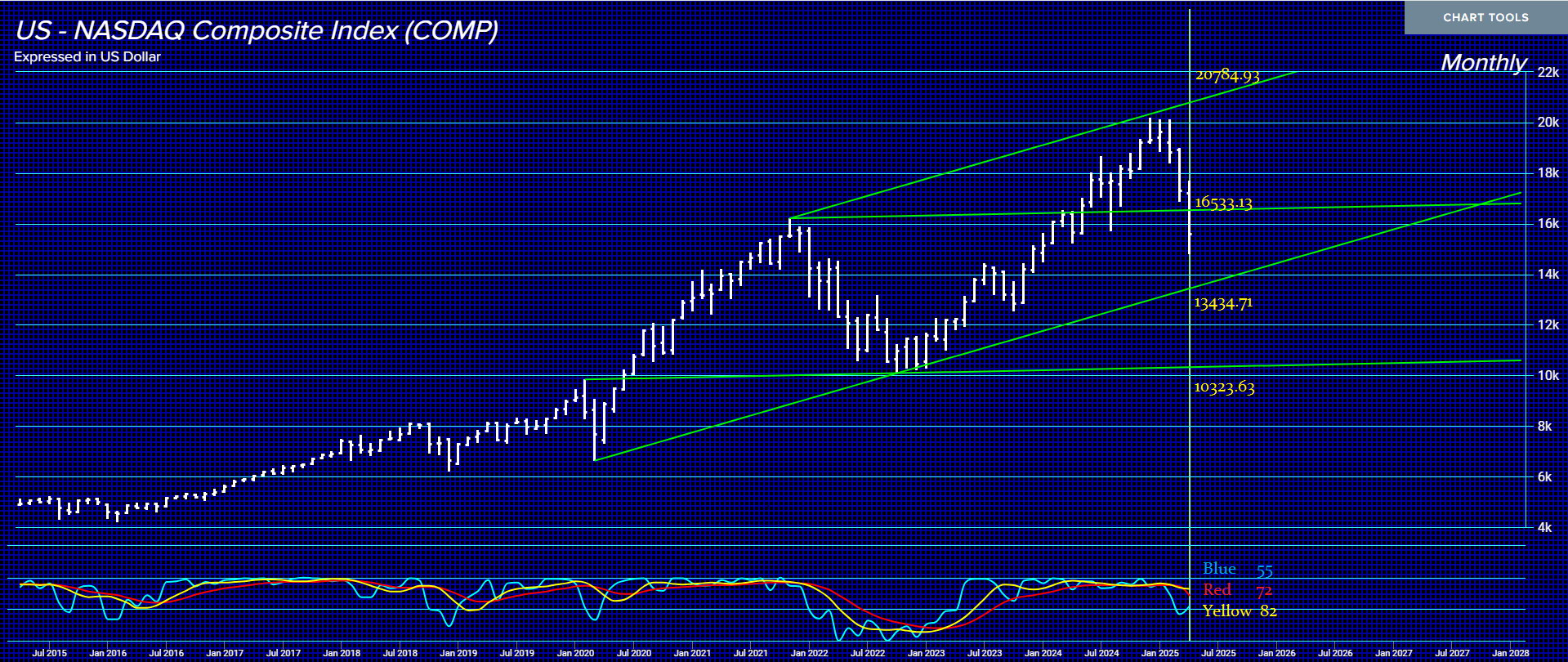
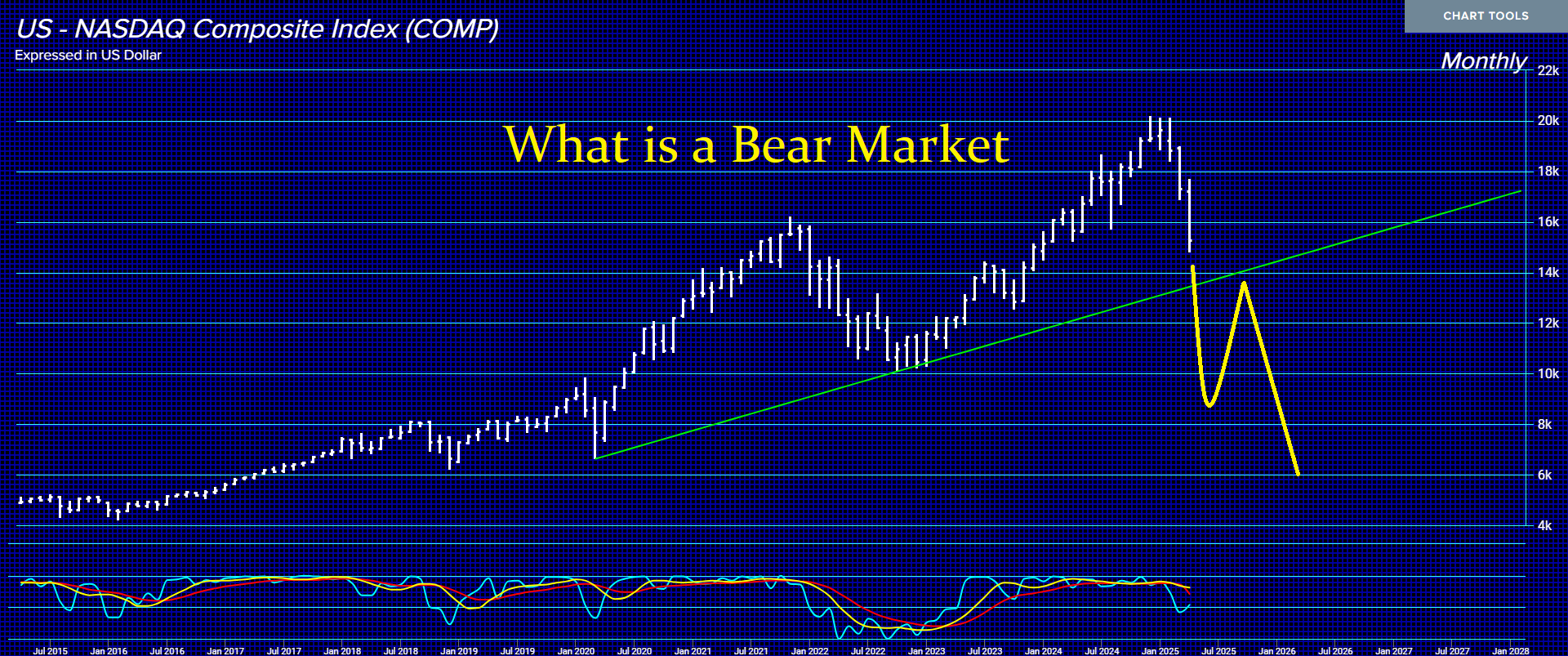
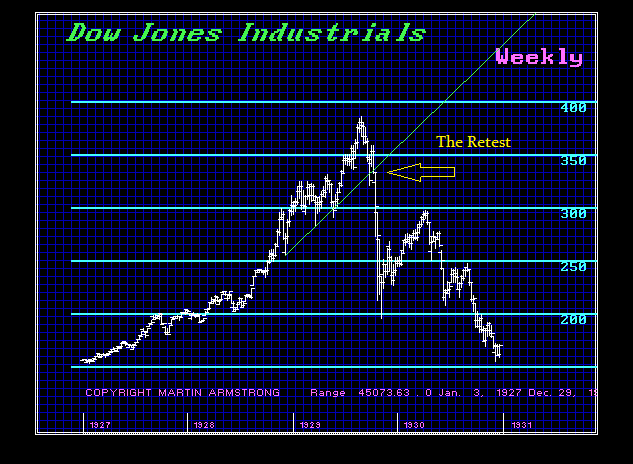
What Bloomberg reported was entirely LEFTIST propaganda. At the time, the NASDAQ had not even tested the basic uptrend line. Technically, you must break that line, stage a false move that retests that from beneath, and then it turns south again. To imply that the NASDAQ will continue to decline, it must close below 15200 on a monthly basis, raising the possibility of continuing down into May/June.
Democratic Senator Ron Wyden said he will force a vote on repealing tariffs in a test of GOP political support for Trump’s trade war. There are the renegade Republicans who joined the Democrats, demonstrating that they believe the 1932 Democrats’ propaganda to win the 1932 election was utterly false. The rollout of Trump’s tariff strategy has sparked wide-ranging reactions from investors, manufacturers, small businesses, and consumers.
Congress enacted the Reciprocal Trade Agreements Act (RTAA) of 1934 which was a significant U.S. trade policy enacted during the Great Depression under President Franklin D. Roosevelt’s New Deal. The RTAA empowered the president to negotiate bilateral tariff-reduction agreements without requiring Congressional approval for each deal. This marked a shift from Congress’s traditional control over tariffs (e.g., the protectionist Smoot-Hawley Tariff Act of 1930). The Tariff reductions could be up to 50% of the existing rates.
Roosevelt, then, like Trump, engaged in Reciprocity Agreements that were based on mutual concessions, where the U.S. and partner countries agreed to lower tariffs on each other’s goods, boosting trade in theory, but it had little impact because consumers were not buying, staring at the uncertainty of the future. Most-Favored-Nation (MFN) Clause also took place with tariff reductions negotiated with one country being extended to all other trading partners with MFN status, preventing discrimination and broadening the impact of bilateral deals.
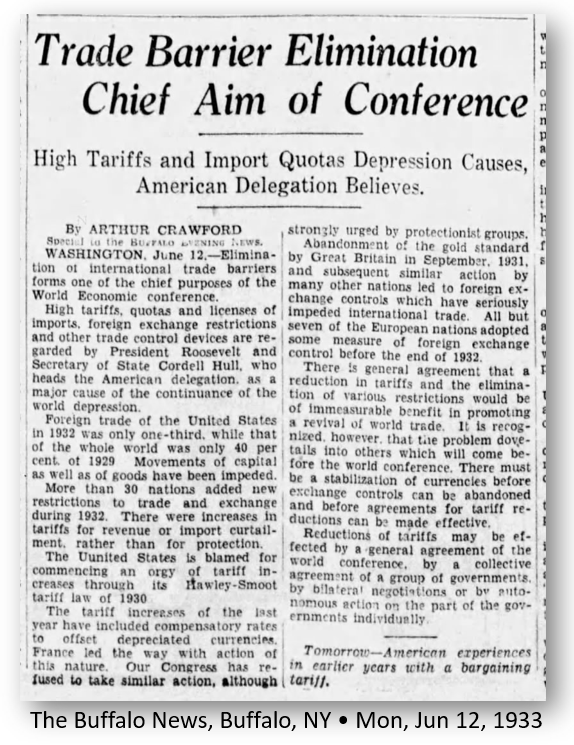
The Democrats had made such a big deal out of the tariffs, remaining dead silent on the Sovereign Debt Defaults, and that is what led to the propaganda we were taught in school that tariffs are bad and free trade is good. Aimed to reverse the trade-collapsing effects that they blamed on the Smoot-Hawley Act, which had exacerbated the Depression by sparking global tariff wars, they ignored the sovereign debt defaults that drove the dollar to record highs that made foreign imports even cheaper.
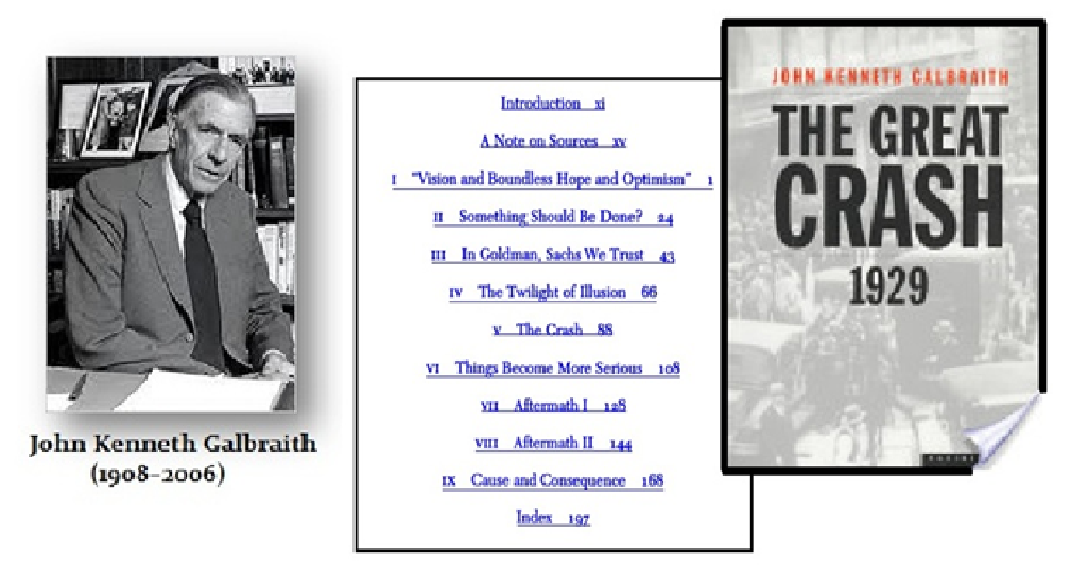
John Kenneth Galbraith, in his seminal work The Great Crash 1929, did not attribute the stock market collapse of 1929 to tariffs. That was not practical since they came in June 1930 after the CRASH. Instead, Galbraith emphasized factors such as speculative excess, margin buying, fraudulent corporate structures, and weak banking practices as the primary causes of the crash. His analysis was focused on the immediate financial mechanisms and psychological factors driving the bubble and its burst. While he acknowledged broader economic vulnerabilities, he did not highlight tariffs as a direct cause of the crash itself.
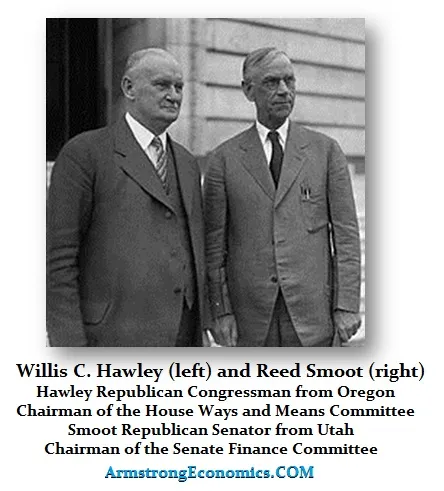
However, tariffs, particularly the Smoot-Hawley Tariff Act of 1930, are often cited as exacerbating the Great Depression that followed the crash, thanks to the Democrats who use it simply because the sponsors were both Republican. Since Smoot-Hawley was enacted after the crash, Galbraith did not blame it for the market collapse but might have recognized its role in worsening global trade and economic relations during the 1930s.
The assertion that the Smoot-Hawley Tariff caused the Great Depression was used during the 1932 election by the Democrats. However, it is not widely attributed to a single individual among reputable economists or historians today. Most scholars view the tariff as a contributing factor that exacerbated the global economic downturn rather than its primary cause, since it was not enacted until the following year. However, several figures have prominently criticized its role:
Economist Milton Friedman: While Friedman emphasized monetary policy failures by the Federal Reserve as the primary cause of the Depression, he and co-author Anna Schwartz noted in A Monetary History of the United States (1963) that Smoot-Hawley worsened international trade tensions.
Political Figures: Opponents of Herbert Hoover, such as Franklin D. Roosevelt, criticized the tariff during the 1932 election, though they focused more on its role in deepening the crisis rather than claiming that they originated it.
Cordell Hull: As Secretary of State under FDR, Hull vehemently opposed protectionism and worked to reverse the Smoot-Hawley Act through reciprocal trade agreements, blaming it for damaging global commerce. As Secretary of State, he championed the RTAA as part of his vision for liberalized trade and international cooperation. However, the RTAA required periodic Congressional renewal (extended 11 times by 1945).
Economic Historians: Scholars like Barry Eichengreen and Charles Kindleberger discuss Smoot-Hawley in the context of 1930s protectionism and its role in stifling international cooperation, but they do not single-handedly credit it with causing the Depression.
The claim that the Smoot-Hawley Act “caused” the Great Depression is oversimplified and more commonly found in political rhetoric or popular discourse of the Democrats, who used it as a campaign argument to blame Republicans when it was a response to the high tariffs first imposed by Europe. Academic consensus recognizes it as one of many factors (alongside stock market collapse, banking crises, and monetary policy) that deepened and prolonged the crisis. No major economist or historian is definitively cited as claiming it was the sole cause.
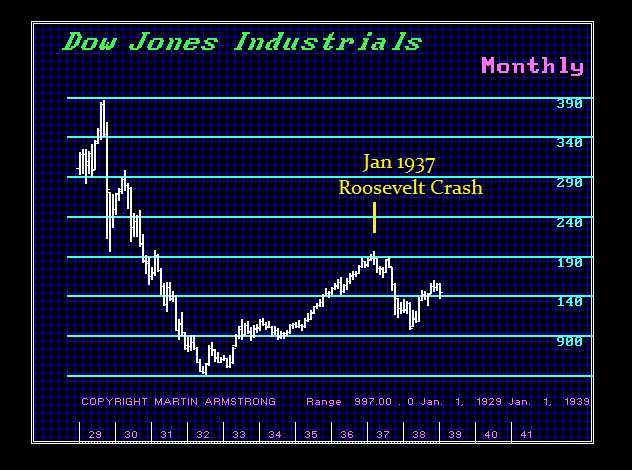
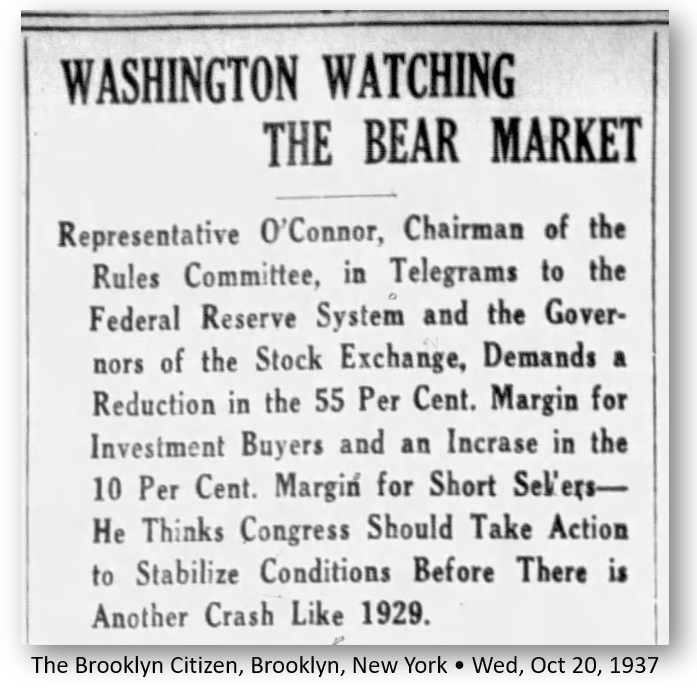
When the economy turned down in 1937, there was widespread panic. People feared that this would be 1929 all over again. They called for raising margins and even curtailing short-selling, as always.
The tariff reforms did not prevent the Crash of 1937. Tariffs were NOT the cause of the collapse of 9,000 banks. We are being subjected to another media attempted coup to undermine Trump and hopefully embarrass the Republicans to vote Democrat against him. They will do whatever they can to destroy Trump.
Posted originally on Apr 10, 2025 by Martin Armstrong
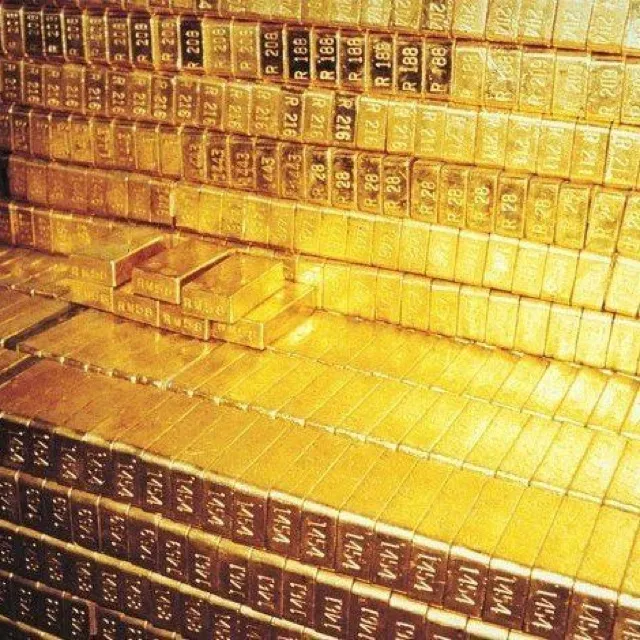
There has been ongoing speculation about America’s holdings of foreign gold reserves. Elon Musk’s request to audit Fort Knox pushed the issue into the headlines once more. Now, the new incoming German government is discussing pulling their gold reserves from the New York Fed due to a lack of transparency and the public is asking—where is the gold?
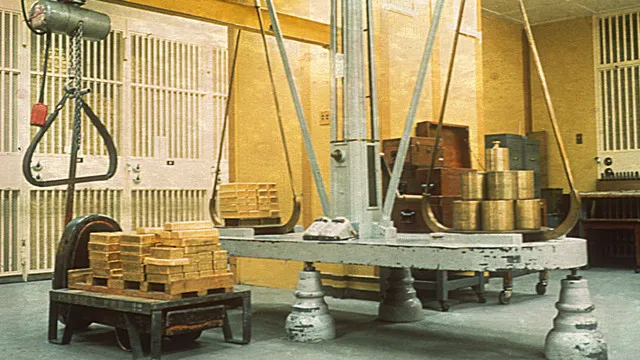
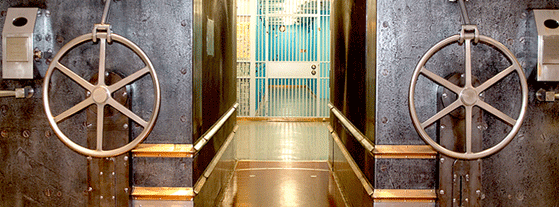
I personally toured the New York Fed many years ago, and while there is gold there, I cannot verify the quantity or quality; no one has ever accomplished such a feat. The last full audit of US gold reserves occurred in 1953 under President Eisenhower. Auditors from the US Treasury and Mint verified domestic and limited foreign-held gold at the New York Fed and Fort Knox. Third-party auditors were not permitted, but there were US Congressional observers. Treasury Secretary George M. Humphrey and Mint Director William H. Brett were in charge of overseeing this audit.
Now, the government declared the audit to be a “full” inspection. However, only 3 of the 22 compartments at Fort Knox were examined, accounting for only 13.6% of gold holdings. Around 88,000 bars (34.4M oz) were meticulously counted, and auditors weighed around 9,000 bars (130 tons). Only 26 gold bars, selected at random, were drilled to confirm purity. Auditors confirmed that US gold certificates matched physical holdings at the New York Fed, but due to limited sampling and a lack of transparency, suspicions rose. “We have no reason to believe other melts would differ [from assay results],” the joint commission stated.
The gold examined was mainly domestic. Germany’s holdings, for example, were not part of the audit. Public confidence in the US government was on the decline at this period amid Cold War secrecy. Around the same time of the audit, the CIA admitted it to Operation Ajax—a covert operation to overthrow Iranian Prime Minister Mohammad Mossadegh and install Shah Mohammad Reza Pahlavi. This was the first time that the US government openly admitted to orchestrating a coup and installing a leader in a foreign nation. How could the public and/or foreign nations trust the US under these conditions?
(Sources: Treasury 1953 Report, Sound Money Defense League, FRASER).
The GAO/Treasury conducted the next audit in 1974, reviewing 21% of gold holdings at Fort Knox. This occurred in the post-Bretton Woods period after Nixon abandoned the gold standard. Again, third-party auditors were not permitted to attend, and this time, auditors did not weigh bars. Some called the September 1974 examination a “show audit” and a publicity stunt as only 1 of the 13 vaults was examined. The “real” audit occurred the following month by a joint GAO-Treasury committee, but as mentioned, only 91,404 bars of 367,500 were examined. Random samples were tested for purity, but there was no assaying or weighing.
Continuing audits were ongoing, and the US government pledged to inspect 10% of its gold holdings annually from 1975 to 1983. As of 1985, the government stated it had audited 89% of its gold holdings, but only through seal verifications and limited sampling. Again, only the US government had access to these vaults.
The matter was ultimately laid to rest until 2012, when US politicians like Ron Paul and foreign governments demanded another audit. Germany was threatening to relocate their US holdings at the time due to a lack of transparency, and had been increasingly calling for an audit in the decades leading up to 2012. To appease doubters, the Treasury OIG conducted another limited audit.
The 2012-2013 NY Fed Audit scope included 34,201 US-owned gold bars (418 tons). Less than 1% (367 bars) were tested for purity. Auditors did not weigh the gold, nor did they conduct a full inventory. All compartments were to remain sealed unless they had reason to suspect tampering. Again, no independent assayers were admitted. Worse, foreign holdings were not inspected. Germany’s gold, for example, was not reviewed but they maintained trust in the US government despite some backlash.
Fast-forward to 2025: DOGE is uncovering government waste and mismanagement and has set its sights on Fort Knox. The US Treasury declared any audit a breach of national security. A true audit of Fort Knox, not including the NY Fed, would take 18-24 months and require 44,000 hours. Foreign governments now have a seemingly plausible reason to point their finger at the US and call “FOUL PLAY!”
Here’s the thing–no nation completely audits its gold holdings. The UAE, for example, implemented mandatory annual audits but only examined 10-20% of its holdings. There is limited transparency as their audits are classified, but they do permit third-party audits and follow London Bullion Market Association (LBMA) standards. Switzerland also follows LBMA standards and conducts regular audits, but auditors only check seals as there is no physical count. Switzerland is far more transparent about its auditing process, but again, they are only looking at a small percentage of overall holdings and not weighing or physically assessing the gold. Any nation could point the finger at another and question the validity of its stockpile.
As for US gold holdings, there have not been any official sales. If anything is missing, then that means it was stolen. However, the media is honing in on the US without understanding that no foreign nation conducts a full audit of their gold holdings. It all comes down to trust in the government, not only the current administration but every administration that has come to pass.
Posted originally on Apr 10, 2025 by Martin Armstrong
Nancy Pelosi strongly supported tariffs before Donald Trump came into the picture. Trump is accomplishing what Pelosi dreamed of achieving nearly three decades ago. In 1996, on the House floor, Representative Nancy Pelosi (D-CA) gave a speech highlighting America’s trade imbalance with China.
“How far does China have to go? How much more repression? How big a trade deficit and loss of jobs to the American worker? And how much more dangerous proliferation has to exist before members of this House of Representatives say ‘I will not endorse the status quo?’” Pelosi touted.
At the time, bipartisan support existed to grant China Most Favored Nation (MFN) trade status, but a younger Pelosi firmly disagreed and believed China was taking advantage of the US. “China should not receive most favorite nation status,” she declared. Similar to Trump’s reciprocal tariff charts, Pelosi provided a chart on the status quo of America’s $34 billion trade deficit with China in 1995, which was expected to rise to $40 billion in 1996.
“Since the Tiananmen Square massacre, this figure has increased 1,000% from $3.5 billion to $34 billion now. In terms of tariffs, I think it’s interesting to note that the average US MFN tariff on Chinese goods coming into the United States is 2%, whereas the average Chinese MFN tariff on US goods going into China is 35%. Is that reciprocal? On exports, China only allows certain industries into China, and therefore, only 2% of US exports is allowed into China. On the other hand, the US allows China to flood our markets with a third of their exports.”
Fast-forward to 2025 when her political opponent implemented tariffs on China. Suddenly, Pelosi believes a tariff on China is “reckless” and told her party to repeat the message that Trump’s tariffs will damage the US economy and hurt the American people. “Donald Trump’s reckless tariffs will cause chaos in our economy, raise prices for consumers, and hurt hardworking American families. This is not a strategy — it’s the largest tax hike on the American people in history,” Pelosi wrote on X.
Yet, in 1996, Pelosi believed the opposite to be true and stated that China was stealing millions of US jobs. “In terms of jobs, this is the biggest and cruelest hoax of all, not only do we not have market access, not only do they have prohibitive tariffs, not only our exports not let in very specifically, but China benefits with at least, at least, 10 million jobs from U.S.-China trade. The president in his statement, requesting the special waiver said that China trade supports 170,000 jobs in the United States whereas our imports from China support a 10 million jobs at least … the fact is that U.S.-China trade is a job loser.”
Pelosi visited Tiananmen Square in 1991 to protest China’s suppression of protestors. She was extremely critical of China’s trade practices, ethics, and human rights abuses. At the time, her views expressed a desire to strongly distance the US from China in general.
In 2018, the Economic Policy Institute (EPI) found that the US-China trade deficit send 3.4 million jobs offshore. Manufacturing, a sector that has been on the decline in recent years, accounted for 74% of all job losses to China. As for Pelosi’s home state, 560,000 jobs were lost to China, the largest loss by state in the nation, followed by Texas, which lost 314,000 positions.
The deficit has widened and Chinese goods have continued to flood the US market. The only thing that has changed is the person paving the way for these tariffs. Pelosi’s flip is yet another example of a politician expressing views that express their self-interest rather than the interest of the American public.
Posted originally on Apr 9, 2025 by Martin Armstrong
COMMENT: I just saw you here on RT (Russia Today) explaining the tariffs. What a marvelous job. Nobody knew that interest and dividends are part of what people call the trade deficit. You appear on TV in Russia explaining the world, but not in America. They are still prejudiced by what the bankers did to you. Thank you for your insight into Trump’s being a businessman, not a politician. The world needs to understand him better.
Yuri
REPLY: I have been criticized by some I know in Washington for appearing on Russian TV. My response is blunt – I don’t give a shit. As President Kennedy said, we all breathe the same air and are all human with our flaws and strengths. I do not subscribe to being prejudiced against a whole people for past events or one person. I have gone to dinner with outright Neocons who, personally, I believe are traitors to humanity. My father taught me long ago to NEVER judge others by your own standards. You must understand their thinking process to grasp why they acted in the past and why they may respond in the future. Everyone and every creature will act in their own self-interest.
I learn as much by doing an interview in Russia as they get from me. I like to hear the questions, for it shows me what is at the top of their thinking process. It is the Neocons who tell leaders never to talk to the enemy. Why? Because you may come to an agreement and settle on peace.
Posted originally on CTH on April 10, 2025 | Sundance
When President Trump announced the 90-day pause in combination with the increase in tariffs against China, there was a background element missed by many.
At the moment President Trump triggered the public announcement, U.S. Trade Representative Jamison Greer was testifying to congress.
President Trump is not a jerk. Donald Trump would not put a top executive Greer in that optically vulnerable position if USTR Greer was the tip of the spear, it’s just bad business form.
The timing and background indicate something more substantial. For what we are calling ‘the BIG UGLY’ Treasury Secretary Scott Bessent is the point, Greer is a functionary. It’s a shift from the Term-1 approach, because the global trade reset is magnitudes bigger and more substantive.
This approach would also explain why Robert Lighthizer was not reenlisted in Term-2. If Lighthizer was in Greer’s chair in front of congress at the moment of the public announcement, he would have been furious and rightly so. Lighthizer and Wilbur Ross were the tip of the spear in term-1, Lighthizer facing the region of Asia and Ross facing Europe; but the same strategy is not present in term-2.
In the Term-2 trade reset, the entire globe is being targeted simultaneously. Enter, the U.S. Treasury Secretary in a bigger, more substantive, and much more prominent role due to the scale of the trade reset.
This trade approach is much bigger, obviously. As the nuclear-level detonation takes place, Secretary Bessent is in control of both the financial market response and the core finances of the USA as it relates to the reverberations.
♦ In essence, President Trump detonates, Bessent controls the immediate aftermath. Commerce (Lutnick) and USTR (Greer) come in after, with the granular details and legal structures for reciprocity compliance. President Trump then reenters deciding the sequencing of inbound contacts, status in the que, bilateral talks with the executive principals and then a later review of free trade agreement (FTA) contracts, details, with I’s dotted and T’s crossed before signatures.
This bigger sequencing, the priority of the strategy, explains all of Scott Bessent’s comments in the aftermath of the April 2nd “liberation day” trigger. Bessent warning the impacted nations not to react with retaliation. Some did, some did not. Those who retaliated go to the back of the que (¹geopolitical needs of Trump not withstanding).
President Trump basically wiped decades of global free trade agreements off the books; many of those FTA’s were not bilateral which is the favored approach for President Trump on a nation-by-nation basis.
As a consequence, I would not look for too much emphasis on the EU as a collective trade partner because the assembly just represents too many interests. I would anticipate President Trump framing FTA’s for each nation within the union and then letting the predictable and internal bitch-fest in Brussels stew; let them work it out.
Yes, throughout this global detonation China is the big target. Without doubt, Beijing is trying to strategize how they can best position, with their previous influence within each “independent” nation now in a new framework. The tentacles of the ‘Belt and Road’ initiative have been simultaneously hit.
As Bessent has noted, the Beijing economic model is established to produce, produce, produce, regardless of purchases for their production. If Beijing does not get purchase orders, China just discount’s the product created and dumps it into any market that will purchase it (insert my trip to Russia witnessing this firsthand). European Commission President Ursula von der Leyen, acting as spokesperson for France and Germany, is extremely worried about this happening in the EU.
The China dumping becomes problematic within the global reset because nations can take the cheap discounted Chinese goods and transship them to U.S. customers at substantially steep discounts that wipe out any protective tariff approach.
President Trump will factor this issue in any agreement with individual nations (hence, bilateral FTAs). If [XXX Nation] tries to transship discounted Chinese goods or components into the U.S. market, Trump will tariff, block or embargo that nation. The result means USA retaliation will cover all national manufactured or produced goods from that nation, not just the transshipped Chinese crap.
These pressure points upon China, from the EU (their own protective self-interest) and various nations who want to have preferred entry status to the U.S. consumer market, are critical. China is a production economy, cut out the purchases and they are in big trouble. This outcome is what can seriously impact President Xi Jinping.
This approach is why Beijing is quiet, trying to game out how to work around this global trade detonation.
¹ The only thing that can change a nation’s position in the trade negotiation cue, is a very specific geopolitical need from President Trump. Example, the EU position toward Ukraine and Russian sanctions.
As noted by President Trump in the XO signing session yesterday, he believes geopolitical events can be folded into the trade discussions if there is great value within them. Even though President Trump is approaching each country individually, the NATO group in Europe may get a better trade outcome if all the NATO members agree to President Trump’s peace outline in Ukraine.
This approach doesn’t replace or remove the issue of confronting inequal trade restrictions and relationships, it merely becomes one facet that can smooth the ink distribution from the reluctant EU hand holding the pen used in the trade agreement.
[ps. I’ll eat a plain rice cake if AMLO did not advise Mexican President Sheinbaum to keep her mouth shut. If only the Snow Mexicans had an AMLO to advise the insufferable Poilievre. 🙄]
Posted originally on CTH on April 10, 2025 | Sundance
President Trump delivers remarks on geopolitical events, the MAGAnomic agenda and trade imbalance reset during a presidential signing session in the oval office.
Beginning with the commission of former Arkansas Governor Mike Huckabee as U.S. ambassador to Israel, President Trump walks through some executive orders on industrial capacity for shipbuilding and defense procurement. Following the executive orders President Trump begins the process to target former national security embeds who violated their oath of office, then takes questions from the media.
The question session begins at 34:00 of the video below (prompted):
Posted originally on CTH on April 9, 2025 | Sundance
White House Press Secretary Karoline Leavitt and Treasury Secretary Scott Bessent hold press gaggle outside the White House. US Treasury Secretary Scott Bessent gives details on the China tariff increase and the 90- day tariff pause on other countries.
As outlined in the press remarks, 75 countries have contacted the White House to renegotiate their access to the U.S. consumer market. Secretary Bessent noted, each of these new trade agreements needs to be handled independently and “President Trump wants to be personally involved in each one. That’s why there is a 90-day pause.”
Bessent revisited his prior comments and warning to global trade partners about not retaliating to last week’s announcement. The hostile response from China was the triggering mechanism for the tariff increase. WATCH:
Posted originally on CTH on April 9, 2025 | Sundance
The first part of this announcement is clear, Chinese tariffs are now raised to 125% effective immediately. The latter part of this announcement is less clear; however, it appears that all other trading nations have their reciprocal tariffs lowered to 10% for a period of 90-days.
“Based on the lack of respect that China has shown to the World’s Markets, I am hereby raising the Tariff charged to China by the United States of America to 125%, effective immediately. At some point, hopefully in the near future, China will realize that the days of ripping off the U.S.A., and other Countries, is no longer sustainable or acceptable.
Conversely, and based on the fact that more than 75 Countries have called Representatives of the United States, including the Departments of Commerce, Treasury, and the USTR, to negotiate a solution to the subjects being discussed relative to Trade, Trade Barriers, Tariffs, Currency Manipulation, and Non Monetary Tariffs, and that these Countries have not, at my strong suggestion, retaliated in any way, shape, or form against the United States, I have authorized a 90 day PAUSE, and a substantially lowered Reciprocal Tariff during this period, of 10%, also effective immediately. Thank you for your attention to this matter!” [SOURCE]
♦ Steel and Aluminum tariffs of 25% remain for all.
I have created this site to help people have fun in the kitchen. I write about enjoying life both in and out of my kitchen. Life is short! Make the most of it and enjoy!
This is a library of News Events not reported by the Main Stream Media documenting & connecting the dots on How the Obama Marxist Liberal agenda is destroying America