Posted originally on Apr 9, 2025 by Martin Armstrong
China is the world’s largest car producer and exporter. A little-known fact is that China first became the world’s largest car exporter back in 2023, with low-cost EV companies BYD and Chery in the spotlight. The nation’s auto sector has been steadily expanding since then, with Chinese brands reaching an all-time high of 69.4% of domestic passenger vehicle market share in Q1 2025.
The growing popularity of higher-tech, EV cars has aided China’s auto sector. BYD overtook Tesla to become the world’s top EV company. BYD actually surpassed Tesla in terms of revenue back in 2018, but the two companies had tight competition. As of 2024, BYD exported 4.27 million vehicles worldwide, compared to Tesla’s 1.79 million vehicle sales. In 2025, BYD delivered 416,388 BEVs, exceeding Tesla’s 336,681 vehicles for two consecutive quarters. BYD surpassed Tesla in annual revenue for the first time in 2024, generating $107 billion (29% YoY increase) after experiencing a 40% increase in battery electric and hybris vehicle sales. Tesla posed a slight 0.95% YoY growth in 2024, generating $97.7 billion in revenue, but auto sales accounted for only $72.5 billion of total revenue.
Overall, China exported 5.86 million vehicles in 2024, a 19.3% annual increase. Mexico, Russia, Brazil, and the UAE were the top buyers. China sold4.96 million passenger vehicles (19.7% YoY increase), 900,000 commercial vehicles (17.5% YoY increase), and 1.28 million new energy vehicles, as well as 987,000 battery-electric vehicles.
Japan is the world’s second-largest car exporter, exporting 4.22 million vehicles in 2024. This marked a -4.5% decline from 2023. Toyota remains Japan’s leading vehicle, accounting for $312.28 billion in revenue and 830,048 million vehicles.
Germany is holding onto third place in auto exports. In 2024, Germany exported 3.4 million passenger cars, marking a 2.5% annual increase. Around 25.9% of all vehicles exported from Germany last year were electric. Volkswagen Group remains Germany’s star, generating $354.86 billion in revenue for the year.
In February 2025, China’s autos accounted for 27.5% of total auto sales globally. Now, these cars are not only cheaper than what other nations like Germany or the US can produce but also more technically advanced. Governments have been placing levies in China’s auto sector for the past few years, as there is a belief China has an unfair advantage. Chinese companies are not separate from the government.
The CCP has been injecting tons of capital into private companies to expand rapidly and undercut competitors’ prices. These companies also have reduced risk as they have the government’s backing. Labor costs are far cheaper in China, and the nation does not need to export vehicle parts for production. Overall, China has been able to rapidly infiltrate the global auto markets and become the global leader.
Posted originally on Apr 9, 2025 by Martin Armstrong
President Javier Milei saved Argentina from the despair of socialism. Poverty reached a two-decade high between January and June of 2024 at 52.9% when Milei was working diligently to undo decades of poor fiscal policies. New data suggests the number of citizens under the poverty line has fallen to 38.1%
Before taking office, around 57% of adults in the Argentina were unemployed. Bloated government programs were costing the nation $6 million daily. Argentina was forced to stop printing money back in 2022 after inflation surpassed 60% in July of that year, and their currency became utterly worthless. here were mass strikes since their money could not fund basic goods. Even if they could find employment, what incentive would the people have when the currency is worthless?
Images of Milei with a chainsaw went viral as he swore to begin rapidly cutting government waste and eliminating the ever-growing public sector. He removed price controls and devalued the currency by 54%. Transport and fuel subsidies were eliminated. It was noted that these measures would at first hurt PPP before the economy could begin to heal. Imagine inflation cooling in February at 276% — the situation was dire. The International Monetary Fund awarded Argentina a $44 billion credit program. The nation is beginning to stabilize very slowly, and it took decades of deteriorating economic conditions for someone to come in and clean house.
The situation worsened before healing could begin. Milei called his measures a form of “shock therapy” for Argentina’s economy. Milei agreed to devalue the nation’s peso from around 350 to 800 pesos per USD. He has eliminated quotas on imports and exports and removed the licensing that was difficult to obtain. There is a temporary rise in taxes for non-agricultural trade that brings it on par with industry standards. Transportation and energy subsidies have been eliminated.
Annual inflation hit 289% in April 2024 as the economy was adjusting to new policies. In a dramatic turn of events, inflation cooled to 2.4% in March 2024. Argentina posted its first surplus in over a decade last April at $589 million. Argentina then hit its first budget surplus in December 2024—the first budget surplus in 123 years. The unemployment rate as of Q4 2024 fell to 6.4%, and labor force participation rose to 48.8%.
Milei exclaimed: “The deficit was the root of all our evils — without it, there’s no debt, no emission, no inflation. Today, we have a sustained fiscal surplus, free of default, for the first time in 123 years. This historic achievement came from the greatest adjustment in history and reducing monetary emission to zero. A year ago, a degenerate printed 13% of GDP to win an election, fueling inflation. Today, monetary emission is a thing of the past.”
Argentina is a shining example of how a nation can survive the death grip of socialistic policies when drastic measures are taken. Yet, the West is keen on abandoning capitalism in favor of policies that historically fail and leave citizens in extreme poverty. Milei has continued to preach the success of his policies at every opportunity, warning the world that they are in serious danger if they attempt to adopt the very policies that nearly ruined Argentina.
Posted originally on Apr 9, 2025 by Martin Armstrong
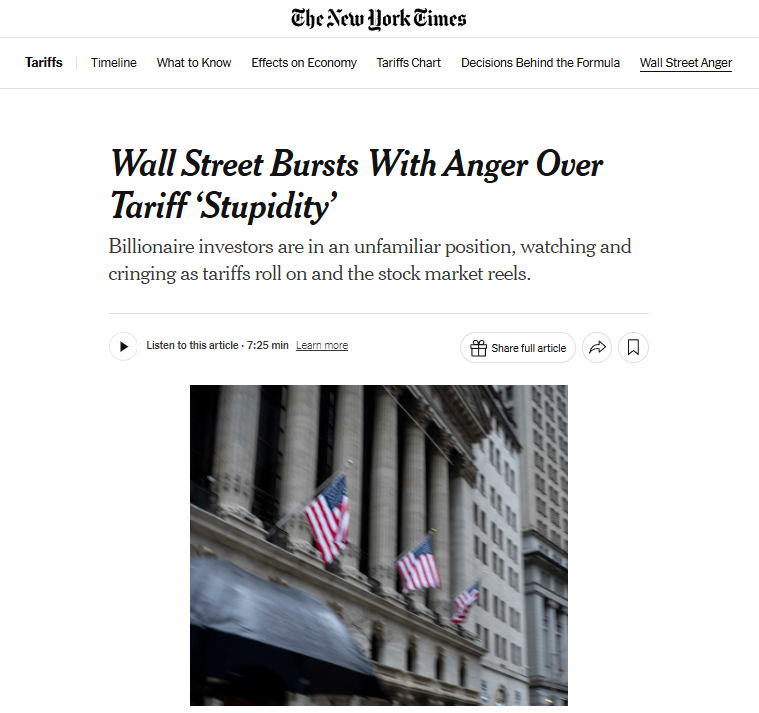
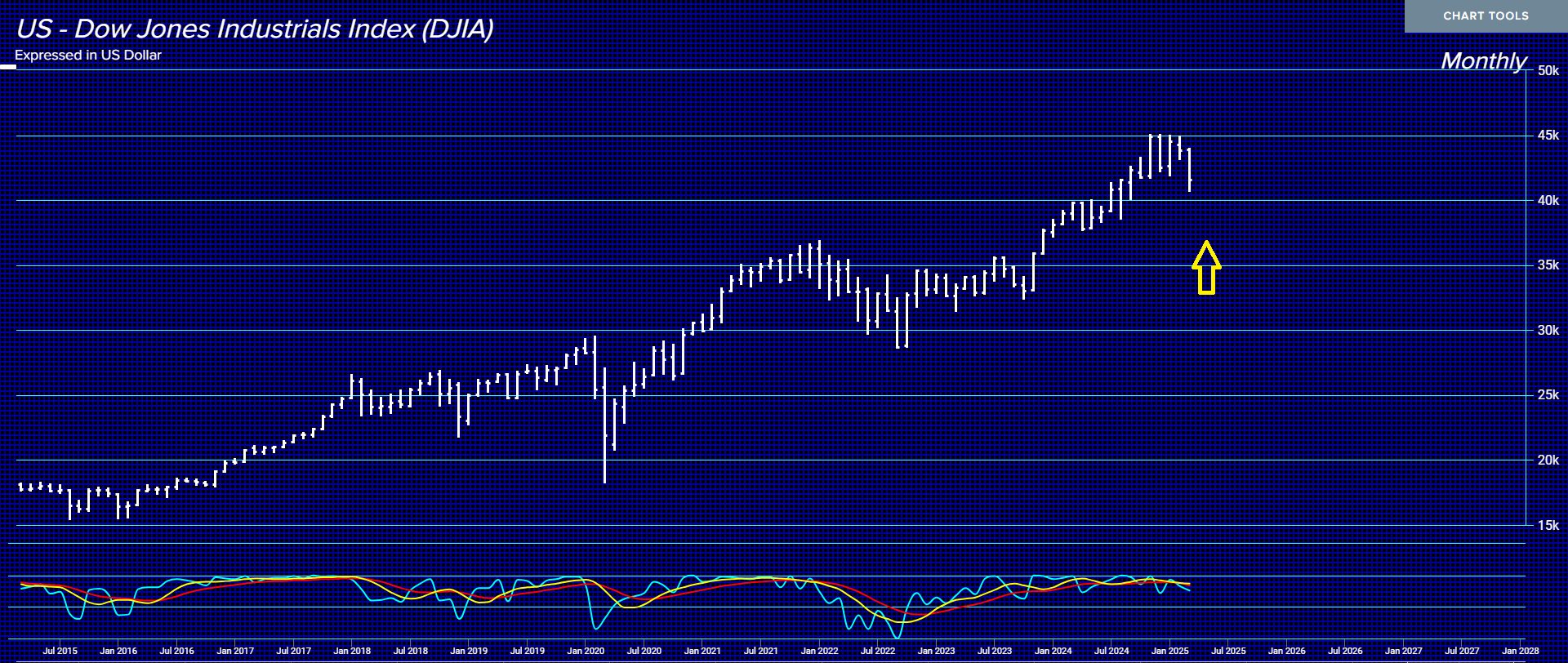
COMMENT: The media including the financial media really going crazy with this Trump Tariff thing – as if the market wasn’t due for a pull back.
DS
REPLY: We had forecast that we would see a correction by April last year. I answered plenty of questions on various podcasts about whether this would be a big crash and the end of the bull market. I consistently warned that such a scenario was absurd, for that implied the classic flight to quality being government debt. Facing a global sovereign debt crisis, I warned that it was just not realistic. The press has latched onto this normal correction and is deliberately trying to crash the market with constant claims that tariffs will destroy the world economy.
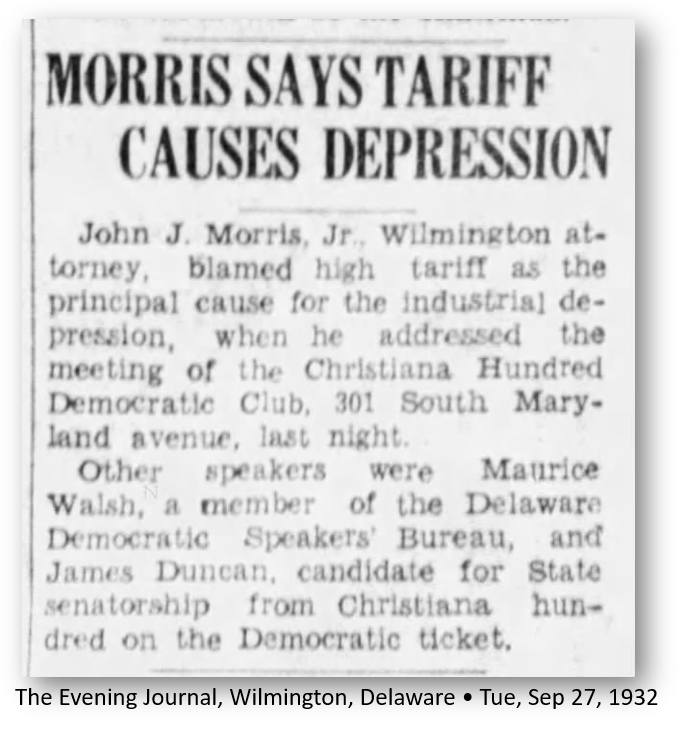
This is the very same political scheme they used in 1932 to blame tariffs on Hoover and the Republicans to win the 1932 election. It was a total lie and a fabrication of history. We are witnessing the attempted coup of Trump by deliberately trying to force the stock market down in a desperate attempt to turn the Republicans against Trump and stop his entire agenda of ending the Democrats’ feeding trough for corruption. I was stunned by the conversation I had yesterday and a deliberate media attempted coup.
Tariffs do not cause a DEPRESSION, no matter how much the media is selling that story now, just as the Democrats did in 1932 to get FDR elected. They also failed to protect any country from the effects of the worldwide depression at the time.
Between 1925 and 1929, there were 33 general revisions or substantial tariff changes, nearly all of which raised tariffs. These included 26 European nations and 17 republics of Latin America. In 1927 and 1928, Australia, Canada, and New Zealand increased and expanded the scope of their tariffs. In Asia, China, Persia, and Siam also raised tariffs during the period. This was all before the 1929 Crash, which the history books omitted along with the 1931 Sovereign Defaults.
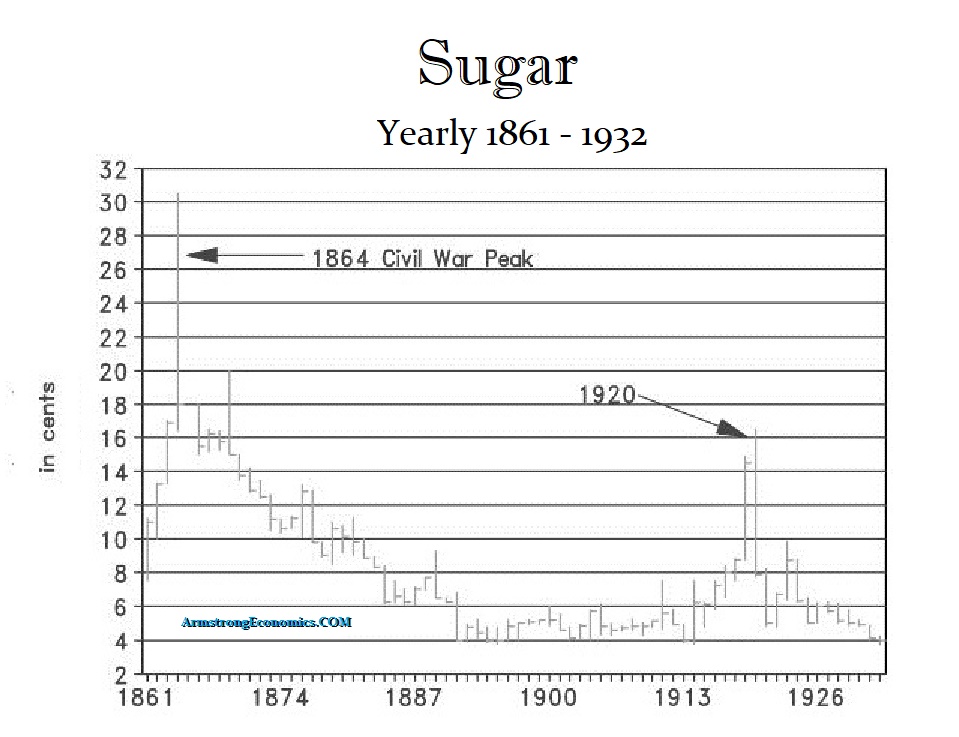
The Smoot-Hawley Tariff of 1930 was in response to the protectionism before 1929. During World War I, obviously, capital moved to the USA, as was the case for production, and also to Latin America. It was World War I that ended the sugar production that used to take place in Europe. It migrated to Java, Cuba, and other South American countries. You can see the huge spike in sugar during 1919/1920. After the war, the Europeans tried to bring back their economic dominance to recover their former glory. To try to achieve that, this was the start of the high tariffs that were really imposed against new competitors. That was the real essence of the trade war. Their high tariffs succeeded and brought sugar production back to Europe. The output during 1927-1928 was actually far greater than before the war in 1914.
The Europeans did the same with Cotton and wheat. This had the effect of creating overproduction, for which Europe lost export markets. This was the protectionist agenda that is rarely, if ever, explained beyond blaming the Smoot-Hawley Act.
There was a Tariff Reduction Bill of 1932, but this did not pass Congress. Here’s the breakdown:
Context: After the Smoot-Hawley Tariff Act (1930) raised tariffs to record levels, worsening the Great Depression, efforts were made to reverse this protectionist policy. By 1932, Democrats, who generally favored lower tariffs, controlled the House but not the Senate (which remained Republican until March 1933).
Legislative Efforts: Democratic lawmakers proposed tariff reduction bills in 1932, but they faced significant opposition. The Republican-controlled Senate and President Herbert Hoover, a protectionist, opposed lowering tariffs during an economic crisis.
Outcome: No major tariff reduction legislation was passed by both chambers of Congress in 1932. The pivotal shift came later with the Reciprocal Trade Agreements Act (1934) under President Franklin D. Roosevelt, which empowered the executive to negotiate tariff reductions.
In summary, despite the post-Smoot-Hawley backlash, the political landscape in 1932 prevented tariff reduction bills from passing Congress, as the Democrats were using this as an excuse to vote for FDR. The focus on austerity and revenue-raising measures (e.g., the Revenue Act of 1932) further sidelined such efforts.
The entire Tariff Issue of the 1930s was indeed just political. The Democrats used it to beat the Republicans over the head and pretended that the Tariffs caused the Great Depression. Today, we have the media, which hates Trump as they all tried so hard to defeat him, now they are deliberately blaming tariffs all over again for a normal correction that many kept call for a major crash before tariffs.
Posted originally on Apr 9, 2025 by Martin Armstrong
European Union leader Ursula von der Leyen has proposed a zero-for-zero-tariff deal with the United States after the EU was hit with a 25% tariff on steel and aluminum, followed by another 20% levy. The 27-nation bloc will be unable to agree on this proposal, especially since Donald Trump declared that a zero-for-zero deal is not sufficient.
“We stand ready to negotiate with the United States. Indeed, we have offered zero-for-zero tariffs for industrial goods, as we have successfully done with many other trading partners, because Europe is always ready for a good deal,” Von der Leyen said on Monday. Dutch Trade Minister Reinette Klever agreed with Von der Leyen, saying that the best way to respond is to remain calm and de-escalate the situation.
Others, of course, France, disagree and want to begin retaliatory measures. “We cannot exclude any options on goods or services and, however we approach it, open the box to the European tool, which is very comprehensive and which can be extremely aggressive,” French Trade Minister Laurent Saint-Martin said. French President Macron, a longtime personal foe of Donald Trump, insists that the EU should abandon all investment in the US, unaware that such a move would hurt the region. Macron will likely take a trade agreement as a personal defeat.
Trump is willing to negotiate but said a zero-for-zero trade deal is insufficient. “We have a deficit with the European Union of $350 billion and it’s gonna disappear fast,” Trump declared. “One of the ways that that can disappear easily and quickly is they’re gonna have to buy our energy from us … they can buy it, we can knock off $350 billion in one week. They have to buy and commit to buy a like amount of energy.” Von der Leyden was somewhat receptive and said the bloc would consider purchasing American liquefied natural gas.
The European Union desperately needs a new energy exporter after the remaining flow of oil from Russia was cut off by Ukrainian President Zelensky. The bloc will vote on its next move today, but as we recently heard from incoming German Chancellor Friedrich Merz, the EU is prepared to abandon any remaining fragments of democracy to ensure Brussels has the final say.
Every issue that the European Union faces is a reminder that a centralized one-European government cannot function. It was doomed from the start, as I have explained in depth on this blog. Each nation has its independent needs, and Brussels utterly disregards those needs if it does not meet its agenda.
Certain Eastern European nations were far more reliant on Russian energy, and yet, Brussels sided with Ukraine to prevent them from accessing that crucial resource. I believe it will become more apparent as time goes on that individual nations have no voice in the European Union, but they will not realize the authority they surrendered until their individual economies turn down and Brussels shows its true disdain for member nations.
Posted originally on CTH on April 9, 2025 | Sundance
Full dragon, no panda mask. Beijing begins using war terminology to discuss the trade conflict with the United States.
Through a series of cumulative trade tariffs, President Trump has now placed Chinese imports into the USA in a position of 104% tariffs.
104%!
In response Beijing has devalued their currency and dumped treasuries, but no amount of subsidy, devaluation or use of their sovereign wealth fund is going to compensate for 104% taxes on Chinese products. Very soon all purchase orders from the USA for Chinese manufactured products will stop.
The Beijing dragon is looking at the future through a zero-sum position. Now, they vow to fight to the death.
BEIJING, April 9 (Xinhua) — With firm will and abundant means, China will resolutely take countermeasures and fight till the end if the United States insists on further escalating economic and trade restrictive measures, China’s Ministry of Commerce said Wednesday.
“I want to emphasize that there is no winner in a trade war, and China does not want a trade war, but the Chinese government will by no means sit by when the legitimate rights and interests of its people are being hurt and deprived,” said an official with the ministry.
The official made the remarks when responding to media questions regarding a white paper released Wednesday by the State Council Information Office on China’s position on some issues concerning China-U.S. economic and trade relations.
Noting that the successes of China and the United States are opportunities rather than threats for each other, the official said that China hopes the United States will immediately remove its unilateral imposition of tariffs, and work with China to strengthen dialogue, manage differences, and promote cooperation.
China is willing to communicate with the U.S. side on key bilateral economic and trade issues, address their respective concerns through dialogue and consultations on an equal footing, and jointly advance the steady, healthy and sustainable development of China-U.S. economic and trade relations, the official noted. (more)
Posted originally on CTH on April 9, 2025 | Sundance
Appearing 4/8/25 on CNBC, Treasury Secretary Scott Bessent outlined some of the specifics within the negotiation strategy of President Trump as it pertains to the ongoing global trade reset.
Bessent notes at the request of President Trump, all administration officials were to pull back from commentary following the “liberation day” tariff announcement. The objective was to give all nations’ time to absorb the impact while reducing the reverberation noise.
After a few days, President Trump then began to assess the inbound communication from various country leaders and their request for renegotiation. The priority schedule permits the honest trade allies to come first in the que to the office of U.S. Trade Representative Jamison Greer, as approved by President Trump.
Japan and South Korean delegations and trade representatives will be the first trade teams engaged; not coincidently both of those ASEAN nations have pre-positioned manufacturing investment in the USA, the truest measure of a trade partnership. The outcome of these first agreements will form the baseline for every nation thereafter.
Both Japan and South Korea have North American manufacturing systems in place; however, it is likely more investment in U.S jobs and products being created in mainland USA will remain a top priority. Additionally, for these nations the largest element of their “reciprocity” will come from a commitment to reduce the trade deficit with better terms and bigger contracts for U.S. product imports.
Posted originally on CTH on April 9, 2025 | Sundance
President Donald Trump attended the National Republican Congressional Committee (NRCC) dinner in Washington DC.
The main topic of President Trump’s remarks is the global trade reset, which includes a cumulative 104% tariff on China, as Beijing attempts to devalue currency and retain economic status. President Trump is in full wolverine mode on the issue of trade. There is no other issue that commands this level of intensity and deliberate effort.
MAGAnomics, American Main Street and economic security as national security priority, is the core issue to define President Trump’s doctrine. He is bringing the thunder, which we have referenced as “The Big Ugly.” WATCH:
I have created this site to help people have fun in the kitchen. I write about enjoying life both in and out of my kitchen. Life is short! Make the most of it and enjoy!
This is a library of News Events not reported by the Main Stream Media documenting & connecting the dots on How the Obama Marxist Liberal agenda is destroying America