Federal Court Bars Biden from Banning Free Speech


Armstrong Economic Blog/Tyranny Re-Posted Jul 24, 2023 by Martin Armstrong

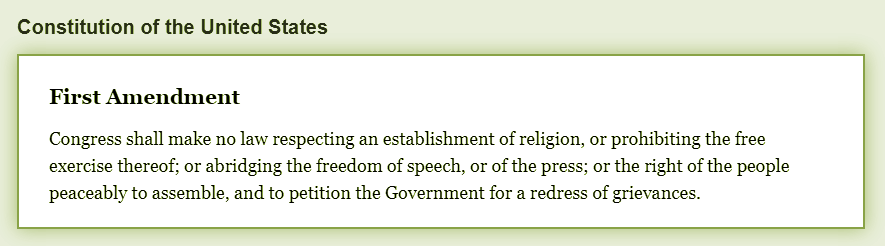
Judge Terry Doughty favored the people in the Missouri v. Biden case. The 5th Circuit Court of Appeals will hear the case in the near future, but the ruling stands. This is pending an appeal because the current propaganda machine refuses to be dismissed. The Ministry of Truth is completely unconstitutional. The Biden Administration believes they have the authority to remove the first amendment, asking the public to believe whatever they claim is true blindly.

It is public information that Biden used strategic propaganda ahead of the last election. Social media companies silenced any negative new about Biden and his associates, and silenced anyone from speaking out against him. The COVID narrative shows just how far the propaganda powers will go to promote a single message to people that they are legally unable to deny. Judge Doughty banned the administration from meeting with “social-media companies for the purpose of urging, encouraging, pressuring, or inducing in any manner the removal, deletion, suppression, or reduction of content containing protected free speech posted on social-media platforms.”

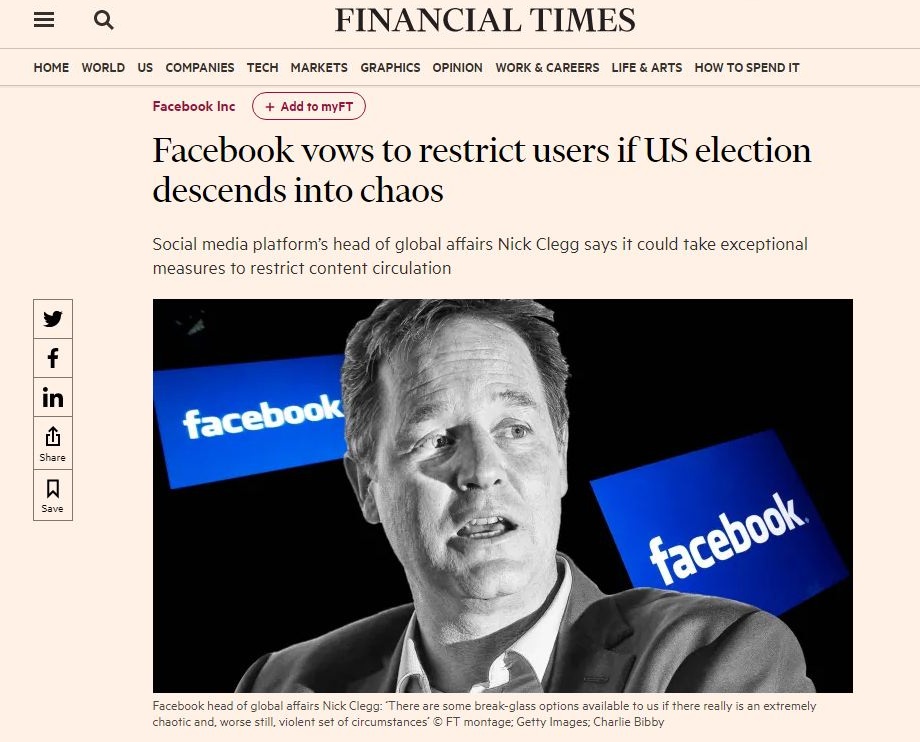
Yet, social media companies routinely block the conservative narrative. Look at what they have done to RFK. You can no longer question government without the risk of being deplatformed and shunned as a conspiracy theorist. YouTube, Facebook, Google search results, and entire mainstream media silence ANYONE who speaks out against the status quo. So while this may be a step in the right direction, there is a long road to go to regain our freedom to speak, and therefore our freedom to think critically instead of blindly obeying like sheep.

Loser Democrats Hilariously Faceplant in Hearing (Ep. 2051) – 07/20/2023


The Dan Bongino Show Posted originally on Rumble on: Jul 20, 11:00 am EDT

Action Alert – ODNI Release of FISA Court Review Reveals Alarming Disconnect That Must Be Discussed Before FISA-702 Reauthorization


Posted originally on the CTH on July 23, 2023 | Sundance 

There is a major issue within the use of the FISA-702 authority that must be immediately understood.  A silo problem that is not being discussed within Congress as the potential for FISA-702 reauthorization is looming.

I’m setting aside my opinion of the entire process in order to just outline the facts as they appear.  I am not in support of any of this FISA process; nor do I support the baseline premise of the NSA database capturing the private electronic communication of Americans, which I do not believe is legislatively authorized to exist.

The Office of the Director of National Intelligence (ODNI) recently released the 2023 FISC opinion on FISA-702 activity as reported by the NSA, FBI and to a lesser extent CIA and NCTC [REPORT HERE].

In this report, the Foreign Intelligence Surveillance Court (FISC) is reviewing legal compliance by the NSA and FBI in accessing the NSA database that houses the private electronic records, metadata, of every American.  This is the core of the FISA-702 authorization, where 702 indicates an American citizen protected from illegal searches and seizures by the Fourth Amendment.

The NSA database contains the private electronic data (metadata) of every single American – including emails, text messages, social media posts, instant messages, direct messages, phone calls, geolocation identifiers, purchases by electronic funds, banking records and any keystroke any American person puts into any electronic device for any reason. [A big issue here is the use of Two-Factor Authentication (2FA) but that’s for a different article.]

The 2023 FISC report reviews the action of the FBI and NSA to ensure compliance with rules and restrictions in the search of this database.

The NSA and FBI report violations of the process to the FISA Court; this is somewhat of an honor system.  You may have heard FBI Director Christopher Wray recently saying they have reduced the number of unauthorized searches of this database by 80%.  The FBI has presumably tightened up the rules and restrictions on who and how this database can be searched.

The ODNI release only covers the compliance of the NSA and FBI (and the CIA and NCTC) to the FISA-702 rules.  The CIA and NCTC are foreign mission authority only, therefore they should never even be involved in searching American citizens.

FISA-702 is not supposed to apply to the Central Intelligence Agency (CIA) and/or National Counterterrorism Center (NCTC), because they are not supposed to be looking at American citizen data directly.  If the CIA or NCTC want to search the database for records of Americans, they are supposed to turn over their predicate intelligence (a foreign subject in contact with an American citizen, so they want depth on the American citizen) for determination by the FBI or NSA, who then conduct the search.  At least that’s the way it’s supposed to work.

The FISC review covers the results of the NSA and FBI as reported to the FISA Court.  The congressional oversight process looks at this FISC review as part of the reauthorization process.  The FISC report is legislatively required to be conducted and released as part of this compliance review prior to Congress considering reauthorization.  Congress may legislatively change the 702 rules prior to reauthorization or negate the 702 authorities completely, by not reauthorizing it.

Congress (House and Senate) weighs the FISC review heavily.

Here’s the issue.  There are exponentially more violations taking place than are contained in the reporting from the NSA and FBI to the FISA Court.  The FISC is only seeing one small part of the overall compliance picture.   There are way more violations taking place than the court is aware of.

This is a silo issue, where the court is isolated in a silo without receiving information from the Dept of Justice (another silo).  How do we know this?

Because the Dept of Justice Office of Inspector General (DOJ-OIG) reviews the entire U.S. government as part of the new, Trump initiated, OIG oversight of the DOJ National Security Division (DOJ-NSD).

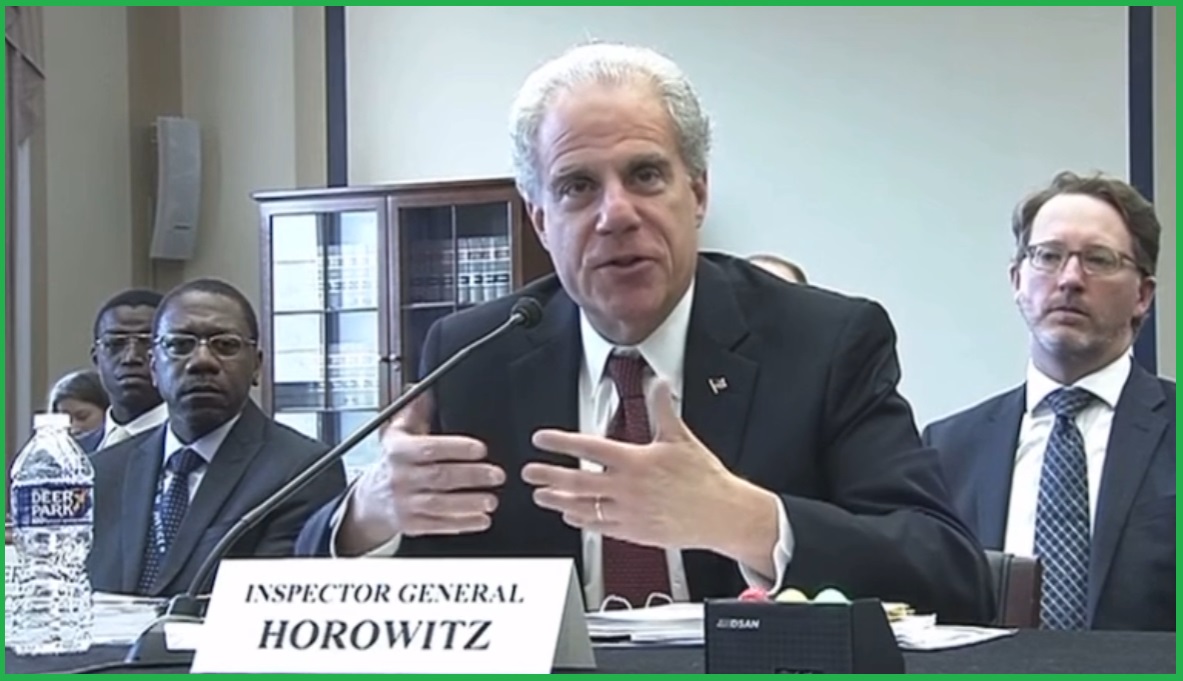
Inspector General Michael Horowitz doesn’t just look at the FBI or NSA using the database; the OIG looks at the entire government and who has access to this NSA database to perform searches.  There is a massive disparity between the number of unauthorized searches conducted and self-reported by the NSA and FBI silos, when compared to the whole of government.  The FISA Court only hears about the NSA/FBI violations, not the unauthorized searches conducted outside the NSA/FBI by people who have access to this database.

How big is the disparity?  HUGE! 

Office of Inspector General Michael Horowitz testified April 27, 2023, that more than 3.4 million search queries into the NSA database took place between Dec. 1st, 2020 and Nov. 30th, 2021, by government officials and/or contractors working on behalf of the federal government. These search queries were based on authorizations related to the Foreign Intelligence Surveillance Act (FISA).

Within his congressional testimony, OIG Horowitz stated, “Approximately 30% of those 3.4 million search queries were noncompliant,” that is outside the rules and regulations that govern warrantless searches.  The government calls these “non-compliant searches.”  Additionally, IG Horowitz also stated that somewhere north of “10,000 federal employees have access to conduct these searches of the NSA database.”

While DOJ-OIG Horowitz is looking at the entire government, he reports these violations only into the silo of the Dept of Justice.  Horowitz does not report his findings to the FISA Court.  The violations by Horowitz, in this example over a million illegal or “noncompliant” searches, is reported internally to the DOJ (Main Justice).  The DOJ (an information silo) does not turn these findings over to the FISA Court (another information silo).

As a result, the FISC opinion of the database compliance audit is only reached with a limited perspective on the totality of the violations taking place within government.

As a result, the FISC report does not contain discussion of the violations discovered by IG Horowitz.

As a result, the House Permanent Select Committee on Intelligence (HPSCI) and Senate Select Committee on Intelligence (SSCI) do not debate the FISA-702 reauthorization with the fulsome scale of the jaw dropping abuse of the database outlined by IG Michael Horowitz.   FISA-702 reauthorization is debated in congress based on the 2023 FISC report which does not include the Horowitz review.

The 2023 FISC report is a compliance review of a very limited subset of database search queries, and only includes those done by the NSA and FBI.

Why is this only just now coming to light?

Simple answer, despite the DOJ National Security Department creation in the first year of President Obama’s term (2009 by AG Eric Holder), the Inspector General was never permitted oversight.

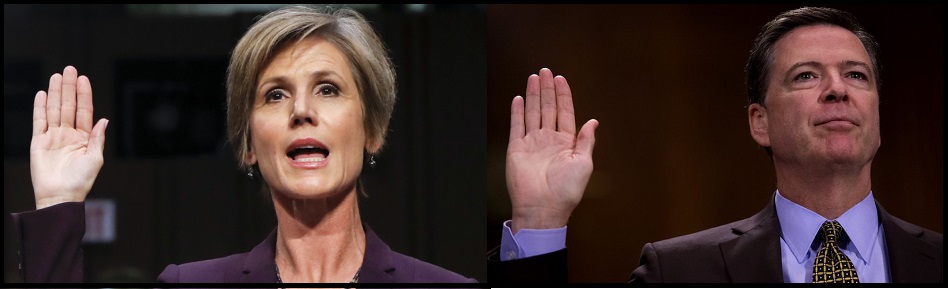
Despite his requests, the IG office was blocked by the DOJ-NSD for the entire Obama term in office. In 2015 the OIG again requested oversight, and it was Sally Yates who responded with a lengthy 58-page legal explanation saying essentially, ‘nope – not allowed.’ (PDF HERE) All of the DOJ is subject to oversight – except the NSD.  The claimed justification was “national security,” and the information was too sensitive.

It was not until 2017, when President Trump and AG Jeff Sessions took office, that IG Michael Horowitz was granted oversight into the DOJ-NSD.  With this oversight authority Horowitz first started his review of the FISA application used against Carter Page (2017/2018).  Then, using the problems discovered within the Page FISA application, the IG expanded the review to the entire FISA application process in the entire DOJ (2019). The initial review of the process was horrible {SEE HERE} resulting in a major report of criticism [SEE HERE] in late 2021.

From there, in late 2021 IG Horowitz began the very first compliance review, outside of the limitations of the NSA/FBI self-reporting, and looked at the totality of the FISA-702 process as it was used to access the database from December 2020 to December 2021.  His first full report was generated only a few months ago, and the IG testified to Congress. [LINK]

None of the FISA-702 reauthorizations, that have taken place between origination to today, have ever included a review of the entire government access, until Horowitz testified in late April.

More than 3.4 million search queries into the NSA database took place between Dec. 1st, 2020, and Nov. 30th, 2021, by government officials and/or contractors working on behalf of the federal government. This number is much, much larger than the search queries produced by NSA/FBI review to the FISA Court.

Additionally, as noted by IG Horowitz around 10,000 federal employees have access to conduct these searches of the NSA database, and his review of the searches revealed that 30% of them, that’s over a million, were noncompliant.

ACTION:  At the very least, we immediately need to contact our congressional representatives and senators and inform them the FISA-702 reauthorization cannot be appropriately debated, considered or reviewed, without the FISA Court first receiving the information from the DOJ Inspector General review of the FISA-702 process.   No FISC opinion is worth anything when it is based on a minimal subset of the actual violations that factually take place.   This is at a minimum! 

The FISC silo must receive the violation information from the silo at the DOJ.

I’ll have more on this, but for now this point is super important.

They Are Hiding Something (Ep. 2046) – 07/13/2023


The Dan Bongino Show Posted Originally on Rumble on: Jul 13, 11:00 am EDT

Representative Thomas Massie Questions FBI Director Chris Wray About Mysterious and Elusive Jan 6th Pipe Bomber


Posted originally on the CTH on July 12, 2023 | Sundance 

During congressional testimony today, Representative Thomas Massie questions FBI Director Chris Wray about the mysterious circumstances surrounding the J6 pipe bombs and the inability of the FBI to identify a suspect.

Massie plays CCTV video of a mysterious person who *found* the pipe bomb located near the DC headquarters of the DNC and then informed stationed police units nearby.  The inability of the FBI to identify the suspect despite the area being surrounded by CCTV systems has always been odd.  Additionally, the cell phone ping-data from the area where the pipe bombs were discovered was also mysteriously corrupted and rendered of no value. WATCH:

.

.

Inside Ray Epps Lawsuit Against Fox News, Plaintiff Contends DOJ Notified Him in May They Would “Seek to Charge Him Criminally”


Posted originally on the CTH on July 12, 2023 | Sundance 

Something is suspicious about this in the presentation, the timing and even the wording.

Ray Epps was a guy who attended the events in/around Washington DC on January 5th and January 6th, 2021.  There is a lot of video footage of Ray Epps instructing people to go to the Capitol building.  Despite a rather voluminous amount of evidence, Ray Epps was never charged with any conduct related to the events of January 6th.

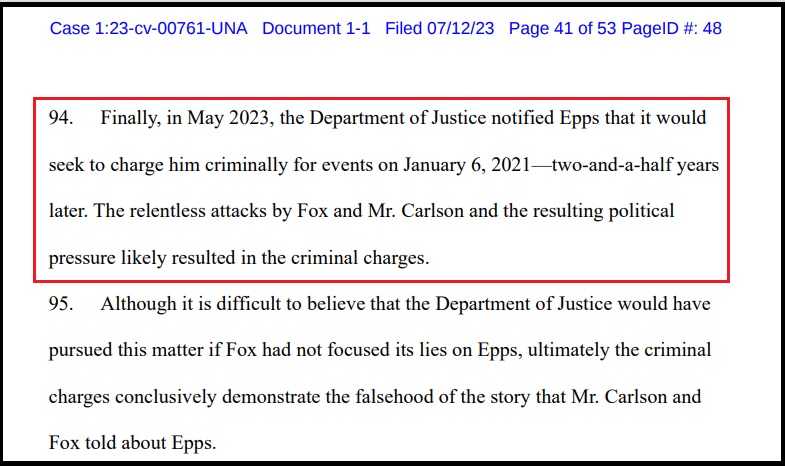
According to a lawsuit Epps filed against Tucker Carlson and Fox News claiming the outlet targeted and defamed him, Ray Epps states, “in May 2023, the Department of Justice notified Epps that it would seek to charge him criminally for events on January 6, 2021—two-and-a-half years later.”  [lawsuit citation – pg 41]

[Source Citation]

First, since when does the DOJ inform a suspect in advance they are seeking to charge him?  Second, timing.  It is now mid-July; where’s the indictment?  Third, the wording is suspicious – the DOJ would “seek to charge him criminally.”   Meaning, the Dept of Justice told Epps they were going to make efforts to arrest him?

Considering the lawsuit itself if dependent on a very specific narrative; and considering the lawsuit itself if dependent on a sympathy construct within that narrative; and considering the media narrative has been about wrongly targeted Epps by right-wing disinformation white nationalists, something is not passing the sniff test.

Suspicious Cat remains, well, suspicious.

Representative Matt Gaetz Has Fiery Exchange with FBI Director Chris Wray Asking, “Are You Protecting the Bidens?”


Posted originally on the CTH on July 12, 2023 | Sundance 

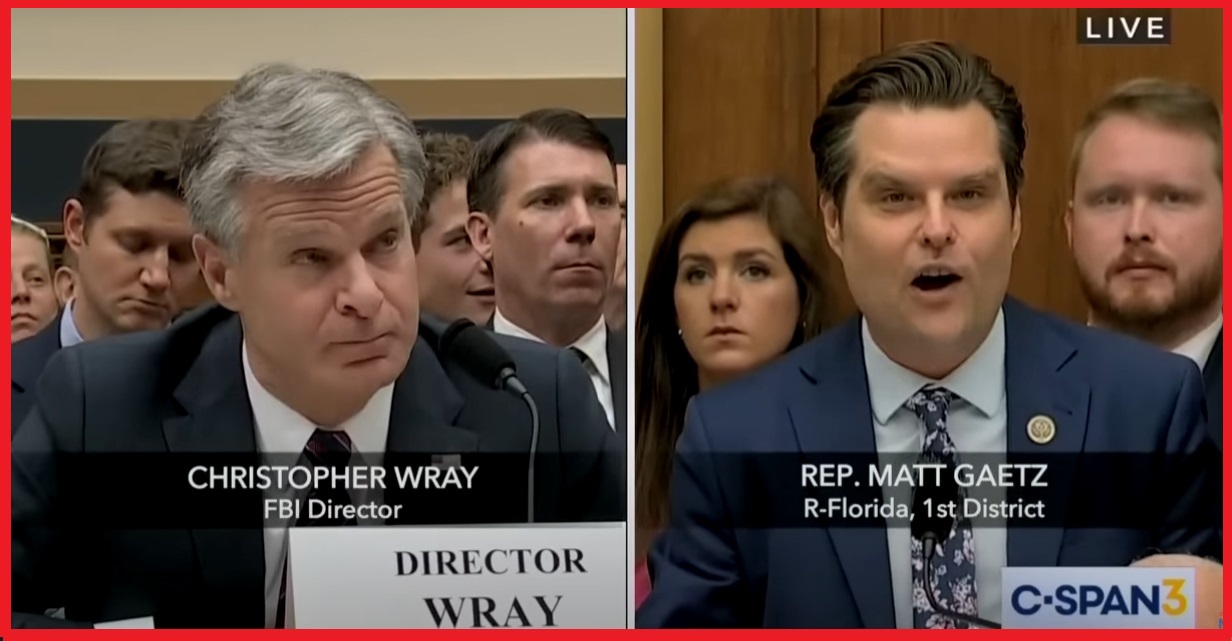
Representative Matt Gaetz (R-FL) expresses a great deal of contempt for FBI Director Chris Wray during questioning today.

From the topic of FBI conduct in the Hunter Biden investigation to the FBI surveillance of American citizens through unauthorized and illegal database searches, Matt Gaetz goes full wolverine on the FBI director.  WATCH: 

.

Elon Musk Is Self-Immolating on Twitter and Being Disingenuous About the Reasoning


Posted originally on the CTH on July 1, 2023 | Sundance

The Twitter platform decisions are making headlines and opening conversation, because Elon Musk is trying to retain his platform against all odds and not really working to solve his problem.  Several platform changes are taking place that are being less than honestly explained.  As interested CTH readers look on quizzically, perhaps it’s time for me to revisit the truth of Musk’s challenge as it has always existed so people can understand. [NBC ARTICLE HERE, that doesn’t understand]

Keep in mind, long before people realized the Dept of Homeland Security (FBI, DHS, CISA etc.) had a portal into Twitter, I was explaining how transparently obvious it was. {Go Deep – Jack’s Magic Coffee Shop} In part, the transparency of the problem is driven by CTH understanding of the costs associated with Twitter as a very unique platform in the sphere of social media. {Go Deep – Understand the Costs}

With the latest revelations we shared about the financial position of Twitter {Go Deep on FINANCIALS}, all of the moves now underway make sense.  Musk was on track to hit a date in/around October of this year where Twitter would be insolvent. If you had read those previous “Go Deep” links, you will easily see the problem. However, if you have not read those backgrounds, this could be difficult to understand.

[Source Link]

Musk is being disingenuous in his explanation here.  I’m being generous in not calling him a fibber.  His problem is multifaceted, and he is looking at it with two approaches.

First, by Musk’s prior admissions, he’s losing approximately $300 million/month and needs to grow revenue fast.  That’s why he hired Linda Yaccarino.  Second, he’s trying desperately to reduce operational costs for data processing.  Twitter has a systemic platform cost issue that will not change easily – due to his very unique issue of “simultaneous users,” in combination with no proprietary content.  That’s where he is being less than honest about these changes.

Twitter is a global discussion platform, essentially a global commenting system.  Elon Musk is trying to address the cost and utility of his platform at the same time that a similarly constructed META alternative is about to launch.  Yes, Mark Zuckerberg is JUST ABOUT to launch a Twitter version of META that will link Facebook, Instagram, and Google YouTube content into one big instant conversation and commenting system.

Zuckerberg has one key thing Musk doesn’t, proprietary content and actively engaged and solid advertising systems built into the operation.

META CEO Mark Zuckerberg has the revenue options that will cover the extreme costs of the simultaneous user interface and data processing, while simultaneously allowing content creators to cross post their content.

Zuckerberg has multifaceted advertising engagement systems that allow advertisers to target and engage with users in very creative ways on his platform(s). You can even shop directly from Instagram and Facebook with the advertiser.  Setting aside the other issues with advertisers, corporate wokeism etc, Elon Musk has nothing like that – not even close.

However, Musk’s biggest issue is the cost of his platform.  This is what he is trying to tackle right now, while simultaneously fending off the META infringement.

In the big picture of tech platforms, Twitter, as an operating model, is a massive high-user commenting system.

Twitter is not a platform built around a website; Twitter is a platform for comments and discussion that operates in the sphere of social media.  As a consequence, the technology and data processing required to operate the platform does not have an economy of scale.

There is no business model where Twitter is financially viable to operate…. UNLESS the tech architecture under the platform was subsidized.

[NOTE: In my opinion, there is only one technological system and entity that could possibly have underwritten the cost of Twitter to operate.  That entity is the United States Government.  That’s where the quid pro quo in allowing DHS to have a backdoor comes in.]

Unlike websites and other social media, Twitter is unique in that it only represents a platform for user engagement and discussion.  There is no content other than commentary, discussion and the sharing of information – such as linking to other information, pictures, graphics, videos url links etc.

In essence, Twitter is like the commenting system on the CTH website.  It is the global commenting system for users to share information and debate.  It is, in some ways, like the public square of global discussion.   However, the key point is that user engagement on the platform creates a massive amount of data demand.

Within the systems of technology for public (user engagement) commenting, there is no economy of scale.  Each added user represents an increased cost to the operation of the platform, because each user engagement demands database performance to respond to the simultaneous users on the platform.  The term “simultaneous users” is critical to understand because that drives the cost.

According to the Wall Street Journal, Twitter has approximately 217 million registered daily users, and their goal is to expand to 315 million users by the end of 2023.   Let me explain why things are not what they seem.

When people, users, operate on a tech platform using the engagement features, writing comments, hitting likes, posting images, links etc, the user is sending a data request to the platform’s servers.  The servers must then respond allowing all simultaneous users to see the change triggered by the single user.

Example: when you hit the “like” button feature on an engagement system, the response (like increasing by one) must not only be visible to you, but must also be visible to those simultaneously looking at the action you took.   If 100,000 simultaneous users are looking at the same thing, the database must deliver the response to 100,000 people.  As a result, the number of simultaneous users on a user engagement platform drives massive performance costs.  In the example above, a single action by one person requires the server to respond to 100,000 simultaneous users with the updated data.

As a consequence, when a commenting platform increases in users, the cost not only increases because of that one user, the cost increases because the servers need to respond to all the simultaneous users.   Using CTH as an example, 10,000 to 15,000 simultaneous commenting system users, engaging with the servers, costs around $4,500/mo.

This is why most websites, even big media websites, do not have proprietary user engagement, i.e. commenting systems.  Instead, most websites use third party providers like Disqus who run the commenting systems on their own servers.  Their commenting systems are plugged in to the website; that defers the cost from the website operator, and the third party can function as a business by selling ads and controlling the user experience.  [It also sucks because user privacy is non existent]

The key to understanding the Twitter dynamic is to see the difference between, (a) running a website, where it doesn’t really matter how many people come to look at the content (low server costs), and (b) running a user engagement system, where the costs to accommodate the data processing -which increase exponentially with a higher number of simultaneous users- are extremely expensive.   Twitter’s entire platform is based on the latter.

There is no economy of scale in any simultaneous user engagement system.  Every added user costs exponentially more in data-processing demand, because every user needs a response, and every simultaneous user (follower) requires the same simultaneous response.  A Twitter user with 100 followers (simultaneously logged in) that takes an action – costs less than a Twitter user with 100,000 followers (simultaneously logged in), that takes an action.

If you understand the cost increases in the data demand for simultaneous users, you can see the business model for Twitter is non-existent.

Bottom line, more users means it costs Twitter more money to operate.  The business model is backwards from traditional business.  More customers = higher costs, because each customer brings more simultaneous users….. which means exponentially more data performance is needed.

User engagement features on Twitter are significant, because that’s all Twitter does.  Not only can users write comments, graphics, memes, videos, but they can also like comments, retweet comments, subtweet comments, bookmark comments, and participate in DM systems.  That is a massive amount of server/data performance demand, and when you consider simultaneous users, it’s almost unimaginable in scale.  That cost and capacity is also the reason why Twitter does not have an edit function.

With 217 million users, you could expect 50 million simultaneous users on Twitter during peak operating times.  My back of the envelope calculations, which are really just estimations based on known industry costs for data performance and functions per second (pfp), would put the data cost to operate Twitter around $200 to $300 million per month.

In 2021, Twitter generated $5.1 billion in revenue, according to the Wall Street Journal.  According to the New York Times, in 2023 that revenue has dropped to around $1 billion per year.

Musk stated during public conversation that Twitter was essentially break even at $4 billion, which was the position in 2022 just prior to his taking over.  [2022 costs around $4.5 billion and revenue around $4 billion +/-, per public financial statements and reporting].   Musk cut approximately $500 million in expenses from realignment and staffing reductions.

Musk has a $1.5 billion debt service on the loan he took out, per his own admission: that’s more than $100 million per month.  The debt service alone is higher than his revenue.  As I noted last month, Twitter is losing somewhere around $300 million per month.  With $1 billion liquid in the bank, as of June (per Musk), that only gets him to September; by October, he needs another influx of cash, or else.

There is no business model, even with paying subscribers, for Twitter to exist without a major increase in revenue (Yaccarino) or a major decrease in costs.  As the business grows (more users), the costs increase (more simultaneous users), and the costs to subscribers would grow.  Twitter Blue subscriptions are around 180,000 users, paying $11/mo.  That’s around $2 million a month- a pittance in comparison to what he needs.

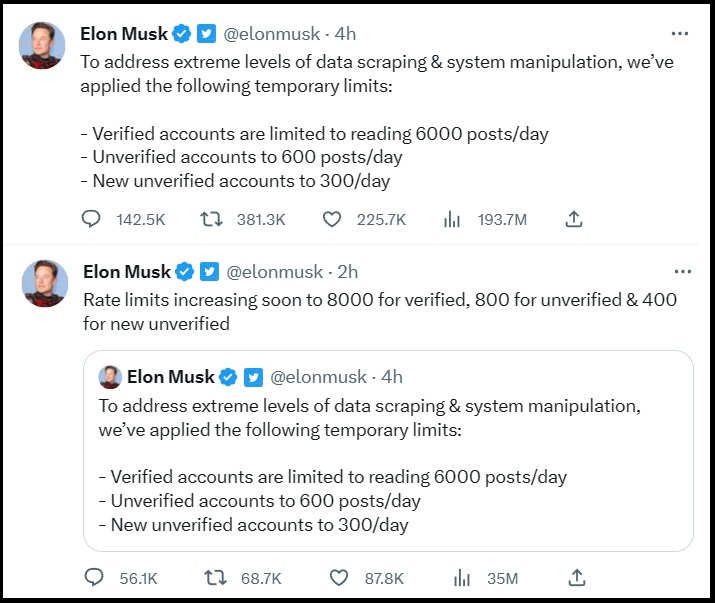
Right now, meaning literally right now, Musk is trying to reduce operational costs by limiting user engagement.

It is not an accident these solutions target the “simultaneous user” issue?

Can you see it now?

.

Comrade Tucker Carlson Outlines the New Democratic Dictatorship and Transition of Power from Joe Biden to Gavin Newsom


Posted originally on the CTH on June 28, 2023 | Sundance 

For his Twitter monologue episode 7, Tucker Carlson walks through the post COVID new authoritarian model of ‘western democracy’, a system of dictatorial fiat and unilateral power intent on retention of control. {Direct Rumble Link}

Within our new system of “western democratic norms” authoritarianism is embraced by both wings of the UniParty vulture as it ensures power for those who benefit. From the dual system of U.S. justice to the dictatorship now present in Ukraine, the common thread is power by a select group of system operators with large control mechanisms.

The retention of this power structure requires the passing of the baton to the next loyalist of the regime. In the case of Joe Biden, Tucker foresees the rise of California Governor Gavin Newsom. I predicted a very specific flow for this transition a year ago and fully agree with Carlson’s prediction. WATCH:

Irony Alert: the war for democracy enables dictatorship. Episode-7

[NOTE: I find it interesting [at 06:29] that Carlson notes the Ukraine war is only opposed by “one opponent”, yet he never mentions the man’s name, Donald Trump.  It is a small datapoint, but an omission datapoint nonetheless enhanced by the chosen platform of the Carlson broadcast.  I notice nuance. Keep watching.]

New York Times Confirms IRS Whistleblower Claims About US Attorney David Weiss Saying Main Justice Blocked Joe and Hunter Biden Investigation


Posted originally on the CTH on June 27, 2023 | Sundance 

At the heart of the IRS whistleblower statements, is a meeting that took place on October 7, 2022, where U.S. Attorney David Weiss told six witnesses that he was not able to pursue a full case against Hunter Biden due to Dept of Justice roadblocks.

Notes and a contemporaneous email in regard to the explosive meeting were taken by IRS whistleblower Gary Shapley, who then testified to Congress and delivered the evidence which contradicts the statements by Attorney General Merrick Garland and Deputy AG Lisa Monaco.  Shapley’s lawyers documented some of the participants from the meeting on behalf of their client, as they refute the claims of Main Justice (Garland & Monaco):

Today, buried 21 paragraphs deep in their own reporting, the New York Times now confirms the content of the meeting and the statement by USAO David Weiss.

[New York Times] – […] in mid-2022, Mr. Weiss reached out to the top federal prosecutor in Washington, Matthew Graves, to ask his office to pursue charges and was rebuffed, according to Mr. Shapley’s testimony.

A similar request to prosecutors in the Central District of California, which includes Los Angeles, was also rejected, Mr. Shapley testified. A second former I.R.S. official, who has not been identified, told House Republicans the same story. That episode was confirmed independently to The New York Times by a person with knowledge of the situation.

While Mr. Weiss had the authority to pursue leads that led to jurisdictions other than his own in Delaware, the department’s practices dictated that he secure the approval and cooperation of the U.S. attorneys in those districts before proceeding.

[…] U.S. Attorney Weiss stated that he subsequently asked for special counsel authority from Main D.O.J. at that time and was denied that authority,” he added.

Mr. Weiss, he said, was then told “to follow D.O.J.’s process.”

Mr. Shapley did not say if Mr. Weiss told him who had turned down his request to appoint a special counsel, a decision that can only be made by an attorney general under department regulations.

After Mr. Garland last week denied Mr. Shapley’s account, Mr. Shapley’s lawyer, Mr. Lytle, issued a statement naming six F.B.I. and I.R.S. agents who he said witnessed the exchange, which Mr. Shapley also recorded in a contemporaneous email. (more)

The IRS whistleblower, Mr. Gary Shapley, is also talking to CBS News.   WATCH: