Category Blogger Martin Armstrong
COVID-19 The Lab Leak Cover Up
Posted originally on Apr 21, 2025 by Martin Armstrong

Happy Easter
Posted originally on Apr 20, 2025 by Martin Armstrong

Happy Easter Sunday to all who celebrate!

Putin Declared Easter Truce
Posted originally on Apr 19, 2025 by Martin Armstrong

Russian President Vladimir Putin has declared an ‘Easter truce’ in Ukraine. He said his military would cease “all military operations” from 6pm Moscow time on Saturday until midnight Monday in a statement to Russian television.
“Guided by humanitarian considerations, today from 18:00 [Moscow time] to 00:00 [Moscow time] from Sunday to Monday, the Russian side declares an Easter truce.”
“I order that all military actions be stopped for this period.”
While Wester Fake News constantly support the Neocons and their puttet Zelensky who they installed to create World War III because he was a Neo-Nazi who joked about confiscating assets of Jews and Russians before he was installed as President many Ukrainians believe was a riggesd elect not much different from what they did in Romania, constantly put out propaganda.
Many now see Zelensky as Soros who pretended to be Christian and aided the Nazis in confiscating Jewish assets. Zelensky only admitted being Jewish after he became president. His Neo-Nazi days of raw hatred of Russians made him the perfect guy to start World War III.
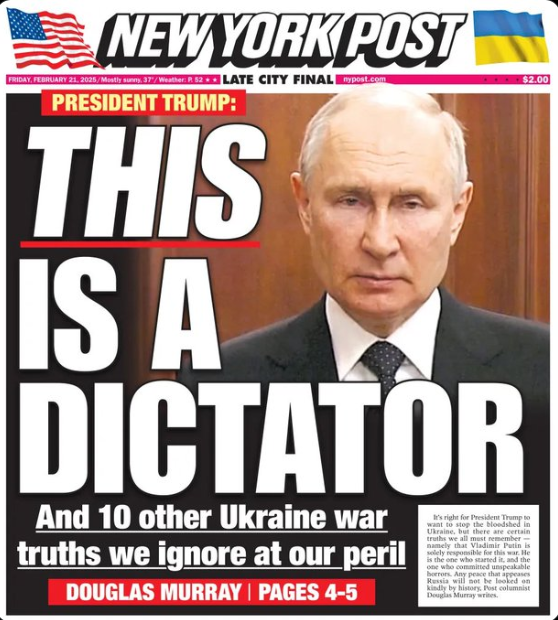
The New York Post in its outlandish claim that Putin is the dictator when Zelensky keeps martial law, renewing it so he does not have to stand for election, when no US President or European Prime Minister ever suspended elections during war, claiming martial law. In fact, under the parliamentary system, the people do not get to vote for the leader of their country. No leader in the EU is ever elected. The only two world leaders who are directly elected by the people just so happen to be
Presidents of USA & Russia
The Dog that Had to Say Goodbye
Posted originally on Apr 20, 2025 by Martin Armstrong

Is Anyone Listening?
Posted originally on Apr 20, 2025 by Martin Armstrong

COMMENT: Marty, do not get discouraged. You are being heard here, and people are listening. Your experience in world finance is unsurpassed. You know how to view the world from 35,000 ft above. There are discussions behind the scenes about the tariffs and your historical views.
Keep up the good fight, please.
annonymous
ANSWER: Thank you. I hope you are right.
Interview: China Will Become the Financial Capital of the World
Posted originally on Apr 19, 2025 by Martin Armstrong
Does Trump’s team understand a Trade War with China?
Posted originally on Apr 18, 2025 by Martin Armstrong

QUESTION: How come nobody in Trump’s team can not explain to Trump that the Trade War with China will push the rates up?
It looks very logical to me that if you are aggressive to China, they will continue to sell off bonds, and the sale of USA bonds will push rates higher. If they would start talking peace and honor the One China Policy, they will simply stop selling bonds, and rates would stay lower.
Peace means we all collaborate, and hostility will finally expose the fact that the FED is not controlling the rates, but markets do.
Is this correct logic?
Regards,
GD
ANSWER: I’m not entirely sure. What seems like common sense to me looks like Nobel Prize-winning logic to others. Perhaps because they are just domestic and cannot see the international aspects or how we are all connected, I have encountered strange forecasts from some analysts. However, I can understand it because they are purely domestic and never consider anything outside their own country.
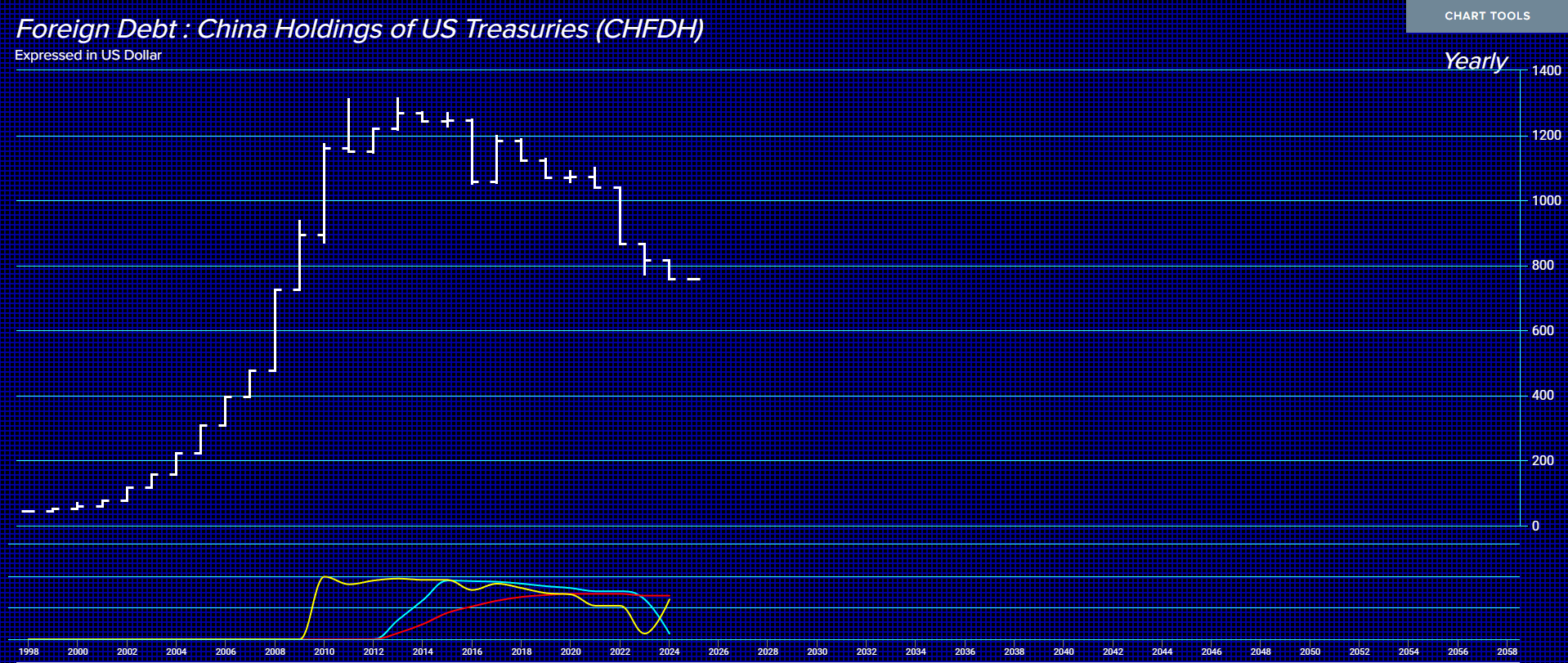
Both China and Japan have been selling US debt, but this was before the tariffs were imposed. Their economies are declining, and they need to bring cash home. In the case of Japan, this is while the Biden Administration was threatening China with sanctions if they helped Russia. One Socrates, we also have all the countries holding US debt. You can look at the trends and see what I am talking about. Yes, selling US debt will send long-term rates higher which the Fed cannot prevent. Trump’s thinking that he can fire Powell and lower rates for politics is without any historical backing.
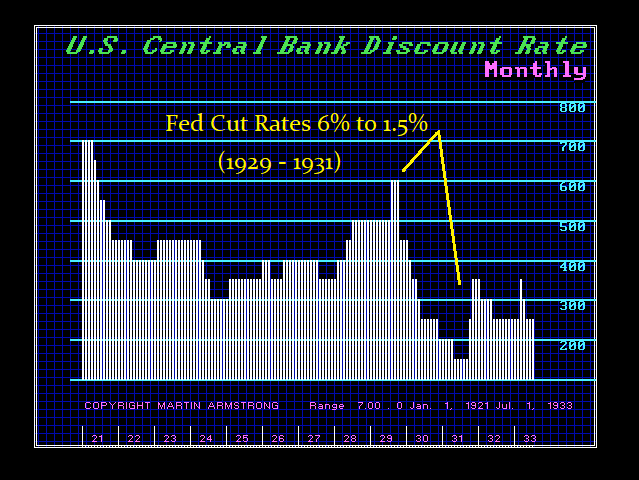
There is absolutely ZERO evidence that lowering interest rates will EVER stimulate the economy. Trump is dead wrong on this. The ECB went NEGATIVE in 2014, and it still did not reverse the economic decline of Europe, and it made it worse, undermining pensions and banks. Trump is a borrower, not a lender. He has to step back and objectively look at history.
This trade war will cause STAGFLATION, and Trump seems to be taking us in that direction, all on his misguided views that somehow China is to blame for us losing manufacturing. I have experience with multinational companies and have reorganized many. It is the Democratic propaganda that companies move solely because they can get cheaper labor. That is just socialist propaganda.
I even warned a company in Germany that when the Berlin Wall fell, they rushed to open a plant there on this stupid theory of cheaper labor. After one year, they apologized for not listening to me. They bought into the theory that they were Germans so that they would have the same work ethic. They admitted that it took nearly 3 East Germans to do the same work as one West German.
Companies move due to regulations and taxation. I helped some get into North Macedonia, which gave them a 25-year guarantee of no tax increases. I put Japanese companies in Britain that needed skilled labor, vs Germany or France, because the cost of regulation was 40% more on the same salary in Germany vs Britain.
Perhaps because I have dealt with international issues, it’s just common sense to me and our global readers. I sent a letter last week to the Secretary of the Treasury, and I just texted someone else about the tariffs on China. There will be shortages in goods, and that alone will drive prices higher, even without the tariffs.

The Crimean War, from 1853 to 1856, in what is now called Ukraine, halted grain shipments from that region, and wheat prices nearly doubled in the USA due to the war in Crimea. There was a crash in 1856 when the war ended.
Britain Ensuring It Will Join the European Great Depression into 2028
Posted originally on Apr 18, 2025 by Martin Armstrong
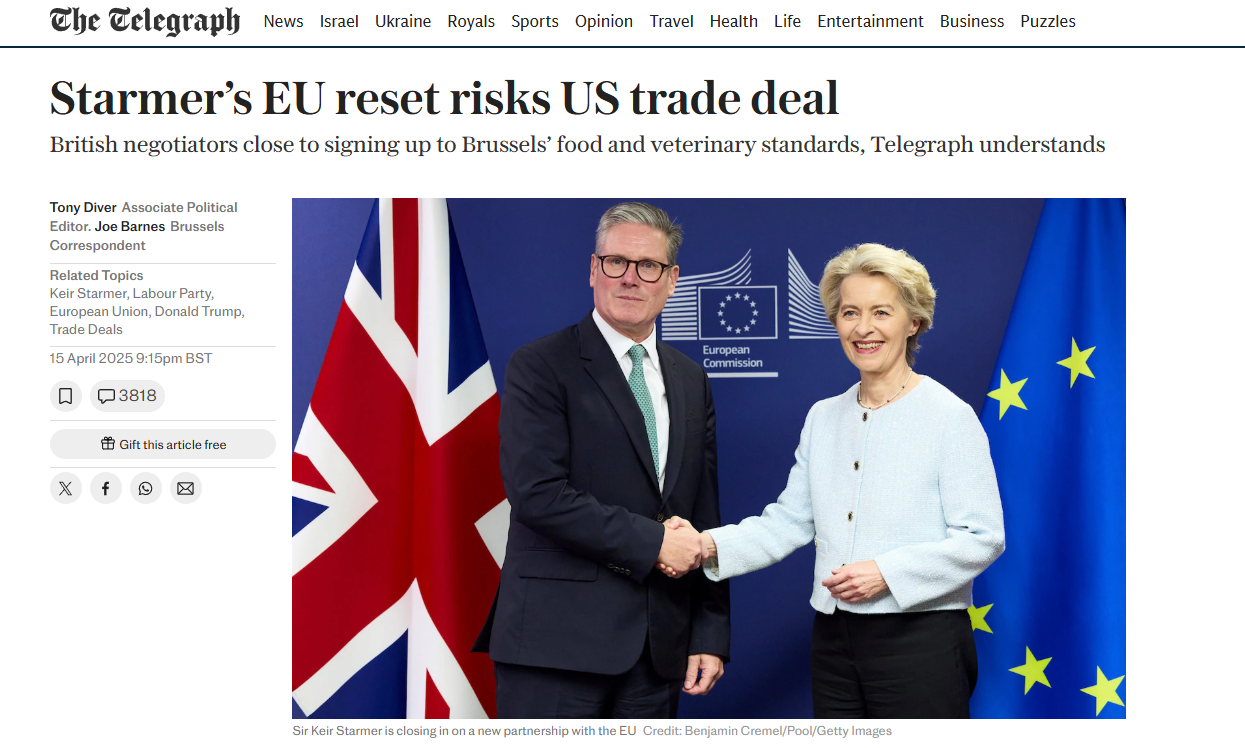
While the press bashes Trump over the tariffs and trade war, they continue to ignore the facts and will always take the opposite position from Trump. If Trump said he wanted everyone to live an extra 5 years to help the economy because of declining birth rates, the Press would advocate mass suicide like Jim Jones’ Jonestown, just to prevent anything Trump does.
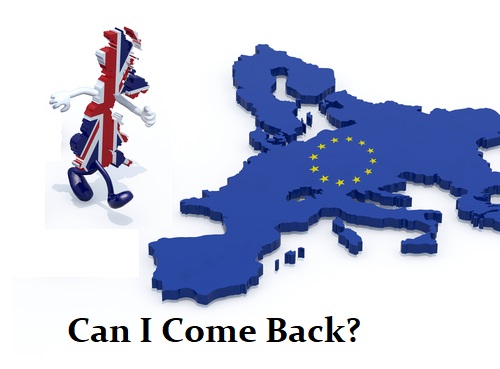
Starmer, the good Marxist follower, wants to reverse BREXIT, but knows that would be difficult. So he wants to join in trade and adopt all the regulations that the EU imposes, that has suppressed their economy from ever growing. As I have said, out of every $10 spent by consumers globally, the EU accounts for only $1.20 – a fraction of America, despite having 450 million people compared to the USA’s 330 million.
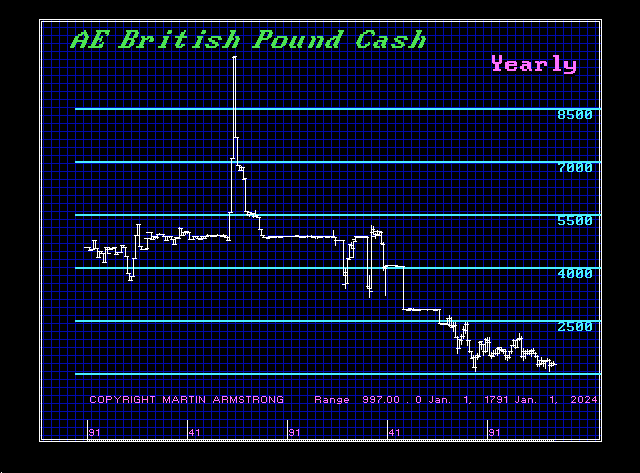
Even on a purely economic basis, Starmer is turning his back on the USA, which has a consumer market more than twice the size, for more regulations that will reduce trade with the USA. This is clearly not an economic decision – this is a Marxist political decision. Starmer is fulfilling our long-term forecasts. This year was a Directional Change, and next year is a Panic Cycle.
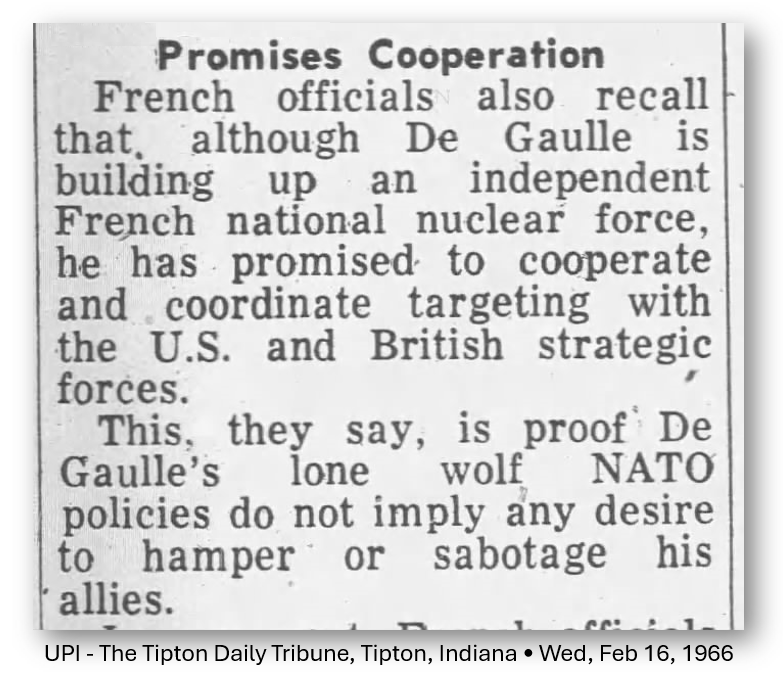
Europe has historically been the most hostile when it comes to trade. They cling to Marxism, and when they can’t justify tariffs, they regulate against allowing American products in. When Charles de Gaulle in 1966 said no American/NATO nukes in France, and he ordered all American military personnel to leave France, they asked if that applied to the dead Americans buried there to free France. This has been the position of the French elites. They still view the world as speaking French if Napoleon had won. They have not gotten over that.
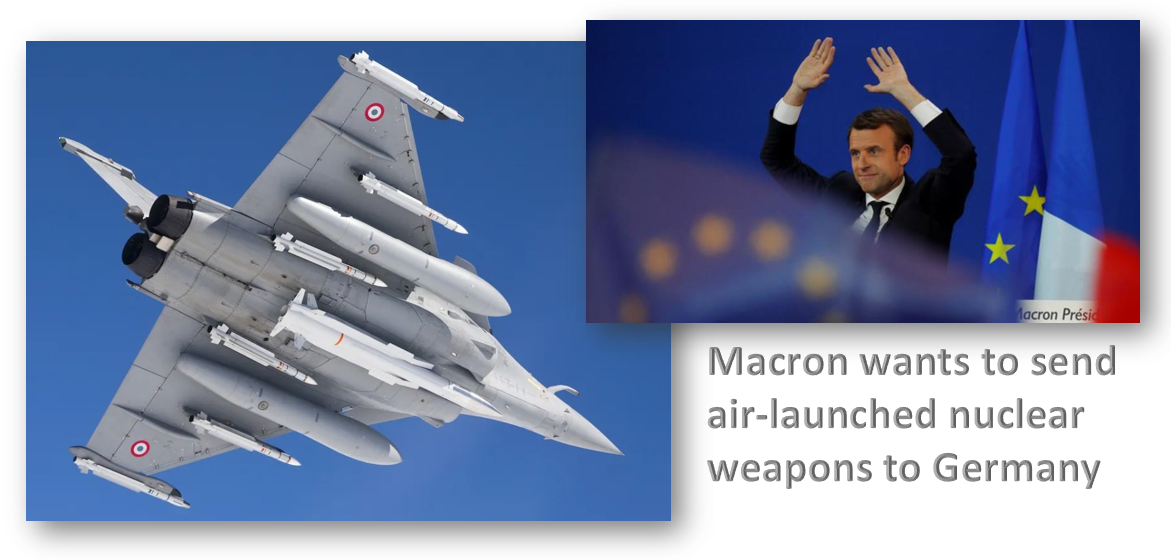
To this day, Macron is the most hostile, and he wants France to replace the United States, offering their nuclear power to shield Europe from Russia. This is why Macron was the first to say he wanted to send troops into Ukraine, knowing that would start World War III.
The European Union (EU) does not impose a blanket ban on all food and veterinary products from the United States. However, it does enforce strict regulations that can result in restrictions or prohibitions on specific products that do not meet EU standards. Key points include:
- Hormone-Treated Beef: The EU prohibits beef from cattle treated with growth-promoting hormones, a common practice in the U.S. This has been a longstanding trade dispute.
- Chlorine-Washed Poultry: The EU bans poultry treated with antimicrobial rinses (e.g., chlorine washes), favoring stricter farm-to-table hygiene controls instead.
- GMOs (Genetically Modified Organisms): The EU requires rigorous authorization and labeling for GMO products, limiting some U.S. agricultural exports unless approved.
- Ractopamine in Pork: The EU prohibits meat from animals treated with ractopamine, a feed additive used in the U.S. to promote lean muscle growth.
- Veterinary Medicines: Restrictions apply to certain antibiotics and hormones used in livestock for non-therapeutic purposes, aligning with the EU’s precautionary principle and emphasis on animal welfare.
- Mutual Recognition Agreements (MRAs): Since 2019, some veterinary products are covered by MRAs, easing trade for compliant products. However, U.S. exporters must still meet EU standards.
These measures reflect differences in regulatory philosophies that are used in reality as trade barriers. The EU prioritizes its regulations, knowing that there are different standards internationally. Trade negotiations (e.g., TTIP) have sought to bridge these gaps but with limited success. The restrictions are not actually becoming outright bans by requiring compliance with EU rules, which are stringent to prevent trade that pretends it is not the goal.
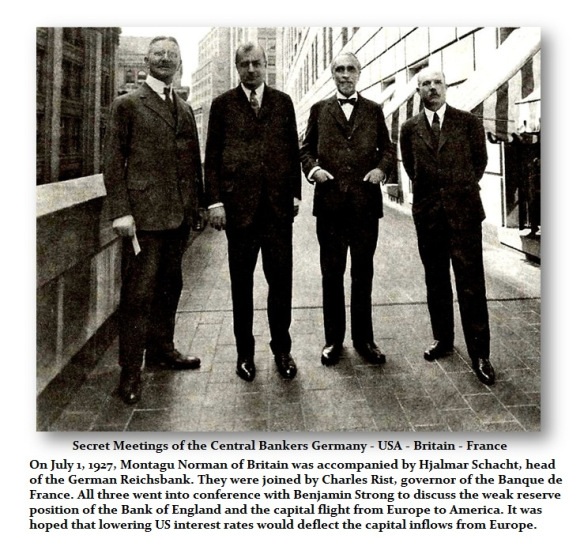
After World War I, European countries began imposing high tariffs in the early 1920s as part of a broader shift toward economic protectionism, driven by postwar reconstruction challenges, political instability, and efforts to shield domestic industries. France implemented significant protectionist measures, particularly through the 1927 Tariff Law (Loi du 3 août 1927), which marked a major shift toward economic nationalism. This law replaced the earlier Méline Tariff of 1892. It was enacted in response to post-World War I economic challenges, including the need to protect domestic industries and agriculture from foreign competition. At the same time, France was pushing the United States Federal Reserve to lower interest rates (G4) in an attempt to reverse the capital inflows to the United States.
The tariff increases were enacted in 1927, though France had maintained generally protectionist policies throughout the 1920s. The 1927 law formalized and expanded these measures sharply. The 1927 tariffs were part of a broader European trend toward protectionism in the interwar period. The 1927 law introduced a flexible tariff system, allowing the government to adjust rates based on reciprocal trade agreements or retaliation against foreign protectionism. Tariffs were applied differentially, with higher rates on agricultural goods (to protect French farmers) and certain industrial products.
France’s Agricultural products saw the implementation of tariffs on items like wheat, meat, and wine. These rose significantly, with some rates exceeding 30% (e.g., wheat tariffs increased to protect against cheaper imports from Eastern Europe and the Americas). The Industrial goods saw rates that were less restrictive yet still varied widely, targeting textiles and machinery. These sectors saw tariff rates between 15% and 25%, depending on the product and origin.
France also combined tariffs with import quotas (e.g., for coal and steel) to shield its economy further. Overall, France has always been the most protectionist of all European nations. Its cost of living is above average in the EU. According to Eurostat’s 2022 data, France’s price level index (with the EU average set at 100) was 116.5, placing it above the average but below several other EU countries. This compares to Denmark (141.7), Ireland (138.7), Luxembourg (134.0), Sweden (128.9), and Finland (123.3). The devil is in the details. While Paris is one of the EU’s more expensive cities to live in, the national average is lowered by cheaper costs in other regions.
The 1927 law made France one of the most protectionist economies in Europe by the late 1920s. While this was effective in shielding domestic sectors, these policies contributed to reduced international trade and economic fragmentation, exacerbating global tensions, leading to the Great Depression, and the US response in June 1930 by the Smoot-Hawley Act.
In the United Kingdom, there was the 1921 Safeguarding of Industries Act, which imposed tariffs on “key industries” like chemicals and optical goods deemed vital for national security. This was Post-WWI Economic Struggles, in which Britain lost the status of the Financial Capital of the world to New York. After the war, Britain faced industrial decline, unemployment, and foreign competition. Key industries critical during the war (e.g., chemicals, optics, scientific instruments) were all at risk of collapse. The Brits raised the National Security concerns of over-reliance on foreign imports for strategic goods, and this was the argument to impose tariffs to try to resurrect their industries.
Tariffs on Imports under this act imposed a 33.3% tariff on imported goods in strategic sectors, including chemicals, optical glass, and scientific instruments. This aimed to make foreign products less competitive and protect British industries. They also targeted industries that they deemed vital for national defense and economic resilience, reflecting lessons from wartime shortages. The Act was passed under Prime Minister David Lloyd George’s coalition government, though it aligned more with Conservative Party tendencies toward protectionism, marking a shift from Britain’s traditional free-trade stance.
The Act had mixed results at best. While it provided temporary relief for protected industries, critics argued it was too narrow, benefiting only specific sectors. Consumers faced higher prices, and retaliatory tariffs from other countries harmed British exports. The limited scope initially covered 6,000 items but was seen as insufficient to address broader industrial decline. Amendments in 1925–1926 expanded coverage to include more goods like lace and gloves. This Act shifted toward protectionism as Britain abandoned free trade, foreshadowing more extensive protectionist policies during the 1930s that followed the 1932 Import Duties Act, which expanded tariffs to most imports (except from the British Empire), formalizing protectionism during the Great Depression.
In the United States, the strong dollar resulted in making foreign goods cheap. The 1921 Act in Britain led to the US response in 1922. The Fordney-McCumber Tariff of 1922 was a significant piece of U.S. legislation that raised tariff rates on imported goods to protect American industries in the aftermath of World War I. It was signed into law by President Warren G. Harding in September 1922. Republican Congressman Joseph Fordney and Senator Porter J. McCumber have sponsored it. This reversed the lower tariffs of the 1913 Underwood Tariff. The tariff increases: did elevate import duties to historically high levels (averaging about 38.5%), targeting both agricultural and industrial goods to shield domestic producers from foreign competition due to the strong dollar. This tariff provided a flexible authority granted to the president, allowing him to adjust tariff rates by up to 50% based on recommendations from the U.S. Tariff Commission, although this flexibility was rarely used.
While tariff hikes began in the early 1920s (e.g., the UK in 1921), they did not prevent the bull market, nor did they prevent the Great Depression. This protectionist spiral fragmented global trade and worsened the Great Depression, but certainly did not create the economic crisis.
Powell Warns of Stagflation
Posted originally on Apr 18, 2025 by Martin Armstrong
Socrates has honed in on 2025 becoming a year of great stagflation in the United States. The Federal Reserve has finally admitted that the data is undeniable—the United States will experience stagflation.
The economy is declining but prices are rising. Most understand inflation, especially in the post-COVID world, but few understand stagflation. Stagflation is when you have high inflation and stagnant economic growth at the same time. Normally, inflation is supposed to go hand in hand with rising demand and growth. But during stagflation, prices go up even though the economy is barely moving.
“Powell said the president’s tariffs announced so far had been ‘significantly larger than anticipated’, adding that ‘the same was likely to be true of the economic effects, which will include higher inflation and slower growth’,” as reported by every major media outlet. Powell “later added that those economic effects may place US rate setters ‘in the challenging scenario in which our dual-mandate goals are in tension’. The Fed’s dual mandate is to maintain the target 2% inflation while encouraging “maximum” employment levels.

“Maximum” employment is simply not possible during a period of stagflation. Investments dry up, confidence collapses, and businesses face higher costs in every area from wages to materials. Consumers lose purchasing power and are less likely to purchase nonessential goods at inflated prices, affecting business revenue and overall GDP. This then forces businesses to cut back on hiring instead of focusing on expansion. Many businesses will be unable to maintain large workforces if the revenue is not there.
The FOMC members seem to agree that stagflation is inevitable, although some argue about how long it will last. “Several Fed officials — including John Williams, head of the New York Fed, and Governor Christopher Waller — have said inflation is likely to surge in the coming months on the back of the administration’s proposed tariffs. While Waller thinks the impact of tariffs will prove short-lived, other members of the rate-setting Federal Open Market Committee, which Powell chairs, believe Trump’s tariffs have increased the odds that inflation will be a longer problem for US consumers.”
Now the central bank has maintained interest rates at 4.25-4.5% this year. Everyone is holding their breath for the Fed’s May announcement, but there is very little that the Fed can do here. Capital investment depends on confidence. Our models have honed in on May 19, 2026, as a major turning point in confidence where the next Panic Cycle will begin, and unfortunately, confidence will decline into 2028.