Posted originally on Aug 15, 2025 by Martin Armstrong |
(Image explained in previous post— grocery inflation spiked years ago and has not relented)
An AP-NORC poll questioned Americans about their main cause of financial stress. Over half (53%) of respondents cited rising food prices as their main stressor, with 19% admitting to deferring payments to afford groceries.
The cost of housing was a close second at 47%, followed by the amount of money in savings (43%) and wages (43%), and healthcare was close behind (42%).
Buy Now Pay Later services are on the rise, with 3 in 10 of respondents reportedly using this deferred payment option for essentials. Around 29% said that credit card debt has become their top financial problem, with other studies showing that more Americans are using credit card to purchase the basics like groceries.
The New York Federal Reserve reported that total US household debt rose by $185 billion in Q2 2025 to $18.39 trillion. When people are forced to borrow to eat, the issue becomes deeper than inflation, as it is a sign of government failure. Civil unrest does not occur when the people are fat and happy.
Rising food insecurity could be used as a dangerous political weapon to usher in programs such as price controls, UBI, or a bloated welfare state. They will use the food crisis to usher in greater control. A hungry population is the easiest to manipulate. Food prices declined by 0.1% in July on a monthly basis, which means absolutely nothing. Food prices are a glaring example of how weather, geopolitics, and domestic policies have beaten the so-called inflation “soft landing” narrative. This won’t fade in 2025 as it’s set to persist through 2027 unless the public confronts the real causes.
Posted originally on Jul 29, 2025 by Martin Armstrong
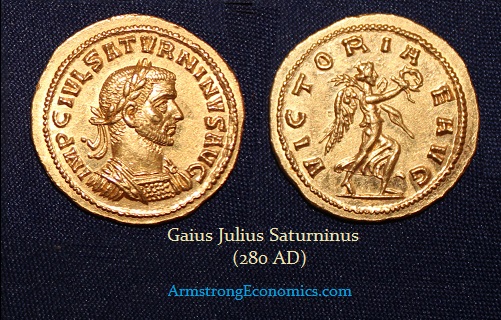
My problem with academics is that they sometimes overthink and claim that someone writing about events 200 years or more in the past cannot be considered a historian. We still write about the American and French Revolutions today. They recently made a film about Napoleon from the early 19th century. I have written before about the Historia Augusta and how academics have called it a fraud because it mentions emperors like Saturninus, for whom there is no other source, so it must be fake. They were proven wrong when coins were discovered showing all the names they rejected were real.
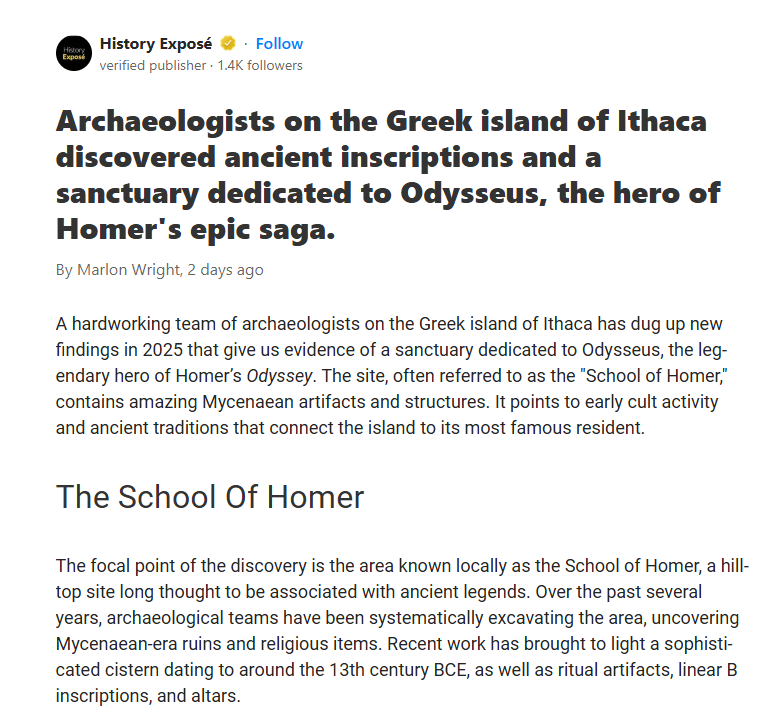
We are plagued by fake news on every front, and academics are no exception. Just recently, evidence of a sanctuary dedicated to Odysseus, the legendary hero of Homer’s Odyssey, was found. The site, often referred to as the “School of Homer,” contains amazing Mycenaean artifacts and structures. It points to early cult activity and ancient traditions that connect the island to its most famous resident. For more than a century, academics have insisted that Homer was merely a story for children and that there was no Troy or Mycenae.
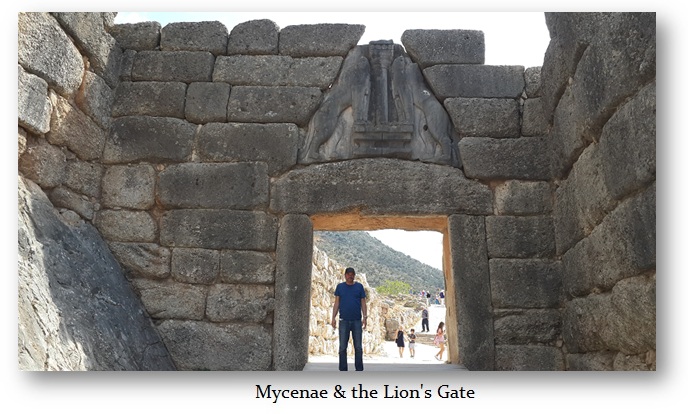
I have been to Mycenae, the city that the academics claimed never existed. When it came to Homer and his works, The Iliad and The Odyssey, academics pronounced that it was not history and was a story written for children. That was the argument of the French scholar François Hédelin, Abbé d’Aubignac (1604–1676). In his work Conjectures académiques, ou Dissertation sur l’Iliade written around 1664 but published posthumously in 1715, d’Aubignac argued that Homer never existed and that the epics were compilations of older, shorter folk tales. He declared, with NO EVIDENCE, that the Iliad and Odyssey was not historical but rather entertainment for young audiences, akin to fairy tales or children’s stories. Another academic, Friedrich August Wolf (1759–1824), in his Prolegomena ad Homerum (1795), further developed the “Homeric Question”—debating Homer’s authorship and the origin of the poems.
Today, no credible academic can argue that Homer was solely for children. Many still insist, without any evidence whatsoever, that the epics blended myth, folklore, and oral tradition rather than strict history. I suppose Paul Revere’s ride never actually took place, since all we have are accounts from people who were not eyewitnesses, and perhaps these are just folklore. The problem these academics have is that the historical basis (e.g., Troy’s existence) was debated until archaeological discoveries (like Schliemann’s excavations) suggested some factual underpinnings.
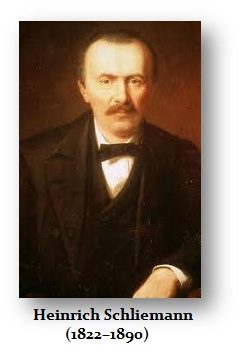
Anyone who has been to the ancient cities mentioned only by Homer will find a plaque that notes it was discovered by Heinrich, a wealthy non-academic who believed that Homer was a historian. He not only discovered Troy, but also Mycenae, mentioned by Homer.
Heinrich Schliemann, the German archaeologist, heavily relied on Homer’s Iliad as a guide to locate the ancient city of Troy. Schliemann was convinced that the epic poem contained historical truths about the Trojan War and used its descriptions to pinpoint the site. In the early 1870s, he focused on a mound at Hisarlik in northwestern Turkey, which he believed matched Homer’s depiction of Troy’s location. His excavations there, beginning in 1870, uncovered multiple layers of settlements, one of which he claimed was the Troy of Homer’s epic.
The academics NEVER sought to verify that Troy never existed. The problem was merely a story for children, and they did not conduct any investigation to substantiate their thesis. When Troy was found, the academic accused Heinrich Schliemann of fraud. They accused him of embellishing or even fabricating some of his discoveries—including the so-called “Jewels of Helen” that his wife, Sophia, was famously photographed wearing. In 1873, Schliemann claimed to have discovered a hoard of gold and silver artifacts at Troy, which he dubbed the “Treasure of Priam.” This included diadems, earrings, and other jewelry, which he later had Sophia wear in photographs, suggesting they were ancient Trojan royal treasures.
Some scholars refused to admit that they were wrong and accused Schliemann of assembling the treasure from finds made at different times or even other locations, presenting them as a single, dramatic discovery. Schliemann was accused of sensationalizing and possibly misrepresenting his finds, but the jewels themselves were likely authentic ancient artifacts—just not necessarily the “Treasure of Priam” as he described. His reputation remains a mix of groundbreaking archaeology and self-aggrandizing academics who were flat-out wrong.
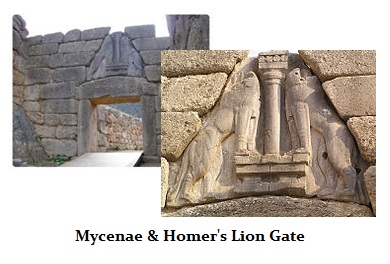
Homer does not explicitly describe the Lion Gate of Mycenae or the exact location of Agamemnon’s burial in his epic poems, the Iliad and the Odyssey. However, he does provide some indirect references to Mycenae and Agamemnon’s tomb that later inspired archaeological discoveries. In the Iliad, Mycenae is described as a mighty city ruled by Agamemnon, the leader of the Greek forces against Troy. Homer calls it “rich in gold” (πολύχρυσος, polychrysos), a phrase that aligns with the wealth found in Mycenaean tombs.
The Lion Gate, the monumental entrance to the citadel of Mycenae (built around 1250 BC), is not directly mentioned by Homer. However, the grandeur of Mycenae in his epics matches the archaeological evidence of its impressive fortifications. The gate was given its modern name due to the relief sculpture of two lions (or lionesses) above the lintel, but Homer does not reference this structure. In the Odyssey (Book 4), Menelaus mentions that Agamemnon was buried by Orestes (his son), but no specific tomb location is given.
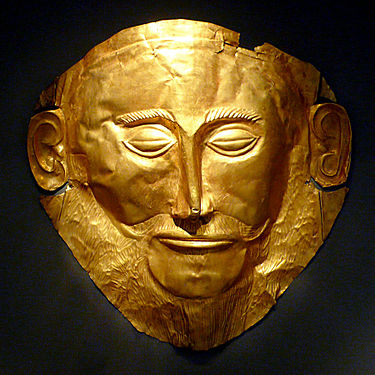
Later Greek tradition (e.g., Pausanias, 2nd century AD) claimed that Agamemnon was buried within the walls of Mycenae. In 1876, Heinrich Schliemann excavated the so-called “Grave Circle A” inside Mycenae, uncovering gold-rich shaft graves. He famously, but perhaps mistakenly, identified one mask as “Agamemnon’s Mask” (now dated to 1550–1500 BC, earlier than the Trojan War era).
Homer’s epics and the portrayal of Mycenae’s wealth and power align with the archaeological remains. The connection between Homeric legend and Mycenaean archaeology was primarily shaped by later interpretations, including Schliemann’s excavations.
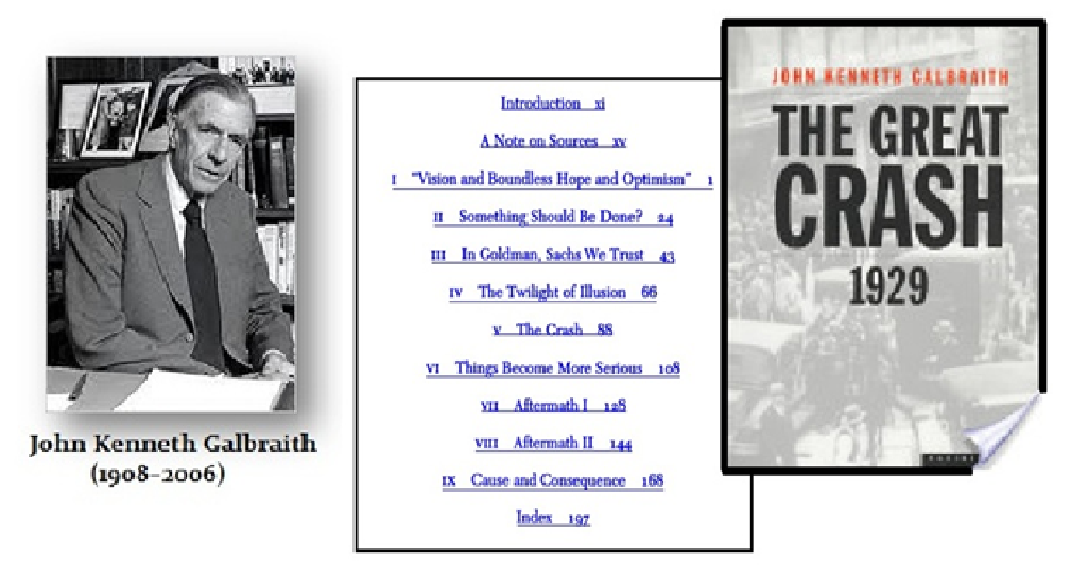
What I learned in school is that it was not honestly teaching history, but opinion. The socialist will NEVER admit they were ever wrong, any more than these so-called academics of ancient history that pronounce conclusions without ever investigating anything. As I have said, I had to read Galbraith’s Great Crash in high school. He was a socialist and omitted any discussion of the sovereign defaults of 1931. It had to be blamed on corporations, for the solution was complete power to the state.
I have created this site to help people have fun in the kitchen. I write about enjoying life both in and out of my kitchen. Life is short! Make the most of it and enjoy!
This is a library of News Events not reported by the Main Stream Media documenting & connecting the dots on How the Obama Marxist Liberal agenda is destroying America










 Centinel2012