Climate Change – the Elections Issue


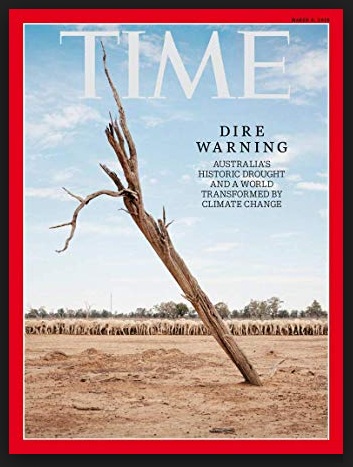
In Australia, the polls said this would be  a climate change election because the voters were confronted by a drought that they were blaming on human causes. Tony Abbott, the former prime minister, lost to an independent who campaigned on the issue. There were a few other new candidates who used climate change and also won. Nevertheless, the people voted against the whole climate change argument and in a surprise victory, the conservatives won.

The US 2020 elections appear to be heading in the same direction. Climate change will be a major campaign issue in 2020. Climate change is the top issue among Democratic voters, according to a new national poll. A CNN poll found that 82% of registered voters who identified as Democrats or Democratic-leaning independents listed climate change as a “very important” top priority they’d like to see get the focus of a presidential candidate (see the Hill). During the 2016 general election, no journalist even asked the presidential candidates a debate question on the topic of climate change. As the 2020 race begins to take shape, it appears that the Democrats will rely on bashing Trump and climate change. What do climate-motivated voters really want? And how is the issue likely to change the race? Do they really want to end air traffic? Do they want to force people to have electric cars? Maybe — at least the USA.


Germany’s New Green Deal Has Failed – Energiewende


On March 11, 2011, when an earthquake-triggered tsunami damaged the nuclear power plant in Fukushima, Japan, Chancellor Merkel and her cabinet held that nuclear power in Germany had to come to an end. It was a historic event and a historic decision (see Der Spiegel). The new green deal of Merkel quickly became bogged down in the details of German reality and the impracticability of the whole idea. The so-called Energiewende, the shift away from nuclear in favor of renewables, was a major project that was up there with Germany’s reunification. After eight years, it is facing complete failure. Germany’s leaders in Berlin committed themselves to a project. They introduced laws, decrees, and guidelines with a complete lack of coordination, demonstrating once again that government is incapable of proper management skills.

With all the hype about pollution and greenhouse gases, Germany is still producing electricity by burning coal. German houses are still dependent on oil and natural gas furnaces, and the streets are still packed with the cars burning diesel when once upon a time they thought it was less polluting than gasoline-powered motors.

European carmakers are rolling out electric vehicles like the ones on view this week at the Paris Motor Show to burnish their reputations as technology leaders and compete with Tesla. But they are also doing this because EU regulations don’t leave them much choice. Europe’s automotive market is slowly getting charged. The drivers of electrification are EU regulatory agencies, which are imposing ever-stricter limits on carbon and nitrogen oxide pollution. The European Parliament has voted to mandate a 20% cut in CO2 emissions from new cars and vans in 2025, and a 40% reduction in 2030. The EU’s elected chamber rejected the European Commission’s more modest proposal of a 30% cut in 2030 compared to 2021 emission levels. The Parliament’s plan includes penalties for automakers that fail to meet sales targets, a key policy instrument the Commission had dropped from its proposal after lobbying by German carmakers.

With the bulk of electricity being produced by coal furnaces, it seems the lack of coordination and this drive for a new green deal is just far from organized and may have a tremendous impact upon the European economy as a whole. Nobody is addressing the heating of homes on top of this and the wind power that has failed to provide a viable alternative.

Pumped Dry: The Global Crisis of Vanishing Groundwater | USA TODAY


Published on Aug 14, 2018

In places around the world, supplies of groundwater are rapidly vanishing. As aquifers decline and wells begin to go dry, people are being forced to confront a growing crisis.

Conversation with global warming skeptic Anthony Watts


Published on Sep 17, 2012

Spencer Michels interviews one of the nations’s most read climate skeptics Anthony Watts. Watts believes much of the data used to support global warming theories is faulty. The big problem, as Watts sees it, is that the stations were temperatures are gathered are too close to urban developments where heat is soaked up and distorts the readings. So it looks like the earth is warming though it may not be.

California’s Renewable Energy Problem


Published on May 25, 2019

Be one of the first 500 people to sign up with this link and get 20% off your subscription with Brilliant.org! https://brilliant.org/realengineering/ New vlog channel: https://www.youtube.com/channel/UCMet… Patreon: https://www.patreon.com/user?u=282505… Facebook: http://facebook.com/realengineering1 Subreddit: https://www.reddit.com/r/RealEngineer… Instagram: https://www.instagram.com/brianjamesm… Twitter: https://twitter.com/Fiosracht Discord: https://discord.gg/s8BhkmN Get your Real Engineering shirts at: https://standard.tv/collections/real-…

Global Warming – Just Follow the Money


I just returned from New York City, the armpit of the world since I never saw an apple tree there yet, and I had a very interesting meeting behind the curtain. I thought I would share this subject which they agreed I could go public on without names of course. Besides the fact that there is an understanding that this entire Global Warming scenario is acknowledged nonsense for in real science you debate whereas this agenda seeks to shut down any debate whatsoever, there has been a geopolitical agenda that has been going on which is also why Trump has refused to join the club.

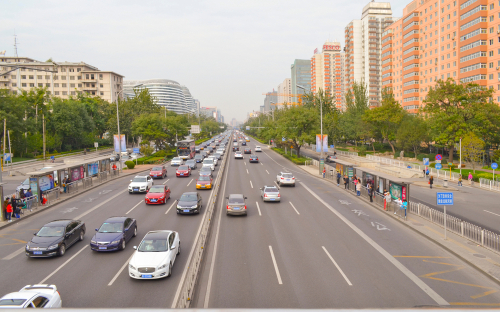
There are those who were using this movement for geopolitical reasons trying to oppress emerging markets which included China. When I was in Beijing back in 1997, 95% of the people were on bicycles. Today, perhaps 5% use bicycles that notice on the streets. There were far more people riding bicycles in Amsterdam than in Beijing based on just my observations on my last trip to both places. In just 5 years, China had poured more concrete in their infrastructure than the United States had poured since the Great Depression. Trying to ban coal was perhaps a covert move to try to keep China from expanding. But it had other problems. Angela Merkel banned nuclear power after the Japan nuclear disaster yet this meant that Germany would still be in a position to produce energy by coal. In Sweden, they used the Global Warming agenda to move to nuclear power.

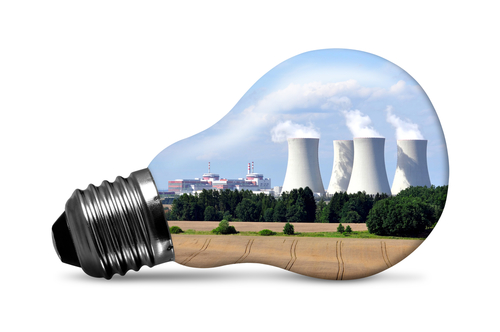
The other covert agenda only required the simple task of following the money. From the very beginning, the movement to create nuclear power plants funded the agenda of Global Warming to clear the resistance to move to what they were calling a “cleaner” form of energy. The Trump administration has repeatedly vowed to help revitalize the nation’s nuclear power industry, which has struggled to compete with cheap renewables and natural gas. However, he has been unable to get that through Congress.

Meanwhile, the U.S. did agree to build six nuclear reactors in India, which has plans to massively scale up its nuclear-power program to meet the country’s growing energy demands as it reduces emissions. There is no doubt that the Global Warming agenda has also begun as a means to further the nuclear power industry in international markets.

The compelling argument used to convince that the world must turn to nuclear power plants centers on the fact that it is carbon-free energy to stave off global warming. It’s not at all clear that renewables can do the job alone and the dream of electric cars will never materialize without nuclear power on any grand scale. Nuclear is a proven technology, which already provides 11% of all electricity globally. They need the Global Warming propaganda to justify building nuclear power plants which are far more costly to construct – $5 billion to $10 billion a pop. Sometimes, it just helps to follow the money.

Al Gore to Hold Australian Climate Change Event to Discourage Australians From Mining Coal


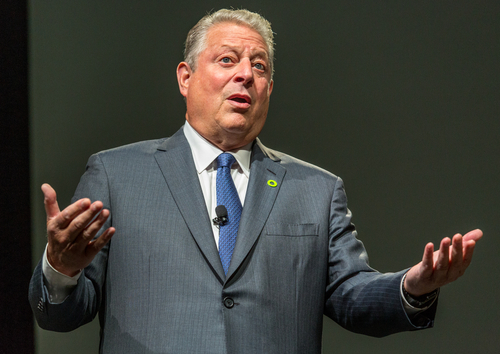
Al Gore is still at it. At the expense to Australian taxpayers of $142,000, Gore will lead a three-day climate change lecture in Queensland. Gore will push his global warming theory, speaking at the Minister’s Climate Change event in Brisbane from June 5 to 7, 2019. The three-day climate change conference was supposed to include Labour leader Bill Shorten. The polls said Shorten would win the Federal Election, but in a surprise, he lost. The entire election was built on climate change and it did not go over very well at the voting booths. He intends to train between 800 and 1000 business and community leaders from across Australia and the Asia-Pacific region during the climate change event to adopt his theory, even though the analysis is linear and has failed with both of his movies.

As a side note, Queensland is experiencing bitter cold – perfect timing!

Chaos of Weather Record Heat Wave Coming


This weekend the forecasts are calling for a blistering, dangerous heat wave which is poised to scorch the southeastern U.S. over the Memorial Day weekend. I warned that our computer was showing a sharp increase in volatility in the weather. The winters would spike to new record lows and then the summers would spike to scorching highs. Once again, this is not my personal opinion. If you simply input the data this is what comes up – patterns.

Lorenze

During the 1950s, Edward N. Lorenz (1917-2008) observed that there was a cyclical non-linear nature to weather, yet the field relied upon linear statistical models in meteorology to do weather forecasting. Lorenz became the father of Chaos Theory. He was an American mathematician and meteorologist. Lorenz was certainly THE pioneer in Chaos Theory. A professor at MIT, Lorenz was the first to recognize what is now called chaotic behavior in the mathematical modeling of weather systems. It was like trying to measure the circumference of a circle with a straight edge ruler. His work on the topic culminated in the publication of his 1963 paper “Deterministic Non-periodic Flow”in the Journal of the Atmospheric Sciences, and with it, the foundation of chaos theory. During the early 1960s, Lorenz had access to early computers. He was running what he thought would be random numbers and began to observe there was a duality of a hidden repetitive nature. He graphed the numbers that were derived from his study of convection rolls in the atmosphere. What emerged has been perhaps one of the most important discoveries in modern time.

LORENZ (3)

This illustration of the Lorenz Strange Attractor is incredibly important and was first reported in 1963. Lorenz’s discovery of a strange attractor was made during an attempt to create a model of weather patterns. The actual experiment was an attempt to model the atmospheric dynamics of the planet. It involved a truncated model of the Navier-Stokes equations. It is a visual example of a non-linear dynamic system corresponding to the long-term behavior in a cyclical manner revealing a hidden order we cannot otherwise observe.

The Lorenz Strange Attractor is a three-dimensional dynamical system that exhibits chaotic flow, noted for its interesting shape revolving around two invisible strange points in space-time we call Strange Attractors. The map shows how the state of a dynamic system with three variables of a three-dimensional system evolves over the fourth dimension (time) in a complex, yet non-repeating pattern. In other words, here is a visualization of duality – what appears to be randomness (chaos) simultaneously contains a broader clear pattern of order. The same identical structure appears in the light where it is both a waveform and particle, as we see in the economy where we retain our individuality yet at the same time we are part of a broader collective pattern. This is the very essence of the Invisible Hand – or in Lorenz terms, a Strange Attractor.

Therefore, Chaos Theory is a field of study in mathematics with applications in several disciplines including meteorology, physics, engineering, economics, biology, and philosophy. Chaos theory investigates the behavior of dynamical systems that are highly sensitive to initial conditions and subtle changes in the input can create a drastic alternative in the outcome. This has been explained as the “effect,” which is popularly referred to as the butterfly effect. Slight differences in initial conditions yield widely diverging outcomes for such dynamical systems, rendering long-term prediction impossible in general without comprehending dynamic analysis that is cyclical based.

The chaos that appears is complex, yet it masks a hidden order beneath. The complexity of variables creates the illusion that these systems are unpredictable yet they can be extremely deterministic when viewed correctly. The future behavior of such systems is entirely determined by their initial conditions, with no random elements involved whatsoever. In other words, the deterministic nature of these systems allows them to be predictable when approached objectively by a computer eliminating the randomness of human judgment. This type of behavior is best described as Deterministic Chaos.

This fascinating dimension was summarised by Edward Lorenz as follows:

“Chaos: When the present determines the future, but the approximate present does not approximately determine the future.”

This extraordinary complexity that created the surface impression of chaos hides amazing order below. Chaotic behavior can be observed in many natural systems, from such things as weather to economics. Our problem has been mankind’s attempt to reduce everything he sees to simple-minded one-dimensional cause and effect. This type of explanation of such behavior has restrained our ability to move forward in many fields, the least of which is not social science including economics.

Deterministic Chaos may be the key to everything for within both nature and our social world, we are surrounded with complexity yet we try to rationalize everything to a single dimension and are unable to cope with the dynamics of the world in which we live.

Of course, Larry Summer admitted that economists cannot forecast the future because it is complex like the weather systems. We are pointed to perhaps break records that date back to the 1800s.

The Grapes of Wrath – How to Keep Them Warm


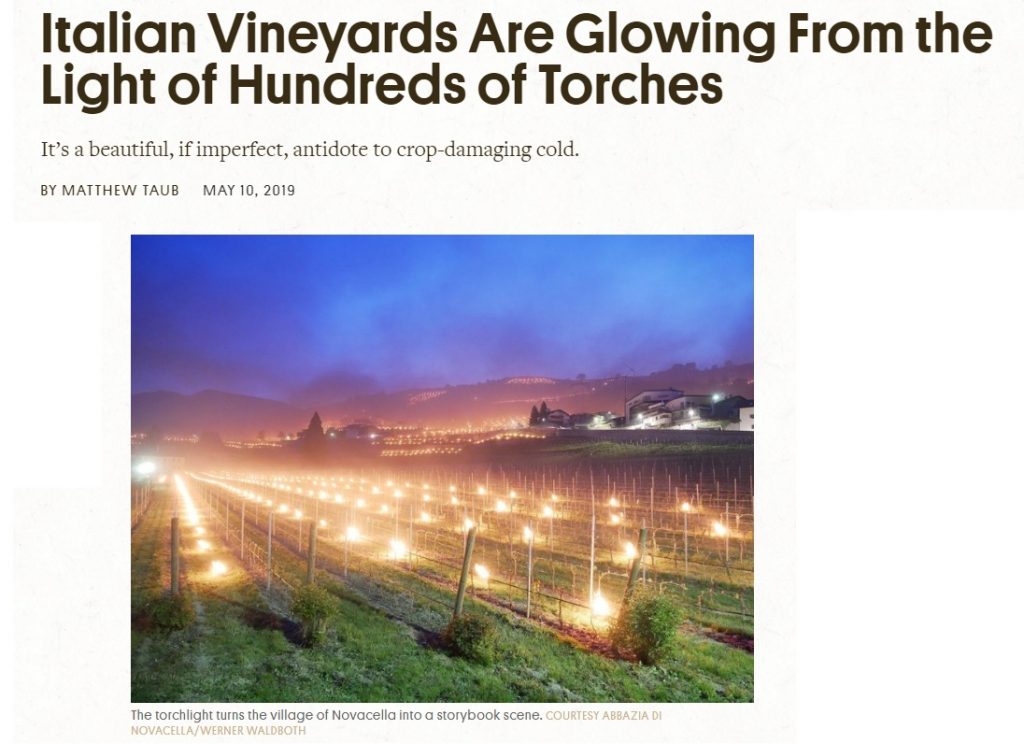
The Winter that Will Not End is impacting even northern Italy. In Tuscany, winemakers have lit hundreds of torches to keep their grapes warm during this cold period in order to save their crops. The temperatures have been cold and the crops have been subjected to frost at night that would otherwise ensure their demise. The farms have indeed sought to create global warming at a time when the politicians in Europe all agree that short-term flights by air should end to prevent global warming. The last cold spell like this with temperatures dropping below 1 degree celsius took place during May 1987. Temperatures below 0 celsius can wipe out the entire crop for the year

Failure to Plant Crops


COMMENT: Good day from Chatham, Ontario Canada (50 miles east of Detroit 42.4048° N, 82.1910° W);
Interesting your models are warning of the next year’s results in climate change.

Our location is always the first to plant in Canada as it is the same latitude as northern California.
A few climate tidbits;

– As of today, May 18th, 2019, no farmers (zero) have started planting.
– In 3 years the percentage of April planting starts has decreased to 0% from 70% just 4 years ago. Typically planting was completed by mid to end of May.
– Flooding this year from Ottawa to Detroit along with cooler temperatures can wreak havoc on winter wheat crops which are planted in the fall and has germinated. But if the heat doesn’t come to dry up the land then the wheat crop is susceptible to rot.
– soil temperatures are below the 25-year average by 23 degrees.
– more rain means less sunshine.
– Songbirds in our area are unusual for May. Makes for a very noisy morning coffee.

Bird watchers reporting many species have not finished their normal migration north. Somehow they have stalled in lower latitudes knowing the northern food sources are not ready.
The birds singing is nice, but I would like to eat.
Best to you;

RH

REPLY: Others are reporting the same general trends. Some people write in and try to disagree with the forecasts. What they fail to understand is this is BY NO MEANS my “opinion” or what “I think” for I do not see myself as qualified on such a personal level to forecast such events since I am not a farmer and have never been. My grandfather had maybe an acre where he grew grapes, fruit trees, and some other things like tomatoes. He was not a professional farmer.

All I can do is report what the computer is projecting and I believe it does a far better job than human forecasting simply because it just goes by the data and extracts the patterns upon cycles. I take no pleasure in warning that we could be headed into a very rough patch for food production into 2024/2025 if we see a colder and longer winter again next year.