Princeton physicist: There’s a ‘cult’ building around climate scientists


Published on Feb 17, 2017

SUBSCRIBE 506K
Princeton physics professor William Happer explains why he describes some climate change scientists as a ‘cult.’


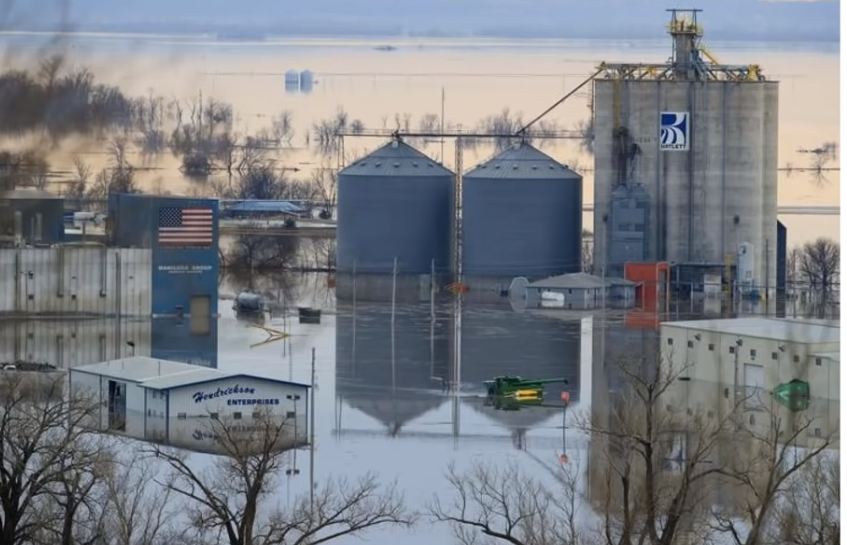
Climate Change, Midwest Floods & Food Shortages


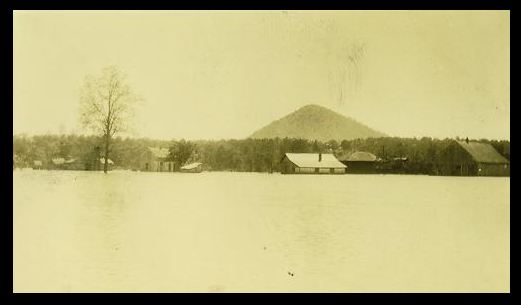
The Great Flood of 1927, flooded the lower Mississippi River valley in April 1927.  It was one of the worst natural disasters in American history. More than 23,000 square miles of land was submerged, hundreds of thousands of people were displaced, and around 250 people died. The flooding impacted areas in Arkansas, Illinois, Kentucky, Louisiana, Mississippi, Missouri, Tennessee, Texas, Oklahoma, and Kansas.

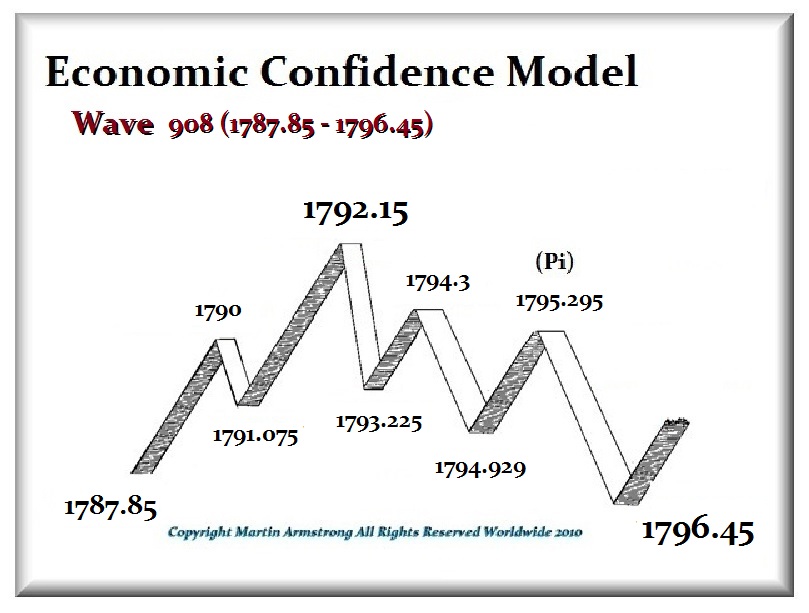
Following that Great Flood of 1927, we then see the climate swing dramatically in the opposite direction into the extreme drought that led to the Dust Bowl of the 1930s. The Dust Bowl was a period of severe dust storms that greatly damaged agriculture in the Midwest prairies during the 1930s. The Dust Bowl was a severe drought that came in three primary waves, 1934, 1936, and 1939–1940. The entire event actually complied with our Economic Confidence Model when many regions of the high plains experienced drought conditions for eight years.

Unfortunately, the global warming people are already out in force and blaming this on moms driving the kids to soccer matches. They always pretend these are catastrophic events never before seen. Cars were not really in wide use until post-1940s. They could care less about history or truth. The cycle is very clear. This major flooding which may destroy at least 6 billion bushels of wheat is a prelude to what is coming.

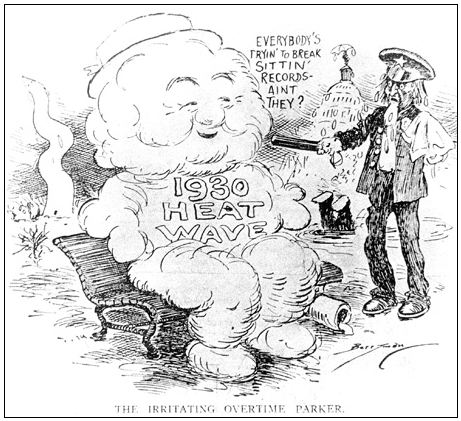
Long before there was the Global Warming crowd, there were the record-setting heat waves and drought of the 1930s that contributed to the Great Depression and wiping out agriculture that was employing 40% of the civil workforce at the start of the century. There were runs of extreme temperatures which broke all records. There was a stretch of 11 days straight in July with temperatures over 100. The two worst years were 1930 and 1936.

Today, they would be demanding action and 11 days over 100 degrees Al Gore would be yelling this proves he is right. Of course, back then, there were no fleets of cars to blame no less soccer moms.

This is all part of the cycle. We have extreme floods now, then swings of heat during the summer to create droughts, then the climate turns down and progressively moves into a colder pattern.


Aurora Borealis Warning the Climate May Turn Sharply Colder into 2032


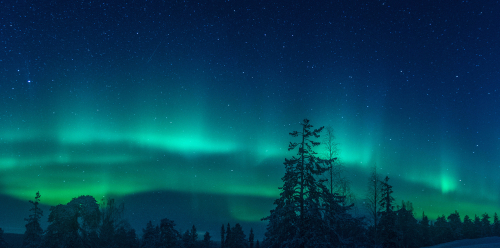
There may actually be a confirmation that we are heading into a much colder climate. The Aurora Borealis, also known as the Northern Lights, can now be seen in the UK. Normally, the Northern Lights can be seen only extremely north as in Alaska. Sir Edmund Halley (1656 – 1742), the man who discovered Halley’s Comet, was a friend of Isaac Newton. He was asked to speak about the unusual events that were taking place in the sky. He addressed the British Royal Society, stating:

The Royal Society, having received accounts from very many parts of Great Britain, of the unusual lights which have of late appeared in the heavens ; were pleased to signify their desires to me, that I should draw up a general resation (sic) of the fact, and explain more at large some conceptions of mine I had proposed to them about it, as seeming to some of them to render a tollerable [sic] solution of the very strange and surprizing [sic] phænomena thereof.

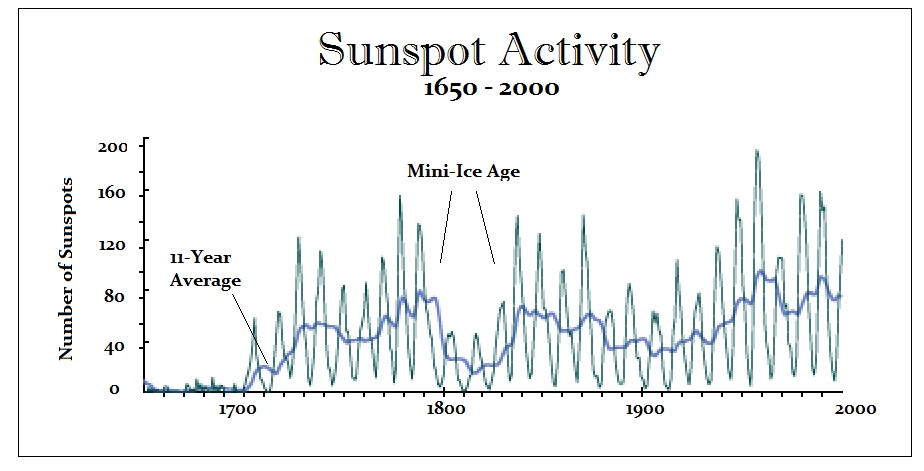
During the period of Halley’s investigation, the Little Ice Age dominated the decades and it bottomed around 1680. The Aurora Borealis actually expands and moves further south during periods of a colder climate. The Northern Lights being visible in the UK is not a good sign for climate change. This may be warning that we are headed back to a prolonged colder climate. Solar cycle 14 had the record high for sunspots during February in 1906. The annual peak took place in 1957 with 190 sunspots taking place that year. Based upon our models, the ideal low was most likely 1686/1687. From the 1957 high, the collapse to just 10 sunspots per year took place in 1964 — 7 years later.

Just before the Mini Ice Age, sunspot activity peaked during 1787 at 132 (mean) and crashed for 11 years into 1798, dropping to just 4 sunspots. If we continue to witness this declining trend from the 2000 high where there are virtually no sunspots, we appear to be vulnerable to a significant decline at least into 2032.

Climate Change: Real – Fake – Exaggerated?


QUESTION: I find it interesting that you are against human-induced global warming yet you confirm that climate change is natural. You seem to be in the middle of these arguments. You warned that solar activity was declining and there was a risk of going into a mini ice-age, but you did not seem to place high odds on that one. So can you elaborate on this since you seem to be the voice of reason?

GR

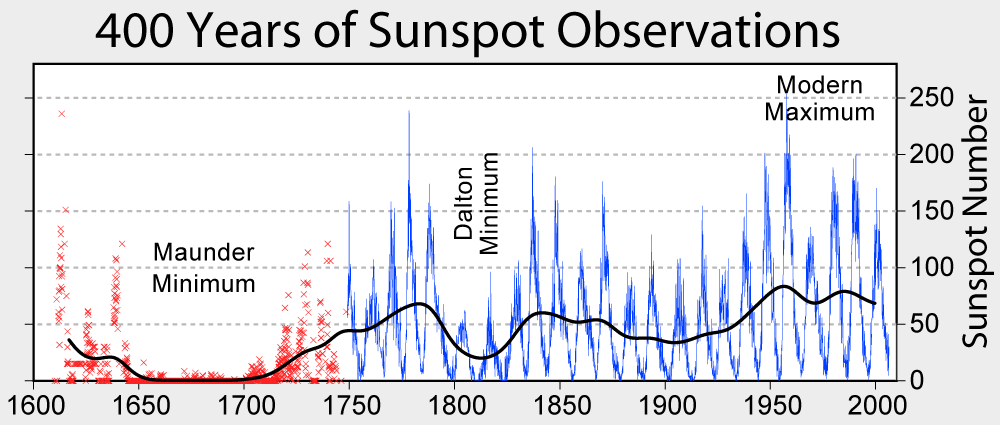
ANSWER: Sunspot activity has declined on schedule. February was an incredible month void of sunspots. This is clearly contributing to the extremely cold weather we are having. Cyclically, between 1645 and 1715, there was a prolonged collapse in sunspot activity known as the Maunder Minimum. Indeed, that was a period where sunspots all but disappeared. This coincided with the “Little Ice Age,” which was a period from 1500 to 1850 in the northern hemisphere. It was so cold, Viking settlers even abandoned Greenland.

I have stated many times that a major error in analysis is the attempt to reduce a problem to a single cause and effect. This topic of climate change is no different. Many scientists have strongly suggested that the Maunder Minimum caused the Little Ice Age. As I have shown, correlating everything that took place revealed that during solar minimum there is also an increase in volcanic activity and earthquakes.

You will read that scientists seem to be debating between the two rather than comprehending that EVERYTHING is absolutely connected. We cannot reduce everything to a single cause and effect. Therefore, in order for me to confirm that we are heading into a new ice age requires more volcanic activity in addition to a prolonged solar minimum.

The sunspot cycle is also called the Schwabe cycle, and currently we are moving toward the end of cycle 24. It does appear using long-term cycle analysis that cycle 25 will probably be at the very least a quieter cycle than we are concluding here with cycle 24. There’s been this steady decline, so we are indeed heading into what could be a prolonged solar minimum.

There have been several protracted solar minimums since 1000 AD:

  1. Oort minimum (1040–1080 AD)
  2. Medieval Minor minimum (1150–1200 AD)
  3. Wolf minimum (1270–1350 AD)
  4. Spörer minimum (1430–1520 AD)
  5. Maunder minimum (1620–1710 AD)
  6.  Dalton minimum (1787–1843)

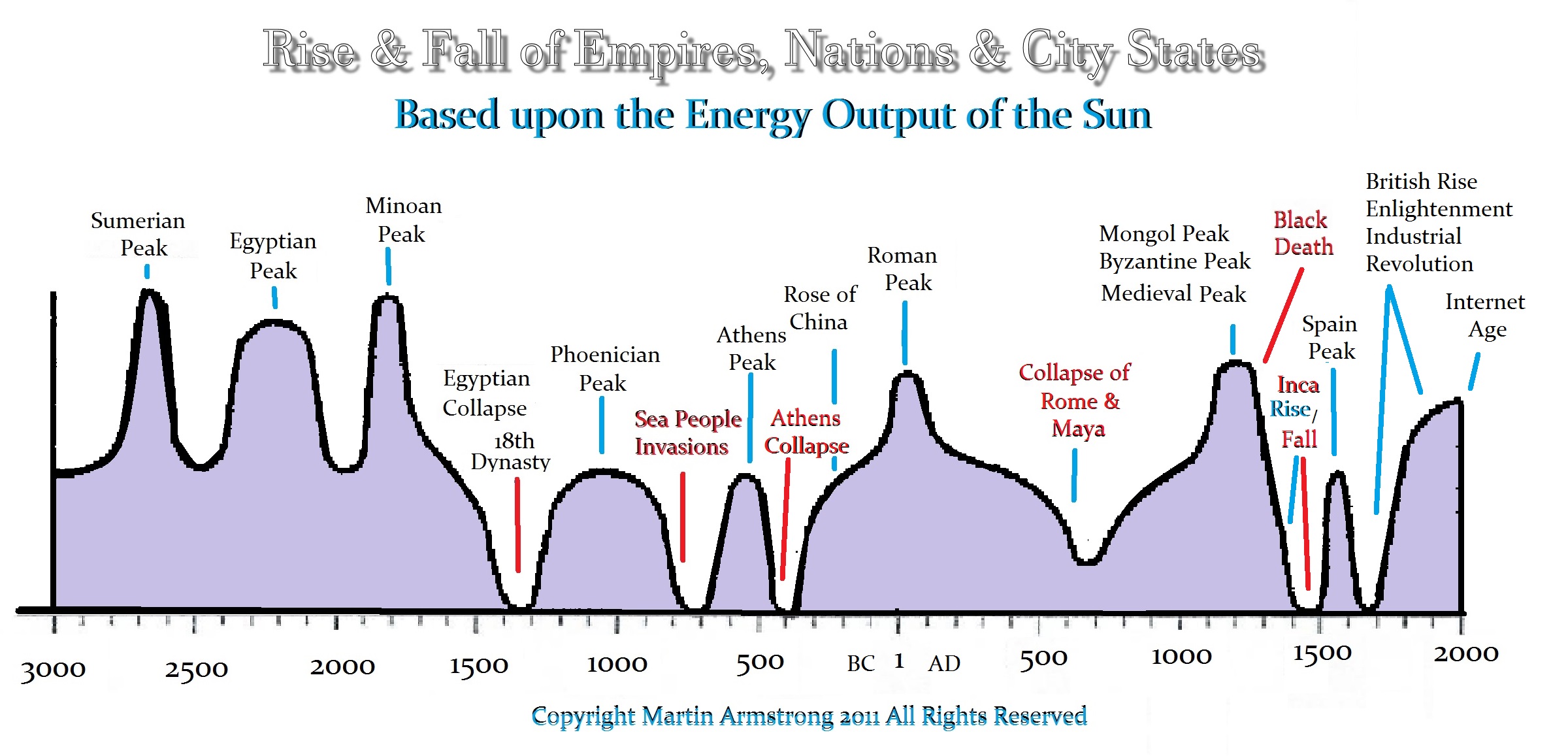
This post-Dalton minimum peaked strangely with the Economic Confidence Model on 1989.95. The peaks in solar activity have been declining with each wave subsequent to that turning point. It is now declining faster than ever previously know for nearly the last 10,000 years. Pretend scientists claim climate change it due to human activity. They were predisposed to arrive at that conclusion and not offer legitimate analysis whatsoever. Society expands during warming cycles and contracts during periods of global cooling.

I have also warned that if next year is colder than the 2018/2019 winter, and if this summer ends up with an expansion of drought, then besides keeping an extra supply of canned goods, the short-term cycle would warn of a further cold period into 2024/2025. The problem here is that if governments can blame humans, then they can tax us. When something is natural, there is no one to tax or blame except Acts of God. So YES, there is always climate change, but humans do not create it. There is far more complexity to this than a single cause and effect. REAL analysis cannot take place when the objective is always to reduce it to a single cause and effect.

50 to 1 Project – Marc Morano Interview


Published on Aug 29, 2013

SUBSCRIBE 3.8K
http://www.50to1.net – Topher interviews Marc Morano, accused ‘criminal against humanity’ and alleged ‘central cell of the climate denial machine’ and gets an insiders look into the politics and collateral damage caused by clumsy political responses to fears about climate change.


Lord Christopher Monckton – The Economics Behind Windmills


Published on Feb 5, 2018

SUBSCRIBE 21K
Lord Christopher Monckton joins us on stage for a quick talk to discuss the economics behind windmills and the problems behind them.


Dan Britt – Orbits and Ice Ages: The History of Climate


Published on Feb 8, 2012

SUBSCRIBE 33K
Another lecture in IHMC’s award winning lecture series. http://www.ihmc.us Climate change has become a major political issue, but few understand how climate has changed in the past and the forces that drive climate. Most people don’t know that fifty million years ago there were breadfruit trees and crocodiles on the shores of the Arctic Ocean, or that 18,000 years ago there was a mile-thick glacier on Manhattan and a continuous belt of winter sea ice extending south to Cape Hatteras. The History of Climate provides context of our current climate debate and fundamental insight how the climate works. Dr. Daniel Britt is a Professor of Astronomy and Planetary Sciences at the Department of Physics, University of Central Florida. He was educated at the University of Washington and Brown University, receiving a Ph.D. from Brown in 1991. He has had a varied career including service in the US Air Force as an ICBM missile launch officer and an economist for Boeing before going into planetary sciences. He has served on the science teams of two NASA missions, Mars Pathfinder and Deep Space 1. He was the project manager for the camera on Mars Pathfinder and has built hardware for all the NASA Mars landers. Britt currently does research on the physical properties and mineralogy of asteroids, comets, the Moon, and Mars under several NASA grants. Honors include 5 NASA Achievement Awards, election as a Fellow of the Meteoritical Society, and an asteroid named after him; 4395 Dan Britt. He is currently President of the Division for Planetary Sciences of the American Astronomical Society. He lives in Orlando with his wife Judith. They have two sons, ages 16 and 21.

Food Riots of 1795 Due to Climate Change


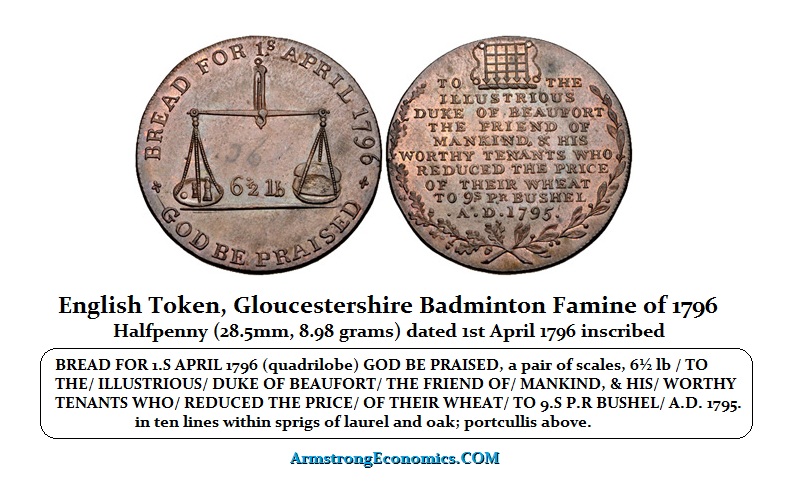
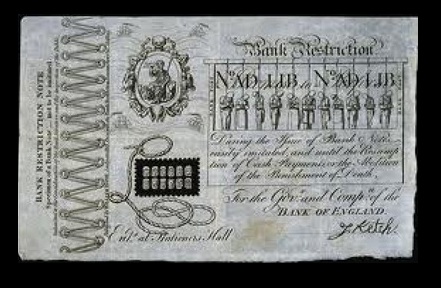
The British had a long tradition of striking tokens for political purposes. There was Climate Change back then as well and it resulted in massive riots over shortages of food. The British also even issued a protest Bank of England note that stated the mere possession of a counterfeit was punishable by death. The protest was people who unknowingly accepted a bank note that was counterfeit were being routinely hanged, but the law also meant that all their assets were then forfeited to the Crown and any family was thrown out on the street. Therefore, there has been a wealth of private tokens issued by the British to record various political issues over the centuries.
On February 1st, 1796, the weather had turned bitterly cold and crops had been failing. There were food riots emerging over the price of bread which culminated in in an assault upon King George III and Queen. In fact, Queen Charlotte was struck by a stone as she and King George return from a trip to the theatre.

It was during the extremely cold winter of 1794-1795 where even the Thames River froze over and temperatures reached -6 (21c). A deep freeze began on December 20th, 1794, and continued until February 7th, 1795. Even when the thaw came, this resulted in major flooding of the rivers which devastated the surrounding farmlands. The weather resulted in a great famine.

According to the Geast chronicler, the government had to act providing the poor a public subscription that provided bread and coal to be sold at a subsidized price. In some exceptional cases, it was provided free only when it was obvious the people could not pay. The number of deaths between 1794 and 1795 more than doubled because of the weather and crop failures. The death records of this period show that as food became scarce, disease spreads. About one-third of the deaths are attributed to disease rather than just hunger. Clearly, when there is malnutrition, diseases such as Small Pox spread rapidly.

Nevertheless, as spring and summer arrived during 1795, it never really warmed up very much. There were recorded frosts well into June of 1795. Countless animals also died from the bitter cold as the grounds froze and nothing grew. The wheat harvest of 1794 had been very poor, for the summer showed extreme volatility in temperature. As we see today, the summer of 1794 was very hot and dry resulting in crop failures during that season due to the lack of rain. Today, they would call this proof of Global Warming when in fact historical records reveal such extreme swings between heat and cold are not modern events.
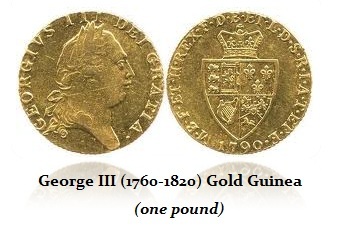
The prices of all agricultural and livestock products rose dramatically.  Then, the extreme cold and floods of the following winter affected crop production and prevented farmers from undertaking fieldwork. The bad weather during the spring of 1795 was also detrimental to agricultural production. A sack of flour costing £2.4s. [£2.20] in 1794 cost £4.3s. [£4.15] in 1795. Food prices soared because of the weather.

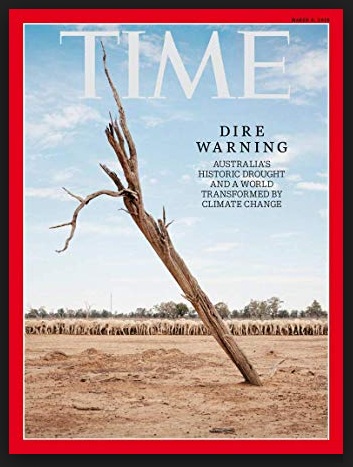
Our models are warning that we DO NOTface Global Warming, but these same dramatic swings in temperature with colder winters and dryer summers. TIME Magazine on March 4th, 2019, ran a piece on the Australian drought and attributed it, of course, to human-caused climate change. The exact same patterns of the 1790s demonstrate that this is a natural cycle, not unknown to history, and it must be understood what is really happening or millions of people will die waiting to people to end airfare and stop driving their cars and politicians to find someone else to tax.

Great Britain had been at war with Revolutionary France since 1793, therefore much of the wheat that was produced was bought by the government to supply the army and navy. Moreover, the war at that time prevented the importation of grain into Britain by ship for they would be attacked in the war. This combination of war and weather brought the country to the brink of famine and food riots. By the summer of 1795, the price of bread had doubled at around 1s [5p] for a 4lb loaf. The weekly wage of a skilled worker was around 10s [50p] per week. The lower skilled laborers were paid as little as 5s per week. We can see that bread at 1s could be 20% of the weekly wage.

As prices soared, millers would hoard grain in anticipation of continually rising prices. Why sell now when you could get more next week? We see the same thing take place during storms. Prices soar and even things like air tickets and gasoline rise in front of a hurricane. This is human nature. It always takes place despite laws against price gouging in a crisis.

During 1795 and 1796, the shortages, high prices, and profiteering practices all combined to produce food riots throughout the country. There was a riot involving about 200 people that erupted in Tewkesbury, England, on Tuesday, June 24th, 1795. Flour was waiting at Tewkesbury Quay to be transported by water to Birmingham where prices were even higher. On the following day, Henry Fowke, the Town Clerk of Tewkesbury, wrote to the Home Secretary, Lord Portland, reporting the event.

My Lord

I do myself the Honour of addressing Your Grace on the subject of extreme Rioting at this place yesterday. Several Quantities of Wheaten Flour were forcibly taken out of the Barges at the Quay & carried off by divers Persons, chiefly Females – The civil force was convened with all possible Dispatch, & after much difficulty & confusion, the Riot was suppressed, & the ringleaders committed to the county rather than the Borough Goal, as more secure – The appearance of the Town this morning, I have the pleasure to say, is pacific. I have thought it my Duty to acquaint Government, through Your Grace, of this transaction. With the greatest respect, I am My Lord, Your Grace’s most obedient servant

Henry Fowke
Town Clerk of the Borough of Tewkesbury
Tewkesbury 25th June 1795

(Home Office: Domestic Correspondence, George III (Letters & Papers), National Archives HO 42/35 (online).)

Many people were arrested and the government feared there would be yet another riot in an attempt to free them from prison many of whom were women. As a response, the government transported the prisoners to Gloucester. Many of those detained women and the city’s gaol register records the details of the charges and names four of the prisoners. They were charged effectively as terrorists. They were charged with inflicting the terror of his Majesty’s subjects and in breach of the peace. They would remain in prison until trial in late July. Many were able to carry off sacks of flour which had been the property of a James Lamb who was presumably the buyer in Birmingham rather than the seller in Tewkesbury.

As is said, starve a man and the most honest soul will become a thief.

GOP Senators Become Man-Made Climate Change Believers: “Not Worth the Fight”


Published on Mar 7, 2019

SUBSCRIBED 121K
As a growing group of GOP Senators become man-made climate change believers, you have to ask: Did the science move them or just the political calculation that it’s “not worth the fight.” Right Angle — with Scott Ott, Bill Whittle and Stephen Green — is a production of the Members at http://BillWhittle.com

The Florida Migration Influx


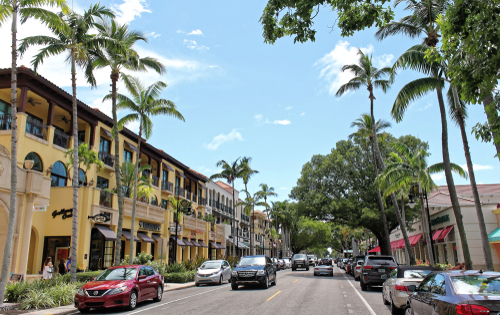
COMMENT: Mr. Armstrong; I want to thank you. My parents died and left me their home in Naples, Florida. I was going to sell it but after reading you and the fact that even you moved to Florida, I decided to keep it. We have been renting it out and it is always fully booked. The realtor said we can probably get 20% more next year the market is that good. He said it was the weather. I think it is also taxes.

Thank you very much. You do make a difference.

RH

REPLY: The rental market is very good here. I must say, traffic has been about double from the last snowbird season. I personally do not like that, but it is a result of the extreme cold up north. The joke down here is you can probably rent out space under your bed. The weather has clearly boosted the rental market. However, we also have a strong migration from people fleeing New Jersey, New York, Connecticut, and Massachusetts who mostly head for the East Coast of Florida. The west coast, where I am, tends to attract more people from the midwest, but I have probably met more people from New Jersey here than I ever did in New Jersey. I was doing some interviews for potential staff and I actually met a girl born in Florida. The interesting thing here is that just about everyone you meet is from someplace else.