
Very interesting as this goes against everything that Obama was doing — I bet Putin has something to do with this!
Tag Archives: BRICS World bank
Bill “Microsoft” Gates on Depopulation
The following U-Tube clip is taken from a Seminar that Mr. Gates gave back in 2010 if I remember it was over an hour long but this clip is the heart of it.
The purpose of this presentation is to show why CO2 must be eliminated and since its increase is a direct result of people using energy the only way to reduce CO2 is to reduce the number of people. — depopulation!
Depopulation is a word that progressives and environmentalists use as part of their plan to save the planet from humanity! The history of this belief goes back 200 years to an economist Thomas Malthus who believed that over population was inevitable and would lead the famine and war. The reasons he thought this way were never valid but others picked up on this thought and used concerns of the environment to hijack that thought and adapt it to modern concerns on the environment. Some of the environmental agenda was real and needed to be addressed but those that thought the reason problem was too many people took over.
The work to control population goes back into the early 70’s and that work lead to UN Agenda 21 adopted by the UN in Rio de Janeiro in 1992. Those that wanted few people couldn’t say that so they came up with sustainability as the goal. The vehicle was Carbon dioxide being put in the atmosphere by power generation. And in the period from the 70 though the 90’s the planets temperature was increasing and these zealots convinced many that the increase was from CO2. Politicians seeing a way to line their pockets with money saw that a Carbon Tax could be used for that purpose; so they contracted with universities and others to come up with studies to show that CO2 was the cause of increasing temperatures.
Jame E. Hansen in a 1988 presentation to the US Congress showed how the world would be in serious trouble within 20 years based on his radiative transfer models. Soon after this presentation the UN Intergovernmental panel on Climate Change (IPCC) was formed. And its purpose was to shown the damage that increased Temperatures would cause. Keep in mind it was never established to find the cause of the warming. Money began to flow and with that came the pollution of science as to many were will to accept the money and forget the science.
Unfortunately Mother Nature had her own mind and was not following what these silly men thought! Although CO2 has a small effect on climate the many drivers are thermal flows of heat through the oceans and atmosphere of the planet from around the equator to the poles. These flows have well documented cycles and when, as in the period fro 1970 to 2000, they were in ascendance it gave these zealots the illusion that there was cause and effect. Now that Mother nature is cooling the planet there theories are unable to explain why. The current cooling cycle with last about 20 years to 2035 or so and then another warming period will began.
NATO To Deploy Tanks In Eastern Europe Shortly After VP Of Europarliament Says Ukraine-Russia War Imminent
Deploring armor is not a good sign!
More Nails In U.S. Dollar’s Coffin: Russian Ruble Exchanges With Turkey & India.
The destruction of the dollar is all most complete

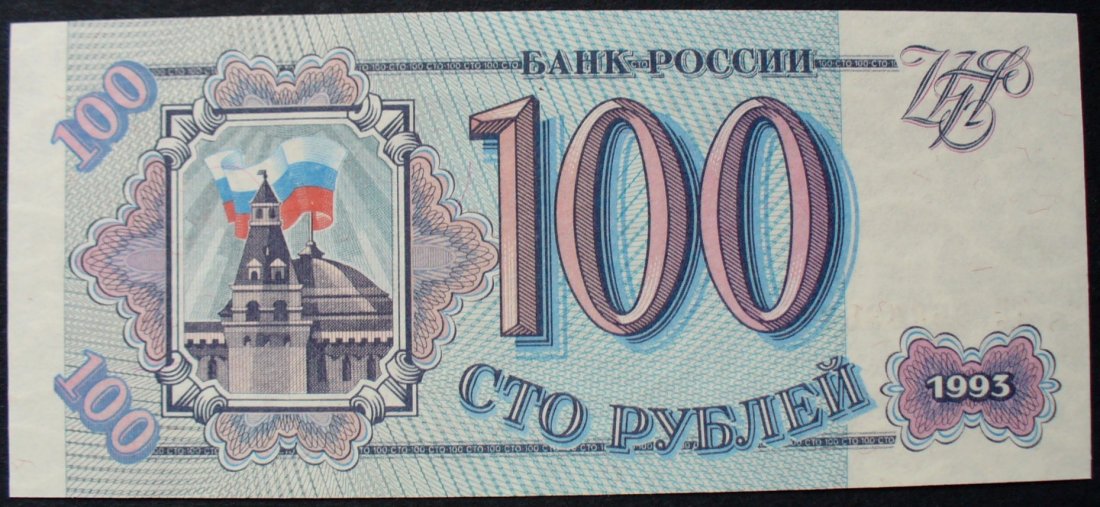 Russian Rubel With New Federated Flag Following The Removal Of The Last Rothschild Soviet ~ Mikhail Gorbachev In 1991.
Russia and Turkey are set to work on increasing payments between the countries in their national currencies, the Russian-Turkish Intergovernmental Commission said Wednesday.
“The working group on financial and banking cooperation, taking into account information about detected barriers, is to continue its work to eliminate them and increase the volume of payments in the national currencies of Turkey and Russia,” the commission said.
Both sides noted the absence of legal and infrastructural constraints for conducting payments in their national currencies and agreed to work alongside representatives of the business communities to identify possible obstacles. Russia Insider
View original post 425 more words
Russian battleships in the English Channel, say they’re training
A show of force from Russia. The news got some of this wrong — that is not a battle ship but appears to be more a Cruise. Other sources claim its a large antisubmarine ship “North Sea” sailing out of the closed Naval) port of Severomorsk..
Did Creepy Smokey the Bear PSAs Brainwash You to Accept Agenda 21?
This short video is 100% true; I have been researching this for a while now and also attended planning meeting in Ohio last year as they were starting to implement UN Agenda 21 in Northeast Ohio which is basically Cleveland Akron. The Program is being run by NOACA with offices at 1299 Superior Ave, Cleveland, OH 44114. The program itself is called VIBRANT NEO 2040 and its offices are in the same building. This program is funded by the US Federal Government and its goal is to move the people back into the central cities so that they will not need cars and they will not need property nor large homes; like the Chinese they (the common man) will live in complexes where they work This is being done by zoning at this time and 2040 is when the program is to be completed.

Model claim: airplanes of the future won’t be able to take off at some airports due to global warming
In the view of the Greens fewer planes would be a good thing!

No, Australia’s ABC Media Isn’t Biased. Aren’t The Greens Just Preaching Revolution And Racial Division As The New Normal?
When you are ignorant stupid or a politicians the truth doesn’t matter!

 By Andrew Bolt ~
 Australian Broadcasting Corporation Logo
Australia’s ABC Media biased? Of course not.
ABC presenter Fran Kelly this morning interviews a US academic, Rosa Clemente, about the Ferguson riots, in which violent black mobs are destroying shops and cars because a jury cleared an innocent white policeman of having a case to answer of murdering a black thief.
In her unbiased way, Kelly allows the academic to make the following comments unchallenged.
– “the destruction of property to me is not a violent act”
– police are “an occupying force”
– black Americans have “grown up under occupation” by police
– blacks are “slaughtered in the streets” by police
– the riots in Ferguson, in which the mobs are looting, burning and shooting, are actually “organised struggle”.
Not once does Kelly question this defence of mindless mob violence, this race-based narrative, this vilification of police, this baseless…
View original post 854 more words
America in Retreat: The New Isolationism and the Coming Global Disorder
This is vintage Bret Stephens: wise, comprehensive, and penetrating.
Forwarded by Prof. Paul Eidelberg
Pulitzer Prize-winning Wall Street Journal columnist Bret Stephens’s new book, America in Retreat: The New Isolationism and the Coming Global Disorder, presents the dangers of an isolationist foreign policy and prescribes a solution for bringing America back to the forefront of the international community.
Speaking to Breitbart News, Stephens expands on his notions of decline and retreat, why America should be the world’s policeman and not its priest, and how a robust foreign policy benefits Main Street America.
In your book, you note that there are two strains of thought in American foreign policy that call for limiting defense spending and international influence– one on the left and one on the right. Do you see the civil libertarian wing of the Republican Party as an equal, lesser, or greater threat to our national security than similarly-minded Democrats?
I don’t know, that’s hard to say. Error of opinion should be combated wherever it is found. I think that it is worrisome that the party that has most consistently stood on the right side of all great national security issues of our day, going back many decades, now finds itself infected with the same kind of “come home, America” mentality that has typified the McGovernite Left for more than 40 years.
What I hope Republicans take away from my book is that the call for reducing our commitments overseas for the sake of shrinking the size of government is a siren call. Any conservative should know that the countries that have the smallest militaries in the West are also the countries that have the biggest debts. Look at Europe; look at Japan. And that is because money that is supposed to be saved by cutting the defense budget never goes back to the taxpayers, it never goes to the productive side of the economy. It goes to further funding of the welfare state. So conservatives who foolishly think we can scrimp and save on defense in order to reduce our deficit are telling themselves a fable. Not to mention all the dangers of minimizing or reducing America’s strategic footprint at just the moment when Russia is on the march, ISIS is on the march, China is approaching on the South China Sea, and Iran is on the cusp of nuclear capability.
Do you predict that we will see more of this “McGovernite” attitude among Republican contenders in 2016?
Well, hopefully my book will have some effect by persuading some leading Republican contenders for the nomination that the Rand Paul recipe for foreign policy is crazy, at least as I’ve previously heard Paul define it. I shouldn’t say crazy—really misguided. And I want conservative readers—and this book is really written largely with conservative readers in mind—to understand that it is wrong to suggest that foreign policy and domestic policy are in a zero-sum game. That what we invest in our security or invest in our alliances is somehow taken away from Main Street America. Main Street America walks around with Samsung phones in their pockets, built in a country that we’ve defended for the past 60 years that went from being one of the most backwards countries in the world to being one of our greatest trading partners. That’s part of American prosperity, so we have to understand that we will never be prosperous at home unless we are also secure and also securing friends from Estonia to Israel to Taiwan.
Are there places in the world where we should be establishing more of a presence, perhaps unlikely contenders for American military aid outside of the nations already heavily associated with U.S. presence?
We need to be careful about where our priorities lie, not only strategically, but geographically. We need to be particularly mindful of helping the defense of those countries that stand on the border of the free and the unfree world. That’s Estonia—between the European Union and Russia. That’s Ukraine. That’s South Korea. That’s Israel. So the idea of the pivot, which was such a big deal in the Obama administration, is fundamentally misguided, because our strategy cannot just be based on geography, it also has to be based on political realities.
For Republicans who may want to agree with you but see Republican intervention abroad in the last decade or so as problematic, what can they learn from the mistakes of the Bush administration in Iraq and what actions that weren’t mistakes can they use as guidance?
We’ve had many misadventures in the past decade in the Middle East, but one of the points that I try to make in the book is to explain what was right about the Iraq war and what was wrong about it. And if I had to sum it up in a couple of sentences, it would be this: we went into Iraq to make an example of Saddam Hussein, and that was the right thing to do. We stayed in Iraq to try to make Iraq exemplary as an Arab democracy, and that was the wrong thing to do.
Making examples for the sake of enforcing global norms, liberal order, and punishing evil violators of that order—that’s the right way to connect with foreign policy, as a policeman. But attempting to heal crippled societies as if we were the world’s priest or doctor, changing hearts and saving souls, that’s the wrong foreign policy. It’s wrong not just because of the cultural realities of the Middle East itself and the absence of traditional liberal democratic values, it’s also wrong for the political realities of the United States, which are not interested in ten-year-long wars.
Can you elaborate on the difference between “decline,” and “retreat,” and how American can be in retreat without being in decline?
I really do not believe for one second that America is in decline, although I do notice that a lot of people like to say that it is in decline because they favor a policy of retreat. The difference between decline and retreat, I would say, is this: decline is a product of broad cultural and even civilizational forces that are beyond the reach of ordinary politics. For example: How would a Russian leader, even Putin with all his power, get Russians to have more babies? Very hard to do. Russia has this massive demographic problem because Russian couples aren’t having children.
How do you get the Japanese to accept that, given their demographic realities, they have to start taking in many more immigrants, bringing into question the whole concept, ethnically, of “Japanese-ness”?
So these are countries that are in decline on account of these large, supra-political forces. On the other hand, retreat is just a policy choice. Retreat is what happens when you get Barack Obama in office talking about nation-building at home and acting defensively, or indifferently, or reactively to foreign policy crises. Its’ a choice that he made, and it’s a choice that we can undo. American retreat is about choices that were made and what we can do about them.
If there is no decline, what is the appeal of a policy of retreat?
There are always signs of decline. Adam Smith famously said “there’s a lot of ruin in the nation.” The question is whether you look at those pieces of ruin and you think it’s a sign of decline, or you think it’s a sign of rebuilding, or a reality of everyday life. Look back on what was being said in the 1950s about the state of American education and how we were falling behind the Russians and how we weren’t teaching Johnny and Jane to compete when it came to math skills and all the rest of it. Now I think most of us would look back at the high schools of the 1950s and say they were a golden era in terms of the quality of public education.
So there is always this idea that you are in decline. The question is: are you really in decline, or are you just looking at everyday evidence of something that isn’t meeting your expectations and calling it a sign of decline? So Americans looked at what happened in Iraq—by historical standards, a relatively small, if very long, war—and said “well, you see, we can’t win wars anymore.”
And they looked at the recession of 2008, which by historical standards is actually not the deepest recession, and they said “we’re never going to be able to get back to high levels of growth and real, full employment.” So they took these pieces and treated them as proof positive of a proposition that the country is in decline, so we therefore have to scale back our military commitments.
I don’t see a recession or an inconclusive and difficult war as sending the country with the largest economy on earth into decline. When you think about Britain, Britain lost a quarter of its national wealth fighting the Second World War, and this was just twenty years after it also lost much of its wealth and many of its citizens fighting the First World War. It takes a heck of a lot to send a country into decline.
Many of us probably have moments of hypochondria where we think some pimple is cancer. That doesn’t mean it’s cancer. And we run the risk of misdiagnosing the state of the nation, and as a result prescribing the wrong medicine, and having the wrong medicine do us more damage that what had been ailing us at the start.
Russia and China: What is Happening Beneath the Propaganda Curtain?
This is a re-post from NEO link at the end and posted there on 25.11.2014
I do not agree completely with this view but it is definitively worth reading

 As Russia announces a new gas deal with China, the voices in the US and European media are anything but delighted. The idea that Russia and China are constructing a natural gas pipeline that will transport millions of dollars worth of resources – and from which no Wall Street or London-based corporations will make any profits — is a sign of the changing nature of the global markets.
The reports of negotiations between US President Barack Obama and Chinese Premier Xi Jinping are causing some to be a little less nervous. The establishment of protocols for military exercises can give some relief to those who fear a possible military confrontation in the near future.
The tension, caused by the changing global economic landscape, has not faded one bit. African countries are growing closer to China. Various Latin American governments have welcomed Russian President Vladimir Putin and expanded economic relations with Russia. The circles of western economic power are losing their grip.
The rise of these two new players on the global markets is being met with violence. As Ukraine grew friendlier to Russia, the elected government was overthrown and fascist violence was unleashed on the population. Conflict and suffering continues in East Ukraine.
Syria, an ally of Russia and China, has been ripped apart by a US-backed terrorist insurgency. Bombs now fall within its borders in violation of international law.
Iran, which is very close to China and growing closer to Russia, has been subjected to harsh economic sanctions and attempts to destroy its peaceful nuclear energy program.
Venezuela, Bolivia, Ecuador, and Cuba are facing Washington efforts to overthrow their popular governments. High-ranking Venezuelan official Robert Serra was assassinated, and the isolated, US-backed “Venezuelan opposition” is growing more desperate and vicious.
In every corner of the world, the battle is raging between the section of the world economy controlled by Wall Street and London on the one hand, and the rising opposition to it on the other – in which Russia and China are major players.
Current events don’t fit into Cold War narratives about communism and capitalism. While the western media would have us believe that US opposition to all these various regimes is based on “human rights” concerns, this is obviously not the case.
To understand what is happening in the eastern parts of the world, and why our government is growing dangerously hostile to Russia, China, and the many countries aligning with them, one must understand a certain period of US history.
The Populist Upsurge
Following the US Civil War, there was a mass uprising of people in the United States against big business. The coalition of “Free Soilers” and abolitionists that Lincoln had utilized to defeat the southern slave plantation owners did not dissolve after the war, but continued for several decades into a mass movement that thundered with hatred for bankers and the ultra-rich.
Unlike the “left” of current times, the majority of this movement did not have a Marxist worldview, and did not identify with the industrial working class. The majority in the movement were small farmers, who were in debt to banks and persecuted by big landowners. The movement also contained small business owners and shopkeepers who feared being crushed by the big “trusts.” Recently freed African Americans saw this movement as a potential ally. Though the early labor movement and socialists identified with these mass movements, they were not its leading force, and struggled for what little influence they had in it.
This alliance pushed for the abolition of the gold standard, and wanted an end to government protections for big business. Its leaders called for certain big economic pillars of society, such as railroads, to be taken under public ownership. This movement was also opposed to war and militarism, and formed a huge peace organization called the “Anti-Imperialist League.”
The millions who made up this massive coalition saw US intervention in Cuba and the Philippines, as well as other parts of the world, as a scheme to make money for Wall Street. Years before the powerful words of US Marine Corps General Smedley Butler, these forces had already discovered that “War is a Racket.”
The movement was very religious, and one of its principal leaders, William Jennings Bryan, was known for his opposition to Darwin’s theory of evolution. Many of the leaders of the movement were protestant Christian ministers.
This movement, which arose in the 1870s and declined in the early 1900s, was known as the “populist” movement. It seethed with hatred for the billionaires and bankers, but did not denounce “capitalism.” Instead, the target of the movement was “monopolists” and “trusts.” It wanted an “anti-monopoly government” that served “people, not money.”
Much of the rhetoric of the populist movement was hijacked by racists and fascists in the following decades, but the origins of the populist movement were anti-racist. The movement had its roots in the struggle to abolish slavery, and was the sworn enemy of the Ku Klux Klan and other neo-confederate groupings. In many instances, populists went out to fight Klansmen and racists. Many populist newspapers proclaimed racism to be tool of the big monopolies in their robbery of the people.
The “People’s Front” that the US Communist Party created during the 1930s was very inspired by this movement, and drew its rhetoric from it. William Z. Foster, the leader of the US Communist Party during the 1930s, first campaigned for William Jennings Bryan, before being won to Marxism-Leninism decades later after the Russian Revolution.
The Rise of Anti-Monopoly Governments
What do the governments of Iran, Syria, Zimbabwe, the People’s Republic of China, Venezuela, Belarus, and Russia all have in common?
On the surface, these governments are very different. Iran is an Islamic Republic based on very clear religious principles. Venezuela is a “Bolivarian Socialist Republic” that seeks to construct “21st Century Socialism.” Zimbabwe is led by African nationalist Robert Mugabe. China is led by the Communist Party, but has a vast capitalist market, and upholds “Deng Xiaoping Theory” as an alternative to planned economies that were once synonymous with communist-led states. Syria is led by the Arab Nationalist Baath Party. Belarus is led by Alexander Lukashenko, who preaches a kind of patriotic anti-capitalism. Russia is led by Vladimir Putin, who is largely considered to be a Russian nationalist.
None of these governments are ideologically identical. They all have a unique heritage, and different historical, religious, and ideological backgrounds.
But there are certain things they have in common.
All of these governments voice loud opposition to the financial monopolies of Wall Street and London, and the military aggression waged to keep their profits rolling in. All of these governments preside over a huge network of state-owned enterprises that make up a large bulk of their national economies. All of these governments face opposition from the wealthiest sectors of their respective countries, who have aligned with the United States and want “regime change.” All of these governments also enjoy massive popularity among low-income sectors of society, and have taken big measures to improve the living standards of the people.
In Venezuela, Bolivia, and Iran, state ownership of oil resources funds the social programs that benefit the population. In most of these societies, certain services like healthcare and education are provided free of charge by the state.
These governments all came into power as a result of explosions of mass outrage, revolutions, and the political involvement of millions of people.
The Iranian revolution overthrew a western-backed dictator who was a puppet of western oil corporations. The Bolivarian revolution of Venezuela can trace its roots to the “Caracazo” uprising against Neo-Liberal privatizations. Putin’s strength is loved for combatting the oligarchs who looted the country in the aftermath of the USSR’s demise. The Syrian Baath has its roots in the uprisings against French colonialism. Zimbabwe arose from an anticolonial struggle against the white settlers of “Rhodesia.”
If the late-1800s populist movement that railed against war, corruption, criminal bankers and railroad tycoons had taken power in the United States, the result would have been an economic setup much like Iran, Venezuela, Russia, or Syria. Key industries would have been nationalized. A capitalist market would have remained, but under constant fear and regulation by the state. A populist government would depend on support from a politically involved populace, as Wall Street would fight each day to overturn it.
A populist anti-monopoly government would have taken its actions in the name of morality and humanity. Populist leaders often expressed in religious terms why the power of capitalists and bankers had to be restricted and “the people” had to take priority.
The New Anti-Imperialists
Once the primary opposition to the US internationally was made up of forces that called themselves “Marxist-Leninist.” In the current period, it is a different kind of politics that is on the rise.
It’s worth noting that even the rhetoric through which the Communist Parties took power often sounded very populist, and was not the Marxist language of “surplus value” and “alienation.”
The Chinese Communist Party did not come to power on a program calling for “worker’s power” or “dictatorship of the proletariat.” The political line of the Chinese Communist Party in 1949 was for a “New Democratic Revolution,” led by a “bloc of four classes” including business owners, peasants, and intellectuals, as well as industrial workers.
The 1959 Cuban revolution was not fought in response to a call for worker’s power. Fidel Castro did not proclaim the goal of socialism until 1962, and the official Soviet-aligned Communist Party in Cuba had not originally been part of the July 26th Movement.
While Marxism-Leninism tends to be highly secular, and in some cases blatantly hostile to religion, the rising bloc of global resistance to the US contains many deeply religious tendencies.
The Islamic Republic of Iran was founded by Imam Khomeini, a man who lived a devout and humble life, and rallied his people against the evils of usury and moral decay. The Bolivarian movement of Latin America is led primarily by leaders who consider themselves to be Christians, and invoke the name of Jesus Christ and his “driving the money changers out of the temple.” The Syrian government is secular, but has become increasingly religious and pro-Islamic in the last decade. Though President Bashar Assad is Alawite, he has attended prayer in mosques, and worked to build ties with the country’s Sunni population.
However, as much as the new anti-imperialist current sweeping the globe is not Marxist-Leninist, communism has without question left its mark.
The Soviet Union no longer exists, having collapsed in the catastrophic events of 1991, but Russia would not be what it is today without it. It was the USSR’s Five-Year Plans of the 1930s that created the steel mills, oil refineries, mines, and other economic infrastructure that now strengthens the Russian economy. Prior to the Bolshevik Revolution, Russia was an impoverished agrarian society. Much of the “means of production” constructed by the Communist Party of the Soviet Union and to be held in common by the workers are largely still state-owned.
The strength of the Chinese economy is also the huge state sector, forged in the aftermath of the 1949 revolution. The 2008-2009 financial crisis did not have the devastating impact on the Chinese economy that it had on capitalist economies, because a huge state apparatus was mobilized to keep people in China employed. Chinese capitalists have no “economic rights.” The multi-million-member Communist Party has the final say in all matters of politics and economy. Xi’s anti-corruption campaign serves as the most recent reminder of this fact.
The Resistance Forces in the West
The communists, social democrats and anarchists who make up the western “left” have always declared the Wall Street and London monopolists their enemies. However, in modern times, all but a small minority of leftists has refused to build links with the new anti-imperialists forces emerging around the globe.
Most leftists do not cheer for the Chinese Communist Party, as it pushes around corporations like McDonald’s on behalf of the public and builds hospitals and trains in Africa. Instead, too many leftists echo the New York Times and cheer for the minority of wealthy university students in Hong Kong who “Occupy Central” with Wall Street NGOs funding them.
Likewise, leftists do not support the Syrian Arab Republic, born out of an anticolonial struggle, as its government battles Wall Street-backed takfiris. Many leftists have been cheering for the terrorists, and repeat the Pentagon line that “Assad must go.”
With the exception of Latin America, the bulk of the western left has declared almost absolute, unapologetic opposition to the emerging anti-imperialist bloc.
Just like the western left failed to build alliances internationally, it has also failed to capture the energy of rising political movements within western countries. Occupy Wall Street and the explosions of resistance to austerity throughout the world from 2008-2012 caught the leftists who traditionally lead “activism” in western countries by complete surprise. Much of the left had no idea how to relate to it, and arguably grew weaker in its aftermath.
Many leftists seem not to realize that history is not made by ideas, but by existing social forces.
In the 1860s, Karl Marx was not neutral in the US Civil War. Lincoln was no anti-capitalist, but that was not the struggle at hand. Marx and his followers like August Willich, who led union soldiers into battle, understood that the abolitionist movement and the Union Army stood for social progress. By smashing the slavocracy, history was moving forward.
The forces of resistance to Wall Street and monopoly power cannot function as they did in 1980, 1968, 1935, or 1914. In a new world, new tactics and alliances must be made.
A global explosion against Wall Street is continuing. It takes place in the Middle East, in Africa, in Asia, and is gradually finding its way into Europe and the United States. The Ferguson uprising is seen by many as a sign of things to come, and events are still unfolding in Missouri. Not since the age of the populists have states like Missouri, Kansas, Iowa, and Nebraska been battlegrounds of social conflict. De-industrialization, the rising police state, and the economic crisis seem to have forced them back into the center stage of US history.
The many changes in the East are forcing changes in the West, and many more are to be expected. History is marching forward at a rapid pace, and new battlefields are opening up. What ultimately results is unlikely to fulfill anyone’s preconceived notions or predictions.
Caleb Maupin is a political analyst and activist based in New York. He studied political science at Baldwin-Wallace College and was inspired and involved in the Occupy Wall Street movement, especially for the online magazine “New Eastern Outlook”.
First appeared: http://journal-neo.org/2014/11/25/russia-and-china-what-is-happening-beneath-the-propaganda-curtain/
 Centinel2012