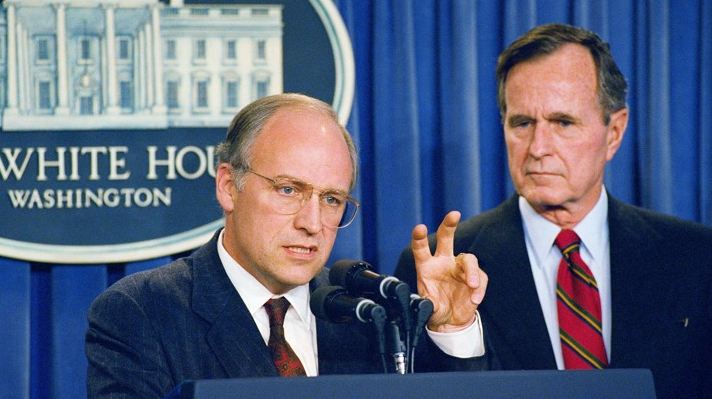
President Trump and President Lopez-Obrador Sign Joint Statement – Press Conference – 3:30pm ET Livestream…


U.S. President Trump and Mexican President Andrés Manuel López Obrador will be holding a joint press conference prior to signing a joint declaration celebrating the initiation of USMCA in the Rose Garden. Anticipated start time 3:30pm ET

UPDATE: Video and Transcript Added

.

[Transcript] – PRESIDENT TRUMP: Well, thank you very much, everyone. It’s a nice hot day, to put it mildly — (laughter) — so we’ll make this quick. But it’s all very positive — that, I can say.

And it’s my tremendous pleasure to welcome everyone to the White House with my good friend, President López Obrador of Mexico. We’ve had a very outstanding relationship.

Mr. President, we’re truly moved that you chose to make your first foreign visit since taking office — very successfully taking office, I might add — to be with us at the White House.

The relationship between the United States and Mexico has never been closer than it is right now. And as the President said a little while ago, people were betting against that. They were actually betting against that. But it’s never been stronger, never been closer. We’re doing a tremendous job together.

We’re cherished friends, partners, and neighbors. Our cooperation is founded on mutual trust and mutual respect between the two of us and between our two countries. And we honor the great dignity of both nations.

With this visit, President López Obrador and I have the opportunity to strengthen the bond we afford since his impressive election victory more than two years ago — a victory the Vice President and Ivanka joined in celebrating at the swearing-in. That was a very exciting day for them.
Each of us was elected on the pledge to fight corruption, return power to the people, and put the interests of our countries first. And I do that and you do that, Mr. President.

The tradition of great respect between Mexican and American Presidents goes back to the early days of both of our nations. And, in particular, it includes President Abraham Lincoln and President Benito Juárez, who each held one another in very, very high esteem. They were great friends and they did great things together. And we are grateful that, this morning, President López Obrador laid a wreath at the memorials that stand to each of these leaders, right here in our nation’s capital. That was a very beautiful, beautiful ceremony.

Our countries are linked by trade and travel, by history and culture, by faith and family. The United States is home to 36 million incredible Mexican American citizens. Mexican Americans uplift our communities, and they strengthen our churches and enrich every feature of national life. They are hardworking, incredible people. They are also great business men and women, and make up a big percentage of our small-business owners — and very successful. They’re very, very successful. They’re like you: They’re tough negotiators and great business people, Mr. President.

Working alongside President López Obrador, we’re taking this relationship to new heights and building a powerful economic and security partnership. Together, we have addressed many of the most complex issues facing our two countries that really went unresolved for many years — and, frankly, far too long. It should have been resolved long before I got here. But we’re achieving great strides and remarkable breakthroughs in strengthening our relationship for decades to come.

With everything that we have accomplished, the potential for the future of the United States and Mexico is unlimited. Far, far greater situation, really, for both countries than anyone thought possible.

Today we celebrate the historic victory we achieved together just days ago when NAFTA was officially terminated — one of the worst trade deals in history — and replaced with a brand-new, beautiful USMCA.

We want to thank Canada, also. I spoke with and will be speaking to the Prime Minister in a little while.

While NAFTA slashed wages and eliminated jobs, the USMCA includes groundbreaking labor protections for workers in both nations. This landmark agreement will bring countless jobs from overseas, back to North America, and our countries will be very big beneficiaries. We are already seeing the fruits because it started. It’s the largest, fairest, and most advanced trade deal ever reached by any country, and it will bring enormous prosperity to both American and Mexican workers and Canada. We want to thank everybody. We’ll have a separate day with Canada. They’re coming down at the appropriate time. But we want to congratulate Canada and the people of Canada, the Prime Minister.

But this has been a tremendous achievement. It’s actually the largest trade deal ever made. And we made a big one with China too, but this is the largest trade deal ever made.

Our two governments are also in close cooperation to stop the illicit cross-border flow of drugs and guns, cash, and contraband, and very importantly, stopping human trafficking.

We’re forging critical partnerships across the Western Hemisphere to combat the cartels and the smugglers and to ensure safe, humane, and lawful migration. And we’ve been helped greatly by Mexico on creating record numbers, in a positive sense, on our southern border. It’s been really, very, very tight and done a great job.

And I want to thank the Secretary, who’s here. We have a — Chad, you’re here someplace. Where is Chad? What a good job you’re doing, Chad. Great job. We’re proud of you. And you’ve worked very closely with Mexico. I know you were just telling me what a great help they’ve been, right? Thank you very much, Chad.

We’ve also worked closely in the battle against the coronavirus, together saving countless — thousands of lives. It’s been my honor to help Mexico procure 600 ventilators, and it’s going to be a higher number than that. They needed them very badly, and we were able to make them. We’re making thousands a week, and we’re helping a lot of countries. But one of the first, and maybe the first that I spoke to, was Mexico. We have a lot of them in Mexico saving a lot of lives. And, Mr. President, we’re in this fight together, and we’re doing very well.

Just a couple of things on that: I’m proud to further announce that the U.S. is, by far, number one in testing — number one in the world in testing — and that the mortality rate is the lowest, or just about the lowest of any nation anywhere in the world.

And we’re safely reopening our country, and very importantly, we’re safely reopening our schools. We want the schools to be open and going in the fall. And most of them, I think, are looking at it that way. It’s very important. We’re finding out that learning by computer is not as good as learning in the classroom or learning on the campus. And I think you’re finding that too. We want to learn in the classroom. So, our schools — we want them open in the fall.

Following President López Obrador’s remarks, we’ll sign a joint declaration committing ourselves to a shared future of prosperity, security, and harmony. This is truly a proud moment in history for both of our nations, Mexico and the United States.

With this signing, we pledge the close and continued friendship between the United States and Mexico, and we accelerate our progress toward an even greater tomorrow — and that’s what’s happening: a greater, maybe even a far greater tomorrow — with a prospering region, a flourishing hemisphere, and two sovereign nations thriving, growing, and excelling side by side, working together — and that’s what we’ve been doing.

Mr. President, we look forward to hosting you for a beautiful dinner later on this evening with some of your friends from Mexico and some of our great friends from the U.S. And it’s an honor to have you with us.

And, please, we’d love to have you say a few words. Thank you. Thank you very much.

PRESIDENT LÓPEZ OBRADOR: (As interpreted.) Friends, ladies and gentlemen, I truly celebrate this meeting with you, President Trump.

My visit, to a great extent, has to do with the importance right now, in these times of world economic crisis, the importance of the entry into effect of the Mexico-U.S.-Canada Agreement, to make by Spanish acronym, “USMCA.” Having been able to close this deal constitutes a great accomplishment benefitting all three nations and our peoples.

As it is well known, North America is one of the most important economic regions of the planet. However, our region is inexplicably a region of trade deficits. We export to the rest of the world about $3.6 trillion, but we import about $4.2 trillion. That is, we have a deficit of $611 billion, which is translated into capital flight, less opportunities for companies and businesses, and job source losses.

This new agreement seeks to reverse this imbalance through greater integration of our economies and improvements in the functioning of productive chains to recover the economic presence that North America has lost in the last five decades. Suffice it to say that, in 1970, the region constituted 40.4 percent of the world GDP. And now, this share in the global economy has gone down to 27.8 percent.

That’s why this agreement is a great option to produce, create jobs, and foster trade without having to go so far away from our homes, cities, states, and nations. In other words, import volumes of our country’s imports to the rest of the world may be produced in North America at a lower transportation cost with reliable suppliers — reliable vis-à-vis the companies, of course — and the utilization of regional labor force…

Of course, it’s not a matter of closing our countries to the world. It’s a matter of taking advantage of all the advantages that we have because we’re neighbors, as well as the enforcement of a good policy of cooperation for development.

This agreement allows us to attract investments from other places of the hemisphere, bringing those investments to our countries, provided we comply, we honor the principles of reducing merchandises with high regional content, and also trying to have salary and labor conditions that are fair conditions for our workers of the exporting or importing countries of consumption goods.

It’s also important to point out that this agreement signifies the integration of all three countries, because we’re all contributing with productive capacity, markets, technology, experience, expertise, highly skilled labor force, and we end up complementing each other. For instance, Mexico has something which is extremely valuable to make this economic integration effective and to boost this integration — economic and commercial integration — in the region. I’m talking about this very young, creative, and responsible labor force.

Let us not forget that the participation of workers in productive processes is just as important as the role of businesses and companies. It really would be not good for us to have capital and technology if we don’t have good workers that are outstanding workers because of their imagination, their talent, and their mystique when they do their work.

On the other hand, with this type of agreement — and respecting our sovereign states — instead of distancing ourselves, we are deciding, we’re opting to walk together towards the future. We want to privilege understanding. That’s why we’re united. And we’re setting aside differences, or we are solving those differences through a dialogue and mutual respect.

Certainly, in the history of our relations, we’ve had perhaps moments in which our minds have not been together. And there are — there have been problems that are not yet forgotten. However, we’ve been able to establish explicit agreements of cooperation and coexistence. For instance, in the ‘40s of last century, during the Second World War, Mexico helped meet the needs of the United States in terms of the raw materials needed by the United States, and it gave its support with the labor of migrant workers that were known as the braceros.

Since then, and until now, we’ve been consolidating our economic-commercial trade relationship, as well as our very — very peculiar coexistence, cohabitation, sometimes as distant neighbors and other times as very affectionate and close friends.

And it is also a well-known history of geopolitics, this neighborhood we have and economic circumstances of both of our nations have promoted, in a very natural manner, a process of migration of Mexican men and women coming here to the United States. And here we’ve been able to create a community of about 38 million people, including the children of Mexican parents. It is a community of good, working people — good people, working people who have come here to make a living in a very honest fashion. And they have so much contributed to the development of this great nation.

Furthermore, in Mexico, more than in any other country of the world, we have in our society a million and a half of U.S. citizens. They live there, and they’re part of our society. So we’re not just united by geographic proximity; we have economic commercial, social, cultural, and ties of friendship, President Trump.

As in the best times of our political relationship, during my mandate as President of Mexico, is that of remembering this insults and things like that from — against me. We have received from you, President Trump, understanding and respect. People — some people thought that our ideological differences would inevitably lead to confrontations. Fortunately, this has not been the case. And I believe that, towards the future, there will be no motive or need to break our very good political relationship or the friendship between our two administrations.

The best president Mexico has ever had, Benito Juárez García, as you have mentioned, had a good understanding with the great Republican President, Abraham Lincoln. Let us remember that this great, historic leader of the United States, who was the promoter of the abolition of slavery, never recognized Emperor Maximilian imposed in Mexico through the intervention of the powerful French army.

It is no coincidence that Juárez lamented Lincoln’s murder in the United States, saying, I quote, “I have deeply felt this disgrace because Lincoln, who was constantly working in such a determined manner for the complete freedom of its fellow men, was worthy of a better fortune or luck.” End of quote.

The same thing happened with the splendid relationship that Democrat President Franklin Delano Roosevelt had with our patriot president, General Lázaro Cárdenas. The same situation took place. And after the oil expropriation, in a letter, General Cárdenas recognized the good understanding — the good bilateral understanding as follows: He said, “My administration believes that the attitude of the United States of America, in the case of the oil company expropriation, reasserts once more the sovereignty of the peoples of this continent that with so much efforts have been maintaining the situation and the position of his Excellency, Mr. President Roosevelt.” End of quote.

So with all proportions and all the circumstances, with different circumstances, history tells us that it is possible to understand each other without arrogance or extremisms.

Now that I have decided to come to this meeting with you, President Trump, we had a good debate in my country on the convenience of this trip. I decided to come because, as I have already expressed, it is very important for us to be launching this new agreement.

But I also wanted to be here to thank people of the United States, its government, and thank you, President Trump for being increasingly respectful with our Mexican fellow men.

And to you, President Trump, I want to thank you for your understanding and the help you’ve given us in issues related to trade, commerce, oil, as well as your personal support for the acquisition of medical equipment that we needed urgently to treat our patients of COVID-19.

But what I mainly appreciate is that you have never sought to impose anything on us violating our sovereignty. Instead of the Monroe Doctrine, you have followed, in our case, the wise advice of the lustrous and prudent President George Washington who said, quote, “Nations should not take advantage of the unfortunate condition of other peoples.” End of quote.

You have not tried to treat us as a colony; on the contrary, you have honored our condition as an independent nation. That’s why I’m here to express to the people of the United States that their President has behaved with us with kindness and respect. You have treated us just as what we are: a country and a dignified people; a free, democratic, and sovereign people.

Long live the friendship of our two nations. Long live the United States of America. Long live Canada. Long live our America. Long live Mexico. Long live Mexico. Viva México. (Applause.)

(The joint declaration is signed.)

END 4:10 P.M. EDT

WH Livestream Link – Fox News Livestream – Alternate Livestream

.

.

.

Why Did The DOJ Declassify and Release the FISA Application on July 21, 2018?….


On July 21, 2018, amid the apex of all things Trump-Russia being carefully narrated by the special counsel team, why did the DOJ release the Top Secret Classified Intelligence document known as the Carter Page FISA application?

At the time it happened everyone was so consumed with the content of the release, almost no-one stopped to ask that question.  Except, well, me.

Put yourself back into that 2018 time-frame: the Trump-Russia collusion hoax was being pushed hard; the Nunes memo -vs- the Schiff memo was being argued and the media was writing furiously about leaks from anonymous sources “with knowledge of the investigation” etc.  Congress was being blocked from all their document requests and their bucket lists for declassification.  Rod Rosenstein was refusing to testify to the House Intel Committee led by Devin Nunes.  The DOJ was blocking documents related to surveillance of President Trump.  The media was saying there was no surveillance of Trump.  Congress was desperate to break the stonewalling and asked President Trump to declassify a list of documents they provided.  Rod Rosenstein threatened Trump that if he declassified documents it would be adding to a potential obstruction investigation and claim. Etc. Etc.

Hell, despite his recusal from these matters, AG Sessions was getting major heat over the blockage from DOJ… the battle was intense.  Sessions announced an Illinois USAO John Laush to try and mediate the issues.  Laush was a major fail.

Then, amid all of that stonewalling, blocking, redacting of documents, failure to unredact, and refusal to declassify…. suddenly, all of a sudden, presto, here’s the most top secret classified document release ever.

To fulfill a FOIA request by Judicial Watch and the New York Times.

A FOIA request?

Seriously?

Considering all of the documents that would have been the easiest NOT to release because it is a top secret classified intelligence product; and considering the denial of that FOIA request would have easily withstood all judicial challenge because of the nature of its content; all of a sudden… hey, here you go. Here it is.

It just never made sense.

I have finally found the answer to that question; and while I must hold back on some details, we are at a point where you too should know.

First, an admission that I was wrong.

I always thought Robert Mueller was a false front, a semi-cogent face for a team of 17 lawyers that moved-in to take over Main Justice.  I was not wrong about Mueller, he was exactly that: a hand selected name to give credibility to a team assembly, and a man who would acquiesce to the smart, familiar and legal minds that were really running the resistance operation.

Where I was wrong, was thinking Rosenstein was a countermeasure to those who took control over Main Justice.

He was not.

Rod Rosenstein was doing exactly the same as Mueller, acquiescing to every request, instruction and demand by the seventeen legal squatters who took over Main Justice.

As Rod Rosenstein recently testified before the Senate Judiciary Committee, he never once questioned the special counsel about any request, demand or instruction; and he never once challenged their motives for the requests they made.

As Deputy AG, and with AG Sessions recused, Rod Rosenstein should have been on top of the special counsel; but he wasn’t.  He intentionally wasn’t.

The entire time the special counsel was operating, seventeen assembled members of the Trump resistance, were running the show inside the U.S. Department of Justice.  They controlled everything.

AG Jeff Sessions was fire-walled; he saw nothing, and he had no input into anything.  That was the first step in the resistance operation.

The second step was to instruct Rosenstein that every request made by the team was part of their investigation; regardless of how it might seem disconnected, it was all part of their investigative process.  That’s how they steamrolled Rosenstein into sitting in a corner and waiting for documents to sign; authorities to grant (scope memos etc.); indictments to approve; and requests to be fulfilled.

Seventeen members of the special counsel were running Main Justice.  Seventeen members of the resistance, with input guidance and assistance from Lawfare, were running Main Justice.  That’s the paradigm shift needed to baseline everything.

When the FISA application was released in July 2018, it was released by the special counsel team.  Technically Rosenstein released it; however, unofficially it was released by the demand of the resistance operators under the auspices that it was part of their investigative technique; part of the ongoing operation.

Except that wasn’t the real motive.

The real motive for releasing the FISA application, under the auspices of granting a FOIA request, was because the resistance already knew the New York Times had obtained it illegally.

In fact The New York Times had the FISA application since March 17, 2017, when SSCI Security Director James Wolfe, operating under instructions from SSCI resistance coordinator, Mark Warner, took pictures of each page of the FISA application and sent them to journalist Ali Watkins at Buzzfeed.

Ms. Watkins then shared the FISA with fellow resistance allies at the Washington Post and New York Times.   To cover her tracks Ms. Watkins did not immediately write about the FISA application, and I suspect the editors at Buzzfeed may not have known.

In exchange for her pre-planned role, The New York Times then hired Watkins; and, under the legal tutelage of the NYT, Watkins based her reporting on the Trump-Russia narrative from there.

However, in March 2017 what Watkins, Wolfe, media and Mark Warner did not immediately know, was that the FBI was conducting a leak investigation; a genuine leak investigation, and the SSCI was suspected.

The FISA application picked up by James Wolfe and delivered to the SSCI contained a leak tracer, a trap.  When the tracer showed up in media reports, the FBI knew where it leaked from – the SSCI.

[Note the FBI interception dates – The Wolfe leak was March 17, 2017]

Unfortunately, what the FBI did not know – was that SSCI Vice Chairman Mark Warner was the inside resistance operative giving Wolfe the instructions on how to proceed.

In May 2017, the FBI informed Vice-Chair Warner and Chairman Richard Burr that someone in the SSCI leaked the FISA application.   In essence FBI investigators just told the culprit they were investigating a leak he created.  Think about the ramifications.

As part of the overall investigation to locate the specific leaker, all of the SSCI was subject to review and quiet investigation.  As the FBI worked through a process of elimination, that’s when the FBI discovered the Mark Warner text messages to Adam Waldman, the lawyer for Chris Steele.   Not coincidentally the Warner text messages end in May 2017; exactly when he was first notified by the FBI about the specifics of the leak hunt.

What also started in May 2017?…..  The special counsel.

One important aspect to the coordinated demand and incessant drumbeat by the media for a special counsel, was a need to control the outcome of the FBI leak investigation.

Total control.  This was all connected.

The resistance took over Main Justice with the appointment of the special counsel; and one of their priorities was to stop anyone from: (a) finding out the FISA application had leaked; (b) block anyone from finding out how it was leaked; (c) block any independent FBI activity surrounding the leak.

Remember, in this period of 2017 the media side of the resistance operation were denying Trump was under any surveillance.  They were denying anyone in/around the Trump campaign was under surveillance.  However, they were also reporting on the investigation of the Trump-Russia collusion narrative from the investigative perspective, while using and exploiting the information they had in the March 17th leak of the FISA.

March 17th was less than two months after President Trump was inaugurated.   The FISA was leaked even before it was renewed in April (Boente/Comey), and renewed again by the instructions of the special counsel team on June 29th.

When the New York Times sent a FOIA for the FISA application, they did so as a necessary legal cover because they already illegally possessed it.  [Keep in mind, the copy they had was not redacted at all.]

When the Trump-Russia narrative was at it’s apex in July 2018; and with a need to deploy all weapons against the upcoming mid-term election; and when the resistance group  needed to provide legal cover for the New York Times; the FISA application was released by the resistance unit running Main Justice.

It was released as cover for the New York Times (and others) who were already reporting on it; and it allowed the NYT, and others, to fully weaponize the fictitious aspect of the narrative about the FBI genuinely being concerned about Trump colluding with Russia.

The July 2018 release itself was not a clean copy of the FISA application; but rather the DOJ team re-released the March 17, 2017, release and then added the final two renewals to the total release.  In 2018 the DOJ resistance group had to re-release the portion of the FISA application that was previously leaked in March 2017 (or else any reporting containing the leak tracer would not be covered/justified).

So who do you think released the Mark Warner text messages for the same purpose?

BINGO.  Yup, the same resistance group.   It was all an effort to cloud, cover and control.

Key takeaway.  The seventeen members of the special counsel were intentionally brought into Main Justice to organize the resistance.   The DOJ was running the resistance operation.  AG Jeff Sessions was fire-walled and clueless; and DAG Rosenstein was just approving anything put in front of him because it was sold as part of the investigative process.

Regardless of the FBI investigation, the DOJ resistance operation held ultimate control.

Some in the FBI were not happy… not happy at all…. but not in a position to do anything about Main Justice patting them on the head and telling them to run along now.

Oh, there’s so much more…. this is just an appetizer.

The SSCI

The Gang of Eight

The DOJ

The ICIG

Why did Warner/Burr, the SSCI and the DOJ resistance need ICIG Michael Atkinson?

…..Control, in the event a whistle-blower tried poking his head up.


Flynn Case Update: DOJ Provides Defense With Handwritten Notes from Tashina Guahar Meeting January 25th – And Dana Boente Notes Which Explain the Reason He Was Retired…


Today the DOJ has released additional exculpatory information to the Flynn defense team surrounding hand-written notes taken by Tashina Guahar and FBI agent Peter Strzok. The 1/25/17 meeting takes place the day after two FBI agents interview Flynn at the White House.  There’s also an internal document from the DOJ dated 1/30/17, and notes by former DOJ AAG -who later became FBI counsel- Dana Boente.

[NOTE: Keep in mind the last day for Jody Hunt, Noel Francisco and Dana Boente was last Friday, July 3rd. Coincidental timing?]

The notes and internal document are filed under seal per Judge Sullivan’s prior order. However, with previous filings the documents were made public the following day; so we might see the content tomorrow.

Tashina Guahar and Dana Boente were part of the small group inside Main Justice who convinced AG Jeff Sessions to recuse.   But you don’t need to wait for the court to release the March 30, 2017, Boente notes, because we already have them.

When the special counsel team was stirring the pot for the Trump-Russia collusion hoax, they leaked the Boente notes to their allied resistance member, Rachael Maddow.   Those notes form the basis/justification for Boente signing the second renewal of the FISA warrant against Carter Page (April 2017).   James Comey called Dana Boente because he needed the FISA extended and could not call Jeff Sessions.

Comey enlisted Boente into the operation against President Trump.  Ultimately these notes form the basis for why the DOJ demanded Boente leave his position in May.  This is why Boente was removed {Go Deep}.

In 2015 the DOJ-OIG (office of inspector general) requested oversight of the DOJ National Security Division.  It was Deputy Attorney General Sally Yates who responded with a lengthy 58 page legal explanation saying, essentially, ‘nope – not allowed.’ (PDF HERE) All of the DOJ is subject to oversight, except the DOJ-NSD.

When John Carlin resigned as Asst. Attorney General in charge of the DOJ National Security Division in October 2016 he was replaced by Principal Deputy Asst. Attorney General and Chief of Staff, Mary McCord.  After President Trump took office on January 20th, 2017, Sally Yates was Acting AG and Mary McCord was in charge of the DOJ-NSD.

Yates and McCord were the two Main Justice officials who then engaged with White House Counsel Don McGahn on January 26th, 2017, regarding the General Flynn FBI interview conducted on January 24th.

The January 25th meeting notes [released today] likely document Tashina Guahar and Peter Strzok preparing Sally Yates and Mary McCord for that confrontation with Don McGhan.  The Trump-Russia Collusion Conspiracy was the headline they were driving..

On January 30th, 2017, Sally Yates was fired for refusing to defend the Trump travel ban from extremist countries.  Yates was replaced on January 31st by the U.S. Attorney from the Eastern District of Virginia (EDVA), Dana Boente.

With his shift to Main Justice Dana Boente was Acting Attorney General, and Mary McCord was Asst. AG in charge of the DOJ-NSD.  Boente was in the Acting AG position from Jan 31st, 2017, until Jeff Sessions was confirmed on February 8th, 2017.

When Jeff Sessions became AG, Dana Boente became Acting Deputy AG, a role he would retain until Rod Rosenstein was confirmed on April 25th, 2017.   [Mary McCord remained head of the DOJ-National Security Division]

On March 2nd, 2017, Dana Boente was one of the small group who participated in a conversation that led to the recusal of Jeff Sessions from anything related to the 2016 election.  This recusal included the ongoing FBI counterintelligence investigation known as Crossfire Hurricane, which was later picked up by Robert Mueller.

The other attendees for the recusal decision-making meeting (see above schedule) included Sessions’ chief of staff Jody Hunt; Criminal Chief in the U.S. Attorney’s Office for the District of Maryland, Jim Crowell; Deputy Assistant Attorney General (DAAG) in the Department of Justice National Security Division Tash Gauhar (FISA lawyer); and Associate Deputy Attorney General Scott Schools.  [Note: Tash Gauhar was lawyer for FBI Clinton case; and Scott Schools was part of drafting Clinton exoneration letter.]

The Main Justice group influenced Jeff Sessions to recuse.

With AG Jeff Sessions recused on March 2, 2017, FBI Director James Comey now reported to Acting Deputy AG Dana Boente.  [Technically, Boente is still EDVA U.S. Attorney and is only ‘acting’ as Deputy AG]  Additionally, on March 31st, 2017, President Trump signs executive order 13787 making the U.S. EDVA Attorney the 3rd in line for DOJ succession.

Question:  If Dana Boente was appointed “Acting Attorney General” on January 31st, 2017 (he was), then why did Don McGahn need to draw up XO 13787 on March 31st, 2017… especially after confirmed AG Jeff Sessions was already in place Feb 9th?

The answer likely has to do with a sign-off needed for FISA.

See the issue?

How does somebody (unknown) advise White House Counsel Don McGahn to draw up an executive order so that Boente can sign a FISA…. without telling Don McGahn the reason why AG Sessions can’t sign off on the FISA?   See the issue now?

In the period between March 2nd and April 25th – With AG Sessions recused, and without a Deputy AG confirmed, Dana Boente is simultaneously:

  • U.S. Attorney for EDVA
  • Acting Deputy AG.
  • Acting AG for all issues related to Sessions recusal.

It is James Comey and Dana Boente who sign the April 2017 FISA renewal for Carter Page.

(Page #271 – Carter Page FISA Application)

This dynamic would later become important as notes Boente took from conversations with James Comey became evidence for Mueller’s expanded obstruction investigation.  [3/2/17 Mary McCord is still head of DOJ-NSD]

Somehow, almost guaranteed to be  leaked by the special counsel team (Aaron Zelby and Andrew Weissmann, Acting Deputy AG Dana Boente’s personal and handwritten notes were mysteriously leaked to MSNBC’s Rachel Maddow.

[Backstory Here]

On April 20th, 2017, Mary McCord announces her intent to resign from the DOJ National Security Division effective with the confirmation of Deputy AG nominee Rod Rosenstein.

On April 25th, 2017, Deputy AG Rod Rosenstein is confirmed.

Rosenstein now takes over the responsibilities held by Acting DAG Dana Boente; this includes the FBI counterintelligence probe.

I can almost guarantee you Boente was removed by AG Barr specifically because of his role in this FISA fraud……  He willingly signed-on to the objective of James Comey and Andrew McCabe.  Boente knew he was targeting the White House and President Trump.

[More on Boente Here]

Senator Chuck Grassley Ponders Lack of Durham Response Prior to 2020 Election…


U.S. Senator Chuck Grassley implied this morning that USAO John Durham may not provide evidence of the already well-documented effort to remove President Trump from office until after the November election:

Senator Chuck Grassley
135 Hart Senate Office Building
Washington, D.C. 20510
Phone: 202-224-3744
Fax: 202-224-6020

Senator Grassley is chairman of the Senate Finance Committee, and sits on the Senate Judiciary Committee as well as the Senate Budget Committee. Senator Grassley was elected in 1981 and has held office for almost 40 years.

WASHINGTON DC – […] Attorney General William Barr said in May that Durham, who is investigating misconduct by federal law enforcement and intelligence officials, will likely not conduct a criminal inquiry into former President Barack Obama or former Vice President Joe Biden, the presumptive Democratic presidential nominee.

“I have a general idea of how Mr. Durham’s investigation is going. … There’s a difference between an abuse of power and a federal crime. Not every abuse of power, no matter how outrageous, is necessarily a federal crime,” Barr said during a press conference. “Now, as to President Obama and Vice President Biden, whatever their level of involvement, based on the information I have today, I don’t expect Mr. Durham’s work will lead to a criminal investigation of either man. Our concern over potential criminality is focused on others.”

Barr told Fox News in June that he expects there to be “developments” in Durham’s investigation into the Russia investigation this summer even as he hinted that it would continue through the November election. (more)

Kayleigh McEnany White House Press Briefing – 1:00pm ET Livestream


White House Press Secretary Kayleigh McEnany holds press conference with the press pool in the Brady room.  Anticipated start time 1:00pm ET

WH Livestream Link – Fox Business Livestream – Fox News Livestream – Alternate

.

.

.

Important Bill Barr Interview Segment With Maria Bartiromo: “This is the closest we have ever come to an organized effort to push a president out of office”…


As Max Ehmann said in 1927 “whether or not it is clear to you, no doubt the universe is unfolding as it should.”  From an important reference point, this quote holds additional meaning when cast against the backdrop of this Bill Barr segment. [More on that later.]

This morning Maria Bartiromo released a previous segment of her interview with AG Bill Barr that was not originally broadcast.  It is a very insightful segment.  AG Barr begins by acknowledging a very key and foundational point: President Donald Trump was indeed targeted by various entities in a concerted effort to remove him from office.  Do not let the importance of just that statement alone sit without its appropriate weight.

Second, another key aspect from the attorney general perspective is highlighted at 03:30 to 03:53 where he notes the role and responsibility of media. The importance of a distinction Barr makes is subtle for most, but for CTH it’s important because of THIS.

I would urge everyone to take the time to watch this segment.

The Hawks are Out for Trumps’ Blood


First, there was John Bolton who claimed he was the smoking gun to impeach Trump. His book has revealed that he was not the smoking gun at all. Now we have Dick Cheney’s daughter, Liz Cheney,  joining Bill Kristol in trying to overthrow Trump. You find elite Republicans are preferring a Democrat to Trump because they will invade countries. Trump refuses to force American boys to die for the agendas of the elite. This is really quite amazing, but it reveals how the DEEP STATE hates outsiders.

Many believe that the CIA refuses to release the Kennedy files of his assassination, claiming national security since 1964, which likely means they killed him because he would not invade Vietnam. If it was really Russia, they would release that right now to justify war. The only reason not to release it is that the CIA was involved.

The fact that now Dick Cheney’s daughter Liz Cheney, is against Trump as was Bolton confirms this is the same problem they had with Kennedy. They will do their best to defeat him and rig the elections rather than try to assassinate him like Kennedy.

President Trump Executive Order to Build Monuments To American Heroes – A National Garden…


How do you confront the lunacy of the anti-American leftists intent on removing American monuments? Well, if you are President Donald John Trump, you build more of them.  Hence, an executive order establishing A National Garden of American Heroes:

[Executive Order] – By the authority vested in me as President by the Constitution and the laws of the United States of America, it is hereby ordered as follows:

Section 1. Purpose. America owes its present greatness to its past sacrifices. Because the past is always at risk of being forgotten, monuments will always be needed to honor those who came before. Since the time of our founding, Americans have raised monuments to our greatest citizens. In 1784, the legislature of Virginia commissioned the earliest statue of George Washington, a “monument of affection and gratitude” to a man who “unit[ed] to the endowment[s] of the Hero the virtues of the Patriot” and gave to the world “an Immortal Example of true Glory.” I Res. H. Del. (June 24, 1784). In our public parks and plazas, we have erected statues of great Americans who, through acts of wisdom and daring, built and preserved for us a republic of ordered liberty.

These statues are silent teachers in solid form of stone and metal. They preserve the memory of our American story and stir in us a spirit of responsibility for the chapters yet unwritten. These works of art call forth gratitude for the accomplishments and sacrifices of our exceptional fellow citizens who, despite their flaws, placed their virtues, their talents, and their lives in the service of our Nation. These monuments express our noblest ideals: respect for our ancestors, love of freedom, and striving for a more perfect union. They are works of beauty, created as enduring tributes. In preserving them, we show reverence for our past, we dignify our present, and we inspire those who are to come. To build a monument is to ratify our shared national project.

To destroy a monument is to desecrate our common inheritance. In recent weeks, in the midst of protests across America, many monuments have been vandalized or destroyed. Some local governments have responded by taking their monuments down. Among others, monuments to Christopher Columbus, George Washington, Thomas Jefferson, Benjamin Franklin, Francis Scott Key, Ulysses S. Grant, leaders of the abolitionist movement, the first all-volunteer African-American regiment of the Union Army in the Civil War, and American soldiers killed in the First and Second World Wars have been vandalized, destroyed, or removed.

These statues are not ours alone, to be discarded at the whim of those inflamed by fashionable political passions; they belong to generations that have come before us and to generations yet unborn. My Administration will not abide an assault on our collective national memory. In the face of such acts of destruction, it is our responsibility as Americans to stand strong against this violence, and to peacefully transmit our great national story to future generations through newly commissioned monuments to American heroes.

Sec. 2. Task Force for Building and Rebuilding Monuments to American Heroes. (a) There is hereby established the Interagency Task Force for Building and Rebuilding Monuments to American Heroes (Task Force). The Task Force shall be chaired by the Secretary of the Interior (Secretary), and shall include the following additional members:

(i) the Administrator of General Services (Administrator);

(ii) the Chairperson of the National Endowment for the Arts (NEA);

(iii) the Chairperson of the National Endowment for the Humanities (NEH);

(iv) the Chairman of the Advisory Council on Historic Preservation (ACHP); and

(v) any officers or employees of any executive department or agency (agency) designated by the President or the Secretary.

(b) The Department of the Interior shall provide funding and administrative support as may be necessary for the performance and functions of the Task Force. The Secretary shall designate an official of the Department of the Interior to serve as the Executive Director of the Task Force, responsible for coordinating its day-to-day activities.

(c) The Chairpersons of the NEA and NEH and the Chairman of the ACHP shall establish cross-department initiatives within the NEA, NEH, and ACHP, respectively, to advance the purposes of the Task Force and this order and to coordinate relevant agency operations with the Task Force.

Sec. 3. National Garden of American Heroes. (a) It shall be the policy of the United States to establish a statuary park named the National Garden of American Heroes (National Garden).

(b) Within 60 days of the date of this order, the Task Force shall submit a report to the President through the Assistant to the President for Domestic Policy that proposes options for the creation of the National Garden, including potential locations for the site. In identifying options, the Task Force shall:

(i) strive to open the National Garden expeditiously;

(ii) evaluate the feasibility of creating the National Garden through a variety of potential avenues, including existing agency authorities and appropriations; and

(iii) consider the availability of authority to encourage and accept the donation or loan of statues by States, localities, civic organizations, businesses, religious organizations, and individuals, for display at the National Garden.

(c) In addition to the requirements of subsection 3(b) of this order, the proposed options for the National Garden should adhere to the criteria described in subsections (c)(i) through (c)(vi) of this section.

(i) The National Garden should be composed of statues, including statues of John Adams, Susan B. Anthony, Clara Barton, Daniel Boone, Joshua Lawrence Chamberlain, Henry Clay, Davy Crockett, Frederick Douglass, Amelia Earhart, Benjamin Franklin, Billy Graham, Alexander Hamilton, Thomas Jefferson, Martin Luther King, Jr., Abraham Lincoln, Douglas MacArthur, Dolley Madison, James Madison, Christa McAuliffe, Audie Murphy, George S. Patton, Jr., Ronald Reagan, Jackie Robinson, Betsy Ross, Antonin Scalia, Harriet Beecher Stowe, Harriet Tubman, Booker T. Washington, George Washington, and Orville and Wilbur Wright.

(ii) The National Garden should be opened for public access prior to the 250th anniversary of the proclamation of the Declaration of Independence on July 4, 2026.

(iii) Statues should depict historically significant Americans, as that term is defined in section 7 of this order, who have contributed positively to America throughout our history. Examples include: the Founding Fathers, those who fought for the abolition of slavery or participated in the underground railroad, heroes of the United States Armed Forces, recipients of the Congressional Medal of Honor or Presidential Medal of Freedom, scientists and inventors, entrepreneurs, civil rights leaders, missionaries and religious leaders, pioneers and explorers, police officers and firefighters killed or injured in the line of duty, labor leaders, advocates for the poor and disadvantaged, opponents of national socialism or international socialism, former Presidents of the United States and other elected officials, judges and justices, astronauts, authors, intellectuals, artists, and teachers. None will have lived perfect lives, but all will be worth honoring, remembering, and studying.

(iv) All statues in the National Garden should be lifelike or realistic representations of the persons they depict, not abstract or modernist representations.

(v) The National Garden should be located on a site of natural beauty that enables visitors to enjoy nature, walk among the statues, and be inspired to learn about great figures of America’s history. The site should be proximate to at least one major population center, and the site should not cause significant disruption to the local community.

(vi) As part of its civic education mission, the National Garden should also separately maintain a collection of statues for temporary display at appropriate sites around the United States that are accessible to the general public.

Sec. 4. Commissioning of New Statues and Works of Art. (a) The Task Force shall examine the appropriations authority of the agencies represented on it in light of the purpose and policy of this order. Based on its examination of relevant authorities, the Task Force shall make recommendations for the use of these agencies’ appropriations.

(b) To the extent appropriate and consistent with applicable law and the other provisions of this order, Task Force agencies that are authorized to provide for the commissioning of statues or monuments shall, in expending funds, give priority to projects involving the commissioning of publicly accessible statues of persons meeting the criteria described in section 3(b)(iii) of this order, with particular preference for statues of the Founding Fathers, former Presidents of the United States, leading abolitionists, and individuals involved in the discovery of America.

(c) To the extent appropriate and consistent with applicable law, these agencies shall prioritize projects that will result in the installation of a statue as described in subsection (b) of this section in a community where a statue depicting a historically significant American was removed or destroyed in conjunction with the events described in section 1 of this order.

(d) After consulting with the Task Force, the Administrator of General Services shall promptly revise and thereafter operate the General Service Administration’s (GSA’s) Art in Architecture (AIA) Policies and Procedures, GSA Acquisition Letter V-10-01, and Part 102-77 of title 41, Code of Federal Regulations, to prioritize the commission of works of art that portray historically significant Americans or events of American historical significance or illustrate the ideals upon which our Nation was founded. Priority should be given to public-facing monuments to former Presidents of the United States and to individuals and events relating to the discovery of America, the founding of the United States, and the abolition of slavery. Such works of art should be designed to be appreciated by the general public and by those who use and interact with Federal buildings. Priority should be given to this policy above other policies contained in part 102-77 of title 41, Code of Federal Regulations, and revisions made pursuant to this subsection shall be made to supersede any regulatory provisions of AIA that may conflict with or otherwise impede advancing the purposes of this subsection.

(e) When a statue or work of art commissioned pursuant to this section is meant to depict a historically significant American, the statue or work of art shall be a lifelike or realistic representation of that person, not an abstract or modernist representation.

Sec. 5. Educational Programming. The Chairperson of the NEH shall prioritize the allocation of funding to programs and projects that educate Americans about the founding documents and founding ideals of the United States, as appropriate and to the extent consistent with applicable law, including section 956 of title 20, United States Code. The founding documents include the Declaration of Independence, the Constitution, and the Federalist Papers. The founding ideals include equality under the law, respect for inalienable individual rights, and representative self-government. Within 90 days of the conclusion of each Fiscal Year from 2021 through 2026, the Chairperson shall submit a report to the President through the Assistant to the President for Domestic Policy that identifies funding allocated to programs and projects pursuant to this section.

Sec. 6. Protection of National Garden and Statues Commissioned Pursuant to this Order. The Attorney General shall apply section 3 of Executive Order 13933 of June 26, 2020 (Protecting American Monuments, Memorials, and Statues and Combating Recent Criminal Violence), with respect to violations of Federal law regarding the National Garden and all statues commissioned pursuant to this order.

Sec. 7. Definition. The term “historically significant American” means an individual who was, or became, an American citizen and was a public figure who made substantive contributions to America’s public life or otherwise had a substantive effect on America’s history. The phrase also includes public figures such as Christopher Columbus, Junipero Serra, and the Marquis de La Fayette, who lived prior to or during the American Revolution and were not American citizens, but who made substantive historical contributions to the discovery, development, or independence of the future United States.

Sec. 8. General Provisions. (a) Nothing in this order shall be construed to impair or otherwise affect:

(i) the authority granted by law to an executive department or agency, or the head thereof; or

(ii) the functions of the Director of the Office of Management and Budget relating to budgetary, administrative, or legislative proposals.

(b) This order shall be implemented consistent with applicable law and subject to the availability of appropriations.

(c) This order is not intended to, and does not, create any right or benefit, substantive or procedural, enforceable at law or in equity by any party against the United States, its departments, agencies, or entities, its officers, employees, or agents, or any other person.

DONALD J. TRUMP

THE WHITE HOUSE,
July 3, 2020.

Mount Rushmore Independence Day Fireworks and Celebration – Video and Pictures….


Here’s a video of the full event, and of the spectacular fireworks at Mount Rushmore; with some excellent pictures of the day’s events. Happy Birthday America.ENJOY:

.

Speech and Transcript Will Follow

Here’s the fireworks:

Sidney Powell Discusses In-Depth Background of Michael Flynn Case….


Michael Flynn’s lead defense counsel Sidney Powell sits down for a lengthy discussion with Epoch Times’ host Jan Jekielek.

In the court case against Lt. General Michael Flynn, the U.S. Court of Appeals for the DC Circuit has ordered Judge Emmet Sullivan to grant the DOJ’s request to dismiss. But what will happen next?

In the eyes of General Flynn’s attorney Sidney Powell, what are the implications of Judge Sullivan keeping the case open? Is there more exculpatory evidence to come in the Flynn case? And, what are some possible steps to take to strengthen the U.S. Department of Justice as an institution?

Advertisements