WHITE HOUSE – Today, President Donald J. Trump issued an Executive Grant of Clemency (Full Pardon) to I. Scooter Lewis Libby, former Chief of Staff to Vice President Richard Cheney, for convictions stemming from a 2007 trial. President George W. Bush commuted Mr. Libbys sentence shortly after his conviction. Mr. Libby, nevertheless, paid a $250,000 fine, performed 400 hours of community service, and served two years of probation.
In 2015, one of the key witnesses against Mr. Libby recanted her testimony, stating publicly that she believes the prosecutor withheld relevant information from her during interviews that would have altered significantly what she said. The next year, the District of Columbia Court of Appeals unanimously reinstated Mr. Libby to the bar, reauthorizing him to practice law. The Court agreed with the District of Columbia Disciplinary Counsel, who stated that Mr. Libby had presented credible evidence in support of his innocence, including evidence that a key prosecution witness had changed her recollection of the events in question.
Before his conviction, Mr. Libby had rendered more than a decade of honorable service to the Nation as a public servant at the Department of State, the Department of Defense, and the White House. His record since his conviction is similarly unblemished, and he continues to be held in high regard by his colleagues and peers.
In light of these facts, the President believes Mr. Libby is fully worthy of this pardon. I dont know Mr. Libby, said President Trump, but for years I have heard that he has been treated unfairly. Hopefully, this full pardon will help rectify a very sad portion of his life. (LINK)
Added by Centinel2012
This was long over due I’m very pleased that Trump did this!
What is very clear is that the philosophy adopted by the US military post-World War II seriously threatens world peace and it diminishes the dignity of the United States. In the Cycle of War report, I provided the evidence that every single war we have engaged in has been a lie not just the invasion of Iraq because they had weapons of mass destruction when it was all about oil and making money for Dick Cheney’s friends. Sadly, George Bush Jr will go down in history for being the aggressor when it would be a miracle if he even knew where Iraq was, to begin with. Then there was the fake news that Vietnam attacked the USA. Even Lyndon Johnson lied to the nation on TV and privately said the Americans were probably shooting at whales that night not a Vietnamese attack.
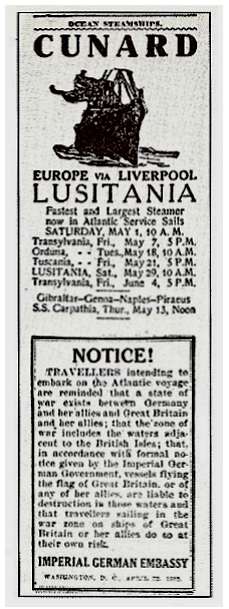
Even the sinking of the Lusitania was a deliberate act by the USA to justify getting involved in the war because Americans were isolationists. The Germans even took out an advertisement warning that the Lusitania would be sunk because it was using passengers as cover to move weapons to Britain. Our military sacrificed its own citizens to justify war.
Then there was Operation Northwoodswhere the documents have come out showing that the CIA wanted to kill Americans and blame it on Cuba to start a war. Every single war has been started with fake news all so some in the Military get to play with their toys no matter how many boys die for their games.
The critical problem we face is truly monumental. It is a vast problem that has consumed foreign policy discussions for decades. The underlying Syria issue brings to the surface the core problem. Besides the fact that it was the US invasion of Iraq that has unleashed the war in Syria since Sadam prevented the religious fanatics to ever gain a foothold. There was no civil war in Syria before removing Sadam. Mercenaries have come from all over to fight in Syria. It is not even purely a civil war.
The issue at hand is a very serious set of questions. (1) What is America’s role in the world? (2) What are America’s obligations to the world? (3) What happens if America ignores these beliefs of its role to police the world? These questions encapsulate the threat of World War III so the military gets to play with their toys one more time. They presume the USA has a divine right to police the entire world when its people were always isolationists who fled here to get away from the chaos of Europe. True, as that first generation died out, the subsequent generations forgot why their ancestors fled Europe, to begin with. Far too many just assume the USA is the policeman of the world and never question that assumption.
The military establishment looks in the mirror and sees only that they wear a white hat. They have destroyed the American dream and do not even know it.They have sacrificed the American standard of living to fund their wars. True, they defended the people against Hitler. But have they merely replaced Hitler from a power grabbing viewpoint perceiving themselves as rulers of an empire! There is no threat of an invasion by Russia or China. War has changed. The idea of conquest and occupation have faded into memory. If Russia were to take France, the French would look to them to pay their pensions. The world has changed very much.
The US military argues that America is the champion of democracy and human rights which justify its unique role in the world, or so they keep saying. They see themselves as the world’s policeman which justifies using force at will because everyone else is inherently a potential criminal. Who gave them these special powers and obligations to rule the world? Have the American people ever sanctioned such a military role over the world or agreed to reduce their standard of living to defend the entire world?
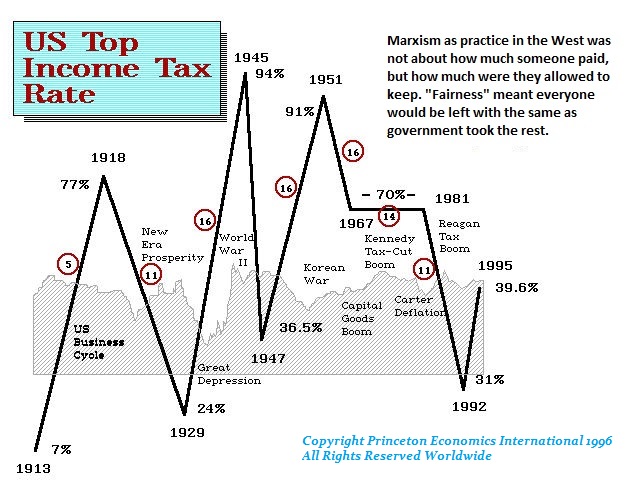
During the 1960s Presidential Debate, John F. Kennedy caused the first postwar Gold Panic. He publicly stated the truth. The Bretton Woods Monetary System was collapsing not because of a trade deficit – it was the military establishment opening bases around the world and the dollars that poured out to build these facilities and maintain them. America was squandering its wealth on the whims of the military. It was not consumers living high on foreign goods. As the Democrats raised taxes to insane levels of 94% for World War II in 1945 and back to 91% for the Korean War, with each tax hike to fund the military, more and more companies began to leave sending manufacture overseas. The military sucked the lifeblood of the nation from its veins and now interest expenditures alone for all this accumulated war debt will exceed military spending by 2019.
This very idea that America has a divine role to police the world has always been controversial. This is a highly dangerous notion for these people who always desire war see themselves as better than everyone else and that justifies the lies and manipulation of the truth to accomplish their objectives. This delusional view of American power grew with victories in both world wars. They see themselves as the savior of the world and that role must continue even when there are no aggressors threatening our future directly with invasion.
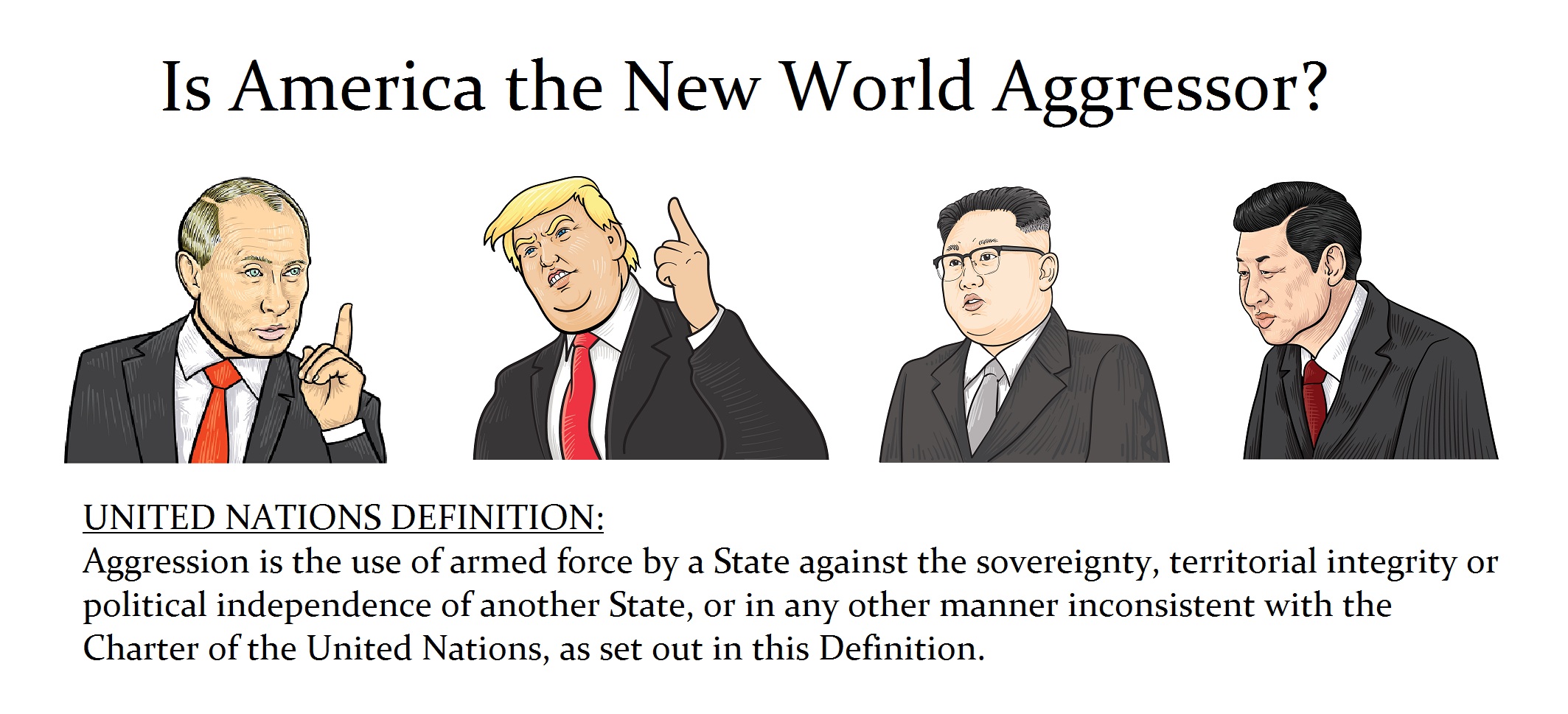
So how does a chemical weapon attack inside Syria justify US involvement? It does not. The definition of an aggressor is a use of force against another sovereign nation. Not an internal civil war. There is no absolute proof that the Syrian government even used chemical weapons. The mercenaries know the game. Like Operation Northwoods, if they kill their own people and blame Syria, then the USA will rush in and support the Islamic terrorists. We are played for fools as always.
The US military views any crisis in the world as America’s responsibility to end. They argue that the failure to do so would mean giving up some of its moral power, and that will result in America appearing weaker. But EVERY nation has a right to defend itself from civil war. Spain has abused the people of Catalonia yet Brussels and the USA remain silent. Since there are mercenaries who are not even Syrian fighting in this war, it is highly debatable if it is truly a civil war or an Islamic faction invasion of a religious war. Clearly, there is another goal here and it is really just a proxy war with Russia. It is all about a pipeline that would compete with Russia in selling gas to Europe. That is the bottom line.
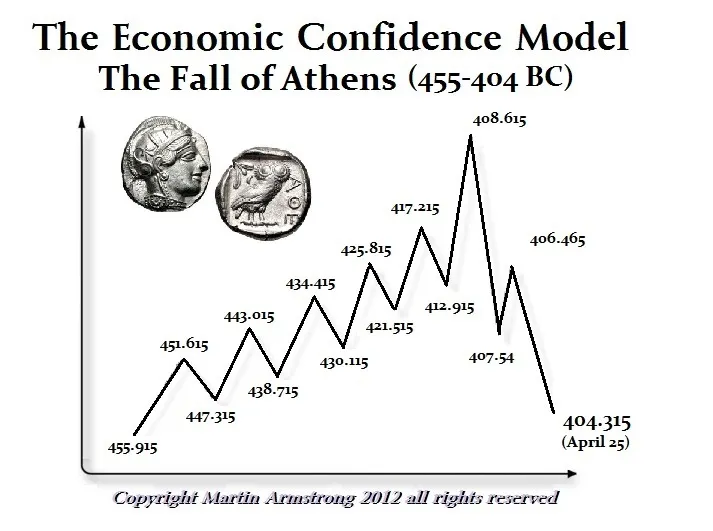
Both Napoleon, Hitler, as well as Japan, all lost in war because they waged conflicts on too many fronts. When you piss off the world, you end up with too many enemies and the old saying that two enemies will unite whenever they have a common enemy. The lesson of the fall of the Athenian Empire is a blueprint of what is to come. There were internal battles politically between the oligarchy and Democracy the same as we have today between the Democrats (Oligarchy) and the Republicans (Democrats of old). They too brought charges against the leader of the Athenian Democrats, Perikles, showing that Athens was divided for their empire was too big and tempting for corruption. This is why Mueller is desperate to take down Trump. The pattern from history is uncanny.
Delian League was found in 478BC to unite against another possible Persian invasion led by Athens. But Persia, like Russia today, became too weak to ever invade and by 431 BC, Athens’ heavy-handed control of the Delian League and demand for taxes to support a military that would not be used prompted the outbreak of the Peloponnesian War. The League was dissolved winning its freedom upon the war’s conclusion in 404 BC under the direction of Lysander, the Spartan commander. The rise and fall of the Athenian Empire followed the same Pi frequency – 8.6-years.
It is a HUGE mistake to allow the military to dominate government and instigate this war over chemical weapons being used internally within Syria for it is just a proxy war with Russia. By the UN’s definition, it is the USA who is the aggressor, not Syria, Russia, or China. The USA has few friends and to engage in war will only lead to the same conclusion that Athens suffered. The United States cannot defeat everyone if they too ban together – your enemy is my enemy. Many outside the USA will see this a freedom from American aggression. Banning together will leave the USA in shambles and defeated. History stands as a blueprint upon which the future is determined.
Oh, heck yes. This is exactly what we have been talking about. In an interview with Neil Cavuto, Senator Rand Paul shares his opinion that President Trump should respond to the coordinated political attacks by FBI and DOJ operatives by declassifying the information underneath all their shenanigans.
Good advice. Without interfering with the IG Horowitz and parallel Proseuctor John Huber approach, President Trump should immediately begin declassifying the documents surrounding the FISA abuse scandal.
Start by declassifying the 99-page opinion of FISA Court Presiding Judge, Rosemary Collyer. Remove all the redactions and let us see who the FBI/DOJ officials were allowing to have access to the NSA database to conduct searches. Then declassify the full FISA Title-1 surveillance application used by the FBI and DOJ against U.S. person Carter Page.
If these releases of information create a need for prosecution of the people, entities and former officials behind the documents, then so be it. These documents are unrelated to the issues of the FBI conduct review of IG Horowitz, and extend outside the DOJ. WATCH:
An Eagle was soaring through the air. Suddenly it heard the whizz of an Arrow, and felt the dart pierce its breast. Slowly it fluttered down to earth. Its lifeblood pouring out. Looking at the Arrow with which it had been shot, the Eagle realized that the deadly shaft had been feathered with one of its own plumes.
Moral: We often give our enemies the means for our own destruction.
The United States economy is the Eagle; the shaft is Wall Street; the feather is the U.S. middle-class, and the archer is U.S. Chamber of Commerce President Tom Donohue.
Need proof? Please, don’t take my word for it, read:
Tom Donohue: Tonight feels like a gathering of old friends. Five years ago, I had the pleasure of being in this beautiful city to help start a hemispheric business dialogue, and I’m pleased to be back in Lima for this year’s CEO Summit of the Americas.
[…] I also want to talk a little about the priorities within our government. Because, as everyone knows, many of the policy decisions coming out of Washington today not only impact the U.S. economy and its businesses and workers, but indeed those across this hemisphere and around the world.
[…] The Chamber has helped lead the fight to protect the status of more than one million people who are at risk of deportation. It makes no sense to send one million talented workers back to their home countries when we don’t have enough labor to get the job done in our own. This includes the young men and women who were brought to our country as children through no fault of their own—known as “the Dreamers”—as well as hundreds of thousands of individuals who are working in the U.S. under temporary protected status.
Moreover, as the debate has unfolded in Congress, we have been fighting back against proposals that would further reduce legal immigration.
♦You get that? I cannot tell you the number of people who have argued with me, and CTH, about Tom Donohue supporting amnesty and open borders. Many of the voices who oppose truth are deep within CONservative media. I digress.
Donohue continues on the topic of trade:
[…] NAFTA “As many of you know, there several problematic U.S. proposals that have stalled progress toward a deal.”
[…] [The Trump administration sunset clause proposal] calls for an automatic termination date after five years unless the three parties agree to continue it. I don’t need to tell any of you as investors that this is untenable to anyone who intends to achieve return on his investment; the conversation should start at 20 years in order to provide the certainty in ROI that we all require.
•You get that? “Problematic U.S. proposals”… WTF? Wall Street, via The U.S-CoC is demanding no review of any new NAFTA deal for any period less than 20 years? Twenty.Fucking.Years. [Twenty years ago cell phones were shoe boxes.]
[…] Next, the U.S. has put forward a proposal introducing severe restrictions on Mexican and Canadian access to U.S. government procurement. While touted as a way to supposedly promote improved reciprocity, the U.S. proposals are likely to have the opposite impact.
U.S. companies have far more at stake in North American government procurement than our Canadian and Mexican partners. Hundreds of American firms in financial services, IT, education and beyond have literally billions of dollars in government contracts in Canada in Mexico.
•You get that? Wall Street, via the U.S-Coc, wants Mexican and Canadian companies to benefit from U.S. taxpayer expenditures on government contracts (ie. infrastructure spending etc.) Why? Because Wall Street has investment in Mexican and Canadian companies, that’s why.
[…] Finally, the U.S. has advanced a proposal on rules of origin for auto production that mandates increases in North American content.
I touch on this area last because it’s the controversial proposal that’s shown the most promise for a potential breakthrough. Negotiators are creatively looking at ways to introduce areas like vehicle design and research and developmentinto the content equation in a way that potentially limits disruption to production.
And there’s the key. Whatever solution they come to cannot disrupt the fully integrated North American supply chains that have made our continent’s auto sector the most competitive in the world.
•Your get that? Wall Street, via the U.S-CoC want to keep the flow of cheap Chinese and Asian parts into their investments in Mexican auto-plants. In an effort to hoodwink the details, Wall Street, via the U.S-CoC want to add the cost/value of designing a car into the content as if “design and research” was an actual physical component. See the scheme?
[…] As we heard at the recent meeting of AACCLA leaders in Miami that many of you attended, our regional partners view NAFTA as a bellwether for the fate of other agreements. Let’s not forget that all U.S. FTAs are slated to be reviewed, presumably once NAFTA 2.0 is complete. And twelve of our 20 FTA partners are in the Americas. Nearly half of all U.S. goods exports are bound for this region. … The U.S. Chamber will keep fighting for that outcome, here and in Washington, and for as long as it takes.” (continue reading)
Oh there’s more, much more, but you get the picture. There are trillions of dollars at stake and the U.S. CoC is committed to exploiting every single penny. President Donald Trump is an existential threat to these endeavors.
As you are probably aware President Trump cancelled his visit to the Summit of the Americas in Lima, Peru this week; preferring to send Vice President Mike Pence in his stead. U.S. Chamber of Commerce President Tom Donahue is in Peru and delivered the Wall Street positions on trade to the gathering. (More on that later).
It is critical to remember, at the epicenter of all political position is money. All support and opposition to POTUS Trump surrounds the money. Under the foundation of ideology are financial benefits and/or lack thereof. [Ex. Chuck Grassley’s presentation of a bill to support SC Robert Mueller is directly tied to his purchased Big AG lobby position on trade via UniLever, ConAgra, Monsanto, ADM etc.] The Wall Street coalition needs leverage against POTUS Trump to defend their financial positions. There are trillions at stake.
Directly related, today in the White House, President Trump -together with U.S.T.R Robert Lighthizer- met with an assembly of governors and congressional representatives to discuss trade and agriculture. Each of these state and federal officials is part of the Big AG corporate purchase of policy.
.
When POTUS keeps the cameras rolling, it’s beneficial to pay attention. Notice how President Trump is leveraging an agricultural benefit of ethanol against the financial influence of Big AG lobbyists who control the assembled politicians.
It’s a modern fact, albeit sickening in the big picture, that President Trump has to fight for the best outcome of America’s economic policy against special interests of U.S. politicians – who are purchased by lobbyist money to act against America’s best interests.
[Transcript] 11:07 A.M. EDT – THE PRESIDENT: So this is a group I like very much. We’re here to discuss agriculture — very important. And these are great people, great Americans, great patriots. And they’ve been treated very badly for a long time. And if you look at the farmer, it’s been, unfortunately, over a 12-year period, trending downward. Very much trending downward. So we’re changing things with respect to trade and trade with other countries.
A lot of times, the farmers sort of — they know what they have. But it’ll be very good when we get it all finished. It’ll be great. People are a little bit concerned going into that wild blue yonder, or, in our case, the wild red yonder. (Laughter.) But I will say that the farmers are going to be — they’re going to do fantastically well.
But they have been trending downward for a long period of time, and we’re not going to have that. A lot of it is because of bad trade deals.
So I’m pleased to be joined by several of our nation’s governors — very distinguished governors — and members of Congress to talk about trade and agriculture.
As you know, the recent investigation led by U.S. Trade Representative Bob Lighthizer — who’s with us today also — identified a pattern of chronic Chinese trading abuses, including theft of intellectual property and trade secrets, and forced technology transfers, which has cost this country hundreds of billions of dollars, and also, the targeting of American technology. It’s cost us untold hundreds of billions of dollars over the years.
Larry Kudlow is here and he’s shaking his head, approvingly — meaning, of what I’m saying.
KUDLOW: Yes, sir.
THE PRESIDENT: But disapprovingly of what they’ve done.
KUDLOW: Yes, sir.
THE PRESIDENT: As you are all aware, China has consistently treated the United States agriculture unfairly. I was very proud of something I did at Mar-a-Lago, in Florida. I had President Xi, who’s a friend of mine, who’s a very, very good man. And I don’t blame China; I blame our representatives that — our people over the past, our Presidents and negotiators and trade representatives — that they allowed this to happen.
But during a very brief conversation, I said, “President, the United States, we want to sell beef again to China.” Now, they hadn’t sold it in, what, 14 years or something. And he looked at me and he said, “Say it again.” I said, “We want to sell beef” — that’s a big industry — “in China.” And he said, “We will sell beef in China.” And we did other things too. But the one that really is the most interesting for the people at this table is beef.
And I think, Governor, that made a big impact, and they’re selling a lot of beef in China that hadn’t been — for 14, 15 years, they were not allowed to sell beef in China.
So we have the kind of a relationship that, I think, is going to be very aggressively sustained. Yesterday, as you know, President Xi made a very good speech, and he said he’s going to open up China. He’s going to open it up, take down a lot of the trade barriers — maybe all of them — but take down a lot of trade barriers.
And he’s going to get rid of a lot of the taxes or tariffs that they charge. Because, right now, if you have — and I use this example because it’s so easy — if we sell a car into China, number one, they won’t take the car; and number two, if they did take the car, it’s 25 percent tariff. Whereas we have no barrier, and when they sell a car into us, it’s 2.5 percent. So they have barriers, but when they don’t have barriers, it’s 25 percent versus 2.5 percent. That’s not a good way to make money. Chuck will tell you that. So we’re straightening that out.
We want to be reciprocal. So if they charge 25, we charge 25. If they charge 2.5, we charge 2.5. And maybe what happens is we both charge nothing, because I know we’d all like that. I think Ben would like that better than anybody, okay? That’s simpler than 25. Let’s save all the transfer of funds, right?
SENATOR SASSE: We need more trade.
THE PRESIDENT: So that’s what we want. We want more trade. We want no barriers. But the only way you can knock it down, you can’t just go in — for 25 years, Presidents have been trying to negotiate and they’ve been very unsuccessful, because they’d meet and they’d say, “Can we talk?” And the Chinese would say, “Yes, we can.” And that’s what they do — they talk for four years, then they’ll talk for another four years, and that would be the end of that. Nothing would happen. So nothing would happen. So we’re doing a job there.
NAFTA — we’re renegotiating NAFTA. It’s coming along great. I have no time. You know, I keep reading from the “fake news” media that we’re pushing it. I’m not pushing it; I don’t care. Oh, you’re laughing. That’s good, Chuck. See, Fox can smile because — (laughter) — you know, you do a very beautiful job.
But I keep hearing how we’re pushing NAFTA, we want it done. There’s no timeline. There’s no timeline. Now, in the meantime, nobody is moving into Mexico. Because as long as NAFTA is in flux, no company is going to spend a billion dollars to build an automobile plant.
So I say this — I’ve told it to the Mexicans: We can negotiate forever. Because as long as we have this negotiation going, nobody is going to build billion-dollar plants in Mexico, which is what they’ve been doing a lot. They have taken our auto industry by the throat. And so many jobs have been lost, so many massive plants have been built in Mexico. Top-of-the-line stuff. But it’s not happening now, and they’re coming back. Chrysler has moved back; a lot of them have moved back.
And the same thing with agriculture, which is going to be our predominant discussion today. So agriculture is okay with NAFTA. Not great. We’re going to make it great. We’re going to make it great. And we’re getting pretty close to a deal. It could be three or four weeks. It could be two months; it could be five months. I don’t care. In fact, if everybody in this room closed their ears, I’d say I’d rather terminate NAFTA and make a brand new deal, but I’m not going to do that because I want everyone to be happy in this room, okay? We’ll see how it goes.
But we’re going to make a fair NAFTA deal, much better than it is right now. NAFTA has cost this country hundreds of billions of dollars. It has been a disaster. We’ve lost 50,000 factories, millions of jobs. NAFTA has been a disaster.
So we’re going to either come up with a great NAFTA deal, and a fair one for this country, or we’re going to just do something else. And agriculture will be taken care of 100 percent.
So we’re going to have a discussion today and we’re going to talk about agriculture as it relates to trade, primarily. Again, we’re doing really well with China. I think we’re having some great discussions, and we’ll see what happens. We put a $50 billion tariff on, and then we put $100 billion tariff on. And, you know, at a certain point, they run out of bullets.
Remember what I said: When you’re $500 billion down, you can’t lose a trade war. And I won’t call it a trade war because it’s really a trade negotiation. But nobody ever negotiated from our side. Nobody ever did anything. All they did was talk. And in the meantime, we helped rebuild China because they took so much money — bridges, and airports, and military, and everything. They took so much — hundreds of billions of dollars out of our country.
So now we’re really negotiating, and I think they’re going to treat us very fairly. I think they want to. And again, I don’t blame my friend, President Xi. I blame our representatives, for years, that didn’t do a damn thing, and they allowed it to happen. I wish we could do what they did because that would make everybody at this table very happy. So perhaps we’re in the process of doing it.
The other thing is, if you look at the European Union — we’re talking to them — I don’t know if you realize it, but they have virtual barriers against even agriculture, from going in. So they sell us their Mercedes-Benzes, and they sell us their BMWs, and they sell all the different things. And we have no barriers whatsoever.
Hello, Pete. Good job you’re doing. Nebraska, folks. Doing a good job. He never liked me until we met. (Laughter.) Right? He was a Never Trumper. And his family.
GOVERNOR RICKETTS: No, that was my brother, Todd. (Laughter.)
THE PRESIDENT: No, the whole family. (Laughter.) And then I flew to Nebraska — a state I love — I made a speech, and he liked me. And from then on, he called his brother — he said, “Trump is good. Let’s be friends.” Then we became —
GOVERNOR RICKETTS: Well, remember in that speech, Mr. President, you vowed to open up the Chinese market to our U.S. beef. And you delivered on that promise.
THE PRESIDENT: And that’s what we’re doing, right? Did I deliver? I did that quickly.
GOVERNOR RICKETTS: Yeah.
THE PRESIDENT: In one conversation. So — good to see you, Pete.
So we are opening up the European Union or we’re not going to be very nice about it. At the European Union, we’ll lose about $151 billion this year. We lose with almost everybody. We lose with Canada. We lose with Mexico. We lose with the European Union. We lose with — certainly, we lose with China, Vietnam. I mean, no matter where you go, it’s very rare — very rare that our country has a surplus.
But we’re changing it. And, as Ben said, we want to have trade. And we want to have barriers taken down because the barriers, in many cases, are far worse than the tariffs. I mean, the tariffs can be bad, but the barriers are very bad.
So the European Union makes it very hard for agricultural products because their farmers don’t want you there. The farmers say, “We don’t want the American farmers.” But that’s not fair because we take all of their stuff. A lot of cars and lot of other things. So they’re going to have to take down the barriers because we can’t have it.
You know, when you think of European Union, you think so friendly, so nice. They’re very brutal to us in terms of trade. So we’re talking about that, too.
In the end, the farmers are going to be, I think, the biggest beneficiary from all of what’s happening. They are great people. We love our farmers. They were so good to me during the election, that whole — much more than center of the country. It’s a big group of people, Joni. Right?
But Sonny Perdue came, and he said, “Look at this.” And he hung up a map, and the whole thing is red. And those are those farmers, and we love those farmers. Right? We’re going to take care of the farmers. They haven’t been taken care of.
I mean, you just take a look at European Union. They virtually can’t do business. Take a look at China. Take a look at so many other places.
So we are going to finish off these trade deals. I’m going to ask Sonny, Secretary of Agriculture, to say a couple of words. I might ask Bob Lighthizer to say a couple of words, and maybe Larry Kudlow. And then we will get on with our meeting, and we’ll ask the media to head out of the room.
Sonny.
SECRETARY PERDUE: Mr. President, the people in this room, both in Congress and governors, represent some of the best people in America, and that is those people that you’ve used a word that I like to use about them. They’re “patriots” first. They’re Americans first.
THE PRESIDENT: Patriots.
♦SECRETARY PERDUE: They bring the hardworking ethics of the American spirit from their fields and farms and ranches across this country. And they support you. And they understand what you’re trying to do in calling the question — having the courage to call the question against people who have been cheating, both China and EU. The barriers that you describe actually punish American farmers more than a lot of other industries because the American farmer and rancher has been so productive. So they’re with you in that effort.
Obviously, from their livelihood perspective, we can understand their anxieties. And that’s what these people hear about on an ongoing basis. But I’ve been out last week on the road, assuring them what you told me, is that you are going to take care of the American farmer. You don’t expect them to be the only soldiers in this battle.
And, first of all, I think your point of what President Xi said over the weekend — I don’t think we’re in a battle yet. I think we have set the stage for a balanced negotiation that can happen. And that’s what all of us are hoping and praying for, that we get a good, sound, fair, balanced negotiation with all of these countries. And we applaud your leadership and courage in calling that question.
THE PRESIDENT: Well, that’s why I really called the farmers “patriots” — because they know what I’m doing. They had a group of 10 in one of the shows over the weekend, and they were farmers. “And do you agree what the President is doing with China?” And they all agreed. They all said, “Look, we may have to take a little bit of a hit.” I don’t even think they will. But in the end, the country is going to be much stronger; our country is going to be much stronger.
But more importantly, they’re going to be — everything is going to be better. Just everything is going to be better. And one of them said, “You know, most importantly, the country is going to be much stronger, but we’re going to make much more money.” They’re going to be doing much better.
And, you know, as an example, I’m working with Chuck Grassley, and with Joni, and with Deb, and — all of us, right? We’re all working together. And we’re working on the ethanol, and it’s really working out. I think it’s going to really work out. People have been talking about this for years. And we think we’re going to do something, I will say, early — and now this is no guarantee — but we’re going to raise it up to 15 percent, which makes a lot of people happy.
We’re going to go to 12 months, which makes a lot of farmers very happy — because we go from 8 months to 12 months, that’s a big difference. That was always unnecessary and ridiculous.
So we’re going to work out something during the transition period, which is not easy, very complicated, because we have to take care of our refineries. We have to take care of a lot of other people. But we’re working on transition now because there will be a two-year period of time that we have a little bit of complexity while things are happening, while things are being built.
But we’re going to be going probably — probably — to 15 [percent], and we’re going to be going to a 12-month period. So I think that’s going to be —
GOVERNOR RICKETTS : It’s a great deal.
THE PRESIDENT: Look at that big smile. All of a sudden, there’s a lot of smiles. (Laughter.)
SENATOR FISCHER: That’s good.
THE PRESIDENT: And you know what? It’s going to solve a problem. And we’re going to be helping also — we’re going to be also helping the refineries. So the refineries are going to be able to do much better, because right now there are a lot of them that are not doing well. So we have to help the refineries. So we’re very close to getting that done and we’ve worked hard on that, Joni.
SENATOR ERNST: We really have. We have.
THE PRESIDENT: But it’s coming along very nicely.
Could I ask Bob Lighthizer to say a few words, please?
♦AMBASSADOR LIGHTHIZER: Sure, Mr. President. I would say, first of all, we’ll get into details about things in the private session, as you asked. Just preliminary — one, I talk to a lot of people around this room a lot. Everybody — I hope you all realize that I’m available to talk. I know this is in-time information, and consulting is important.
And I haven’t talked to all of you, but most of you I talk to a fair amount. So I want you to know that I welcome to do it. I’m happy to do it.
THE PRESIDENT: He’s working about 23 hours a day, and he sleeps for one. Look at him. I mean, is this guy — (laughter) he’s like exhausted.
SENATOR THUNE: It shows.
THE PRESIDENT: That’s all right. That’s okay. You’re looking good. Go ahead.
♦AMBASSADOR LIGHTHIZER: I don’t look that bad, all right? (Laughter.)
So the second thing is, we tend to think a lot about agriculture as always on the defensive in all of these things. The fact is you can’t really find a serious market where we couldn’t do better in agriculture.
China, of course, we talked about the sales there, but they’re a fraction of what they should be — literally, a fraction. So we’re very much on the aggressive side as far as that goes.
Moving down quickly, of course, we’ve made enormous progress. People are aware of that. I feel — I agree with the President on everything, including we’re in no hurry on NAFTA. Having said that, we’re making progress on NAFTA.
Some of the people don’t focus on — we have 18 cases at the WTO where we are pursuing the interest of agriculture very — within the trading system, which is a very big part of what we do.
THE PRESIDENT: And we’re starting to get much better results at the World Trade Organization, WTO, because they know we’re not playing games anymore. You know, we’re going to get the results or they’re not going to be so happy. I mean, it was set up to hurt us.
I mean, if you look at it, 25 years ago, or whatever it was, it was really set up to take advantage of the United States, as far as I’m concerned. But we’re starting to get much better results, and that would make, I think, a lot of people very happy.
Go ahead.
♦AMBASSADOR LIGHTHIZER: I’ll just say, the final thing I had — and we’ll about this privately — but the China situation is a serious problem. Everybody realizes something has to be done about it. I’ll show you the numbers. They’re off the charts. It’s a real threat to our economy.
The President has a plan that you can draw, literally, back from June of 2016, where we talked specifically about what we would do. He ran on this issue. He has a mandate, and I’ll show you every moderate, reasonable, well-studied step we’ve taken — I’ll do this in private, of course — and you can see how we got here in a very moderate, reasonable way.
But it’s just not an issue that can be further kicked down the road. We expect to continue to do it that way, and you get a good result, Mr. President.
THE PRESIDENT: Good. Thank you very much, Bob. And you really are doing a great job. I appreciate it. But we want to see the end result — because it doesn’t matter what happens during the course, it’s the end result that counts.
I just — while we’re talking about China, we are getting along very well. I think we’re going to do some great things. But very importantly, they’re very much helping us at the border of North Korea and they’re continuing to. And, you know, they view it as something they should do. I think it’s certainly very beneficial to them. Getting rid of nuclear weapons is very good for them. Good for everybody.
But they have really been a great help to us at the border of North Korea, and maybe that all plays into what we’re doing because I think it does. I think everything does. But perhaps that’s one of the reasons that they are so helpful. They’ve been really terrific in helping us get to some kind of a settlement.
Meetings are being set up right now between myself and Kim Jong-un, who will be — I think it will be terrific. I think we’re going with a lot of respect, and we’ll see what happens. So we’ve come a long way. But China has really helped us at the border, and we appreciate it. Okay?
Larry Kudlow.
♦KUDLOW: Yes, sir. Thank you. Let me just add on. Trump economic policies have designed and succeeding now in promoting economic growth in the U.S. We’re already running over 3 percent growth from the last three quarters. People said we couldn’t, but we are. There may be a sloppy quarter in there someplace, but the trend is unmistakable.
I will say — you know me, I’m a growth guy — better economic growth helps everyone. Everyone. I don’t care what industry what sector, what state, what region. Growth helps everyone. The 155 million Americans are benefitting from growth. New businesses, existing businesses; new investments, existing investments. Getting rid of the tax burdens and the regulatory burdens help, and it’s paramount.
In connection with the President’s trade initiatives, these are designed to promote growth. If you lose sight of that, as we get into the various details, I urge you not to think of the worst case in every situation. I just urge you to do that. We’ve got one of the greatest negotiators on the planet. He’s laid out a menu of options. Everything is on the table. If he has to do it, he’ll do it.
But there’s also a positive side. As the President said, we’ve had good signals from China for change just in the past few days. The President signaled back. Great discussions are going on. The China initiatives, with respect to technology and barriers and autos and farming, this is all designed at the end of the process — I call it the end of the rainbow — to promote growth. There’s a pot of gold there. And if you open that pot, there will be better growth and more prosperity for every part of this country and every working person in this country. That’s the design, is not to punish; it’s to grow. We never talked about punishment.
And I spoke to a lot of House members and Republican (inaudible) just earlier this morning, and I said this, and I hope I don’t violate anything, sir: Stay with us while we go through this difficult process. Stay with us. And at the end, if the worst case has come out as the President said, you will be helped. That’s a promise. I echo that promise. But stay with us now. The next few months could be very, very important. And if we succeed — and I do believe he’s going to succeed — growth is the dividend of prosperity, and we haven’t seen it in over 20 years.
So this trade initiative, as part of our growth policies, folds very nicely into lower tax rates and lower regulations. And President Trump has ended the war on business, and that’s part of this. We grow at 4 percent — who knows. This is good stuff, even though it’s difficult in the process, it’s all aimed at growth. That’s a Kudlow message. I’ve been saying it for many decades. I’m still saying it. And these are the best growth policies I’ve seen since I was a kid working for Reagan.
THE PRESIDENT: Thank you, Larry, very much. Beautifully said.
Just to finish, we have some tremendous numbers coming out from companies. We have hundreds of billions of dollars pouring back into our country from our tax cut plan where money overseas is coming in, which, Larry, you often mention and talk about. Apple, as an example, is investing $350 billion in plants — which they don’t have too many of, but they will — and campuses and everything else.
Other companies are investing billions of dollars back in our country. So they’re bringing in billions of dollars, I would say ahead of schedule, even far ahead of schedule. And that’s going to create growth and jobs and everything else.
As you know, we had 32 solar plants, and of the 32, I think 30 were closed, Larry, right? There were — it’s a new industry, but they were getting absolutely killed by China and some others. And we put a tariff on those panels coming in, which were not nearly as good as the ones we make. And now we have two that are open. Can you imagine, of the 32, there were two that are — were just about limping along and barely open.
These two are now doing very well and they’re looking to open seven, eight, nine of the plants. Same thing with washing machines. They were dumping — if you can believe this — washing machines all over the country. Just dumping them. And we put a 30 percent tariff on, and now washing machine plants are expanding and opening in our country.
So I just want to use tariffs judiciously but it can certainly help. The steel and aluminum industry — 10 percent on aluminum. And you probably have seen, and I sort of thought this might happen, aluminum is down 4 percent since we put a 10 percent tariff on it. So someday, somebody is going to explain that to me. I didn’t think it would be that good; I thought maybe it would go up just a little bit.
Steel, we have taken the tariff off some countries when we’ve been able to renegotiate deals. For instance, in South Korea, when they heard they had to pay 25 percent tariff on steel coming in, they went absolutely crazy and we made a deal. The KORUS deal is now pretty much concluded. And we really made that, I would say, Bob, largely because of the fact that they did not like the fact that they were having to pay tariffs on steel.
So we’ve been able to — even the European Union, they’re not happy about the steel, and we’re negotiating with them. I don’t know that we would be negotiating without the steel. And I say, for them to hear, I couldn’t care less. They can hear it.
In some cases, people are paying tariffs and we’re taking in a lot of money for the country. Those tariffs are tremendous. We’re taking in a lot of money. Not so bad, either. But the tariffs have really helped us. When used properly, they really get people to the table. And that’s what we want. But I want people to the table, also, for our great American farmers for the ag industry. I love those people. We’re taking care of those people. And it’s working out really well.
So thank you all very much for being here. And thank you very much. Thank you.
◊Q Mr. President, is military action against Syria inevitable, sir? Is there any way to avoid it?
THE PRESIDENT: We’re having a meeting today on Syria. We’re having a number of meetings today. We’ll see what happens. We’re obviously looking at that very closely.
And I will be leaving here. I was there, and now I’ll be going back as soon as this meeting is over. But we’re looking very, very seriously, very closely at that whole situation. And we’ll see what happens, folks. We’ll see what happens.
It’s too bad that the world puts us in a position like that. But, you know, as I said this morning, we’ve done a great job with ISIS. We have just absolutely decimated ISIS. But now we have to make some further decisions, so they’ll be made fairly soon.
H.R. 1865, the “Allow States and Victims to Fight Online Sex Trafficking Act of 2017,” which makes it a Federal crime to own, manage, or operate a website with the intent to promote or facilitate prostitution. [Summary Details]
[Transcript] 11:08 A.M. EDT – THE PRESIDENT: Thank you very much for being with us today as we sign this crucial legislation to combat online sex trafficking and bring criminals to justice.
And the people behind me have been working on this long and hard. That’s political, as well as some of our great citizens. And we appreciate it.
I want to thank House Majority Leader McCarthy. Kevin, thank you very much. Senator Portman. Senator Portman? Thank you very much, Senator. I know you two have really been working along with Congresswoman Wagner, Congresswoman Walters — thank you very much; great job — and all of the members from both parties who worked tirelessly to pass the Fight of the Online Sex Trafficking Act of 2017. So we have an official name: Fight Online Sex Trafficking Act.
REPRESENTATIVE WAGNER: FOSTA.
THE PRESIDENT: Sounds good, right?
REPRESENTATIVE WAGNER: FOSTA. (Laughter.)
THE PRESIDENT: You, did you work hard. (Laughter.) I also want to thank Governor Kenneth Mapp of Michigan [the U.S. Virgin Islands]. And we have — where’s Kenneth? Kenneth.
GOVERNOR MAPP: Right here.
THE PRESIDENT: Hi, Kenneth.
GOVERNOR MAPP: How are you doing, sir?
THE PRESIDENT: We got you all straightened out on that beautiful island, right? (Laughter.)
GOVERNOR MAPP: Yes, thank you so much.
THE PRESIDENT: Governor Kenneth Mapp and Michigan Attorney General Bill Schuette, who has been so great in so many ways. And good luck with your race.
SCHUETTE: Thank you.
THE PRESIDENT: And I think Dick Blumenthal is here. I saw Dick. So thank you very much for coming. I appreciate it very much.
SENATOR BLUMENTHAL: Thank you, Mr. President.
THE PRESIDENT: And the rest of the people are much more important because they’re not politicians. Right? (Laughter.) And, Bill — Bill Schuette, thank you very much. We appreciate it.
Most importantly, I want to thank the survivors and families who join us today. I’m signing this bill in your honor. And we are all together — politicians, both Republican and Democrat — signing this and representing this to you in your honor. So thank you all very much. We very much appreciate it. You’re very brave. (Applause.)
You’ve endured what no person on Earth should ever have to endure, and we are going to do everything in our power to make sure that traffickers are brought to a swift and firm justice. And I’ve heard statistics where trafficking in the world is more now than it ever has been ever in the history of the world. And you wouldn’t believe that with, you know, modern-day everything. But they use modern-day better than law enforcement can use modern-day, whether it’s the Internet or anything else. And you wouldn’t believe that. But trafficking, it’s probably worse today than at any time in history.
So I want to thank you for your courage, and thank you for helping survivors across our country. And you are not alone. You are not alone. And this is a very important day. If we work together, we can get the criminal traffickers off our streets and off of the Internet. We can bring safety and hope to every community across the country, and we can create a culture that respects the dignity of every child of God.
So I just want to thank everybody for being here. And I think what we’ll do is I’d love to have a few of you make statements. Kevin, maybe we start with you.
MAJORITY LEADER MCCARTHY: Well, first I want to thank you. And I want to thank all the survivors. We would not be here today if it wasn’t for your courage. And the difference that this is already making — we’ve tried for 10 years to get this bill through. You just achieved something we haven’t been able to do because, of the hundreds of thousands of children who are trafficked, 70 percent of them are online. And because of what you’re doing today, that’s already shut down. Eighty-seven percent of that is already shut down.
THE PRESIDENT: That’s fantastic.
MAJORITY LEADER MCCARTHY: You are saving lives.
THE PRESIDENT: Thank you, Kevin. That’s so nice. And I have to give credit to Ivanka Trump. She’s here someplace. (Applause.) She’s been a great representative, I will say.
MAJORITY LEADER MCCARTHY: At the very beginning of your administration, she put a meeting together of all of us over there — the start of making this happen.
THE PRESIDENT: That’s true. Thank you, Ivanka, very much.
Rob, would you like to say something?
SENATOR PORTMAN: Mr. President, you’re correct about Ivanka. (Laughter.) Early on, she sent some personal tweets out which were very helpful to us, at a time when, to be frank, many people thought we couldn’t get here. There were people who believed that this was not the appropriate way to go, and we instead persevered, with the help of all these survivors with us today.
They kept saying, “You know, it’s unbelievable” — as you just said — “that trafficking could be increasing in this country, in this century.” And yet, it has been. And all the experts say it’s because of the Internet. So we had to deal with this issue.
And there was a federal law, unbelievably, that actually gave these websites immunity, that shielded them from prosecution or from these victims and survivors you see here being able to have their day in court. And so, they persevered.
And by signing this today, Mr. President, you will make a huge difference in the lives of so many women, girls, boys going forward. And I want to thank you for that and, again, thank the survivors who are here because they’re the ones who led this fight.
THE PRESIDENT: That’s true. That’s so true.
Dick?
SENATOR BLUMENTHAL: I want to thank my partner, Rob Portman. It was really a partnership in the Senate, and the bipartisanship on this issue really can provide a model for the country of how we can work together and do anything if we are together.
And I just want to add my thanks to the survivors. I’ve been working on this issue for more than a decade. And they said it literally couldn’t be done because we couldn’t overcome the power and the wealth of the folks who had a vested interest in that statute that was protecting the online traffickers. But with your help, your courage, your strength, we did it. Thank you.
MAJORITY LEADER MCCARTHY: Mr. President, it was Ann and Mimi who put this bill together to make it get to your desk, too.
THE PRESIDENT: Good. Well, say something. (Laughter.)
REPRESENTATIVE WALTERS: First of all, thank you to all the survivors. You have a lot of courage. It’s difficult to come forward, and we couldn’t have done this without you.
I come from Orange County, California, and last year there was a sex trafficking ring that was uncovered. As you said, didn’t know it could happen in my backyard, and it is everywhere. And I became much more involved once I found out what had happened. So I am so honored to be here today. I’m so glad that we’re now going to hold those accountable who are hurting people.
THE PRESIDENT: Really great work. We appreciate it.
REPRESENTATIVE WAGNER: H.R. 1865, Mr. President, FOSTA.
THE PRESIDENT: That’s right.
REPRESENTATIVE WAGNER: We are so excited. And this is landmark legislation that is truly, as the Leader said, going to save lives, and it already is. I received a text message from the Manhattan DA last night that said we have already shut down 87 percent — 87 percent — of the online sex trafficking ads out there. And we’re after the remaining 13 percent.
It’s amazing what this is going to do to give prosecutors, the Department of Justice, state and local district attorneys the ability to go after and shut down these websites and put people behind bars, give victims the justice they deserve, and to actually go to the heart of the Communications Decency Act and make sure that the courts know, that the public knows, that survivors know that it was never Congress’s intention, through CDA, to make a red-light district out of the Internet. If it’s a crime offline, it’s a crime online. And we are grateful to your leadership, Mr. President, and to Ivanka who has really led the charge in helping us bring this together.
THE PRESIDENT: Great job. Thank you very much. And I didn’t know you were going to be here. You have to say — you have been so good to us. (Laughter.) I didn’t know she was going to be here. Now I’m happy.
REPRESENTATIVE FOX: Well, I just want to say, Mr. President, that we have the Center for Missing and Exploited Children in the jurisdiction of the Education Workforce Committee, and we want to highlight that too. Just as Congresswoman Wagner has talked about what’s been happening, there is a resource there of the federal government, and we want people to go to that and to pay attention to it and use the center when necessary.
But hopefully, of course, we’d like to see that be able to go away because we wouldn’t have exploited children.
THE PRESIDENT: Right. That would be nice.
REPRESENTATIVE FOX: Thank you, Mr. President.
THE PRESIDENT: Thank you very much.
MAZZIO: So, Mr. President, we have a survivor. This is M.A. She was the first person to sue Backpage in 2010 and she elbowed me and would like to say something.
REPRESENTATIVE WAGNER: From Ferguson, Missouri.
THE PRESIDENT: Absolutely.
M.A.: I am not a survivor. I am M.A. It’s about damn time. (Laughter and applause.)
THE PRESIDENT: Thank you very much. Bill, say something?
SCHUETTE: The credit goes to the survivors, Mr. President. Because of the leadership in Congress, and your signature, as Attorney General of Michigan, it will give me and others attorneys general and county prosecutors the ability to shut down these bad actors, the Craigslist, the Backpage. And so this is a monumental day. Thank you, sir.
THE PRESIDENT: Thank you very much, Bill. Thank you.
SCHUETTE: My pleasure. You bet.
THE PRESIDENT: I’d love to have you say something.
REPRESENTATIVE WAGNER: Yvonne, please. She lost her daughter, Mr. President.
THE PRESIDENT: I know that, and I heard, and it’s very special. And we’d love to have to you say a few words.
AMBROSE: I don’t want to cry in front of you, Mr. President. (Laughter.)
THE PRESIDENT: Don’t cry. Don’t cry.
AMBROSE: This is so important to all of us, and I thank you, Mr. President, so much for signing this bill into law. It means so much to our family. To lose your child who has been trafficked, which is modern-day slavery in our country, and to get that call on Christmas Eve that your one daughter, your oldest child has been brutally murdered because she said, “no”, because she did not want to be a part of this, is the worst thing.
Unfortunately, my daughter was not the first person whom this has happened to. And thanks to you and everyone here, hopefully there won’t be many more after her that have to endure this pain. The pain that has brought on my family is unimaginable.
So I thank you, Mr. President. I thank you all to the survivors and my husband for everything that you guys have done.
THE PRESIDENT: How old was your daughter?
AMBROSE: She was 16.
THE PRESIDENT: Oh, boy. We’re with you 1000 percent, okay?
AMBROSE: Thank you so much.
THE PRESIDENT: Thank you very much. Very brave to be here.
AMBROSE: Thank you.
THE PRESIDENT: Thank you very much. I appreciate it. Would anybody want to say anything? Anybody else? Anybody? Please.
SVENGARDE: Mr. President, I’d just like to thank you on behalf of my family as well. My daughter was trafficked at the age of 15. And by signing this, like Yvonne said, hopefully there won’t be too many more.
And I would like to thank all the representatives in the bipartisan leadership that it took to get this across the finish line and onto your desk.
THE PRESIDENT: Thank you. They really worked hard. Thank you. This was a tough one, but it was something that we got done. And it shouldn’t have been tough.
REPRESENTATIVE WAGNER: Right. That’s right.
THE PRESIDENT: It’s even tough politically, if you can believe that. But we got it done. Right, Kevin?
MAJORITY LEADER MCCARTHY: Yes.
THE PRESIDENT: So this is in honor of your daughter, okay? This is very important. I think we may have to give you the pen. (Laughter.)
AMBROSE: Thank you, Mr. President.
(The bill is signed.)
AMBROSE: Thank you. (Applause.)
THE PRESIDENT: Well, I want to thank everybody. This is my great honor. I will say, the political people around the desk, every one of them — Democrat and Republican — have worked very hard. And it was surprisingly difficult. You would think it would be easy, but it was much more difficult than any of us would have assumed because people have reasons. But I personally don’t understand those reasons. This should not have been as hard and it shouldn’t have taken as long. It’s been many years in the making.
So on behalf of everybody, and just in honor of your daughter and all of the folks behind me, I want to thank you and I want to really congratulate you. This is a great piece of legislation. It’s going to make a tremendous difference.
AMBROSE: Yes.
THE PRESIDENT: Thank you very much.
AMBROSE: Thank you so much, Mr. President.
THE PRESIDENT: And we have some extra pens, all right? (Laughter and applause.) Thank you all very much everybody.
Do not get so caught up watching the granules moving at our feet that we forget to look up and notice the landscape is shifting….
A key DIA official from within the White House National Security Council has resurfaced today as reports showEzra Cohen-Watnick has been hired by Attorney General Jeff Sessions to assist on issues surrounding counterintelligence and counterterrorism.
WASHINGTON — A former American intelligence official who came under intense scrutiny during a stint at the White House last year is returning to government as the national security adviser to Attorney General Jeff Sessions, according to a person familiar with the decision.
The official, Ezra Cohen-Watnick, will play an important role at the Justice Department, advising Mr. Sessions on counterintelligence and counterterrorism. (NYT Link)
Before getting to the big picture of Cohen-Watnick, let’s look at a few recent granules which at first might seem disconnected – but they are not.
♦U.S. Attorney John Lausch was brought on by AG Jeff Sessions to coordinate investigative document releases to congressional oversight. Specifically, Lausch has been assigned as the point of contact for discussion with congress. This move keeps Federal DOJ Prosecutor John Huber (IG Horowitz’s investigative partner) away from political engagement, and allows Huber to continue culling through potentially criminal evidence without political concerns.
Earlier today Lausch was asked about the two-page “electronic communication” (EC) letter that initiated the 2016 FBI Counterintelligence operation against candidate Donald Trump and his campaign officials. The “EC” relates to the origin of the surveillance conducted by the corrupt DOJ-NSD and FBI officials; and ties directly to the abuse of FISA(702((16)(17) search abuses – and later to the issues of a fraudulent, potentially criminally misrepresented, FISA Title-1 surveillance application by those same officials.
In responding to the questioning, Attorney Lausch stated the EC document, and as a consequence the FISA documents, are not under his authority for review and release. So the DOJ has carved out the FISA and EC issues from the investigative releases to congress.
This distinction is important.
♦Remember, previously the Eastern District of Virginia attorney, Dana Boente, was identified as being a problem for the ‘small group’ of co-conspirators during their activity. Following the firing of AAG Sally Yates, April 2017, Boente was put in charge of the DOJ National Security Division. Acting Attorney General Boente granted IG Horowitz previously denied access to oversight within the DOJ-NSD. After Jeff Sessions confirmation Boente remained in charge of the DOJ-NSD.
Near the end of 2017 Dana Boente left Main Justice and then resurfaced late in January 2018 when FBI chief legal counsel James Baker was outlined as being a key participant in the 2015, 2016, 2017 anti-trump operation. Baker was removed from all responsibilities and replaced with Boente. Mr. Boente remains the current chief legal counsel of the FBI serving under Christopher Wray.
♦The Head of the FBI Counterintelligence Unit is E.W. “Bill” Priestap. In ’15, ’16, and 2017 Priestap was Peter Strzok’s boss. Text messages between Andrew McCabe’s former office lawyer, Lisa Page, and FBI Agent Peter Strzok, during the DOJ/FBI operations against candidate Trump, showed multiple examples of the ‘small group’ working around Priestap.
FBI Agent Peter Strzok was even promoted to #2 without Priestap’s prior knowledge.
On March 20th, 2017, when FBI Director James Comey was asked by congress why he did not inform oversight -as required- about the 2016 counterintelligence operation against candidate Trump, James Comey stated the decision not to inform congress was recommended by his FBI Director of Counterintelligence, Bill Priestap.
There is also evidence from Priestap’s statements to investigative officials that contradicts FBI, DOJ-NSD and intelligence community leadership, McCabe, Comey, Brennan (CIA) and Clapper (ODNI); in that the source documents (Clinton/Steele Dossier) for the October 2016 FISA surveillance application were not vetted at the time they were used.
On January 30th, 2018, after Chairman Nunes personally took FBI Director Christopher Wray to view his HPSCI “FISA Memo”, and prior to the House Intel Committee vote to release the memo the next evening, FBI Director Christopher Wray sent a Main Justice official and a “counterintelligence official” to view the content. According to Catherine Herridge reporting: those officials: “could not point to any factual inaccuracies.”
Mr. Bill Priestap, has given statements to ongoing FBI investigators and remains the head of FBI Counterintelligence today. [Absolutely no change in status, role or responsibility]
♦Responding to the initial results of an NSA FISA audit – on April 28th, 2016, NSA Director Admiral Mike Rogers shut down the DOJ-NSD and FBI access to the NSA database based on 702(16) “about” search inquiries. When the full audit was completed, October 2016, Admiral Rogers informed the FISC court of serious FISA search violations, breaches, extraction of raw intelligence information and misrepresentations by FBI and DOJ officials to the FISA court.
In April 2017, Director of National Intelligence Dan Coats, declassified and released a substantive portion of the 99-page response from the FISA court. The FISC reviewed the DOJ-NSD and FBI FISA misrepresentations and the NSA compliance audit reports provided by NSA Director dmiral Mike Rogers.
On June 7th, 2017, Admiral Mike Rogers informed congress the NSA deleted all of the results of those unlawful FISA(702) searches, but also stated he directed “all audit logs of the activity to be preserved/retained”. (ie. the NSA preserved the evidence of conduct)
♦Early April this month: (Via The Hill) […] Attorney General Jeff Sessions quietly tapped Prosecutor John Huber — apparently last fall — to work in tandem with the Justice Department’s inspector general to determine whether allegations of abuse at the FBI and the Justice Department merit investigation. […] The Justice Department has declined to comment on his budget or what Sessions meant when he said that Huber is working “in cooperation” with Inspector General Michael Horowitz. Horowitz’s office also declined to comment.
♦Back to Today’s News – The IG Horowitz and Prosecutor Huber investigation is ongoing; the FBI has Dana Boente as chief legal counsel; Bill Priestap remains in place as head of Counterintelligence; and now Attorney General Jeff Sessions has added former DIA official Ezra Cohen-Watnick to “advise Mr. Sessions on counterintelligence” matters.
2017: […] “Washington got its first real look at Cohen-Watnick when he was identified as one of two White House sources who provided House Intelligence chairman Devin Nunes with evidence that former national security adviser Susan Rice requested the “unmasking” of the names of Trump associates in intelligence documents.” (Atlantic – link)
I think everyone can see how each of these moves and shifts relates to the larger matters at hand. It is obvious Mr. Cohen-Watnick is part of the dynamic to capture all those who participated in the scheme to destroy the Trump presidency.
You can call it a soft-coup, or you can call it politicization of the DOJ and FBI, but the end result is the same – the intentional effort to manipulate, influence, and ultimately subvert an election for the presidency of the United States. ~SD
Last night House Intelligence Chairman Devin Nunes threatened to impeach FBI Director Christopher Wray and Asst. Attorney General Rod Rosenstein, if not granted access to review the two-page intelligence community origination document that kicked-off the 2016 FBI counterintelligence operation against candidate Donald Trump.
Today Rosenstein and Wray allowed Chairman Nunes and Trey Gowdy to review the origination document, also known as the “electronic communication” (EC). House Permanent Select Committee on Intelligence Chairman Devin Nunes issued the following statement today:
“After numerous unfulfilled requests for an Electronic Communication (EC) related to the opening of the FBI’s Russia counterintelligence probe, Chairman Trey Gowdy and I met this afternoon with Deputy Attorney General Rod Rosenstein. During the meeting, we were finally given access to a version of the EC that contained the information necessary to advance the Committee’s ongoing investigation of the Department of Justice and FBI. Although the subpoenas issued by this Committee in August 2017 remain in effect, I’d like to thank Deputy Attorney General Rosenstein for his cooperation today.” (link)
The two-page electronic communication (EC) is essentially the intelligence report from CIA Director John Brennan, that started the FBI Counterintelligence Operation against the campaign of Donald Trump.
From The Hill: […] According to a Justice Department official, the remaining redactions in the document are “narrowly tailored to protect the name of a foreign country and the name of a foreign agent.” Specifics have been replaced with identifiers like “foreign official” and “foreign government,” the official said.
“These words must remain redacted after determining that revealing the words could harm the national security of the American people by undermining the trust we have with this foreign nation,” the official continued, adding that they appear “only a limited number of times, and do no obstruct the underlying meaning of the document.” (link)
However, thanks to leaks from John Brennan (CIA) and James Clapper (ODNI) to the New York Times we already know the ridiculous content of the redactions. The “foreign nation” was Australia, and the “foreign agent” was Alexander Downer.
WASHINGTON — During a night of heavy drinking at an upscale London bar in May 2016, George Papadopoulos, a young foreign policy adviser to the Trump campaign, made a startling revelation to Australia’s top diplomat in Britain: Russia had political dirt on Hillary Clinton.
About three weeks earlier, Mr. Papadopoulos had been told that Moscow had thousands of emails that would embarrass Mrs. Clinton, apparently stolen in an effort to try to damage her campaign.
Exactly how much Mr. Papadopoulos said that night at the Kensington Wine Rooms with the Australian, Alexander Downer, is unclear. But two months later, when leaked Democratic emails began appearing online, Australian officials passed the information about Mr. Papadopoulos to their American counterparts, according to four current and former American and foreign officials with direct knowledge of the Australians’ role.
The hacking and the revelation that a member of the Trump campaign may have had inside information about it were driving factors that led the F.B.I. to open an investigation in July 2016 into Russia’s attempts to disrupt the election and whether any of President Trump’s associates conspired.
If Mr. Papadopoulos, who pleaded guilty to lying to the F.B.I. and is now a cooperating witness, was the improbable match that set off a blaze that has consumed the first year of the Trump administration, his saga is also a tale of the Trump campaign in miniature. He was brash, boastful and underqualified, yet he exceeded expectations. And, like the campaign itself, he proved to be a tantalizing target for a Russian influence operation.
The information that Mr. Papadopoulos gave to the Australians answers one of the lingering mysteries of the past year: What so alarmed American officials to provoke the F.B.I. to open a counterintelligence investigationinto the Trump campaign months before the presidential election?
It was not, as Mr. Trump and other politicians have alleged, a dossier compiled by a former British spy hired by a rival campaign. Instead, it was firsthand information from one of America’s closest intelligence allies. (link)
The New York Times leak was specifically structured around the CIA “electronic communication”. However, the story within the origination document is abject nonsense.
♦If Papadopoulos having a conversation in a London bar in May 2016 was the origination of the FBI counterintelligence operation against the Trump campaign. Then why did the FBI wait until January 15th 2017 to talk to Papadopoulos for the first time?
♦Further, if a Papadopolous conversation in May 2016 was the origin, the source material, of the FBI counterintelligence operation, then why was the FBI denied a FISA application in June/July 2016?
The far more realistic review says George Papadopoulos talking in May 2016, is likely about this open and public information from April 2016 about Guccifer hacking Hillary Clinton email [LINK].
The intelligence community “EC” was an excuse to start an FBI counterintelligence operation against the candidacy of Donald Trump. The true intent of the counterintel-op was to provide a cover-story for the DOJand FBI “small group” political opposition research and surveillance that was already ongoing.
U.S. Attorney John Lausch appears on Fox and Friends morning show to discuss the ongoing issue of releasing documents to congress yet retain integrity of potential criminal evidence that may be used in future proceedings.
Lausch notes the FBI two-page document that initiated the 2016 FBI counterintelligence operation against candidate Donald Trump is not under his authority to release.
I have created this site to help people have fun in the kitchen. I write about enjoying life both in and out of my kitchen. Life is short! Make the most of it and enjoy!
This is a library of News Events not reported by the Main Stream Media documenting & connecting the dots on How the Obama Marxist Liberal agenda is destroying America

 WHITE HOUSE – Today, President Donald J. Trump issued an Executive Grant of Clemency (Full Pardon) to I. Scooter Lewis Libby, former Chief of Staff to Vice President Richard Cheney, for convictions stemming from a 2007 trial. President George W. Bush commuted Mr. Libbys sentence shortly after his conviction. Mr. Libby, nevertheless, paid a $250,000 fine, performed 400 hours of community service, and served two years of probation.