The Emergent Universe


Published on Jul 6, 2018

SUBSCRIBE 77K
Join us at: http://www.inspiringphilosophy.org To help support this ministry click here: https://www.patreon.com/inspiringphil…

Quantum Theory Made Easy [2]


Published on Dec 1, 2015

SUBSCRIBE 74K
PART 1: https://www.youtube.com/watch?v=e5_V7… Today we’ll be exploring the evolution of the atom, starting from J.J. Thomson’s Plum Pudding model, on to Rutherford’s Planetary model, and then on to the Bohr model, which is one of the central focuses of this lecture. After going over the strengths and weaknesses of each, we’ll see how de Broglie’s crazy ideas about the duality of matter manifest themselves in the Bohr model, which we’ll use to (partially) derive the Rydberg equation. Finally, after calculating the Balmer series in order to show off how successful Bohr was, I’ll ruin the moment by explaining why Bohr’s model wasn’t complete after all. Some very important questions will be raised, and the answers… well, the answers will blow your mind in the next episode. This video is less dense than the last one, and certainly less heavy on the maths than the next one. For those of you who paid attention in high school chemistry, at least half of the content here will be review. If this video seemed a little bit too basic, don’t worry- the next video will be the most difficult one in the series. The goal here was to provide a setup for what’s to come- you’ll probably need to revisit this video a few times, since there are things that I mention here that will be explored in much greater depth later on. Now that all the pieces are in place, though, we can finally get to the bread and butter of quantum mechanics in the next video. Stay tuned. Don’t forget to like, share, comment, favorite, and subscribe! Soundtrack: selected works from Stellardrone and Nights Amore Special thanks to NOVA, Best0fScience, and others (to be specifically credited shortly) for several animations used in this and other videos.

Quantum Theory Made Easy [1]


Published on Jul 17, 2015

SUBSCRIBE 74K
“Quantum Theory Made Easy,” a series in which the concepts of quantum physics are broken down for layaudiences in a more digestable manner. More in-depth than most presentations for laypersons, but without the mathematical rigour needed by a specialist in the field. So, you’ve heard that light is a wave/particle. Now you get to find out how we know this! In this episode, we’ll be discussing the dual nature of light, starting with a brief overview of how light was determined to be an electromagnetic wave and what properties light was classically associated with. From there, we’ll present the results of Planck’s blackbody experiments and introduce the concept of quantization, which was how this whole quantum mess was started in the first place. After explaining how the quantum of action (h) works, we’ll move on to how it showed up in experiments that challenged the wave picture of light, and how Einstein, bremsstrahlung, and Compton, made it clear that light can behave like a particle. If you enjoyed this video, please give it a like. If you want to help support the propagation of this material, please press the “favorite” button, and if you’re feeling particularly proactive, please share it on your social media of choice. And of course, if you’re new to this channel, or have just been lurking about but aren’t sure if you’re ready to commit, just take a risk and press that subscribe button (there’s actually no risk involved. Like, at all. Just subscribe already.) Special thanks goes to the following resources for their (Fair-Use protected) material:

The Mystery of Pi


QUESTION: Hi Mr. Armstrong,

I just encountered this video.:
Can you explain why Pi is showing up there?

Thanks and kind regards,

M


ANSWER: No. I have come to believe that Pi is strangely the key to all knowledge upon which the entire universe was constructed. The sun’s light takes about 8.6 minutes to reach the Earth after it has been emitted from the sun’s surface. This is a derivative of Pi. Does that mean that life will evolve on a planet that conforms to Pi?  It is assumed that it takes our galaxy approximately about 230 million years to make one complete orbit around the Milky Way! I suspect it is really 224 million years and that would comport with Pi.

On a basic level, Pi seems very simple for it is the ratio of a circle’s circumference divided by its diameter. This ratio is always the same no matter how large the circle (orbit) – 3.14 or so. Obviously, anytime you find yourself working with circles, arcs, pendulums, etc. you find Pi popping up. Therefore, you will be confronted with Pi when looking at gears, spherical helium balloons, and pendulum clocks. However, as this illustration exposes, you also find Pi in many unexpected places for reasons that seem to have nothing at all to do with circles at all. Pi even shows up in the gravity. (see Wired).

I have discovered that Pi shows up in economics as well as nature. I can only explain that it exists on all planes within this universe. It appears to be the cornerstone upon which everything in the universe was constructed.


Beyond the Higgs: What’s Next for the LHC? – with Harry Cliff


Published on Jan 17, 2018

SUBSCRIBE 506K
In 2012, the announcement of the Higgs boson made headlines around the world. But what has been going on at the Large Hadron Collider since? Physicist Harry Cliff will be your guide. Subscribe for regular science videos: http://bit.ly/RiSubscRibe Watch the Q&A here: https://youtu.be/JuVc_pIwVYE What is the future of the world’s biggest physics experiment? And what intriguing hints of new physics are around the corner? Harry Cliff is the Science Museum Fellow of Modern Science, which he reckons might be the only job title which begins and ends with ‘science’. He spends half his time searching for signs of new physics at LHCb, one of the four big experiments at CERN’s Large Hadron Collider. For the other half, he indulges his love of talking about physics at the Science Museum, where he develop exhibitions, events and online content. This talk was filmed in the Royal Institution on 31 October 2017.

Fake Science, Exposed by Sharyl Attkisson.


This investigative report may lead you to question much of what you hear and read about scientific and medical studies. It’s a cautionary note issued by respected industry leaders who say unseen interests are exerting enormous control over research and what is– or isn’t– published. Their startling claim: that a large percentage of articles in prestigious medical journals are simply not to be believed. We begin with Dr. Marcia Angell of Harvard, a pioneer in the medical journal field.

Dr. Marcia Angell: I think physicians and the public have come to believe that drugs are much better and much safer than they really are.

What makes Dr. Marcia Angell’s skepticism so remarkable is where she places much of the blame: on researchers and medical journals. That includes the prestigious New England Journal of Medicine, where she worked for 20 years and was its first female Editor in Chief from 1999 to 2000.

Sharyl: Most people probably think an article is in a journal, probably written at a university based on independent study, and that’s that.

Angell: It used to be that way, as you describe it, pretty simple, and it began to change as the pharmaceutical industry became richer, more powerful, more influential, and began to take over the sponsorship of probably most clinical research.

http://fullmeasure.news/news/cover-story/fake-science-08-06-2017

Naples & the Supervolcano


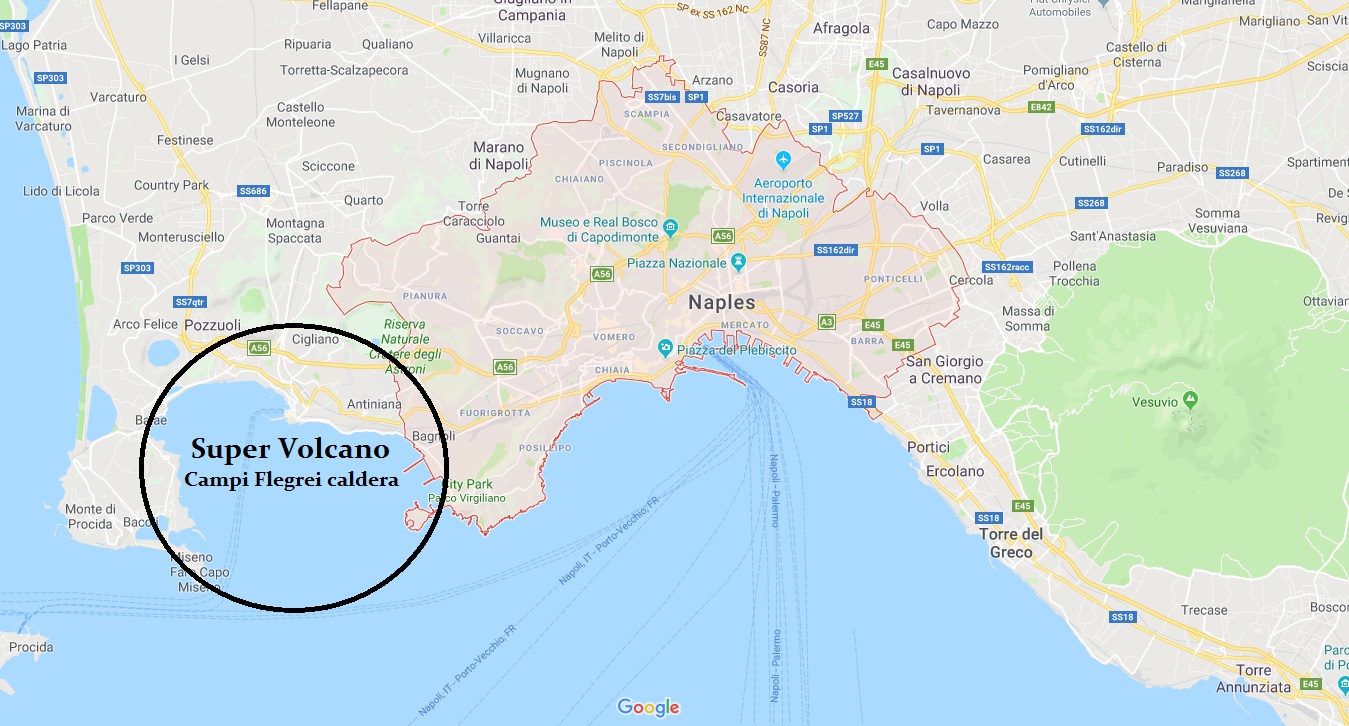
There are a number of Supervolcanoes around the world and perhaps the most recent one to erupt was in Italy. The term Supervolcano has been popularized by the BBC and the Discovery Channel story on Yellowstone back in 2005. According to the United States Geological Survey (USGS), a supervolcano is any volcanic center that has explosively erupted at least 1,000 cubic kilometers (240 cubic miles) of fresh volcanic material in a sudden, violent manner – in a so-called supereruption – often producing a huge depression crater named a caldera. Currently, Italy’s Campi Flegrei volcano has been showing signs for the first time in nearly 400 years that it is still alive and well and capable of making a lot of people experience a very bad day.

Aside from Yellowstone, the largest volcanic eruption in the Northern hemisphere in the past 100,000 years, has been attributed to a Supervolcano which erupted some 39,400 years ago in what is known as the Phlegraean Fields by Naples, Italy. This has been documented from several sources. The ashes from this eruption were distributed over the entire eastern Mediterranean and up to central Russia. This was a huge event that clearly also produced a Volcanic Winter, and that is what is the worst thing for the rest of the world who resides at a safe distance from the actual Supervolcano.

We are beginning to witness a rise in volcanic activity as we enter solar minimum. Hopefully, we are not facing a catastrophic volcanic winter period. But it also does raise some concern about a pole shift can be far more rapid than previously anticipated. I believe that people prefer to assume uniformity rather than a catastrophe. A stalagmite-based paleomagnetic record of the post-Blake excursion reveals details of repeated polarity drifts have occurred during periods of low geomagnetic field intensity at 100 thousand years before present around the time of this Naples eruption. One surprisingly abrupt centennial reversal transition occurred in 144,000 provides unprecedented evidence that raises fundamental questions about the speed of geomagnetic field shifts. Such rapid polarity changes could severely affect satellites and human society in the future if the current geomagnetic field intensity continues to decrease.

We have a pole shift, climate change, and volcanic eruptions seem to be interlinked on a correlated basis. Our correlation models have warned that this is something that needs to be investigated. For the first time, laying out this record produces what appears to be a single geological archive creating a precise chronological order. These types of events can take place in the space of even just a single decade.

The recent events at the Campi Flegrei volcano have, for the first time in nearly 400 years, provided a warning sign. The ground at the center of the caldera has bulged up by 4 meters warning that lava is collecting once again. This uplifting curiously began in 1985 with this ECM wave. Keep in mind that the eruptions at the Supervolcanic level took place around 315,000, 205,000, 157,000 and 18,000 years ago. A minor event is still at the level of Vesuvius. So while we no doubt face a major Supervolcanic event, that level may still be off several thousands years into the future. What is emerging now is more likely to be an important event, but not at the Supervolcanic level.


China’s First AI TV Anchor


China has scored a real first and it may be an answer to the FAKE NEWS problem in the United States and Europe. A TV anchor has joined a Chinese news agency, but with a twist: he isn’t human. China’s state-run Xinhua News Agency has launched an artificial intelligence (AI), anchor. “English AI Anchor” debuted Thursday at the World Internet Conference in the country’s eastern Zhejiang Province.

Modeled on the agency’s Zhang Zhao presenter, the new anchor learns from live videos and is able to work 24 hours a day, reporting via social media and on the Xinhua website. ”‘He’ learns from live broadcasting videos by himself and can read texts as naturally as a professional news anchor,” the company said in an online statement.

Now if we can do this for politicians and judges, it will end war and injustice!!!!

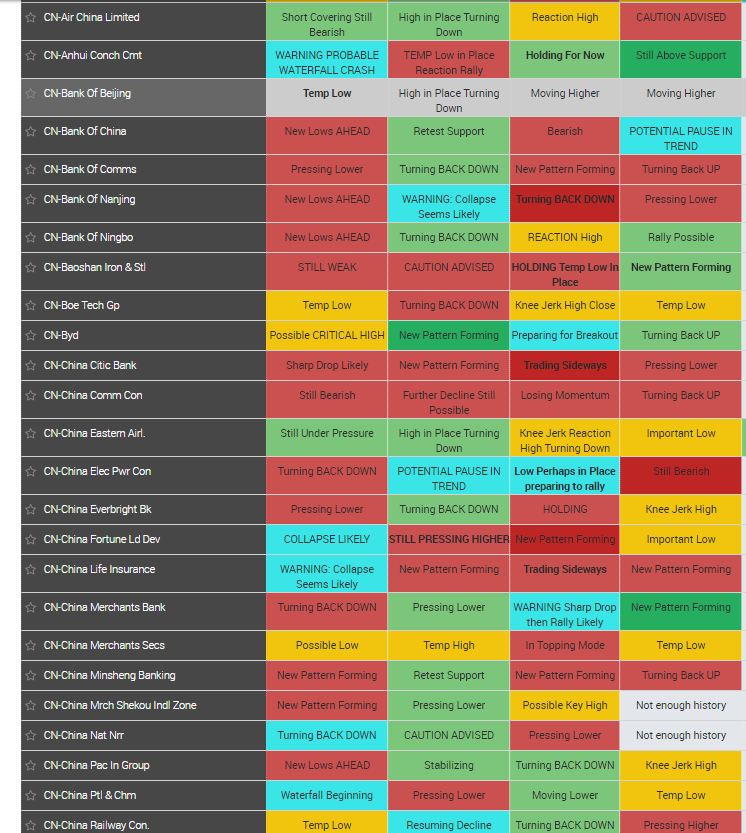
We were granted our Business license in China and they are quite thrilled to have an AI computer that writes analytical reports on Chinese equities, markets, and currencies. We too are thrilled to have the largest forecasting operation on the Chinese markets that is completely computer driven without human biases.

Tectonic Plate Splits in Two Raising Risks for West Coast


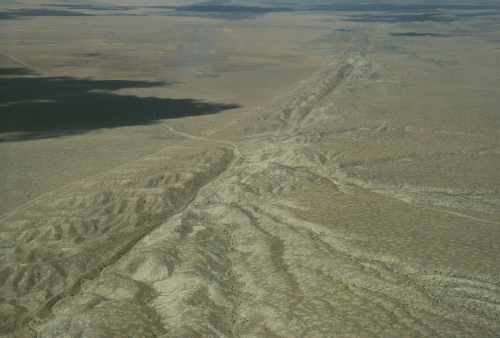
San Andreas Fault in California Can Be Observed from the Sky

Recent studies have revealed that the massive earthquake which stuck Mexico actually split a tectonic plate in two. This has done more than just shaken the ground. It has also shaken up the geologist community for this may even introduce a greater risk to California. That quake took place on September 7th, 2017, and was a magnitude 8.2 earthquake that struck southern Mexico. Earthquakes are common events around the world in different degrees. However, this powerful event wasn’t any run-of-the-mill tremor. It actually split the tectonic plate itself.

Normally, earthquakes take place where two tectonic plates meet. They constantly move around Earth’s surface, either grinding side by side, or they will crumble which ends up creating mountain ranges. They can also descend under another plate in what is referred to as a subduction zone. However, this one was a huge intraslab quake which resulted in breaking a plate in two. This means there is now a greater risk for more earthquakes along this fault line.

New Discovery Proves History Books Were WRONG!


I have previously written how the academics have REFUSED to revise history even when the evidence has been right in their face. I have previously written that the date for the eruption of Vesuvius could not possibly historically correct based upon a single coin that was discovered in the dig. My position based upon a single coin has now at last been confirmed by writing on a wall recently discovered.  This time, they have NO CHOICE!!!!

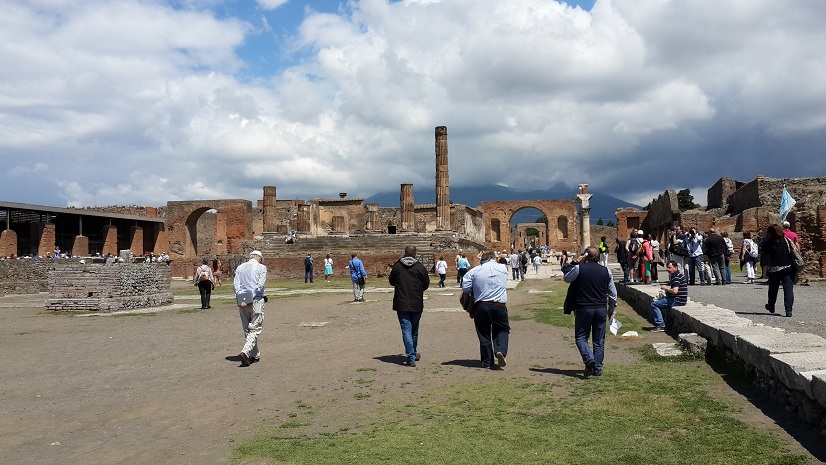
Coins have often called into question recorded history. The date of the destruction of Pompei near Naples has been a classic example of how the academic community has defended old interpretations and refuse to revise previous assumptions. The history books have written in stone that Vesuvius erupted burying Pompeii definitively on August 24th, 79 AD as the date carved in stone. This date has been interpreted from a letter to the historian Tacitus some 25 years following the event. This was his old friend Pliny the Younger who provided an eye-witness account of the eruption. He states that the eruption took place on Nonum Kal September (the ninth day before the Kalends of September), which has been calculated as being August 24th. However, Tacitus was translated during the 16th Century which remains questionable on many points. The ancient historian Cassius Dio directly states that the disaster took place “towards the end of the harvesting season” which would be in October, not August.

The excavation of Pompeii revealed that the stores were selling fruit that would not have been seasonal for August. There were amphoras filled with wine after the harvest which had been sealed and ready for transportation and sale. Many of the people discovered were wearing warm clothing. That has been dismissed as they just wanted to cover themselves for maintaining a wrong interpretation for decades. But during excavations of Pompeii’s “House of the Gold Bracelet” in 1974, 180 silver and 40 gold coins were discovered with the bodies of a group of victims. The coins were buried with the people attesting to their link with the eruption. The coins were never cataloged until 2006. There was one coin that confirmed that the date for the eruption of Pompeii was incorrect and that the account of Cassio Dio was closer to fact than Tacitus.

Titus (79-81AD) was emperor at the time of the eruption and he was remembered for the relief efforts. Titus’ administration was marked not by military or political conflicts, but by disasters. His first disaster was the eruption of Vesuvius. The eruption destroyed the cities and resort communities around the Bay of Naples in addition to Pompeii and Herculaneum which were buried under many feet of stone, ash, and lava. Titus appointed two ex-consuls to organize and coordinate the relief effort. He personally donated large amounts of money for the relief effort and he even personally toured the region the following year like presidents do today after such disasters (human nature never changes).

A single silver denarius was discovered among the 180 silver coins in 1974. When it was cataloged, it overturned history and has ever since been buried again in the Naples Museum rather than rewrite the history books. Titus’ father Vespasian (69-79AD) died on June 24th, 79 AD. Therefore, any coin of Titus as emperor would have to have the very first recording of his power “IMP VIIII” or 8th Imperator, which was a title that meant ‘leader of the army’ to the Romans. The award was generally given at this point in history for a particularly important victory that was celebrated. In some cases, these subsequent awards, denoted by a numeral following IMP, which also allows dating of coins to a very short period.

The coin discovered in Pompeii had the legend “IMP XV,” which was granted to Titus for the war in Britannia where he sent Gnaeus Julius Agricola who pushed further into Caledonia and managed to establish several forts there as recorded by Tacitus (Agricola 22). Therefore, Titus received this title of Imperator for the fifteenth time for this event, according to Cassius Dio (Roman History LXVI.20). This took place we know in September 79 AD about 3 months after becoming emperor following his father’s death. Obviously, if any coin was discovered in the ruins of Pompeii with “IMP XV” in its legend, then this provides absolute proof that the date for Vesuvius of August 24th, 79 AD cannot be correct as I previously wrote.

 

Archeologists in Pompeii have discovered a remarkable inscription written in charcoal which has survived the catastrophy confirming that the eruption of Mt Vesuvius indeed took place in October 79AD as confirmed by the coin discovered and ignored.  The charcoal writing, discovered on the wall of a villa during a new phase of excavations, adds weight to a theory that the volcano destroyed the town in October 79AD rather than August of that year in line with Cassio Dio and the denarius of Titus. The Italian authorities said the new discovery “rewrites the history” of Pompeii proving that the August 24th date was WRONG! The inscription reads, in Latin, XVI K NOV – the 16th day before the first day of November in the Roman calendar, in other words, October 17th. The inscription may have been written by a builder or architect who was working on the restoration of a villa a few days before the eruption, possibly as a way of recording the work he had done. Remarkably, it survived the catastrophic eruption of Vesuvius now confirming October 24th.

Archeologists recently discovered that a worker had inscribed the date of “the 16th day before the calends of November”, meaning October 17, on a house at Pompeii. “Today, with much humility, perhaps we will rewrite the history books because we date the eruption to the second half of October,” said Italy’s Minister of Culture Alberto Bonisoli. At last, the single silver denarius discovered, and which has been ignored for so long, has been finally vindicated. The coins won!!!