BANNON: RFK Jr.’s Move Against mRNA Vaccines Is Massive, But They Can’t Stop At A Press Release


Posted originally on Rumble By Bannon’s War Room on: August 6, 2025

General Flynn: Flynn’s Rules Of Diplomacy For American Officials


Posted originally on Rumble By Bannon’s War Room on: August 6, 2025

TEXAS Rep. Harrison: Texas Is Doing What NY And California Have Done For A Decade, Only Difference? We’re Republicans, And They Hate That.


Posted originally on Rumble By Bannon’s War Room on: August 6, 2025

Marlow: Every Case Against Trump Started With The Russia Hoax, Even Stormy Daniels Traces Back To It


Posted originally on Rumble By Bannon’s War Room on: August 6, 2025

PASKAL: China Is Building It’s Beachhead In Micronesia The Same Way Japan Did In The 1930s


Posted originally on Rumble By Bannon’s War Room on: August 6, 2025

Episode 4686: 80th Anniversary Of The Bombing Of Hiroshima


Posted originally on Rumble By Bannon’s War Room on: August 6, 2025

Episode 4687: Breaking The Law Of Two Tiers Of Justice


Posted originally on Rumble By Bannon’s War Room on: August 6, 2025

US Treasury to Print $500 Bills?


Posted originally on Aug 7, 2025 by Martin Armstrong |  

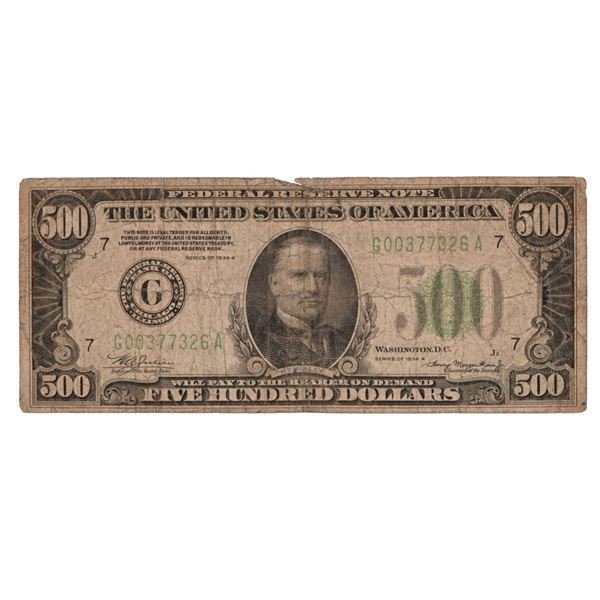
500dollarbillUSD

Rumors are circulating that the United States may begin to print $500 bills. The US Bureau of Engraving and Printing began printing $500 bills in 1861 until 1945, formally discontinuing them in 1969 when Nixon moved to close the gold window. The US Treasury has since required banks to send all $500 bills back to them to be destroyed, as the government claimed higher-denominated notes paved the way for criminal activity.

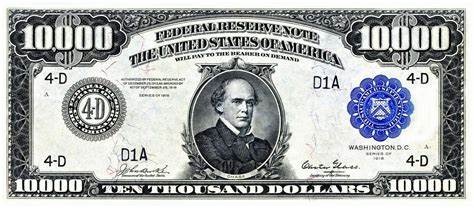
Collectors know that the US Treasury issued $1,000, $5,000, $10,000, and even $100,000 notes once upon a time. The $100,000 bill featured President Woodrow Wilson and was issued as a gold certificate from 1934 to 1935. That particular bill was not publicly circulated. No citizen needed to use such currency in day-to-day transactions. The $10,000 note was primarily used for transactions between domestic Federal Reserve Banks, as digitalization had not yet occurred, and they needed an efficient way to move capital.

The rumors about the $500 bill’s revival are not wholly unfounded. Rep. Paul Gosar (R-Ariz.) introduced a bill in 2024 to reintroduce the $500 bill, replacing William McKinley’s image with Donald Trump’s. This was more than political pandering; besides, Congress would certainly never approve of a note featuring Donald Trump’s image. However, the government could be enticed to reintroduce higher-denominated notes due to INFLATION. This is precisely why the penny will be discontinued, as it represents absolutely nothing and is a reminder that our currency is becoming increasingly devalued.

10000dollarbillUSD

A new $500 bill would mirror historical currency debasement as we saw in Rome under Diocletian, for example, which comes before a collapse. Printing higher-denomination notes is not just a reflection of price increases, but a sign that the people are losing trust in the value of the USD. Now, even the highest-denominated cash note will not get one far, paving the way for digitization as cash becomes an inconvenient burden. If the US were not eager to digitize banking, we would undoubtedly see higher-denominated notes in circulation once again to mask the effects that inflation has had on the value of the dollar.

America has never canceled its currency, and all of these notes are still deemed legal tender, although they are far more valuable to collectors than their face value. The Federal Reserve does not currently have plans to print the $500 bill despite rumors. The goal is to move the nation to digital currency, and cash is becoming increasingly worthless in transactions. Still, providing a limited-edition $500 note would not be unheard of in today’s economic landscape.

Four EU Nations Announce $1 Billion Arms Deal with US


Posted originally on Aug 7, 2025 by Martin Armstrong |  

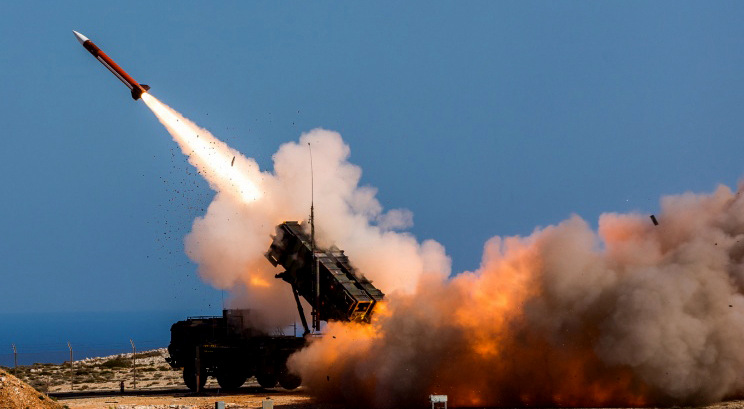
PatriotMissile

The European Union pivoted its stance on US defense as soon as the funds began to flow to Ukraine again. Although leaders like Macron and Merz previously warned against relying on the US for aerospace and defense, four EU nations have announced a $1 billion arms deal with the US through a new initiative devised by the US and NATO.

“It’s either that or leave Ukraine without weapons,” one NATO official, speaking on condition of anonymity as they aren’t authorized to speak on the record, told RFE/RL in regard to purchasing from the US. “I think on the European side there is a hard realization that this has to happen in some fashion or another.” This comes after the Ukraine Defense Contact Group, an alliance of 50 nations, held a virtual meeting at the end of July to decide how they would continue funding the proxy war.

The Dutch government agreed to spend around $576 million on US Patriot missile defense systems for Ukraine. Sweden, Denmark, and Norway plan to spend another $500 million on American defense collectively. “By supporting Ukraine with determination, we are increasing the pressure on Russia to negotiate,” Dutch Defence Minister Ruben Brekelmans posted on X. “The more Russia dominates Ukraine, the greater the danger to the Netherlands and our NATO allies,” he said. Continually arming the opponent is not going to open the door to peace negotiations. It only alerts Russia that it must continue fighting for the foreseeable future, as this war is NOT against Ukraine but against the entire NATO alliance.

Swedish Defence Minister Pal Jonson said his nation plans to offer $275 million toward the deal. “Ukraine is not only fighting for its own security, but also for our security,” Jonson declared. Of course, all of this spending of public funds is being done under the premise of national security. European governments are lying to their people. They know Russia has no plans or desire to invade Europe, as there is nothing to gain by doing so.

NATO Secretary General Mark Rutte, the former Dutch prime minister, praised the northern European nations for their willingness to invest. “Since the earliest days of Russia’s full-scale invasion, Denmark, Norway and Sweden have been steadfast in their support for Ukraine. I commend these allies for their quick efforts to get this initiative off the ground,” Rutte said in a statement. As a reminder, all NATO members must up their spending to 5% of GDP, although they previously could not even meet the 2% target.

Santa Claus Mask

These deals will now go through the Priority Ukraine Requirements List (PURL), created by NATO and the US. Basically, Ukraine writes a list for Santa, or in this case, the US, listing its most requested weapons of choice. NATO’s Supreme Allied Commander Europe (SACEUR) then approves of the wish list and tells US manufacturers to deliver Ukraine anything it desires. The Netherlands’ half-billion-dollar purchase was the first gift basket to go through this program.

PURL plans to send $10 billion worth of American-manufactured arms to Ukraine. But the US is not Santa, and there are no elves creating weapons. Lockheed Martin and Raytheon are increasing their production of Patriot missiles, following Rutte’s suggestion that NATO nations will supply Ukraine with at least 17. NATO nations are required to pay upfront for their gifts to Ukraine to bypass the typical US arms sales process. The taxpayers did not vote to send $10 billion to Ukraine, but NATO and EU nations are beholden to unelected bureaucrats who dictate the rules.

Japan to Build Australia’s New Warships


Posted originally on Aug 7, 2025 by Martin Armstrong | 

Australia has tapped Japan to begin building its next fleet of warships as the nation retires the ANZAC-class fleet. Japanese shipbuilder Mitsubishi Heavy Industries beat German manufacturer Thyssen­Krupp Marine Systems as Japan’s Mogami frigate was more desirable than the German MEKO A-200. This is a landmark win for Japan as it marks the first time Japan has exported warships to a foreign nation.

The first 11 frigates alone are worth at least 10 billion Australian dollars ($6.5 billion USD). Japan will produce the first three ships domestically before building a facility in Australia to create the rest. Australia has exclusive access to the first Mogami warships. The 4,800-tonne Mogami carriers are faster than their German rival’s at a speed of 30 knots and has a range of 10,000 nautical miles. The ANZAC-class ship required a crew of 170 compared to the frigate’s need for only 90 personnel, maximizing operational efficiency.

“The upgraded Mogami is built in a way that makes it easy to customise depending on the owner’s order — the power setting and the space design are different from the original one, so the ship is ready to cater to any requests coming from the Australian government,” ATLA official Koji Nishimura stated. “From the very first phase of the project, I thought about the benefit for Australia and for the Japanese Maritime Self-Defence Force, because of that we formed an all-Japan team — with Ministry of Defence working as a team to make this project happen,” he added.

“This is clearly the biggest defence industry agreement that will ever have been struck between Japan and Australia. In fact, it’s really one of the biggest defence exports that Japan has ever engaged in,” Defence Minister Richard Marles said

This is a huge win for Japan as they have not previously had a heavy role in defense exports. The deal will show the world if Japanese manufacturers can reliably enter the sector and begin exerting its geopolitical power. Domestic defense is a matter of survival for Japan but now it has the ability to share its elite manufacturing capacities with the world.

The US supported Japan’s bid because it plans to use American-made components and comes equipped to carry American-made missiles specifically. The European Union has been back and forth on whether it wants to continue purchasing military equipment from America. Germany’s loss is a big hit to its already contracting manufacturing sector, as the nation was once the go-to for industrial exports. Japan is not beholden to unelected officials who could sway policy and, therefore, trade.