Posted originally on Aug 4, 2025 by Martin Armstrong
Consumer sentiment remained elevated for the second consecutive month but remains worse than in December 2024, according to the University of Michigan’s Surveys of Consumers. Sentiment rose 1.6% in July from June, reaching a reading of 61.7 from 60.7. However, overall sentiment has been 17% beneath December’s reading, although it rebounded from April’s low when the market experienced a sharp downturn due to tariff fears.
“Although recent trends show sentiment moving in a favorable direction, sentiment remains broadly negative,” Surveys of Consumers Director Joanne Hsu said in the report. “Consumers are hardly optimistic about the trajectory of the economy, even as their worries have softened since April 2025.”
Inflationary fears declined for the second consecutive month as well, dropping from 5% in June to 4.5% in July after peaking at 6.6% in May, again, as a result of tariff uncertainty. Consumers believe inflation will wane in the long run for the third consecutive month, with the figure declining from 4% in June to 3.4% in July, which marks the lowest reading in 2025.
The Consumer Confidence Index, as reported by the Conference Board, rose 2 points to 97.2 in July, and June’s figure was revised to 95.2. The short-term outlook on the Expectations Index rose 4.5 points to 74.4, yet has been below the recession threshold of 80 since February. Business and labor market conditions, as measured by the Present Situation Index, fell 1.5 points to 131.5.
Yet, the Kansas City Fed noted that consumer sentiment is no longer an accurate reading for consumer spending. “Recent data suggest consumer sentiment has been declining for the past several months, signaling a potential slowdown in spending. However, most measures of actual spending, such as core retail sales and PCE, have remained relatively stable. This discrepancy raises the question of how useful consumer attitudes are in predicting actual spending,” the Fed questioned, later concluding, “Consistent with evidence from the prior 30 years, the near-term outlook for spending growth looks similar regardless of whether we account for the recent weakening in consumer sentiment.”
Federal Reserve Chair Jerome Powell also stated “the link between sentiment data and consumer spending has been weak. It’s not been a strong link at all…it wouldn’t be the case that we’re looking at [consumer sentiment] and just completely dismissing it. But it’s another reason to wait and see.”
Consumers are continually pessimistic, albeit less so, as prices remain elevated. We saw a sharp downturn in consumer sentiment with the peak in inflation during 2022. However, regardless of how one feels about the economy, consumers are forced to spend more on less. The FOMC will no longer use consumer sentiment as a strong gauge for future spending or GDP calculations since the correlation remains weak.
Posted originally on Aug 4, 2025 by Martin Armstrong
US employers have reduced their workforce more in the first seven months of 2025 than in all of 2024. The DOGE cuts to the public sector were the primary driver of layoffs; however, there has been a notable drop in retail and technology positions in the private sector.
July alone saw 62,000 jobs reduced from the workforce, a 30% increase from June and 140% from July 2024. Over 806,000 positions were removed from January to July, surpassing the 761,358 job cuts in all of 2024.
Public sector positions in government saw the largest reduction at 292,294 positions. The current administration implemented the largest public sector reduction in modern US history by offering over 2 million government employees a buyout. Around 65,000 people accepted the buyout offer within the first two weeks alone. Additionally, DOGE halted grant funding to various NGOs and non-profits, leading to 17,826 fires, which amounts to a 413% annual reduction. None of these positions contributed to the US GDP.
The private sector shed 33,000 positions in June 2025, marking the first contraction in the private sector in nearly two years. For 2025 overall, the sectors facing the steepest layoffs are technology (-89,251) and retail (-80,487).
A few major tech companies implemented large layoffs this year such as Intel (-21,000), Microsoft (-15,000), PayPal (-2,500), and HP (-2,000). The advancement of Artificial Intelligence has led to a drastic reduction in workers in the technology sector, with some reports believing that AI is replacing around 491 tech jobs per day. We’ve seen a 36% decline in tech jobs this year compared to last as technology advances. Another issue has been outsourcing positions to places like India. The US outsourced 300,000 tech-based jobs overall to India as offshoring trends continue. Not only is labor cheaper, but India produces over 1.5 million engineering graduates annually. Visa restrictions have less of an impact as remote work is commonplace.
Retail experienced the second-largest decline in private sector roles with a 249% annual decline. Brick and mortar stores are deteriorating as another casualty of creative destruction as consumers prefer to spend online. Various articles are blaming tariffs and price increases for the drop in retail positions, but consumers are simply spending less. Around 20,000 retail positions were lost to AI automation, especially for basic roles and inventory management. American consumers have never rebounded from the increased cost of living. Credit card delinquencies and bankruptcies continue to reach new highs, and every survey indicates that households are spending more on less and focusing their resources on the basics.
Technology and retail are sensitive to advancements in AI. Offshoring has drastically cut competitiveness for American workers in tech. There is an offshoring corporate tax penalty of 28% but it is safe to assume that this figure will rise. As for AI, the government hasn’t found a way to tax robotic systems, but rest assured they will find a way.
Posted originally on Aug 4, 2025 by Martin Armstrong
Young Americans know that they are forced to pay into a system that will produce returns. A new study by AARP found that confidence in Social Security has plummeted to a 15-year low. The government has successfully run this Ponzi Scheme for 90 years, but in due time, it will run out of money.
According to the survey, confidence in Social Security fell to 36%, nearing the all-time low of 35% experienced in 2010. Only a quarter of respondents between 18 and 49 expressed confidence in the system, compared to 48% of Americans over 50 who believe they will see a return. Still, 69% of Americans overall felt that Social Security was an important program.
Why? Why must we permit the government to claim a portion of our pay only to redistribute it back to us at a loss? Individuals would receive far greater returns if permitted to independently invest those funds. Similar to tax refunds where the government steals a portion of our pay only to hand it back to us at the end of the fiscal year, Social Security is another interest-free loan for the government that does not benefit the people.
As of June 2025, 53 million retired Americans and 7.1 million Americans with disabilities received Social Security, with the average monthly payment amounting to $2,005. That is not enough to live on anywhere. Yet, 24 million families rely on Social Security as their primary source of income. The aforementioned study found that 78% of people realize that Social Security will not cover their living expenses upon retirement. A quarter of respondents on 50 said that they are not factoring in Social Security payments in their retirement plans as they know the jig is up.
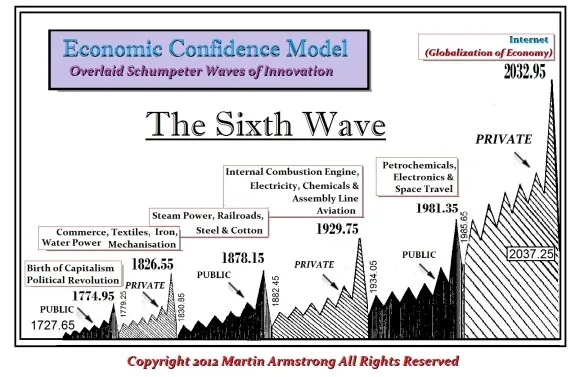
It comes as no surprise that analysts are projecting Social Security to run dry by 2034, aligning closely with the computer’s date of 2032 when the entire world will experience a drastic transformation. Those same analysts believe that the program will need to rely entirely on payroll tax revenue once the general fund becomes depleted.
Social Security cannot survive. Social Security invests 100% in government bonds, meaning it does not earn a fair interest rate. I spoke with Congress in the 90s and urged them to transform it into a wealth fund allocated out among managers. The Democrats voted against the privatization of Social Security. The fund would be more than abundant had it been permitted to invest in equities or anything other than government debt. It never should have been a political decision.
So those deciding not to factor in Social Security payments are wise. Those who feel angered that they must continue paying into this failing system are also awakened to the truth—Social Security is in its final stages until collapse.
Posted originally on Aug 4, 2025 by Martin Armstrong |
QUESTION: I find it very interesting that Earth passes closest to the densest part of the Taurid stream in late October and early November, when both the Southern and Northern Taurids are active. However, 2032 is predicted to have enhanced activity due to gravitational influences from Jupiter, which can bring more debris into Earth’s path. Some have suggested that an impact of a cosmic event caused the Younger Dryas, perhaps from this Taurid stream, if the Earth were hit by a comet or asteroid impact around 12,900 years ago, which triggered the Younger Dryas that sent the planet into an abrupt cooling lasting about 1,200 years. That would be like a mega volcanic winter. If you divide 12,900 years ago by 8.6, that is precisely 1500 cycles. Since the forecast for the highest intensity in the Taurid stream is 2032, is your computer picking this up?
Jos
ANSWER: The cycle is fractal, like everything within nature. We know that the world dramatically changed about 11,000 years ago. Six waves build into 51.6 years, and six of those build into 309.6 years, with six of those creating waves of 1857.6, and 6 of those take us right to 11,145.6. This is a significant turning point. I cannot dismiss the scientific forecast for 2032, coinciding with the Taurid stream out of hand. I think we do need to pay attention and be prepared to divert such an impact if it becomes obvious. We are headed back into a cooling period – not warming. These nut jobs who want to put dust in the air to reduce global warming will kill most of humanity when a volcano of 7+ erupts on top of their dust.
Posted originally on Aug 3, 2025 by Martin Armstrong
I have written directly to members of the Trump Administration and received no reply. When you generally write, you get the standard form thanking you for your letter. Not getting even a form letter response tells me they are not allowed to be passed on. The Deep State is still the gatekeeper for correspondence. Even if you write to your Congressman, you get the form letter response, and they will NEVER see your letter if the gatekeeper disagrees. Welcome to democracy.
Director of National Intelligence Tulsi Gabbard has also come to realize the reality of Washington. She has said she is surrounded by “deep state actors” within the government who are actively working to undermine the president’s agenda and suppress information. These are the people who think they are defending the Constitution, but they are taking us into World War III.
Naturally, CNN has always to report the opposite. If Trump said the sky is blue, they will call him a liar and report it is red. They are in the pocket of the NEOCONS, even if only the top brass know what the real agenda is. They claim that Gabbard’s actions were a politically motivated attempt to rewrite the history of the Russia investigation, according to CNN. The NEOCONS only look at their hatred of Russia and maintain that they must be wiped off the face of the earth. They ONLY look at that objective and are destroying the United States and Western Civilization.
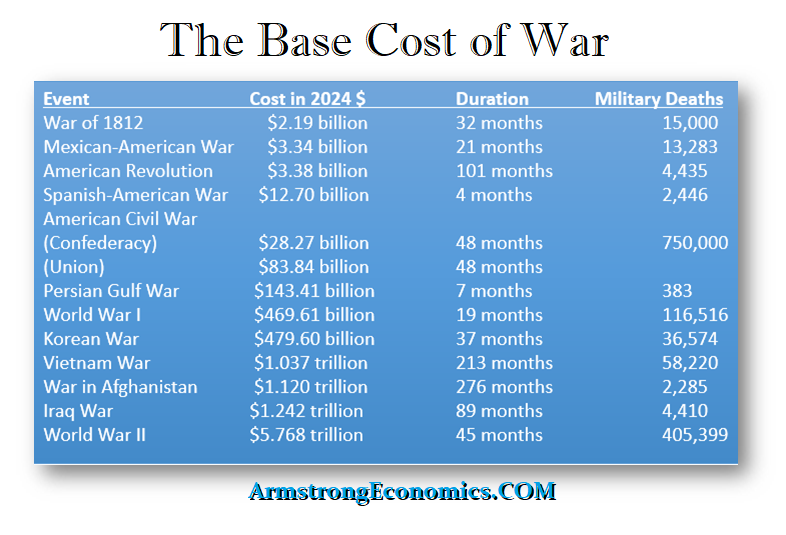
The National Debt is bloated because of endless wars. This has not benefited society. The corruption feeds only a few in the Military Establishment that President Eisenhow warned us about. The debt is unsustainable, they will demand higher taxes and reduce our living standard all for their endless wars. This one they are cooking up will end the United States. Their debt cannot be sustained, and this is the Sovereign Debt Crisis, all for their hatred of Russians. This is what 2032 is all about. They will bankrupt the West, and the Financial Capital of the World will move to China. Sorry, that is what the computer is projecting. It’s not my opinion. I am just so glad I am not 18 today. While Kinzinger claims we can defeat Russia in 3 days, I do not see any such war that has been finished in 3 days.
Posted originally on CTH on August 3, 2025 | Sundance
President Trump holds an impromptu press conference as he heads back to Washington DC. Topics included the Russia/Ukraine conflict, the fighting in Gaza against Hamas and more.
Presidential Emissary Steve Witkoff will likely be heading to Russia, at the Russian’s request for a discussion, mid-week. WATCH:
Posted originally on CTH on August 3, 2025 | Sundance
U.S. Trade Representative Jamieson Greer appears on Face the Nation with the ever-dramatic Margaret Brennan. Video and Transcript Below:
The part about Canada is very interesting.
[Transcript] – MARGARET BRENNAN: And we’re joined now by United States Trade Representative, Jamieson Greer. Ambassador, good to have you here.
JAMIESON GREER: Great to be here. Thank you.
MARGARET BRENNAN: So the President signed this executive order on Thursday, raises tariff rates on about 70 countries. Should we expect those to be negotiated down in the coming days?
JAMIESON GREER: I don’t, I don’t think they will be in the coming days. I think a lot of these, well I know a lot of these, are set rates pursuant to deals. Some of these deals are announced, some are not, others depend on the level of the trade deficit or surplus we may have with the country. So, so these, these tariff rates are pretty much set. I expect I do have my phone blowing up. There are trade ministers who, who want to talk more and see how they can work in a different way with the United States, but I think that we have, we’re seeing truly the contours of the President’s tariff plan right now with these rates.
MARGARET BRENNAN: I was reading some interviews you had given, and you said at some point the President’s view is maybe a tariff is better than a deal. Are you saying there are countries that just, they have no shot of avoiding a tariff?
JAMIESON GREER: Well, I would say that, in fact, most countries in the world, they just have a tariff assigned to them, right? Whether it’s–
MARGARET BRENNAN: It’ll be the 10 percent or 15 percent.
JAMIESON GREER: 10 or 15 or the higher level tariff. Because, again, when the President is looking at this, he looks at potential deals, and we bring him potential concessions from countries and the things they might want to do. And he compares that to the potential tariff that might be applied to try to get that deficit down. And then talking to his advisors, he makes a call on this. And you know, sometimes a country will come back and make additional concessions that, that make it more appropriate. He’s trying to get at the deficit. He’s trying to reshore manufacturing. And so those are the factors he’s looking at when he’s looking at when he’s determining whether he’s just going to have a tariff or he’ll take a deal.
MARGARET BRENNAN: Trying to reshore manufacturing, bring manufacturing jobs back to America. But we just saw in this unemployment data that while the level is pretty low overall, it’s pretty steady, good. Manufacturing in particular, we saw it contract for the fifth straight month in July, factory employment dropped to lowest levels in five years. What does that data indicate to you about the impact of your tariffs?
JAMIESON GREER: Yeah, I saw that and my own view is that I think a lot of companies were waiting to see if the tax bill was going to come through with the expensing for capital goods and things like that. And so I think now you know a lot of that data comes pre “One Big Beautiful Bill”. Now that we have “One Big Beautiful Bill”, and we have a better sense of where the taxes are going, I think we’re going to see a much, we’re going to see more investment, all the, all the commitments on investment we’ve seen countries making, that’s going to come through. And like you said, it’s a relatively small number. So I don’t, I don’t read tariff policy into that number. I think that is kind of pre-bill policy.
MARGARET BRENNAN: So you believe the executives are making strategic decisions with hiring, but the President just announced that the head of Labor Statistics is being fired because of the weak jobs report, claiming the data was faked.
JAMIESON GREER: Well, I think you know, and I saw what the president did, and he also talked about the, just the record from BLS, you know, last year–
MARGARET BRENNAN: Labor Statistics Bureau.
JAMIESON GREER: That’s right, yeah, exactly. You know, even last year during the campaign, there were enormous swings in the jobs numbers and so it sounds to me like the President has real concerns. You know, not just based on today’s but everything we saw last year. You want to be able to have somewhat reliable numbers. There are always revisions, but sometimes you see these revisions go in really extreme ways. And it’s, you know, the President is the President. He can choose who works in the executive branch.
MARGARET BRENNAN: But you were just saying you weren’t really doubting the data.
JAMIESON GREER: No, I wasn’t– You asked me what I thought about the data–
MARGARET BRENNAN:
Right.
JAMIESON GREER:–And was it reflected in the tariff policy? The answer is no. I mean, my view is, to the extent that there’s some kind of, you know, information about manufacturing jobs, you know, I think that we’re going to see a big increase in manufacturing jobs now that we have the “one big, beautiful bill” passed, now that we have the expensing going in. And I think that, you know, our manufacturers know that they have a clear and certain path forward on that now.
MARGARET BRENNAN: Are you confident, though – because you have to deal in legal terms, in details, with facts and data when you are negotiating a legal agreement – do you trust that if you bring hard data to the president, he takes your counsel, even if it’s an inconvenient fact?
JAMIESON GREER: Always, yes. I mean, I’ve spent the- I spend many hours with the president almost every day, and that’s what we’re talking about is data. We’re looking – and I’m on the trade side, of course – and we’re looking at import figures, export figures, investment levels, et cetera. And that’s how we’re making this decision. So I’m very comfortable with that.
MARGARET BRENNAN: So you’ve seen that Apple estimates, for the full year, tariffs are going to cost them more than a billion dollars. For the automakers – GM, Stellantis, Ford – they all came out and said they are going to take a hit from this.
AMBASSADOR GREER: Well, so that’s exactly the issue, right? We have, over decades, we’ve had these large manufacturers, advanced manufacturing, that have gone overseas. They’ve gone to other countries. They’ve taken advantage of unfair trading practices, and the fact that the US has had low tariffs while other countries haven’t, and they’ve taken advantage of that. That’s what businesses do. We’re all capitalists. And so if now they have to pay a tariff or build here, the President is creating incentives to bring them back here. That’s why GM has announced investments here in the United States, and that’s why we have all these companies and countries announcing investment in the US. Because the tariffs create the incentive to do so.
MARGARET BRENNAN: But reductions in profits come at a cost, right? And as CEOs are making decisions, how long do you expect this pain to last for corporate America?
AMBASSADOR GREER: Well, you know, again, when we look at- you know, when we look at the numbers and the data, we’re seeing predictions of more investment here. That’s what we want. The President isn’t doing this so much for the companies. He’s doing it for American workers who have seen their jobs offshored to Mexico, to Vietnam, to China. So when we hear companies having to make hard choices about supply chain changes. We have to do that. I mean the status quo, where we keep making things overseas, because we can do it a little bit cheaper in the short run. That is not preferable to having that investment and employment here in the United States.
MARGARET BRENNAN: But we haven’t seen that reshoring happen.
AMBASSADOR GREER: Well, we have- we have announced AstraZeneca announced they’re going to have a $50 billion investment in pharmaceuticals. GM has announced $5 billion. Hyundai Steel has said they’re going to do a $21 billion investment in Louisiana. So this is- this is actually happening. These are things from the company saying it right, and they have to say it. And they have, you know, earnings reports, and they have and- they have filings. They can’t just make this stuff up. This is real investment that we’re seeing.
MARGARET BRENNAN: Let me ask you about Canada, which is our second largest- largest trading partner. The president increased tariffs to 35%. It applies, though, to just about 10% of what Canada sells here. Why bother to do this now in the middle of negotiations?
AMBASSADOR GREER: So I would say, first of all, you know, Canada is subject to 50% tariffs on steel, aluminum. 25% tariffs on autos, and again, the 35% tariff on- on goods that don’t follow the rules of USMCA. And, you know, early on, the president posed a 25% tariff on Canada, and that was really about fentanyl and border issues, right? It’s- it’s- it’s a separate regime from the reciprocal tariff. And what did Canada do in response? You know, they talked about helping at the border. And I’m not, you know, I’m not the drug czar or anything. But what I do know, as the trade guy, is that Canada retaliated. The only other country in the world who retaliated on tariffs was the Chinese. And so if the president’s going to take an action and the Canadians retaliate, the United States needs to maintain the integrity of our action, the effectiveness. So we have to go up too.
MARGARET BRENNAN: So, you’re talking about the things that the former Prime Minister Trudeau put in place, not the current Prime Minister–
AMBASSADOR GREER: — And are still in place–
MARGARET BRENNAN: — That are still in place. But the current prime minister has held off, largely, on retaliation here. That’s the guy you’re negotiating with and his team. So what’s the strategy here? And aren’t you worried that this will hurt the broader free trade deal if you truly do want to renegotiate it next year.
AMBASSADOR GREER: Well- well, the President’s view with with every country, whether it’s Canada or Mexico, and regardless of the kind of trade agreement we have in place, is that the net result of the trading system, whether it’s our WTO agreements or our existing trade agreements, the net result has been that a lot of the manufacturing has gone overseas, and when that’s the net result, you can’t continue with that system. So you know, I’m not concerned that it’s going to complicate things with Canada. Our view is the President is trying to fix the terms of trade with Canada, and if there’s a way to a deal, we’ll find it. And if it’s not, we’ll have the tariff levels that we have.
MARGARET BRENNAN : So I hear you drawing distinctions when you say I’m the trade guy, I’m not the drug czar.
AMBASSADOR GREER: Correct.
MARGARET BRENNAN: I’m the trade guy. I’m not handling these other things. But the President is kind of blending all these things together, because he cited fentanyl once again when it came to tariffs- to the policy with Canada. He also said on social media, Canada’s decision to back statehood for Palestine is going to make it hard for us to make a trade deal. How does that have anything to do with financial and trade agreements?
AMBASSADOR GREER: So, so- so, first of all, the president United States has his foreign affairs power where he can- he can manage relations under the Constitution with foreign countries. Second of all, you know, Congress delegated to the president the ability to take economic action in response to national emergencies in the International Economic Emergency Powers Act. And for example, the Treasury Department, they have a number of sanctions where they can actually cut off a country’s trade with the United States, prohibit goods, cut them off from our financial system for geopolitical reasons. So the fact that they can do that- almost certainly the President can do something that’s not as expansive and just- and just put a fee on those goods, which is a- which is a tariff. So if you–
MARGARET BRENNAN: –But can and should are different things, right? And- and I’m asking this–
JAMIESON GREER: –But to- to go- but- but listen, if you’re going to sanction somebody and essentially prohibit trade, you almost certainly can do something that’s softer, which is to allow the trade and just put a tariff on it.
MARGARET BRENNAN: So let me ask you about Brazil, because the U.S. has a trade surplus with Brazil. That means, you know, we sell them more than we buy from them. So it doesn’t seem to be consistent here, when you have the President put 50% tariffs on Brazil, one of the highest of any countries. And at the same time, the President is bringing up things that have nothing to do with trade when he’s justifying them. He sent a letter to the current government complaining about the prosecution of his ally, Bolsonaro, who is- who allegedly staged a coup when he lost the last election. The President called it a witch hunt. This seems politically motivated and not about trade.
AMBASSADOR GREER: Well, two things. First of all, there’s a 10% tariff on Brazil because we have a surplus with them. That’s the reciprocal tariff. And then there’s a 40% tariff that the President has chosen to do under the International Emergency Economic Powers Act, like we would do any sanction where we see geopolitical issues. The President has seen in Brazil, like he’s seen in other countries, a misuse of law, a misuse of democracy, what one might call lawfare. It is normal to use these tools for geopolitical issues. I mean, sanctions, we’ve been using them for years with all kinds of countries, including countries we like–
MARGARET BRENNAN: You view tariffs and sanctions as the same?
AMBASSADOR GREER: They’re just different in degree. I mean, tariffs are actually lighter than a sanction- a sanction, you’re cutting off a country from your financial system. You’re prohibiting trade with them. A tariff, you’re allowing trade. You’re just putting a fee on it. It’s a- it’s a lesser
MARGARET BRENNAN: –But now
AMBASSADOR GREER: step than sanctions–
MARGARET BRENNAN: –You- you have moved far away from from dealing with the deficit. Now–
AMBASSADOR GREER: –Well the deficit has a 10% tariff–
MARGARET BRENNAN: –you are talking about politically motivated trade actions here. I mean, the president sent a letter to President Lula, saying that tariffs are due in part to Brazil’s insidious attacks on free elections. He also, at the same time, sanctioned the Supreme Court justice overseeing Bolsonaro’s trial. Why are you trying to influence a criminal trial of an ally of President Trump?
AMBASSADOR GREER: So, so, so the president of United States, historically, whether it’s a Democrat or Republican, they have used IEEPA to impose sanctions for all kinds of geopolitical reasons in all kinds of countries. Sometimes it’s countrywide, sometimes it’s specific to certain, you know, individuals and often foreign leaders and foreign officials. So this is not, this is not way outside the market. If anything, the President could have gone farther in the type of sanction that was used. Instead he just used a tariff instead of cutting them off from the financial system altogether.
MARGARET BRENNAN: So you were fully on board with it. It sounds like.
AMBASSADOR GREER: With the president of the United States? My boss? Of course I am–
MARGARET BRENNAN: –But with intervening in criminal trials–
AMBASSADOR GREER: –when the President–
MARGARET BRENNAN: — through trade policy.
AMBASSADOR GREER: When the President sees lawfare going on, he’s going to impose a sanction through IEEPA that’s been delegated by Congress. That’s his job as the president. He’s elected to assess the Foreign Affairs situation in the United States and take appropriate action. There’s just no question that it’s both from a legal perspective, it’s completely permissible. And from a policy perspective, that’s what he’s elected to do.
MARGARET BRENNAN: When it comes to trade, the big deal that is pending out there is how is the president going to deal with China? There’s an August 12 deadline, and if that deadline is not met, you have said tariff levels could snap back to above 80%. Is that deadline going to slide?
AMBASSADOR GREER: So that’s what’s under discussion right now. I would say that our conversations with the Chinese have been very positive. We have discussions at the staff level, at my level, you know, President Xi and President Trump have had conversations.
MARGARET BRENNAN: They said that it’s sliding. The Chinese said it’s sliding.
AMBASSADOR GREER: That’s something we’re working toward. That’s what we talked about–
MARGARET BRENNAN: So you’re not there yet.
AMBASSADOR GREER: And so, so they want to do that. We’re working on some technical issues, and we’re talking to the president about it, you know, I think it’s going in a positive direction. You know, I’m not going to get ahead of the President, but, you know, I don’t think anyone wants to see those tariffs snap back to 84%.
MARGARET BRENNAN: Did you get any commitments in those two days of talks in Stockholm?
AMBASSADOR GREER: So yes, we did. Yes, we talked about, and I won’t go into detail, because they’re, you know, confidential conversations between two, two governments, but they really focused on rare earth magnets and minerals. You’ve probably heard some about that, that China has put a global control on the world, and so for the United States, we’re focused on making sure that the flow of magnets from from China to the United States and the- and the adjacent supply chain can flow as freely as it did before the control, and I’d say we’re about halfway there.
MARGARET BRENNAN: Ambassador Greer, thank you for your time today.
Posted originally on CTH on August 3, 2025 | Sundance
White House Deputy Chief of Staff and Senior Policy Advisor, Stephen Miller, appears for an interview with Maria Bartiromo. Mr. Miller is outraged at the latest declassified evidence that provides evidence of how the intelligence apparatus was weaponized against Donald Trump 2016 through 2020 and beyond.
The outrage of Miller is righteous; however, the outrage of Miller also breaks down along partisan lines. “One outrageous felony after another,” Mr. Miller explains. WATCH:
The non-pretending take. Tulsi Gabbard was not really paying attention in ’17/’18 when each Trump-Russia granular detail was discovered. What she knew of it was surface level and suspect.
Fast forward… Tulsi Gabbard in 2025 is paying close attention. However, she (like almost all others) still has an overall information deficit; but the stuff she is discovering today seems enough by itself.
Think about what they don’t know: The SSCI stuff, the John McCain stuff, the Wolfe stuff, the Mueller/Weissmann stuff, the Waldman stuff, the Deripaska stuff, the Mifsud stuff, the Mary McCord stuff, the Michael Atkinson stuff and all the stuff Durham was not allowed to review.
Just the stuff they know looks bad, really bad. Yet, that’s the tip of the Iceberg…. AND that my friends is the problem.
Bartiromo has been trying to position herself outside the collateral damage blast circle for 3 weeks. She knows the “accountability” part will not happen, and she doesn’t want to go down with the ship of outrage sellers. Her current presentation style is strategic. I don’t blame her.
All three branches of govt. (Legislative, Judicial and Executive), and the leadership of both political parties, actively, willfully and purposefully participated.
You cannot parse this one.
In 2016, Obama hated Trump and the professional Republicans hated Trump. Just like the 2010-2012 Tea Party targeting, both the Democrat and Republican apparatus benefited.
The Trump-Russia conspiracy, took an all of government approach – including the Robert Mueller coverup. AND THAT reality is exactly why no one will be held accountable for it!
Remember, Democrats thirst for POWER. Republicans thirst for MONEY.
Democrats use money to get power. Republicans use power to get money.
Now, insert Russiagate.
Dems used money to create fraud. Republicans use the fraud to create money (current status).
That’s the frustrating circle we are stuck in.
We need a different approach.
Replace the truth managers. Keep Tulsi, indict the system.
A much more confrontational approach.
A group of people who will stand up and call the Executive Branch, the Legislative Branch and the Judicial Branch out for their duplicity.
The system needs to be indicted, using very specific evidence.
Confront Republicans and Democrats by name, by committee, with intensity and purpose.
I have created this site to help people have fun in the kitchen. I write about enjoying life both in and out of my kitchen. Life is short! Make the most of it and enjoy!
This is a library of News Events not reported by the Main Stream Media documenting & connecting the dots on How the Obama Marxist Liberal agenda is destroying America