Ep 3686a – Countries Are Now Caving To Trump, The [CB]/Globalist System Is Over


Posted originally on Rumble By X 22 Report on: July 14, 2025 at 6:30 pm EST

Ep 3687a – Gold Is Signaling The Collapse Of The Fiat System, Constitution Reset Is Coming


Posted originally on Rumble By X 22 Report on: July 16, 2025 at 7:45 pm EST

Phillip Patrick On Combatting BRICS: “The Dollar Doesn’t Need To Be The Only Option, But It Needs To Be The Best Option”


Posted originally on Rumble By Bannon’s War Room on: July 15, 2025, at 8:00 pm EST

Judge Rules Medical Debt Must Appear on Credit Reports


Posted originally on Jul 16, 2025 by Martin Armstrong 

Debt Burden

The Consumer Financial Protection Bureau (CFPB) may no longer remove medical debt from credit scores, a federal judge has ruled. This is yet another example of political cycles dictating economic policy, as the Trump-era judge dismissed the Biden-appointed mandate. Today, regulators expand; tomorrow, courts shrink. Millions of Americans will be affected by this ruling.

The Biden Administration was not attempting to wipe out medical debt; rather, the ruling would have changed how medical debt impacted credit scores. U.S. District Judge Sean Jordan, a Trump appointee, argued that the Fair Credit Reporting Act does not permit the CFPB to decide what debt it will and will not report.

Consumer advocates see this as punishment for those who fall ill to no fault of their own. The credit industry believes that payment is due when it is due. The medical industry would likely demand upfront payments, which has become a more common practice. None of this addresses the root cause—healthcare costs are obscene in the United States. Yet, lobbyists continue to line the pockets of politicians, and meaningful change never occurs despite politicians on both sides acknowledging the growing problem.

Currently, one in 12 adults living in the United States has medical debt exceeding $250. Over 14 million Americans, 6% of all adults, owe $1,000, while 3 million people, or 1% of the adult population, have medical debt exceeding $10,000. Medical debt is the leading cause of bankruptcies in America. As of late 2024, Americans were collectively behind on $220 billion worth of medical debt. Around 66.5% of all bankruptcy filings are a direct result of medical bills, affecting over 550,000 Americans annually.

The stop‑start volatility undermines both consumer confidence and market stability. The law is subject to change with each regime change, and the people are unprepared for the rug pull that happens with each new administration. The root of this issue has been entirely ignored and will contribute to the consumer debt crisis facing the nation, which spills into the overall economic growth of the nation.

Ca

US Inflation Rises in June


Posted originally on Jul 16, 2025 by Martin Armstrong 

Inflation up

Core inflation’s mild “only” 2.9% annualized rise is not cause for relief. Government agencies, central banks, and regulators all react to data. The Fed, having held rates steady since May, will now sit on its hands until reports confirm if inflation gets a firm grip. Jerome Powell has come out once more to state that the FOMC would have lowered rates if not for Trump’s tariffs. Trump is in opposition with the Fed as fiscal policy blames monetary policy, and no one opens their eyes to see the underlying problem.

A massive systemic risk looms on the horizon as consumer stress intensifies. Medical services, shelter, apparel, food, and everything else have been significantly more expensive since the pandemic, although the trend began five years ahead of COVID. These structural moving parts are more than mere statistics, as they are a sign of social stability and confidence.

Core inflation rose 0.2% for the month, representing a 2.9% annualized increase. The consumer price index rose by 0.3% in June, bringing the 12-month inflation rate to 2.7%.

I’ve repeatedly warned that the inflationary trend, which has become stagflation, would be blamed on Trump’s policy. “In effect, we went on hold when we saw the size of the tariffs and essentially all inflation forecasts for the United States went up materially as a consequence of the tariffs,” Powell said at the European Central Bank forum in Sintra, Portugal.

I’ve said it once, and I will say it again– Prices have simply not returned to what they once were before the global economy came to a standstill during COVID. Every nation has been affected. The lockdowns and supply chain cracks were exacerbated by a massive increase of government spending. Then the government doubled down on green policies, causing energy prices to rise, and lit the situation ablaze amid the Ukraine war and Russian sanctions. The world was already amid a sovereign debt crisis before COVID, and in fact, the Economic Confidence Model clearly stated that the landscape would permanently change after the Big Bang target of October 1, 2015 (2015.75)—the peak in government confidence.

The Council of Economic Advisers (CEA) has even issued a report that found PCE consistent across core goods, excluding energy, over the past three years. The CEA found “no clear break” in trend despite the headlines. Inflation has been above target for years and the Fed simply cannot control the trend.

Expect a cautious Fed. And expect politicians to blame their opponents, as always, rather than seeking the actual cause. Those politicians merely turn to academics who do not understand how the economy functions at its core and rely on outdated concepts that do not reflect the current landscape. The real culprit is cyclical history repeating itself—trade policy swings, inflationary follow-through, central bank reaction, and then economic slowdown.

Socrates is already flagging this cycle rising. And in 2026, we’ll look back and see that June 2025 was merely the early tremor of a system-wide shift.

Will Mass Deporation Harm US GDP?


Posted Jul 14, 2025 by Martin Armstrong 

GDP 3

The Federal Reserve Bank of Dallas believes that mass deportation efforts will negatively impact US GDP. Projections speculate that GDP could decline by nearly a percentage point in 2025, followed by larger cuts in the coming years.

GOVERNMENT SPENDING IS FACTORED INTO GDP.

I have repeatedly warned that Donald Trump would be blamed for the stagflation we are experiencing, when in reality his policies could not have impacted a cycle that was already in motion.

The study used a baseline scenario where 2.4 unauthorized migrants were deported in 2025, leading to a 0.8% drop in GDP for 2025. In a scenario where 1 million migrants are deported annually through 2027, the study believes GDP could decline by 0.9% in 2025 and 1.5 percentage points by 2027.

The study states that the labor force will contract as a result of closed borders, which is not a reflection of reality, as Americans are filling the roles once taken by non-foreign-born workers.

The problem is the brain-dead method used to calculate GDP. Government spending happens to be one of the main components of GDP. Cutting the public sector, for example, cut into GDP as even the salaries of government employees are factored into calculations.

GDP=C+I+G+(X−M)

  • C is consumer spending,
  • I is business investment,
  • G is government spending on goods and services,
  • X is exports,
  • M is imports

An untold fortune has been spent on open border policies. New York City alone believes migrant-related costs will reach $12 billion by mid-2025. The House Budget Committee stated in a 2024 report that American taxpayers were forced to pay at least $150.7 billion on “President Biden’s open border policies,” but that is a low estimate.

The American people are forced into increased taxation as a result of these policies. GDP calculations are a disaster and too warped to reveal the true health of the economy. Stagflation was inevitable, but the academics will continue to blame Trump-era policies that have had absolutely zero impact on the ongoing cycle.

New Report Finds Tariffs not to Blame for Inflation


Posted originally on Jul 14, 2025 by Martin Armstrong 

Trump tariff

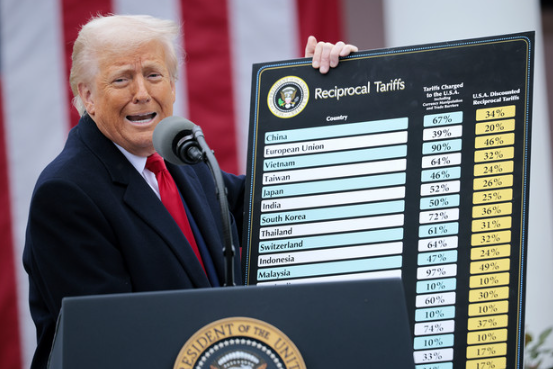
The Council of Economic Advisers (CEA) issued a new report that found tariffs are not to blame for inflation. In fact, the cost of imported goods has fallen this past year to a lower level than that of overall goods.

“CEA’s directional findings using this method of analyzing the PCE are consistent across core goods (excluding food and energy), durables (which last for at least three years), and nondurables,” the report reads. “The import contribution to inflation includes both the direct impact of imported final goods for consumption and indirect effects of imported intermediate inputs.”

Imported goods fell by 0.8% while the price of overall goods remained stagnant. The PCE index rose 0.4% from December to May or a 1% annualized rate, according to the CEA’s findings. Yet, the imported portion of PCE fell by 0.1% during the same period.

“The results clearly show the price of imported components declining, starting in March, while overall prices were close to unchanged or increased slightly,” the report reads. “Cumulatively, overall PCE prices have increased by about 1.1% since December compared to about 0.2% for PCE import prices. However, those values include pricing for services, which tend to have lower import intensity, so the divergence could be due to stickier services prices.”

The agency concluded “there is no clear trend break” this year in prices, despite the headlines claiming tariffs are the reason inflation remains above target.

June Minutes Report Decoded


Posted  originally on Jul 11, 2025 by Martin Armstrong 

Interest Rates Percent

The Minutes Report by the Federal Reserve indicates that the central bank is unlikely to cut rates at the next Federal Open Market Committee meeting on July 29-30. FOMC members unanimously maintained the borrowing range between 4.25%-4.5% where it has stood since December 2024. The central bank knows that it has limited power to control inflation through rate cuts, and stimulating demand is a moot point when the government is the largest borrower.

Instead of noting that the government simply borrows in perpetuity, Fed members focused on uncertainty surrounding tariffs and a potentially weakening labor market. Chairman Jerome Powell stated that cutting rates was a “closer call” as the 2% inflation target as been out of reach for several years. “With regard to the outlook for inflation, participants expected that inflation would continue to move toward 2 percent, although they noted that recent higher-than-expected readings on inflation, and the effects of potential changes in trade and immigration policy, suggested that the process could take longer than previously anticipated,” the FOMC minutes said. The last CPI reading was 2.7% with the PCE coming in at 2.4%.

The ongoing Trump v Powell feud is potentially spilling over into policy. Despite non-foreign-born citizens picking up over 2 million jobs as a direct result of deportation efforts, the Fed believes that the weakening labor market could be the result of deporting cheap labor. “Almost all participants judged that upside risks to the inflation outlook had increased. As reasons for this judgment, participants cited recent stronger-than-expected readings on inflation and the likely effects of potential changes in trade and immigration policy,” the minutes said. Unemployment fell to 4.1% with June posting an increase of 147,000 jobs.

The Fed is also blaming Trump’s tariff policies for inflation. “Ultimately, the cost of the tariff has to be paid, and some of it will fall on the end consumer,” the Fed Chair told reporters in June. “We do expect to see more of that over the course of the summer.”  Powell is confusing a one-time price adjustment with a monetary-driven inflationary wave that began in 2015 and soared after the pandemic. As previously noted, “almost all” participants saw trade policy as an upside risk to inflation. “Many participants noted that the eventual effect of tariffs on inflation could be more limited if trade deals are reached soon, if firms are able to quickly adjust their supply chains, or if firms can use other margins of adjustment to reduce their exposure to the effects of tariffs,” the Minutes stated.

A ”couple” of members stated rate cuts could happen at the next meeting, with Fed Governors Michelle Bowman and Christopher Waller going on record to say that they believe rate cuts are appropriate this month. “Several” officials said the overnight rate “may not be far” from target, believing a bit of adjustment could bring inflation to target. The “dot plot” of individual officials indicates a divide on the outlook of cuts.

The Minutes Report noted that two rate cuts could potentially happen in 2025, followed by additional cuts over the next few years. Powell has less than a year left in office, and the president is certain to appoint someone who will abide by his policy that he sees through the eyes of a borrower and not a lender.

The Better Investment — ETFs or Mutual Funds?


Posted originally on Jul 7, 2025 by Martin Armstrong 

ETF Tax

The primary difference between mutual funds and ETFs (exchange-traded funds) is that while an open-end mutual fund is priced once based on the market closing, ETFs, as well as closed-end mutual funds, trade all day. This actually goes back to the Panic of 1966 when mutual funds were open-ended but traded on the exchange and were bid up and down based on emotion rather than net asset value. The crash took place because mutual funds were, at times, selling well above net asset value.

If we look at the reforms post-1966, investors in mutual funds buy or sell them directly from the mutual fund companies themselves. That creates a different tax structure than an ETF in which purchases go to the market and the ETF is simply created by purchasing the underlying basket.

Mutual funds and most ETFs are governed by the Investment Company Act of 1940. Therefore, this legislation treats them like a pass-through company. When a mutual-fund investor wants to sell, the fund sells shares of appreciated stock to generate cash, which creates a taxable capital gain. Since most funds operate as simple pass-through vehicles, those tax liabilities from the gains accrue to all investors in the fund, including those who have not sold any holdings.

ETFs actually do avoid that type of tax issue. ETFs are not direct buyers or sellers of shares as a mutual fund. The ETF is created by a market maker with a special contract with the ETF provider. The investor has the newly created ETF share, which is created by purchasing all of the holdings in the underlying ETF. This basket of shares is given to the ETF issuer, thereby creating the ETF shares.

Because an ETF is not a direct buyer of the underlying shares as in a mutual fund, the ETF itself is not a buyer or seller. The basket of shares is swapped and is therefore an in-kind transaction; thus, there is no pass-through capital-gains tax bill. This is the tax advantage of an ETF over a mutual fund.

FREEMAN: “Gold-Backed Debit Cards Are Here, And The Movement Is Just Getting Started.”


Posted originally on Rumble By Bannon’s War Room on: June 19, 2025, at 1:00 pm EST