
We need to flood Trump Tower with Postcards and then the media will have to recognize what is going on. Do not believe the Polls its very easy to manipulate the outcome and they will do that. I know statistics and if I wanted I could make a poll say anything!
Tag Archives: COP21
Moonbat Representative Claims SNL “Endangering Latinos” With Donald Trump as Guest Host….
They are afraid of Trump — Send more Post Cards
Large Sample Florida Poll – Donald Trump Dominates In Florida – Leads Every Demographic and Every Region…
Good news in this poll but I don’t hear anything from the #ColdAnger postcard campaign from Trump. We need to send more Post Cards!
The Enforce-ability of the Climate Treaty from COP21
Can the Paris text guarantee compliance?

Section K of the Paris text, ‘facilitating implementation and compliance’, discusses measures to ensure that Parties stick to the commitments they agreed upon in the previous sections.
This section is brief, underdeveloped and appears to be one of the more contentious parts of the text. Some parties even consider section K “premature to discuss”; which is unfortunate as compliance mechanisms are going to be an integral part of achieving the UNFCCC’s goal of stabilizing greenhouse gas emission levels.
The importance of compliance mechanisms in International Environmental Law
Whether the final Paris agreement has any legal force is dependent on effective compliance mechanisms. This is because “legal force” is a variable concept at international law. For example, while a legal norm is considered ‘binding’ when it creates a legal obligation, this is distinct from legal enforcability. A norm is only ‘enforcable’ if it is backed by procedural mechanisms to incentivise parties to act in the prescribed manner. These incentives can be reputational or material, implicit or explicit, and include measures such as transparency, facilitation, compliance and enforcement.
It is currently undecided whether the Paris agreement will be “protocol, another legal instrument, or an agreed outcome with legal force.” While there is an intuitive desire for the agreement to be ‘hard’ (binding legal obligations; tightly worded) rather than ‘soft’ law (merely providing guidance), it is possible to have a hard legal instrument which lacks enforceability – and vice versa. As such, regardless of the format it eventually takes, the Paris agreement’s overall effectiveness (at practically achieving its goal) will rely on procedural mechanisms to incentivise compliance.
Some compliance mechansims are considered more suitable for environmental agreements than others. Enforcement mechanisms such arbitral tribunals, sanctions and other coercive measures are not often used in this context. Since international environmental agreements involve a collaborative approach to a long-term problem, punishing non-compliance can remove incentives for further participation, and thus ultimately prove counterproductive.
Measures to incentivise, assist and restore compliance are considered more effective for environmental agreements. Examples include reporting and monitoring systems to provide transparency and ‘early warnings’ for non-compliance; a regular Conference of Parties (COP) process to provide a forum to discuss evolving norms; capacity-building measures such as financial and technical assistance; diplomatic pressure (‘naming and shaming’); or non-compliance procedures (expert bodies to respond with non-punitive recommendations).
Existing Compliance Mechanisms
A compliance mechanism has already been established under the UNFCCC, in the form of the Kyoto Protocol’s Compliance Committee. The Kyoto Protocol covers emission reductions targets between 2008-2012 and 2012-2020 and is the predecessor to the upcoming Paris agreements. The Kyoto Compliance Committee consists of an independent team of experts who monitor and control the procedure surrounding the Protocol’s Parties emission reduction commitments. Parties can also report each other – and themselves – to the Committee in cases of potential non-compliance. The Committee has a facilitative branch and an enforcement branch to respond appropriately to these situations. The approach is quasi-judicial but its consequences are not punitive. The facilitative branch provides advice, assistance to Parties in order to promote compliance, and further provides an early warning of potential non-compliance. The enforcement branch decides whether developed nations (which are labelled “Annex I” Parties in the Kyoto Protocol) are meeting their reporting and reduction requirements, and determines whether to apply adjustments the assigned targets. The enforcement branch recommends actions against Parties when they fail to make progress towards their commitments.
The UNFCCC website advertises the Compliance Committee as one of “the most comprehensive and rigorous systems of compliance for a multilateral environmental agreement.” Nonetheless, it has not been entirely successful. Canada’s withdrawal from the Kyoto Protocol in 2014 is perhaps the best demonstration of the difficulties of enforcing compliance in an inherently voluntary international law system. Even a combination of hard and soft law, balanced to incentivise long-term collective action, will be rendered ineffective if a Party does not want to participate.
So what are the compliance mechanisms suggested in the Paris Text?
All three options suggested are essentially expansions to the pre-existing Compliance Committee, adapted to the Paris modality of differentiated commitments.
Enforcement and Facilitation
Kyoto’s commitments – and consequently, compliance measures – only extended to Annex I (developed) nations. Paris, in contrast, takes a universal “Nationally Determined Contribution” approach to commitments. Accordingly, Parties have suggested that Section K extends the Compliance Committee’s facilitative branch to developing nations, in order to provide the necessary resources (ie financial, technological, and capacity-building) for poorer nations to meet their requirements. Whether the enforcement branch is extended to all nations or remains for developed parties only is undecided, with both options still on the table.
Various different options suggest extending the Compliance COmmittee, but none of them develop the idea much further. Specifics of representation, committee membership rules, and decision-making processes are undecided. One option suggests leaving any elaboration beyond the suggested structure for future COP decisions; another leaves it to the first session of the governing body (where they will decide on an “indicative” list of consequences for different causes, types, degrees and frequency of non-compliance).
Regarding the substantive scope of the compliance arrangements (i.e. when the enforcement or facilitation measures are triggered), some parties suggest that the committee bear responsibility for enforcing commitments made across all sections of the text while others suggest that their jurisdiction be limited only to specified sections (such as [D] Mitigation and [I] Transparency) while excluding others (such as [E] adaptation).
Section K of the text requires considerable development and clarification ahead of COP21 in Paris. Extending the Kyoto Compliance Committee will not alone be enough to ensure compliance with the Paris agreements. Specific, tailored mechanisms with a clear substantive scope are needed.
A Climate Justice Tribunal?
While the above are options are consistent with the established preventative, non-political, non-judicial modalities, a contrasting option has been inserted at the end of the section K: a ‘Climate Justice Tribunal.’ This body would be independent from the Compliance Committee; and would be established to “oversee, control and sanction the fulfilment of and compliance with the obligations … under this agreement.”
The Climate Justice Tribunal was a suggested by the Bolivian government. The concept was developed at the World People’s Conference on Climate Change and the Rights of Mother Earth (WPCCC) hosted by Bolivia in 2010. The WPCCC was instigated by developing nations, indigenous peoples and civil society groups frustrated with the lack of commitments made at Copenhagen (COP 15) in 2009. As well as the call for a Climate Justice Tribunal, the WPCCC also resulted in a ‘Universal Declaration of the Rights of Mother Earth’ and a call for a ‘World People’s Referendum on Climate Change.’
Clearly, its inclusion in the Paris text represents a broader voice and movement among (but not necessarily limited to) the global south community, for increased climate action and accountability from wealthy industrialised nations. It is also a considerable deviation from the mainstream negotiated decisions under the UNFCCC; as well as traditional approaches to compliance in international environmental law. Whether these outspoken minority groups have the political weight to realistically achieve this outcome remains to be seen.
Conclusion:
Section K is one of the most important sections relative to its inconclusiveness. Finding the correct combination of hard and soft law compliance mechanisms will be crucial to incentivise ongoing commitment cycles without discouraging participation. A Climate Justice Tribunal represents an idealized way to ensure nations honour their commitments; but it is difficult to imagine nations voluntarily signing up to its jurisdiction. A strengthened Compliance Committee seems to be the likely outcome of Section K, but its specific mechanisms (and how it relates to nations at different levels of development) still needs further clarification.
Simon Hillier and Thomas Stuart | Image by Brian Turner
What is the cost of illegal immigration!
Re-posted from God Father Politics
Over the past couple of weeks, I’ve shared how much illegals cost taxpayers in Ohio, Maryland and North Carolina. The combined cost to taxpayers in those three states amounts to over $4.8 billion a year. Those were followed up with a report on how much illegals were costing Texas taxpayers a year, a state with a greater number of illegals. Based upon figures from 2013, Texas taxpayers were shelling out over $12 billion a year to cover the unwanted costs of illegals.
So what about the nation’s capital for illegals – California?
The Federation for American Immigration Reform (FAIR) states that as of 2014 there were around 3 million illegals living in California. Ironically, legal immigrants only total up to 2,403,070 as of 2012. The total population of California, as of 2012, was placed at 38,041,430 with illegals comprising nearly 8% of the total state population.
The estimated annual cost to California taxpayers as of 2014 adds up to $25.3 billion. That’s more than the total operating budgets for some states. This breaks down to approximately $2,370 for every household headed by a US citizen.
According to FAIR:
“Nearly half of those expenditures ($12.3 billion) result from the costs of K-12 education for the children of illegal aliens — both those illegally in the country and those born in the United States. Another major outlay ($2.1 billion) results from the need to provide supplemental English language instruction to Limited English Proficient students, many of whom are children of illegal aliens. Together, these educational costs are 57.1 percent of total expenditures.”
“Other fiscal outlays result from the costs of medical care ($4.0 billion), public assistance services ($800 million), administration of justice functions ($4.4 billion), and general governmental services ($1.6 billion).”
The 2015-16 fiscal year budget for the entire state of California is $167.6 billion. The cost for illegals comprises nearly 15% of the total state budget while only comprising nearly 8% of the population.
Adding the annual cost of California’s illegals to the costs of Ohio, Maryland, North Carolina and Texas, we get a total of $42.1 billion per YEAR that taxpayers are being forced to pay thanks to Obama’s failure to enforce federal immigration laws. Perhaps the best solution would be to bill him and his fellow cronies for the cost incurred by illegals. I wonder if they would be so welcoming if they had to personally pay the bill?
Two States consider leaving the Union!
Vermont Separatist Movement
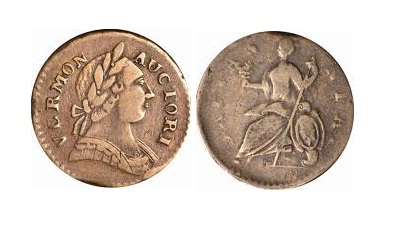
The Vermont Republic was, in fact, a separate government that existed from 1777 to 1791. We are now starting to hear rumblings of a separatist movement beginning in Vermont that is right on schedule, according to the 224-Year Cycle of Political Change. Vermont did issue its own coinage and was not one of the 13 colonies. There was a strong debate, and for this reason, Vermont was always known as the “reluctant republic” since some favored a political union with the United States and others wanted to remain independent. In 1791, Vermont joined the United States and became the 14th state, which was the first addition to the original 13 colonies. The rise in separatist movements is once again brewing.
Hawaii Separatist Movement – Its Own Country by 2031?

The upcoming election in Hawaii has revealed the rise of a separatist movement that argues that Hawaii is an independent country that has been occupied. Indeed, Hawaii is one of four U.S. states that were actually independent nations before they became states. The others are Vermont, where there is also a separatist movement, along with Texas, and then California, which joined just before the Gold Rush of 1849 in 1846.


The actual royal Kingdom of Hawaii was sovereign from 1810 until 1893 when resident American and European capitalists and landholders staged a coup d’etat and overthrew the royalty. Hawaii was thereafter still independent between 1894 and August 12, 1898, when it officially became a “territory” of the United States. Hawaii became a state on August 21, 1959. Ironically, our cyclical models warn that Hawaii may return to a separate sovereign nation in 2031 or about when the ECM peaks in this major wave in 2032.
“Get out of my Class and Leave America”: College Prof’s Intro to his Class GOES VIRAL
At least one professor has it right.

Welcome back to class, students! I am Mike Adams your criminology professor here at UNC-Wilmington. Before we get started with the course I need to address an issue that is causing problems here at UNCW and in higher education all across the country. I am talking about the growing minority of students who believe they have a right to be free from being offended. If we don’t reverse this dangerous trend in our society there will soon be a majority of young people who will need to walk around in plastic bubble suits to protect them in the event that they come into contact with a dissenting viewpoint. That mentality is unworthy of an American. It’s hardly worthy of a Frenchman.
Let’s get something straight right now. You have no right to be unoffended. You have a right to be offended with regularity. It is the price you pay for…
View original post 609 more words
#ColdAnger Postcard Campaign Reminder…
SUNDANCE is 100% right Post Cards are a very cheap way to accomplish the message that we support Trump. This is a true Grassroots movement in the spirit of the founders.
Too Funny – Tonight The MSM Sells “Rubio Surging” and “Carson Leading”….
We knew this would happen that’s why we have #ColdAnger and I am sending out lots of post cards i hope the rest of you are as well.
“Sketchy Business” – Ted Cruz Campaign Puzzled By Silence of Pro-Cruz SuperPacs?….
It would very hard to think there was any connection with Hillary so what could Barton and Beck have in mind Huckabee?
 Centinel2012