Full Spectrum Surveillance Lies Behind the J6 Committee Motive to Delete all Investigative Material


Posted originally on CTH on September 9, 2025 

There’s a reason why the J6 Committee deleted the records of their activity, an angle missed by most.  When you understand what they hid and why they did it, you then understand why current Speaker of The House Mike Johnson will not go near the subject.

The J6 Committee used interfaces with the NSA database and pre-existing portals with aligned DHS Social Media databases (including Twitter, see prior “Twitter Files”), as research and evidence gathering mechanisms for their investigations.

The J6 targets were identified through a collaboration between the legislative research group and the FBI. [That’s unlawful by the way – but that’s another matter]. The FBI contracted Palantir to identify the targets using facial recognition software and private sector databases.

Once identified, the targets were then searched in the NSA database for a fulsome context of identity. All subsequent electronic metadata of the targets was retrieved and utilized in prosecution; however, no one ever discovered this was the collaborative method. That has not come out yet.

Ultimately, the J6 Committee hiding and deleting their files and operational techniques was due to several issues. They really didn’t have a choice given the unknowns of an incoming republican majority.

First, the collaboration with the FBI is unconstitutional. Legislative officers are not law enforcement officers. There is a separation of powers issue.

Second, ultimately – and most consequentially – all of the participants did not want the American public aware of the mass surveillance techniques that were carried out as part of the ’round up.’

Wait to see what the next NSA compliance audit looks like. Remember, these reports are more than a year behind the activity they highlight.

This is where a complete mental reset is needed.

The modern application of the fifty-year-old concept around FISA as a constitutional mechanism to search the private papers (data) of American citizens, is a fraud, a complete ruse.

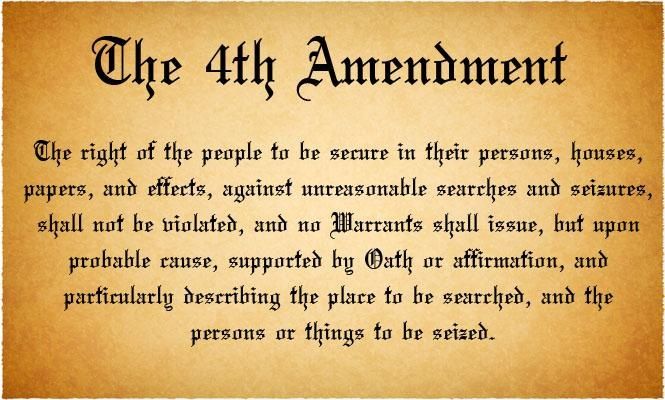
The Foreign Intelligence Surveillance Act, FISA, represents the method used by the intelligence apparatus of the FBI to conduct surveillance. It was purposefully designed, as a method to avoid the problems with 4th amendment protections. However, the modern application of the FISA justification has no lawful basis.

♦CONTEXT – Beginning in/around 2012, after the Dept of Justice National Security Division was created by President Barack Obama and Attorney General Eric Holder, the use of FISA warrants were extended to include electronic searches of captured information held within the National Security Agency (NSA).  This was the database into which former NSA employee Edward Snowden was creating the search engine software.

The capturing of information was relatively new; technology was still being developed.  Rapid scale-ups of archives and data processing was underway.  Various iterations of the search tools and processes were being tested and deployed.

Prior to 2010/2012 we were mostly talking about emails, phone calls and text messages.  However, as more and more technology was deployed, the interfaces expanded.  Today, almost every electronic interface is captured/stored within either the NSA database, or a private sector database with connections to the NSA search portals.

Arguably, all of the underlying data captures were unconstitutional, and when the captures were originally discovered there was some intense conversations about fourth amendment protections and Americans privacy.  To set aside the concerns and justify the existence of electronic search measures, the American government justified existence via the FISA court process, which extended to cover the new capabilities.

Currently, almost every American interfaces electronically with some system that captures their data.  In the private sector that data is then assembled, attributed and used for consumer product micro-targeting, i.e., all data is commercially monetized.

Local and state governments also interface with the federal government database. As a consequence, all data eventually flows to the NSA capture points where searches of the total assembly are possible.

As noted in various explanations of government collaboration with social media, DHS has access to the various databases which house information inside the private sector.  The lines between govt and private sector data captures are nonexistent as both public information and private information databases can be searched through the same network.

This is the baseline to understand the scope of data collection.
The important part to understand is all of the data collected is searchable.  Then you move on to ‘how’ can the data be searched.

The ‘how’ is where FISA comes into the picture as the justifiable mechanism that permits the federal government to search the database.

The existence of the database is no longer argued.  The govt has now moved beyond justifying the existence of the stored data, and now the only point of contention is ‘how’ and ‘when’ the government may exploit it.

This is where the DOJ-NSD, FBI, U.S. Intelligence Community, Congress and even the Judicial Branch claim the FISA laws protect the unlawful exploitation of the search capability.  However, did you know there is not a single example of a FISA search application to the FISA Court that has ever passed Inspector General review.

Prior to President Trump’s authorization of the OIG in 2017, no one was ever permitted to review, check or audit the government submissions to the FISA Court.  From the moment the DOJ National Security Division was created to permit the enhanced search review, not a single oversight mechanism was ever in place.

Factually, in the timeline of FISA use not a single oversight mechanism was ever in place.  The entire process, and think of searching the database as a process, was/is based on the ‘honor system’. That explains why it was so easy to weaponize by Obama/Holder.

As soon as President Trump permitted the Office of Inspector General to start looking at filled out FISA applications, and justified FISA search documents created by users who were searching through the database, what they discovered was a non-existent accountability system.

After the DOJ Office of Inspector General (OIG), Michael Horowitz, presented his December 2019 findings of the FISA application used against U.S person Carter Page, the gross deficiencies and intentional fraud were so extensive the IG said he was going to review a sample of FISA applications to identify if the fraud and abuse was widespread.

The OIG began reviewing FISA applications from eight field offices (the proverbial “rank and file”).  The OIG selected 29 FISA applications from those field offices over the period of October 2014 to September 2019.

Additionally, every field office and the DOJ-NSD generate internal “Accuracy Reviews”, or self-checks on FISA applications; so, the OIG inspected 42 of the accuracy review FISA files to determine if they were compliant.

The results were so bad the IG produced an interim memorandum to the DOJ and FBI [pdf link here].  Within the 17-page-memo the IG notified Attorney General Bill Barr and FBI Director Chris Wray that all of the claimed FISA processes, in every field office, are grossly deficient, and in most cases, there is zero compliance with FISA standards.

The IG memorandum was presented before the Inspector General even looked at the specifics of the non-compliance.

Below is the report/memorandum.  Additionally, I am summarizing the stunning top-lines identified by the IG memo:

  • The IG reviewed 29 FISA applications, surveillance warrants, used against U.S. persons.
  • The 29 FISA applications were from eight different field offices.
  • The FISA applications were from Oct/2014 through Sept/2019.
  • All of the FISA applications reviewed were approved by the FISA court.

The ‘Woods File’ is the mandatory FBI evidence file that contains the documentary proof to verify all statements against U.S. persons that are contained in the FISA application.  Remember, this is a secret court, the FISA applications result in secret Title-1 surveillance and wiretaps against U.S. persons outside the fourth amendment.

♦ Within the 29 FISA applications reviewed, four were completely missing the Woods File.  Meaning there was zero supportive evidence for any of the FBI claims against U.S. persons underpinning the FISA application.  [ie. The FBI just made stuff up]

♦ Of the remaining 25 FISA applications, 100% of them, all of them, were materially deficient on the woods file requirement; and the average number of deficiencies per file was 20.  Meaning an average of twenty direct statements against the target, supporting the purpose of the FISA application, sworn by the FBI affiant, were unsubstantiated.  [The low was 5, the high was 63, the average per file was 20]

♦ Half of the FISA applications reviewed used Confidential Human Sources (CHS’s).  The memo outlines that “many” of applications containing CHS claims had no supportive documentation attesting to the dependability of the CHS.

♦ Two of the 25 FISA applications reviewed had renewals; meaning the FISA applications were renewed to extended surveillance, wiretaps, etc. beyond the initial 90-days.  None of the renewals had any re-verification.  Both FISAs that used renewals were not compliant.

Keep in mind, all of these applications/justifications to engage title-1 surveillance against suspects, were approved by the FISA court.  How is this possible, unless the FISA Court is intentionally just a false front for a nonexistent process.

That’s my position now.  There is no FISA process in place at all.  It’s as if there’s a traffic light at an intersection, but the power is turned off.  What good is the traffic light, other than to say there’s a traffic light at this intersection.

But wait… it gets worse.

The DOJ and FBI have an internal self-check mechanism.  The DOJ National Security Division (DOJ-NSD) chief counsel, and the chief counsel for every FBI field office are required to conduct an “Accuracy Review” of selected FISA applications.

One review per FBI field office (25 to 30 field offices), which are also sent to DOJ-NSD (main justice) for general counsel inspection.

Keep in mind, these “accuracy reviews” are known in advance, so the FBI has all the time in the world to select the best FISA file for review.

Additionally, I surmise the OIG wanted to inspect the “accuracy review” FISA’s because they would show the best light on the overall system itself.  The OIG was looking for the best, most compliant, product to report on.

However, when the OIG inspected 42 of these Accuracy Reviews, the IG identified that only three of them had accurately assembled documents (Woods File) supporting the application.  The error rate within the files self-checked was over 93%.

So the best FBI files are selected to undergo the FBI and DOJ-NSD accuracy review.  The accuracy review takes place by FBI legal counsel and DOJ-NSD legal counsel.  However, the IG finds that only three FBI applications in the accuracy reviews were compliant.

The error rate in the files undertaken by the internal accuracy review was over 93% (3 compliant out of 42 reviewed).  These were the FISA submissions with the greatest possibility of being accurate.

This is the baseline to understand what comes next.

Summary:  The justification of FISA or FISA (702) as a mechanism to protect the American people from illegal searches of the NSA database IS A FRAUD.  The searching of the NSA database not only continues but has factually expanded through today.  There are no established limits on search use, only false claims that are fed to the public for popular consumption.

The DOJ and FBI are aware of this.  The OIG is aware of this. The Intelligence Community is aware of this.  The NSA is aware of this.  The FISA Court is aware of this.  The Supreme Court, which oversees the FISA Court, is aware of this.  The Legislative Branch is aware of this.

We have the evidence and receipts.

More soon…

Steve Bannon at Hillsdale College and NPR | EP #276 | President Trump and MAGA | Royce White


Posted originally on Rumble on By Bannon’s War Room on: September, 8, 2025

Steve Bannon at Hillsdale College and NPR | EP #276 | President Trump and MAGA | Royce White


Posted originally on Rumble on By Bannon’s War Room on: September, 8, 2025

WarRoom Battleground EP 845: Taking Back Chicago; AI Jesus And The Digital Rapture


Posted originally on Rumble on By Bannon’s War Room on: September, 8, 2025

Posted originally on Rumble on By Bannon’s War Room on: September, 8, 2025


Posted originally on Rumble on By Bannon’s War Room on: September, 8, 2025

Sen. Schmitt Puts the H-1B Visa Scam on Blast, Explains How It’s Harming Hardworking Americans


Posted originally on Rumble By Charlie Kirk show on: September, 5, 2025

End the H-1B Scam + The Fall of Britain | Sen. Schmitt, Levine, Sibarium | 9.4.2025


Posted originally on Rumble By Charlie Kirk show on: September, 5, 2025

Unemployed Outnumber Job Openings in US


Posted originally on Sep 8, 2025 by Martin Armstrong |  

Jobs

The number of unemployed Americans now outnumbers available job openings. Data from July show 7.24 million unemployed Americans compared to 7.18 million job openings, marking the first time that the unemployed have outnumbered the number of available jobs since April 2021.

This is precisely what we see during stagflation and a structural labor shift. Companies are cutting costs due to regulations, taxation, and inflation that have never meaningfully waned since the pandemic. AI automation has replaced countless positions, and when companies do choose to hire, they are often seeking new hires from outside the US, where the cost of labor is cheaper.

The fact that job openings are now falling below the number of unemployed is a warning that we are entering the next phase of the economic decline into 2026. Just as the ECM has forecast, confidence is shifting. Employers are reluctant to expand, workers are squeezed by inflation and the cost of living, and the political response will be more regulation, higher taxes, and demands for wage hikes that only accelerate the cycle downward.

Around 60% of recent college graduates cannot find employment. Entry-level jobs are being replaced by AI or outsourced overseas and the unemployment rate for those aged 20 to 29 is 7.1% compared to the national average of 4.3%. Previously, college graduates had lower unemployment rates than the national average, as those inexperienced employees were the cheap labor that companies were seeking.

Stagflation is the combination of rising prices with a stagnant or declining economy. Here, you have unemployment rising as job openings vanish, while at the same time, food, insurance, shelter, and taxation continue to rise. People are struggling to make ends meet. The central bank and politicians are reluctant to use the word “stagflation,” as everyone wants the public to believe that the economy is growing rather than stagnating.

Is AI Changing the World?


Posted originally on Sep 8, 2025 by Martin Armstrong |  

AI Thinking

QUESTION: Hi Martin,

Considering the potential influence of AI, also taking into account the behaviour of the 80 percent that went with the COVID narrative, I was wondering. The AI is being fed by human interaction on the internet, probably somewhere else as well, but very much directed. Now that does not seem to direct to a real advancement, does it? What if the human spirit will be directed to a more animal like behaviour? Like a programmed nature thing that birds show. Go south in winter and go north in spring to get your food. Would not that be a degradation of the general human?
Cheers,
L.

Star Trek Phone

ANSWER: I have been involved in AI, actually, since the late 1960s. I have explained how the TV show Star Trek not only secured funding from Congress for NASA’s Moon mission and named the first Space Shuttle, Enterprise, but also inspired us in the computer industry to dream big. We all knew each other back then. Even the clamshell flip communicators used by the crew of the USS Enterprise are a clear visual and conceptual precursor to the flip phones that dominated the market before the iPhone, and by extension, the iPhone itself.

While Steve never said, “I copied the Communicator,” he did explicitly reference Star Trek when introducing the iPhone. At the 2007 Macworld keynote, while demonstrating the iPhone’s multi-touch interface for the first time, he said, “Boy, have we patented it!” This was a direct and knowing wink to the “pinch-to-zoom” and swipe gestures that looked exactly like the magic interfaces everyone had seen in science fiction for decades, with Star Trek being the prime example. The idea of a sleek, portable, handheld device used for instant communication, information access, and computation is pure Star Trek. The iPhone made that science fiction a reality.

Long before tablets were a practical reality, Star Trek: The Next Generation featured characters using flat, touch-screen devices called PADDs (Personal Access Display Devices). The crew members would carry these thin, slate-like devices to read reports, access data, and input commands. They were used exactly as we use tablets today: for reading, browsing, and as a portable terminal. When Steve introduced the iPad, he framed it as a new category of device between a laptop and a smartphone. For any fan of Star Trek, it was immediately recognizable as the realization of the PADD. The form factor, the touch interface, and its purpose as an information consumption device were all directly inspired by that vision of the future.

Dragon Systems R

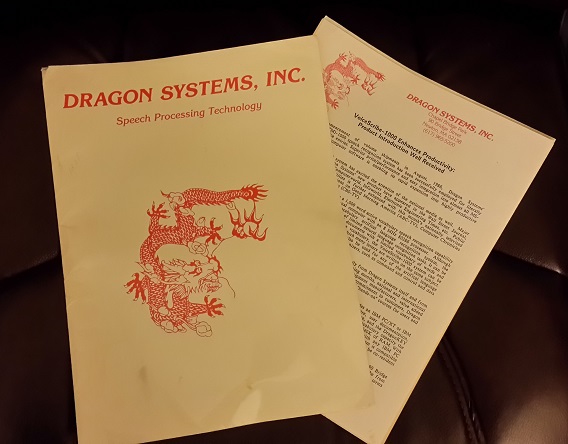
The idea of talking to your computer and it talking back to you in a natural, conversational way was a staple of Star Trek. The crew could walk onto the bridge and ask the computer any question and get a verbal answer. In the early 1980s, I was working with Dragon System when this was all hardware. Today it is software. My kids grew up talking to the computer. They were my guinea pigs to teach Socrates how even to have a conversation with them. My daughter thought it was completely normal and would ask her friends, You don’t talk to your father’s computer? She would bring her girlfriends over, and they would be stunned.

 This vision of a voice-activated, intelligent assistant is the entire concept behind Siri (which Apple acquired and integrated into the iPhone) and other voice assistants like Alexa and Google Assistant. The goal was to create the Star Trek computer: an intuitive, omnipresent interface that required no keyboard.

The inspiration wasn’t just about specific gadgets. It was also about a philosophy. In Star Trek, technology isn’t clunky. It’s intuitive, elegant, and seamlessly integrated into daily life. It just works. This was a step back, a second, and take a look at Steve’s core design principle for Apple products. The glowing, glass-like, multi-touch displays of the LCARS system in Star Trek: The Next Generation were a radical departure from the blinking command prompts of 1980s computers. They presented a vision of computing that was visual, graphical, and friendly—a vision Apple brought to life first with the Macintosh and later with iOS.

There’s a wonderful, direct link between Steve’s company, NeXT, and Star Trek. In the mid-1990s, the development team for the video game Star Trek: The Next Generation – A Final Unity used NeXT computers as their development platform. They even sent a letter to Steve (on a NeXT computer, of course) asking for permission to use the NeXTstep operating system’s alert sound as the beep for Geordi La Forge’s communicator badge. Steve, of course, instantly agreed.

Steve Jobs’ brilliance lay in his compelling vision of the future, inspired by science fiction, and in applying Apple’s design and engineering prowess to make it a reality. He didn’t invent the concepts of the smartphone, tablet, or voice assistant, but their most popular and idealized depictions directly inspired him in Star Trek. He was far more inspired by Star Trek than most would ever imagine. We all were!

Then Came the Intelligence

AI Artificial Intelligence

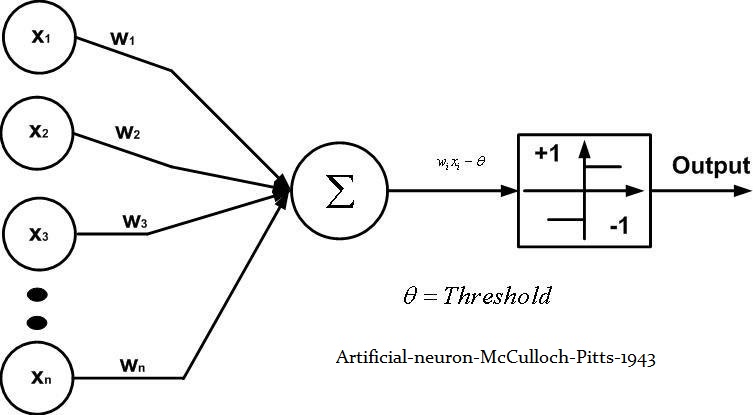
Beyond the gadgets, how can we create a computer that truly understands you and conducts legitimate, original research? There were two theories running around. The original path that 99% of those in AI followed, except me, was the core idea that a neural web (or network) could mimic the brain and that complexity, which could lead to consciousness. This theory is primarily credited to Warren McCulloch and Walter Pitts, known as the Foundational Theory: McCulloch and Pitts (1943).


Download their 1843 Article

mccolloch.logical.calculus.ideas.1943


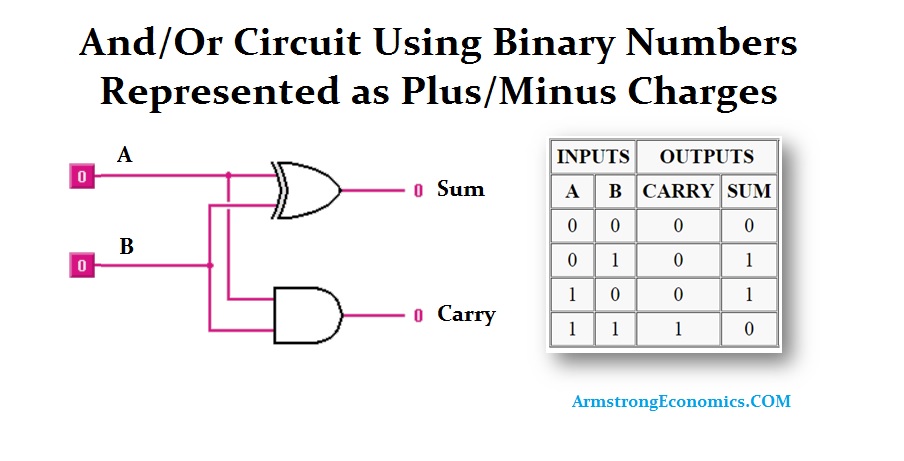
And Or Circuit

Because I had to do the electrical engineering learning how to create a computer from the ground up, I saw the obvious connection between the McCulloch-Pitts (MCP) neuron, proposed in their seminal 1943 paper, “A Logical Calculus of Ideas Immanent in Nervous Activity,” which was explicitly and directly based on the principles of electrical circuits and Boolean logic.

Artificial neuron McCulloch Pitts 1943

To be a good trader, you also require visual skills, which enable you to see patterns within patterns. So while the software guys were all enamored with the McCulloch and Pitts theory, I rejected that idea after doing my own testing. IBM is spending over $1 billion and employing over 3000 people to create its Watson, which they believe will be able to cure cancer.

Deep Blue v Kasparov

The documentary film Man vs. The Machine was about the famous chess match between Deep Blue and Garry Kasparov. He beat the computer at first. When the final match took place and Deep Blue beat Kasparov, IBM’s shares rose 15% and they would not grant him a rematch.

IBM Watson 1024x481

Real Artificial Intelligence is something that learns and analyzes on its own to create its own conclusion. In all honesty, 99.999% of what people present as AI are simply expert systems that can be distinguished relatively easily because all they are doing is looking up some subject from rule-based systems. The neural nets were supposed to be the great hope.

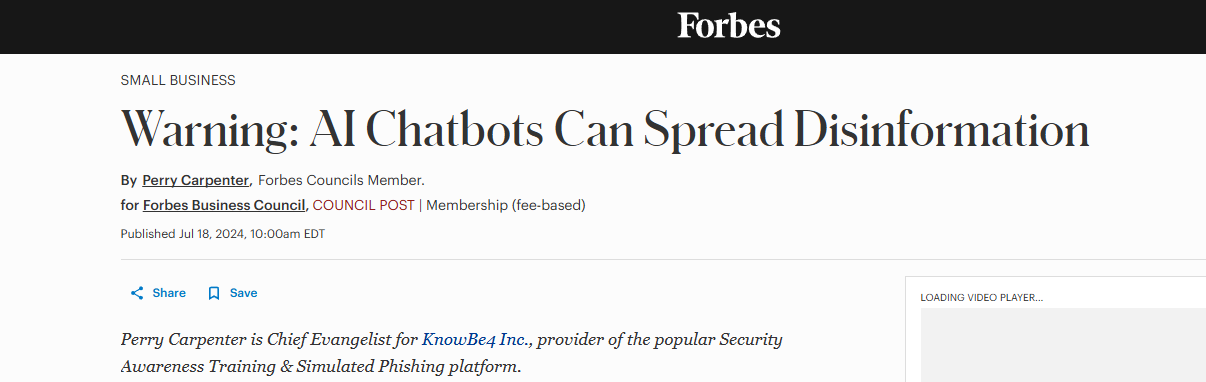
Warning_AI_Chatbots_Can_Spread_Disinformation FORBES 7 18 24

IBM’s Watson could search the entire internet and gather every piece of information possible. That was the easy part. What IBM lacked was the expertise in conducting research. How do you determine which piece of information is more important than another? They were unable to develop a genuine analysis capability. All of these AI programs are interesting. However, I have tested them to see the results, and if the sources they base their comment on are FAKE NEWS, they cannot analyze whether the information is fake or real.

AI

The presumption was that our minds are just supercomputers, all stems from the 1943 theory of McCulloch and Pitts. They ignored perhaps the critical understanding of what makes one person brilliant at math and another a brilliant artist who can’t count beyond 1,000.

This theory that our minds are simply supercomputers ignores some critical traits and how to distinguish one person from another. There was this idea that if you create a neural net and stuff in all this knowledge, it will learn all by itself. This was just a giant fiction to me, which was up there with the theory that somehow the machine will come to life and decide it wants to rule the world and take over humankind.

My approach was to teach them HOW to analyze, not WHAT to analyze. I incorporated as much of myself as possible into the code, without the human flaws that make life interesting. I taught Socrates how to analyze, rather than relying on the chance of a neural net that cannot be tested. I’ve chosen a completely different path, rejecting the black-box approach of throwing in a heap of information, shaking well, and hoping for the best, like James Bond. WATSON failed because they followed McCulloch and Pitts, when I did not.

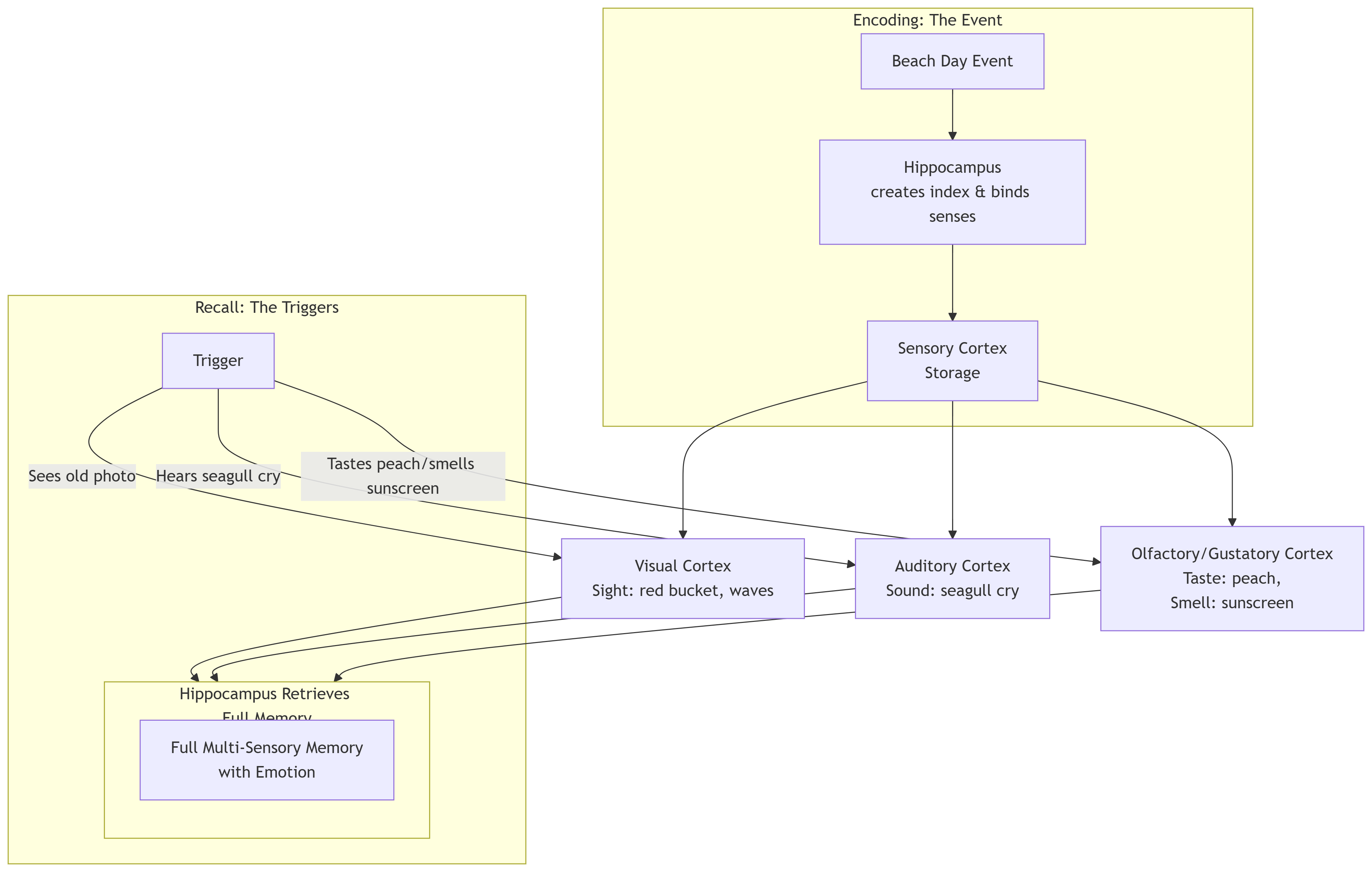
How AI Memorary Works all senses

What McCulloch and Pitts overlooked is that the brain is far more complex than a simple AND OR CIRCUIT. You may have met your first love in a restaurant, and returning to that place suddenly and involuntarily brought back that memory. Or you hear that song that was playing, and again you involuntarily retrieve that memory, or perhaps it may have been the food.

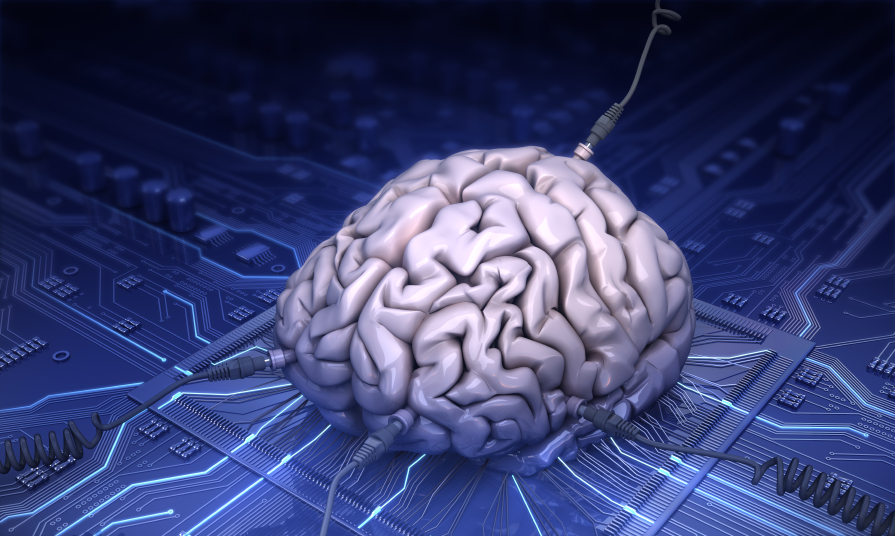
Brain Human 300x257

Our brain does not function as an electrical circuit using Boolean logic. Going down that path creates impressive retrievers, but by no means will they EVER produce actual original analysis. That is simply impossible.

1 Waiting Dogs

Most know I have two French Bulldogs. They each have their own unique personality, just like humans. As I delved deeper into how we actually think, I discovered that my dogs think in the same functional manner, looking at patterns and remembering from past experiences. I get up with my coffee cup, and they know where I am going. They anticipate my actions.

The general consensus among dog experts and trainers is that the average dog can learn around 165 words, with the most intelligent breeds (like Border Collies and Poodles) capable of learning 250 or more.  They understand what I say, but some words I have to spell, so they don’t always know what I am saying. I feel sometimes I have to do that in Washington, DC, as well. As I have pointed out, even a lion can love a human.

I’m sorry, but neither our minds nor those of animals function in this simplistic electrical circuit manner using Boolean logic. This is why Socrates has been able to do actual research and teach me a thing or two. However, it lacks the expertise in the medical field to cure cancer. These AI language-based programs can be impressive if you do not understand the coding and capabilities behind the design. They are remarkable retrieval aids, but do not expect them to forecast World War III and IV.

DANIEL HOROWITZ on AI data centers: “Multifront Assault On Land.”


Posted originally on Rumble on By Bannon’s War Room on: September, 6, 2025