White House Prepares for NATO Summit Next Week in London – Bilats With Merkel, Conte and Frederiksen Announced…


The leaders of the twenty-nine NATO member nations are scheduled to meet next week in London, England.  Amid consistent pressure on the member states for increased defense spending to live up to their prior 2014 promises (Wales summit); and with NATO economies in a stalled geopolitical stasis due to their attachment to China (5G telecom), Russia (Nordstream II), and Iran; this summit holds increased possible ramifications.

This NATO summit could very well expose the duplicity and hypocrisy of the EU depending on how far U.S. President Donald Trump is willing to call them out.

There are going to be a lot of nervous snake handlers around the table(s), and with the U.K. elections in the near future there is a great deal at stake. The summit is Tuesday and Wednesday.  Here’s the White House background briefing:

[Transcript] – SENIOR ADMINISTRATION OFFICIAL: Good morning, ladies and gentlemen. I just want to thank everyone for being here today, Friday after Thanksgiving.

Just up front, this call is going to be on background, attribution to a senior administration official, and there will be an embargo on the contents of this call until it’s completed.

Here’s the run of show for today. Our first — our speaker will be [senior administration official], and he will provide an overview of the President’s trip. And I will follow with an overview of the President’s key events and bilats. And after that, we’ll take some questions.

So with that, over to you.

SENIOR ADMINISTRATION OFFICIAL: Thanks, and thanks everyone for listening in. This is a celebratory Leaders Meeting, in many ways. The President is greatly looking forward to it. This is the most successful alliance in history. It remains instrumental in guaranteeing the security and prosperity and freedom of our allies.

The President, as you know, has been committed to making NATO stronger and ready to face today’s threats and tomorrow’s challenges. This is why he places such an emphasis on encouraging all allies to live up to their commitments and increase defense spending, in line with their Wales commitments.

I have to say, for a priority that United States has had for — since at least the 1960s — the President has been spectacularly successful. Since he has taken office, the Allies have added over $100 billion in new spending. In 2016, only four Allies spent 2 percent of GDP on defense. Now, there are nine, and following through their implementation plans to get the 2 percent, we expect there to be eighteen by 2024. This is tremendous progress, and I think it is due to the President’s diplomatic work.

However, there are continuing challenges that NATO needs to face: China, above all. China is actively seeking a great presence and more influence across the globe, including in NATO’s area of responsibility. It is offering cheap money, cheap investment, and critical infrastructure, including ports and electricity grids. It is seeking to trap nations in debt, and thus bring diplomatic concessions that way. And it is looking to undermine the rules-based international order and skirting, in some cases, (inaudible).

5G, as you know, is another area where NATO has to be vigilant. This is a priority of the President. Trading security of our telecommunications networks and privacy of our personal data for savings is not in any of the Allies’ interests. This is an issue we continue to socialize and raise with our NATO partners, and we will certainly be discussing it at the summit today.

Lastly, while we welcome our European Allies doing more and spending more on defense, we have to continue to socialize that EU defense initiatives not undermine or duplicate those of NATO, and that procurement and defense industrial issues are open to United States and U.S. companies.

We are stronger together. The transatlantic relationship is in a very, very healthy place. And I think that will be the message, loud and clear, at this 70th anniversary of NATO.

SENIOR ADMINISTRATION OFFICIAL: Okay, thank you. Before we go into Q&A, I just want to provide an overview of the President’s key events and bilateral meetings. So — and I will speak slowly so that folks can take notes.

On Tuesday, December the 3rd, the President will have a working breakfast with NATO (inaudible) — with NATO Secretary General Stoltenberg. We will be having a bilateral meeting with President Emmanuel Macron of France, and we’ll be going in that evening to the NATO Leaders Reception, hosted by Her Majesty Queen Elizabeth II.

On the 4th, we are looking at the official welcome ceremony. The NATO Leaders Meeting Plenary Session, a bilat with Chancellor Angela Merkel of Germany, and then a working lunch with representatives of the following nations: Estonia, Greece, Latvia, Poland, Romania, Lithuania, Bulgaria, and the United Kingdom.

Additionally, we’re looking at meetings with Prime Minister Frederiksen of Denmark and Prime Minister Conte of Italy. And I just want to — I just want to also caveat that we are also working on additional bilats, and those will be announced once they are confirmed.

Okay, that’s all I have. And so at this time, Operator, I’ll go and hand off you for moderating Q&A.

Q Hi, thank you. Christina Anderson. Thank you for doing this call. Kristina Anderson, AWPS News. Last week, the NATO ministers voted to declare space another domain, along with the other standard domains: air, land, and sea, and cyber. Will there be discussion about space as a domain and the framework to promote cooperation between the NATO Allies going forward? Will this take place at the Leaders Meeting also? Thank you.

SENIOR ADMINISTRATION OFFICIAL: Hey, Christina, thanks for that. No, I think this is a really interesting and exciting point. As you know, the President has stressed space as a domain in his administration. NATO’s adaptation of it is one more example of NATO addressing new challenges. We have already been discussing with our Allies how this works, how this looks, some of the conceptual issues. I expect — yes, I expect that it will come up during the Leaders Summit.

Q Good morning. Thank you for doing the call. This is Dmitry Kirsanov with TASS. I wanted to ask if there will be a discussion at the NATO Summit about (inaudible) relations with Russia. And if that’s going to be the case, and if President Trump is going to raise this issue during his bilats what is he going — what is he planning to tell his counterparts? Thanks so much.

SENIOR ADMINISTRATION OFFICIAL: Hey, thanks, Dmitry. I suspect NATO’s relationship with Russia will certainly come up. You know, none of NATO’s measures are intended as a threat to Russia. For example, you know, the four NATO battle groups in the eastern part of the Alliance are relatively modest in size and can’t compare to the very large conventional ground forces that Russia has on the ground. Those are fully in line with our international commitments.

By contrast to NATO’s defensive and proportionate deployments, Russia has shown a consistent disregard for the sovereignty and territorial integrity of its neighbors. It is no wonder that so many countries are concerned about Russian threats to their security. Certainly that will be something that will be discussed at the Leaders Summit.

Q Hello, this is David Alandete, from ABC Spain. I wanted to ask about President Trump’s position towards those countries that are the ones that are paying less for defense. (Inaudible) nation — the case is specifically of Spain, Italy, and Belgium. And I wanted to know if Mr. Trump is expecting to meet with these leaders or is he going to push these less-investment countries towards spending more in the coming years? Thank you.

SENIOR ADMINISTRATION OFFICIAL: Well, the President, as you know, is going to be engaging a number of different leaders. For example, Germany is not paying 2 percent of its GDP in defense. And he will certainly be meeting with Chancellor Merkel.

I would point out though that even among most of the states that have not hit the 2 percent threshold, they are making progress. For example, Germany has added over $14 billion in new spending since 2016. For the first time — Ambassador Grenell told us this a few days ago — has announced a plan to reach 2 percent.

So we think those are marks of progress. But, of course, in that meeting, the President will be urging Germany and other countries to do more.

Q Thank you.

Q Hi, can you hear me?

SENIOR ADMINISTRATION OFFICIAL: Yes.

Q Yeah, hi. Thanks for the call. This is Sebastian Smith with AFP. Just a bit more on the Russia question. Does the President — is he thinking more along the lines of what Emmanuel Macron seems to be saying, that Russia is no longer really the priority for NATO? Macron wants to look more to the south and to terrorism-type threats. Is Russia still a threat for NATO? Thanks.

SENIOR ADMINISTRATION OFFICIAL: I think Russia will be an issue of interest and concern at the NATO Leaders Summit. While we have, I think, successfully worked to adapt NATO to address new challenges — as you point out, like terrorism; and as I mentioned earlier, like China and 5G — the territorial threats to sovereignty, as well as hybrid threats posed by Russia, are an issue a deep, deep concern for many Alliance members, and indeed for us. And certainly — certainly that will be a high priority at this Leaders Summit.

Q Thanks so much.

Q Hello, it’s David Charter from the London Times. May I ask: There’s no bilateral you’ve announced with Boris Johnson of the host nation. What’s the reason for that, please? Is it something to do with the election? Was that a UK request? And is President Trump actually going to appear at a press conference?

SENIOR ADMINISTRATION OFFICIAL: Hey, David. As I mentioned, we’re continuing to develop our bilats and that we’ll update accordingly.

Q Press conference?

SENIOR ADMINISTRATION OFFICIAL: Stay tuned. We might have more for you on that as it goes forward.

Q Yes, this is Mario Parker with Bloomberg News. Wondering if there’ll be any bilat or other interactions between Trump and Erdogan, and what the President’s message to him will be at the summit, particularly given the S-400 activation.

SENIOR ADMINISTRATION OFFICIAL: Yeah, thanks for that. So we are not doing as you know, Erdoğan — President Erdoğan was just here a few weeks ago. The President spent several hours in direct diplomacy with him then. We do not have a separate bilat scheduled for the NATO Summit. I suspect President Erdoğan will hear from many Alliance members that — their concern over the activation of the S-400 radar.

We have been very, very blunt with him that that radar is inconsistent with Turkey’s duties as a NATO member, and particularly its participation in a bilateral sense in the F-35 program. That message will be reinforced across the Alliance.

Q Thank you.

Q Hey, it’s Tom Howell from the Washington Times. I just want to know if you’re going to spend a lot of time on 5G technology, pushing for nations to resist Huawei, things like that — if you can just give me a sense of whether that will feature.

SENIOR ADMINISTRATION OFFICIAL: Yeah, absolutely. Absolutely. You know, the — this has been a major push of ours. We are absolutely going to insist that our NATO Allies use trusted and reliable partners — providers in their 5G networks.

This is not something they want, where they want to allow the Chinese Communist Party to be able to siphon off their citizens’ data or entry into their networks at all. So this is a very, very high priority for us. And the President’s going to reiterate that message.

Q Hi, this is Lucía Leal with EFE News. I was wondering if there — the President is planning to have any interactions at all with Prime Minister Sánchez of Spain. And secondly, President Macron said recently that the NATO was in a state of cerebral death. I was wondering if President Trump agrees with that.

SENIOR ADMINISTRATION OFFICIAL: Hey, there. You know, we are not currently scheduled, as my colleague noted earlier, to have a bilateral meeting with Spain, though we continue to engage them at a high level outside of this event.

With regard to the second part of your question, you know, there is a 70-year history here of the United States — at least a 60-year history — of the United States urging its Allies to pay more in the Alliance. There is concurrently a 60- or 70-year history, as Secretary Pompeo noticed, of contentious actors, (inaudible) France, with NATO. That is part of having Alliance of 29, soon to be 30, democratic nations. But I think, underneath all of the democratic politics hurly-burly, the Alliance members are fully in accord on the goals of their shared commitments in this institute, absolutely.
So, I think we take this as part of the hugger-mugger of democratic politics with the Alliance.

Q Hi, can you hear me?

SENIOR ADMINISTRATION OFFICIAL: I sure can.

Q Yes, I am (inaudible) from Sky News Arabia. I want to follow up on Turkey. You said that Erdoğan will hear from several members during this summit, their concern regarding the S-400. But also, there are several issues with Turkey: their invasion to northeast Syria, and we saw this exchange of statements between them and the French leader. To what extent do you think that issues of Turkey would be present during this summit?

And also, the second question, please. I want just to make sure that I have all the bilateral meetings that you mentioned. Can you repeat them, please? On the second day, especially. Thank you.

SENIOR ADMINISTRATION OFFICIAL: [Senior administration official], do you want to repeat the bilateral meetings?

SENIOR ADMINISTRATION OFFICIAL: No. Ma’am, if you could just send me an email, please. I will be happy to clarify that for you on the second question.

SENIOR ADMINISTRATION OFFICIAL: Sure. Okay. So, on the substance here. Diplomacy is a game of addition, not of subtraction. That is a facile way of saying that the Alliance is stronger with Turkey — fully in sync with Turkey, than out of sync with Turkey. That underpins the President’s diplomacy with the Turks, and it underpins all of our desire at the very top level, which you saw leading up to the October 17th ceasefire, when the President sent most of his senior national security officials out to Ankara to negotiate with Erdoğan and his Cabinet on a ceasefire in Turkey — in Syria, rather.

We believe that ceasefire is still holding. This is — this has been widely confirmed. We are working with the Turks to allow humanitarian access to the area, to that box; to maintain security at the ISIS detention facilities; and to impose order and accountability on those proxy forces — the TSO — that the Turkish armed forces support, engage with.

So all of that to say, I’m not going to speak to the bilateral Turkey-France back-and-forth. But our approach on Turkey — and I believe, which is shared by the vast majority of NATO members — is very clear: direct engagement, working out the tough issues, holding them to their commitments.

SENIOR ADMINISTRATION OFFICIAL: Operator, we have time for two more questions.

Q Hi, this is Jordan Foster, with ABC. Can you hear me?

SENIOR ADMINISTRATION OFFICIAL: Yes, sure can, Jordan.

Q Hi, thanks for doing the call. I wanted to ask: President Trump is often viewed as a disruptive force within NATO. But this year, President Macron has sort of been competing for that title, many observe. So I was wondering if you could speak to the, kind of, special bond between the two men. And going into this NATO Leaders Meeting, how do the two men relate to one another? Do they see themselves as sort of a unified force working for change? If you could speak to that relationship a bit?

SENIOR ADMINISTRATION OFFICIAL: Oh, I think they have a great deal of respect for each other. You know, the — they have different — they have different priorities for the Alliance. The President wants to make it stronger and the burden sharing more equitable. I think President Macron is still, kind of, working out what he wants out of the group.

But — but I think they have a healthy level of respect for each other. That will come out in their bilateral conversation; indeed, it comes out in every conversation they have.

We were saddened by the loss of 13 French soldiers recently in Africa as part of the great work the French do on CT missions elsewh- — and other things outside of NATO down there.

But in terms of Macron’s participation in NATO, I would simply refer you back to the Secretary’s comment that the, kind of, one or two standard deviations removed of normal of Alliance discourse that sometimes we hear is really just well within the standard of democratic politics, and indeed of democratic politics at NATO over the last 60 or 70 years.

SENIOR ADMINISTRATION OFFICIAL: Last question, please.

Q Hi, there. It’s (inaudible) with the Sunday Times. I wanted to shore up on a question about Mr. Trump and Boris Johnson. There’s an election coming up in Britain. And I just wonder if the President has been briefed and warned not to speak about it. The Prime Minister today has said that he — even though the President has said nice things about him in the past, that he should not endorse or say anything about the Prime Minister. Is that something that the President has been aware of, that he should avoid talking about the general election while he’s in London? And is that a reason why there’s no bilat currently scheduled? Or is that something you’re still working on? Thank you.

SENIOR ADMINISTRATION OFFICIAL: Hey, that’s something we’re still working on, as my colleague noted earlier. I would point out, the President is very conscious — he doesn’t need briefings from us — of the fact that we do not interfere, wade into other (inaudible).

Q He has said things in the past, though. I mean, he gave quite a splashy interview with The Sun about Theresa May the last time he was there. Is that a concern? Is that something that, you know, has come up that he should stick to?

SENIOR ADMINISTRATION OFFICIAL: No. He’s well aware of this. He also, as I suspect you know, likes Boris Johnson — Prime Minister Johnson, personally. But he is absolutely cognizant of not, again, wading into other country’s elections.

SENIOR ADMINISTRATION OFFICIAL: Thank you. Thank you very much. We’re out of time, as we have to transition. Thank you, everyone for your time today. And this — the embargo is lifted. And we will follow up with any details on bilats.

Thank you so much.

[END TRANSCRIPT]

The Mysteriously Redacted Paragraph – 700 Days Since Lindsey Graham Outlined Susan Rice CYA Memo, and DC Doesn’t Want Answers?…


In the past several days; and in anticipation of an inspector general report/release tasked to look into the FISA processes of the prior administration; I have been assembling a file, a series of reminder questions, that peer into the heart of the 2015/2016 FISA surveillance.  Today, is another reminder…  [*ahem* Sidney Powell, please note]

Left to right: Kathryn H. Ruemmler, President Obama, Lisa Monaco and Susan Rice.

Knowing what we know now, consider this long forgotten letter from Susan Rice’s lawyer Kathryn Ruemmler.  Ms. Ruemmler is currently the global co-chairman of the Latham & Watkins white collar criminal defense practice; she formerly served as White House Counsel to President Obama.  Ask yourself: how do these paragraphs reconcile?

[Feb 23, 2018] The memorandum to file drafted by Ambassador Rice memorialized an important national security discussion between President Obama and the FBI Director and the Deputy Attorney General. President Obama and his national security team werejustifiably concerned about potential risks to the Nation’s security from sharing highly classified information about Russia with certain members of the Trump transition team, particularly Lt. Gen. Michael Flynn.

[…] While serving as National Security Advisor, Ambassador Rice was not briefed on the existence of any FBI investigation into allegations of collusion between Mr. Trump’s associates and Russia, and she later learned of the fact of this investigation from Director Comey’s subsequent public testimony.

Ambassador Rice was not informed of any FISA applications sought by the FBI in its investigation, and she only learned of them from press reports after leaving office. (link)

How could Ms. Rice be aware of a “national security compromise”, “particularly surrounding Lt. Gen. Michael Flynn” after a “briefing by the FBI”, if she was not briefed on the existence of an FBI investigation”?

See the problem?

Perhaps now it is worth remembering a certain paragraph within the Susan Rice letter that mysteriously dropped from the radar.  When Senator Lindsey Graham first revealed the existence of the Susan Rice “memorandum to draft”, it was at the height of the Mueller investigation.

Likely as a consequence of that ongoing investigation, there was paragraph omitted from the public release of the Susan Rice memo.  I am pretty darned sure that paragraph would answer the question I asked moments ago…. and that’s why, 700+ days later, that memo  has never been unredacted and/or released.

So here’s the background and citations for everyone to refresh.

On February 8th, 2018, Senator Lindsey Graham first revealed an inauguration day 2017  email from Susan Rice to herself. That’s 700+ days ago, and yet we still don’t know what is behind the removed and classified paragraph.

Why is this being kept hidden?

At 12:15pm on January 20th, 2017, Obama’s outgoing National Security Advisor Susan Rice wrote a memo-to-self. Many people have called this her “CYA” (cover your ass) memo, from the position that Susan Rice was protecting herself from consequences if the scheme against President Trump was discovered. Here’s the email:

On January 5, following a briefing by IC leadership on Russian hacking during the 2016 Presidential election, President Obama had a brief follow-on conversation with FBI Director Jim Comey and Deputy Attorney General Sally Yates in the Oval Office. Vice President Biden and I were also present.

President Obama began the conversation by stressing his continued commitment to ensuring that every aspect of this issue is handled by the Intelligence and law enforcement communities “by the book“.

The President stressed that he is not asking about, initiating or instructing anything from a law enforcement perspective. He reiterated that our law enforcement team needs to proceed as it normally would, by the book.

From a national security perspective, however, President Obama said he wants to be sure that, as we engage with the incoming team, we are mindful to ascertain if there is any reason that we cannot share information fully as it relates to Russia.

[Redacted Classified Section of Unknown length]

The President asked Comey to inform him if anything changes in the next few weeks that should affect how we share classified information with the incoming team. Comey said he would.

Susan Rice ~ (pdf link)

This has the hallmarks of an Obama administration justification memo, written by an outgoing National Security Advisor Susan Rice to document why there have been multiple false and misleading statements given to incoming President Trump and his officials.

This is not a “CYA” memo per se’, this appears to be a justification memo for use AFTER the Trump-Russia collusion/conspiracy narrative collapsed; and if the impeachment effort failed.

The “By The Book” aspect refers to President Obama and Susan Rice being told by CIA Director John Brennan, FBI Director James Comey, Director of National Intelligence James Clapper, and Deputy Attorney General Sally Yates, that President Trump was the subject of an active counterintelligence investigation…. Yet, Rice denies ever knowing about Trump being under investigation?  This contradiction cannot be reconciled.

So with the Mueller investigation concluded, why didn’t Senator Lindsey Graham release the full email content, including the classified and redacted aspects which remain hidden?

Susan Rice responded to Senator Graham’s letter through her attorney Kathryn Ruemmler. Again, Ms. Ruemmler is the global co-chairman of the Latham & Watkins white collar criminal defense practice; she formerly served as White House Counsel to Obama.

Ruemmler’s letter stated there was nothing unusual about Rice’s email memorializing a White House meeting two weeks after the meeting occurred, January 5, 2017. Additionally, Ms. Rice’s lawyer said her client was completely unaware of the FBI investigation into President Trump at the time she made the draft on January 20th.

In part, Ms. Ruemmler’s letter on behalf of Rice states:

The memorandum to file drafted by Ambassador Rice memorialized an important national security discussion between President Obama and the FBI Director and the Deputy Attorney General. President Obama and his national security team were justifiably concerned about potential risks to the Nation’s security from sharing highly classified information about Russia with certain members of the Trump transition team, particularly Lt. Gen. Michael Flynn.

In light of concerning communications between members of the Trump team and Russian officials, before and after the election, President Obama, on behalf of his national security team, appropriately sought the FBI and the Department of Justice’s guidance on this subject. In the conversation Ambassador Rice documented, there was no discussion of Christopher Steele or the Steele dossier, contrary to the suggestion in your letter.

Given the importance and sensitivity of the subject matter, and upon the advice of the White House Counsel’s Office, Ambassador Rice created a permanent record of the discussion. Ambassador Rice memorialized the discussion on January 20, because that was the first opportunity she had to do so, given the particularly intense responsibilities of the National Security Advisor during the remaining days of the Administration and transition.

Ambassador Rice memorialized the discussion in an email sent to herself during the morning of January 20, 2017. The time stamp reflected on the email is not accurate, as Ambassador Rice departed the White House shortly before noon on January 20.

While serving as National Security Advisor, Ambassador Rice was not briefed on the existence of any FBI investigation into allegations of collusion between Mr. Trump’s associates and Russia, and she later learned of the fact of this investigation from Director Comey’s subsequent public testimony.

Ambassador Rice was not informed of any FISA applications sought by the FBI in its investigation, and she only learned of them from press reports after leaving office.

Here’s the full letter:

.

Everything about this Susan Rice email, including the explanations from her lawyer Kathryn H. Ruemmler, is sketchy and suspicious. The sketchy extends to Senator Graham’s lack of action to declassify the redacted paragraph.

Nothing about this DC activity is passing the proverbial sniff test…

As we await the DOJ Inspector General report on FBI FISA authorized surveillance directed toward the Trump campaign and incoming Trump administration; which apparently is significant enough connected to the DOJ case against Flynn such that the prosecution has requested a delay in further proceedings until the IG report is released; I would remind everyone the biggest challenge for current U.S. Attorney General Bill Barr is not necessarily investigating evidence we do not know, but rather navigating through the minefield of evidence a significant portion of the American public are well aware of.

Borrowing from a comment to emphasize the point therein:

We will know the FISA Report is a whitewash if Byrne and Butina are not addressed by disclosing whether Republican presidential candidates other than Trump were surveilled.

For Rogers to conduct his audit and for Collyer to conclude therefrom that 85% of the 11/1/15 through 4/18/16 searches were unauthorized, the database has to have some type of access/search history — whether who or what or when or all three — and for Collyer to conclude that the same person was searched multiple times suggests that its access/search history is qualitative, not just quantitative.

This should also be the case due to the need to regulate statutory two hop authority under Title 1. If you cannot audit access/search history through one or two hops, you cannot know whether the accessor/searcher stopped at two hops for enforcement purposes.

Under such circumstances, the database is subject to abuse beyond our wildest dreams, given it is left to the good faith of those accessing/searching to regulate themselves without any potential oversight.

If this is the case, then Horowitz should tell us (as should have Collyer before him). If it is not, then Horowitz should describe the access/search history of the FISA application for Carter Page, as well as the 3 renewals.

He should describe the extent of the electronic surveillance on Page — text, cell, email, internet, GPS, financial and travel — then identify all those surveilled on the first and second hops, including specifically those affiliated with the Trump campaign or family, including Candidate Trump, both primary and general, President-elect Trump, and President Trump.

The meeting between President-elect Trump and Admiral Rogers had to have communicated actual NSA database surveillance, whether authorized by the FISA court or not, for Trump to react by moving his transition team from Trump Tower and for cabinet members in the intelligence community to urge the ouster of Rogers to President Obama in response. We just don’t know how much Rogers told Trump.

As head of the NSA, Rogers was in a position to monitor database access and search history even outside the confines of the audit, so theoretically he could have monitored every access/search conducted under the Page FISA application and renewals, and provided continuous updates to President Trump through their expiration. But if the small group knew he had that capacity, knew he was watching them, then why seek the renewals in the first place?

To cut through the intrigue, Horowitz should disclose whether the audit revealed electronic FISA database surveillance on candidates other than Trump. If the access/search history for the subcontractors reveals surveillance of Cruz or Rubio, in the same timeframe as Byrne was running Butina through their campaigns, then that is clearly political espionage, using “Russian influence or collusion” as a pretext.

If all of these issues are observable by a poor lurker from what Sundance has been addressing for the last 3 years, Horowitz should be able to see them from his investigation. If he does not address them, we have a whitewash.

Peace is the Prize – President Trump Holds Bilateral Meeting With Afghan President Ghani on Thanksgiving Day – Video and Transcript….


After President Trump met with North Korean Chairman Kim Jong-un to stop a region headed toward military crisis, the President was asked about the Nobel peace prize for his efforts with South Korean Moon Jae-in. President Trump responded: “Peace is the prize“.

Yesterday U.S. President Donald Trump secretly flew to Afghanistan to spend time with U.S. troops on Thanksgiving day.   While he was there President Trump met with Afghanistan President Ghani to discuss the groundwork for renewed discussions with Taliban leadership in an effort to construct a peace agreement in the highly tribal nation. [Video and Transcript Below]

.

[Transcript] – PRESIDENT TRUMP: Well, thank you very much. It’s great to be in Afghanistan with our troops. And we had a wonderful Thanksgiving lunch. It was abbreviated a little bit, but we served lunch and had lunch. And these are great people, and it’s also wonderful to be with the President of Afghanistan. And, President Ghani, thank you very much. It’s an honor.

We have a lot of things to talk about — many, many things. We’ve had tremendous success in the last few months with our military, as you know. ISIS has been very — very badly hit, very severely hit. We had al-Baghdadi down in a different part to the world, and we took him out. That was the father of ISIS — the founder. And he was trying to rebuild it, and that didn’t work out too well for him.

But we had tremendous success with ISIS over the last three to four months, and we’re down to a very small number. And likewise, with al Qaeda, we’re down to a very small number. And the Taliban wants to make a deal. We’ll see if they make a deal. If they do, they do. And if they don’t, they don’t. That’s fine. But we’ve had tremendous success.

And I think what I’d like to do — and perhaps, General, if you could say just a couple of words before President Ghani. Tell him about how we’ve literally decimated ISIS in Afghanistan, also al Qaeda in Afghanistan, if you would.

GENERAL MILLEY: Sure, absolutely, Mr. President. And, President Ghani, good to see you again. And we had a great meeting earlier today.

And as you know, Scott Miller and the troops here, and Afghan troops and international troops, have all put a significant amount of pressure on ISIS, particularly in Nangarhar. And they’ve been hurt bad. Their numbers have been treaded and dwindled significantly. Organizationally, they have not been destroyed but they have been severely hurt. And that pressure will continue.

And as the President mentioned, there’s ongoing talks with the Taliban, and hopefully those will be successful. And hopefully we’ll — that will lead to Afghan-to-Afghan dialogue in the not-too-distant future.

So I think there’s been some significant progress, Mr. President. And I thank Scott Miller and the Ambassador. And the entire team of U.S. forces here, in combination with the Afghan National Security Forces, has done a great job.

So thanks for your support.

PRESIDENT TRUMP: Good. Thank you very much, General.

And, Scotty, do you want to just mention how much — what we’re left with? You’re down to very small numbers with ISIS, and also you’re down to very, very small with al Qaeda. Do you want to mention that?

GENERAL MILLER: Mr. President, with the Afghan forces, particularly over the last 30 days of this — although it’s been a long fight — we’ve seen a — quite a few surrenders by Daesh/ISIS fighters, as well as their families, coming out of southern Nangarhar, which, as everybody knows, that’s a — been a tough set of terrain for the United States of America and Afghanistan.

Since 2001, it was a safe haven for bin Laden in the early days, and been a pretty remarkable military operation, as well as the following operations with the Afghans.

PRESIDENT GHANI: It (inaudible) al Qaeda South Asia.

PRESIDENT TRUMP: We made that tremendous progress though over the last, I would say, six months. And we’ve really, with respect to ISIS and al Qaeda. And we’ve hit them very, very hard. And they’re down to literally hundreds as opposed to thousands. They had many thousands a short while ago, and now they’re down to hundreds. Probably 200 left. And we’re scouting them out. So we’ll be down to very little, if anything, in a very short period of time.

Great job, by the way. Great job.

GENERAL MILLER: Thank you, sir.

PRESIDENT TRUMP: Appreciate it, Scotty.

Mr. President, please.

PRESIDENT GHANI: Well, Mr. President, it’s a great honor and pleasure to welcome you. Let me first pay tribute to the Americans who paid the ultimate sacrifice.

From 2001, 2,298 Americans — might be one or two difference — paid the ultimate sacrifice. We salute their courage and their determination for your security and our freedom.

Since you’ve been President, the number has been 52. So it’s been a tremendous change. Afghan Security Forces are taking the lead now in most of operations. I would like to pay tribute to General Miller and to Ambassador Bass for their remarkable partnership with their problem solving and our security forces. Our team is here; has gone from strength to strength.

I’d like to thank you for your leadership and for your determination both on the South Asia strategy that made this possible and on your very principled decisions regarding putting limits on the type of peace that would ensure the gains of the past years and ensure your security and our freedom.

PRESIDENT TRUMP: Right. Well, as you know, for a period of time, we’ve been wanting to make a deal and so have the Taliban. Then we pulled back. We were getting close and we pulled back. We didn’t want to do it because of what they did. It was not a good — it was not a good thing they did with the killing a soldier. They knew he was a soldier, but he was a solider — an American soldier from Puerto Rico. And they killed him. They killed a United Nations soldier. And they also killed — they killed a total of 12 people. They thought that was good negotiating power. I said, “No, that’s bad negotiating power.” That was not good what they did.

And since then, we’ve hit them so hard, they’ve never been hit this hard. In the history of the war, they have not — never been hit hard.

And they want to make a deal. So we’ll see what happens. If they make it, fine. If they don’t make it, that’s fine.

We’re going to be able to do everything we’re doing, and actually more. And at the same time, we’re bringing down the number of troops substantially. But we’re able to because of the weaponry and all of the things that we have in place. We can do, actually, more damage with even fewer troops.

So we’re going to — we’re bringing it down very substantially. And we’ll be down at a number that’s very — it’s a good number. And we’re going to stay until such time as we have a deal or we have total victory. And they want to make a deal very badly.

So we’re dealing with — this is really for the media, I guess, more than anybody, because the President knows what I’m saying. The Taliban wants to make a deal. And we’re meeting with them, and we’re saying it has to be a ceasefire. They didn’t want to do a ceasefire, but now they do want to do a ceasefire, I believe. And it will probably work out that way. And we’ll see what happens. But we’ve made tremendous progress.

But the thing I’m most proud of — because you could look at Taliban and say they’re fighting for their land; you could look at, you know, others and say they’re fighting for other things. But we know what ISIS is fighting for and we know what al Qaeda is fighting for. And we have them down to a very small number of people. So — and that won’t be — that will not be a long-lasting fight. That will be over with very soon.

So we made a lot of progress, and, at the same time, we’re drawing down our troops. And, by the way, the same thing in Syria. I have to tell you, there was false reporting in the New York Times and some of the others, yesterday.

We — as you know, we did withdraw from Syria, except we kept the oil. And we’re doing a little scattered fighting because we had some areas where ISIS was a little prevalent and gaining some traction. And we sent some troops in and pretty much wiped it out. But we have left — for the most part, we’ve left, but we’ve kept the oil. And by keeping the oil, we don’t have the enemy getting the oil. And the oil is what fueled the enemy. In this case, it was ISIS.

And so in addition to — in addition to what we did two weeks ago, which was pretty remarkable, the — what that group of young people was able to do very rapidly and very surgically, we are only in an area where we’re keeping the oil and knocking out certain small groups of ISIS as it reforms. We don’t want to — as it — as it reforms, it gets back, it tries to get back.

But we’ve also knocked out — Mr. President, as you know, we knocked out the number-two person who became the number-one person. And now we have our sights on the number-three person, who’s going to be the number-one person, if he wants it. You know, it’s not a good job. I don’t think he wants it. Maybe he doesn’t want it so badly. He’s not acting too quickly.

So we’ve had tremendous success. And we’ve had tremendous success here, especially over the last period of six months to a year. So it’s very — very nice to be with be with you.

PRESIDENT GHANI: It’s a pleasure.

PRESIDENT TRUMP: Very, very nice. Thank you.

PRESIDENT GHANI: Thank you, Mr. President.

PRESIDENT TRUMP: Okay, thank you very much everybody.

Q Mr. President, will you withdraw without a deal? Will you withdraw if there is no deal?

Q Has the U.S. restarted peace talks with the Talban?

PRESIDENT TRUMP: Say it?

Q Has the U.S. restarted peace talks with the Taliban?

PRESIDENT TRUMP: No, we’re talking to the Taliban. Yeah.

Q Are you prepared to withdraw even without a deal?

Q And will you include the Afghan —

PRESIDENT TRUMP: I would never say a thing like that. You wouldn’t want me to say a thing like that. But I could just say this: We haven’t had so much success in this — in this country, in this area. We haven’t had success like this probably from the beginning, certainly as it relates to ISIS and al Qaeda, which is a very primary aim. But we’ve had very good success in talks with the Taliban.

Q You said that you’re, at this point, pulling out troops. How many troops are currently in Afghanistan? And what is the plan for —

PRESIDENT TRUMP: Well, we’ll give you those numbers later, but we’ll get down to a certain number. I’m not sure I want to give you that number, to be honest. But it’s a very big difference. But because of new weaponry and technology, we’re able to do actually more with fewer troops.

Q You had mentioned 8,600. Is that not the number anymore, sir?

PRESIDENT TRUMP: It’s a number that people are talking about, yes.

Q And is that the number you’re talking about?

PRESIDENT TRUMP: Yeah, it is, for now. And then we can do much better than that.

Q Would you like to get it lower, sir?

PRESIDENT TRUMP: We can go much further than that. But we’ll have it all covered.

You know, this is a country where, for whatever reason, they reform, they regenerate. And we don’t want that to happen. And we also have the support of a lot of other countries, by the way. We have a lot of help from a lot of other countries. But don’t let anybody tell you that’s it’s anybody else, because we’re leading it all the way.

And frankly — and frankly, that’s one of the thing. We — look, we’re in an area of the world — we’re 8,000 miles away. Some of us — I guess, most of us came here together. We want other players in this area to help. They don’t like ISIS either. They don’t like al Qaeda either. And they have to help also. You have countries that are right nearby that are very big, that have power, and they should be doing some of the work too, not just the United States.

Thank you very much everybody.

[END TRANSCRIPT]

Did U.S. Attorney John Durham Interview Patrick Byrne? – If So, How Does DOJ/FBI Reconcile Running Russian Operative Into Trump Campaign in 2015?…


During his short-lived media appearances former Overstock CEO Patrick Byrne claims he had spoken to the DOJ April 5th, 2019, and again April 30th, 2019. Mr. Byrne stated he told the DOJ all of the information he was aware of during those two interviews covering approximately seven hours of questioning from officials in the Department of Justice.

During interviews Mr. Byrne highlighted the May 13th DOJ appointment of John Durhamto look into the origination of the Russia investigation events. Byrne surmised this was likely, at least in part, a direct result of his two DOJ sessions April 5th and 30th, 2019.

Ms. Maria Butina, a young Russian idealist, was caught up in the 2016 vast Russian conspiracy agenda and had strong connections to high powered Russian oligarchs.

Originally the purpose of Butina coming to the U.S. in 2015, as explained by Patrick Byrne, was for her to engage with influential Americans for political contacts that could provide geopolitical value to the oligarchs.

Former Overstock CEO Patrick Byrne was seen as important to Ms. Butina due to his connections to the emerging financial structures of crypto-currency and block-chain. Mr. Byrne is a libertarian who believes in small government, and is somewhat of a disruptor in the business world. Ms. Butina wanted to introduce Byrne to her friends in Russia.

Alternative currency options to the U.S. dollar has been an ongoing effort of Russian interests for a while. Russia considers global trade attached to the dollar as geopolitical problem; and they have been working for years on alternative currencies for trade (and their own wealth) that can avoid U.S. sanctions and the reach of the U.S. treasury.

As a Russian national with specific Russian interests that are not in alignment with U.S. national interests, Maria Butina was defined by the U.S. intelligence community as an ‘agent of a foreign power’.

Butina’s status meant unrestricted monitoring by the U.S. intelligence community was entirely legal.  However, because of this ‘foreign agent’ status Ms. Butina could also be a valuable 2015/2016 FISA virus to infect anyone the U.S. intelligence apparatus would wish to target domestically for surveillance.  Keep this in mind….

Political Espionage” – During the 2016 election season, Butina’s useful purpose appeared to be the reason the FBI in Washington DC enlisted Patrick Byrne as a handler, giving Butina specific instructions and introductions to Republican presidential candidates.

Once those candidates were contacted the FBI’s background surveillance transferred to the republican politicians, including persons in/around the Trump orbit.  Mr. Byrne stated several times that FBI Agent Peter Strzok, and persons working on his behalf, were the FBI officials directing the engagements.

Byrne claims he was asked to participate in an FBI intelligence operation and to introduce, and/or facilitate the introduction of, Ms. Butina to the campaigns of Marco Rubio, Ted Cruz and Donald Trump.

In December of 2015 Mr. Byrne said he became suspicious of the FBI motives because he warned FBI officials of the potential that his efforts, his reputation and those who trust him, may result in Butina gaining entry into campaign confidences. The FBI agents told Mr. Byrne that was exactly the intent.

People high up in the FBI wanted Ms. Butina to gain deep access into the Trump campaign. Mr. Byrne became suspicious of a corrupt political motive, but didn’t say anything at the time.

In/around Feb or March 2016 Byrne was told to focus Ms. Butina’s attention to the campaign of Donald Trump and to diminish any attention toward Rubio or Cruz.

Later in June & July (2016), FBI agents requested Mr. Byrne to focus on developing a closer romantic relationship with Ms. Butina and to use his influence to target her to closer proximity with the Trump family and Trump campaign.

It was within these June and July 2016 engagements where FBI agents were apologetic about the requests and specifically mentioned their instructions were coming from three principle FBI officials Byrne described as “X, Y and Z”. Later Byrne identified FBI Director James Comey as “Z”.  Mr. Byrne said the specific instructions were coming to the agents from Special Agent Peter Strzok as he relayed the requests of those above him [X, Y and Z (Comey)].

This FBI contact structure highlights an arms-length operation; perhaps intentionally constructed to create plausible deniability for those above the directly instructing agents.

In essence, these rank-and-file FBI agents were asking Patrick Byrne to be a civilian handler of a Russian national, and instructing him to carry out a covert counterintelligence operation. The FBI agents were apologetic about asking a civilian to take on such a role.

Conducting FISA-702(16)(17) database searches and electronic surveillance on U.S. persons who would meet with Butina would be justifiable and legal.

Extended contact with any U.S. person could lead to a Title-1 surveillance warrant through the FISA court, similar to what happened with Carter Page.  However, even without the FISA warrant, 702 searches would be valid just from brief contact.

As we have shown FISA-702 (“16” to-from) and (“17” about) queries were off the charts during the time-frame of November 2015 through May 2016.  Per the FISA auditconducted by NSA Director Admiral Mike Rogers, after the flags noted by the database compliance officer, 85% of the search returns were unauthorized and unmasked.

The time-frames here seem too coincidental to be accidental. [Judge Collyer Report]  This was the same period when DC-based FBI officials were telling Patrick Byrne who they wanted him to introduce Ms. Butina to.

From the operational description of Mr. Patrick Byrne it would appear Ms. Butina was used by the FBI to “dirty-up” political targets, opening them up for surveillance.

The FBI/NSA database can be used in real time, or in historic mapping, to monitor people simply by entering their cell phone number and filtering the geolocation.   Additionally, texts, call logs, emails, personal data and sensitive electronic communication can all be reviewed by FBI officials using this FBI/NSA database.

Was what Patrick Byrne describes as “political espionage” the illicit and intentional use of an FBI counterintelligence operation to monitor the political campaign of the opposing party?

Maria Butina likely did have sketchy intentions from a U.S. strategic interest perspective; and monitoring her was perhaps justifiable.  However, specifically directing Butina on where to go and who to meet is another kettle-o-fish entirely.

That aspect could be why Mueller, Weissmann and the “dirty cops” within the DOJ and FBI, originally locked away Maria Butina in strict isolation and solitary confinement.

♦ In a Fox Business interview, Patrick Byrne described being offered a $1 billion bribe of sorts to stay quiet in 2018.  This piqued many curious questions; however, it is worth noting a bribe as described could come in a multitude of forms for a businessman who operates a massive corporation.

In 2018 Mr. Byrne’s company, Overstock, was also under an SEC investigation.

(LINK)

I’m sure it is just a coincidence, but FBI Special Agent Peter Strzok’s wife, Melissa Hodgman, happens to be the Assoc. Director of the SEC Enforcement Division, who happened to be leading the SEC investigation of Patrick Byrne’s company. [LINK]

So the wife of the FBI agent who was directing Patrick Byrne in the sketchy FBI operation targeting Donald Trump… just happens to open an investigation of Byrne shortly after the corrupt FBI operation containing her husband first hit the headlines in early 2018.

I wonder if the elimination of that SEC investigation was worth, oh, say $1 billion.

Huh, imagine that?

Coincidences.

Small world.

[LINK to SEC]

Ms. Butina pleaded guilty in December 2018 to one count of conspiring to act as a foreign agent and agreed to cooperate with prosecutors.

Maria Butina was also removed from harsh isolation in prison on May 9th, ten days after Mr. Byrne delivered his testimony to the DOJ. According to Byrne Ms. Butina was moved to a very different White Collar facility based on his information.

On October 25th, 2019, Ms. Butina was released from federal prison and immediately deported back to Russia.

WASHINGTON (Reuters) – Convicted Russian agent Maria Butina was released from a Florida prison on Friday after serving most of her 18-month sentence for conspiring to influence U.S. conservative activists and infiltrate a powerful gun rights group, and taken into custody by immigration officials to be deported to her native country. (read more)

Full Interview Here ~

Stephen McIntyre@ClimateAudit

wife of Michael Atkinson, the rogue ICIG who prompted Ukraine impeachment, was tagged in Iaakov Apelbaum’s opus on Nellie Ohr links, as an associate of Mary Jacoby (wife of Fusion Glenn Simpson)https://apelbaum.wordpress.com/tag/mary-jacoby-facebook/ 

View image on Twitter
257 people are talking about this

President Trump Extensive Interview With Bill O’Reilly – Epic Trump Response to “China Deal”…


Bill O’reilly had an extensive and semi-casual interview with President Trump a few days ago. Mr. O’Reilly released the full interview for Thanksgiving.  They cover a lot of ground.

O’Reilly is a decent interviewer, but doesn’t understand the complexity of the President Trump’s strategy in the geopolitical realm.  The underestimation is not an O’Reilly weakness; the apparatus of ‘media’ do not grasp the full context of the background work POTUS has put into a global trade reset.  The global reset is a massive and ongoing plan.

Specifically as it pertains to China, O’Reilly is stuck in the traditional financial perspective that no U.S. President could ever walk away from China; which is exactly what President Trump is doing. So at 19:00 of the video below, O’Reilly asks: “what’s holding up the China deal?”  To wit, President Trump pauses and matter-of-factually says:

….”ahhhhhh, ME!”

It’s a hilariously Trumpy moment. LISTEN:

200 Days – Where Are Rosenstein’s Scope Memos to Robert Mueller? – Or is One Impeachment a Small Price to Pay to Preserve the Institutions?……


On May 23rd, 2019, President Donald Trump gave U.S. Attorney General Bill Barr full authority to review and release all of the classified material hidden by the DOJ, FBI, State Department, CIA, FISA Court, and aggregate intelligence apparatus; 200 days ago.

It has been 200 days since President Trump empowered AG Bill Barr to release the original authorizing framework of the Mueller investigation which began on May 17, 2017. A Mueller investigation that concluded nine months ago, and yet we are not allowed to know what the authorizing 2017 framework was?…. Nor the 2nd DOJ scope memo of August 2nd, 2017?… Nor the 3rd DOJ scope memo of October 20th, 2017?….

The released Weissmann/Mueller report showed after the origination authorization in May 2017 there were two additional scope memos authorizing specific targeting of the Mueller probe. The second scope memo was August 2nd, 2017, OUTLINED HERE, and is an important part of the puzzle that helps explain the corrupt original purpose of the special counsel. [Now Confirmed Here]  Generally, the second scope memo (Aug ’17) authorized Robert Mueller to investigate the claims within the Steele Dossier.

The second scope memo came a month after the third renewal of the Carter Page FISA warrant.  We now know that FISA warrant was renewed using falsified documents by FBI Lawyer Kevin Clinesmith.  That means special counsel team requested the second expanded scope memo from Rosenstein in August after the DOJ was aware Kevin Clinesmith held political bias, and he along with four members of the original Crossfire Hurricane team were removed. (K Clinesmith, P Strzok, L Page, S Moyer and unknown).

The third scope memo was issued by Rod Rosenstein to Robert Mueller on October 20th, 2017. The transparent intent of the third expanded scope memo was to provide Weissmann and Mueller with ammunition and authority to investigate specific targets, for specific purposes.

One of those targets was General Michael Flynn’s son, Michael Flynn Jr.

As you review the highlighted portion below, found on pages 12 and 13 of the Weissmann report, read slowly and fully absorb the intent; the corruption is blood-boiling:

This third scope memo allowed Weissmann and Mueller to target tangentially related persons and entities bringing in Michael Cohen, Richard Gates, Roger Stone and Michael Flynn Jr. Additionally and strategically (you’ll see why), this memo established the authority to pursue “jointly undertaken activity“.

With Paul Manafort outlined as an investigative target in the original authorization and the first expanded scope memo (dossier expansion), the second scope memo authorizes further expansion to Manafort’s business partner Richard Gates and their joint businesses. This memo also permits the investigation of Trump’s lawyer Michael Cohen and all of his interests; and in ultimate weasel sunlight, DAG Rod Rosenstein authorizes Mueller to begin an investigation of their boss, Attorney General Jeff Sessions.

Before getting to more targets, notice the underlined passage about starting with a lot of investigative material because the special counsel was picking up a Russian interference investigation that had been ongoing for “nearly 10 months.”

I would also note that our CTH research indicates all of the illegally extracted FISA-702(16)(17) database search results would be part of this pre-existing investigative file available immediately to Weissmann and Mueller. However, in order to use the search-query evidence, Weissmann and Mueller would need to backfill some alternate justification; or find another way to “rediscover” the preexisting results.  The Carter Page FISA renewal becomes inherently valuable… I digress

The four identified targets within the original July 2016 investigation, “Operation Crossfire Hurricane”, were George Papadopoulos, Michael Flynn, Paul Manafort and Carter Page. (See HPSCI report):

General Flynn was under investigation from the outset in mid-2016. The fraudulent FBI counterintelligence operation, established by CIA Director John Brennan, had Flynn as one of the early targets when Brennan handed the originating electronic communication “EC” to FBI Director James Comey.

The investigation of General Flynn never stopped throughout 2016 and led to the second investigative issue of his phone call with Russian Ambassador Kislyak in December 2016:

Back to the Page #12 October 20th Scope Memo:

The first redaction listed under “personal privacy” is unconfirmed; however, the second related redaction is a specific person, Michael Flynn Jr.

In combination with the October timing, the addition of Flynn Jr to the target list relates to the ongoing 2016/2017 investigation of his father, General Michael Flynn, for: (1) possible conspiracy with a foreign government; (2) unregistered lobbying; (3) materially false statements and omissions on 2017 FARA documents; and (4) lying to the FBI.

This October 20th, 2017, request from Weissmann and Mueller aligns with the time-frame were special counsel team lawyers Brandon LVan Grack and Zainab N. Ahmad were prosecuting Michael Flynn and attempting to force him into a guilty plea.

Getting Rosenstein to authorize adding Mike Flynn Jr. to the target list (scope memo) meant the special counsel could threaten General Flynn with the indictment of his son as a co-conspirator tied to the Turkish lobbying issue (which they did) if he doesn’t agree to a plea. Remember: “jointly undertaken activity“.

The October 20th, 2017, expanded scope memo authorized Mueller to start demanding records, phones, electronic devices and other evidence from Mike Flynn Jr, and provided the leverage Weissmann wanted. After all, Mike Flynn Jr. had a four month old baby.

The amount of twisted pressure from this corrupt team of prosecutors is sickening. A month later, General Flynn was signing a plea agreement:

The IG Report on James Comey Memos Outlined the Fraud of Mueller Probe Origination.

All of this information backstops the 19-page filing (full pdf below), where Flynn’s attorney Sidney Powell walked through the history of the DOJ, FBI and intelligence apparatus weaponization against Mr. Flynn and lays out the background behind everything known to have happened in 2016, 2017 through today.

From the corrupt DOJ lawyers who were working with Fusion-GPS and Chris Steele, including Mr. Weissmann, Mr. Van Grack and Ms. Zainab Ahmad; to the 2015/2016 FISA database search abuses; to the CIA and FBI operation against Flynn including Nellie Ohr; to the schemes behind the use of DOJ official Bruce Ohr; to the corrupt construct of the special counsels office selections; to the specifics within the malicious conspiracy outlined by hiding FBI interview notes of Mike Flynn,… all of it…. is bolstered by the IG Horowitz report on how the FBI “small group” was manipulating the media, and hiding Comey memos.

Read:

.

The IG Report on James Comey’s memos clearly shows former DAG Rod Rosenstein working with the corrupt FBI and DOJ small group toward an objective of appointing their special counsel selection, Robert Mueller.

Today former DAG Rod Rosenstein sends an openly coded-message to AG Bill Barr, requesting that Barr stick with him and not highlight the extent of the DOJ and FBI corruption for the sake of their institutions.


President Trump Makes Surprise Trip to Afghanistan Celebrating Thanksgiving With Troops…


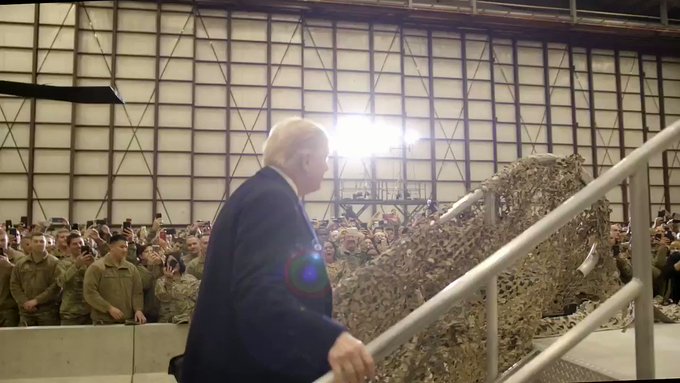
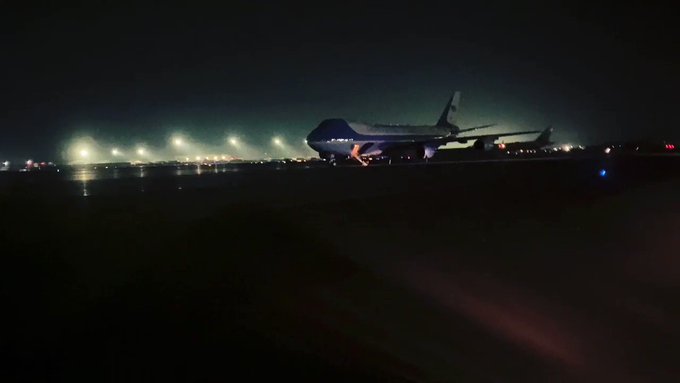
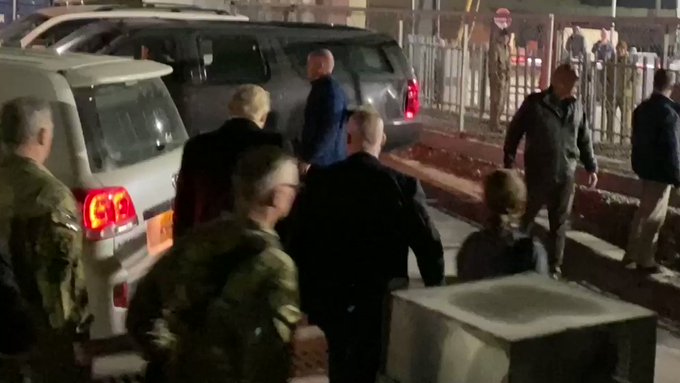
President Donald Trump made a surprise trip to Bagram Air Field in Afghanistan to celebrate Thanksgiving with our troops.  The trip took place under a shroud of secrecy, and very tight security arriving in a darkened airplane just after 8:30 p.m. local time.

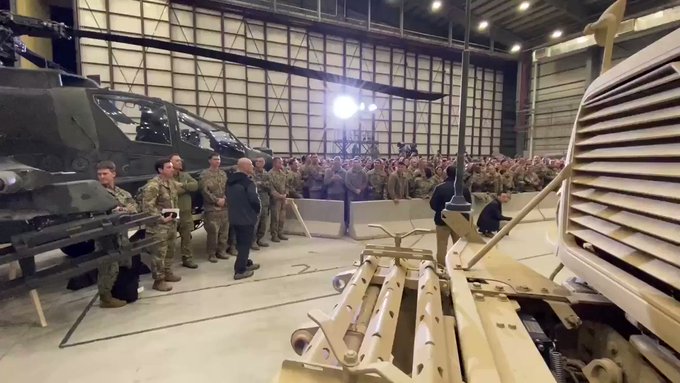
The White House concealed the trip from his public schedule for security reasons. President Trump helped the chow staff feed turkey and mashed potatoes to American troops in fatigues, before dining himself.  Additionally President Trump posed for photographs before delivering remarks celebrating America’s military in an aircraft hangar.  WATCH:

.

Donald J. Trump

@realDonaldTrump

HAPPY THANKSGIVING!

Embedded video

66.8K people are talking about this

Dan Scavino Jr.🇺🇸

@Scavino45

Behind the scenes with President @realDonaldTrump in Afghanistan… https://twitter.com/scavino45/status/1200127447821377537 

Embedded video

Dan Scavino Jr.🇺🇸

@Scavino45

🚨MOMENTS AGO🚨
President @realDonaldTrump visits U.S. Soldiers at Bagram Airfield in Afghanistan….

Embedded video

3,602 people are talking about this

Dan Scavino Jr.🇺🇸

@Scavino45

🚨MOMENTS AGO🚨
President @realDonaldTrump visits U.S. Soldiers at Bagram Airfield in Afghanistan….

Embedded video

17.9K people are talking about this

Dan Scavino Jr.🇺🇸

@Scavino45

United States Army General and the 20th Chairman of the Joint Chiefs of Staff Mark Milley introduces the 45th President of the United States @realDonaldTrump at Bagram Airfield in Afghanistan. HAPPY THANKSGIVING!!🇺🇸🇺🇸

Embedded video

14.8K people are talking about this

Fascinating Interview – Presidential Historian Doug Wead Discusses His Book About The Trump Presidency…


Presidential historian Doug Wead was given unprecedented access to the White House and people associated with the Trump presidency for his book “Inside Trump’s White House: The Real Story of His Presidency.”  Mr. Wead discusses the experience.  This is a must watch interview:

President Trump Signs “Hong Kong Human Rights and Democracy Act”…


The act that President Trump signed today is a law that requires the U.S. to review all of the democracy issues within Hong Kong to assess whether any Chinese violations to Hong Kong autonomy are happening.  If so, the U.S. can take remedial steps to punish China.

The Hong Kong Human Rights and Democracy Act would require the State Department annually re-certify Hong Kong’s autonomous nature, in order for the so-called “special treatment” the U.S. affords Hong Kong to continue. (more)

Keep in mind a dual purpose to this latest move:  Hong Kong holds a special trade status with the U.S. and is exempt from tariffs placed on China.  Part of the punitive action President Trump could take against China involves tariffs against Hong Kong.

Today, I have signed into law S. 1838, the “Hong Kong Human Rights and Democracy Act of 2019” (the “Act”). The Act reaffirms and amends the United States-Hong Kong Policy Act of 1992, specifies United States policy towards Hong Kong, and directs assessment of the political developments in Hong Kong.

Certain provisions of the Act would interfere with the exercise of the President’s constitutional authority to state the foreign policy of the United States. My Administration will treat each of the provisions of the Act consistently with the President’s constitutional authorities with respect to foreign relations.

 President Donald J Trump

Again, back to the big picture, is this an action that would indicate President Trump is actually looking for a U.S-China trade agreement?   Of course not.  So why now, what changed?…  The USMCA!   It’s all connected folks.

More IG Report Leaks – New York Times Reports FBI “Spies” Placed In/Around Trump Campaign Were Not Spying “On” Trump Campaign…


Following the IG report draft review by the principals within the DOJ/FBI small group under investigation more leaks are submitted to the New York Times in an effort to get out ahead of the scheduled publication of the final report on December 9th.

One note before content review:  The highly structured obfuscation within how these leaks are being released, in combination with the lawyers representing the principals, explains why there was such a lengthy delay after the principal review phase.

Each principal can provide feedback for inclusion in the report; however, all feedback added to the report generates an IG rebuttal.  Keep this in mind because these leaks are the “feedback” and the leakers have no idea what the IG “rebuttal” will be.  The more the principals’ obfuscate and justify conduct to the IG in their feedback, the stronger the rebuttal to that feedback will be in the final report.

The New York Times latest narrative effort is intentionally obtuse with the word “spy”:

WASHINGTON — The Justice Department’s inspector general found no evidence that the F.B.I. attempted to place undercover agents or informants inside Donald J. Trump’s campaign in 2016 as agents investigated whether his associates conspired with Russia’s election interference operation, people familiar with a draft of the inspector general’s report said.

[…] The finding also contradicts some of the most inflammatory accusations hurled by Mr. Trump and his supporters, who alleged not only that F.B.I. officials spied on the Trump campaign but also at one point that former President Barack Obama had ordered Mr. Trump’s phones tapped.

[…] [FBI] agents had an informant, an academic named Stefan A. Halper, meet with Mr. Page and Mr. Papadopoulos while they were affiliated with the campaign.

[…] The F.B.I. did have an undercover agent who posed as Mr. Halper’s assistant during a London meeting with Mr. Papadopoulos in August 2016.

But that’s not spying?  OK gotcha.

[…]  Mr. Horowitz will also undercut another claim by Trump allies — that the Russian intermediary who promised dirt to Mr. Papadopoulos, a Maltese professor named Joseph Mifsud, was an F.B.I. informant.

This obfuscation is really silly.  No-one has ever claimed Mifsud was an FBI informant. The concern has always been Mifsud was a western intelligence asset, perhaps CIA.

[…] The report is also expected to debunk another theory of Trump allies: that the F.B.I. relied on information to open the investigation from a British former spy, Christopher Steele, himself a onetime bureau informant who compiled a dossier of damaging, unverified information on Mr. Trump.

Another paragraph of nonsense.  No-one has alleged the Steele Dossier was used to open the FBI investigation in July 2016.  The technical origination of the FBI investigation known as Crossfire Hurricane came from the joint FBI/CIA operation into Papadopoulos on July 31st, 2016.  The questions have always been about what predicate the pre-July ’16 originating investigations into Papadopoulos, Page, Flynn and Manafort were based on.

What was the evidence of Russia’s interference in the election, known to the FBI, before July 2016?  And what was the evidence that connected the Trump campaign to that predicate claim?

[…] The inspector general will fault the F.B.I. for failing to tell the judges who approved the wiretap applications about potential problems with the dossier, the people familiar with the draft report said. F.B.I. agents have interviewed some of Mr. Steele’s sources and found that their information differed somewhat from his dossier.

Mr. Horowitz plans to say that the wiretap application, which referenced Mr. Papadopoulos, should have also included a statement he made to the undercover agent in London that could be seen as exculpatory or self-serving, the people familiar with the draft report said.  (read full article)

A ‘wired’ FBI “undercover agent” recorded an exculpatory statement from Papadopoulos, but no – they weren’t spying?  OK gotcha….  Oh, and the FBI just avoided the transcript of the ‘wired’ statement because it just didn’t fit their purposes.   But not political?  Uh-huh.

If this is the type of feedback the principals gave the IG to justify their endeavors, the rebuttal evidence will be even more interesting.

Thanks, but I’ll just wait for the actual report… AND the declassified supporting documentation that damn sure better be a part of the release !