
September 4, 2019
Earlier today President Trump delivered remarks on updated Hurricane Dorian preparations from the Oval Office. In addition to the hurricane updates, President Trump held an an impromptu press conference. [Video and Transcript Below]
.
[Transcript] Oval Office – THE PRESIDENT: We thought we’d give you an update on the hurricane. We got lucky in Florida — very, very lucky indeed. We had — actually, our original chart was that it was going to be hit — hitting Florida directly. Maybe I could just see that, Kevin. It was going to be hitting directly, and that would have affected a lot of other states. But that was the original chart.

And you see it was going to hit not only Florida, but Georgia. It could have — it was going toward the Gulf. That was what we — what was originally projected. And it took a right turn and ultimately — hopefully, we’re going to be lucky. It depends on what happens with South Carolina and North Carolina. But it’s heading up the coast, and Florida was grazed. Mostly wind. And we’re going to have a report on that.
We have been sending, through the United States Coast Guard — who have been incredible. They are on the Bahamas right now and they’re helping with the Bahamas. The Bahamas was — a big section of the Bahamas was hit like few people have seen before.
But we’re helping in a humanitarian way. We’ve been asked to help by the government of the Bahamas. And we have numerous helicopters, and we’re sending some — some people to give them a hand, and they need a big hand. What’s going on over there is incredible. Few people have seen anything like that, although, I must tell you, over the years, there have been some hurricanes that were bigger and stronger and more powerful that hit us very hard also.
But I’d just maybe like to start — Kevin, if you could just say a few words about where we are.
ACTING SECRETARY MCALEENAN: Sure.
THE PRESIDENT: And then I’ll ask the Admiral to talk a little bit about what you’re doing in the Bahamas. And then we’ll get back to South Carolina, North Carolina, and what we expect.
Okay? Thank you, Kevin.
ACTING SECRETARY MCALEENAN: Yes, sir. Mr. President, we have Acting Administrator Pete Gaynor, from FEMA, on the line as well. He’s been in Florida yesterday. He’s in Georgia right now, headed up to South Carolina, touching base with the emergency managers in all of the states that are on the path of Dorian.
Obviously, the hurricane remains a Category 2 — a very powerful, very large storm. We are worried about significant impacts to South Carolina, from Charleston to Wilmington, as well as the Outer Banks. And it’s that triple threat of potentially hurricane-force winds, certainly tropical storm force; as well as a storm surge — four to seven feet; and then a significant rain event, up to 10 inches or more in parts of the Carolinas.
So we’ve been very well prepared. Coordinated fully with the states. A lot of pre-deployed assets ready to come in and fully respond after the storm. *311 are repositioning some of the assets that were further south in Central Florida.
So we’re ready for the storm, Mr. President. FEMA and the interagency partners, supporting the states, have done a tremendous job, and we’re on our toes, looking forward to responding effectively.
THE PRESIDENT: That’s great.
I think we want to also say we were really well prepared in Puerto Rico. It — we got lucky in Puerto Rico, where it missed it by quite a bit, actually. But we were ready just in case. And tremendous supplies, people. A lot of things going on in Puerto Rico. And they were very happy, and it worked out very well — the optimum — because they didn’t get hit. But it took a different path and it hit the Bahamas very hard.
So, again, we’re working with the government of the Bahamas at their request. And we have a lot of — a lot of people helping. And we have, most importantly, the United States Coast Guard, which has done so incredibly well in Texas and Florida and in Puerto Rico on the last hurricane — the last big one.
Admiral, if you could say a few words about that.
ADMIRAL SCHULTZ: Yeah. Thank you, Mr. President. Just to reinforce the Secretary: We’re ready, domestically, here, from Florida up through the Carolinas. We’re Coast Guard, part of the DHS/FEMA team, sir. So we’re 100 percent ready to roll there.
In the Bahamas, it’s been challenging. We accessed the Bahamas — the Abaco — which is in the northeastern reach of the Bahamas. On Monday, the first flight crews — those were rotary-wing helicopters — got in there. We’ve rescued probably, you know, 50 folks to date. We’re just starting to get a site picture on Grand Bahama Island in Freeport, which is the center of gravity, population-wise, in the northern Bahamas. So today, we’ll start to have a much fuller picture. That’s the region where Dorian sat almost 36, 48 hours, and just pounded the region.
THE PRESIDENT: Right.
ADMIRAL SCHULTZ: So we expect the impact to be severe, sir. We’re rendering, you know, lifesaving support here, humanitarian assistance. We’re working with USAID and the Office of Foreign Disaster Assistance, who is the lead agency here on providing, you know, urgent support. Our CBP Air and Marine counterparts are there with helicopters. And, you know, we’ll see where this evolves to in the next 24 hours and what type of additional support, possibly from DOD, may be warranted, sir.
THE PRESIDENT: Good. Will you be using some of the supplies from Florida and even from Puerto Rico, where — to areas that will definitely get hit? If you look at North Carolina, South Carolina —
ADMIRAL SCHULTZ: Yes, sir.
THE PRESIDENT: — Georgia.
ADMIRAL SCHULTZ: So, Office of — the Office of Foreign Disaster Assistance, under AID, has a warehouse in South Florida. So we’re working on an air bridge of supplies into the Bahamas, a maritime bridge, aboard Coast Guard cutters.
What’s challenging right now, sir — because we haven’t gotten into Freeport, Grand Bahamas, and there’s no open airports there. The airports are under water. Those airports that are accessible are not accessible from roads. So most of the stuff has got to come in rotary-wing. AID has got to get, you know, sort of a network in place to start distributing supplies, sir.
But we’re working diligently with our partners on that, on trying to bring some relief to the Bahamas, sir.
THE PRESIDENT: And I guess the other problem is we don’t know how hard South Carolina and North Carolina; Georgia, to an extent, could be — to a big extent — we don’t know yet. We don’t know where the hurricane is turning, I guess.
Admiral, would you like to say something about that?
ADMIRAL BROWN: Certainly, Mr. President.
Secretary McAleenan discussed the major risks — the storm surge, the heavy rainfall, and the tropical storm- and the hurricane-force winds. The other aspects of this storm that make it particularly troublesome are the duration of it. It’s going to be yet another two days before we clear the North Carolina coast. On it’s current track, there is a potential for landfall.
But even without landfall, the heavy rain that’s going to impact South Carolina and North Carolina is coming right on top of areas that were damaged in Hurricane Matthew in 2016 and Hurricane Florence in 2018.
So FEMA is well prepared for what they’re calling “response on top of recovery.” These are communities, families, who have already been affected by previous hurricane seasons.
THE PRESIDENT: That’s pretty amazing. This is the original path that we thought. And everybody thought that this was about a 95 percent probability, and it turned out to be not that path. It turned out to be a path going up the coast, and we’ll see where that happens now. There’s even a chance that it could start going further right. That could happen. That would really be luck.
But we certainly got lucky in Florida. Now, if we can get lucky in Georgia and — if you look at South Carolina, North Carolina, but it could even extend even beyond that. So we’re talking about Virginia. Hard to believe. So we’ll see what happens.
But it’s a very erratic, a very slow, very powerful hurricane, so that it’s built up tremendous water and water supply like few have seen. Texas had something similar, where the water was tremendous — the water dump was tremendous. And we have that here.
But again, it looks like Florida is going to be in fantastic shape by comparison to what we thought. We thought it was going to be a direct hit. We were thinking in terms of Andrew — Hurricane Andrew — from many years ago, where it went right through the middle of Miami, and that was a disaster. And so we’re very happy about, so far, Florida, and we’ll see how it comes with respect to other states.
But it’s starting to move up along the coast. It’s a little bit further away, I think, than we would have projected right now. But it can rapidly turn left, or west. And we hope that doesn’t happen, but we’re very well prepared. Everybody has been incredible.
I have, actually — Peter Gaynor is on the phone listening to what we’re saying. Peter, do you have anything you’d like to add?
ACTING ADMINISTRATOR GAYNOR: Yes, sir. Sorry I couldn’t be there with you today. You know, more than two weeks ago, when we started planning for this storm, our guidance was: big storm, big response. And we are ready to go today. And really, this is a whole-of-government effort. Federal resources are positioned throughout many states and we’re ready to respond to any response from multiple states or a single event. And again, we followed the storm up the coast. We’ll continue to do that until Dorian is not a threat.
Just to give you a quick overview of some of these resources that are in the field right now: 4,000 federal responders are deployed to — and that does not include the 6,000 National Guardsmen that have been mobilized. We also have National — or, excuse me, American Red Cross spaces for 65,000 potential evacuees, and 40,000 line workers that are ready to do restoration of electrical lines.
We are ready to go. And again, we’ll follow Dorian up the coast until it is not a threat to the U.S. Thank you, sir.
THE PRESIDENT: Great job. Tell you’re people at FEMA, “Fantastic job.” But we’ll hold it until the very end, okay? We’ll hold congratulations until the end.
But we’re very well prepared for North Carolina, South Carolina, Georgia. And again, we’re helping the Bahamas at the request of the government of the Bahamas, okay?
Thank you all very much.
Q Mr. President, there was some concern that was voiced last week about reprogramming $115 million from the FEMA Disaster Relief Fund base budget to address the crisis on the border. Are you still comfortable with that? Is there still —
THE PRESIDENT: Oh, yeah.
Q — enough money in that base budget?
THE PRESIDENT: Well, first of all, we’re using much less here than we anticipated. We thought this was going to be a direct — originally, this was going to be a direct hit into Miami. And we’re — we would have been satisfied anyway.
No, we need — we need help on the border. The numbers are really good. I want to thank, again, the country of Mexico. They have 25,000 soldiers right now protecting our border. And they’ve done a fantastic job. So we appreciate that very much. Mexico has never helped us on the border and they are now — 25,000 soldiers.
And you may want to talk about the numbers are down in half, I guess.
ACTING SECRETARY MCALEENAN: Yes, sir.
THE PRESIDENT: Do you want to mention that?
ACTING SECRETARY MCALEENAN: Yeah. We’re compiling the August numbers now. We’ll be releasing those early next week. But we’re looking at a reduction of over 50 percent from May to today. Continued partnership with Mexico — I just got back, Mr. President, from El Salvador last week, where we signed a new agreement to continue to work together on irregular migration.
So we’re getting a lot of partnership from the countries in the region, with your leadership, and, again, applying those resources at the border to enhance our security.
THE PRESIDENT: And the wall is being built. It’s going up rapidly. It’s — I guess, most of you have been able to see it. We’re building very large sections of wall. It’s — I guess a big factor was we just won the big Supreme Court case, as you know.
And we have — we’re building in different sections. We’re building different sections simultaneously. And we think by the end of next year, which will be sometime right after the election, actually — but we think we’re going to have close to 500 miles of wall which will be complete. That’ll be — what we wanted to do is about 500 miles. That will take care of all of the areas that we wanted, including some of the marginal areas that we didn’t necessarily need, but if we could — could have gotten it done. We were looking to do about a 500-mile stretch. We should have it almost complete, if not complete, by the end of next year. So we look forward to that.
Q Mr. President, you consulted with members of Congress about reprogramming $3.6 billion.
THE PRESIDENT: Yes, we have.
Q Can I — can we ask what you told those members of Congress —
THE PRESIDENT: Well, I didn’t tell them anything.
Q — about that reprogramming?
THE PRESIDENT: The Secretary of Defense spoke with members of Congress and explained it to them. And I think he felt very good about it. He feels it’s a national security problem; I do, too. It is — when you have thousands of people trying to rush our country, I think that’s national security. When you have drugs pouring into our country, I view that as national security. And he had very good conversations with various members of Congress.
Q Sir, if this storm stays on track, going through Georgia and the Carolinas —
THE PRESIDENT: Yeah.
Q — it will hit farmland. Many farmers are already having problems there. What do you have in place to help them if there is devastation —
THE PRESIDENT: Good question.
Q — as there has been in the past?
THE PRESIDENT: We’re very well prepared for that. Last time, if you remember, when it hit Mexico Beach, we — wiped out a large, large farm areas — and not only Florida, but in Alabama and in Georgia.
And what we did is we were able to help the farmers a lot. As you know, we sent aid to the farmers. They lost their crops. They lost — in some cases, they lost almost everything. We were able to help them — get them back on their feet. We’ll be doing the same thing now.
You will have, probably, some hit on farms up along the coast, and we’re going to be able to go in with Secretary of Agriculture.
We have a lot of money because of the tariffs we’ve taken in. We’ve taken in tremendous — many billions of dollars of tariffs from China. And we will have a lot of money to be helping our farmers along the coast if they get hit.
They may not get hit. There’s a real chance that this could veer out the other way. But there’s also a chance that it goes straight or it goes left. If it goes left, that’s an even different subject. But our farmers will be helped. We’re going to help our farmers.
Q How much are you talking about, sir? You say you a lot of money from the tariffs.
THE PRESIDENT: Well, it depends. It depends what you’re talking about. It depends who’s hit, which state is hit. Right now, we don’t know.
Q Coastal Carolinas, Georgia?
THE PRESIDENT: We can predict the path, but so far, the predicting has been very tough with this particular hurricane. But we have a lot of — we’ve taken in tens of billions of dollars in tariffs from China. Prices have not gone up, or they’ve gone up very little. China has paid for most of that, and I say paid for all of it. China has now had the worst year that they’ve had in 57 years. This is the worst year they’ve had in 57 years. And they want to make a deal; we’ll see what happens.
But in the meantime, we’re taking a lot of money. We haven’t taken 10 cents in from China. If you look back over the years, it’s been the other way around. They’ve taken from us; we never take from them. Now we’re taking from them. So we’ll see what happens.
But we have a lot of money to help our farmers. Last year, I gave the farmers $16 billion out of tariffs. The year before that — because they were targeted by China. The year before that, I gave our farmers $12 billion. And the way we figured that — I said, “How badly have our farmers been hit by targeting from China?” And I was told they were hit to the tune of $16 billion. And I made up that 16, dollar-for-dollar, to the farmers.
So the farmers are extremely happy, and they also know — they’re warriors — they also know we have to do this with China. We can’t let this go on. They were taking out $500 billion a year out of this country, including intellectual property theft, which was rampant.
So, our farmers will be helped. Nobody that we’ve done more for than our farmers. And they understand you have to win the war with — this is a trade war, trade battle; you can call it anything you want. But — and this should have been done by Presidents before me, not just President Obama. This should have done by President Bush and President Clinton. This should have been done a long time ago.
China has been absolutely — the World Trade Organization has been a disaster for the United States. China has taken advantage of it and us, and that’s not happening anymore. But the farmers have been taken care of. Sixteen billion dollars and twelve billion dollars, each year. Okay? Thank you.
Q Huawei is accusing the United States of trying to infiltrate its company, snoop around.
THE PRESIDENT: Who is? Who?
Q Huawei. Do you have any comment on that?
THE PRESIDENT: No. It’s a national security concern. Huawei is a big concern of our military, of our intelligence agencies. And we are not doing business with Huawei. It’ll stop almost completely in a very short period of time. And we’ll see what happens with respect to China. But Huawei has been not a player that we want to discuss, we want to talk about, right now. We’re not going to be doing business with Huawei. We’re going to do our own business, you know, the old-fashioned way. We’ll do right from within the United States, which is what I’ve been saying for a long time.
And, by the way, speaking of tariffs, there are no tariffs. If you want to build or make these products in the United States, there are no tariffs whatsoever. And people are coming back now to the United States in large numbers.
Q Mr. President, Senator Daines and Senator Perdue just returned from a visit to China where they met with the Vice Premier, Liu He. Did you approve that meeting? And was it helpful?
THE PRESIDENT: I approved it, and my people approved it. China asked for the meeting. They have a lot of respect for Senator Daines and for Senator Perdue; so do I. They’re friends of mine, and they’re great senators doing a fantastic job. I knew about the meeting. I approved of the meeting. And all they did is say that we really have bipartisan support.
If you look at it — and the support is very serious. So we’re not playing games. And that was the message that was given by Senator Perdue and Senator Daines, and it was given very strongly. They absolutely had my permission, and they also spoke to Ambassador Lighthizer and Secretary Mnuchin about the trip, before they went there.
Q Was it helpful?
THE PRESIDENT: Well, they told me the attitude of China, and I think, basically, they said that China would like to do something. Like — I know they’d like to do something. Look, they’re having their worst year in, you know, many, many decades, as I said. They’re having a supply chain that’s being absolutely fractured and broken, which is very bad for them. They’ve lost 3 million jobs, and the jobs are moving to Vietnam and other places, including the United States, by the way. Some people are just making the product here.
But they’re moving all over Asia and some here. And, you know, if I were China, I’d want to make a deal. I can’t tell you, but I want to make a deal. And I can tell you, they do want to make a deal. We’ll see if we can do a real deal, not a fake deal, like the fake media. A real deal. Okay?
What else?
Q Do you plan to travel to the Bahamas?
THE PRESIDENT: Well, it’s — again, I guess you would call it a British protectorate. But I will do a lot. We just — have a call. We’re waiting for the call — they’re having a lot of trouble with the telephones over there, as you can imagine — from the Prime Minister. And we’re helping a lot. And the Admiral just said — we’re sending a lot of resources over there to help people on a humanitarian basis.
But I would do that. If we think it’s appropriate, I would stop there, yeah.
Q We know the actions that — I’m sorry, Admiral.
ADMIRAL SCHULTZ: I was just going to say, John: Mr. President, we had the Prime Minister onboard a Coast Guard aircraft with our Atlantic Forces Commander, the charge d’affaires, the U.S. senior — the U.S. diplomat there, and many folks of the Bahamian government, to a get a site picture. Again, we couldn’t access parts, but we’re working very closely with the government and Commonwealth of the Bahamas, sir, to help them understand the extent of the damage.
THE PRESIDENT: They’ve got a situation in the Bahamas like few have seen before. It’s a tough, tough thing.
Q We know the actions that Treasury took against the IRGC-Qods Forces — oil deal that it was running, particularly with Syria — there was some thought that this may be part of a precursor to talks between you and President Rouhani. What’s your thinking on that front?
THE PRESIDENT: Well, we’re going to see what happens. They want to talk. They want to make a deal. Iran is not the same country is was two and a half years ago, that I can tell you. Getting to be three years. Hard to believe. Here — we’ve been here almost three years now. I’ve been saying two and half years, and it’s almost three years. We’re getting very close.
But Iran is not the same country. When I came into office, Iran was absolutely a terrorist organization, all over — from 14 to 18 sites of confliction, and they were behind every one of them. And now you’re not hearing so much about that. We’ll see what happens.
Look, Iran is a country with tremendous potential. We’re not looking for regime change. They have tremendous potential. And I think they’re going to want to take advantage of that potential. I really believe that. I think North Korea is a country with tremendous potential, and I think they’re going to want to take advantage of it. So we’ll see what happens.
But Iran has tremendous potential, and I can’t imagine they’re going to want to go through what they’re going to have to go through if they want to do it the hard way. So we’ll see what happens.
Q You, Rouhani, and Macron will all be at the General Assembly in New York, later this month. Could a meeting potentially happen then?
THE PRESIDENT: Well, I don’t know. I mean, I very much appreciate President Macron — his involvement. But we’re not dealing through President Macron. People are dealing with us directly. We don’t have to go through another country.
Q Could there be a meeting?
THE PRESIDENT: We have actually — we’ve had a lot of help, if we wanted, from Japan. Japan is one of their biggest — possibly their biggest buyer of oil. They have a big relationship. That’s Prime Minister Abe.
So we don’t need anybody to deal. We can deal directly, if we want. But other countries are offering help. They’d like to see it straightened out. But they also agree with me. We had a great G7, and they all agreed: no nuclear weapons for Iran. They all agree: no nuclear weapons for Iran.
Q Sir, but the Iranians have said that they don’t want to talk to the U.S. until the U.S. rejoins the JCPOA. So how do you square —
THE PRESIDENT: No. Well, that’s not their last statement, actually. But they did say it in a different form. They said until we do certain other things, like drop sanctions. And that’s not happening. Okay? That won’t be happening. They — they didn’t say it quite the way you said it, but they said it with the same end result. And that won’t happen.
Q Is it possible that there could be a meeting between you and Rouhani at the UNGA?
THE PRESIDENT: Sure. Anything is possible. They would like to be able to solve their problem. They’ve got a big problem. They’re getting killed, financially. Their inflation is at a number that few people have ever seen inflation at. And it’s a very sad situation. They could solve it very quickly. We could solve it in 24 hours.
But we’ll see what happens.
Q Will the Chinese delegation come to Washington this month, Mr. President?
THE PRESIDENT: I can only say this: When you hear they have their worst year in over half a century — this is the worst year they’ve had in — that anybody can even remember — but over 50 years, over half a century. I would think they want to solve the problem.
People have no idea. You know, we’ve created tremendous wealth in this country, in our country, since I’ve been elected — well over $12 trillion. They’ve lost, probably, $20 trillion.
When I assumed office, had my opponent won, within two years, in my opinion — maybe less — China would’ve been a bigger economy than the United States. Would’ve been bigger. Now we’re so far ahead of them, it’ll take them years to catch. And if we always have competent people sitting here, they’ll never be able to catch us.
We have a springboard. It’s amazing what’s happened. And let me tell you: if I wanted to do nothing with China, my stock market — our stock market — would be 10,000 points higher than it is right now. But somebody had to do this. To me, this is much more important than the economy. Somebody had to do this. We had to do it with China. It had to be done.
And I’m not even talking about purely economically; I’m talking about in other ways also. And they were — it was out of control. And they were out of control.
So we’ll see what happens. If they want to make a deal, they’ll make a deal. If they don’t want to make a deal, that’s fine. But I can tell you: They’re having one of the worst — I guess, the worst on record, and they want to make a deal. And if I were them, I’d want to make a deal, too. But we’ll see what happens.
Okay? Anything else?
Q Have you been following the situation in London with Boris Johnson and the Brexit vote?
THE PRESIDENT: Well, Boris is a friend of mine. And he’s — he’s going at it. There’s no question about it. He’s in there — I watched him this morning. He’s in there fighting.
And he knows how to win. Boris knows how to win. Don’t worry about him. He’s going to be okay.
And he’s also got — you know, they have a big stake in the Bahamas. When you mention that, they have a very big stake in the Bahamas. So I know they have one ship that’s on its way — had a hard time getting there with the weather, but it’s on its way. And they have a lot of people over there, so they have big stake. Okay?
Q What was the rationale for rolling back the regulations on energy-efficient lightbulbs?
THE PRESIDENT: On what?
Q Energy-efficient lightbulbs.
THE PRESIDENT: We’ll give you a report on that. We’re doing a report on all of that. But there’s a very good rationale when you hear it. And what’s saved is not — is not worth it. For the little they save, and what people were going through, it is not worth it. And price was another thing. Okay?
Same thing with cars. In California, they have a standard where the cars are going to have to be much more expensive and won’t be as good. So we’re giving an option to car companies to create a better car for less money — meaning less money to the consumer.
So if the consumer can save $3,000 on a car and have a very energy-efficient car, but not energy-efficient so that the car doesn’t work well — which is happening — we’re giving them a tremendous option, if they want the option. We’re giving it to the consumer, but we’re giving it to the car company to pass — companies to pass along. And we’ll see how that one works out.
We’re doing that. We’re doing a lot of that. We want to make it good for the consumer. If we can build a less expensive car that’s better, we like that.
Q Since we likely won’t be able to ask you questions in this afternoon’s event, what impact do you think this $2 billion in opioid grants will have?
THE PRESIDENT: So we’ve done a great job with drugs, generally. But it’s a tremendous worldwide problem. But we’ve done a very good job with opioids and getting fewer people to use them and prescribe them. And we’re about 17 percent down from a little more than a year ago. That’s a big number, when you think 17 percent. But we’re about 17 percent down.
And one of the things we are doing is we’re funding different projects where we come up with a painkiller that’s not addictive. You know, you have — people go into a hospital with a broken arm. They come out; they’re drug addicts after three days. The opioid stuff is bad. And when they get used to it — once they get hooked, it’s a very hard thing to get off of.
So we’re down 17 percent. We’re going to be doing a conference today, as you know. And we’ll talk a little bit about it. But we’ve worked very, very hard on opioids and all of the problems that they’re causing — tremendous problems. Okay?
Q Sir. Lay out your healthcare plan, sir.
THE PRESIDENT: Okay? Thank you. Thank you, everybody. Thank you, everybody.


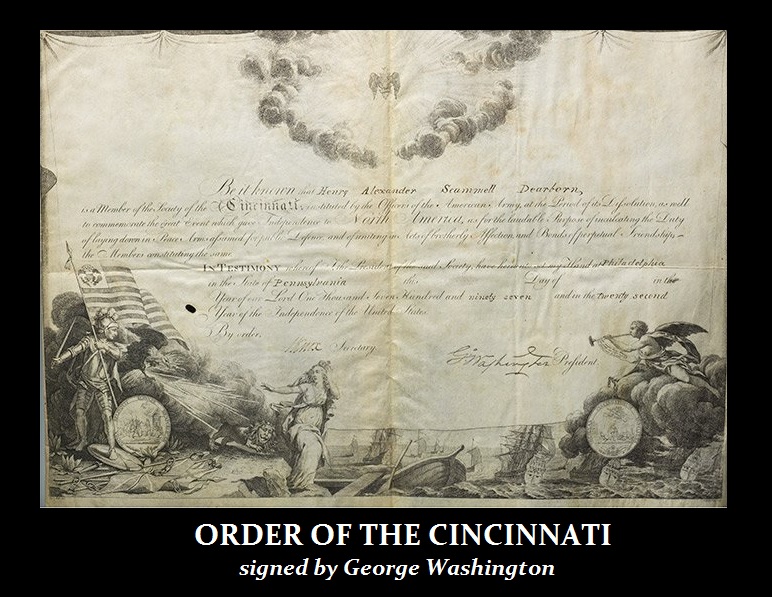
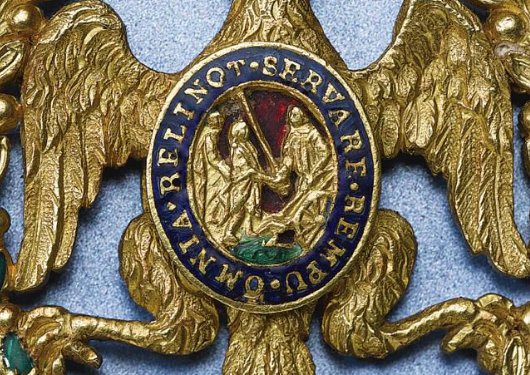 George Washington would not accept the office of president until he had resigned as a military leader and returned to private life. The Founding Fathers were deeply impressed with the battle of Rome against its Tarquin king that gave birth to a republic. George Washington followed and created the Order of the Cincinnati and wanted to follow his integrity.


