Barry? Head’s Up Louisiana and Northern Gulf Region…


A storm is gaining strength in the northern Gulf of Mexico and the National Hurricane Center is now predicting organization to hurricane strength late Friday. If you live in a gulf coast community pay attention to storm updates.

At 1000 PM CDT (0300 UTC), the disturbance was centered near latitude 27.7 North, longitude 88.0 West. The system is moving toward the west-southwest near 9 mph (15 km/h). A motion toward the west is expected on Thursday, followed by a west-northwest motion on Friday and a northwestward motion by early Saturday. On the forecast track, the system is expected to approach the Louisiana coast this weekend.

Maximum sustained winds remain near 30 mph (45 km/h) with higher gusts. Strengthening is forecast during the next couple of days, and the disturbance is forecast to become a tropical depression early Thursday, a tropical storm by late Thursday, and a hurricane by late Friday. (LINK)

Ryan Kruger

@Ryan11Alive

We’re keeping an eye on the tropics on https://www.11alive.com/article/weather/hurricane/developing-tropical-system-forecast-to-make-landfall-this-weekend/85-8d061f04-d28f-4dc3-ba97-48ce54489137 

Developing tropical system forecast to make landfall this weekend

The National Hurricane Center forecasts this system to become a category one hurricane when it makes landfall in Texas or Louisiana

11alive.com

See Ryan Kruger’s other Tweets

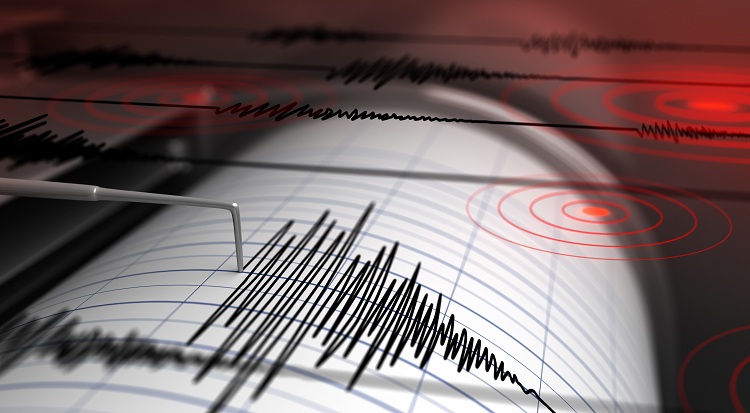
Correlated Earthquakes from Alaska to California July 3rd-5th, 2019


QUESTION: You warning that earthquakes were due in California with solar minimum seem to be right on target. Why won’t they just look at your correlations since this is not some opinion you pull out of thin air?

FB

ANSWER: A quake hit last Thursday on the 4th of July which was the largest earthquake to strike Southern California in nearly 20 years with a magnitude 6.4 temblor centered in Ridgecrest, California. Then the aftershock was even bigger. A 7.1 earthquake rocked Southern California last Friday night unleashing multiple fires. They called a state of emergency is declared in Ridgecrest and San Bernardino County.  You can watch the energy wave set off by the earthquake on July 4th ripple through the entire United States.

Lost in the headline of the California quake was the fact that there was a 6.2 magnitude earthquake recorded off the coast of northern Vancouver Island on Wednesday night – July 3rd. There was also a 4.7 earthquake just south of Cohoe, Alaska also on July 3rd. Therefore up and down the West Coast of the USA/Canada, there was correlated earthquake activity which seems to be linked.

Watch SpaceX Push their Falcon Heavy further than ever!


Want a full rundown? Check out our Prelaunch Preview for this launch! – https://everydayastronaut.com/prelaun… SpaceX will be launching the Space Test Program 2 (STP-2) rideshare mission for the U.S. Air Force’s Space and Missile Systems Center on a Falcon Heavy rocket. This Falcon Heavy is composed of a new block 5 center core (B1057) and the two block 5 side boosters (B1052 & B1053) from the Arabsat-6A mission. The launch window for this mission opens at 11:30 PM EDT on June 24, 2019 and is 4 hours in duration. The Falcon Heavy will be lifting off from Launch Complex 39A (LC-39A) at the Kennedy Space Center in Florida. After burning for about 2 and a half minutes, the side boosters will separate from the core booster and boost back to the launch site for a landing at Landing Zones 1 & 2 (LZ-1 & LZ-2). The core booster will continue burning for another minute, before shutting down and separating from the second stage. The core booster will be landing approximately 1,240 km (771 miles) downrange on Autonomous Spaceport Drone Ship, Of Course I Still Love You (OCISLY).

Apollo 11 Saturn V Launch Camera E-8


Published on Apr 7, 2013

This clip is raw from Camera E-8 on the launch umbilical tower/mobile launch program of Apollo 11, July 16, 1969. This is an HD transfer from the 16mm original. Even more excellent footage is available on our DVDs at our website at http://www.spacecraftfilms.com The camera is running at 500 fps, making the total clip of over 8 minutes represent just 30 seconds of actual time.

Reaction Wheels – Things Kerbal Space Program Doesn’t Teach


Published on Jul 9, 2016

Reaction wheels in Kerbal Space Program might actually refer to a number of different technologies used to control the attitude of spacecraft. Let’s go into some detail about these.

How Gravity Assists Work


Published on Sep 25, 2017

Time to clear up some misconceptions and show how a spacecraft’s close encounter with a planet can change a spacecraft’s orbit and enable trajectories beyond its available delta-v. I specifically cover some of the math and look at the unusual trajectory employed by the OSIRIS REx mission.

Geostationary, Molniya, Tundra, Polar & Sun Synchronous Orbits Explained


Published on Jan 10, 2019

Illustrating different classes of orbits commonly used by satellites in Earth orbit, there are special classes of orbit designed to solve certain problems and the physics behind them is important. All the orbits are displayed using Universe Sandbox 2. Buy it here: https://www.humblebundle.com/store/un…

Heat Shields – Things Kerbal Space Program Doesn’t Teach


Published on Dec 29, 2018

The science of Aerothermodynamics covers what happens during a spacecraft’s fiery flight through a planetary atmosphere as it sheds speed, converting kinetic energy into thermal energy. This represents a complex interaction between fluid mechanics, thermal radiation and chemistry. The engineering required to shield hardware against this intense heating is an equally complex multi disciplinary art. If you want to learn the math then this course offered an excellent overview: https://tfaws.nasa.gov/TFAWS12/Procee…

Graveyard Orbits Where Old Satellites Are Forgotten


Scott Manley
Published on Jun 21, 2019
When a satellite is designed these days it’s also important to think about what happens at the end of its lifetime, for more LEO satellites they’ll happily decay and fall into the atmosphere on their own. But there are many cases where this can’t happen, either because the spacecraft doesn’t have the fuel, or because the satellite is dangerous. For these, there’s a retirement home in the graveyard orbit.

How To Make Sure Ships Don’t Sink | Built From Disaster | Spark


Published on May 31, 2019

Advances in boat technology, including the design features that allow passenger ships to operate safely.