Why Formal Education Can Be Just Propaganda


Posted originally on Aug 29, 2024 By Martin Armstrong 
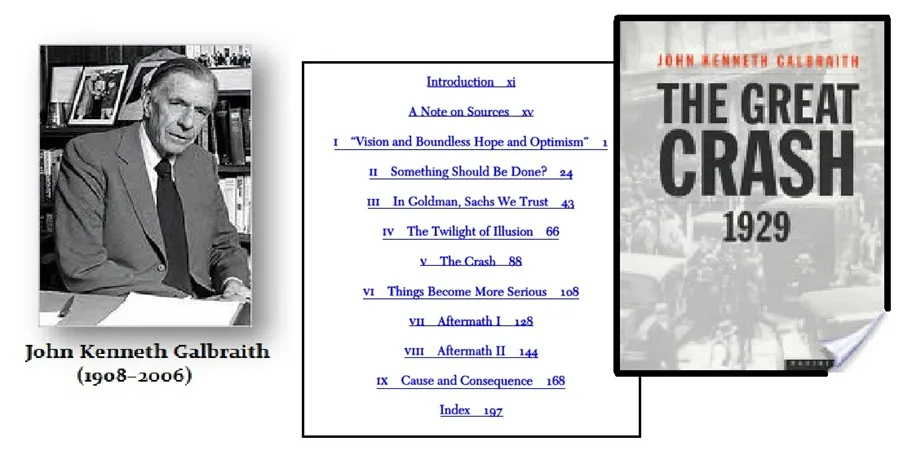
Galbraith Great Crash
Herbert Hoover Memoirs

When I was in high school history class, I had to read Galbraith’s The Great Crash. It was not until I came across a two-volume set of Herbert Hoover’s Memoirs that my eyes were pulled open. Nowhere in Galbraith’s book was there ever any mention of a 1931 Sovereign Debt Default because he was a Socialist, and the object of his book was to pin all the blame on corporations and the rich. He omitted everything that ever remotely pointed to the government as a cause. We should all own nothing, shut up, and be happy. Speak up, and today, you go to prison for Free Speech.

The conflict surfaced in my mind in high school. As I have said, in physics class they said nothing is random. Then in economics class, they said everything is random so government has the power to manipulate society and prevent recessions. That was a conflict to me that began my questioning of what I was being taught.

It is becoming painfully obvious schools are programming children for political agendas. This is very Stalinistic, for he, too, instructed children that the state was their parent and if their biological parents ever said anything against the state, they were to report them.

It has gotten far worse than when I was a kid. They were trying to brainwash us that the government is good and the corporate world is all evil. Today, that has gone into being gay, changing your gender, and not telling the parents like Stalin for the State is your parent. This is a movement to reduce the population to make Schwab, Gates, and Soros happy.

What does this all say? Today, if I had to start over, I would choose homeschooling.

(read Chapter on 1931)
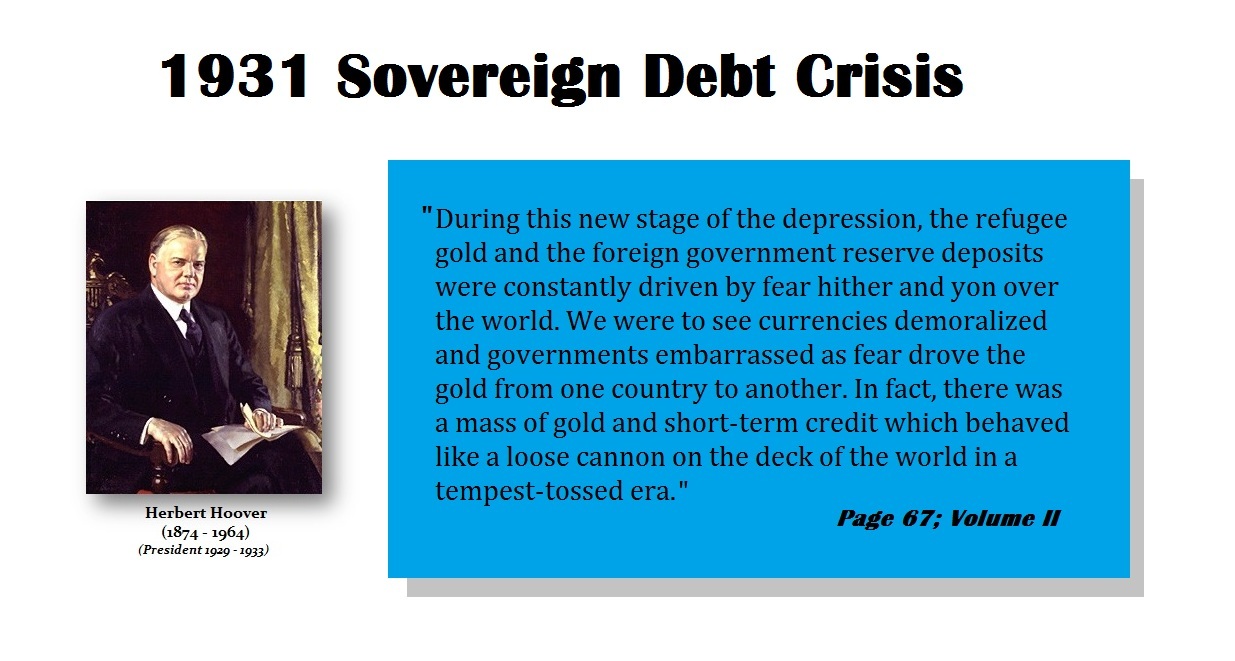
Hoover Quote

Why is Keynesian Economics Collapsing?


Posted originally on Jun 10, 2024 By Martin Armstrong 

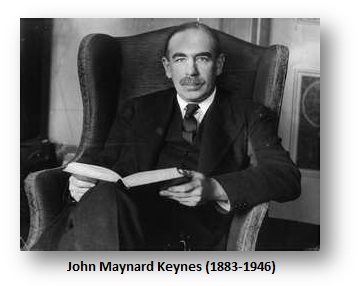
Keynes 5

John Maynard Keynes in his 1936 book, ‘The General Theory of Employment, Interest and Money,” argued aggregate demand was too volatile to be stable and would lead to inflation or recessions. His theory honed in on spending as a means of price control. Low aggregate demand, Keynes argues, would lead to high unemployment and stagflation. Government could intervene through fiscal policies to increase aggregate demand, as an example, increased government spending could tame inflation. Interest rates, according to Keynes, could also be modified to encourage spending and stimulate demand. So why are these theories failing miserably today?

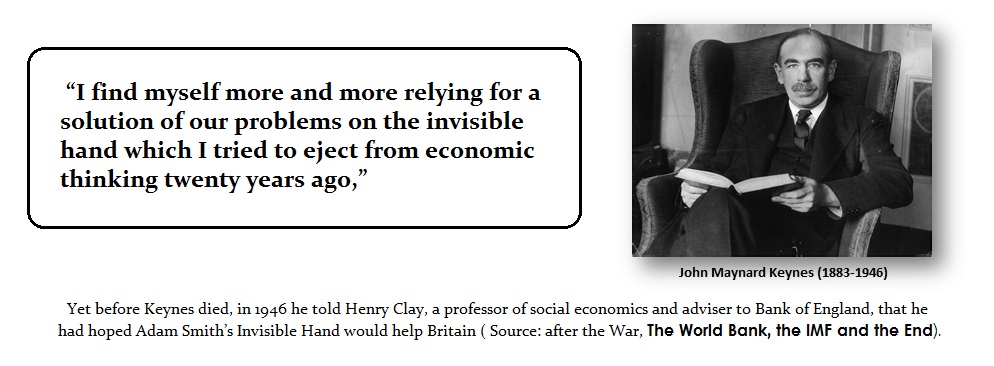
To begin, the United States had a balanced budget when Keynes presented his theory. The government is now the biggest borrower, acting in its own self interest under Adam Smith’s theory of the invisible hand that Keynes spent his career attempting to deny. According to Keynes, “there is no self-correcting mechanism in a free market economy that automatically restores full employment.” He believed that the government could change the business cycle but arguably regretted this notion on his deathbed.

Keynesian economics gave the government the green light to manipulate the economy, or at least make numerous failed attempted to do so. There is that old joke about communism that you can vote your way in but must shoot your way out, seemingly fitting to the utter disaster governments have created in regards to our economic situation.

Keynes quote on Invisible Hand

The government is by far the biggest borrower. Raising interest rates can have no impact on demand, as the government will simply borrow more, and the central banks simply have no say. During the Great Depression, for example, Washington forced the Federal Reserve to implement QE policies to artificially lower rates to increase demand. Yet, when Washington ordered the Federal Reserve to do the same during the Korean War in 1951, the central bank first broke with Washinton and refused to comply as it knew it would hurt the economy as America’s budget was no longer balanced.

Quantitative Easing destroyed the Keynesian model, and there is now no other alternative for central banks to control the economy. If they raise rates, the budget explodes. The Keynesians advocate manipulating demand and advocate fiscal spending that the central bank cannot control. However, the other part of Keynesianism is the manipulation of taxes. Keynes argued that to stimulate demand, you lower taxes. He saw this correctly, but again, it does not fit with government agendas.

There is no limit to what the government will spend with “money” that simply does not exist. Governments continue to borrow perpetually with no real intention of paying back their debts. This is one piece of the Sovereign Debt Crisis that will implode like a nuclear bomb the likes of which we have never witnessed. The business cycle cannot be manipulated, and what’s more, the Keynesian model cannot account for declining confidence in both government and the economy.

Fed President Says Americans Would Prefer a Recession to Inflation


Posted originally on Jun 5, 2024 By Martin Armstrong 

Fed Ship in STorm

Federal Reserve Bank of Minneapolis President Neel Kashkari has advised against anticipating near-term rate cuts. While speaking to the Financial Times, the Fed president stated that people would simply prefer a recession to continued inflation.

“I have learned that the American people—and maybe people in Europe equally—really hate high inflation. I mean, really viscerally hate high inflation,” he told the Financial Times’ The Economics Show podcast. Kashkari is speaking as if we are not already in a recession. It is not difficult to understand the “visceral” hatred people around the world feel toward rising prices. The effects of inflation are felt with every purchase, causing the average person to adjust their entire lifestyle.

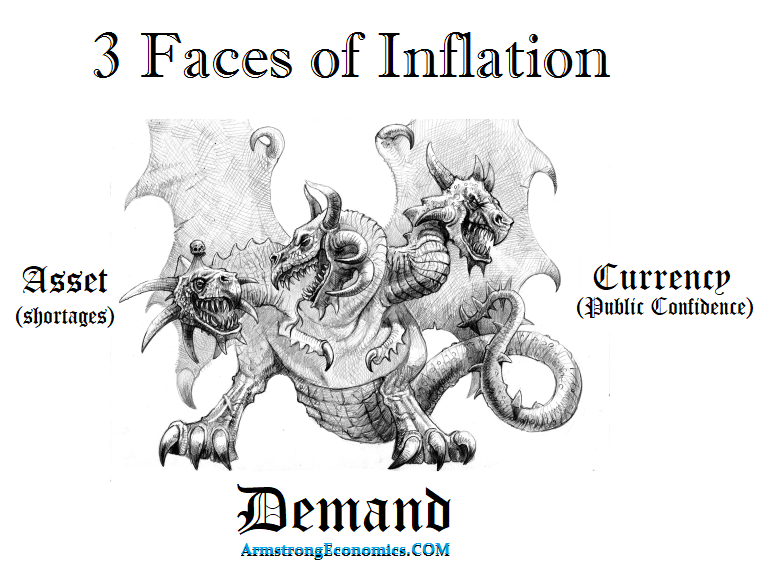
3 faces of Inflation Dragon

Vague issues such as rising unemployment or declining wages do not impact everyone. “I lose my job, I lean on my sister or my parents or my friends, and they help me through it. But high inflation affects everybody. There’s no one I can lean on for help because everyone in my network is experiencing the same thing I’m experiencing,” Kashkari explained. Mass layoffs, for example, would only impact a fragment of the overall population, and people would feel lucky simply to keep their jobs.

“In the US, GDP has been remarkably strong, very strong,” he noted. “The labor market has been resilient. Wage growth has been mostly resilient. And we’re seeing even the housing market has shown signs of resilience. So if I look at this resilience and economic activity, that does not look like an economy that is under pressure of very high, very tight monetary policy.” Yet, inflation is outpacing wage increases and people are watching their savings dwindle while spending less. The average person cares not of the health of the overall economy as they simply want to be able to continue maintaining or improving their standard of living. Most Americans, for example, do not invest and live paycheck to paycheck.

CPI Formula

Real prices have far surpassed anything they calculate in CPI. Everyone understands that prices have risen far more than the arbitrary number the Fed provides us. Taxes are continually increasing for everyone in every tax bracket. The government not only adds to inflationary issues with their spending but then expects their citizens to foot a portion of the bill with taxes, which will simply never be enough.

Then we have Washington telling the masses to blame corporations for price gouging while raising their taxes and making it increasingly difficult to conduct business and maintain a large workforce. It is not that the people would prefer to be in a recession, the real issue is that countless people are entering survival mode. People everywhere want to hold onto whatever they may have out of fear for the future, but they are unable even to hoard as real prices now demand they hand over whatever they have to maintain their lives.

The Problem with K-Waves


Posted originally on May 29, 2024 By Martin Armstrong 

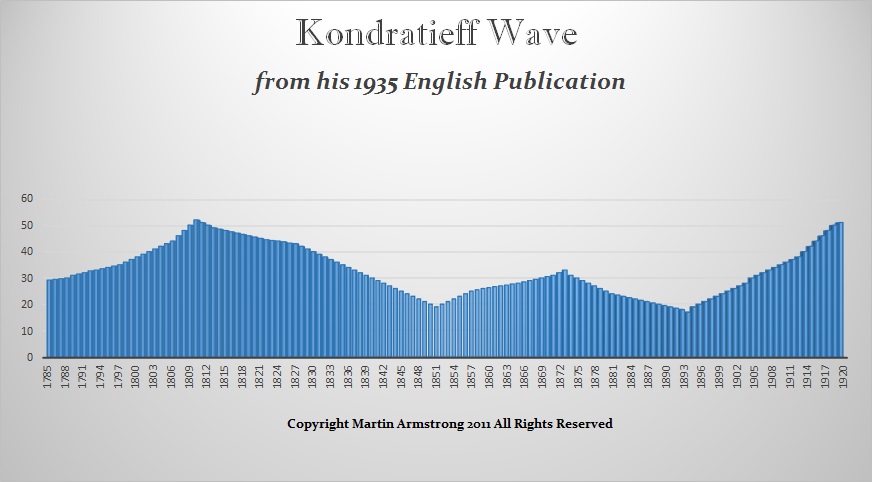
K Wave MAA

All those investigating cycles within the economy made a simple mistake. Kondratieff followed agriculture/commodity prices when agriculture accounted for 70% of the GDP pre-19th century. That only began to decline from 1850 forward, dropping to 40% by 1900 as the Industrial Revolution emerged with the invention of the steam engine. Moreover, aside from climate impacting the food supply, there were also wars. So the Kondratieff Wave failed to take into account all of the external forces.

If we extend the K-Wave 54 years from the commodity high in 1919, that brings us to 1973, which was close to the end of Bretton Woods in 1971 and the OPEC Oil crisis. Another 54 years from there will bring us to 2027. Therefore, this may be based entirely on commodities, but they were impacted by weather and war. Note that 2027 is the ideal target on our model for war derived from entirely different sources.

KONDRATF

There is a cycle of industrialization as well. Rome began as an agrarian society and moved toward trade, which brought them into conflict with Carthage. Rome itself became more like New York and grain was imported from Egypt. As agriculture became more of an import, Rome blossomed like New York into the arts and culture. The shift toward industrialization also resulted in a decline in birth rates for children. Large families were needed in an agrarian society but not so much in a developed society – hence the family laws of Augustus.

The first known Clean Air Act occurred in 535 AD by Emperor Justinian in Constantinople. He proclaimed the importance of clean air as a birthright. “By the law of nature these things are common to mankind—the air, running water, the sea.” Even Cicero wrote about pollution in the ancient city of Rome. This went hand and hand with developed societies and urbanization.

Consequently, when looking at long-term cycles, a few hundred years is not enough data. If Kondratieff were alive today and based his study on the current system, he would focus on services rather than commodity-based economies. Agriculture has fallen to just 1.2% of the civil workforce, so we cannot follow K-Waves as the innovator intended.

Commodities Trade Differently


Posted originally on May 29, 2024 By Martin Armstrong 

Wheat1220 1375

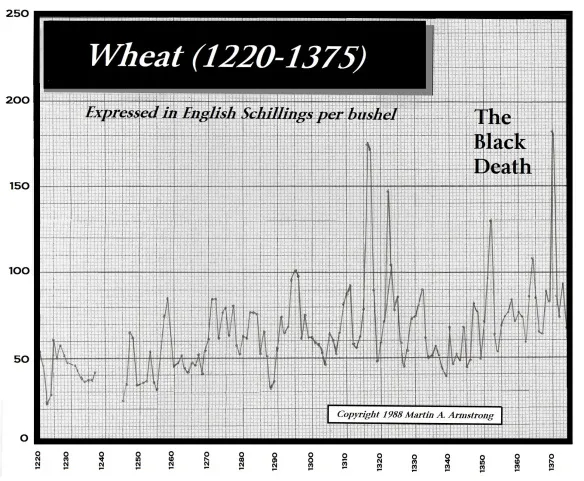
All commodities, including gold, trade substantially differently than stocks or real estate. Pictured here is wheat back to 1200. Note that you see what appears to be a brain wave. Commodities trade differently because they are subject to nature. Manufactured items can be produced on a more regular basis. However, commodities are subject to weather, and even mining is subject to discovering supply.

Look at energy. The US was dependent on imports and was virtually self-sufficient from foreign production until Biden was appointed.

Here is wheat impacted during the Black Death. Two trends were clashing. There was a 50% drop in population, so demand dropped, but also there was a collapse in labor, so production declined. Prices rose because there was still a shortage of supply because land went vacant and that forced landlords to begin paying wages. There are always far more complicated trends involved in commodities.

WheatWholesaleWWI

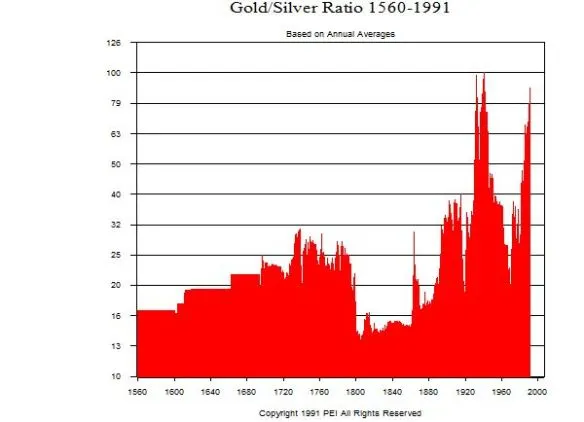
War has also impacted commodities. But when gold was MONEY, it declined in purchasing power WITH inflation. When gold is a free market as present, it moves opposite to inflation because, yes, it too is then a commodity. Making gold money will NEVER prevent the cycles as illustrated above and it will decline in purchasing power with inflation that is in part driven by nature.

GOLD1560to1991

Consequently, even gold makes runs to the upside (bursts) that are largely catch-ups. It does not remain constant even against silver. Gold is the worst investment from an inflationary standpoint if you expect it to track inflation, for it does not and will not. Right now, we are in a cycle where CONFIDENCE has waned, and we will see gold rise with the stock market, but it trades far differently from stocks.

Cyclical analysis is all about defining WHEN such events will take place. Price is entirely a different aspect. The burst is just that – a rally that appears to come from nowhere playing catch-up because EVERYTHING has an international value.

Does an Increase in the Money Supply Lead to Inflation?


Posted originally on May 29, 2024 By Martin Armstrong 

Supply Demand

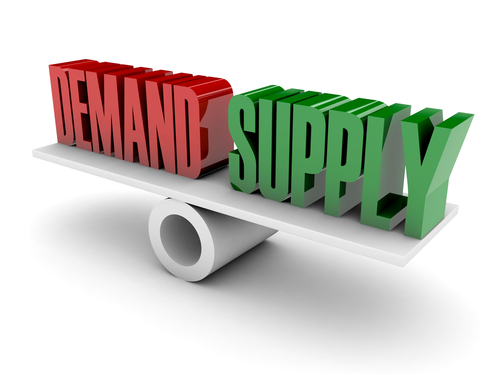
The old idea that inflation is created by an increase in money supply has distorted the minds of many people. Inflation is caused by numerous factors for it is not a one-dimensional aspect. For example, say a bird flu has rendered half of the egg production to be worthless, which would send egg prices soaring. This would have nothing to do with the quantity of money. So, obviously, a decline in the supply of some service or commodity can also lead to rising prices. Supply and demand.

Then there can be cost-push inflation as we saw during the 1970s due to OPEC. The first OPEC price shock was October 1973 from where we should see the next low in 2016 (43 years later). The sudden rise in oil sent a shockwave through the economy, driving up prices because the entire economy had to readjust to higher energy. This was not the result of an increase in demand nor an increase in the money supply.

When gold was used for money during the 19th century, it fell sharply in value with each new discovery from California, Australia, and Alaska. Inflation rose because of a dramatic increase in the money supply, which is exactly what took place in Europe when Spain brought back ship after ship of gold from the New World. The sudden dramatic rise in the supply of money unleashed inflation, and during both periods, money (gold) failed to provide a store of value.

Steady, slow growth in the supply of money does not lead to inflationary waves. We find that major waves of inflation are often tied to waves of speculation, which differ with each wave moving from real estate, commodities, stocks, or bonds, constantly rotating over decades within a domestic economy and then this movement of capital takes place internationally.

Inflation is not a single one-dimensional aspect. It moves up and down between the rise and fall in the demand for private assets vs. hoarding and uncertainty.

Is the population decrease a bad thing? Unpacking why population increase is an overall good


Posted originally on Rumble By Charlie Kirk show on: May 24, 2024 at 5:30 pm EST

US Home Prices Nearing All-Time Highs


Posted originally on May 3, 2024 By Martin Armstrong 

House US Real Estate

Home prices in the US are near all-time highs. As I repeatedly stated, we can no longer look at real estate on the national level. Demand and value are contained to certain states and areas of certain states that the public has deemed most desirable, largely due to political factors such as taxes. Yet, at the moment, buyers are swiping up real estate where available. The S&P CoreLogic Case-Shiller posted a 6.4% gain in February after January’s 6% spike, marking the fastest uptick in home prices since November 2022.

The 20-city composite jumped 7.3% on an annual basis, rising from January’s posting of 6.6%. The 10-city composite saw an 8% annual rise, up from 7.4% in January. February was the third consecutive month of rising home prices in all cities, with Washington D.C., New York, San Diego, and Los Angeles experiencing all-time highs in price.

San Diego saw an 11.4% annual rise in home prices, the largest jump in the 20-city composite. Detroit and Chicago posted 8.9% annual gains. Yes, we will eventually see the red states surpass the blue. Smart money is moving into assets like real estate. The downside of real estate is that they impose a property tax on it annually, but investors enjoy that passive income.

There is a notion of “now or never” among first-time buyers as it simply no longer makes sense financially to rent. A person’s ability to qualify for that first downpayment has diminished with rising rental costs. Rental costs increased 3.15% from February 2023 to February 2024, further rising to 3.6% annually in March of this year. This is close to the pre-pandemic growth rate of around 4.1%, but rental pricing is up 36.6% from the pre-pandemic era. While difficult to judge on a national basis, the average rental now costs $1,983 per month, but it is much higher in places like New York City ($3,206 average) or San Francisco ($3,024) hence why we are seeing people sweeping up real estate there.

Shelter is 34% of CPI. The April 10 release from the Bureau of Labor Statistics found that shelter costs have risen for the past 40 months. In March, shelter costs were the largest contributing factor for core inflation. Rising home prices will not benefit the economy or lead to any positive indicators that inflation is waning.

Insurance is Always a Scam – Beware – They Pay NO CLAIMS in time of war


Posted originally on Apr 20, 2024 By Martin Armstrong 

Loyds refuse to pay for NordStream R

Loyds Nord Stream v (1) LIC and (2) Arch – CL-2024-000094 – Defence

Switzerland-based Nord Stream AG filed a lawsuit against the insurers for refusing to compensate the company. Nord Stream estimated the cost incurred by the attack to be between €1.2 billion and €1.35 billion and is seeking to recoup over €400 million in damages. The insurers, Lloyd’s Insurance Company and Arch Insurance Company responded that since the Nord Stream explosions were “more likely than not to have been inflicted by… a government,” they have no responsibility to pay for damages to the pipelines.

British insurers took the position that they have no obligation to honor their coverage of the Nord Stream pipelines because they were blown up in September 2022, because they were destroyed as an unprecedented act of sabotage, most likely carried out by a national government. They have contradicted reports of the Washington Post and others claiming that a private Ukrainian team was responsible for the massive act of industrial sabotage.

In their legal brief, you can download above, filed by Lloyd’s and Arch Insurance Companies, they state that the “defendants will rely on, inter alia, the fact that the explosion Damage could only have (or, at least, was more likely than not to have) been inflicted by or under the order of a government.”

Consequently,  they argue, “the Explosion Damage was “directly or indirectly occasioned by, happening through, or in consequence of” the conflict between Russia and Ukraine and therefore falls under an exclusion relating to military conflicts. This is important because regardless of your insurance, going into war means they will never pay any claims. Personally, I have NEVER had any insurance company EVER pay what I was covered for. When I die, I am sure they will claim that he is a clone and he is hiding somewhere.

A tree once fell on my brand-new car in a storm. It was then sent to Bordentown Autobody to be repaired. They burned down with my car in it. Allstate Insurance screwed me because I paid cash for the car, and as soon as they knew no bank was involved, they claimed there were two deductibles and subtracted about 25%, knowing that would be my legal fees to make it UNREALISTIC to sue them. Insurance is ALWAYS a scam.

Can Socrates Predict the Lottery?


Posted Apr 4, 2024 by Martin Armstrong

lotto

Can Socrates predict the lottery? We ran tests on that probably 30 years ago, and the results were interesting. No matter what it is, there is always a cycle. You cannot predict the lottery number as a whole, for the possible variables are tremendous.

In the past few years, we have seen continual advertisements for record-breaking jackpots, but this is not some mere game that you can strategically win. You must realize you are betting against the government, and the house never loses.

Desperate for funds, the government has seemingly been promising larger jackpot prizes. Now, they claim that 65% of their earnings will go to the person with the winning ticket. The federal government takes a mandatory cut of all jackpot winnings and pushes all winners into the top tax bracket. State governments also demand a cut of jackpot winnings. There is a fee for public beneficiaries, retailer commissions, and administration costs as well.

You have a 1 in 292.2 million chance of winning the Powerball lottery and a 1 in 302.6 million chance of hitting the Mega Millions lottery. However, you’re more likely to be struck by lightning (1 in 15,000), attacked by a shark (1 in 3.75 million), or die from a bee sting (1 in 55,764), to name a few.

In addition to collecting taxes on winnings, the government receives tons of funding from ticket purchases. New York, the most popular state for lotto, earned over $10.545 billion from lottery revenue in FY23, allocating $3.7 to the Lottery Aid Education fund. This is a stark jump from FY21 when the state earned $8.5 billion on lottery revenue.

The likelihood that you, as an individual, will win is extremely rare. The likelihood that the government will win is absolutely guaranteed, and they earn more for extended contests and larger jackpots.

What we did discover was partial success on individual numbers—123456. For example, partial success is running an individual cycle on each digit. Trying to run a cycle on the number as a whole was pointless.