Ep 3687a – Gold Is Signaling The Collapse Of The Fiat System, Constitution Reset Is Coming


Posted originally on Rumble By X 22 Report on: July 16, 2025 at 7:45 pm EST

Phillip Patrick On Combatting BRICS: “The Dollar Doesn’t Need To Be The Only Option, But It Needs To Be The Best Option”


Posted originally on Rumble By Bannon’s War Room on: July 15, 2025, at 8:00 pm EST

Judge Rules Medical Debt Must Appear on Credit Reports


Posted originally on Jul 16, 2025 by Martin Armstrong 

Debt Burden

The Consumer Financial Protection Bureau (CFPB) may no longer remove medical debt from credit scores, a federal judge has ruled. This is yet another example of political cycles dictating economic policy, as the Trump-era judge dismissed the Biden-appointed mandate. Today, regulators expand; tomorrow, courts shrink. Millions of Americans will be affected by this ruling.

The Biden Administration was not attempting to wipe out medical debt; rather, the ruling would have changed how medical debt impacted credit scores. U.S. District Judge Sean Jordan, a Trump appointee, argued that the Fair Credit Reporting Act does not permit the CFPB to decide what debt it will and will not report.

Consumer advocates see this as punishment for those who fall ill to no fault of their own. The credit industry believes that payment is due when it is due. The medical industry would likely demand upfront payments, which has become a more common practice. None of this addresses the root cause—healthcare costs are obscene in the United States. Yet, lobbyists continue to line the pockets of politicians, and meaningful change never occurs despite politicians on both sides acknowledging the growing problem.

Currently, one in 12 adults living in the United States has medical debt exceeding $250. Over 14 million Americans, 6% of all adults, owe $1,000, while 3 million people, or 1% of the adult population, have medical debt exceeding $10,000. Medical debt is the leading cause of bankruptcies in America. As of late 2024, Americans were collectively behind on $220 billion worth of medical debt. Around 66.5% of all bankruptcy filings are a direct result of medical bills, affecting over 550,000 Americans annually.

The stop‑start volatility undermines both consumer confidence and market stability. The law is subject to change with each regime change, and the people are unprepared for the rug pull that happens with each new administration. The root of this issue has been entirely ignored and will contribute to the consumer debt crisis facing the nation, which spills into the overall economic growth of the nation.

Ca

US Inflation Rises in June


Posted originally on Jul 16, 2025 by Martin Armstrong 

Inflation up

Core inflation’s mild “only” 2.9% annualized rise is not cause for relief. Government agencies, central banks, and regulators all react to data. The Fed, having held rates steady since May, will now sit on its hands until reports confirm if inflation gets a firm grip. Jerome Powell has come out once more to state that the FOMC would have lowered rates if not for Trump’s tariffs. Trump is in opposition with the Fed as fiscal policy blames monetary policy, and no one opens their eyes to see the underlying problem.

A massive systemic risk looms on the horizon as consumer stress intensifies. Medical services, shelter, apparel, food, and everything else have been significantly more expensive since the pandemic, although the trend began five years ahead of COVID. These structural moving parts are more than mere statistics, as they are a sign of social stability and confidence.

Core inflation rose 0.2% for the month, representing a 2.9% annualized increase. The consumer price index rose by 0.3% in June, bringing the 12-month inflation rate to 2.7%.

I’ve repeatedly warned that the inflationary trend, which has become stagflation, would be blamed on Trump’s policy. “In effect, we went on hold when we saw the size of the tariffs and essentially all inflation forecasts for the United States went up materially as a consequence of the tariffs,” Powell said at the European Central Bank forum in Sintra, Portugal.

I’ve said it once, and I will say it again– Prices have simply not returned to what they once were before the global economy came to a standstill during COVID. Every nation has been affected. The lockdowns and supply chain cracks were exacerbated by a massive increase of government spending. Then the government doubled down on green policies, causing energy prices to rise, and lit the situation ablaze amid the Ukraine war and Russian sanctions. The world was already amid a sovereign debt crisis before COVID, and in fact, the Economic Confidence Model clearly stated that the landscape would permanently change after the Big Bang target of October 1, 2015 (2015.75)—the peak in government confidence.

The Council of Economic Advisers (CEA) has even issued a report that found PCE consistent across core goods, excluding energy, over the past three years. The CEA found “no clear break” in trend despite the headlines. Inflation has been above target for years and the Fed simply cannot control the trend.

Expect a cautious Fed. And expect politicians to blame their opponents, as always, rather than seeking the actual cause. Those politicians merely turn to academics who do not understand how the economy functions at its core and rely on outdated concepts that do not reflect the current landscape. The real culprit is cyclical history repeating itself—trade policy swings, inflationary follow-through, central bank reaction, and then economic slowdown.

Socrates is already flagging this cycle rising. And in 2026, we’ll look back and see that June 2025 was merely the early tremor of a system-wide shift.

Will Mass Deporation Harm US GDP?


Posted Jul 14, 2025 by Martin Armstrong 

GDP 3

The Federal Reserve Bank of Dallas believes that mass deportation efforts will negatively impact US GDP. Projections speculate that GDP could decline by nearly a percentage point in 2025, followed by larger cuts in the coming years.

GOVERNMENT SPENDING IS FACTORED INTO GDP.

I have repeatedly warned that Donald Trump would be blamed for the stagflation we are experiencing, when in reality his policies could not have impacted a cycle that was already in motion.

The study used a baseline scenario where 2.4 unauthorized migrants were deported in 2025, leading to a 0.8% drop in GDP for 2025. In a scenario where 1 million migrants are deported annually through 2027, the study believes GDP could decline by 0.9% in 2025 and 1.5 percentage points by 2027.

The study states that the labor force will contract as a result of closed borders, which is not a reflection of reality, as Americans are filling the roles once taken by non-foreign-born workers.

The problem is the brain-dead method used to calculate GDP. Government spending happens to be one of the main components of GDP. Cutting the public sector, for example, cut into GDP as even the salaries of government employees are factored into calculations.

GDP=C+I+G+(X−M)

  • C is consumer spending,
  • I is business investment,
  • G is government spending on goods and services,
  • X is exports,
  • M is imports

An untold fortune has been spent on open border policies. New York City alone believes migrant-related costs will reach $12 billion by mid-2025. The House Budget Committee stated in a 2024 report that American taxpayers were forced to pay at least $150.7 billion on “President Biden’s open border policies,” but that is a low estimate.

The American people are forced into increased taxation as a result of these policies. GDP calculations are a disaster and too warped to reveal the true health of the economy. Stagflation was inevitable, but the academics will continue to blame Trump-era policies that have had absolutely zero impact on the ongoing cycle.

New Report Finds Tariffs not to Blame for Inflation


Posted originally on Jul 14, 2025 by Martin Armstrong 

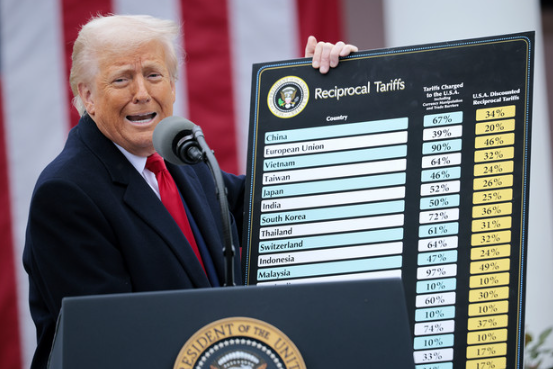
Trump tariff

The Council of Economic Advisers (CEA) issued a new report that found tariffs are not to blame for inflation. In fact, the cost of imported goods has fallen this past year to a lower level than that of overall goods.

“CEA’s directional findings using this method of analyzing the PCE are consistent across core goods (excluding food and energy), durables (which last for at least three years), and nondurables,” the report reads. “The import contribution to inflation includes both the direct impact of imported final goods for consumption and indirect effects of imported intermediate inputs.”

Imported goods fell by 0.8% while the price of overall goods remained stagnant. The PCE index rose 0.4% from December to May or a 1% annualized rate, according to the CEA’s findings. Yet, the imported portion of PCE fell by 0.1% during the same period.

“The results clearly show the price of imported components declining, starting in March, while overall prices were close to unchanged or increased slightly,” the report reads. “Cumulatively, overall PCE prices have increased by about 1.1% since December compared to about 0.2% for PCE import prices. However, those values include pricing for services, which tend to have lower import intensity, so the divergence could be due to stickier services prices.”

The agency concluded “there is no clear trend break” this year in prices, despite the headlines claiming tariffs are the reason inflation remains above target.