KOMMONSENTSJANE – Et tu, Gateway Pundit? Report on yesterday’s Pizzagate March on D.C. disappeared into the memory hole — Fellowship of the Minds


I wish the Demorats would disappear!

kommonsentsjane's avatarkommonsentsjane

Memory Hole (definition): A mechanism for the alteration or disappearance of inconvenient or embarrassing documents, photographs, transcripts, or other records, such as from a website or other archive, particularly as part of an attempt to give the impression that something never happened. The concept was first popularized by George Orwell’s dystopian novel Nineteen Eighty-Four, where […]

via Et tu, Gateway Pundit? Report on yesterday’s Pizzagate March on D.C. disappeared into the memory hole — Fellowship of the Minds

GOOGLE IS INTERFERING WITH MY BLOG!

Reblogged on kommonsentsjane/blogkommonsents.

For your information.

kommonsentsjane

View original post

Dems Move to Block Supreme Court Nominee


The Demorats are not all that smart and will try to block Gorsuch no matter what!

What Happens If They Kill Donald Trump?


Published on Mar 25, 2017

Alex Jones breaks down the repeal of Obamacare and the latest attacks on Trump.

Help us spread the word about the liberty movement, we’re reaching millions help us reach millions more. Share the free live video feed link with your friends & family: http://www.infowars.com/show

Follow Alex on TWITTER – https://twitter.com/RealAlexJones
Like Alex on FACEBOOK – https://www.facebook.com/AlexanderEme…
Infowars on G+ – https://plus.google.com/+infowars/

:Web:
http://www.infowars.com/
http://www.prisonplanet.com/
http://www.infowars.net/

:Subscribe and share your login with 20 friends:
http://www.prisonplanet.tv
http://www.InfowarsNews.com

Visit http://www.InfowarsLife.com to get the products Alex Jones and his family trust, while supporting the growth of our expanding media operation.

[http://bit.ly/2dhnhbS] Biome Defense™
[http://bit.ly/2bnEj91] Bio-True Selenium™
[http://bit.ly/1WYw8jp] Vitamin Mineral Fusion™
[http://bit.ly/1QYBNBv] Joint Formula™
[http://bit.ly/1nNuR3r] Anthroplex™
[http://bit.ly/1ljfWfJ] Living Defense™
[http://bit.ly/1Iobcj2] Deep Cleanse™
[http://bit.ly/1DsyQ6i] Knockout™
[http://bit.ly/1Kr1yfz] Brain Force™
[http://bit.ly/1R5gsqk] Liver Shield™
[http://bit.ly/1cOwQix] ProstaGuard™
[http://bit.ly/1mnchEz3] Child Ease™
[http://bit.ly/1xs9F6t] WinterSunD3™
[http://bit.ly/1L3gDSO] Ancient Defense™
[http://bit.ly/1EHbA6E] Secret-12™
[http://bit.ly/1txsOge] Oxy Powder™
[http://bit.ly/1s6cphV] Occu Power™
[http://bit.ly/1rGOLsG] DNA Force™
[http://bit.ly/1nIngBb] X2 Survival Shield™
[http://bit.ly/1kaXxKL] Super Female Vitality™
[http://bit.ly/1mhAKCO] Lung Cleanse™
[http://bit.ly/1mGbikx] Silver-Bullet – Colloidal Silver™
[http://bit.ly/1xcoUfo] Super Male Vitality™
[http://bit.ly/1z5BCP9] Survival Shield – Nascent Iodine™
[http://bit.ly/1o4sQtc] Patriot Blend 100% Organic Coffee™
[http://bit.ly/1iVL6HB] Immune Support 100% Organic Coffee™

All available at – http://www.infowarsshop.com/

INFOWARS HEALTH – START GETTING HEALTHY BEFORE IT’S TOO LATE – http://www.infowarshealth.com/

Newsletter Sign up / Infowars Underground Insider : http://www.infowars.com/newsletter

The Alex Jones Show © copyright, Free Speech Systems .LLC 1995 – 2017 All Rights Reserved. May use for fair use and educational purposes

Sunday Talks – Trey Gowdy -vs- CBS John Dickerson


Source: Sunday Talks – Trey Gowdy -vs- CBS John Dickerson

Watch These Geopolitical Flashpoints Carefully


One thing for sure is the Obama left us in a mess!

KOMMONSENTSJANE – DID RACHEL MADDOW GET PUNK’D BY HER OWN COHORTS? DID THE CHICKEN EVER CROSS THE ROAD?


Maddow makes a fool of herself more often than naught.

kommonsentsjane's avatarkommonsentsjane

~ Conservative Zone
Trump’s Tax Return Wasn’t the Scoop Rachel Maddow Hoped It Would Be

For nearly two years now, MSNBC’s Rachel Maddow has been itching to tar and feather Donald Trump with damaging information or expository gossip that would embarrass our country’s new president or at least make him unpalatable to the nation’s voters. On Tuesday, March 14, Maddow appeared to have just such a scoop, as she teased on Twitter to draw in ratings.
The only problem? The story was less of a scoop and more simply a piece of virtual non-news because the big piece of information she had — two leaked pages of Trump’s 2005 tax return — contained no “smoking gun” bombshells.
In fact, for all practical purposes, it made Trump look like a law-abiding citizen compared to other high-profile personalities such as ex-President Obama, Democratic candidate Bernie Sanders and wealthy investor Warren Buffett, who…

View original post 842 more words

“Don’t Say You Haven’t Been Warned”


Tyler Durden's picture

Authored by Jeffrey Miller via Miller’s Market Musings,

So after a long period of basically no volatility, we finally got some – in a hurry.  In case you were out, the S&P 500 (SPX) finally had a down day of more than 1%.  But that’s not the real story.  Look in bankland, where we have been cautious ever since the rip higher on the Trump Trade (lower taxes, higher rates, lower regulations).  The KRX (KBW Regional Bank Index) fell over 5% on Tuesday – yes, the bank index took a dive of 5% in one day.  And it didn’t bounce.  The SPY was up a bit on Wednesday, but marginally, while the dollar continued to weaken versus the Yen and Euro.  The big questions being asked all revolve around whether the dip in the 10-year bond yield to under 2.40% is reflecting a weaker outlook for the Trump Trade, or, if it’s just an unwind of a massive 10-year bond short after the Fed hike last week was perceived as dovish.

Picture

All Calvin and Hobbes comics courtesy of Bill Watterson and Go Comics.

The mini-rally in the 10-year bond could be the proximate cause of the banks selling off, but that is a little too old school – that implies that what is driving these stocks right now is a focus on fundamentals.  But as long-time readers know, fundamentals only matter in the very long term – in the short term, positioning, especially among the CTA/trend following/risk parity crowd, can become very important at inflection points.  These funds all tend to been leaning in the same direction at the same time, in size, and are designed to pull down risk and then flip the other way quickly on a steep decline.  In short, they are the embodiment of feedback loops that drove the big sell off in August 2015 and in early 2016.  But…this time I think we could be in for a bigger shock.  Just because the market didn’t follow through to the downside after Tuesday doesn’t mean we’re done.  Instead, this may be a preview of coming attractions, as the KRX falling 5% in a day is a warning sign, not an all clear sign.  Because these funds can be easily spooked – especially on a hike.

Picture

The issue isn’t that there are funds that trend-surf.  The issue is that there are now a lot of them, and there has been a recent push into using these funds to “hedge” risk.  The idea is that any downturn will evolve slowly enough for these funds to sell into it – which has happened in the past.  But that was when the group was a lot smaller.  A recent Financial Times article detailed how pervasive this has become. According to the article, clients of Pension Consulting Alliance (PCA) typically allocate 10-20% of their assets to a “CRO program.” What is a CRO program?  “Crisis Risk Offset.” PCA apparently coined the term.  Now, full disclosure: I know a few people who work at PCA and they are all great folks (and neighbors).  This isn’t about them. It’s about allocating to momentum strategies in a size that may be too big to execute properly.  Portfolio insurance anyone?  If you recall, that didn’t work out well (see October 19th, 1987).  Will that (down over 20% in a single day) happen again?  Unlikely.  But we could easily get a situation where a garden-variety 5% pullback in the SPX quickly morphs into a fast 10-15% decline, as funds de-lever their equity longs or flip short.  See these charts of where we are in terms of equity exposure in various trend-following systems, and the size of these funds today.

Picture

Picture

The problem with everyone leaning in one direction is that they scare easily.  When realized volatility has been near all-time lows, as it has been in recent months, the simpler versions of these strategies view assets as less risky, so they lever them up.  What the models fail to capture is the speed with which volatility can return.  If volatility slowly creeps back up, then the models work fine.  But if it suddenly spikes higher, the models fall apart, other investors quickly de-risk, and everyone is up all night looking for ghosts.  Don’t say you haven’t been warned.

Picture

This was one of the weirder weeks I’ve seen in awhile. Various proxies for U.S. interest rates were bouncing around based on each tweet and missive from D.C. about whether or not the new healthcare bill would pass.  When the bill was first pulled on Thursday, U.S. stocks fell, and rate proxies reacted as if all of the Trump agenda was in trouble (Trump policies are viewed as inflationary, so rates move up when he’s doing well and down when he’s not).  Look at the Yen this week – every time the Trump agenda looked vulnerable, it rallied.  And then that relationship quickly fell apart at the end of the day on Friday.  When the healthcare bill got pulled for good Friday, it took about 5 minutes for the narrative to shift from Trump failed to now tax cuts can happen sooner rather than later, and so the Yen fell sharply.  This is the world we live in today – traders are making up new and different reasons to scare themselves daily.  Should we care?  I’d say no, except we’re in unstable times (see the 5% selloff in the KRX on Tuesday for proof), and with lots of money in passive funds, ETFs and trend-following strategies, it won’t take a lot to get the markets heading down fast.

Picture

So what will be the catalyst to cause more than a 1% sell-off in the SPX?  While everyone is fixated with the non-bill in D.C., I think they are missing the big risk in the market, which is only getting bigger by the day.  Long-time readers can guess where this is going.  That’s right – China.  While we’ve been distracted in the U.S., China has been raising its equivalent of the Fed Funds rate and trying to stem a credit bubble there from ballooning out of control, while at the same time trying to make sure that if they do succeed in popping the bubble, it deflates slowly.  Good luck with that.  I’m not saying they won’t be able to do it.  I’m just saying that no country has ever pulled it off before.  The borrowing rates for their non-bank financial institutions (NBFIs) are rocketing higher (see the chart below) as they scramble for funds.  Evidently, the popular thing for these NBFIs to do is lend very long-term into risky ventures in order to generate higher yields, but borrow very short-term (under a year) because the funding is cheaper.  If this sounds just like our S&L crisis, version 2.0, you’d be correct.  I would have thought there are some things the Chinese may have wanted to avoid copying from the U.S., but apparently they’ll have to learn that lesson for themselves.

Take a look at the charts below.  You’re actually seeing defaults in China occur, and at an increasing rate (albeit from zero, as extend and pretend is the national motto in China, where everything is always awesome – it is always awesome, right?).  Remember, you’re also seeing short-term repo rates spiking.  A sign of renewed growth and inflation fears?   Ah, no.  It’s a sign of stress in the funding markets and increasing counterparty risks.  Put another way, credit is starting to fray in China right after the biggest increase in debt in the history of the world.

Picture

Picture

How will it end? I think Calvin has it pretty well figured out in the below comic strip.

Picture

?So to recap: the question investors need to ask themselves is what will happen if China’s issues start to manifest themselves in global markets (remember August 2015?  Me too.  We’re all in this together). The combination of large risk-parity funds and CTAs being quite long equities at the exact moment that China’s credit bubble is starting to show signs of stress could end quite badly.  The pension funds that have hired CTAs to sell into the next selloff will exacerbate what would have in the past been a normal correction.  And when retail investors who have been relentlessly told to invest their money in long-only index funds or ETFs wake up to a market that is down 10%, 15%, or 20% fast, are they going to hold on, or even buy more, or are they going to realize that their ship is just a plank, and decide to swim for shore while they can?  If history is a guide, we’re going to see lots of investors making a swim for it.

Picture


Why Middle Class Whites Are Dying Faster (In 6 Painful Charts)


Tyler Durden's picture

Authored by Julia Belluz via Vox.com,

In 2015, a blockbuster study came to a surprising conclusion: Middle-aged white Americans are dying younger for the first time in decades, despite positive life expectancy trends in other wealthy countries and other segments of the US population.

The research, by Princeton University’s Anne Case and Angus Deaton, highlighted the links between economic struggles, suicides, and alcohol and drug overdoses.

Since then, Case and Deaton have been working to more fully explain their findings.

They’ve now come to a compelling conclusion: It’s complicated. There’s no single reason for this disturbing increase in the mortality rate, but a toxic cocktail of factors.

In a new 60-page paper, “Mortality and morbidity in the 21st Century,” out in draft form in the Brookings Papers on Economic Activity Thursday, the researchers weave a narrative of “cumulative disadvantage” over a lifetime for white people ages 45 through 54, particularly those with low levels of education.

Along with worsening job prospects over the past several decades, this group has seen their chances of a stable marriage and family decline, along with their overall health. To manage their despair about the gap between their hopes and what’s come of their lives, they’ve often turned to drugs, alcohol, and suicide.

Meanwhile, gains in fighting heart disease have stalled, and rates of obesity and diabetes have ploddingly climbed.

So the rise in mortality for white mid-life people in America since the late 1990s is actually the final stage of a decades-long process. “It’s about the collapse of white middle class,” said Case. Here are the five big takeaways from the researchers’ new opus.

1) Suicides, alcohol, and drug overdose deaths have gone up across the entire country. (Read: It’s not just a rural problem.)

 Brookings

“Deaths of despair” — or suicide, alcoholism, and drug overdoses, particularly from opioid painkillers — are a growing problem for midlife white people.

As you can see on the left-hand map, the epidemic started in the Southwest. Now it’s “country-wide,” the study authors write, and the increase can be “seen at every level of residential urbanization in the US.” So it’s not just a rural problem or an urban problem — it’s both.

The crisis is particularly acute among middle-aged whites. “The deaths of despair come from a long-standing process of cumulative disadvantage for those with less than a college degree,” Case and Deaton write. “The story is rooted in the labor market, but involves many aspects of life, including health in childhood, marriage, child rearing, and religion.”

 Brookings

In an interview, Deaton explained, “The cohort that entered the labor market in the ’70s on down, their jobs earnings and prospects are worse. That affected their marriage prospects. Marriages got screwed up. They had children out of wedlock. Their pain levels [are] going up.” All that contributes to the deaths of despair.

The study authors don’t see the opioid supply as the fundamental factor here, but “prescription of opioids for chronic pain added fuel to the flames, making the epidemic much worse than it otherwise would have been,” they wrote.

The impact of rising deaths of despair on overall mortality was masked until the late 1990s by the decline of heart disease deaths. But recently that has changed too.

2) Deaths from chronic diseases such as diabetes have been rising

County-level mortality from diabetes, urogenital, blood, and endocrine diseases between 1980 and 2014. You can see these trending up all over the country. JAMA

Progress against mortality from heart disease has slowed and stopped, and deaths from cancer, which had been on a steady decline, are also stagnating in this group.

Meanwhile, other chronic diseases have continued to rise in the whole population, particularly among middle-aged white people. Diabetes’ prevalence has exploded in the US over the past 20 years. Nearly 30 million Americans live with the disease today — more than three times the number in the early 1990s. And this may be a major, underappreciated driver of the mortality trend.

3) The least-educated Americans are suffering the most

 Brookings

The rise in mortality among middle-aged whites is largely being driven by those with a high school degree or less. The researchers find that the gap in mortality between more and less educated is increasing, while mortality is also rising for those without a college degree and falling for those with a college degree.

“It looks like there are two Americas,” Case said. “One for people who went to college and one that didn’t.”

The middle-aged whites with less than a bachelor’s degree saw “progress stop in mortality from heart disease and cancer, and saw increases in chronic lower respiratory disease and deaths from drugs, alcohol, and suicide,” the researchers write.

Why education is such an important health indicator is difficult to untangle, Case added. “But when you think about what happens when industries pull out of towns, the tax base implodes, schools [are] not well funded, and the death spiral continues.”

In the past, people with low levels of education could get a job in a factory and work their way up the chain of command. “You could graduate high school, work at Bethlehem Steel, get more money every year as you get more experienced,” Deaton said, “and turn yourself into one of the famed blue-collar aristocrats of the 1970s.” Now, he added, “There’s a feeling that life has gone, and remainders of that life are getting less and less for each generation.”

To be clear, the study authors don’t buy the idea that one’s income relative to what one expected is influencing mortality. Rather, “It’s the life you expected to have relative to your father or grandfather — it’s just not there anymore,” Deaton said.

4) Other nonwhite racial groups aren’t experiencing the same mortality uptick — so it’s not just about income

 Brookings

As you can see here, mortality for middle-aged black people converged with mortality for middle-aged white people with low levels of education in the late 2000s (though the white population overall is still doing better than African Americans). Meanwhile, mortality rates among Hispanics continued to fall.

These other racial groups aren’t necessarily doing any better economically than their white counterparts, which is part of the reason Case and Deaton don’t accept a simple income explanation for the death uptick.

“It is possible that it is not the last 20 years that matters, but rather that the long-run stagnation in wages and in incomes has bred a sense of hopelessness,” they write. “But … even if we go back to the late 1960s, the ethnic and racial patterns of median family incomes are similar for whites, blacks, and Hispanics, and so can provide no basis for their sharply different mortality outcomes after 1998.”

Instead, the researchers think the fact that the overall life prospects for white middle-aged people without a BA have declined over time — they are doing worse than their parents on both a personal and professional level, and probably worse than they expected — is nudging mortality downward. This regression is different from the story of progress in the African American community, for example. Here’s Case and Deaton again.

The historian Carol Anderson argued in an interview in Politico (2016) that for whites “if you’ve always been privileged, equality begins to look like oppression,” and contrasts the pessimism among whites with the “sense of hopefulness, that sense of what America could be, that has been driving black folks for centuries.” That hopefulness is consistent with the much lower suicide rates among blacks, but beyond that, while suggestive, it is hard to confront such accounts with the data.

5) This story is unique to the US

 Brookings

The US, particularly middle-aged white Americans, is an outlier in the developed world when it comes to this mid-life mortality uptick.

“Mortality rates in comparable rich countries have continued their pre-millennial fall at the rates that used to characterize the US,” Case and Deaton write. “In contrast to the US, mortality rates in Europe are falling for those with low levels of educational attainment, and are doing so more rapidly than mortality rates for those with higher levels of education.”

If American wants to turn the trend around, then it has to become a little more like other countries with more generous safety nets and more accessible health care, the researchers said. Introducing a single-payer health system, for example, or value-added or goods and services taxes that support a stronger safety net would be top of their policy wish list. (America right now is, of course, moving in the opposite direction under Trump, and shredding the safety net.)

They also admit, though, that it’s taken decades to reverse the mortality progress in America, and it won’t be turned around quickly or easily. But there is one “no-brainer” change that could help, Case added. “The easy thing would be close the tap on prescription opioids for chronic pain.”

Unlike health care and increasing taxes, opioids are actually a public health issue with bipartisan support. Deaton, for his part, was hopeful. Paraphrasing Milton Friedman, he said, “All policy seems impossible until it suddenly becomes inevitable.”


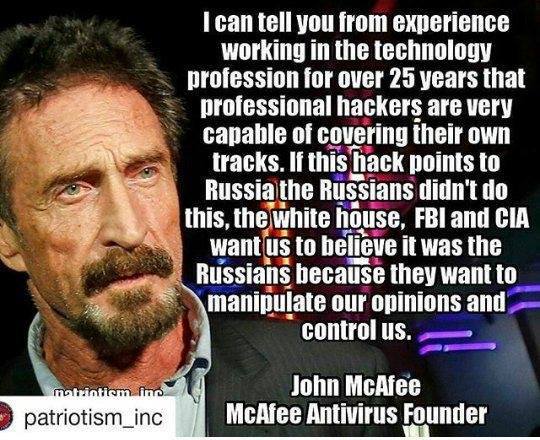
KOMMONSENTSJANE – THIS MAN I WOULD BELIEVE.


If anyone would know he would!

kommonsentsjane's avatarkommonsentsjane

This alone should tell us how Democrats and Obama (the dark state) were  working during his time in office and/now continuing with  all of this  Russian BS the Democrats are putting out every day to keep the President from doing his job.

We should listen and understand what this man is telling the -American people to inform us.  It is not the Russians but was our own government under Obama and the democrats.  Rep. Schiff a democrat is still  trying to pull the wool over  American people’s eyes with his/Russian stories who is really the CIA.

john

kommonsentsjane

View original post

Texas Republican Ted Poe Quits Freedom Caucus Over Their #NeverTrump Intransigence…


Source: Texas Republican Ted Poe Quits Freedom Caucus Over Their #NeverTrump Intransigence…