Two people were killed and up to five more stabbed as a terrorist used two knives to attack the public in London, England. The attack happened near (and on) the London Bridge and the terrorist wore a dummy explosives vest. Members of the general public tackled and disarmed the terrorist until police arrived moments later and shot him.
British authorities have confirmed the attack was a terrorist incident. London Mayor Sadiq Khan has promised the British people he will write a strong letter of condemnation.
(Via Daily Mail) – Two innocent members of the public have died after a knifeman went on a rampage this afternoon in London.
Armed police shot dead a knifeman wearing a fake suicide vest today after he stabbed up to five people in a shocking terrorist attack as frightened crowds fled the scene.
Witnesses on the scene said the man had been brandishing two knives and had attacked people on the north side of London Bridge before running into the centre at around 2pm.
Dramatic video footage showed he was tackled to the ground by at least six heroic members of the public. Seconds later police told people on top of the suspect to move away, before dragging the last bystander to safety and opening fire. Officers were heard shouting ‘stop moving’ twice before shooting the man at close range.
One of the brave heroes was on the other side of the bridge and ran over to help, tackling the man and wrestling the knife off him. The suspect lay on the ground still moving as officers backed away – clearly fearing they were still in danger. (read more)
.
Note the date: 2018…. Apparently something went wrong with the prior policies put into place to stop refugee jihadists from using knives to kill people.
After President Trump met with North Korean Chairman Kim Jong-un to stop a region headed toward military crisis, the President was asked about the Nobel peace prize for his efforts with South Korean Moon Jae-in. President Trump responded: “Peace is the prize“.
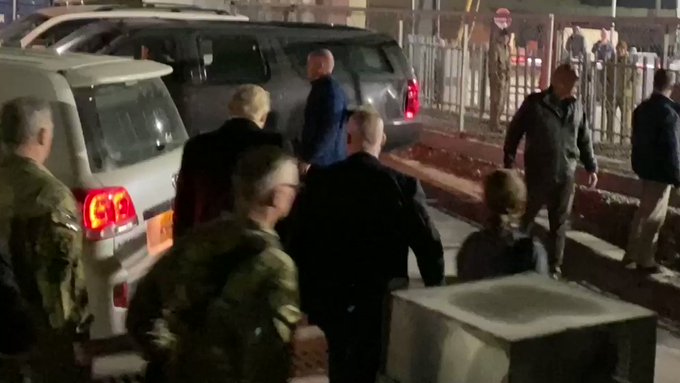
Yesterday U.S. President Donald Trump secretly flew to Afghanistan to spend time with U.S. troops on Thanksgiving day. While he was there President Trump met with Afghanistan President Ghani to discuss the groundwork for renewed discussions with Taliban leadership in an effort to construct a peace agreement in the highly tribal nation. [Video and Transcript Below]
.
[Transcript] – PRESIDENT TRUMP: Well, thank you very much. It’s great to be in Afghanistan with our troops. And we had a wonderful Thanksgiving lunch. It was abbreviated a little bit, but we served lunch and had lunch. And these are great people, and it’s also wonderful to be with the President of Afghanistan. And, President Ghani, thank you very much. It’s an honor.
We have a lot of things to talk about — many, many things. We’ve had tremendous success in the last few months with our military, as you know. ISIS has been very — very badly hit, very severely hit. We had al-Baghdadi down in a different part to the world, and we took him out. That was the father of ISIS — the founder. And he was trying to rebuild it, and that didn’t work out too well for him.
But we had tremendous success with ISIS over the last three to four months, and we’re down to a very small number. And likewise, with al Qaeda, we’re down to a very small number. And the Taliban wants to make a deal. We’ll see if they make a deal. If they do, they do. And if they don’t, they don’t. That’s fine. But we’ve had tremendous success.
And I think what I’d like to do — and perhaps, General, if you could say just a couple of words before President Ghani. Tell him about how we’ve literally decimated ISIS in Afghanistan, also al Qaeda in Afghanistan, if you would.
GENERAL MILLEY: Sure, absolutely, Mr. President. And, President Ghani, good to see you again. And we had a great meeting earlier today.
And as you know, Scott Miller and the troops here, and Afghan troops and international troops, have all put a significant amount of pressure on ISIS, particularly in Nangarhar. And they’ve been hurt bad. Their numbers have been treaded and dwindled significantly. Organizationally, they have not been destroyed but they have been severely hurt. And that pressure will continue.
And as the President mentioned, there’s ongoing talks with the Taliban, and hopefully those will be successful. And hopefully we’ll — that will lead to Afghan-to-Afghan dialogue in the not-too-distant future.
So I think there’s been some significant progress, Mr. President. And I thank Scott Miller and the Ambassador. And the entire team of U.S. forces here, in combination with the Afghan National Security Forces, has done a great job.
So thanks for your support.
PRESIDENT TRUMP: Good. Thank you very much, General.
And, Scotty, do you want to just mention how much — what we’re left with? You’re down to very small numbers with ISIS, and also you’re down to very, very small with al Qaeda. Do you want to mention that?
GENERAL MILLER: Mr. President, with the Afghan forces, particularly over the last 30 days of this — although it’s been a long fight — we’ve seen a — quite a few surrenders by Daesh/ISIS fighters, as well as their families, coming out of southern Nangarhar, which, as everybody knows, that’s a — been a tough set of terrain for the United States of America and Afghanistan.
Since 2001, it was a safe haven for bin Laden in the early days, and been a pretty remarkable military operation, as well as the following operations with the Afghans.
PRESIDENT GHANI: It (inaudible) al Qaeda South Asia.
PRESIDENT TRUMP: We made that tremendous progress though over the last, I would say, six months. And we’ve really, with respect to ISIS and al Qaeda. And we’ve hit them very, very hard. And they’re down to literally hundreds as opposed to thousands. They had many thousands a short while ago, and now they’re down to hundreds. Probably 200 left. And we’re scouting them out. So we’ll be down to very little, if anything, in a very short period of time.
Great job, by the way. Great job.
GENERAL MILLER: Thank you, sir.
PRESIDENT TRUMP: Appreciate it, Scotty.
Mr. President, please.
PRESIDENT GHANI: Well, Mr. President, it’s a great honor and pleasure to welcome you. Let me first pay tribute to the Americans who paid the ultimate sacrifice.
From 2001, 2,298 Americans — might be one or two difference — paid the ultimate sacrifice. We salute their courage and their determination for your security and our freedom.
Since you’ve been President, the number has been 52. So it’s been a tremendous change. Afghan Security Forces are taking the lead now in most of operations. I would like to pay tribute to General Miller and to Ambassador Bass for their remarkable partnership with their problem solving and our security forces. Our team is here; has gone from strength to strength.
I’d like to thank you for your leadership and for your determination both on the South Asia strategy that made this possible and on your very principled decisions regarding putting limits on the type of peace that would ensure the gains of the past years and ensure your security and our freedom.
PRESIDENT TRUMP: Right. Well, as you know, for a period of time, we’ve been wanting to make a deal and so have the Taliban. Then we pulled back. We were getting close and we pulled back. We didn’t want to do it because of what they did. It was not a good — it was not a good thing they did with the killing a soldier. They knew he was a soldier, but he was a solider — an American soldier from Puerto Rico. And they killed him. They killed a United Nations soldier. And they also killed — they killed a total of 12 people. They thought that was good negotiating power. I said, “No, that’s bad negotiating power.” That was not good what they did.
And since then, we’ve hit them so hard, they’ve never been hit this hard. In the history of the war, they have not — never been hit hard.
And they want to make a deal. So we’ll see what happens. If they make it, fine. If they don’t make it, that’s fine.
We’re going to be able to do everything we’re doing, and actually more. And at the same time, we’re bringing down the number of troops substantially. But we’re able to because of the weaponry and all of the things that we have in place. We can do, actually, more damage with even fewer troops.
So we’re going to — we’re bringing it down very substantially. And we’ll be down at a number that’s very — it’s a good number. And we’re going to stay until such time as we have a deal or we have total victory. And they want to make a deal very badly.
So we’re dealing with — this is really for the media, I guess, more than anybody, because the President knows what I’m saying. The Taliban wants to make a deal. And we’re meeting with them, and we’re saying it has to be a ceasefire. They didn’t want to do a ceasefire, but now they do want to do a ceasefire, I believe. And it will probably work out that way. And we’ll see what happens. But we’ve made tremendous progress.
But the thing I’m most proud of — because you could look at Taliban and say they’re fighting for their land; you could look at, you know, others and say they’re fighting for other things. But we know what ISIS is fighting for and we know what al Qaeda is fighting for. And we have them down to a very small number of people. So — and that won’t be — that will not be a long-lasting fight. That will be over with very soon.
So we made a lot of progress, and, at the same time, we’re drawing down our troops. And, by the way, the same thing in Syria. I have to tell you, there was false reporting in the New York Times and some of the others, yesterday.
We — as you know, we did withdraw from Syria, except we kept the oil. And we’re doing a little scattered fighting because we had some areas where ISIS was a little prevalent and gaining some traction. And we sent some troops in and pretty much wiped it out. But we have left — for the most part, we’ve left, but we’ve kept the oil. And by keeping the oil, we don’t have the enemy getting the oil. And the oil is what fueled the enemy. In this case, it was ISIS.
And so in addition to — in addition to what we did two weeks ago, which was pretty remarkable, the — what that group of young people was able to do very rapidly and very surgically, we are only in an area where we’re keeping the oil and knocking out certain small groups of ISIS as it reforms. We don’t want to — as it — as it reforms, it gets back, it tries to get back.
But we’ve also knocked out — Mr. President, as you know, we knocked out the number-two person who became the number-one person. And now we have our sights on the number-three person, who’s going to be the number-one person, if he wants it. You know, it’s not a good job. I don’t think he wants it. Maybe he doesn’t want it so badly. He’s not acting too quickly.
So we’ve had tremendous success. And we’ve had tremendous success here, especially over the last period of six months to a year. So it’s very — very nice to be with be with you.
PRESIDENT GHANI: It’s a pleasure.
PRESIDENT TRUMP: Very, very nice. Thank you.
PRESIDENT GHANI: Thank you, Mr. President.
PRESIDENT TRUMP: Okay, thank you very much everybody.
Q Mr. President, will you withdraw without a deal? Will you withdraw if there is no deal?
Q Has the U.S. restarted peace talks with the Talban?
PRESIDENT TRUMP: Say it?
Q Has the U.S. restarted peace talks with the Taliban?
PRESIDENT TRUMP: No, we’re talking to the Taliban. Yeah.
Q Are you prepared to withdraw even without a deal?
Q And will you include the Afghan —
PRESIDENT TRUMP: I would never say a thing like that. You wouldn’t want me to say a thing like that. But I could just say this: We haven’t had so much success in this — in this country, in this area. We haven’t had success like this probably from the beginning, certainly as it relates to ISIS and al Qaeda, which is a very primary aim. But we’ve had very good success in talks with the Taliban.
Q You said that you’re, at this point, pulling out troops. How many troops are currently in Afghanistan? And what is the plan for —
PRESIDENT TRUMP: Well, we’ll give you those numbers later, but we’ll get down to a certain number. I’m not sure I want to give you that number, to be honest. But it’s a very big difference. But because of new weaponry and technology, we’re able to do actually more with fewer troops.
Q You had mentioned 8,600. Is that not the number anymore, sir?
PRESIDENT TRUMP: It’s a number that people are talking about, yes.
Q And is that the number you’re talking about?
PRESIDENT TRUMP: Yeah, it is, for now. And then we can do much better than that.
Q Would you like to get it lower, sir?
PRESIDENT TRUMP: We can go much further than that. But we’ll have it all covered.
You know, this is a country where, for whatever reason, they reform, they regenerate. And we don’t want that to happen. And we also have the support of a lot of other countries, by the way. We have a lot of help from a lot of other countries. But don’t let anybody tell you that’s it’s anybody else, because we’re leading it all the way.
And frankly — and frankly, that’s one of the thing. We — look, we’re in an area of the world — we’re 8,000 miles away. Some of us — I guess, most of us came here together. We want other players in this area to help. They don’t like ISIS either. They don’t like al Qaeda either. And they have to help also. You have countries that are right nearby that are very big, that have power, and they should be doing some of the work too, not just the United States.
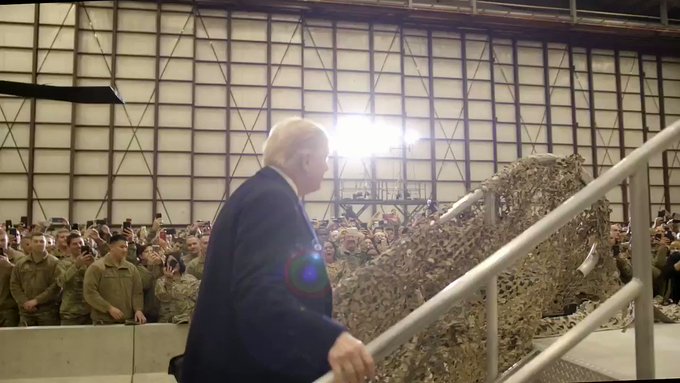
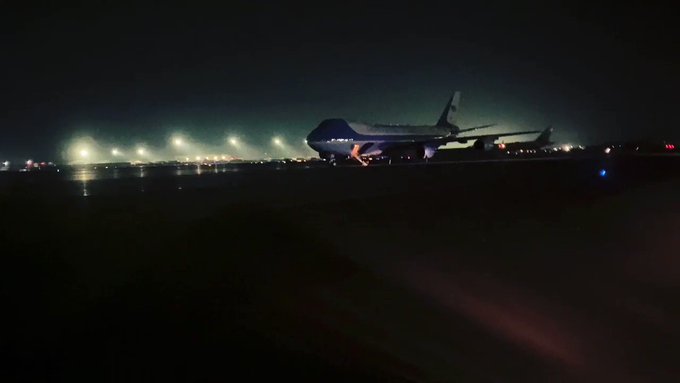
President Donald Trump made a surprise trip to Bagram Air Field in Afghanistan to celebrate Thanksgiving with our troops. The trip took place under a shroud of secrecy, and very tight security arriving in a darkened airplane just after 8:30 p.m. local time.
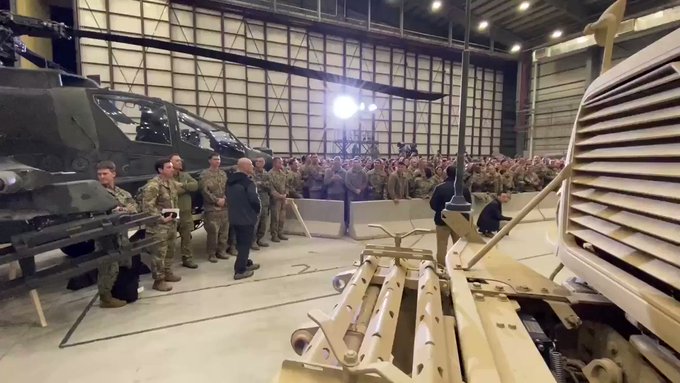
The White House concealed the trip from his public schedule for security reasons. President Trump helped the chow staff feed turkey and mashed potatoes to American troops in fatigues, before dining himself. Additionally President Trump posed for photographs before delivering remarks celebrating America’s military in an aircraft hangar. WATCH:
United States Army General and the 20th Chairman of the Joint Chiefs of Staff Mark Milley introduces the 45th President of the United States @realDonaldTrump at Bagram Airfield in Afghanistan. HAPPY THANKSGIVING!!
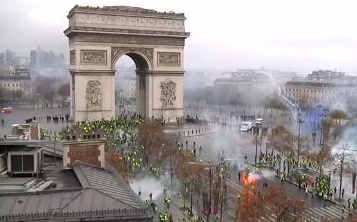
QUESTION: Would you say that the majority of French are becoming anti-Islam?
GSD
ANSWER: No, of course not. The blackout of such protests does make it hard to gauge to what extend the French are rising up in protest. Then again, the standard rule of thumb is for every protester there are 10 who stayed at home.
The point is not to imply that the majority feel in that manner. The point is obviously that this is a rising trend or the government would not try to block media attention. So if it were just a fringe group, news of that would not be blocked for that does not reflect any meaningful segment of society.
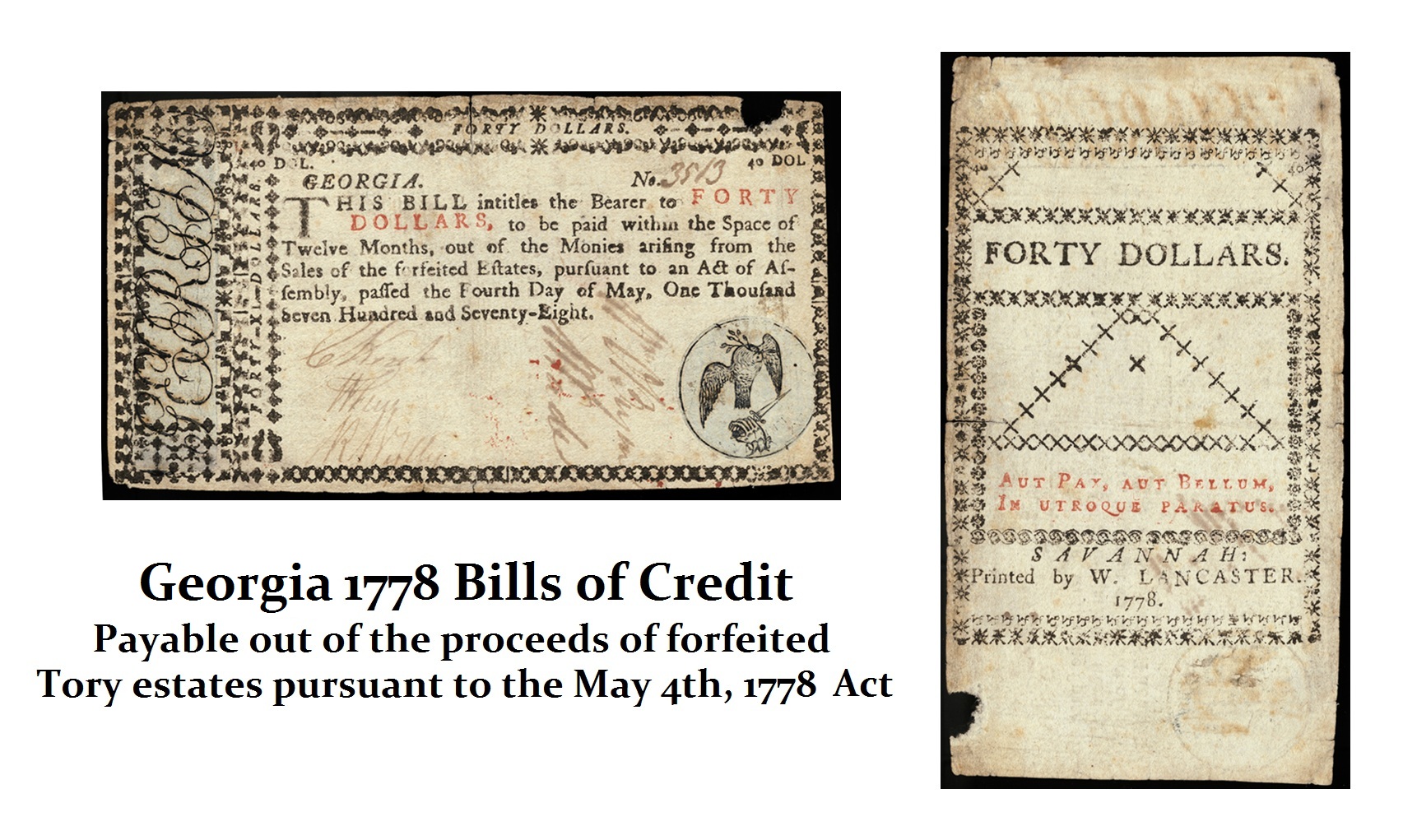
No matter what country you look at, there are always people on both sides of the issue. Here is a note issued by Georgia that was backed by assets confiscated from people who had supported the king during the American Revolution. There is NEVER any such protest or revolution where 100% of the people are on one particular side. There will always be dissent and support of governments. You have the right to pick your side, although you may not have the right to publicly express your opinion.
Presidential historian Doug Wead was given unprecedented access to the White House and people associated with the Trump presidency for his book “Inside Trump’s White House: The Real Story of His Presidency.” Mr. Wead discusses the experience. This is a must watch interview:
The act that President Trump signed today is a law that requires the U.S. to review all of the democracy issues within Hong Kong to assess whether any Chinese violations to Hong Kong autonomy are happening. If so, the U.S. can take remedial steps to punish China.
The Hong Kong Human Rights and Democracy Act would require the State Department annually re-certify Hong Kong’s autonomous nature, in order for the so-called “special treatment” the U.S. affords Hong Kong to continue. (more)
Keep in mind a dual purpose to this latest move: Hong Kong holds a special trade status with the U.S. and is exempt from tariffs placed on China. Part of the punitive action President Trump could take against China involves tariffs against Hong Kong.
Today, I have signed into law S. 1838, the “Hong Kong Human Rights and Democracy Act of 2019” (the “Act”). The Act reaffirms and amends the United States-Hong Kong Policy Act of 1992, specifies United States policy towards Hong Kong, and directs assessment of the political developments in Hong Kong.
Certain provisions of the Act would interfere with the exercise of the President’s constitutional authority to state the foreign policy of the United States. My Administration will treat each of the provisions of the Act consistently with the President’s constitutional authorities with respect to foreign relations.
Again, back to the big picture, is this an action that would indicate President Trump is actually looking for a U.S-China trade agreement? Of course not. So why now, what changed?… The USMCA! It’s all connected folks.
The New York Federal Reserve made a quiet admission two days ago that was missed by almost all financial media. In the NY Fed economic blog they admitted everyone was wrong, President Trump’s 2017 tariffs against China did not lead to increased U.S. consumer prices [Read Here]. The Fed also said imports of the Chinese products affected by U.S. tariffs have fallen by an annualized $75 billion. That’s a huge chunk of business U.S. purchasers have shifted to Japan and other Southeast Asian countries.
.
Within this dynamic lays the real reason why Beijing cannot wait for a 2020 election hoping that Biden or Bloomberg can stop their bleeding. Before going into more depth, this brief explainer from Charles Payne will help establish a framework. WATCH:
What Payne outlines is correct; however, the internal Chinese ‘tariff-offset’ dynamic is actually even a little deeper. Overlaying the NY Fed research we can see that Beijing has attempted to offset the Trump tariffs in four majority ways:
A devaluation of their currency by roughly 10% since the tariffs were implemented. This makes the dollar a higher value when purchasing. The U.S. dollar purchases more stuff.
Direct subsidies by the communist control authority. That is a direct payment to the exporting Chinese company to offset the drop in prices they may need to be competitive.
Indirect subsidies. Remember, China is a communist system. Beijing can tell a province to cancel the electricity bill to a company within that province. Beijing absorbs the cost.
Incentives for enhanced end-product delivery. As Payne noted in the video the Chinese company just give the purchaser more stuff at the same price. That additional stuff offsets the tariff cost. This free stuff shows up in new contract terms.
All of this is an effort by China to diminish the impact of U.S. tariffs against their exports. However, all of this cumulative effort, while small in the individual pieces, when added up is a big economic cost to Beijing. Thus the overall economic loss is starting to snowball as the accumulation of offsets is beginning to aggregate. They cannot continue indefinitely.
China is suffering a slow death by a thousand paper-cuts. The bleeding of cash in combination with the direct loss of $75 billion in annualized exported products that U.S. companies have now sourced from alternative ASEAN nations is biting hard.
The direct outcome is also a drop in China’s purchasing of industrial goods they would normally use in the manufacturing process. This lack of Chinese purchasing is one of the top reasons for the stall in the European economy.
There is a natural lag as supply chains reorient. The ASEAN nations that have picked up U.S. manufacturing contracts first go through a process of increased productivity, expanded utilization of existing manufacturing, before they need to expand to new facilities. Machines operate 20 hours daily – instead of 16 hours; more shifts are added, etc. Until production reaches 100% capacity no ASEAN group is going to purchase the warehoused industrial machinery, not purchased by China, and being stored in the EU.
In this investment, lending and financing dynamic, is where the current Wall Street multinational corps and banks are stalled and watching closely. No-one wants to drop $100 million to help expand a textile company in Vietnam, if Mexico -via the USMCA- ends up being a more cost efficient location. This status is why passage of the USMCA is an important next step for President Trump’s global trade reset.
A final word on a question often asked. What is President Trump doing with the trade negotiations with China? What’s his end?
The answer to that question is actually where one must overlay Trump’s history of energy policy, with the visible signs of his China trade reset that began with his visit to Southeast Asia in November 2017.
President Trump is famously impatient in achieving a financial objective. He is known to have well thought plans, but he is also known to not pause long when executing his plan. This economic impatience may seem to be at odds with the majority of the financial media who say President Trump is playing a long-game with Chairman Xi Jinping.
ERGO the dichotomy is explained thus: If President Trump is famously impatient, then why is he being so deliberate and painfully slow in achieving a deal with Chairman Xi?…
Here’s the ‘ah-ha’ moment.
….The current status with China was the final objective.
President Trump looks like he’s being stunningly patient because President Trump achieved his goal when no-one was paying attention. We are already past the success point.
The goal is essentially achieved.
There is no actual intent to reach a trade deal with China where the U.S. drops the tariffs and returns to holding hands with a happy panda playing by new rules. This fictional narrative is a figment of fantasy being sold by a financial media that cannot fathom a U.S. President would be so bold as to just walk away from China.
That ‘walk away’ is exactly what President Trump did when he left all of those meetings in Southeast Asia in 2017; and every moment since has been setting up, and firming up, an entirely new global supply chain without China.
President Trump is not currently engaged in a substantive trade agreement in the formal way people are thinking about it. Instead “Phase-One” is simply President Trump negotiating the terms of a big Agricultural purchase commitment from Beijing, and also protecting some very specific U.S. business interests (think Apple Co.) in the process.
The actual goal of President Trump’s U.S-China trade reset is a complete decoupling of U.S. critical manufacturing within China.
President Trump does not express angst, frustration, or even disappointment over the U.S-China trade discussions because the decoupling is well underway.
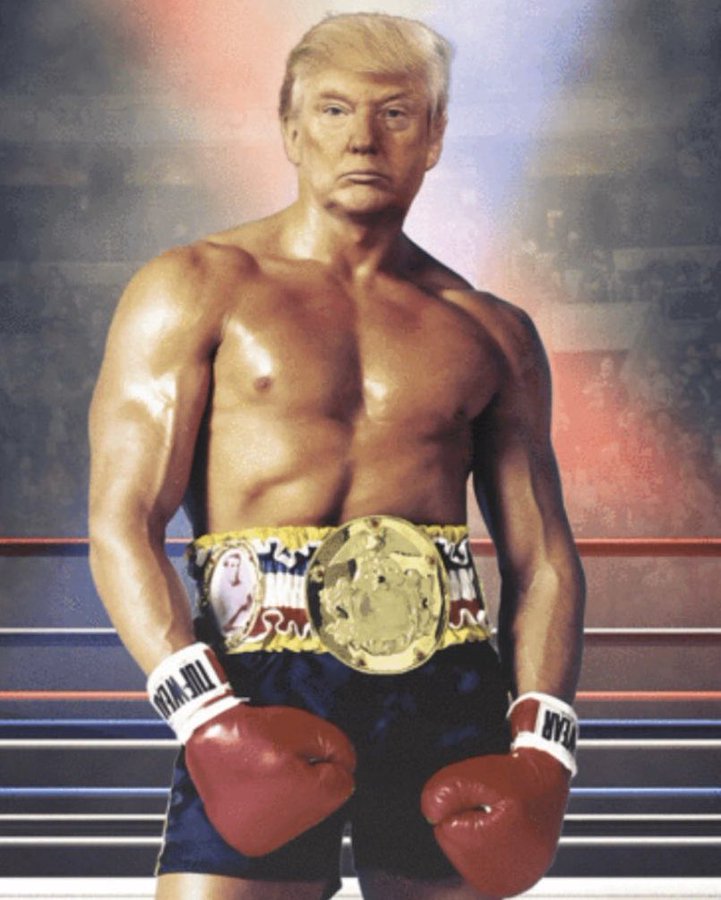
Earlier today President Trump tweeted a humorous meme of Rocky Balboa featuring the superimposed image of President Trump’s head… It’s an apt meme and metaphor.
It’s an obvious meme and given the media’s impeachment drama: “walls closing in”, “it’s the beginning of the end”, “bombshell, Trump is done”, etc. etc. the Rocky metaphor is quite apt and very funny. However, the DC media response is once again stupid; decrying the image as “doctored” and launching actual investigations to get to the bottom of it.
The Washington Post
✔@washingtonpost
Trump tweets doctored photo of his head on Sylvester Stallone’s body, unclear why https://wapo.st/2OnTxzp
Impeachment inquiry live updates: White House faces Sunday deadline on participating in Judiciary…
The panel, led by Rep. Jerrold Nadler (D-N.Y.) will weigh whether to draft articles of impeachment against President Trump based on his conduct toward Ukraine.
Once again the knuckleheads in the DC bubble media encapsulate why we roll our eyes and nod in understanding the reason these same media dolts are relegated to soundbite Chopper Pressers on the lawn.
More signs the U.S. economy is very strong show up today as several key economic indicators defy prior economist predictions. Staring with a significant upward revision by the Bureau of Economic Analysis for the third quarter GDP growth from 1.9% to 2.1%:
The revision to GDP reflected upward revisions to inventory investment, business investment, and consumer spending.
The increase in consumer spending reflected increases in both goods (notably recreational goods and vehicles as well as food and beverages) and in services (led by housing and utilities as well as food services). (link)
Additionally, the commerce department released data showing U.S. core capital goods orders increased 1.2% in November, the largest gain since January; and more data on home sales shows a whopping 31.6% increase year-over-year.
U.S. consumers and home buyers are benefiting from low inflation and significant blue collar wage gains that are an outcome of a growing economy and a very strong jobs market. The most significant wage growth is in non-supervisory positions. The economic strength is broad-based and the U.S. middle-class is confident.
U.S. core capital goods orders post biggest gain in nine months
New orders for key U.S.-made capital goods increased by the most in nine months in October and shipments rebounded, suggesting some stabilization in business investment after it contracted for two…
Well, well, well…. FOX Business’ Maria Bartiromo announced this morning that her sources are saying a USMCA vote is possible next week. This DC source reporting would align with our CTH spidey senses from the visible DC trade twitches.
I have created this site to help people have fun in the kitchen. I write about enjoying life both in and out of my kitchen. Life is short! Make the most of it and enjoy!
This is a library of News Events not reported by the Main Stream Media documenting & connecting the dots on How the Obama Marxist Liberal agenda is destroying America




 MOMENTS AGO