What Will our Collective Future Look Like in the Year 2050? Part One, the Background


The picture below is a good visual example of what those that want to rule us i.e. Klaus Schwab, Bill Gates, George Soros, Barack Obama and yes even Anthony Fauci would like it to be. I do not, for one second, think this is an exaggeration.  

Obviously, this is not a picture that any one that is not a multi billionaire would want to experience but there is one person on the planet that demands that this is what our future will be. That person is Klaus Schwab the creator of the World Economic Form (WEF). So what is the WEF? The WEF is an international non-government organization (NGO) founded by Klaus Schwab on January 24, 1971and located in Switzerland. The stated goal is to improving the status of the entire world. This is accomplished by training potential Global leaders on how best to rule the world and conducting an annual meeting in Davos Switzerland.  

Schwab’s goal is to have every country on the planet be a member of the United Nations (UN) and relinquish their sovereignty to the UN. The UN would then after this was achieved be run by the unelected people that Schwab has trained in his Young Leaders program; comprising tens of thousands of people today. Most of the international corporations and governments are now run by these Schwab people.  

His programs can be found in two books he wrote; The Fourth Industrial Revolution published in 2016 and COVID-19: The Great Reset published in 2020. The core of Schwab’s vision is a modification of the theories of Karl Marx undated to the modern world. The basic essence of Schwab’s vision can be derived from the work of Patrick M. Woods in his book Technocracy Rising The Trojan House of Global Transformation published in 2015. 

Schwab is not an uneducated man; and and has multiple degrees. And like many men of his intellect he dreams of creating the perfect world, written about for the first time by Thomas More in his book Utopia published in 1516. Since then others have tried to find the way to accomplish the lofty goal with that last serious attempt by Karl Marx in his works Capital Volumes I, II and III resulting in the deaths of hundreds of millions in the twentieth century mostly in Russia and China which all failed.

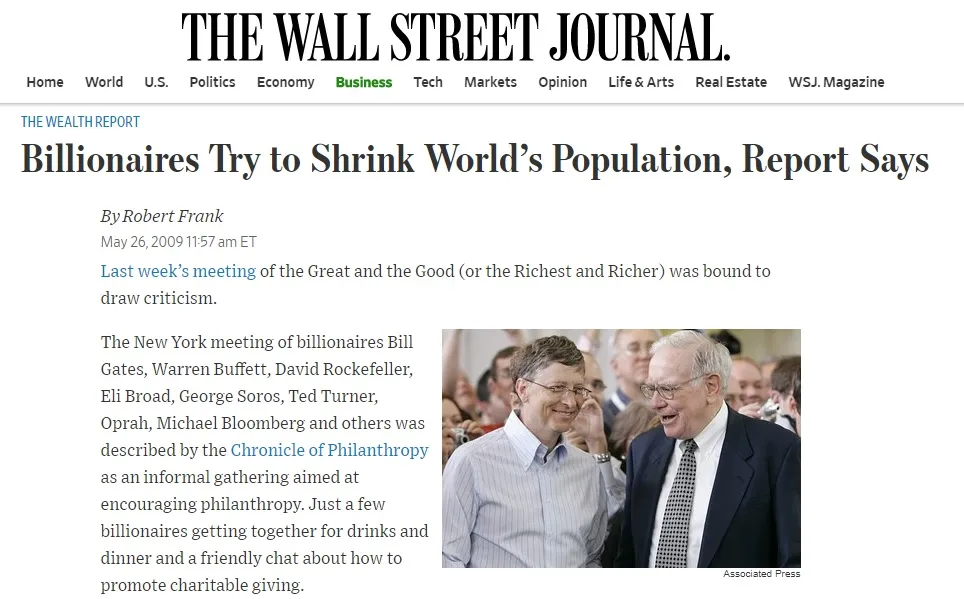
The current attempt by Schwab in creating this elusive goal of a Utopia is The Great Reset and Build Back Better program; which has been adopted by most of the countries in Western Civilization. The Great Reset was started with the planned introduction of the COVID-19 pandemic. Yes I did say planned and the two men responsible for it were Bill Gates and Anthony Fauci. The prove of it in all the initial planning for a pandemic and the work of Fauci in creating the virus (COVID-19) as identified in the book publish by Robert F. Kennedy Jr. The Real Anthony Fauci. Gates, from a family of hard core Eugenic promoters, masterminded his reduction of the world population in the late 1990’s or early 2000’s by adopting the Global Warming narrative developed by the Environmental crowd of Marxists after they took over the movement from the real scientists looking at the real environmental issues.  

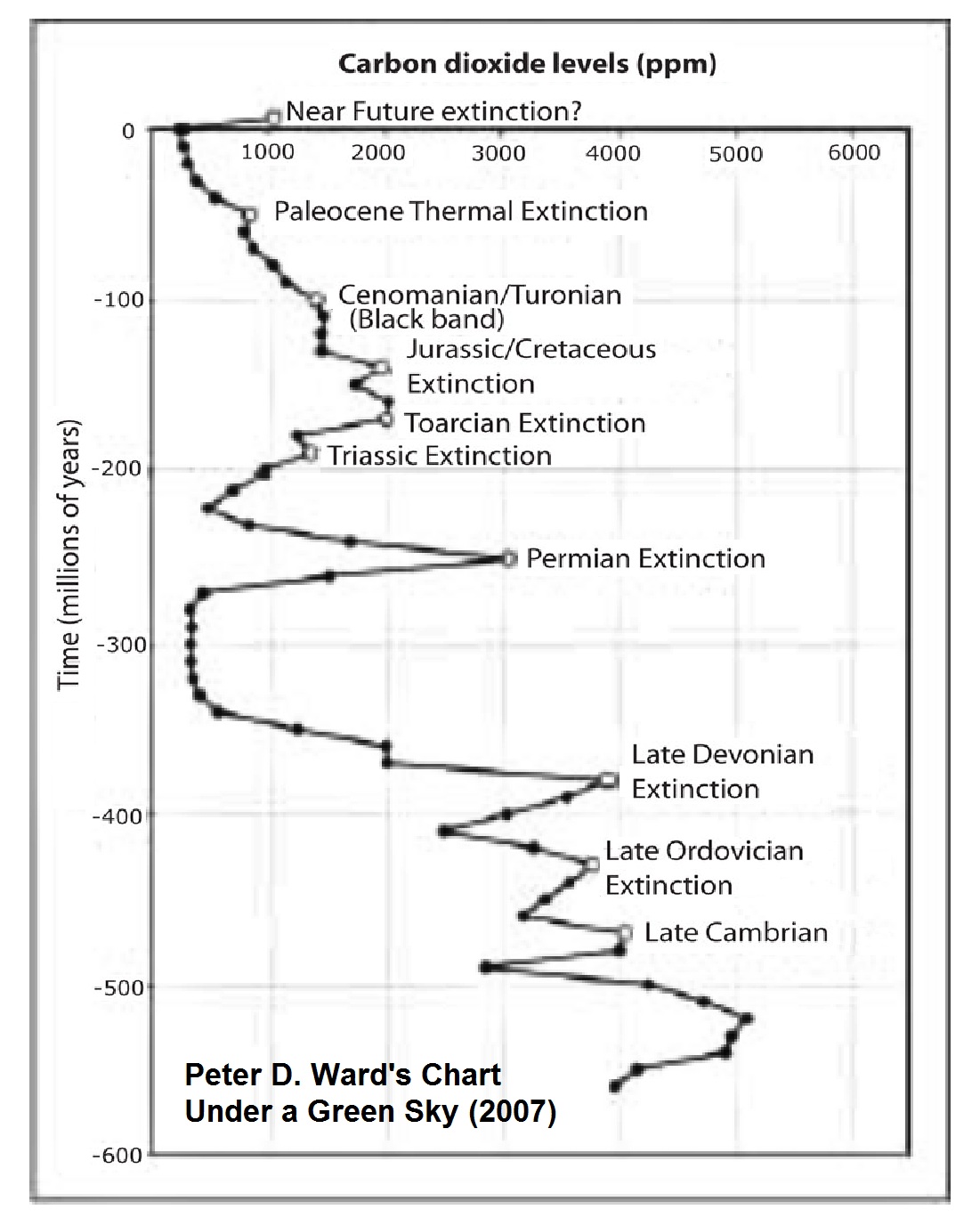
Patrick Moore one of the founders of Green Peace was drummed out when that changed accrued  and is the only one left from that movement that truly understands what happened and how the Climate change narrative has no basis in fact as you can read about in his book Confessions of a Greenpeace Dropout. There is absolutely no truth in the current narrative that Carbon dioxide is a Clear and Present Danger to the world and must be eliminated. There is actually solid scientific evidence that Carbon dioxide is “not” a Clear and Present Danger to us or the planet.
  What Schwab and Gates have done is combine the views of both of men into one master program that will be discussed in Part Two.

Mining Expansion for Green Energy


Armstrong Economics Blog/Uncategorized Re-Posted Feb 15, 2023 by Martin Armstrong

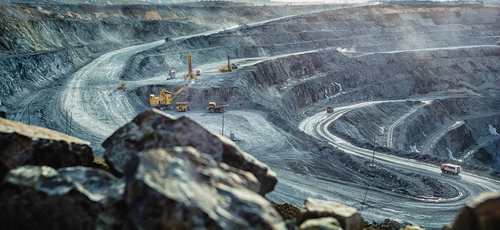
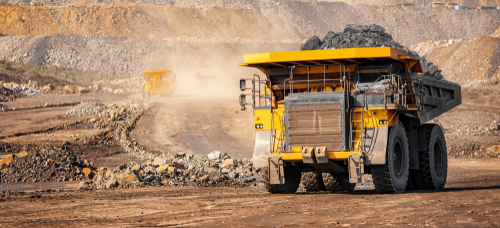
MiningWatch Canada is estimating that 3 billion tons of mined metals and minerals will be needed to power the energy transition. All of this nonsense for climate change means that mining for minerals will escalate dramatically. There will be an incredible expansion in the mining industry for six critical minerals: lithium, graphite, copper, cobalt, nickel, and rare earth minerals. What is really just insane is that even if this green energy were to last, over the next 30 years, we will have to increase the production of these minerals consuming more that all the past generations combined.  Our What-If models project copper at 9-10 by 2028 shutting down fossil fuels.

Shortage of Bread Contributed to French Revolution


Armstrong Economics Blog/Agriculture Re-Posted Jan 27, 2023 by Martin Armstrong

Food shortages have historically contributed to revolutions more so than just international war. Poor grain harvests led to riots as far back as 1529 in the French city of Lyon. During the French Petite Rebeyne of 1436. (Great Rebellion), sparked by the high price of wheat, thousands looted and destroyed the houses of rich citizens, eventually spilling the grain from the municipal granary onto the streets. Back then, it was to go get the rich.

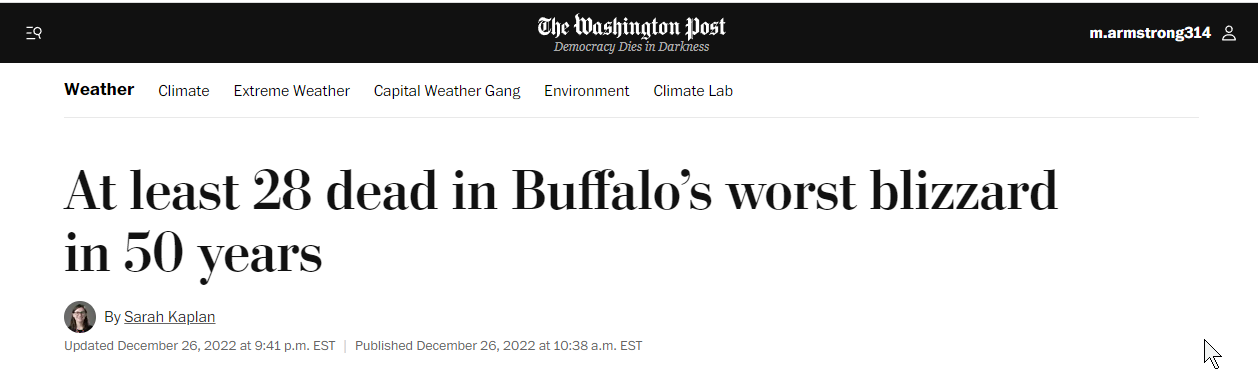
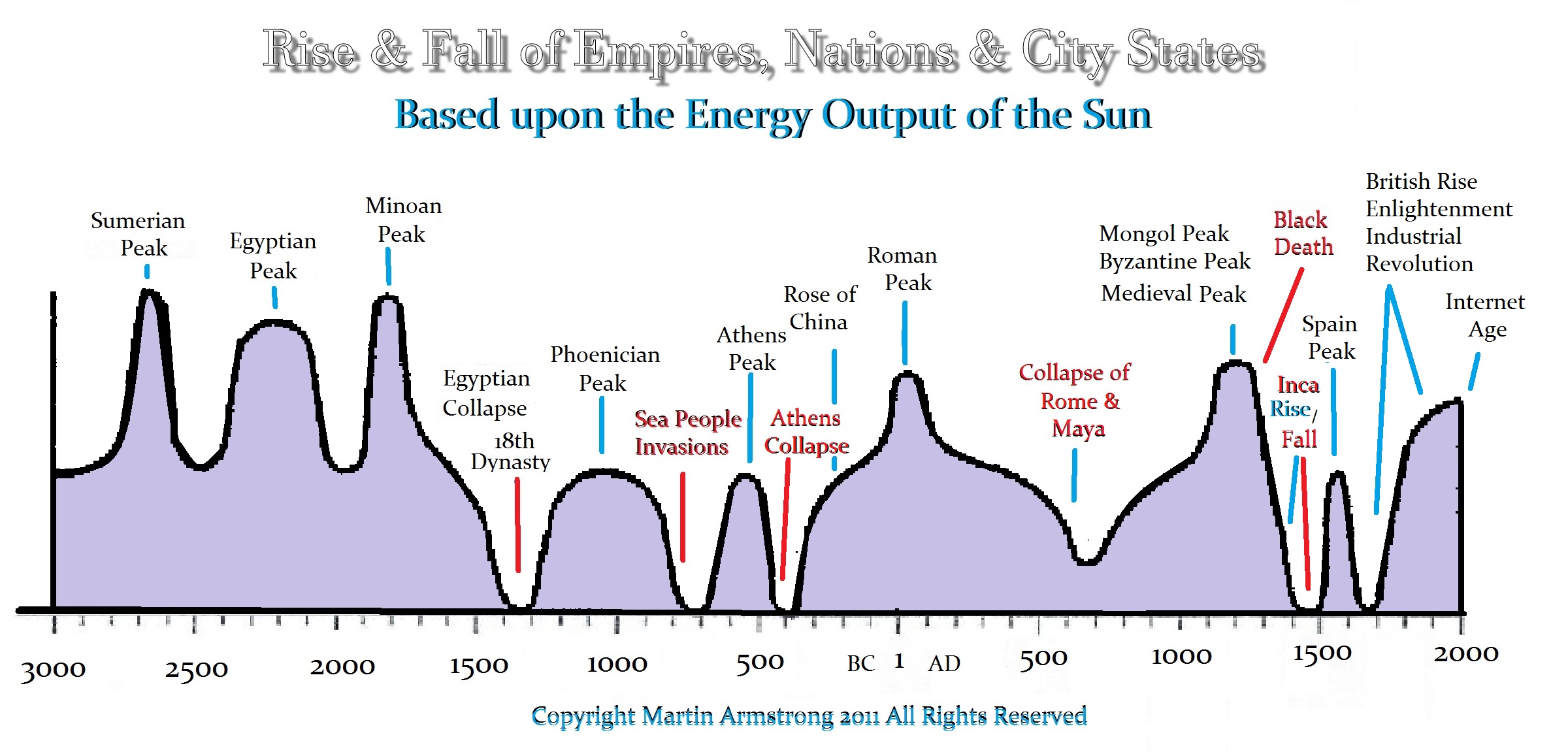
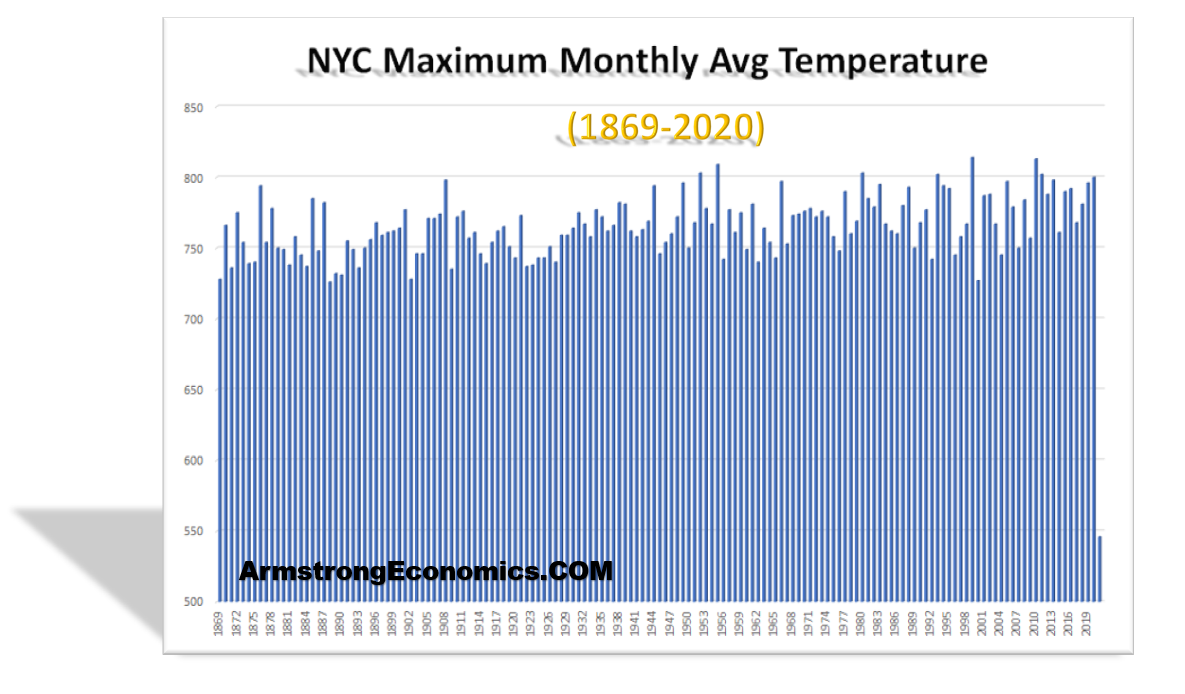
There was a climate change cycle at work and today’s climate zealots ignore their history altogether for it did not involve fossil fuels. The climate got worse at the bottom of the Mini Ice Age which was about 1650. It really did not warm up substantially until the mid-1800s. During the 18th century, the climate resulted in very poor crops. Since the 1760s, the king had been counseled by Physiocrats, who were a group of economists that believed that the wealth of nations was derived solely from the value of land and thereby agricultural products should be highly priced. This is why Adam Smith wrote his Wealth of Nations as a retort to the Physiocrats. It was their theory that justified imperialism – the quest to conquer more land for wealth; the days of empire-building.

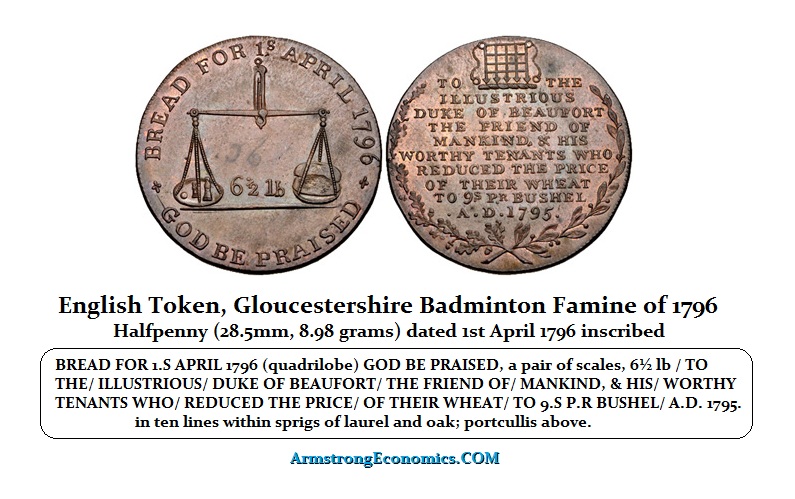
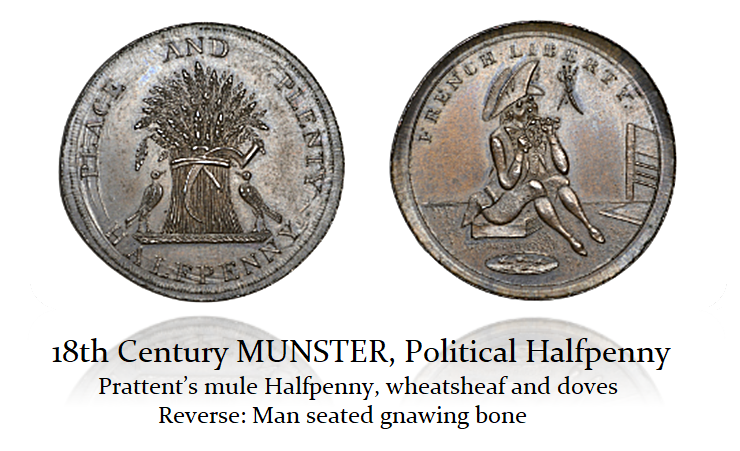
The King of France had listened to the Physiocrats who counseled him to intermittently deregulate the domestic grain trade and introduce a form of free trade. That did not go very well for there was a shortage of grain and this only led to a bidding war – hence the high price of wheat. We even see English political tokens of the era campaigning about the high price of grain and the shortage of food to where a man is gnawing on a bone.

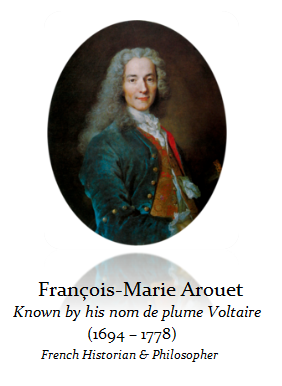
Voltaire once remarked that Parisians required only “the comic opera and white bread.” Indeed, bread has also played a very critical role in French history that is overlooked. The French Revolution that began with the storming of the Bastille on July 14th, 1789 was not just looking for guns, but also grains to make bread.

The price of bread and the shortages played a very significant role during the revolution. We must understand Marie Antoinette’s supposed quote upon hearing that her subjects had no bread: “Let them eat cake!” which was just propaganda at the time. The “cake” was not the cake as we know it today, but the crust was still left in the pan after taking the bread out. This shows the magnitude that the shortage of bread played in the revolution.

In late April and May of 1775, the food shortages and high prices of grain ignited an explosion of such popular anger in the surrounding regions of Paris. There were more than 300 riots and looking for grain over just three weeks (3.14 weeks). The historians dubbed this the Flour War. The people even stormed the place at Versailles before the riots spread into Paris and outward into the countryside.

The food shortage became so acute during the 1780s that it was exacerbated by the influx of immigration to France during that period. It was a period of changing social values where we heard similar cries for equality. Eventually, this became one of the virtues on which the French Republic was founded. Most importantly, the French Constitution of 1791 explicitly stipulated a right to freedom of movement. It was mostly perceived to be a food shortage and the reason was the greedy rich. Thus, a huge rise in population was also contributed in part by immigration whereas it reached around 5-6 million more people in France in 1789 than in 1720.

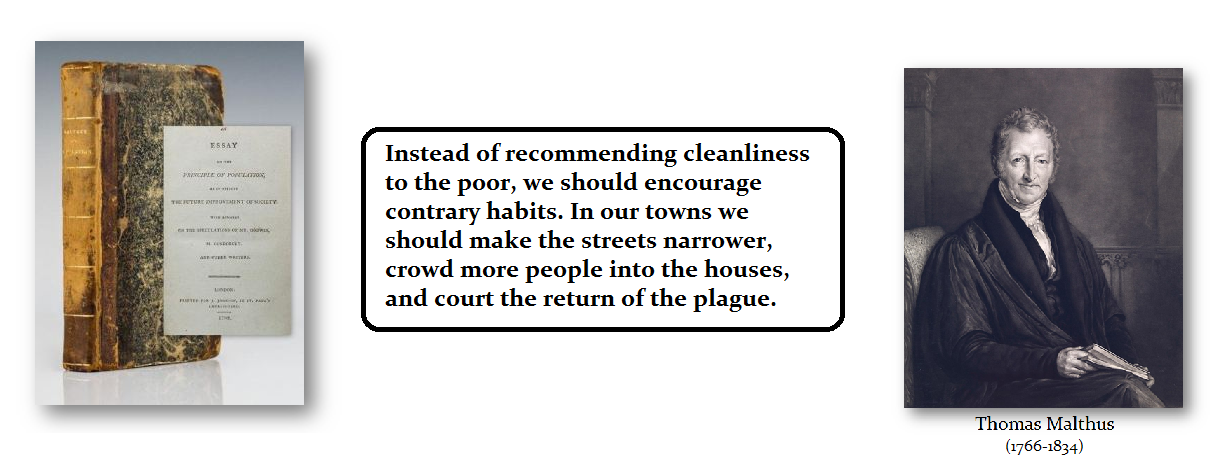
Against this backdrop, we have the publication by Thomas Malthus (1766-1834) An Essay on the Principle of Population was first published anonymously in 1798. He theorized that the population would outgrow the ability to produce food. We can see how his thinking formed because of the Mini Ice Age that bottomed in 1650. All of this was because of climate change which instigated food shortages. Therefore, it was commonly accepted that without a corresponding increase in native grain production, there would be a serious crisis.

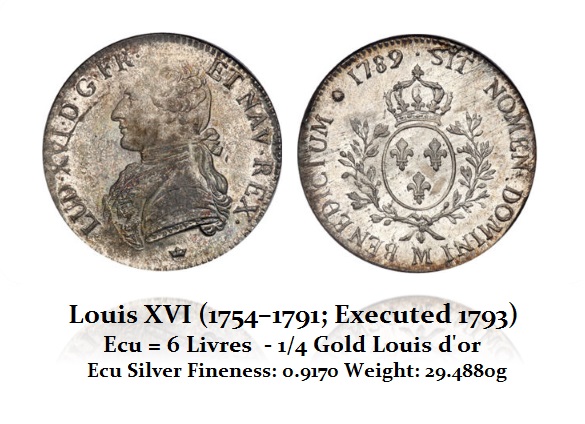
The refusal on the part of most of the French to eat anything but a cereal-based diet was another major issue. Bread likely accounted for 60-80 percent of the budget of a wage-earner’s family at that point in time. Consequently, even a small rise in grain prices could spark political tensions. Because this was such an issue, and probably the major cause of the French Revolution among the majority, Finance Minister Jacques Necker (1732–1804) claimed that, to show solidarity with the people, King Louis XVI was eating the lower-class maslin bread. Maslin bread is from a mix of wheat and rye, rather than the elite manchet, white bread that is achieved by sifting wholemeal flour to remove the wheatgerm and bran.

That solidarity was seen as propaganda and the instigators made up the Marie Antoinette quote: Let them eat cake. . Then there was a plot drawn up at Passy in 1789 that fomented the rebellion against the crown shortly before the people stormed the Bastille. It declared “do everything in our power to ensure that the lack of bread is total, so that the bourgeoisie are forced to take up arms.” 

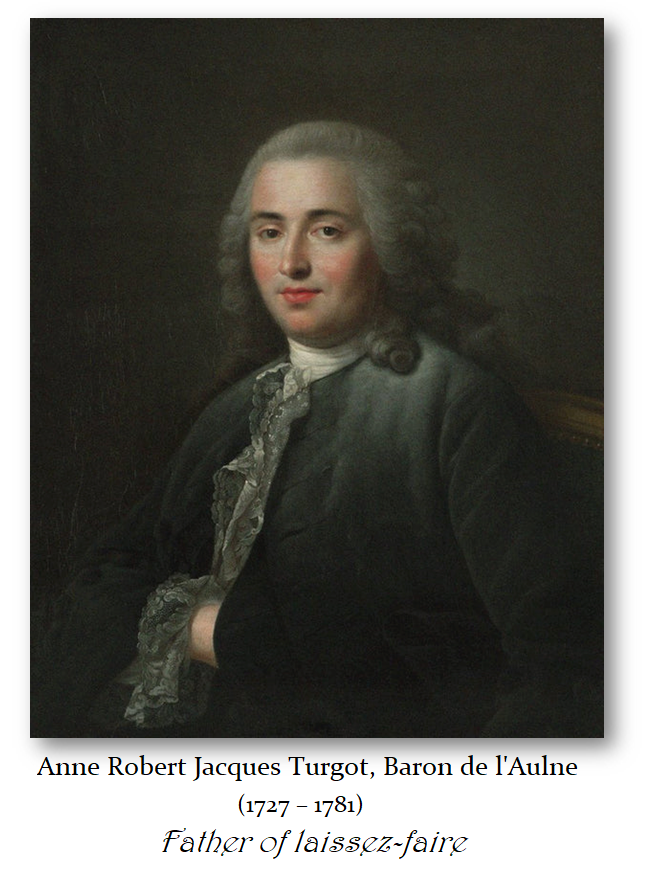
It was also at this time when Anne Robert Jacques Turgot (1727-1781), Baron de l’Aulne, was a French economist and statesman. He was originally considered a physiocrat, but he kept an open mind and became the first economist to have recognized the law of diminishing marginal returns in agriculture. He became the father of economic liberalism which we call today laissez-faire for he put it into action. He saw the overregulation of grain production was behind also contributing to the food shortages. He once said: “Ne vous mêlez pas du pain”—Do not meddle with bread.

The French Revolution overthrew the monarchy and they began beheading anyone who supported the Monarchy and confiscated their wealth as well as the land belonging to the Catholic Church.  Nevertheless, the revolution did not end French anxiety over bread. On August 29th, 1789, only two days after completing the Declaration of the Rights of Man and of the Citizen, the Constituent Assembly completely deregulated domestic grain markets. The move raised fears about speculation, hoarding, and exportation.

Then on October 21st, 1789, a baker, Denis François, was accused of hiding loaves from sale as part of a conspiracy to deprive the people of bread. Despite a hearing which proved him innocent, the crowd dragged François to the Place de Grève, hanged and decapitated him, and made his pregnant wife kiss his bloodied lips. Immediately thereafter, the National Constituent Assembly instituted martial law. At first sight, this act appears as a callous lynching by the mob, yet it led to social sanctions against the general public. The deputies decided to meet popular violence with force.

So, food has often been a MAJOR factor in revolutions. We are entering a cold period. Ukraine has been the breadbasket for Europe. Escalating this war will also lead to accelerating the food shortages post-2024. It is interesting how we learn nothing from history. Wars are instigated by political leaders while revolutions are instigated by the people.

Ice Age – the Come Rapidly


Armstrong Economics Blog/Climate Re-Posted Dec 29, 2022 by Martin Armstrong

Spread the love

COMMENT: Marty you may remember this.

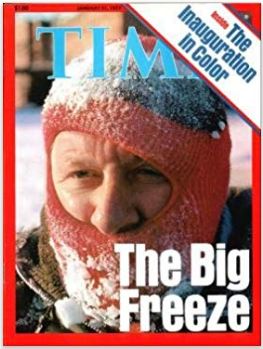
When this hit upper midwest I was in middle school in San Diego. I was in the library every morning before school following this, Voyager and Viking.

I watched another rendition of this video on youtube and it cut out the portion where the chief scientist at Lamont-Doherty (Columbia) stated ice-age conditions can return inside of 10-20 years time at any time (or something like that).

Regards

RD, San Marcos Ca

REPLY: With Ice Ages, we find a similar pattern of cyclical pattern formations as we do in markets. About 2.6 million years ago, that is when the Earth entered the Pleistocene period. This was marked by an interesting cyclical pattern whereby there were these deep ice ages that came at regular 43,000-year intervals. Then about 1 million years ago, the Earth entered what is known as the Mid-Pleistocene transition period. It was here where these ice age cycles suddenly expanded from 43,000-year intervals to nearly 100,000-year cycles. The last one was about 11,000 years ago. This is not referring to the Mini-Ice Age of the 1600s.

What we do know is that there were tiny changes in Earth’s orbit. These events are known as Milankovitch cycles. They are believed to have driven the planet in and out of these ice ages. However, it is also now assumed that these Milankovitch cycles have not correlated to the sudden jump in nearly doubling the Ice Age cycle length.

Preliminary data from Antarctic Ice Core saw a transition from glacial to interglacial conditions about 430,000 years ago which is known as (Termination V). This transition into the present interglacial period needs to be looked at from intensity using our Energy Models. Scientists look at the magnitude of change in temperatures and greenhouse gases. What seems to be overlooked is the cycle of these warming periods. The interglacial stage following Termination V was quite long running the course of about 28,000 years compared to the 12,000 years period so far in the present interglacial period.

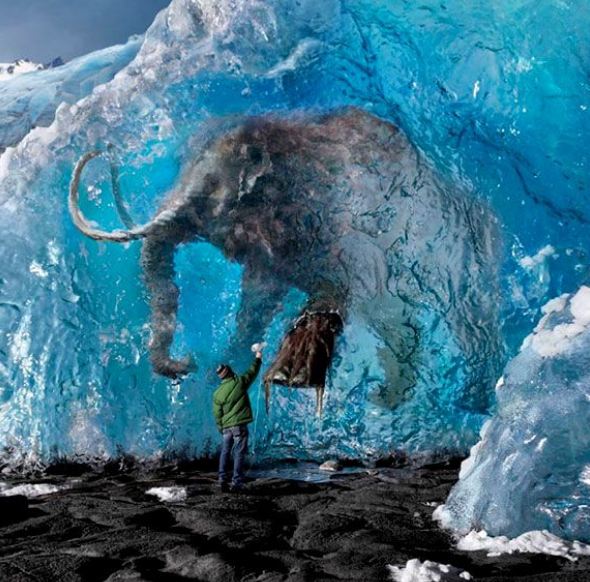
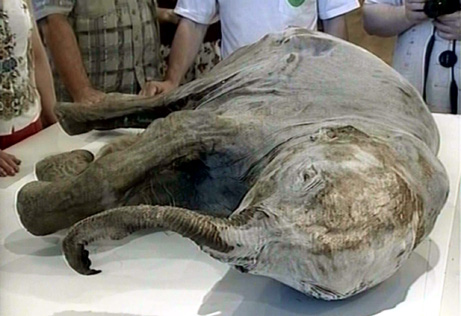
What this is warning is that an Ice Age is not entirely out of the question post-2032. I am awaiting access to the data from the 2.7 million-year core and then run it through Socrates to see if we are indeed going to see a 12,000-year interval or a doubling effect. What does appear to be likely, which explains the frozen animals in Siberia, is that we can see an Ice Age hit within less than 10 years.