Posted originally on May 10, 2025 by Martin Armstrong
QUESTION: Mr. Armstrong, a friend of mine attends your conferences and said you’re the only person who understands the economy because you have international experience and have met with many central banks around the world. He said inflation is no longer the simplistic expansion of the money supply, and anyone who said that is still trapped by Keynesian economics. If inflation is not the quantity of money anymore, then can you explain what inflation is all about? Why have you not appeared on Tucker Carlson to explain your theory?
I appreciate your patience.
Rob
ANSWER: The people who put out this theory have ZERO international experience.
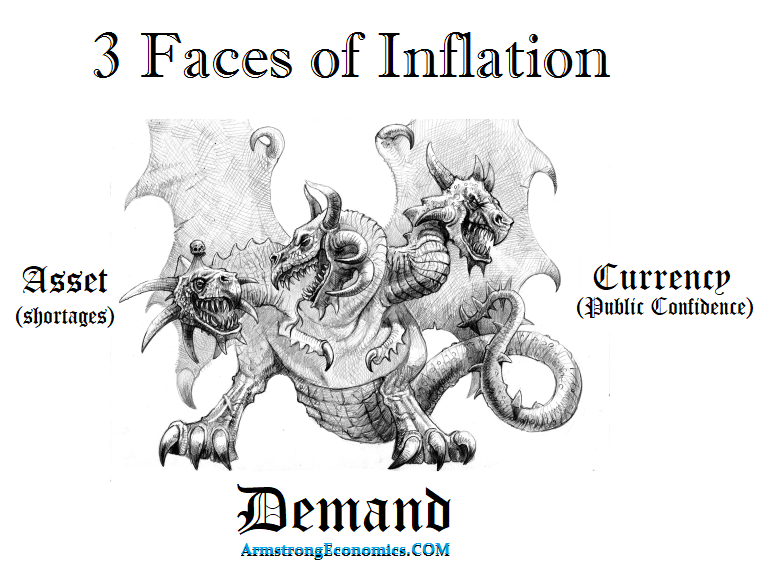
CURRENCY INFLATION:
Currency inflation can take place in primarily two ways. First, the currency declines in value, and this attracts foreign capital to rush in for bargains. I did that myself when the British pound fell to $1.03 in 1985. It was like the country on sale at Harrods.
Secondly, let’s say you have a building in it, and I buy it for $10 million. The money supply is not altered. However, let’s say I’m British and I buy your building in the United States. I have to bring British pounds, convert them into dollars, and then pay you your $10 million. I have just increased the domestic money supply and assets, and the central bank had no impact.
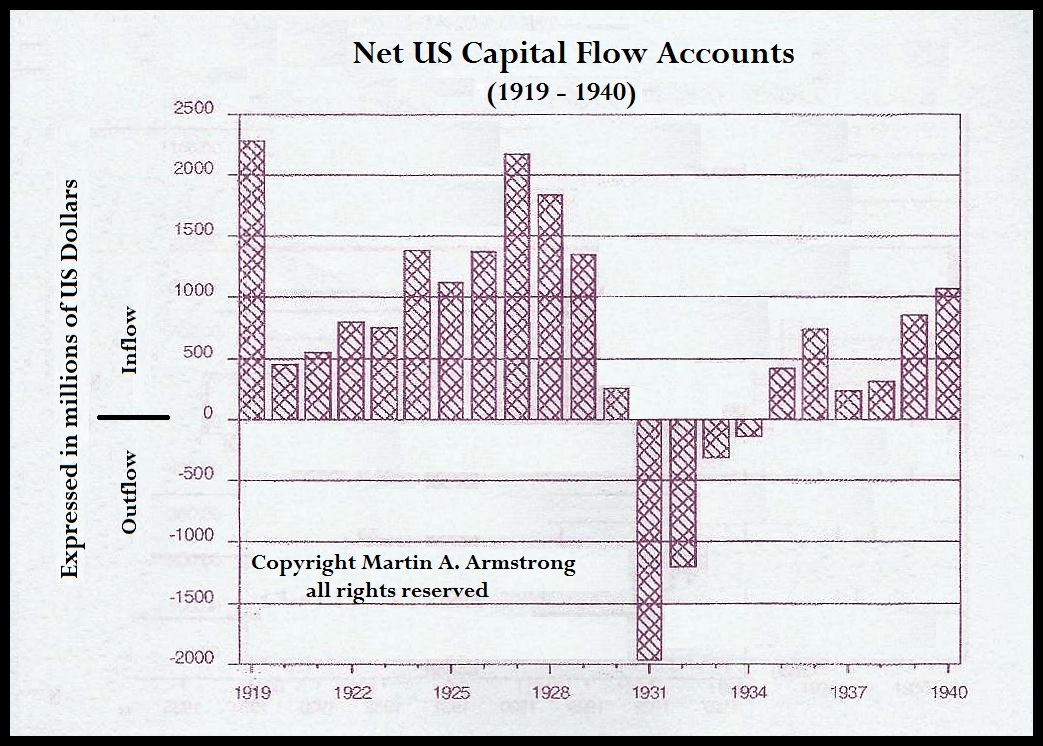
Here are the capital flows during the Great Depression. You see a massive exit of capital in 1931, which was caused by the Sovereign Debt Defaults of 1931, as all of Europe, including Britain and the British Commonwealth, such as Canada, suspended their debt payments. That is what took down 9,000 banks, not tariffs.
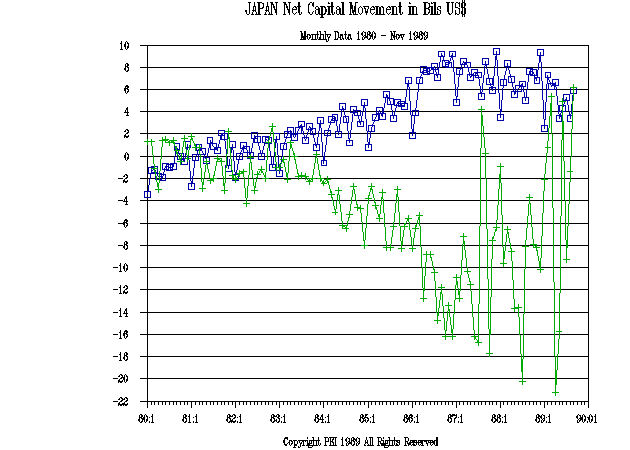
Here are the capital flows for the 1987 Crash, which was also caused by capital outflows. Even looking at the 1989 Japanese Bubble, what made it similar to the 1929 bubble in the USA? Capital inflows and concentration from around the world cause the assets to rise, and money pours into the economy. Currently, Canada has seen a 300% rise in real estate, largely due to foreign capital flowing into the country.
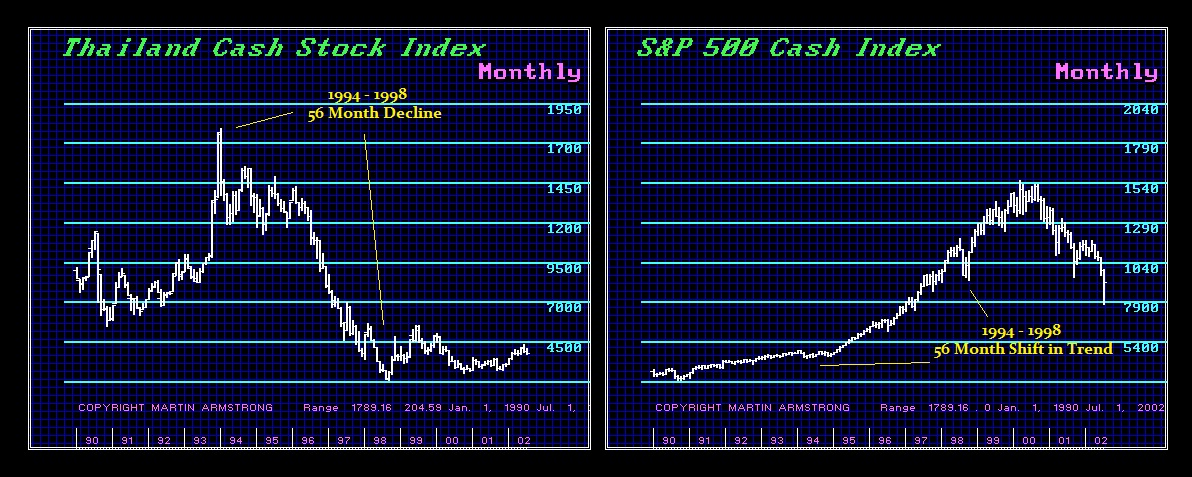
After the 1989 Bubble in Japan, capital then shifted to Southeast Asia. Thailand’s assets soared, both in real estate and stocks. Then it crashed in 1997, as capital was then expected to be the next hot market in 1999. Here you see Thailand’s peak and the US market rose into July 1998. Thailand then passed real estate legislation, which prohibited foreigners from owning land. Foreigners generally cannot own land outright in Thailand, even since the 1997 Asian Currency Crisis. However, exceptions exist for significant investments (e.g., a 2022 cabinet-approved proposal allowing land purchase with a 40 million baht investment in specified sectors, subject to parliamentary processes). This aims to stimulate the economy rather than restrict access.
Foreigners may own up to 49% of the total unit area in a condominium project, provided the funds are imported from abroad, which increases the money supply. Foreigners can lease property for up to 30 years in the classic British system, with potential renewals, although this does not confer ownership – only the right to use. While setting up a Thai company (majority Thai-owned) to hold land is a common workaround, authorities actively scrutinize such arrangements to prevent misuse.
Recent discussions (2022–2023) focused on easing restrictions for high-value investors rather than imposing bans. Thus, Thailand maintains its historical framework: it restricts land ownership but permits certain property investments under regulated conditions. Always consult legal experts for current, case-specific advice. All of this was a response to the 1997 Asian Crisis caused by capital concentration, and then it moved on to the next hot topic.
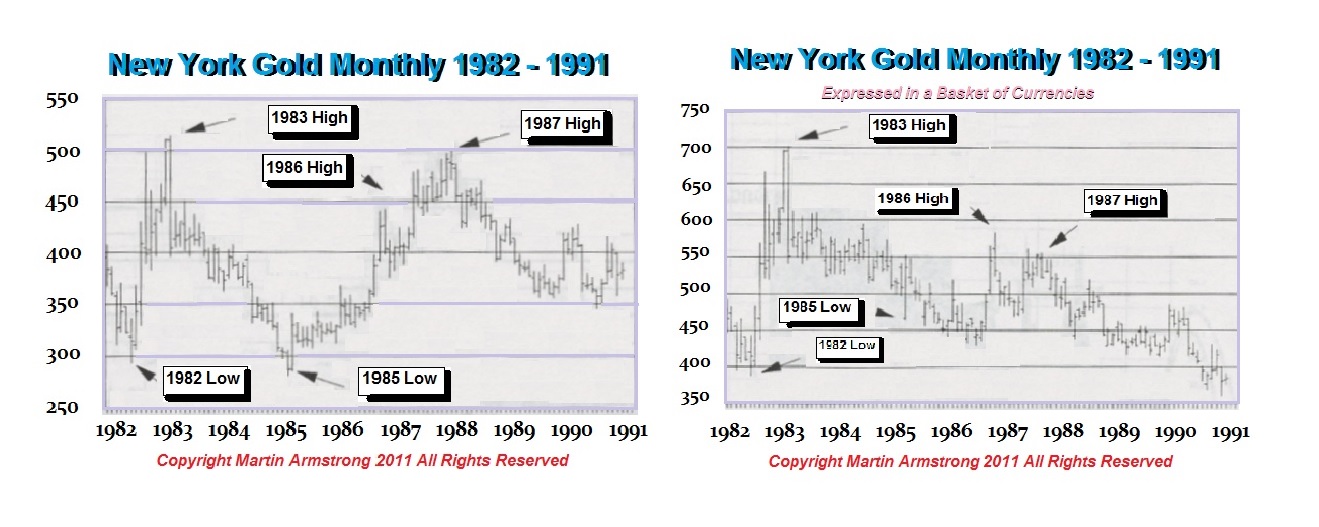
Here, you can see that the price of gold varies by currency, all based on its value. Are you genuinely looking at a chart of gold, or are you only looking at it in relation to the local currency?
DEMAND INFLATION:
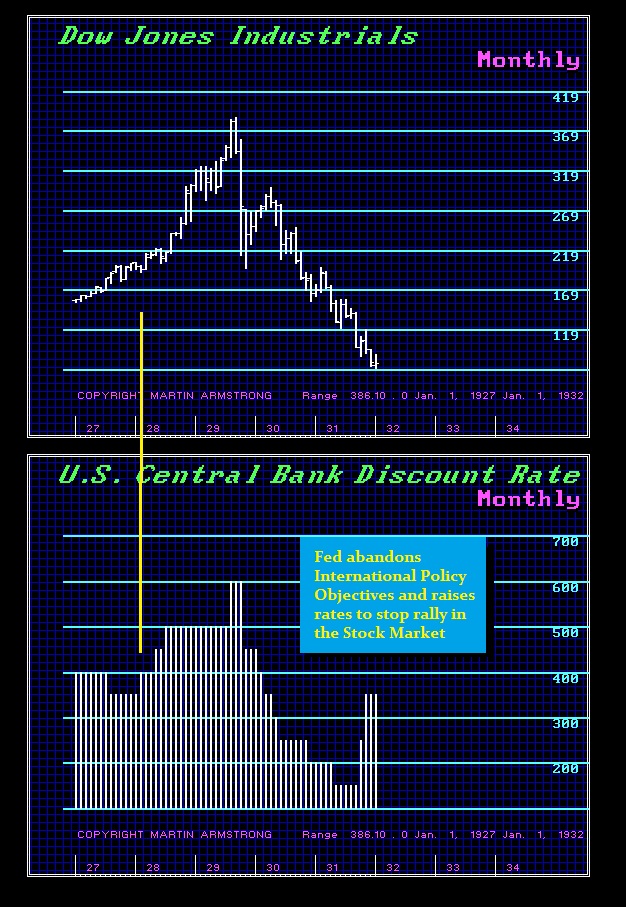
This was Keynes’ misconception, who assumed the bull market up to 1929 was purely driven by domestic demand. He proposed raising interest rates to make borrowing more costly and lowering interest rates to encourage borrowing. The idea was seriously myopic. He did not understand capital flows, and that higher interest rates sometimes attract capital, as was the case when Volcker raised interest rates to insane levels in 1981, which sent the dollar soaring to a record high in 1985.
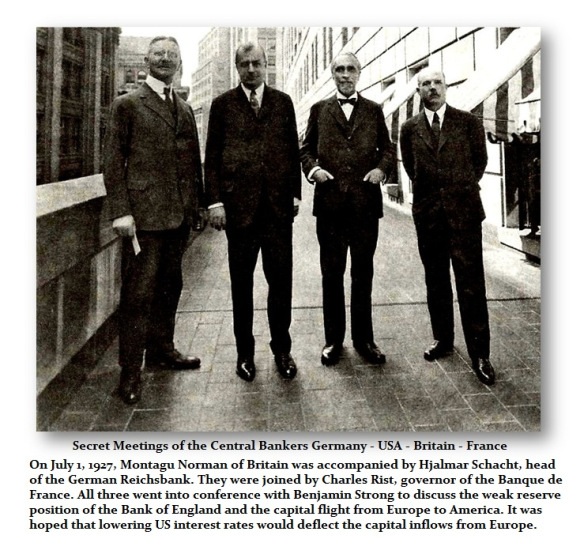
Lowering rates in 1927 to try to deflect the capital inflows back to Europe failed. The Fed raised rates from 3.5% to 6%, and it did not stop the rally in the share market. The Fed then lowered rates from 6% to 1,5% in 1931, and it had no impact on supporting the market. So, again, all we have are failed theories, yet people lacking international experience mouth the same old stuff over and over again because everyone else does.
ASSET INFLATION:
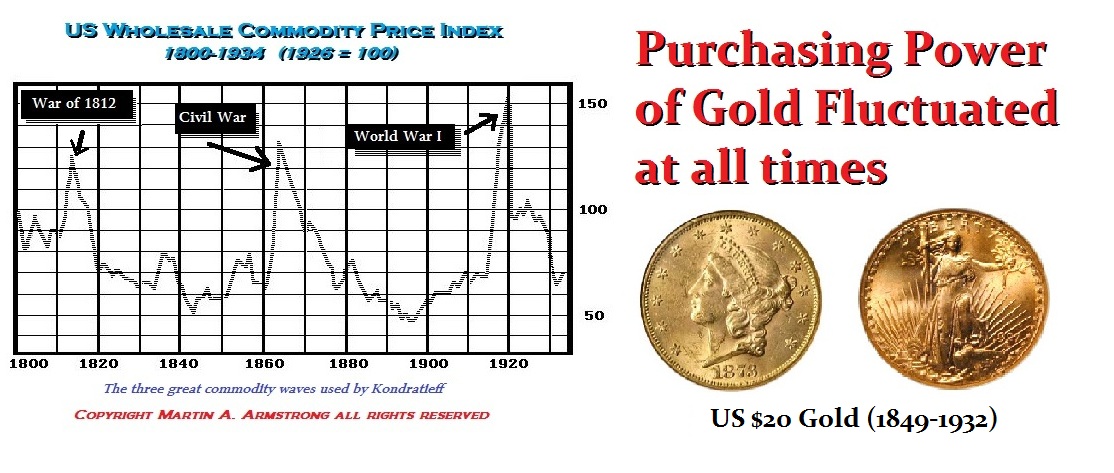
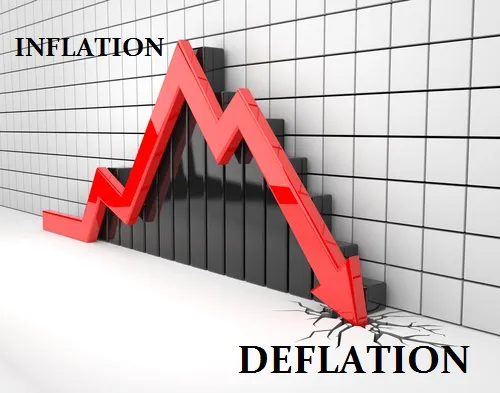
Then you have raw shortages or oversupply. The purchasing value of gold dropped significantly thanks to the 1849 California Gold Rush. During inflation, assets rise in value, and money declines. That took place during the 19th century when a gold coin was money. MONEY has NEVER been of a constant value – NEVER! These people yelling fiat simply do not comprehend that for thousands of years, there has always been a business cycle, and that means money rises and falls in purchasing power, REGARDLESS of whatever it has been. The fiscal irresponsibility of governments is well-documented throughout history, long before the introduction of paper money.
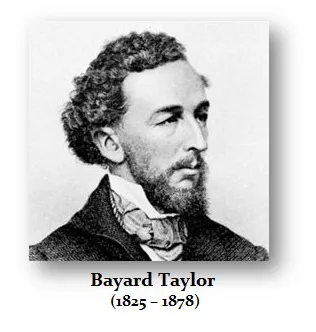
Even under a gold standard, there were periods of inflation and deflation. Read the history of the California Gold Rush. During the 1849 Gold Rush in California, the journalist for the New York Tribune, Bayard Taylor (1825-1878), arrived in San Francisco by ship during the summer of 1849. He was shocked at what he encountered and did not think that anyone would even believe what he was going to write. His dispatches about the gold rush economy in California stunned many and helped to create the 1849 Gold Rush.
The average wage for a laborer in New York was about one or two dollars a day. In California, individual hotel rooms were rented to professional gamblers for upwards of $10,000 a month, which is the equivalent of about $300,000 today. The degree of inflation in terms of gold was astounding and lacks comparison in modern times. There was so much gold that the value of goods rose even though they did not in New York. The inflation phenomenon was local – akin to the Tulip Bubble.
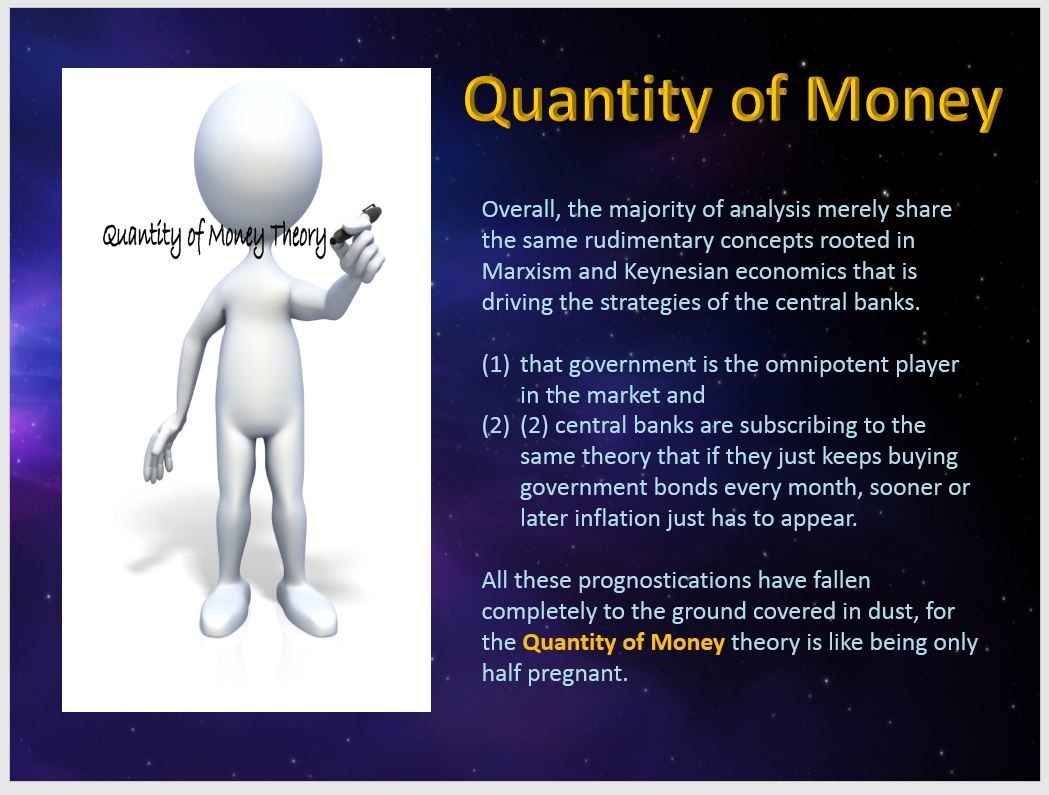
There is a lot more to this than simply the quantity of money. In case you haven’t noticed, some Marxist economists who propose MMT (Modern Monetary Theory) claim that since the U.S. borrows in its own currency, it can print dollars to cover its obligations and can’t go broke. The theory has won converts among freshman Democrats, like Alexandria Ocasio-Cortez, as a way to finance social policies like the Green New Deal and Medicare for All. They pointed to the vast Quantitative Easing (QE) in 2008-2009, and inflation was not created. The European Central Bank expanded the money supply and lowered interest rates to negative in 2014, despite no inflation.
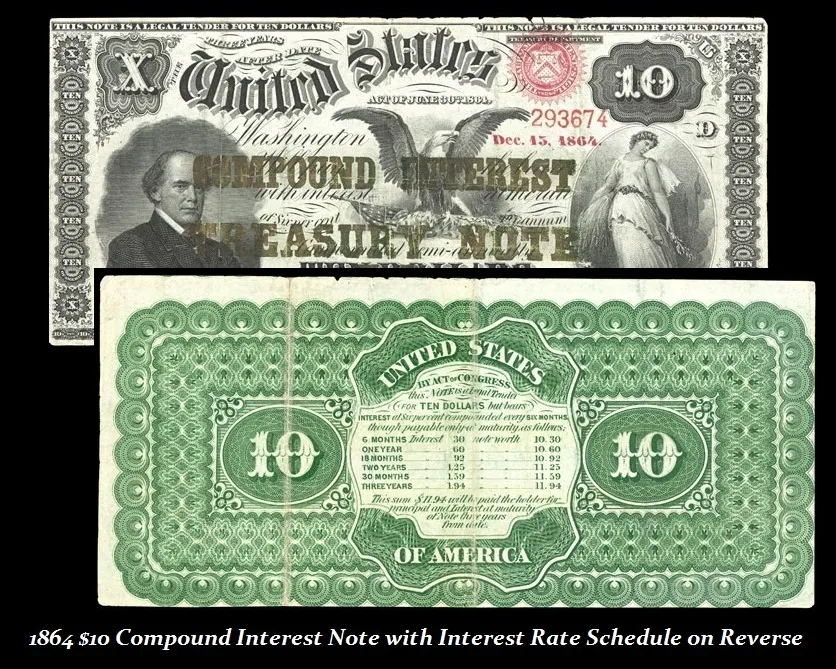
Quantitative Easing (QE) does not increase the Supply of Money—it is only a maturity swap. Today’s total money supply includes debt, unlike during the pre-19th century. This has erroneously given rise to Modern Monetary Theory, for they pointed to QE and said there was no inflation, so that we could print without repercussions. It was merely a swap of maturities when you finally realized that debt is now money that earns interest, as paper money was introduced during the Civil War.
When paper money stopped paying interest, the term “Greenback” emerged, meaning there was no interest payment schedule on the reverse, just green ink. Paper money began as essentially debt or bonds that circulated as a form of cash. Today, people blame the central bank, but remain clueless that the money created by the central bank is only a tiny fraction of the money supply. Because debt issued after 1971 is now legal to use as collateral, posting T-Bills to trade futures, the $34 trillion debt is part of the money supply that dwarfs the central bank. Shutting down the Federal Reserve will make things worse. The real source of inflation under this theory of the Quantity Theory of Inflation is the debt itself.
Moreover, we pay interest, and that no longer stimulates the economy because much of it is held offshore. China has 10% of the US debt, which accounts for 10% of the $1 trillion in interest payments that flow to China, not the domestic economy.
If your Definition of Money is Wrong, So is Everything Else that Follows
As far as Tucker is concerned, I haven’t been invited, and I’m not sure he would want someone who doesn’t agree with 99% of the analysts on this subject.
And by the way, this is not theory – it’s plain experience and observation.
Posted originally on May 1, 2025 by Martin Armstrong
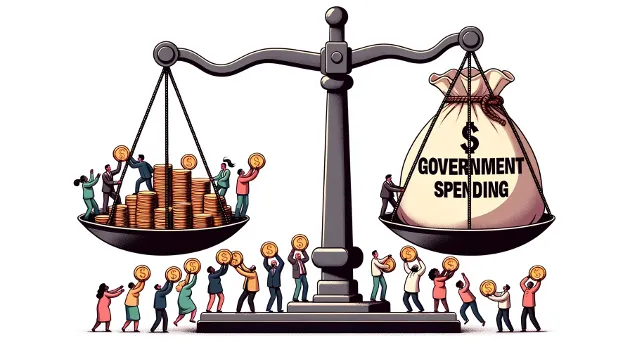
Washington state is multiplying taxes for mega corporations in a move to cover its widening budget deficit. The state is expected to face a $12 to $16 billion shortfall over the next four years, according to the Office of Financial Management. The deficit should come as no surprise as state spending has ballooned by 40% in the past four years alone.
Under HB 2081, the state’s Business and Occupation (B&O) tax will be revised to raise the “Advanced Computing Surcharge.” Corporations earning over $25 billion globally will see their tax rate spike from 1.22% to 7.5%, with the maximum payment expanding from $9 million to $75 million. More specifically, the state is looking to shake down big tech companies like Microsoft and Amazon to compensate for its excessive spending.
Companies earning over $5 million annually will face a tax hike from 1.75% to 2.1%. The state has also implemented a temporary 0.5% B&O surcharge from January 1, 20216 to December 31, 2030, for companies earning over $250 million in Washington taxable income.
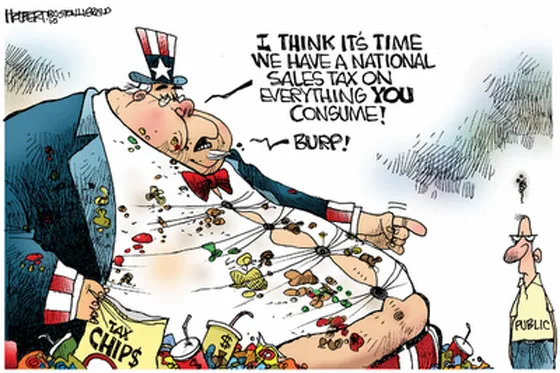
The state requires more revenue, and targeting corporations is merely the beginning. Senate Bill 5814 will raise the state sales tax from 6.5% to 10.6%. Digital automated services were previously exempt from this tax, but beginning in October, tech companies will be required to pay. The state hopes to collect $2.9 billion from this measure alone.
Yet, the state still requires more revenue. Senate Bill 5813 will restructure the capital gains tax to create a new top tier for gains over $1 million. In addition to the 7% base tax, the state has implemented an additional 2.9% surtax. The state expects to generate $321.6 million from this additional fee.
Per usual, fees will be passed on to the consumers.
Naturally, the decision-makers are failing to address the problem—excessive spending. Tax revenue has already increased by 34% or $18 billion since 2019. Politicians passed a number of social programs without proper funding. The child care subsidy expansion passed in 2021, but it took four years to amass the $300 million required. State-funded pre-K expansion also passed in 2021, but the $214 million has not been fully paid. Washington’s tort liability payout account has been operating at a deficit for multiple years, requiring $1 billion to simply move out of the red. What about the Rainy-Day Fund? Democrats used the $2.3 billion revenue to pay for more social programs.
Washington implemented a freeze on non-essential spending in December. Some believe that the state needs to implement a wealth tax, as Democrat lawmakers seek every option to fix the deficit that does not include spending cuts.
Washington managed to spiral into a massive debt in a short amount of time. Governor Inslee approved of incorporating an additional $2 billion into the $69.8 billion operating budget back in March. Eight months later, the Office of Financial Management declared that there was a serious problem and the state could face a deficit of $10 to $12 billion, revising that figure to $16 billion a month later.
The state was operating at a $14 billion surplus three years ago before politicians ramped up their spending by 40%. State taxes have increased by 99% in the past decade, while state spending has risen by 114% in the same time period. It is always the responsibility of the people to pay for government’s fiscal mismanagement.
Posted originally on May 1, 2025 by Martin Armstrong
The Commerce Department’s Bureau of Economic Analysis (BEA) released its first estimate for US GDP in Q1, a 0.3% decline annually.
The decline was mainly due to a sharp 41% uptick in imports as they are subtracted when calculating the final GDP figure. Pharmaceutical goods, medicines and vitamins, computers and parts drove imports in the first quarter.
Government spending decreased significantly as well by 1.4%, with federal expenditures down 5.1%. National defense spending declined by 8%, while non-defense spending decreased by 1%. State and local government spending posted its slowest growth since Q2 of 2022 at 0.8%. Government-driven spending is one of the main components of GDP calculations, but a reduction in government-driven spending in an economy should be viewed positively.
There was a notable rise in business investment at 21.9% as capital is flowing to the US. This is a noteworthy difference, following a 5.6% decline in the fourth quarter of 2024. Nonresidential investment rose 9.8% in the first three months of the year, led by a 22.5% rise in equipment spending.
Consumer spending grew by 1.8%; services led spending with a 2.4% uptick, followed by goods at 0.5%. Personal savings as a percentage of income reached 4%, down from last year’s posting of 5.4%. Disposable personal income reached 2.7%.
ADP released its jobs report for April, anticipating a 62,000 uptick in private sector hirings. This should come as no surprise as thousands were laid off from their public sector positions. However, the figure is below estimates of 115,000 and sharply down from March’s 155,000 figure. “Unease is the word of the day. Employers are trying to reconcile policy and consumer uncertainty with a run of mostly positive economic data,” said ADP chief economist Nela Richardson. “It can be difficult to make hiring decisions in such an environment.” The Labor Department’s nonfarm payroll report is expected to show a 130,000 uptick, well beneath March’s 228,000 posting.
The April 2025 Consumer Price Index (CPI) will be released on May 13, a week after the next Federal Open Market Committee meeting. March posted a core inflation rate of 2.8% on an annual basis, down from February’s 3.1% figure and the lowest noted since March 2021.
Trump’s tariff policy is not to blame for the current state of the economy. War, inflation, debt, poor government policy, and collapsing confidence predate Trump. The Fed’s policy is not to blame either as their policy is almost irrelevant in the grand scheme.
Socrates warned of a massive global shift in 2015 as the sovereign debt crisis cycle turned and public confidence began to decline. The computer identified 2020.05 (May 2020) as a major Economic Confidence Model (ECM) turning point, and needless to say, 2020 was certainly a turning point in every aspect of the global economy. The stagflation we see now began, globally, post-pandemic. Once confidence breaks, stagflation is guaranteed to follow.
I have created this site to help people have fun in the kitchen. I write about enjoying life both in and out of my kitchen. Life is short! Make the most of it and enjoy!
This is a library of News Events not reported by the Main Stream Media documenting & connecting the dots on How the Obama Marxist Liberal agenda is destroying America










 Centinel2012