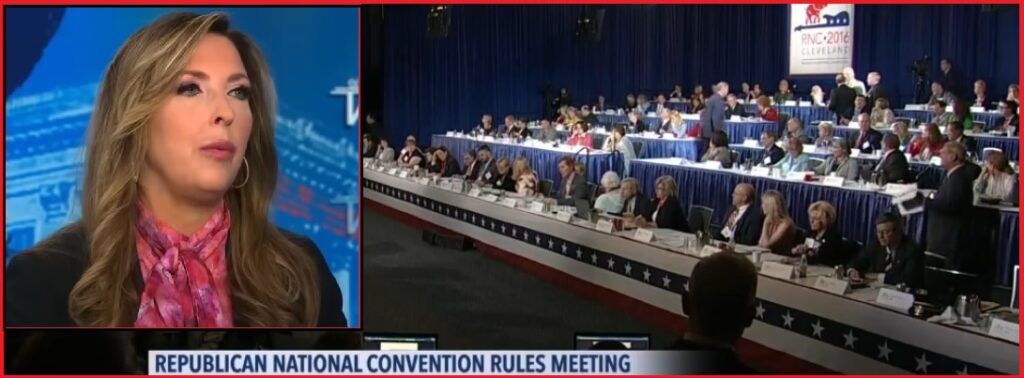
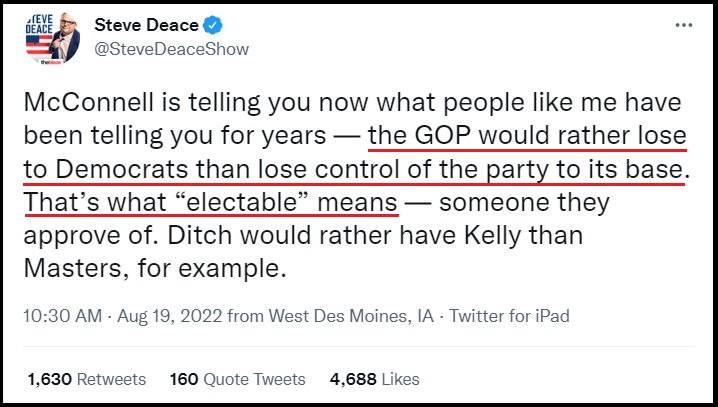
If You Have Not Been Taught to Think for Yourself, Then Disinformation is Scary


Posted originally on the conservative tree house on November 25, 2022 | Sundance 

CTH has encountered criticism for our position on information.  Perhaps it is important to step back and explain exactly why we should not be playing by rules established to control us while engaged in the battle of ideas.  First, my position:

…”There is no such thing as “disinformation” or “misinformation”.  There is only information you accept and information you do not accept.  You were not born with a requirement to believe everything you are told; rather, you were born with a brain that allows you to process the information you receive and make independent decisions.”… 
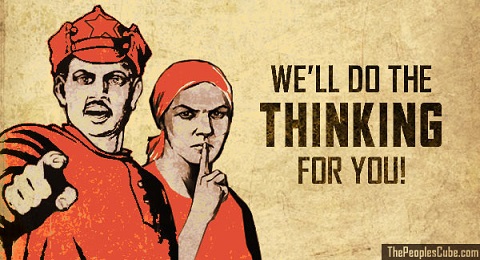
There are only two elements within the public discussion of information, truth and not truth.

In an era filled with “fact-checkers” and institutional guardians at the gates of Big Tech, let me explain exactly why it is important not to accept the speech rules of the guards.

When you accept the terms “disinformation”, “misinformation” or the newest lingo, “malinformation,” you are beginning to categorize truth and lies in various shades.  You are merging black and white, right and wrong, into various shades of grey.

When your mind works in the grey zone, you are, by direct and factual consequence, saying there is a problem.  You are correct; however, this is where people may make a mistake. The problem is supposed to be there.

It is not a solution to the problem to try and remove the grey simply because it takes too much work to separate the white pixels from the black ones.  You were born with a gift, the greatest gift a loving God could provide.  You were born with a brain and set of natural instincts that are tools to do this pixel separation, use them.

If you define the grey work as a problem you cannot solve on your own, you open the door for others to solve that problem for you.  You begin to abdicate the work, and that’s when trouble can enter.

The sliding scale of Pinocchio’s is one of the most familiar yet goofy outcomes.
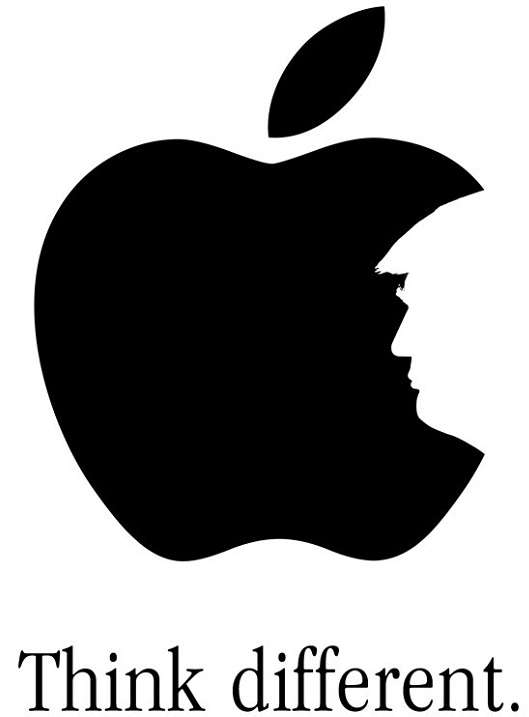
Put more clearly, when you accept the terminology “disinformation”, you accept a problem.

The problem is then the tool by which authorities will step in to make judgements.

Speech, in its most consequential form, is then qualified by others to whom you have sub-contracted your thinking.

When you willingly sub-contract information filters to others, you have lost connection with the raw information.

CTH was founded upon the belief that truth has no agenda, nor does it care about you, your feelings, or your opinion of it.  It just sits there, empirically existing as evidence of information in its most pure form.

The search for truth, in all things, is the mission objective of this assembly.   Often, we don’t like the truth; often, the truth is bitter, cold, challenging and even painful to accept.  However, the truth doesn’t care.  Information in its most raw form is ambivalent to your opinion.  If you struggle to accept these things, that’s when you need grey.  The New York Times is not called the “grey lady” accidentally.

Personally, I am an absorber of information – perhaps on a scale that is unusual.  But I do not discount information from any form until I can put context to it and see if the information makes sense given all the variables present.  When something doesn’t feel right, it’s almost always because it isn’t right.

Often, I find myself struggling in the grey and complex.  It is not unusual to spend days researching, digging, clarifying a situation, only to discover the path to finding the truth is in another direction entirely.   Erasing everything and starting over is frustrating, but it is genuinely the only approach that works; and often finding truth is supposed to be difficult, that’s why it is rewarding.

In the digital information age, we are bombarded with information.  It is easy to be overwhelmed and need to find something or someone who has better skills at separating the black grains from the white ones.  All opinions in this quest should be considered; thus, it is important to allow the free flow of information.

I am not necessarily a speech absolutist.  There is some language that needs to be constrained if we are to participate in a respectful society, with grandma’s rules and knowing the audience.  The CTH has guidelines for comments for this exact reason.  However, those constraints need to be based on a set of inherent values.   When it comes to information it is important to draw a distinction from speech.

There needs to be an open venue for all information. Unfortunately, when we begin to apply labels or categorization to information, there’s an opportunity for information to be manipulated – even weaponized.  Saul Alinsky spent decades pondering the best techniques to weaponize information and speech.  Alinsky’s intentions in the endeavor to change society by changing how language and information was used were not good. He devoted his completed rulebook book to Lucifer.

Be careful about anyone saying we need to label or categorize information in order to control or remove speech from the discussion.

You were not born with a requirement to believe everything you are told; rather, you were born with a God-given brain that allows you to process the information you receive and make independent decisions.
Important Discussion – Let’s Talk About 2010 Citizens United Supreme Court Decision with a Decade of Hindsight


Posted originally on the conservative tree house on November 25, 2022 | Sundance

I have given a great deal of thought to this in the past several years and I am welcoming all opinions.  Just to let you know I intend to read every single comment, because ultimately this is important. AND I believe it will become a silent topic in the next two years [As did the recent conversation of Ballots -vs- Votes].

In 2010 the Supreme Court ruled on a campaign finance legal challenge known colloquially as The Citizens United decision.  The essence of the decision was a speech issue. In the court’s opinion, Justice Anthony Kennedy wrote that limiting “independent political spending” from corporations and other groups violates the First Amendment right to free speech.

Prior to CU corporations were limited in financial spending on behalf of political campaigns just like individuals.  However, unions were not.  Organized Labor Unions could spend unlimited amounts in support of candidates.  Corporations were limited like individuals.

At the time of the January 2010 Supreme Court ruling Democrats and Barack Obama were furious.  Corporations could not form SuperPACs and spend unlimited amounts of money ‘independently’ supporting candidates.

Federal Election Commission (FEC) rules on coordination and communication between the political campaigns and the independent SuperPACs was/is supposed to create a firewall.  However, the obscure nature of that effort has failed miserably.

Real World Example. A SuperPAC can organize a pro-Ben rally, spend on the venue, spend on the banners, t-shirts, rally material etc., and then advertise it.  If Ben shows up to deliver a speech, he’s not breaking the rules so long as Ben and the SuperPAC didn’t coordinate the event.  Ben just shows up to share his support for the effort, thank everyone and everything is legal in the eyes of the FEC.  Yeah, it’s goofy.

More commonly as a result of the Citizens United (CU) case, massive corporate advertising (considered speech) is permitted in support of the candidate; or the corporation can organize ballot collection or get out the vote efforts, etc.  Again, as long as they do not coordinate with any “official campaign” ie. Mark Zuckerbucks, yeah, goofy.   As a result, expanded corporate spending has massive influence over U.S. elections.

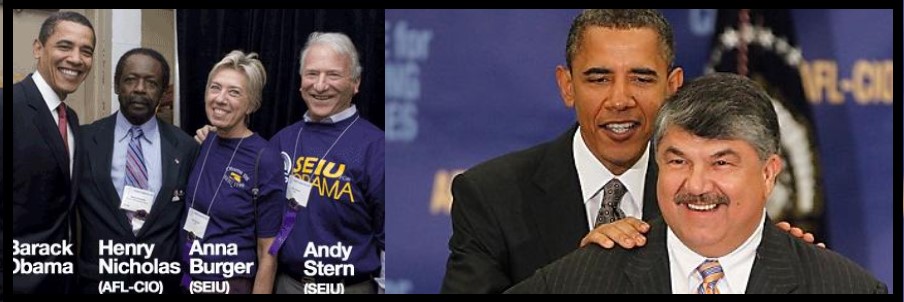
♦ Oppose CU – Democrats opposed the CU decision because they had an advantage with organized labor.  Labor unions were considered a representative body of collective individual membership interests and could spend without limit on campaign support.  Organized labor unions supported democrats.   Factually, Barack Obama won his 2008 election specifically because the SEIU, AFSCME, UFCW, AFL-CIO and other organized labor supported him over Hillary Clinton.

The CU decision watered down this overall Democrat advantage because now corporations funding Republicans could counterbalance the spending support of the labor unions.  Democrats stated the CU decision would inject billions into politics and would increase corruption.

♦ PRO CU – Republicans, in a general sense, supported the CU decision mostly because it did level the field with labor unions and also because the corporate lobbyist connections to the republican party meant a lot of corporate money was available to fuel republican Super Political Action Committees (SuperPACs).  Factually, the CU decision created the ability of SuperPACs to exist.

The business of politics expanded with the CU decision and ultimately both the DNC and RNC clubs evolved to enjoy this unlimited donor spending.

The business sector of politics expanded as the financial aspects to the it grew.  SuperPACs could now fund consultants, polling firms, campaign systems and the money inside politics as a business exploded.

Now we have political campaigns where spending tens-of-millions on a single race is commonplace.  The modern ballot collection (harvesting etc) is now funded by this same flow of unlimited financial resources.

At the time of the 2010 Citizens United decision, I personally was in support of the ruling.  However, in hindsight the benefits of leveling the field with organized labor have become overshadowed by the negatives associated with corporations now in control of which candidates achieve office.

Money was always a corrupting issue and politicians working on behalf of their donors was always problematic, long before the Supreme Court CU decision.  However, CU exploded that problem on a scale that was/is almost unimaginable at the time.

A previous several million-dollar presidential campaign is now a multi-billion-dollar venture, and the corporations are purchasing every outcome.

So, here’s the question….

Knowing what you know now, how do you feel about the Citizens United decision?

Twitter Alternative BACKFIRES On Woke, Leftists Start Getting Banned For Being Whiny Babies


TimcastIRL Published Originally on Rumble on November 24, 2022 

Twitter Alternative BACKFIRES On Woke, Leftists Start Getting Banned For Being Whiny Babies

The Day the Narratives Collapsed | Hoffman, Harmeet, Bovard, Walker, ALX, Sav| The Charlie Kirk Show


The Charlie Kirk Show Published  originally on Rumble on November 23, 2022 

All eyes remain fixed on Arizona and we kick off the show with Jake Hoffman, senator-elect and chair of the AZ Freedom Caucus followed by Lake Campaign lawyer, Harmeet Dhillon. Next up we have Rachel Bovard on her NYT column challenging the Trump doomers and Herschel Walker lays out the stakes in Georgia’s Senate runoff. Finally, ALX and Savanah Hernandez talk Twitter and Libby Emmons does a deep dive into just how extensive the FTX fraud and Democrat bribery goes. The Charlie Kirk Show is LIVE on Salem Radio stations across the country and simulcasting on Real America’s Voice.

Reminder, Watch Inside RNC Club Rule Changes and 2024 Moves Next Month


Posted originally on the conservative house on November 23, 2022 | Sundance

In the background of the republican dynamic, CTH has been reminding everyone about the nature of the Republican National Committee (RNC) and Democrat National Committee (DNC) being private clubs, private corporations, unaffiliated with government.  Most casual voters do not understand what this key and important distinction means within U.S. elections.

There are two private corporations representing Republicans and Democrats; they are most commonly referred to as political parties. There is no basis for the existence of private political parties in the United States constitution.  Both parties’ function from a position as private interests outside the framework of government.

What we commonly refer to as ‘politicians’ are selected representatives to the government from each of the corporations.  What we commonly refer to as ‘primary elections’ are suggestions to each of the corporations from citizens expressing their preference for the representative.   The corporation can individually choose to accept or decline the suggestion from the voters, and the only thing that binds the corporation to follow the suggestion are the corporate rules.

The corporation of the RNC and DNC exist to serve their own interests.  Politics is the RNC and DNC business; however, the income stream -the financial aspects to the business- is what holds influence over the corporate priority.  Ideology is part of the equation, but control of the business and generating revenue is the main function of the corporation. Unfortunately, in the reality of the business model, election outcomes are downstream from those two priorities.

It is with this corporate baseline in mind that all ‘primary election’ political analysis should take place.  The economics of the thing is what Republican officers in the RNC emphasize.  Without money, the corporate mission doesn’t operate.  Without money the RNC members -essentially board members- do not function, hold meetings, assemble, or participate in the organization.  Therefore, from the standpoint of the corporation, the business of politics (inputs) drives the activity, not election results (outputs).

This facet to U.S. politics is rarely discussed because the corporations and the people who run them do not want this process emphasized.  However, if voters do not comprehend this dynamic, they can fall victim to the fallacy of false representative choice.

The corporation is made up of members.  The members make the rules.  The members have preferences and ideological outlooks about the objective of the corporation as part of their position within it.  Inside this dynamic is where you see the changing of rules to benefit the preferences of the members; ultimately influencing outcomes.

Unlike most political sites, CTH watches this inside club dynamic closely because ultimately it explains a lot of ‘consequences’ that we see later discussed.  It is easier to just sit back and discuss the consequences than it is to watch the officials inside the club make rule changes proactively.  However, it is by watching the rule changes that we can see the roadmaps of influence within game as played by both RNC and DNC corporations.

Any political commentary that does not take this private club dynamic into consideration, and/or explain the consequences from decisions within the club, is not serving the interests of the American electorate.

The winter meeting of the RNC is taking place January 25-27th, in Dana Point California at the Waldorf Astoria – Monarch Beach Resort.  There are 168 members who will be in attendance (3 from every state) along with various RNC and national republican leadership.

This RNC corporate meeting, and the votes by the members, will determine the Republican Club rules for the 2024 election cycle.  Rules on primary dates, sequence, apportionment of delegates, distribution of delegates, state sequencing, qualifications and much more will be decided.

Rules that govern the candidates and campaigns of those who choose to run on the corporate identity of “Republican” will also be determined. Rules on financial agreements, expectations for data sharing, fundraising, contribution expectations (both directions) and much more will be determined.

It is inside this dynamic where one of the key club control battles is likely to take place.  It’s mostly boring and seemingly parliamentary stuff {Example Here}, but it has massive ramifications.

Some RNC members support MAGA, some do not.  Some RNC members support the Wall Street alignment, some do not.  Some members support the populist movement, others do not.  Some RNC members support a big tent approach to a working-class coalition, other RNC members regard the working-class as beneath their representative interests. The key point is that it’s a private club making these decisions.

The majority decision from within the club membership vote will determine each outcome(s).  Donald Trump may have earned 100 million voters and supporters, but only 168 unelected members and party officials will determine what that means to their corporate agenda.

There is no guarantee the America-First agenda of Donald Trump is in alignment with the 2023 priorities of the club.  Factually, all recent suggestions from the club control officers, the billionaire the Wall Street donors like Ken Griffin, all suggest the removal of Trump and the MAGA agenda from association with the RNC club should be the priority of the assembly.  The dynamic of financial influence, income to the corporation, changes the entire mechanism of the outcome.

As noted by ‘Niagara Frontier‘: “I’m watching for last-minute RNC rule changes for the national primaries and the selection of convention delegates. If we start hearing anybody, anywhere float a proposal in favor of Republican super delegates for the national convention, it’s total war.”

Niagara is absolutely correct.  The internal battle deep inside the club, fraught with influence, power dynamics and cliques positioning for control, is the part of the political dynamic that everyone should be watching closely.

We will be….