The Democratic National Convention occurring in Chicago is touting the importance of defeating Trump, climate change, gun control, and abortion. These are the ONLY talking points that the Democrats harp on while ignoring the REAL issues plaguing the nation. It was revealed earlier this week that the Biden-Harris Administration completely failed to create new jobs outside of the public sector. As the elite sit behind armored walls, the people of Chicago are suffering under blue policies. In fact, Chicago now ties with Las Vegas for the highest unemployment rate in the nation.
Both Las Vegas and Chicago have an unemployment rate of 6.2%, according to the Bureau of Labor and Statistics. Detroit comes in third with a rate of 5.2%, far above the national unemployment rate or 4.3% posted in July.
Businesses and individuals have fled Chicago and Las Vegas in droves. Crime in Chicago rose an astounding 82% in two years. In Las Vegas, you have a 1 in 28 chance of becoming a victim of crime. Violent crime in Vegas has reached 40.9%, which is far beyond the national rate of 22.7%. Businesses cannot stay open in these conditions where theft and violence is permitted. Chicago considered implementing city-run grocery stores after businesses fleeing led to a food desert.
Both cities are deemed sanctuary cities. They cannot handle their own population but have opened the floodgates to countless individuals who are solely living on government assistance. Their budgets have imploded and those in charge lost control of the situation long ago.
Over 87,000 left Illinois last year, as did the $10 billion they were providing the state in income. The IRS believes the state has lost $47.5 billion in adjusted gross income over the last six years due to the blue state exodus. This trend has only accelerated due to recent policies. “We’re not bringing in the best and the brightest in many cases to the state of Illinois; we’re actually pushing them out of the state with horrible policies and we’re back filling it with folks that want services,” State Sen. Andrew Chesney, R-Freeport reported, as 177,000 new incomers entered the state while 264,000 abandoned it during the same period of 2021 to 2022.
Businesses will flee when crime rises to the point where it is no longer profitable to operate. Crime reached such an unprecedented level that these companies were willing to take a loss simply to leave. Naturally, they took jobs with them and those with the means to move have done so already. These once-great cities are now ravaged by poverty and crime.
Corporations have already fled to move to states that are business-friendly. Who would want to live in such a place other than those receiving government aid who are already part of the problem? It is an insult to the people of Chicago for the DNC to cheer on their only talking points (guns, climate change, Trump, and abortion) while ignoring the American citizens struggling around them.
Posted originally on Aug 23, 2024 By Martin Armstrong |
We already know why the establishment hates Donald J. Trump. Socrates predicted a third party candidate would win the 2016 US Presidential Election. A Democrat turned Republican, Trump does not stand with either party as those within the establishment on BOTH sides detest him. Politicians enter career politics for one reason – money. Why do the elite in the establishment hate Trump?
In Trump’s own words, the establishment hates him because he prevents lobbyists from shoving dollars in politician’s pockets at the expense of the people. Trump is a businessman through and through, but as president, he worked to prop up America’s economy rather than his own personal wealth. The same cannot be said for the greedy politicians who have spent decades in office without making any notable changes.
Trump’s somewhat comical interview with Theo Von shed light on why he is the most hated man in Washington and perhaps the world. “They want to sell product I’m not interested in,” Donald Trump stated when asked why the establishment is trying to sink him. The former president mentions that he did not want to purchase military supplies, a nod to his unwillingness to side with the neocons and arm Ukraine. He calls the lobbying efforts from the pharmaceutical companies “interesting,” which is quite interesting as the Biden-Harris Administration claims they are cracking down on Big Pharma.
Yet, the Biden-Harris Administration undid everything Trump put in place. Elsewhere in the interview, Trump reminds the audience that his plan to have hospitals properly detail their pricing has not been enforced. None of the measures he implemented in regards to Big Pharma was enforced by Biden-Harris.
It is of no coincidence that the Democratic National Convention was watched, perhaps monitored, by lobbying groups. Even liberal commentator Chris Cuomo called the DNC “a game of money.” Suites to watch/monitor the DNC begin at half a million. “Those boxes are filled with the same people they [Harris and Democrats] say they are going to regulate!” Cuomo proclaimed.
Biden sold out the United Statesto special interest groups. We know how he lined his pocket with money from China and Ukraine, bringing on his son and other relatives for good measure. The corruption in America begins at the top. The establishment cares not about America but their own personal gain. A second Donald Trump presidency would hurt the military-industrial complex, Big Pharma, and for-profit global agencies or forums that believe they are above individual governments.
Sanctions and a mysteriously erupted underwater gas pipeline have led to a dramatic decrease in trade between the European Union and Russia. In June, trade between the two fell by 10% to €4.9 billion, marking a low not seen since September 1999, when trade fell to €4.6 billion.
Russia continues to export gas (1.1 billion euros), oil (333 million euros), as well as iron and steel (164 million) to the EU. Overall, Russian goods to the EU fell 14% in June on a monthly basis to 2.5 billion euros, the lowest level since February 1999.
European products received by Russia declined 5% on a monthly basis to 2.4 billion euros. Russia still relies on the EU for pharmaceuticals (634 million euros), equipment( 262 million euros), and optical instruments (203 million euros).
Sanctions do not eliminate demand. When we look at neighboring OR neutral nations, we see a dramatic increase in trade. The EU in particular is buying Russian goods from third-parties at a mark up. Russia’s trade with Romania and Bulgaria increased by 15%, for example.
The main thing here is that Russia is lush with natural resources and fossil fuels. There are not many alternatives for Europe in terms of fossil fuels, especially since America lost its energy independence under the Biden Administration. The demand for Russian fuel has not waned so Western nations are simply forced to purchase the same exact product from a third party. Russia has effectively been selling oil to nations like India who then turn around and sell it to the West at a premium
Russia does not need to adhere to the G7 nation’s price capping regulations. Pettiness is poor business, and simply attempting to ostracize a necessary trade partner from the global market has backfired in a major way. Now nations like those under BRICS are trading freely without Western interference and it is becoming overtly apparent that sanctions do not work. Is it any wonder that Turkey wants to join the BRICS alliance despite its alignment with NATO?
Money is power. Some wiser world leaders will oppose the one-world method of agreeing to collectively embark on poor economic policies to benefit the greater good of the alliance. Hence why nations like China and India have not bought into the climate change policies set by a greater authority. The nations who chose to invade Russia through a proxy war in Ukraine have made a terrible financial decision that will significantly harm their economies for years to come.
I recently watched an excellent series on the History Channel, Sons of Liberty. The series starts only in 1765 and thus omits the start of the civil unrest in Boston. It needs a person to follow, so they start with Samuel Adams (1722 – 1803), a colonist who became incensed by the British Crown’s abuse of power. Nevertheless, Sam Adams dared to stand up against all odds, which eventually manifested in the American Revolution.
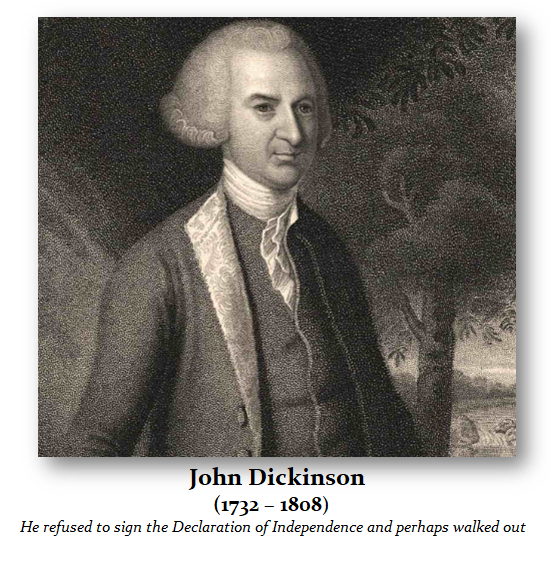
The series portrayed Sam Adams’ arch-enemy, John Dickinson (1732–1808), who was against independence. Some graciously considered Dickinson to be a Founding Father of the United States, but I’m afraid I have to disagree with that honor. Yes, he was a member of the First Continental Congress, where he signed the Continental Association. He also drafted most of the 1774 Petition to the King seeking redress. He then became a member of the Second Continental Congress and again wrote the 1775 Olive Branch Petition. But he was against Independence and taking up arms. He regarded Sam Adams as a troublemaker and opposed the Declaration of Independence.Dickinson abstained and/or walked out when it came to a vote. He later refused to sign the document after its passage. I do not consider him a Founding Father – sorry.
Samuel Adams is perhaps the first of the true Founding Fathers of the United States. He was the main leader of the movement that became the American Revolution and, in the end, a signer of the Declaration of Independence. It was Sam, along with John Hancock and Benjamin Franklin, who truly pushed for American Independence. Sam was a second cousin to his fellow Founding Father, President John Adams.
The series did not show the prelude to 1765 and Sam Adams’s appearance on the scene. In all honesty, it was the wars between Britain with both France and Spain that set in motion serious inflation and economically and was undermining the evolution of the Colonial economy. When we trace the rise of wars in North America, we come to a strange revengeful incident known as the War of Jenkins’ Ear, which perhaps started hostilities in 1731. A Spanish commander sliced off the ear of British merchant captain Robert Jenkins and told him to take it to his king, George II (1727-1760). Eventually, war broke out in 1739 between Spain and Great Britain.
Then there was the War of the Austrian Succession (1740–1748), which challenged the legitimacy of the accession of Maria Theresa, who became the ruler of the Habsburg Dominions (1717-1780) and the Austrian throne. This war began in 1740. While initially, it did not involve either Britain or Spain directly, Britain was drawn diplomatically in 1742 like a NATO agreement as an ally of Austria against France and German Prussia.
This became known as King George’s War (1744–1748), which involved military operations in North America that were part of the War of the Austrian Succession. This war was the third of the four French and Indian Wars. It prompted a parliamentary grant of £180,000 pounds sterling to defray the expenses of 1751. Great Britain had enjoined colonial assemblies in New England from further issuing legal tender paper currency except to finance wartime deficits. Therefore, the inflation in the American Colonies was set in motion by these wars.
Britain won the Seven Years’ War in the colonies but at a tremendous cost. This was a global conflict spanning five continents. In America, it took the form of the French and Indian War (1754–1763). The French and Indian War in America was a major war fought in the American Colonies between 1754 and 1763. The British gained significant territory in North America due to the war. Finally, after years of skirmishes between England, Spain, and France in North America, this is when England officially declared war on France in 1756, unleashing the first World War of the modern era. Simultaneously, Frederick the Great of Prussia in Europe battled against Austria, France, Russia, and Sweden.
The quarter century before the American Revolution is of special economic and historical interest with regard to colonial monetary policy. For you see, in 1749, Massachusetts dramatically ended its great inflation of nearly 827% and returned to a pure specie standard. The Seven Years’ War had a dramatic economic impact on Colonial America, reflected in the colonial paper money issue. Pennsylvania, New York, and South Carolina issued currency under a claimed fiduciary standard. It issued large quantities of paper money to finance the war, accompanied by only moderate increases in the rate of inflation compared to Massachusetts.
Massachusetts maintained a pure species standard to finance the war, issuing instead interest-bearing debt that curiously did not fare much better than printing money and was probably even worse than those states that just printed currency. My interpretation has been that it was worse for Massachusetts because they had great expectations/confidence in the government. The success of war finance in Pennsylvania, New York, and South Carolina can be attributed to paper money issues that financed government expenditures and were matched by the imposition of tax abilities for early redemption.
The resulting collapse in confidence in Massachusetts caused more significant inflation than just printing money, and this calls into question the entire Quantity Theory of Money since those states that issued more money had less inflation – not more. That theory does not hold up in the face of colonial inflation. However, modern economists do not want to look at this period for fear it would upset their theories.
Indeed, in 1750, Massachusetts issued small change notes secured by deposits of silver Spanish dollars. The Seven Years’ War (1755-1763) has a major economic impact. Pennsylvania, New York, and South Carolina each emitted over £485,000 pounds of paper currency. Still, the evidence from the behavior of prices and exchange rates reveals only mild inflation, which cannot easily be reconciled with the quantity theory. Massachusetts, the hard-money colony, with its pure specie standard and its issue of noncirculating interest-bearing debt fared about the same-maybe a little worse-than the colonies with fiduciary standards. Finally, Parliament in 1764 extended its restriction on the issue of leg.
George III (born 1738; ruled 1760–1820) became king on October 25th, 1760. There was a currency crisis when George III came to the throne in 1760. George III faced discontent as the combination of war and inflation led to confrontations with the French and the American colonies. There were plenty of copper farthings and halfpennies, yet silver had risen in value considerably, which led to the hoarding of silver coinage. During the reign of George II, his silver shillings were struck only because the British managed to seize the silver from the Spanish during the War of Jenkin’s Ear. This was silver being transported from Lima, Peru. In the first few years of George III’s reign, only one coin was minted with his portrait – the famous ‘Northumberland’ silver shilling of 1763. Only 3,000 were minted. It is believed that the mint perhaps continued to use the old dies of George II until they were worn out.
However, counterfeiting was a major problem at this period in time. In fact, the counterfeiting of the copper halfpence began soon after Charles II (1630-1685). Copper coinage was so plentiful that production was even halted at the request of merchants. There were simply more counterfeits in circulation than official mint issues. The laws were strengthened to deal more severely with copper counterfeits but had little effect since they applied only when the forged coin was an exact copy of the official issue. The counterfeiters got around this by changing the bust styles, and some of them changed the legends on the coins to skirt the law. Most of these counterfeits were lightweight. Finally, in 1771, the Royal Mint was directed to produce full-weight copper coins, which they hoped would be more desirable than the lightweight forgeries. The Royal Mint began producing farthings and halfpennies with George III busts. As shown here, counterfeits were still being produced. They would melt down the genuine coins and produce lighter-weighing counterfeits.
About 200 years before, this marked the Great Silver Flow that altered the monetary system of Europe from the Potosí silver mine in Bolivia. (see Potosi: The Silver City That Changed the World: By Kris Lane). This took place during the reign of Philip II, King of Spain (1556–98). This was what made the Spanish 8 reales into the new dominant currency in the world. Even China adopted this as their new silver standard, and these Spanish coins became the alternative to British pounds, so much so that when the US dollar was created, it was based upon these Spanish 8 reals that became known as dollars.
The Stamp Act 1765 (5 Geo. 3. c. 12) was an Act of the Parliament of Great Britain that imposed a direct tax on the British colonies in America and required that many printed materials in the colonies be produced on stamped paper from London which included an embossed revenue stamp. This is what began the movement “No Taxation Without Representation.” This series appears to begin with this direct taxation on American Colonies that applied to freedom of the press. This was the first internal tax levied directly on American colonists by the British Parliament. Britain was deeply in debt because of the Seven Years’ War (1756-1763), which was truly the first World War of the modern era.
The American colonists argued that only their own representative assemblies could tax them. The colonists insisted that the act was unconstitutional, and they resorted to mob violence to intimidate stamp collectors into resigning. Parliament had passed the Stamp Act on March 22, 1765 and was eventually forced to repeal it in 1766. They then issued a Declaratory Act at the same time to reaffirm its authority to pass any colonial legislation it saw fit. The issues of taxation and representation raised by the Stamp Act strained relations with the colonies to the point that, 10 years later, the colonists rose in armed rebellion against the British. The scheme was to extract silver and gold from the colonies, but any payment to the colonies was to be in copper. This was all thanks to the cost of war.
Consequently, by the late 18th century, there was such a shortage of silver that this in part contributed to the American Revolution. Silver was too expensive to mint current coins. Silver shillings coins were not produced after 1763 until 1787. The American colonists began using Spanish 8 reals, which they called a dollar, having no alternative. By 1787, only 7% of circulating coins in Britain were genuine. The cost of war had a profound economic impact on Britain. What field the American Revolution was the fact that this tax was to be paid only in gold or silver. Anything the Colonies sold to Britain was paid in copper. In order to discourage smuggling and bribery, Parliament decided to make paper money illegal. If anyone was found guilty of breaking the laws, the fines had to be paid in gold or silver. These measures, in the face of a shortage of silver and gold, combined with the lack of paper money, fueled inflation in the colonies.
There was a legal case that became the seminal beginning of the American Revolution known as Entick v. Carrington and Three Other King’s Messengers (1765), reported at length in 19 Howell’s State Trials 1029. This case was the start of the American Revolution and was also based upon abuse of the king’s agents. The action, dated November 1762, was for trespassing and interfering with the plaintiff’s dwelling by breaking open his desks and boxes and searching and examining his papers.
George III (b 1738; 1760-1820) became king in 1760. In February 1761, Parliament enacted the Writs of Assistance that was challenged in court in Boston, Massachusetts. These were writs that empowered the king’s agents to search anything they suspected, like the NSA today at their discretion. The defending lawyer James Otis (1725-1783) pronounced these writs as “the worst instrument of arbitrary power, the most destructive of English liberty, and the fundamental principles of law, that ever was found in an Englishlaw book.”Otis warned that the king placed discretion in the hands of every agent to act as he desired. Nothing has changed, for our current government can do whatever it desires today, and it is always the burden of the citizen to prove he has any rights whatsoever.
John Adams (1735–1826; 2nd President 1797–1801) was in the audience at that hearing that day, and the four-hour speech of James Otis so moved him that he declared:
“Then and there was the first scene of the first act of opposition to the arbitrary claims of Great Britain. Then and there, the child independence was born.”
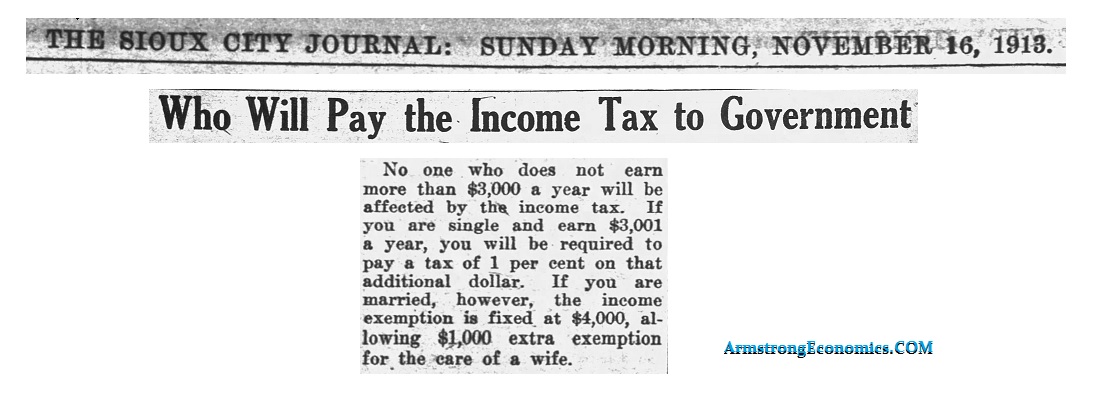
I am sure the king’s men also viewed their power as necessary, as the government does today. The abuse of the king’s agents was simply that they could enter someone’s home and search all their papers. If you wrote anything derogatory against the king, off you went to prison. This is what inspired the Fourth Amendment, which stated that there had to be a reason to search, not just an arbitrary desire to see what we could find. This is the very essence of LIBERTY. You cannot pretend to be the leader of the free world and then advocate that the government has a RIGHT to know everything everyone is doing or what wealth they have. This is incompatible with the term “FREEDOM.”
The question of whether there will be a future revolution in history will be answered with a resounding YES. There is never a question of IF but only when for those in power will always abuse that power when they know they are losing it. It was the fiscal mismanagement of war that created the currency crisis that eventually fueled the American Revolution. Kamala Harris’s proposing a 44.6% tax on capital gains is always marketed at the rich. However, it will apply when you sell your home and seek to retire, move, or just downsize after the kids are gone.
They will always say they are after the rich, but in truth, it always comes down to the middle class, which represents the bulk of the economy. If they confiscated all the wealth of the billionaires, that would not cover the interest expenditures for one year. They never consider that they are the problem. They always look upon the people as the problem. We are still paying interest on the debt for World War II because they never pay off the debt but only add to it every year. Up to 70% of the interest is exported to holders of US debt like China and Japan.
As the Neocons scheme for yet another war that they borrow to fund endlessly, they do not care about the country, our future, or the people. All they care about is their own personal desire to dominate the world. Perhaps there will be the modern version of Sam Adams, who suddenly becomes offended by the endless abuse. The tax hikes proposed by Kamala may be the catalyst that sparks the revolution, just as the Stamp Act did in 1765.
Posted originally on the CTH on August 22, 2024 | Sundance
This is the moment the previous three nights of effort have built toward, the acceptance speech by Kamala Harris at the DNC Convention.
Kamala has never given a major speech with this much attention and her handlers have been working furiously to prepare her for the past 48 hours. There is a lot riding on these next few hours for Barack Obama, the people around him who are trying to install his fourth term of influence, and for James Clyburn and the Democrat apparatus who have steered toward this outcome for the past four years.
If you are watching the events tonight, consider this an open discussion thread. Kamala Harris is anticipated to speak around 9:30pm ET.
♦ 9 p.m. Eva Longoria, then Former Rep. Adam Kinzinger (R-Ill.), then comes Maya Harris, followed by North Carolina Gov. Roy Cooper who will likely introduce Vice President Kamala Harris. However, there could be some surprises.
Posted originally on the CTH on August 22, 2024 | Sundance
According to the Trump campaign, there will now be a special guest attending the Glendale, Arizona MAGA rally tomorrow (7:00pm ET). A lot of speculation has centered around Robert F Kennedy Jr, likely endorsing President Trump.
Many people within the MAGA community, mostly those associated with the financial benefits of the movement, have been advocating for RFK Jr to be placed in a prominent Trump administration position.
I am taking a wait-and-see approach; however, I do not see any benefit from any RFK endorsement. The same Republicans who voted for Evan McMullin, are the same Republicans currently supporting RFK Jr. That group will not change their anti-Trump position with an RFK Jr endorsement.
.
There are many vested interests deep inside the Trump campaign who support RFK Jr with great enthusiasm.
Posted originally on the CTH on August 22, 2024 | Sundance
Earlier today, President Trump discussed Robert F. Kennedy Jr. during his visit to the U.S.-Mexico border in Cochise County, Arizona. President Trump was asked if RFK Jr was going to endorse him, and how he would feel about it. President Trump was also asked if he and RFK Jr were coordinating their appearance in Las Vegas. [VIDEO HERE]
Additionally, President Donald Trump told NewsNation’s Ali Bradley “we’re in danger” before being rushed away by Secret Service during an interview in Cochise County, Arizona. Right now, authorities in that county are searching for a man who allegedly threatened to kill the former president. Bradley reports daily from the southern border, where Trump held a news conference earlier Thursday. She spoke with Trump one-on-one about what he thinks of a possible RFK Jr. endorsement.
I have created this site to help people have fun in the kitchen. I write about enjoying life both in and out of my kitchen. Life is short! Make the most of it and enjoy!
This is a library of News Events not reported by the Main Stream Media documenting & connecting the dots on How the Obama Marxist Liberal agenda is destroying America