Sad News – Epstein Victim Virginia Giuffre Kills Herself (41)


This is terribly sad. This young woman was chased by demons for years as a result of abuse she suffered in her childhood and early adolescence.

Virginia Giuffre (41) has killed herself.
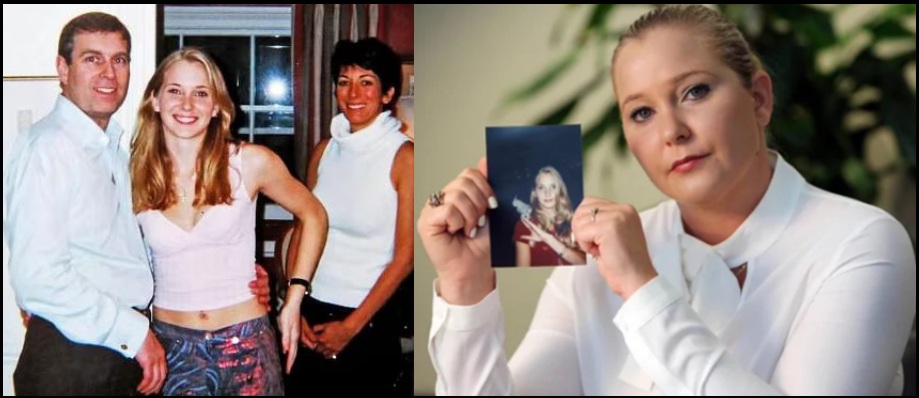
(VIA NBC) – Virginia Giuffre, one of the most prominent survivors of Jeffrey Epstein’s sexual abuse, has died by suicide, her family said Friday.

Giuffre, 41, died in Neergabby, Australia, where she had been living for several years.

Giuffre was one of the earliest and loudest voices calling for criminal charges against Epstein and his enablers. Other Epstein abuse survivors later credited her with giving them the courage to speak out.

She also provided critical information to law enforcement that contributed to the investigation into and later the conviction of Epstein’s associate Ghislaine Maxwell, as well as other investigations by the U.S. attorney for the Southern District of New York.

“It is with utterly broken hearts that we announce that Virginia passed away last night at her farm in Western Australia,” her family said in a statement to NBC News. “She lost her life to suicide, after being a lifelong victim of sexual abuse and sex trafficking.”

“Virginia was a fierce warrior in the fight against sexual abuse and sex trafficking. She was the light that lifted so many survivors,” the statement said. “In the end, the toll of abuse is so heavy that it became unbearable for Virginia to handle its weight.”

Raised primarily in Florida, Giuffre had a troubled childhood. She said she was abused by a family friend, triggering a downward spiral that led to her living on the streets for a time as a teenager.

She was attempting to rebuild her life when she met Maxwell, Epstein’s close confidant. Maxwell groomed her to be sexually abused by Epstein, and that abuse continued from 1999 to 2002, according to Giuffre. Giuffre also alleged that Epstein trafficked her to his powerful friends, including Prince Andrew and French modeling agent Jean-Luc Brunel. (read more)

God our strength and our redeemer: You do not leave us in this life nor abandon us in death. Hear our prayer for those in despair, when days are full of darkness and the future empty of hope. Renew in them Your sustaining strength for we believe that there is nothing in all creation that can separate us from Your love in Christ Jesus our Lord.  ~ Amen.April 25, 2025 | Sundance

Deepfake Threats – Fed Gov Urges for Increased Data Collection


Posted originally on Apr 25, 2025 by Martin Armstrong 

Hacker 2

Federal Reserve Governor Michael Barr is urging banks to begin collecting behavioral and biometric data from customers to combat deepfake digital content created through ID. These deepfakes are capable of replicating a person’s identity, which “has the potential to supercharge identity fraud,” Barr warned.

“In the past, a skilled forger could pass a bad check by replicating a person’s signature. Now, advances in AI can do much more damage by replicating a person’s entire identity,” Barr said of deepfakes, which have the “potential to supercharge identity fraud.”

“[We] should take steps to lessen the impact of attacks by making successful breaches less likely, while making each attack more resource-intensive for the attacker,” Barr insists, believing that regulators should implement their own AI tools to “enhance our ability to monitor and detect patterns of fraudulent activity at regulated institutions in real time,” he said. This could help provide early warnings to affected institutions and broader industry participants, as well as to protect our own systems.”

Enabling multi-factor authentication and monitoring abnormal payments is a first step, but Barr and others believe that banks must begin to collect their customer’s biometric data. “To the extent deepfakes increase, bank identity verification processes should evolve in kind to include AI-powered advances such as facial recognition, voice analysis, and behavioral biometrics to detect potential deepfakes,” Barr noted.

Barr would like banks to begin sharing data to combat fraud. Deepfake attacks have been on the rise, with one in 10 companies reporting an attack according to a 2024 Business.com survey. Yet, will our data be safer in the hands of regulators?

The Office of the Comptroller of the Currency (OCC) fell victim to a cyber attack after discovering that hackers had been accessing their emails for over a year.  Hackers found their way into an admin account, permitting them to access internal communications of over 100 banking regulators. Former Treasury Secretary Janet Yellen had her own computer hacked by Chinese state-sponsored actors who used a third-party vendor to access sensitive, unclassified documents.

Regulators have been unable to protect themselves, but they believe that they can protect us if we continue to share our valuable data. All freedoms are relinquished in the name of protection.

We are J6. Panel Discussion


Published originally on Rumble By The Gateway Pundit on Apr 19, 2025 at 12:05 pm EST

White House Press Briefing – 4:30pm ET Livestream


Posted originally on CTH on April 16, 2025 | Sundance 

Today White House Press Secretary Karoline Leavitt will hold a press briefing from the Brady press room in the White House with a special guest.  The anticipated start time is 4:30pm ET.  Livestream Links Below:

.

.

What’s Next


Posted originally on Apr 15, 2025 by Martin Armstrong 

Europe Institutional Report 2025

QUESTION: Marty, This report on all of Europe is unbelievable. Something like this would cost more than $100,000 from M——-, and they have an opinion, not actual, real forecasts. Do you intend to do one for Asia and South America?

PL

ECM Cover Blue

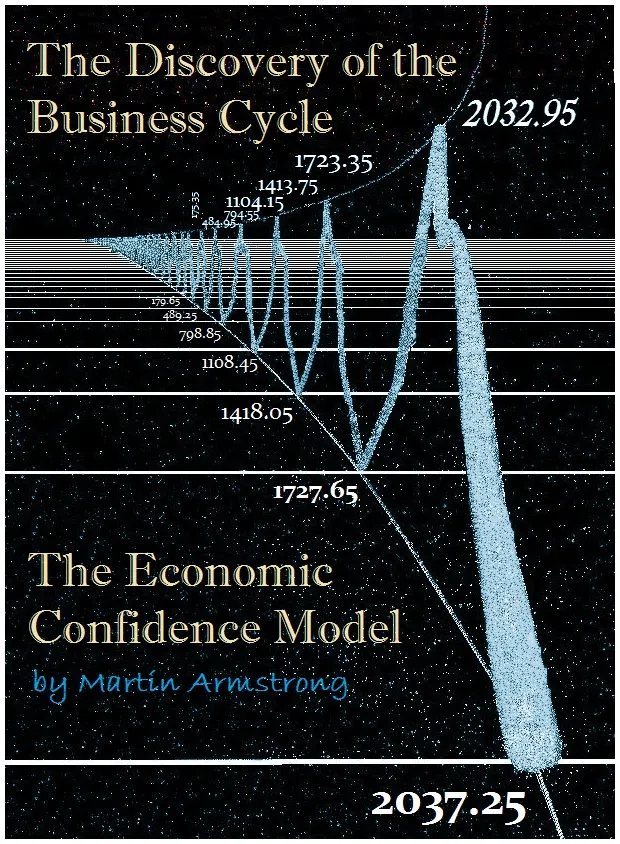
ANSWER: This took a lot of time to put together. The risk of war in Europe is so critical that I realized this was of urgent need.  My next project is to get the ECM book out ASAP. It is 95% written. I have to do the final review. I feel this has to get out, given that the sequel to the Forecaster Movie will be in a couple of weeks.

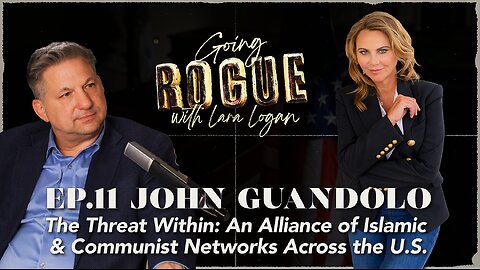
Going Rogue with Lara Logan Episode 11 | The Threat Within with John Guandolo


Posted originally on Rumble By Lara Logan on: Apr 12, 2025 at 5:30 am EST

How France Pushed Nixon to Close the Gold Window


Posted originally on Apr 15, 2025 by Martin Armstrong 

gold reserve fort knox

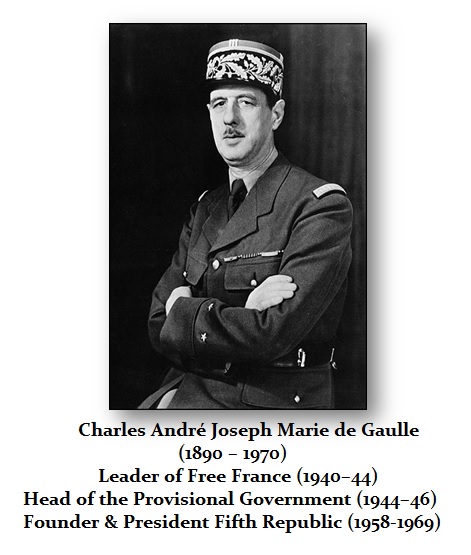
There is much speculation about Germany withdrawing its gold holdings from the United States. We have seen this occur in recent history. In the 1960s, French President Charles de Gaulle began challenging the U.S. dominance in the global monetary system. Gold typically flows where capital feels safe, but in this case, France repatriated its gold from the US due to political tensions.

In 1965, French President Charles de Gaulle withdrew his ministers from the Council of the EU, thereby constituting a de facto veto over all decisions, which became known as the “Empty Chair Crisis.” Several issues regarding European political integration led to the Empty Chair Crisis. There was a push at that time to create the quasi-federalization of Europe. De Gaulle believed that national governments should move towards integration. Still, he did not agree with the Commission’s attempt to create some new super-central state or a federalized Europe, extending powers of the EU beyond national borders as we have today, which Margaret Thatcher also opposed.

President Charles de Gaulle has proposed the Fouchet Plan was a plan back in 1961 to create a new grand design for Europe. Charles de Gaulle wanted to develop a three-power directorate, consisting of France, Britain and the United States. The idea was to form a new ‘Union of States’, as an alternative to the European Communities (EC). De Gaulle feared a loss of French national influence in the EC as there was a drive to federalize Europe back then.

deGaul Charles

After the failure of the Fouchet Plan and De Gaulle’s veto of the United Kingdom’s application for EC membership, the Commission attempted to move towards integration by proposing an idea that would combine the Common Agricultural Policy (CAP), the European Parliament, and Commission. De Gaulle supported the creation of the CAP and favored its enactment. However, he disagreed with the Parliament’s new role, the Commission’s strength, the shift towards federalization and a central state, and the budget proposals for financing the CAP. De Gaulle made it a condition that majority voting with a right to veto must exist if France was to participate in the EC. When de Gaulle was denied a more intergovernmental Commission or voting and veto rights, the French representative left the Council of Ministers thereby creating the Empty Chair Crisis.

The Luxembourg Accord was an agreement reached in January 1966 to resolve the “Empty Chair Crisis,” which had caused a stalemate within the European Economic Community. Then on June 21, 1966, de Gaulle withdrew France in a shocking move, taking its troops from the North Atlantic Treaty Organization (NATO). This decision, led by French president Charles de Gaulle, complicated relations between the U.S. and Europe amidst clashing American and Communist spheres of influence. Though France remained politically in NATO, its actions cast doubt on the organization’s future as a counter to Soviet military power and control back then.

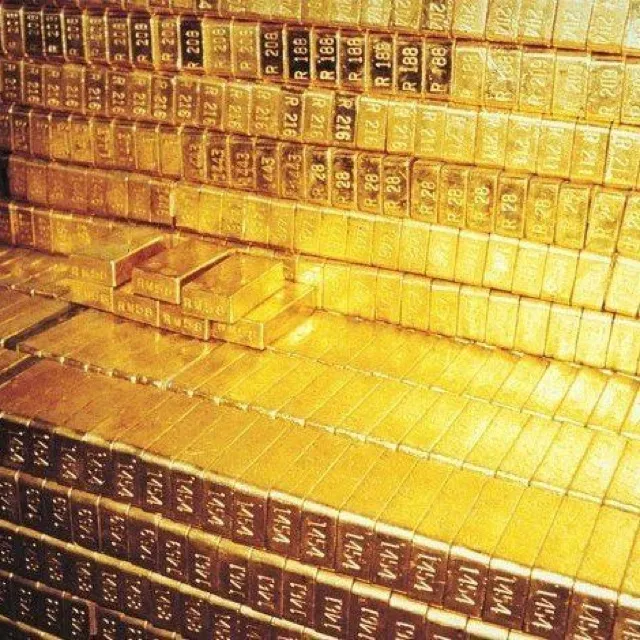
From 1963 to 1966, France secretly implemented Operation Vide-Gousset to repatriate 3,313 tons of gold reserves from the Bank of England and the New York Federal Reserve. It took over 44 boat trips and 129 flights to export the gold back to the Banque de France. Since France converted its dollar holdings into gold, the French made out well when the dollar fell during the Bretton Woods period and lost 96% of its value against gold. France then withdrew from the London Gold Pool in 1966 after recovering its gold holdings to force the US to endure heavier losses.

France’s actions caused a gold run with nations eagerly reducing their holdings at the New York Fed. West Germany reclaimed 1,200 tons of gold. Switzerland increased gold purchases from both the US and UK, but did so more discreetly than France to avoid political upheaval. By 1971, before the gold window closed, the United Kingdom requested $3 billion in gold conversions from the US. This may have been the final move that pushed Nixon to act. The Netherlands and Belgium also began exporting gold holdings from the US at this time.

US gold stock fell from $22.7 billion in 1950 to $12 billion by 1971.  On August 15, 1971, President Nixon closed the gold window, ending the convertibility of the dollar into gold. The 1971 closing of the gold window by Nixon cut the link to gold, ending Bretton Woods.

“The speculators have been waging an all-out war on the American dollar,” Nixon declared, and to “protect the dollar from the attacks of the international money speculators” would take “bold action.”

“I have directed [Treasury] Secretary Connolly to suspend temporarily the convertibility of the dollar into gold.”

France’s actions were a catalyst to the inevitable decision to close the gold window, but not the sole cause. Yet, as we are seeing today, the primary reason that nations would like to withdraw their holdings comes down to politics. Charles de Gaulle said that the dollar was “monumentally over-privileged” and moved to hurt the USD. The incoming German government is now looking to withdraw their holdings from the US solely due to their distaste for America.

Tom Fitton: “Trump Was Almost Jailed During The Trump Administration.”


Posted originally on Rumble By Bannon’s War Room on: Apr 12, 2025, at 1:00 pm EST

BREAKING: Tom Fitton Sues Trump AG Over Epstein Record Release


Posted originally on Rumble By Bannon’s War Room on: Apr 12, 2025, at 1:00 pm EST