Why Trump Will Win the US China Trade War—Stephen Moore


SUBSCRIBE 41K
Can China really hurt the US with its financial weapons in the US China trade war? Is the US in a “fantastic” position, as US President Donald Trump says? Is dumping US Treasury bonds really an option for the Chinese? And how does all this impact the 2020 election? This is American Thought Leaders and I’m Jan Jekielek. Today we sit down with Heritage Foundation economist Steve Moore, who played a major role in the development of President Trump’s economic policy, and is co-author of the book, “Trumponomics: Inside the America First Plan to Revive Our Economy.” More on US China trade! See: US China Trade War: ’Trump is Not Going to Back Down… This is a War of Values’—Curtis Ellis: https://youtu.be/oSjlGNaWPbc


News in Flynn Case – Documents Released and Judge Sullivan Has Well Founded Suspicions…


Things are going to get interesting in the Michael Flynn sentencing review; not because of the recently release documents [Here – and Here – and Here] but rather because it appears Judge Sullivan suspects what we’ve previously outlined.

In addition to the documents, Judge Sullivan is asking the DOJ to provide the transcript of the 12/29/16 call between Mike Flynn and Ambassador Kislyak.

Why is this important?  Because it appears Judge Sullivan suspects the transcript of the phone call will match statements from Flynn to the FBI.  Ergo Flynn did not lie to the FBI.

Since reviewing the November 30th, 2017, pleading we’ve been pointing out how the FBI admits to intercepting the Flynn-Kislyak call, but the FBI never put a factual transcript in the court record. Why not?

It’s a long, but necessary, story.

On December 29, 2016, President Obama announced a series of sanctions against Russians who were located in Maryland.  This was Obama’s carefully constructed response to provide additional validity to the Joint Analysis Report.  After fueling the Russia conspiracy for several weeks the Obama administration knew this action would initiate a response from both Russia and the incoming Trump administration.

After the December 29, 2016, sanctions against Russia, the Obama IC were monitoring Kislyak communications and watching for contact with the incoming Trump administration.

Additionally, it is suspected Flynn may have been under a FISA surveillance warrant which seems confirmed by the Weissmann/Mueller report. The FBI intercepted, recorded, and later transcribed the conversation.  [Notice how Judge Sullivan says: “and any other audio recordings”; ie he’s suspecting additional surveillance.]

In the January 2017 background, the media were continuing to follow the lead from the Obama White House, and Intelligence Community (writ large), by fueling a narrative that any contact with Russians was proof of collusion of some sort.   In addition, the communications team of the Obama White House, DOJ, FBI and aggregate IC began pushing a narrative surrounding the obscure Logan Act.

The ridiculous Logan Act angle was promoted by Deputy Attorney General Sally Yates, and targeted to infer that any action taken by the Trump campaign prior to taking office was interference with the political Obama Russia action.  Any contact with Russian government officials would be evidence of collusion. That was the plan.  DOJ Deputy AG Sally Yates was in charge of pushing the Logan Act narrative to the media.

The first two weeks of January 2017 was a merging of two necessary narratives: (1) Russian interference; and (2) the Logan Act. Each deployed against any entity who would counter the Russia narrative story.

The media were running this dual narrative 24/7 against the incoming Trump officials and demanding repeated answers to questions that were framed around this story-line.

On January 3rd, 2017, the new congressional year began.  SSCI Vice-Chair Dianne Feinstein abdicated her position within the Gang-of-Eight, and turned over the reigns to Senator Mark Warner.  Warner was now the vice-chair of the SSCI; and a Go8 member.

On January 6th, 2017, the Obama White House published the Intelligence Community Assessment, and declared:

We assess Putin and the Russian Government aspired to help President-elect Trump’s election chances when possible by discrediting Secretary Clinton and publicly contrasting her unfavorably to him. All three agencies agree with this judgment. CIA and FBI have high confidence in this judgment; NSA has moderate confidence.  (pdf link)

It is not coincidental the ICA was “high confidence” by Brennan and Clapper; and less confidence by Mike Rogers (NSA).

With the Flynn Dec. 29, 2016, transcript in hand, the DOJ and FBI began aiding the Logan Act narrative with Obama intelligence officials supporting the Russia Conspiracy claims and decrying anyone who would interfere or counter the official U.S. position.

On January 14th, 2017, the content of the communication between Flynn and Kislyak was leaked to the Washington Post by an unknown entity. Likely the leak came from the FBI’s counterintelligence operation; the same unit previously carrying out the 2016 campaign spying operations. [Andrew McCabe is highly suspected]

The FBI CoIntel group (Strzok, McCabe etc.), and the DOJ-NSD group (Yates, McCord etc.) were the largest stakeholders in the execution of the insurance policy phase because they were the epicenter of spygate, fraudulent FISA presentations and the formation of the Steele Dossier.

The media leak of the Flynn conversation with Kislyak was critical because the DOJ/FBI were pushing a political narrative. This was not about legality per se’, this effort was about establishing the framework for a preexisting investigation, based on a false premise, that would protect the DOJ and FBI.  The investigation they needed to continue evolved into the Mueller special counsel.  This was all insurance.

The Flynn-Kislyak leak led to Vice-President Mike Pence being hammered on January 15th, 2017, during a CBS Face the Nation interview about Trump campaign officials in contact with Russians.  Pence was exceptionally unprepared to answer the questions and allowed the media to blend questions about campaign contacts with necessary, and entirely appropriate, transition team contacts.

Sunday January 15th, 2017 – VP-elect Mike Pence appears on Face The Nation. [Transcript Here]

JOHN DICKERSON: But there’s a distinction between that feeling about the press and legitimate inquiry, as you say, that the Senate Intelligence Committee is doing.

Just to button up one question, did any advisor or anybody in the Trump campaign have any contact with the Russians who were trying to meddle in the election?

MIKE PENCE: Of course not. And I think to suggest that is to give credence to some of these bizarre rumors that have swirled around the candidacy. (link)

*NOTE* The incoming administration was under a false-narrative siege created by the media.  At the time (early Jan, 2017) ‘any contact’ with Russians was evidence of meddling/election-collusion with Russians.  VP-elect Mike Pence poorly answered the question from Dickerson from a very defensive position.

The toxic media environment and Mike Pence speaking poorly during a Face The Nation interview now became a much bigger issue.

Once Vice-President Mike Pence made the statement that Flynn had no contact with anyone from Russia etc. any contradictory statement from Flynn would make Pence appear compromised.  Michael Flynn is now contrast against Pence’s false point without clarification.  As National Security Advisor Flynn was interviewed by the FBI on January 24th, nine days after Pence made his comments.

Tuesday January 24th – Lt. Gen. Mike Flynn was interviewed at the WH by the FBI.

During this ambush interview, disguised as a meeting, FBI Agent Peter Strzok and FBI Agent Joe Pientka were contrasting Vice-President-elect Pence’s statements to CBS against the known action of Mike Flynn.  [Flynn has three options: either (1) Flynn contradicts Pence, or (2) he tells a lie; or (3) Flynn explains Pence misspoke, those were his options.]

How Flynn responded to the line of inquiry, and explained/reconciled the difference between Pence’s statement on Jan 15th and what actually took place on December 29th, 2016, is why the FBI ended up with the initial conclusion that Flynn wasn’t lying.

It is within this dynamic where the FD-302 reports, written by Strzok and Pientka, then became the subject of political manipulation by Asst. FBI Director Andrew McCabe.

The FBI knew the content of the Flynn call with Sergey Kislyak because they were listening in.  The FBI were intercepting those communications.  So when Pence said no-one had any contact on January 15th, the FBI crew IMMEDIATELY knew they had an issue to exploit.

We see the evidence of the FBI knowing they had an issue to exploit, and being very nervous about doing it, in the text messages between Lisa Page and FBI Agent Peter Strzok who would end up doing the questioning of Flynn.

The day before the Flynn interview:

January 23, 2017, the day before the Flynn interview, Lisa Page says: “I can feel my heart beating harder, I’m so stressed about all the ways THIS has the potential to go fully off the rails.” Weird!

♦Strzok replies: “I know. I just talked with John, we’re getting together as soon as I get in to finish that write up for Andy (MCCABE) this morning.” Strzok agrees with Page about being stressed that “THIS” could go off the rails… (Strzok’s meeting w Flynn the next day)

[We’re not sure who “John” is, but we know “Bill” is Bill Priestap, FBI Deputy Director in charge of Counterintelligence. And “Jen” is Jennifer Boone, FBI counterproliferation division]

So it’s the day before they interview Flynn.

Why would Page & Strzok be stressed about “THIS” potentially going off the rails?

The answer is simple: they knew the content of the phone call between Mike Flynn and Sergey Kislyak because they were listening in, and they were about to exploit the Pence statement to CBS.  In essence they were admitting to monitoring Flynn, that’s why they were so nervous.  They were planning and plotting with Andrew McCabe about how they were going to exploit the phone-tap and the difference in public statements by VP Mike Pence.

There’s a good possibility Flynn was honest but his honesty contradicted Pence’s national statement on CBS; and Flynn likely tried to dance through a needle without being overly critical of VP-elect Pence misspeaking.   Remember, the alternative: if Flynn is brutally honest, the media now runs with a narrative about Vice-President Pence as a national liar.  

Wednesday January 25th, 2017,  –  The Department of Justice, National Security Division, (at this timeframe Mary McCord was head of the DOJ-NSD) – received a detailed readout from the FBI agents who had interviewed Flynn. Yates said she felt “it was important to get this information to the White House as quickly as possible.”

Thursday January 26th – (morning) Yates called White House Counsel Don McGahn first thing that morning to tell him she had “a very sensitive matter” that had to be discussed face to face. McGahn agreed to meet with Yates later that afternoon.

Thursday January 26th – (afternoon)  Sally Yates traveled to the White House along with a senior member of the DOJ’s National Security Division, “who was overseeing the matter”, that is Mary McCord.  This was Yates’ first meeting with McGahn in his office, which also acts as a sensitive compartmented information facility (SCIF).

Yates said she began their meeting by laying out the media accounts and media statements made by Vice President Mike Pence and other high-ranking White House officials about General Flynn’s activity “that we knew not to be the truth.

According to Sally Yates testimony, she and Mary McCord presented all the information to McGahn so the White House could take action that they deemed appropriate.  When asked by McGahn if Flynn should be fired, Yates answered, “that really wasn’t our call.”

Yates also said her decision to notify the White House counsel had been discussed “at great length.”  According to her testimony: “Certainly leading up to our notification on the 26th, it was a topic of a whole lot of discussion in DOJ and with other members of the intel community.”

Friday January 27th – (morning)  White House Counsel Don McGahn called Yates in the morning and asked if she could come back to his office.

Friday January 27th – (late afternoonAccording to her testimony, Sally Yates returned to the White House late that afternoon.  One of McGahn’s topics discussed was whether Flynn could be prosecuted for his conduct.

Specifically, according to Yates, one of the questions *McGahn asked Yates: “Why does it matter to DOJ if one White House official lies to another?” She explained that it “was a whole lot more than that,” and reviewed the same issues outlined the prior day.

[*If you consider that McGahn was trying to thread the needle between Mike Pence’s poorly worded response to CBS, and Michael Flynn’s FBI questioning that came after Pence’s statement, McGahn would see the no-win situation Flynn was in during that inquisition.]

McGahn then expressed his concern that taking any action might interfere with the FBI investigation of Flynn, and Yates said it wouldn’t: “It wouldn’t really be fair of us to tell you this and then expect you to sit on your hands,” Yates claims to have told McGahn.

McGahn asked if he could look at the underlying evidence of Flynn’s conduct, and she said they would work with the FBI over the weekend and “get back with him on Monday morning.”

Friday January 27th, 2017 – (evening) In what appears to be only a few hours later, President Trump is having dinner with FBI Director James Comey where President Trump asked if he was under investigation. Trump was, but to continue the auspices of the ongoing investigation, Comey lied and told him he wasn’t.

This why the issue of how the FBI agents write the 302 summary of the Flynn interview becomes such an important facet.   We see that dynamic again playing out in the messages between Lisa Page and Peter Strzok; with Andrew McCabe providing the guidance.

Don’t forget, FBI Deputy Director Andrew McCabe was likely the person who leaked the content of the Mike Flynn phone call between Flynn and Russian Ambassador Kislyak to the Washington Post.  A massive leak of highly classified information:

Within the case against Michael Flynn, prosecutor Brandon Van Grack later filed a cover letter attempting to explain the reason for the Flynn interview on January 24th, 2017, and a delay in the official filing of the interview notes (FD-302) on February 15th, 2017, and then another edit on May 31st, 2017.

To explain the FBI delay, Van Grack claimed the FD-302 report “inadvertently” had a header saying “DRAFT DOCUMENT/DELIBERATIVE MATERIAL” (screen grab)

What the special counsel appeared to be obfuscating was a process of deliberation within the investigative unit, headed by FBI Deputy Director Andrew McCabe, surrounding the specific wording of the 302 report on the Flynn interview.  Likely how best to word the FBI notes for maximum damage.

In late 2018 Prosecutor Brandon Van Grack was attempting to hide the length of the small group deliberations within the FBI. In hindsight it seems he did not want the court to know Andrew McCabe was involved in shaping how the Flynn-302 was written.

However, we know there was a deliberative process in place, seemingly all about how to best position the narrative, because we can see the deliberations in text messages between Lisa Page and Peter Strzok: See below (note the dates):

The text message conversation above is February 14th, 2017.

The Michael Flynn FD-302 was officially entered into the record on February 15th, 2017, per the report:

The interview took place on January 24th, 2017. The FD-302 was drafted on January 24th, and then later edited, shaped, and ultimately approved by McCabe, on February 14th, then entered into the official record on February 15th.

It was a deliberative document from the outset. Thanks to the Strzok/Page text messages we know the cover letter from the Special Counsel is misleading.  The Feb 15th, 2017, date was the day after McCabe approved it (three weeks after the FBI interview).

May 17th, 2017, Robert Mueller was assigned as special Counsel. Then, the FD-302 report was re-entered on May 31st, 2017, removing the header; paving the way for Mueller’s team to use the content therein.

This level of overt corruption, and corrupt intent within the special counsel, is one of the more brutally obvious reasons why authorizing Deputy AG Rod Rosenstein should be regarded as participating in a political framing against the Trump White House.  

The FBI interpretation of the Flynn interview was the way the DOJ and FBI could control the interview content; and specifically because the only recourse Flynn would have to contradict that FBI interpretation would be to compromise the Vice President… Flynn cannot openly challenge the structure of the narrative within the 302 outline.

See what happened?

Does it all make sense now?

Do you see why there are reports of the second FBI agent, Joe Pientka, saying he didn’t believe Flynn lied to them in the interview. Likely because Flynn didn’t lie; but the McCabe crew jumped on the opportunity to frame a lose/lose. Either Flynn accepts a version of the 302 report where he lied; or, Flynn has to take the position that Vice President Mike Pence lied to the nation in the CBS Face The Nation interview.

See how that went down?

However, after Weissmann and Mueller enter the picture, they need to force Flynn to admit to the construct of the 302 as presented.  For that they need some leverage.

The original authorization for the appointment of Special Counsel Robert Mueller was May 17th, 2017.  The recently released Weissmann report shows there were two additional scope memos authorizing specific targeting of the Mueller probe.  The first scope memo was August 2nd, 2017, OUTLINED HERE, and is an important part of the puzzle that helps explain the corrupt original purpose of the special counsel.

The second scope memo was issued by Rod Rosenstein to Robert Mueller on October 20th, 2017.  The transparent intent of the second scope memo was to provide Weissmann and Mueller with ammunition and authority to investigate specific targets, for specific purposes.  One of those targets was General Michael Flynn’s son, Michael Flynn Jr.

As you review the highlighted portion below, found on pages 12 and 13 of the Weissmann report, read slowly and fully absorb the intent; the corruption is blood-boiling:

This second scope memo allowed Weissmann and Mueller to target tangentially related persons and entities bringing in Michael Cohen, Richard Gates, Roger Stone and Michael Flynn Jr.  Additionally this memo established the authority to pursue “jointly undertaken activity“.

The four identified targets within the original July 2016 investigation, “Operation Crossfire Hurricane”, were George Papadopoulos, Michael Flynn, Paul Manafort and Carter Page. (See HPSCI report):

General Flynn was under investigation from the outset in mid-2016. The fraudulent FBI counterintelligence operation, established by CIA Director John Brennan, had Flynn as one of the early targets when Brennan handed the originating electronic communication “EC” to FBI Director James Comey on/around July 31st, 2016.

The investigation of General Flynn never stopped throughout 2016 and led to the second investigative issue of his phone call with Russian Ambassador Kislyak:

Page #12 October 20th, 2017, Scope Memo:

The first redaction listed under “personal privacy” is unknown. However, the second related redaction is a specific person, Michael Flynn Jr.

In combination with the October 2017 timing, the addition of Flynn Jr to the target list relates to the ongoing 2016/2017 investigation of his father for: (1) possible conspiracy with a foreign government; (2) unregistered lobbying; (3) materially false statements and omissions on 2017 FARA documents; and (4) lying to the FBI.

This October 20th, 2017, request from Weissmann and Mueller aligns with the time-frame were special counsel team lawyers Brandon LVan Grack and Zainab N. Ahmad were prosecuting Michael Flynn and cornering him into a guilty plea

Getting Rosenstein to authorize adding Mike Flynn Jr. to the target list (scope memo #2) meant the special counsel could threaten General Flynn with the indictment of his son as a co-conspirator tied to the Turkish lobbying issue (which they did) if he doesn’t agree to a plea. Remember: “jointly undertaken activity“.

Forcing a plea for ‘lying to investigators‘ by threatening prosecution for FARA violations was the identical strategy used against both George Papadopoulos and Michael Flynn.

The October 20th, 2017, expanded scope memo authorized Mueller to start demanding records, phones, electronic devices and other evidence from Mike Flynn Jr, and provided the leverage Weissmann wanted.  After all, Mike Flynn Jr. had a four month old baby. 

The amount of twisted pressure from this corrupt team of prosecutors is sickening.  A month later, General Flynn was signing a plea agreement:

UK Intel: On Second Thought Maybe “Huawei is a Risk to Britain”…


Funny how that happens. Less than 24 hours after President Trump declared new tech telecommunication is a national security issue; and one day after Secretary Wilbur Ross bans Huawei (and affiliates) from buying parts and components from U.S. companies without U.S. government approval; all of a sudden the UK is having second thoughts.

…Huh, go figure:

LONDON (Reuters) – China’s Huawei poses such a grave security risk to the United Kingdom that the government must not allow it to have even a limited role in building 5G networks, a former head of Britain’s MI6 foreign spy service said on Thursday.

In what some have compared to the Cold War arms race, the United States is worried that 5G dominance would give any global competitor such as China an advantage Washington is not ready to accept.

The Trump administration, which hit Huawei with severe sanctions on Wednesday, has told allies not to use its technology because of fears it could be a vehicle for Chinese spying. Huawei has repeatedly denied this.

But British ministers have discussed allowing Huawei a restricted role in building parts of its 5G network. The final decision has not yet been published. (read more)

Oh, and we are not naive enough to overlook the current status, and subsequent leverage,  of the executive declassification process which might well outline how the U.K. intelligence apparatus was aligned to defeat President Donald Trump in 2016.

…”Well, where we go yuan, we go all didn’t work out… now what”?

President Trump Releases 2018 Financial Disclosure…


President Donald Trump and First Lady Melania Trump release their 2018 financial disclosure forms.  Summary: They’re Rich….

Deep State – Former Trump Senior State Dept. Official Tells Beijing to Wait Until Trump is Removed…


A clear example of the Administrative State’s seditious alignment with global financial interests and DC indulgences.  This is the deep state at its deepest and most statist.

Mrs. Susan Thornton, the former acting assistant secretary of state in the Trump administration, tells her Beijing audience to stop negotiating until President Trump is removed from office in 2020.

(BEIJING) […] “I want to be optimistic,” said Thornton, whose 27-year career in Washington ended in July. “I tell all our foreign counterpartsthey should keep steady, keep their heads down and wait. [They should] try to not let anything change dramatically.”

“If this skeptical attitude towards talking diplomacy continues in this administration, you might have to wait till another administration,” Thornton said at an event held by National Committee of US-China relations and Shanghai’s American Chamber. (read more)

There was a prescient article written in Politico when Thornton announced her exit from the State Department.

POLITICO […] – Former Secretary of State Rex Tillerson pushed for Thornton to lead the state’s East Asia bureau during his tenure, but then-White House chief strategist Steve Bannon tried to block her advancement. Bannon claimed she was too soft on China, but her nomination moved forward after he was ousted from the White House. Sen. Marco Rubio (R-Fla.) also said he did not want her to be confirmed. Thornton did receive a confirmation hearing, but never a vote.  –link

This type of undermining of the president by a well known top diplomat is likely why the Chinese politburo rebuked the deal put together by USTR Robert Lighthizer and Chinese Vice-Primier Liu He.

Obviously President Trump’s opposition is confident they can remove him from office; and giving advice to the Chinese who are making long-term strategic decisions with that confidence in mind.

Again, just another example of the scale and scope of the challenges faced by President Trump as he attempts to negotiate strength for the U.S. economy, and is undermined by bureaucrats who make more personal wealth selling out our nation to foreign  governments.

There are trillions at stake; and former bureaucrats like Ms. Susan Thornton use their former positions to make millions at the trough even if that means advocating for the interests of a communist government.

Disappointing would be an understatement.

Those who have sold out our nation despise President Trump.

President Trump Delivers Immigration Reform Speech – White House, 2:30pm Livestream…


Today President Trump is delivering remarks from the White House on “Modernizing Our Immigration System for a Stronger America.” A new immigration proposal from President Donald Trump focuses on bolstering border security and rethinking the green card system.

The shift would favor people with high-level skills, degrees and job offers instead of relatives of those already in the country. The anticipated start time is 2:30pm EDT:

WH Livestream Link – Global News Livestream – Fox Business Livestream

CNN Reporter: Russia at War with US, but America Clueless


Published on May 15, 2019

SUBSCRIBED 128K
A new book by CNN national security reporter Jim Sciutto chronicles “The Shadow War” conducted by Russia against the USA. Active on land, and sea, in space and cyber, Vladimir Putin is already on a war-footing toward the United States. Will President Trump and the American public understand the roots of Russian hostility in time to save both countries? Discussion of foreign policy, domestic economics, culture, and more, happens daily among a devoted group of conservatives who are Members at BillWhittle.com. As one Member said, when he first logged into the Member-exclusive website, he felt he was home. Find your people today at https://BillWhittle.com/register/

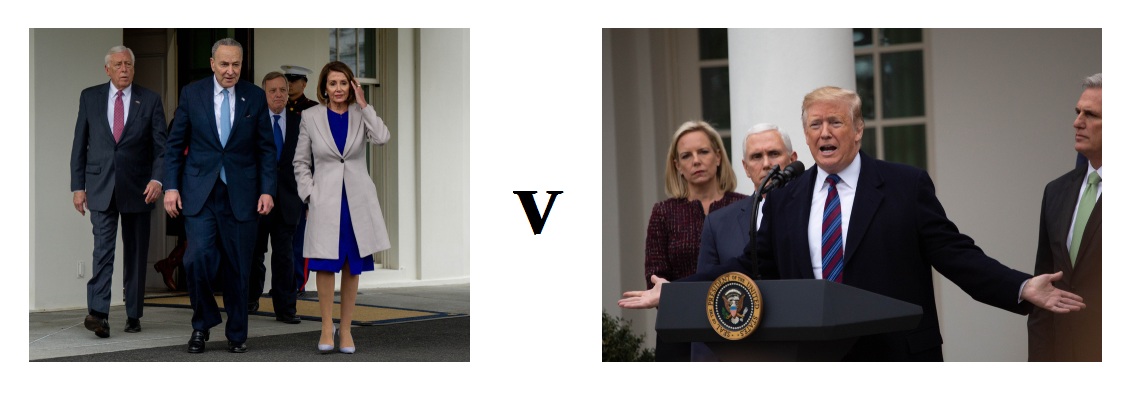
Congress v Trump – Have They Destroyed the Constitution?


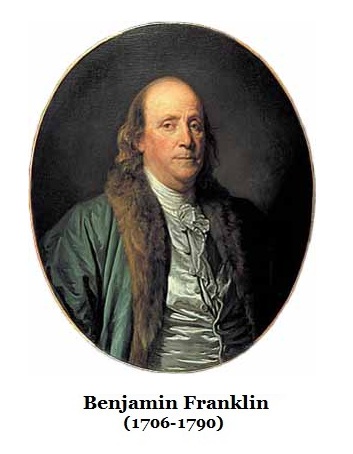
Originally, the Founding Fathers envisioned a government that was “We The People.” The structural design was based largely on the writings of Montesque and embodied the separation of powers — Executive (bureaucracy), Congress (the people), and the Judiciary (the arbitrator). Benjamin Franklin (1706-1790), at the age of 81, gave his assessment of the direction of the country in his final speech before the Constitutional Convention:

“…when you assemble a number of men to have the advantage of their joint wisdom, you inevitably assemble with those men, all their prejudices, their passions, their errors of opinion, their local interests, and their selfish views.”

He understood it would be impossible to expect a “perfect production” from such a gathering for he understood the cycles of history. After all, he was friends with Edward Gibbon who wrote the “Decline and Fall of the Roman Empire” and reviewed the text before it was published. Franklin believed that the Constitution they had just drafted “with all its faults” was still better than any alternative that was likely to emerge.

There is a serious fault in the Constitution that the Founding Fathers neglected to take into account. I believe their judgment was colored by the propaganda which survived from Cicero who painted Julius Caesar as a dictator when in fact it was his own political party, known as the Optimates, who were a conservative political faction in the late Roman Republic.  The Optimates were the corrupt senators who had to flee Rome when Caesar approached because the people cheered Caesar against the corruption of the Senate. Due to the failure to truly uncover other contemporary writers when Gibbon was doing his research, the design of the United States was fatally constructed upon these misconceptions and we are now paying the price for those mistakes.

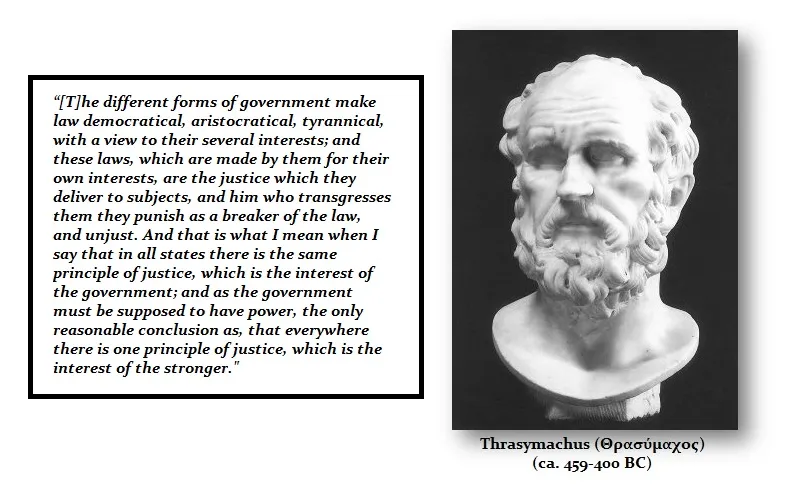
The Constitution was not supposed to be a self-actuating or a self-correcting document. Unfortunately, allowing it to be amended has destroyed its very intent. Once they installed the income tax on a progressive basis, they conveniently interpreted that you can discriminate against class and occupation but not anything else from religion to race and gender. We have proven that there is no EQUAL PROTECTION OF THE LAW and that the observation of Thrasymachus (c 459-400 BC) is the correct one of history — all governments interpret laws only in their own self-interest.

Even with constant attention and devotion of all citizens, our Constitution has utterly failed to protect our liberty and by far it never provides equal justice for all. There is a story, often told, that upon exiting the Constitutional Convention Benjamin Franklin was approached by a group of citizens asking what sort of government the delegates had created. His answer was: “A republic if you can keep it.” The brevity of that response was indeed a reflection of his understanding of the cycle of history. While we pretend to call ourselves a Democracy, we are by no means such an institution. We are exactly what Franklin replied: a REPUBLIC.

While it is a theory that democratic republics are founded upon the consent of the people, any review of history reveals that they are founded upon pretenses and have never been able to constrain those in power. Once they get a taste of that power, they abuse it. This is what drives the cycle of history which shows that society is born, matures, corrupts, and collapses by normally suicide taking shape as a revolution.

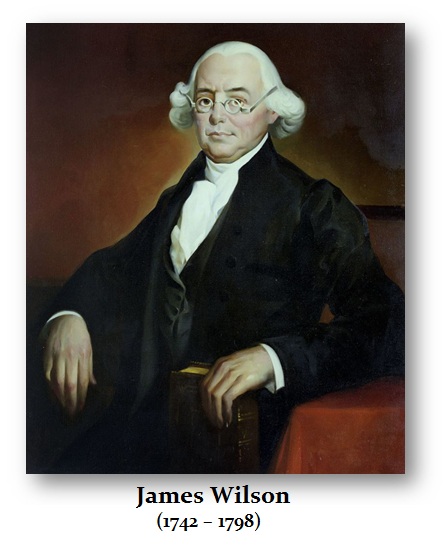
James Wilson (1742–1798) was one of the Founding Fathers of the United States who signed the Declaration of Independence as well as the United States Constitution. Wilson was elected twice to the Continental Congress representing Pennsylvania. He had a good legal mind and was a major contributor in drafting the United States Constitution. Because of his brilliant legal mind, he was also appointed as one of the six original justices to the Supreme Court of the United States.

Wilson believed that “the House of Representatives [shall] form the grand inquest of the state. They shall diligently inquire into grievances.” Indeed, the original idea was that Congress was elected by the people and was their representatives in a Republic. The Senate did not stand for election but were appointed to represent the state in which they served. The idea that Congress would be the overseer was essential. They were to have the power to investigate the executive branch. Under the Roman system, there was a Tribune who has the absolute power to investigate and criminally charge anyone in government. That became the watered-down version of the Office of Inspector General, which will investigate but is under the Justice Department in the Executive Branch which has no power to initiate its own actions.

However, the Constitution does not actually authorize such a power. It states:

SECTION 1. All legislative Powers herein granted shall be vested in a Congress of the United States, which shall consist of a Senate and House of Representatives.

There is actually no provision of the Constitution which expressly authorizes either house of Congress to make investigations and exact testimony. Nevertheless, such a power had been frequently exercised by the British Parliament and by the Assemblies of the American Colonies prior to the adoption of the Constitution. It was asserted by the House of Representatives as early as 1792 when it appointed a committee to investigate the defeat of General St. Clair and his army by the Indians in the Northwest and empowered it to “call for such persons, papers, and records, as may be necessary to assist their inquiries.” (3 Annals Of Congress 490–494 (1792); 3 A. Hinds’ Precedents Of The House Of Representatives 1725 (1907)).

However, the Supreme Court has long since accorded its agreement with Congress that the investigatory power is so essential to the legislative function as to be “implied” as inherent even though it was never expressly granted.  In 1927, the Supreme Court wrote in McGrain v. Daugherty, 273 U.S. 135, 174–175 (1927):

“We are of the opinion,” wrote Justice Van Devanter for a unanimous Court, “that the power of inquiry—with process to enforce it—is an essential and appropriate auxiliary to the legislative function. . . . A legislative body cannot legislate wisely or effectively in the absence of information respecting the conditions which the legislation is intended to affect or change; and where the legislative body does not itself possess the requisite information—which not infrequently is true—recourse must be had to others who possess it. Experience has taught that mere requests for such information often are unavailing, and also that information which is volunteered is not always accurate or complete; so some means of compulsion are essential to obtain what is needed. All this was true before and when the Constitution was framed and adopted. In that period the power of inquiry—with enforcing process—was regarded and employed as a necessary and appropriate attribute of the power to legislate—indeed, was treated as inhering in it. Thus there is ample warrant for thinking, as we do, that the constitutional provisions which commit the legislative function to the two houses are intended to include this attribute to the end that the function may be effectively exercised.”

Chief Justice Warren, in a 1957 opinion, took a hostile approach to the exercise of the investigatory power by Congress. He wrote:

“The power of the Congress to conduct investigations is inherent in the legislative process. That power is broad. It encompasses inquiries concerning the administration of existing laws as well as proposed or possibly needed statutes. It includes surveys of defects in our social, economic or political system for the purpose of enabling the Congress to remedy them. It comprehends probes into departments of the Federal Government to expose corruption, inefficiency or waste.” (Watkins v. United States, 354 U.S. 178, 187 (1957).)

Justice Harlan addressed the matter in 1959. “The power of inquiry has been employed by Congress throughout our history, over the whole range of the national interests concerning which Congress might legislate or decide upon due investigation not to legislate; it has similarly been utilized in determining what to appropriate from the national purse, or whether to appropriate. The scope of the power of inquiry, in short, is as penetrating and far-reaching as the potential power to enact and appropriate under the Constitution.” (Barenblatt v. United States, 360 U.S. 109, 111 (1959). See also Eastland v. United States Servicemen’s Fund, 421 U.S. 491, 503–07 (1975).)

Congress has overstepped its bounds in using its investigative powers against the opposition party for purely political purposes. Partisanship has now not just influenced how those powers are used, it has become the dominant justification. A Democratic Congress investigated Richard Nixon. During the Clinton administration, the Republican-led House issued more than 1,000 subpoenas and held hearings on the Clintons. Now the Congress has gone completely far beyond its powers historically demanding Trump’s tax returns. This has nothing to do with his current administration nor does it have any relevance to legislation. Donald Trump has rightfully declared, “We’re fighting all the subpoenas,” and will sue to block them and instruct officials to ignore them. In this regard, the powers of Congress have been seriously abused over the decades. Partisanship renders oversight illegitimate. To ignore the partisanship is very dangerous because it is taking government in the direction of dysfunction.

Broad as the power of inquiry is, it is not unlimited. In Kilbourn vThompson103 U.S. 168 (1880), the Supreme Court dealt with the question of whether or not the House of Representatives could compel testimony. The Court found that the House did not have the power to punish for contempt. The power of investigation may properly be employed only “in aid of the legislative function.”Clearly, the Kilbourn decision would mean that the investigation launched against Trump has exceeded the outermost boundaries of the power of Congress. Those powers are confined by the outermost boundaries of the power to legislate. In principle, the Court is clear on the limitations, “that neither house of Congress possesses a ‘general power of making inquiry into the private affairs of the citizen’; that the power actually possessed is limited to inquiries relating to matters of which the particular house ‘has jurisdiction’ and in respect of which it rightfully may take other action; that if the inquiry relates to ‘a matter wherein relief or redress could be had only by a judicial proceeding’ it is not within the range of this power, but must be left to the courts, conformably to the constitutional separation of governmental powers; and that for the purpose of determining the essential character of the inquiry recourse must be had to the resolution or order under which it is made.”

In practice, much of the litigated dispute has been about the reach of the power to inquire into the activities of private citizens; an inquiry into the administration of laws and departmental corruption, while of substantial political consequence, has given rise to fewer judicial precedents. It would seem that the only way to eliminate this type of partisanship investigations would be to empower the Office of Inspector General to act independently of the Justice Department and that its powers should be that of the Roman Tribune. That means it should have the power to also investigate those in Congress.

Under the administration of Andrew Jackson, this power to investigate was coming into focus. During the controversy over the renewal of the charter of the Bank of the United States, John Quincy Adams contended that an unlimited inquiry into the operations of the bank would be beyond the power of the House (8 Cong. Deb. 2160 (1832)). Then in 1836, the legislative power of investigation was challenged by the Jackson. A committee appointed by the House of Representatives “with power to send for persons and papers, and with instructions to inquire into the condition of the various executive departments, the ability and integrity with which they have been conducted, . . .” (13 Cong. Deb. 1057–1067 (1836)) called upon the President and the heads of departments for lists of persons appointed without the consent of the Senate and the amounts paid to them. Jackson refused this attempt “to invade the just rights of the Executive Departments,” and the majority of the committee acquiesced in 1837 (H. R. Rep. No. 194, 24th Congress, 2d sess., 1, 12, 31 (1837)).

Then leading into the Civil War, Congress unleashed investigations and brought contempt proceedings against a witness who refused to testify in an investigation of John Brown’s raid upon the arsenal at Harper’s Ferry. There was a debate in the Senate of the basis of this power which was protracted and cut sharply across sectional and party lines. The Senate voted overwhelmingly to imprison the contumacious witness (Cong. Globe, 36th Congress, 1st sess., 1100–1109 (1860)). It was this abuse of power which was then constrained by the Supreme Court in a narrow view of the power in Kilbourn v. Thompson.

Therefore, my legal opinion is that Congress is abusing its power and I agree with the Kilbourn decision that they are not free to investigate members of the opposing party for political gains. Empower the Office of Inspector General to do all investigations – PERIOD!!!!!!

President Trump and First Lady Melania Celebrate White House Historical Association Dinner…


This evening President Trump and First Lady Melania Trump host the 2019 White House Historical Society Association Dinner.

.

[Transcript] East Room – THE FIRST LADY: Good evening. Please, sit down. The President and I are delighted to be with you, all of you, this evening as we celebrate the incredible work of the White House Historical Association over this past year and prepare for our continued work to preserve and restore the People’s House in the years to come.

I want to recognize and thank members of the Association’s Board of Directors who have joined us this evening: President Stewart McLaurin, Chairman Fred Ryan, and Vice Chairman John Rogers. Your entire team has been incredible to work with, and that is a statement to your leadership and vision. I would also like to thank Secretary of Commerce Wilbur Ross and his wife Hilary for being here, and for your continued support.

The White House Historical Association has been a real partner with my office over the past two years, helping to fund, preserve, and promote the important history and timeless beauty of the White House.

Our family is grateful to live in this true symbol of our nation’s history, but we are even more honored to play a part in restoring and enhancing our country’s sacred landmark.

It is only with the support and commitment of Historical Association that we are able to continue the tradition of protecting this home, and I’m so grateful for the opportunity to work with all of you. I want to thank you all for being here tonight. This is an evening I look forward to each year.

And now, I would like to take a moment so President can say a few words. Thank you. (Applause.)

THE PRESIDENT: Thank you, sweetheart. Thank you, honey.

Thank you very much, Melania. She works so hard on these beautiful dinners, and she loves this house. You really do. You love this house. And we appreciate it.
And the First Lady and I are delighted to welcome all of you to our home this evening as we honor the extraordinary work of the White House Historical Association. Very special people. Very hardworking people, and people that work with love.

I want to join Melania in again thanking the members of the Association’s Board of Directors: President Stewart McLaurin, Chairman Fred Ryan, and Vice Chairman John Rogers. Thank you very much. Great job. You’ve done so much.

Thanks also to Secretary Wilbur Ross and his terrific wife and friend of ours, Hilary, a committed friend of this association. And Wilbur had a very big day today. You probably have read about it. It came out at about 6 o’clock in the evening. So, we’re surprised to see you here, Wilbur. You should be working right now, Wilbur — (laughter) — wherever you are.

The White House Historical Association works every day to honor, protect, and preserve the history of this priceless national landmark. Through your many publications and activities, you make the White House and its history accessible even when people who live far away from Washington want to see the White House but they can’t get to do it. They see it through you.

This year, I want to congratulate everyone who helped pioneer your brand new interactive app that shares the majesty of the White House with even more people. In particular, let me thank the Chair of the National Council of White House History, Teresa Carlson, for her incredible work on that project. Thank you very much. Where’s Teresa? Thank you. (Applause.) Thank you very much, Teresa.

Here in Washington, the White House Historical Association helps to conserve the beauty and the grandeur of this absolutely remarkable place. Last year, with the First Lady and her team, you completed the delicate and difficult work of restoring the Bellangé furniture. Incredible stuff, by the way. Good job. That is restored very beautifully — in the Blue Room, which dates back to President Monroe’s administration. And as you all know, that’s a long time ago.

You reupholstered the walls of the Red Room. And you helped manufacture the rug that today graces the Diplomatic Reception Room. It was designed by Melania, funded by the Association, and very importantly to all of us, it was made in America.
Every year, you also produce the White House Historical Association Christmas Ornament. This year, the design honors President Eisenhower — actually, a great President; people are starting to find that out — the first sitting President to fly in a helicopter — with an ornament that evokes the iconic image of Marine One.

Since President Eisenhower, the presidential helicopter has been constructed by Sikorsky, now a Lockheed Martin company. And guess who we have here from Lockheed Martin? We’re grateful to be joined tonight by Lockheed Martin’s Chairman and a friend of mine, President and CEO Marillyn Hewson. Marillyn, please. Thank you very much. (Applause.) Fantastic job. They make the greatest fighter jet in the world. And you got a problem if you’re the enemy, because you can’t see it. It’s stealth. They have a little problem with that. Right, Marillyn? It’s doing great, and you’re doing great. But you’ve been a great supporter, and I really thank you for that. We all thank you, Marillyn.

I’m also excited to announce that, yesterday, the Association generously agreed to fund the renovation of the curator’s storage area here at the White House. This will ensure that our nation’s historic treasures are properly safeguarded for future generations. So important. On behalf of the American people, thank you for that remarkable gift. Thank you all.

The walls of this very room reflect your continued work. The painting of President Theodore Roosevelt that usually hangs here is currently being conserved. It’s been temporarily replaced with the portrait of President John Quincy Adams.

On the other side of this building, a painting of another American President, Andrew Jackson — he was an exciting President, with one of the most exciting election runs ever. Maybe we beat it; I don’t know. But that’s the one they seem to talk about. Hangs behind my desk in the Oval Office. Beautiful painting.

There, it’s a constant reminder of a President who truly saw this home as the “People’s House” and saw himself as the People’s President.

“Old Hickory” constructed the North Portico, the face of this building. Today, it looks on to Lafayette Square, where an equestrian statue of Jackson — a really beautiful statue — is emblazoned with the words, “Our Federal Union, It Must Be Preserved.” He knew. Those words reflect both the true calling of your organization and all who serve here: We are preserving America’s heritage for all of the people. And this is a truly beautiful building. Truly beautiful building.

The story of the White House is the story of our country and the people who dreamed it, who built it, and who defended it every single day. They worked so hard and they defended it so well.

Every day, hundreds of patriotic Americans come to work here to secure our country’s future. Tonight, we express our tremendous gratitude to everyone who devotes their time, energy, and resources to protect our inheritance of the past.

Thank you for everything you’ve done to ensure this magnificent house will be enjoyed by all Americans for many, many years to come.

God bless you, and God bless America. And thank you being with us tonight. Thank you very much. Thank you. (Applause.)

[Transcript Link]

China’s Huawei, and 70 Affiliates, Placed on U.S. Trade Blacklist….


The overall strategery here is brilliant.  After two years of rope-a-dope…. Trump exits the corner for the championship rounds in the trade fight: First the body blow, China boxed-in with trade confrontation and consequences of retreat from agreement (Mnuchin and Lighthizer);… Then whammo, the roundhouse XO placing telecom under national securityreview (Navarro and Pillsbury); then upper-cut, Wilburine places Hauwei and affiliates on Commerce Dept. trade blacklist…  Lions and Killers and Strategists, oh my.

WASHINGTON/NEW YORK (Reuters) – The U.S. Commerce Department said on Wednesday it is adding Huawei Technologies Co Ltd and 70 affiliates to its so-called “Entity List” – a move that bans the telecom giant from buying parts and components from U.S. companies without U.S. government approval.

U.S. officials told Reuters the decision would also make it difficult if not impossible for Huawei, the largest telecommunications equipment producer in the world, to sell some products because of its reliance on U.S. suppliers.

Under the order that will take effect in the coming days, Huawei will need a U.S. government license to buy American technology. Huawei did not immediately comment.

Commerce Secretary Wilbur Ross said in a statement President Donald Trump backed the decision that will “prevent American technology from being used by foreign owned entities in ways that potentially undermine U.S. national security or foreign policy interests.”

The dramatic move comes as the Trump administration has aggressively lobbied other countries not to use Huawei equipment in next-generation 5G networks and comes just days after the Trump administration imposed new tariffs on Chinese goods amid an escalating trade war.  (read more)

There is simply no-way these step-by-step actions were not done without a massive amount of long-term planning and forethought.  Planning that had to be happening well before President Trump’s November 2017 ‘golden ticket‘ tour of Asia.  Well before….

(Reuters) […] Washington has also turned up the heat on other fronts, from targeting China’s tech firms such as Huawei and ZTE to sending warships through the strategic Taiwan Strait.

As the pressure mounts, Chinese leaders are pressing ahead to seal a deal and avoid a drawn-out trade war that risks stalling China’s long-term economic development, according to people familiar with their thinking.

But Beijing is mindful of a possible nationalistic backlash if it is seen as conceding too much to Washington.

Agreeing to U.S. demands to end subsidies and tax breaks for state-owned firms and strategic sectors would also overturn China’s state-led economic model and weaken the Communist Party’s grip on the economy, they said.

Trade analysts say China could reward other global companies at the expense of U.S. firms, replacing for example Boeing planes with Airbus jets where possible.

But there is considerable risk for China in transitioning its retaliation from tariffs to non-tariffs barriers on U.S. companies because doing so would intensify perceptions of an uneven playing field in China and incentivise some firms to shift sourcing or investment outside the country, they say.

Trump has called for U.S. firms to move production back to the United States.

“The medium- to long-term ramifications on supply chains are being deeply underestimated. I would be severely concerned if I was China,” Robert Lawrence, a nonresident senior fellow at the Peterson Institute for International Economics, recently told journalists in Beijing, where a group from the think-tank met with senior Chinese officials. (more)