Posted originally on Aug 22, 2025 by Martin Armstrong |
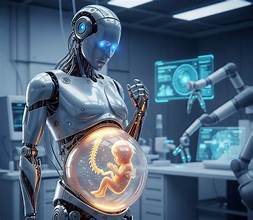
The most human of experiences has been automated as China unveiled a new AI robot that is capable of carrying a fetus to full term, replicating the entire pregnancy process from conception to birth. Kaiwa Technology in Guangzhou plans to release these robots in 2026 for $1,400, or a small fraction of what couples pay for surrogates. Has science gone to far in the quest to play God?
These “pregnancy robots” are vastly different from traditional incubators that are utilized for premature or at-risk newborns. The fetus develops within the robot’s artificial womb in synthetic amniotic fluid. Scientists have developed artificial placentas equipped with a tube system operated by AI, which can feed the baby oxygen and nutrients during gestation. Humans have never procreated through an artificial womb nor has a robot replicated the whole gestation process.
Surrogacy was deemed unethical, and the Chinese government banned the practice in 2001. The government prohibited the trade of ova, sperm, embryos, and other related reproductive items. If not outright banned, most nations have a complicated legal framework surrounding surrogacy and parental rights. The Chinese government believes gestational surrogacy exploits women in poverty, and the law recognizes the birthing mother as the legal mother. Still, repealing the one-child policy and infertility have caused a spike in interest.
Some believe this technology will be a breakthrough for couples suffering from infertility. Outside China, same-sex couples could also benefit from AI-driven surrogacy that costs a fraction of the price. Women may not be exploited for their wombs, but what about the babies born to non-human figures?
The mother-child relationship is the genesis of life and creation. The age-old debate of nature v nurture always concludes that both are essential. Scientists conducted a number of unethical studies during the last World War to see what would happen if a baby were deprived of nurture. Naturally, these studies could never be replicated again.
The Third Reich was keenly interested in eugenics and expanding the Aryan race. In 1935, Heinrich Himmler implemented selective breeding programs for “racially pure” women. Lebensborn homes were developed to discreetly provide unwed women the opportunity to procreate. The Christian society villainized unwed mothers, and so the program operated in secrecy. After birth, biological parents were forced to surrender all parental rights to the German government who assumed full parental guardianship. Thousands of children were born under this program that lasted nine years and expanded to all Nazi-occupied territories.
As a reportfrom the Ministry of Justice stated: “Leaders of the [League of German Girls have] intimated to their girls that they should bear illegitimate children; these leaders have pointed out that in view of the prevailing shortage of men, not every girl could expect to get a husband in future, and that the girls should at least fulfill their task as German women and donate a child to the Fuhrer.”
Newborns were deprived of maternal bonding and nurturing, a crucial factor that the Nazis failed to consider. “Racially and genetically valuable” babies experienced severe cognitive issues. Some of the children were placed in mental facilities for the remainder of their lives. Children showed signs of impaired memory, attentional deficits, emotional dysregulation, and delayed learning. Countless children experienced intense trauma regarding their true identities.
Obviously, there has never been a study to determine development within an artificial womb. Animal studies have shown that maternal hormones such as prolactin (PRL) are excreted during late pregnancy and activate neural brain circuits responsible for the biological nurturing response for both the mother and newborn. The biochemical communication between the mother and child determines fetal outcomes. Could an artificial placenta create the same experience?
Developmental issues are one major area for concern. Countless dystopian tales discuss what could happen if governments could control the population. The Nazis may have attempted to expand the Aryan race, but what could other governments do with this same power? Governments and globalist entities are constantly determining ways to control the population. The majority of developed nations are experiencing a severe decline in birth rates coupled with an aging population. The government could create a subset of humans to act as future soldiers, workers, or worse. Scientists need a human egg and sperm for these devices, and those born to robotic mothers would be humans. Bad actors could easily hide their misdeeds by pretending robot-born humans are AI. We may need to not only prove our identity but our actual existence as sentient homo sapiens in the future.
Posted originally on Aug 19, 2025 by Martin Armstrong |
COMMENT: Mr. Armstrong, I just wanted to thank you for participating in our board meeting. We had come to the same conclusion that all of this talk of BRICS and de-dollarization was being promoted by people in the conspiracy category, lacking any honest experience in international commerce. Before the meeting, we called one, and our Chairman listened. They could not answer any real economic question. The claims that this is the end of dollar hegemony only exposed their lack of expertise.
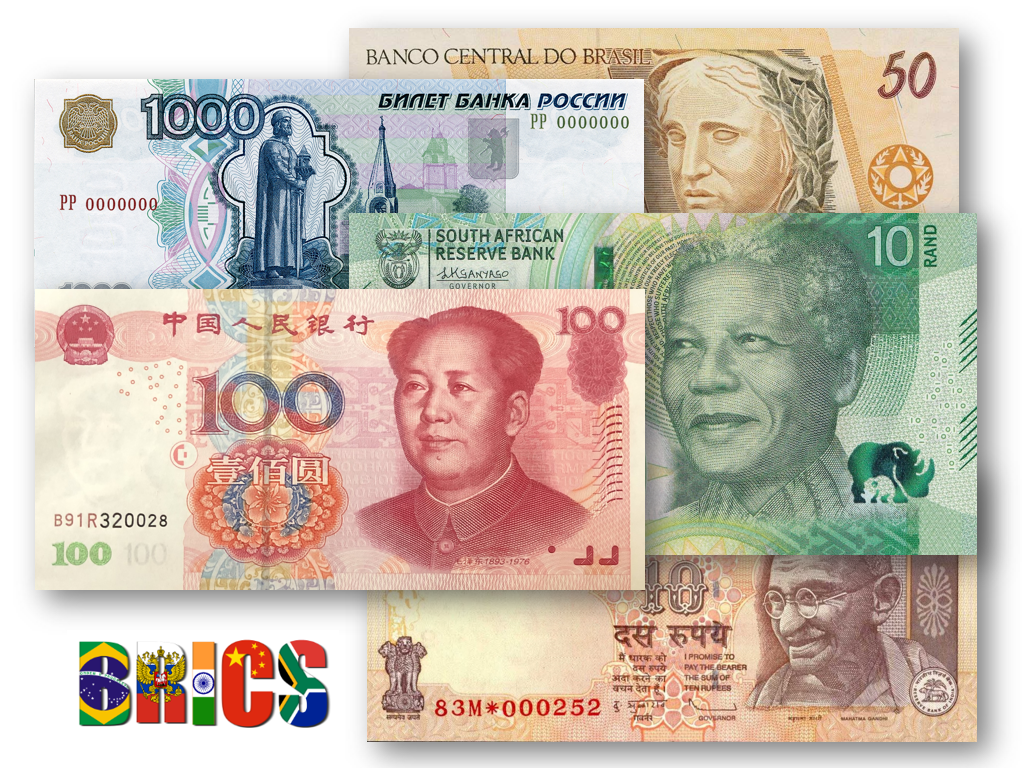
Trump’s tariffs, Biden’s sanctions, and the freezing of Russian assets were all supposed to kill the dollar as Russia, China, India, Brazil, and South Africa were to construct parallel financial systems as if they would no longer sell to the United States. Then there was the mention of backing by gold. Our chairman was very impressed that you could answer every question. You pointed us in the right direction with common sense and your real-world experience.
Thank you once again. As you said, us is about one third of the entire world consumer market, and global financial transactions to IPO are predominantly in dollars. Our Chairman will be at your WEC personally this time.
SFD
ANSWER: Thank you. Because this is such an important topic and I do not have the time to attend every board meeting internationally, I thought it best that I lay out the gist of our discussions. Your company is in the global business, and it is pathetic how the majority of these people preach the same nonsense without understanding world commerce. The US dollar’s dominance in international finance is clear despite BRICS, but its share varies across different areas. Before World War II, countries issued their debt in British pounds in order to sell it in London.
U.S. Multinational Dominance: U.S. companies earn massive profits overseas. This is the PRIMARY reason why these analysts do not understand world commerce. Apple, Microsoft, and Pfizer all generate more than 50% of revenue abroad. In 2022, U.S. multinationals earned $1.6 trillion from foreign affiliates (BEA data). Then there is the Intellectual Property (IP) and Services such as our firm with offices around the world. The US is a net exporter of IP, royalties, and high-value services (e.g., Google’s ad revenue abroad).
The US traditionally runs a goods deficit (manufacturing) of $1 trillion/year but a services surplus of $300 billion if we look at the accounting based on the ownership of companies rather than location, US overseas affiliate sales ($6 trillion/year) dwarf foreign affiliate sales in the US ($4.5 trillion/year). Now throw in the net IP receipts ($100 billion surplus), the U.S. likely shows a net Trader Surplus on an ownership basis.
When combined with services, IP, and overseas profits, the overall balance shifts to a surplus. The US benefits disproportionately from globalized production because its firms capture value through branding, R&D, and IP—elements obscured by traditional trade metrics. This highlights why trade deficits alone are an incomplete measure of economic health. Looking at the ownership-based accounting better reflects where value is captured in global supply chains. I have argued this in Washington, but it goes in one ear and out the other.
Global Trade Invoicing & Settlement (Primary Focus):
Approximately 40-50% of all global trade (exports) is invoiced in US dollars. This means the prices of goods traded internationally are set in dollars, regardless of the countries involved. Over 80% of global trade finance (letters of credit, etc.) is conducted in dollars!!!!! Around 88% of global foreign exchange (FX) transactions involve the US dollar on one side (according to the BIS Triennial Survey). This underpins trade settlements and makes the whole stupid argument of de-dollarization laughable, for they are mixing geopolitical with economics.
SWIFT data (payment messages) accounts for roughly 46-48% of international payment messages (by value) that are denominated in USD (as of mid-2024). This is a key indicator of actual settlement currency. Given that the latest consumer spend at the end of 2025 amounts to $55.5 trillion, of which the American consumer is now $17.9 trillion, US consumer spending accounts for 32.3% of the entire world! So, will BRICS displace the dollar? Come on. They said the same BS about the Euro. The United States is the LEAST socialist country, and that above all accounts for its Dominant Share of the world economy. Despite having only about 4% of the world’s population, the U.S. consistently accounts for nearly one-third of global consumer spending. This underscores the immense size and importance of the U.S. consumer market to the global economy and thus the dollar.
The dollar’s dominance does impact consumer spending globally because many goods that consumers buy locally are imported in other countries. If those imports were invoiced and paid for in dollars, fluctuations in the dollar’s value could affect local prices (inflation/purchasing power). This is why your key commodities like oil, metals, and grains are predominantly priced in dollars. Changes in the dollar affect the cost of energy and raw materials globally, impacting production costs and ultimately consumer prices for a vast array of goods. When the US is about 1/3rd of the world’s consumer spending and about 50% of all world trade, that is why they are priced in US dollars rather than the pesos.
The next HUGE area these one-issue analysts ignore is the Debt & Financial Markets. Countries and corporations borrowing in dollars face repayment costs affected by dollar strength, influencing their economies and potentially consumer spending power within those countries. This has often been one area that I get called into a lot. Currency Pegs/Reserves have been a critical issue over the years. Many countries manage their currencies relative to the dollar or hold significant dollar reserves, influencing their domestic monetary policy and economic stability. This includes Foreign Exchange Reserves. The dollar constitutes about 59% of allocated global foreign exchange reserves held by central banks (IMF COFER data Q1 2024).
Approximately 75-80% of emerging market (EM) external sovereign bonds are denominated in US dollars. For corporate EM bonds, the share is slightly lower, around 60-70%. As I pointed out, before World War II, EMs would issue their debt in British pounds because that was where there was a market to sell their debt. Today, the pound has been replaced with dollars, and the FINANCIAL CAPITAL OF THE WORLD is now New York – not London or Paris.
Of the Sovereign Debt issues globally (Government Issuance), that works out to be 75-80% USD-denominated (e.g., IMF, BIS, and J.P. Morgan EMBI Index data). For example, as of 2023, over 75% of EM government bonds held by foreign investors were in USD. Turn to the corporate world. There we see 60-70% USD-denominated corporate debt issues (e.g., Bank for International Settlements data). This is even higher in sectors like commodities or multinationals.
New York City is unequivocally the world’s leading global financial center, and its banks play a dominant role in key aspects of international banking. This ensures the dollar’s role in global transactions. The vast majority of international trade and finance is conducted in USD. NYC banks are at the heart of that system. On a clearing basis alone, the Clearing House Interbank Payments System (CHIPS) in NYC clears roughly $1.5 trillion daily in cross-border USD payments. That represents a massive share of global USD flows.
Then there is the Correspondent Banking network. Major NYC banks act as correspondent banks for thousands of banks worldwide, facilitating their international USD transactions. Investment Banking (Capital Markets) takes place in the heart of the NYC-based banks (Goldman Sachs, JPMorgan Chase, Morgan Stanley, Citigroup) and this consistently dominates global aspects of Mergers & Acquisitions, Equity and Debt underwriting (IPOs, bond issuances), and Sales & Trading (especially of US Treasuries, the world’s most profound and most important bond market). Even if we look at the global investment banking fee revenue, you will find that more than 50% takes place in New York City.
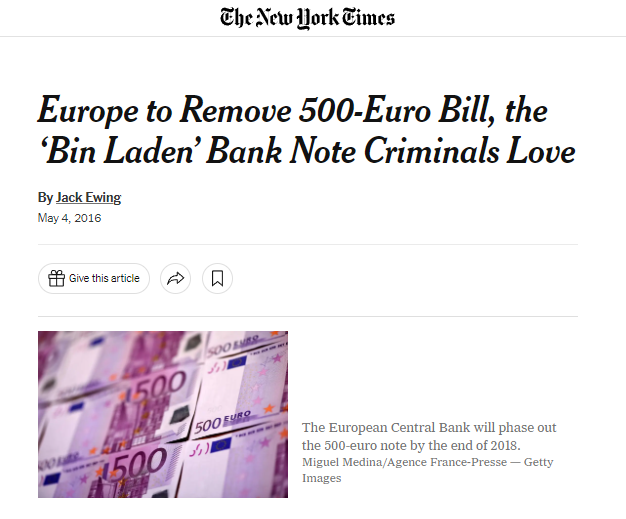
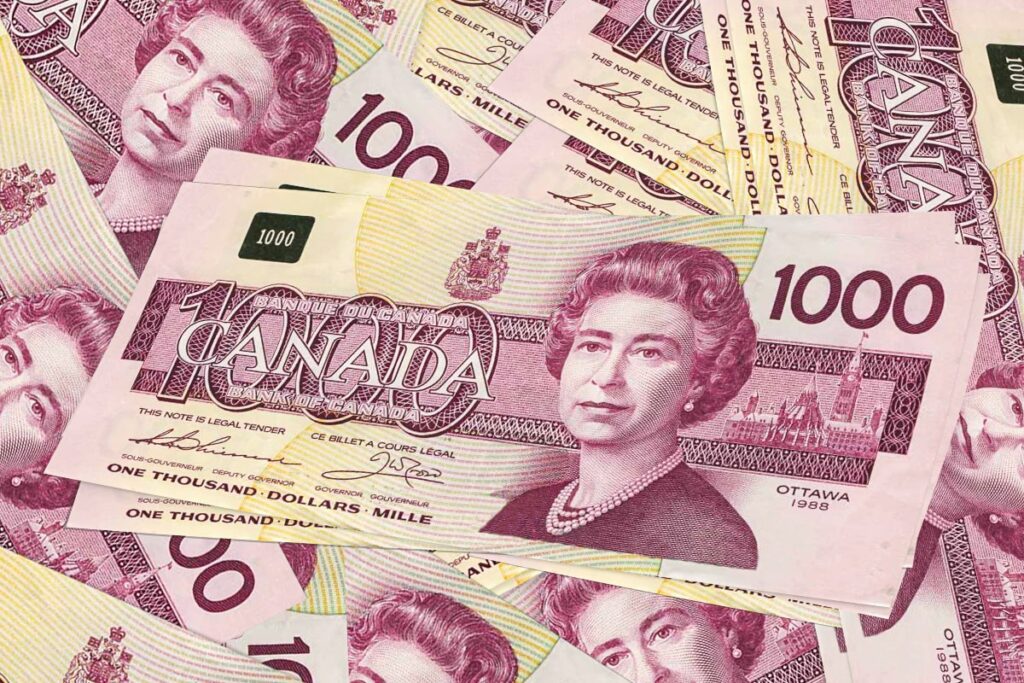
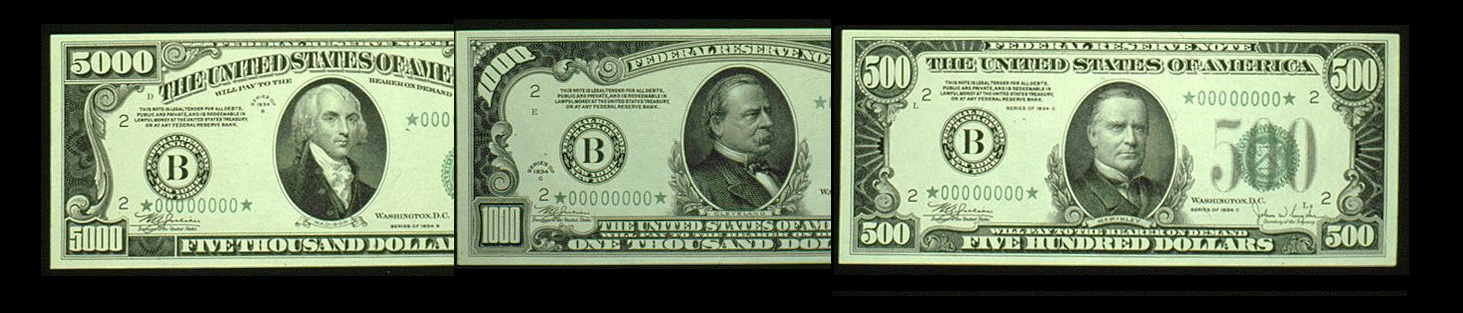
Europe and Britain, along with India and Switzerland, cancelled their currency. The $500 and $1,000 Canadian banknotes were withdrawn from circulation and are no longer legal tender as of January 1, 2021. However, they can still be redeemed at banks or the Bank of Canada for their face value, and they may hold additional value for collectors. Trump has proposed bringing back the $500 bill. Yet, while Roosevelt stopped issuing high-denomination bills, they are still valid. This is a MAJOR issue that the dollar remains the reserve currency around the world – it is TRUSTED!!!!!! While 60% of all U.S. bills circulate abroad, about 80% of $100 notes dominate foreign holdings due to their high value and portability.
The dollar is involved in roughly 40-50% of trade invoicing, over 80% of trade finance, and about 46-48% of international payment settlements. Research has shown that allocating world commerce according to ownership rather than location results in the US having a trade surplus, not a deficit.
The dollar remains the undisputed dominant global reserve and transaction currency, involved in the vast majority of cross-border financial flows. All of the nonsense about “de-dollarization,” with some countries (like China, Russia, Brazil) increasing the use of other currencies in bilateral trade agreements, is a distraction. Such a shift is gradual and hasn’t significantly eroded the dollar’s overall global share, and cannot until the economic changes, and that will not come until AFTER 2032.
Anyone who says the BRICS are displacing the dollar cannot possibly have any experience in world finance.
The space race is no longer prioritizing exploration but militarization and energy. The second space race will see the United States come up against Russia and China to place nuclear reactors on the surface of the moon.
US Transportation Secretary and interim NASA Administrator Sean Duff declared that installing a nuclear reactor on the moon is the agency’s top priority. The reactor will generate a minimum of 100 kilowatts of electricity to support lunar missions and infrastructure, and NASA has a firm deadline—2029.
Duffy also noted that the nation that reaches the moon first will have the ability to implement “keep-out zones” around their reactors. The US has a strong sense of urgency as China and Russia have a joint plan to create an automated nuclear power station on the moon by 2035.
Russia and China have been plotting to implement the International Lunar Research Station (ILRS) since 2021, during the reconnaissance phase of the mission, where China’s Chang’e series and Russia’s Luna missions sought appropriate sites for construction. The construction phase will begin in 2026 and last until 2035. Beginning next year, China and Russia plan to begin assembling a command center and sample return missions before assembling the core facility centers for energy, research, and communications.
The south pole of the moon has consistent sunlight needed for power. It is also believed that water ice may be present in the permanently shadowed craters. Nuclear power is crucial, as solar panels and/or batteries alone will not be able to supply a continuous source of energy due to the moon’s long nights.
The 1967 Outer Space Treaty prohibits the placement of nuclear weapons or military bases on the surface of the moon. No nation has declared that it wants to militarize the moon, and we are to believe their innovations are for peaceful purposes only. The reactors do have the potential for dual-use and will give the commander a massive technological advantage.
Who will reach the moon first? The US and Russia are spending on endless warfare, and China will soon be brought into the battle. Naturally there is a high price to pay for such technology. The US is considered the global leader in space capabilities and plans to launch humans to the Moon by 2028 under the Artemis project. China’s technology is rapidly advancing, and its partnership with Russia will make for a true opponent. Whoever achieves lunar dominance first will become a leader in AI, nuclear powers, resource utilization, and communication technologies—the ultimate global power of the 21st century.
Oh, and it is of note that there may be an abundance of unexplored rare minerals on the Moon as well.
I have created this site to help people have fun in the kitchen. I write about enjoying life both in and out of my kitchen. Life is short! Make the most of it and enjoy!
This is a library of News Events not reported by the Main Stream Media documenting & connecting the dots on How the Obama Marxist Liberal agenda is destroying America













 Centinel2012