Elon Musk Partners with Global Disinformation Index, the Progressive Disinformation Specialists, to Diminish Advertiser Fears


Posted originally on the CTH on August 9, 2023 | Sundance 

The Global Disinformation Index (GDI) is the group who define the content on platforms according to their ideological worldview and then blacklist sites who do not align their content to support the GDI perspective.   According to the Washington Examiner, Elon Musk has just partnered with them in order to enhance the advertising portfolio of Twitter and find ways to make it lose less money.
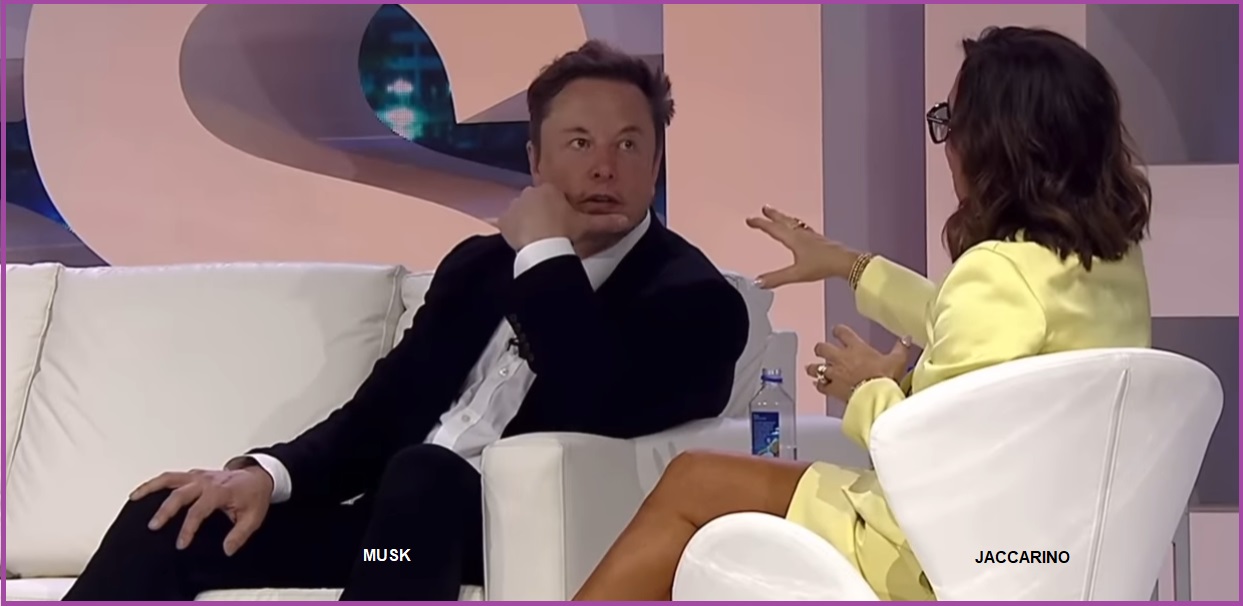
CTH has previously said to watch the economics of the Musk situation, because that will determine the outcome of the decisions. The hiring of NBC-Universal executive Linda Yaccarino was explicitly to lure the advertising side of the issue back onto the platform.

Once you are reliant on the advertising, you must then comply with the content terms of the companies who control the advertising.   Joining with a group to define “disinformation” is an outcome.

WASHINGTON – Elon Musk’s X, the social media company formerly known as Twitter, signed an exclusive partnership with a “misinformation” tracker linked to a government-funded group blacklisting conservative media outlets, records show.

On the heels of Musk in July describing how the social media company had negative cash flows due to a 50% drop in advertising revenue, X is teaming up with Integral Ad Science, an ad-verification company, for a “brand safety” initiative. That same ad group, which uses an artificial intelligence algorithm to rate alleged “misinformation,” is affiliated with the Global Disinformation Index, a British group with two affiliated U.S. nonprofit groups that the Washington Examiner revealed is covertly feeding blacklists of conservative websites to advertisers to defund disfavored speech.

“I am completely against GDI in any form,” Rep. Ken Buck (R-CO), who sits on the House Judiciary and Foreign Affairs committees and has launched investigations into the British group over its alleged censorship efforts, told the Washington Examiner. “This new partnership with a group connected with GDI would only amplify the coercive and destructive powers targeting free speech.”

The partnership between X and IAS appears to undercut Musk’s touted commitment to free speech. The X owner has notably released “Twitter Files” documents to journalists, including Matt Taibbi, from Jack Dorsey’s time running the platform that show the company’s apparent coordination with the government to thwart right-leaning voices online. (read more)

I don’t want to say I told you so, but….

…”There is no such thing as “disinformation” or “misinformation”.  There is only information you accept and information you do not accept.  You were not born with a requirement to believe everything you are told; rather, you were born with a brain that allows you to process the information you receive and make independent decisions.”… 
Keep in mind, long before people realized the Dept of Homeland Security (FBI, DHS, CISA etc.) had a portal into Twitter, I was explaining how transparently obvious it was. {Go Deep – Jack’s Magic Coffee Shop} In part, the transparency of the problem is driven by CTH understanding of the costs associated with Twitter as a very unique platform in the sphere of social media. {Go Deep – Understand the Costs}

With the latest revelations we shared about the financial position of Twitter {Go Deep on FINANCIALS}, all of the moves now underway make sense.  Musk was on track to hit a date in/around October of this year where Twitter would be insolvent. If you had read those previous “Go Deep” links, you will easily see the problem.

In 2021, Twitter generated $5.1 billion in revenue, according to the Wall Street Journal.  According to the New York Times, in 2023 that revenue has dropped to around $1 billion per year.

Musk stated during public conversation that Twitter was essentially break even at $4 billion, which was the position in 2022 just prior to his taking over.  [2022 costs around $4.5 billion and revenue around $4 billion +/-, per public financial statements and reporting].   Musk cut approximately $500 million in expenses from realignment and staffing reductions.

Musk has a $1.5 billion debt service on the loan he took out, per his own admission: that’s more than $100 million per month.  The debt service alone is higher than his revenue.  As I noted last month, Twitter is losing somewhere around $300 million per month.  With $1 billion liquid in the bank, as of June (per Musk), that only gets him to September; by October, he needs another influx of cash, or else.

There is no business model, even with paying subscribers, for Twitter to exist without a major increase in revenue (Yaccarino) or a major decrease in costs.  As the business grows (more users), the costs increase (more simultaneous users), and the costs to subscribers would grow.  Twitter Blue subscriptions are around 180,000 users, paying $11/mo.  That’s around $2 million a month- a pittance in comparison to what he needs.
On March 2, 2023, the people in control of the Joe Biden administration officially announced that government control of internet content was now officially a part of the national security apparatus. [White House Link] If you have followed the history of how the Fourth Branch of Government has been created, you will immediately recognize the intent of this new framework.
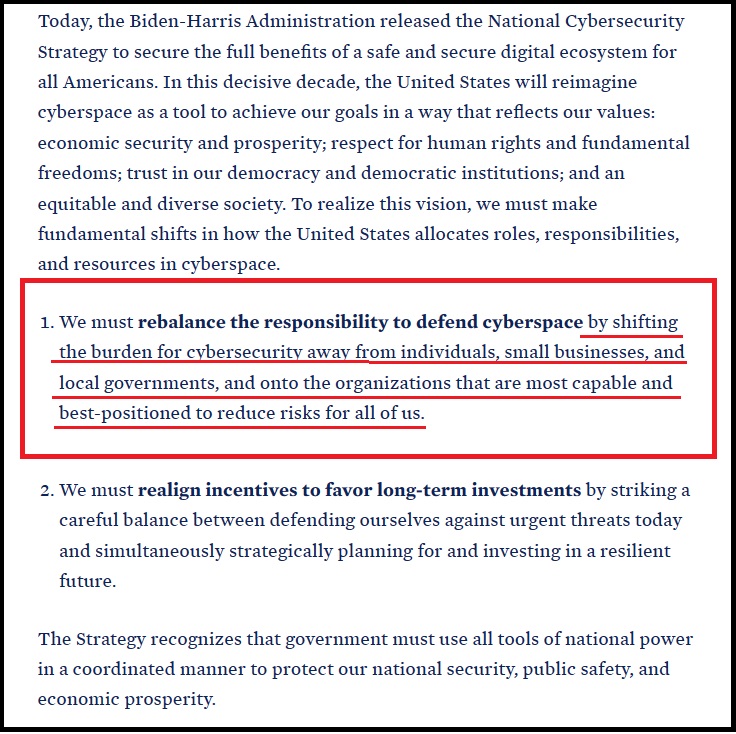
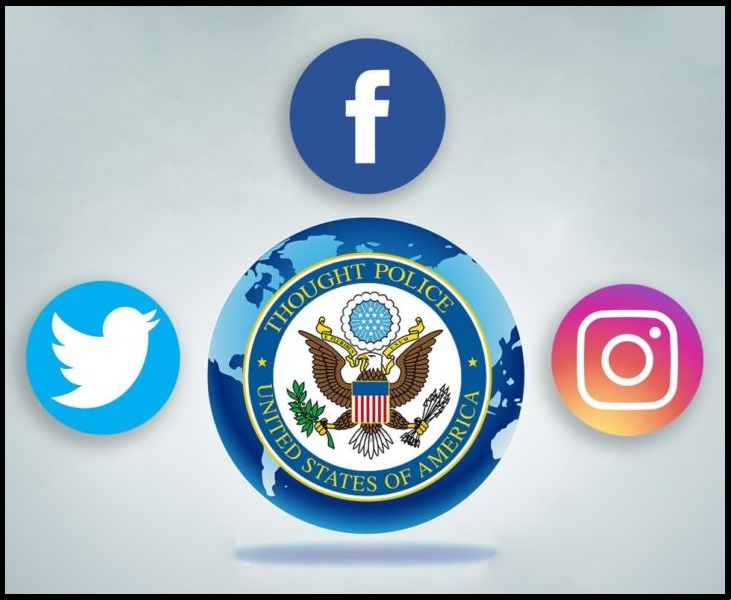
The “National Cybersecurity Strategy” aligns with, supports, and works in concert with a total U.S. surveillance system, where definitions of information are then applied to “cybersecurity” and communication vectors.  This policy is both a surveillance system and an information filtration prism where the government will decide what is information, disinformation, misinformation and malinformation, then act upon it.

In part, this appears to be a response to the revelations around government influence of social media, the Twitter Files.  Now we see the formalization of the intent. The government will be the arbiter of truth and cyber security, not the communication platforms or private companies.  This announcement puts the government in control.

All of the control systems previously assembled under the guise of the Dept of Homeland Security now become part of the online, digital national security apparatus. I simply cannot emphasis enough how dangerous this is, and the unspoken motive behind it; however, to the latter, you are part of a small select group who are capable of understanding what was in this announcement without me spelling it out.

…”There is no such thing as “disinformation” or “misinformation”.  There is only information you accept and information you do not accept.  You were not born with a requirement to believe everything you are told; rather, you were born with a brain that allows you to process the information you receive and make independent decisions.”… ~ SUNDANCE

Twitter Court Filing Cites Alarming FTC Conduct Pressuring Consent Decree Arbiter to Target Elon Musk and Company


Posted originally on the CTH on July 13, 2023 | Sundance 

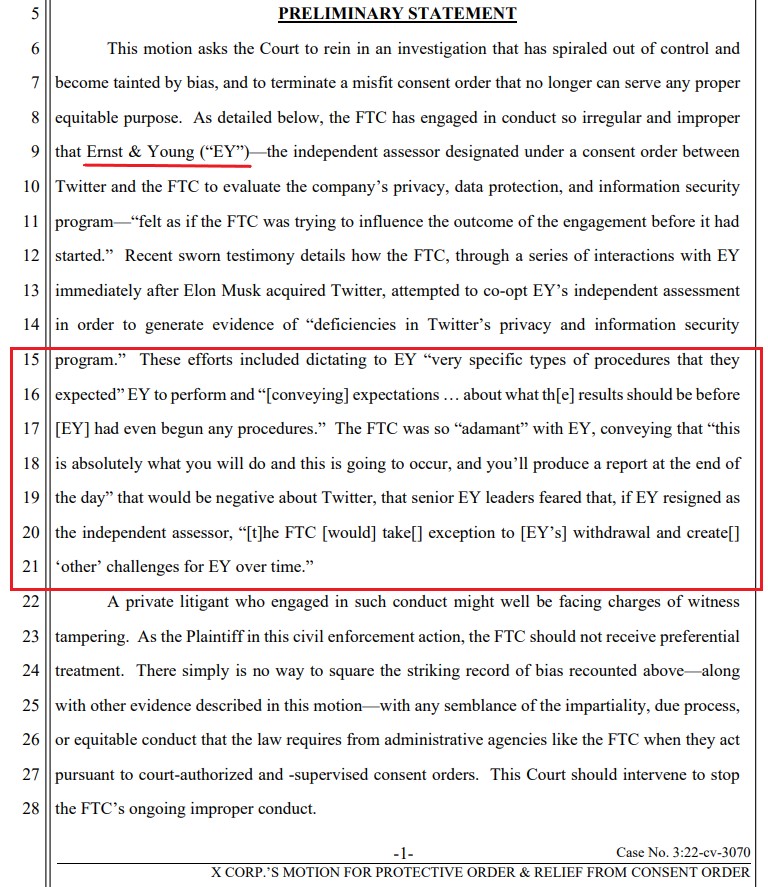
Prior to Elon Musk taking control of Twitter, the social media company entered a consent decree with the Federal Trade Commission putting a neutral arbiter from Ernst & Young in an oversight position for the company’s privacy, data collection and information security protocols.  Given what we know about DHS and FBI control and influence over Twitter content, there is a certain irony in the prior position of the FTC regarding user privacy.

That said, Twitter’s new parent company X Corp filed a court motion Thursday [PDF HERE] asking a federal court overseeing the settlement to either throw out the consent decree entirely, or put it on hold until the FTC turns over documents to Twitter showing historic bias against the company. Twitter is also seeking to bar the FTC from deposing CEO Elon Musk over issues that preceded his arrival.

Within the filing, Twitter presents some alarming information as shared by Ernst and Young about the FTC pressure applied to them.

[SOURCE LINK]

House Judiciary Committee Chairman Rep. Jim Jordan questioned FTC Chair Lina Khan about this issue today during a congressional hearing.

Elon Musk Signs Pledge to Support China’s Socialist Values


Posted originally on the CTH on July 9, 2023 | Sundance 

There’s a lot of background discussion about this latest issue created by Elon Musk signing a pledge to support the socialist (communist) economic enterprise systems under the control of the Chinese Communist Party.

Most of the current discussion is focused on the weak ideological ‘free-market and democratic’ commitment exhibited by Musk’s adherence to the rules and dictates of the Chinese state.  However, I’m staying far outside the esoteric and nuanced implication of this.  The reality is much simpler.

Elon Musk is in a dire financial situation; he cannot afford to be high-minded and ideologically connected to free-speech and free-enterprise right now (if he ever was).

The Musk empire is in a very weak financial position; these decisions made, while China is holding such financial leverage over him, are made without option.  Ironically, Twitter is banned in China. lolol

(Via Daily Mail) – […]  Elon Musk’s Tesla was the only foreign company in the lineup of 15 other automakers to sign the letter.  Part of Musk’s pledge was a promise to support China’s ‘core socialist values’ and bear ‘the heavy responsibility of maintaining steady growth.’ 

The automakers also agreed not to ‘exaggerate or use false publicity and disrupt fair competition with abnormal pricing,’ according to Bloomberg

China accounts for one third of Tesla’s annual sales, reports the FT. The communist country is Tesla’s second-largest market after the U.S. and the Shanghai plant is the electric car maker’s largest production hub. 

Yaqiu Wang, senior China researcher with Human Rights Watch, criticized Musk’s moves, telling the FT: ‘Failing to comply with ‘core socialist values’ has been frequently used by authorities to punish speeches that are critical of the Chinese government.’  (read more)

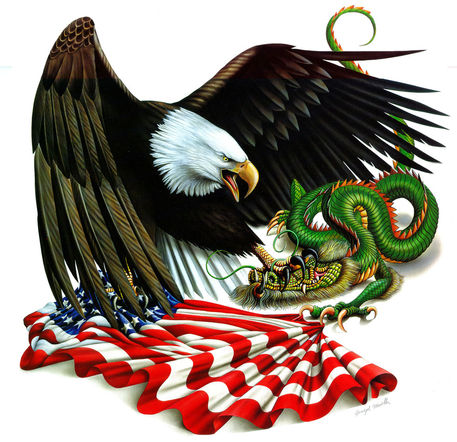
Once you strap onto the ride with the dragon, you don’t get off until the ride’s over.

When the Turkish government told Musk to block the political opposition to the Turkish government, Musk complied.

When the French government told Musk to block and remove content adverse to their domestic interests, Musk complied.

When China says support Communism in our country, or else…. Musk adheres.

Elon Musk is no John Galt.

Elon Musk Is Self-Immolating on Twitter and Being Disingenuous About the Reasoning


Posted originally on the CTH on July 1, 2023 | Sundance

The Twitter platform decisions are making headlines and opening conversation, because Elon Musk is trying to retain his platform against all odds and not really working to solve his problem.  Several platform changes are taking place that are being less than honestly explained.  As interested CTH readers look on quizzically, perhaps it’s time for me to revisit the truth of Musk’s challenge as it has always existed so people can understand. [NBC ARTICLE HERE, that doesn’t understand]

Keep in mind, long before people realized the Dept of Homeland Security (FBI, DHS, CISA etc.) had a portal into Twitter, I was explaining how transparently obvious it was. {Go Deep – Jack’s Magic Coffee Shop} In part, the transparency of the problem is driven by CTH understanding of the costs associated with Twitter as a very unique platform in the sphere of social media. {Go Deep – Understand the Costs}

With the latest revelations we shared about the financial position of Twitter {Go Deep on FINANCIALS}, all of the moves now underway make sense.  Musk was on track to hit a date in/around October of this year where Twitter would be insolvent. If you had read those previous “Go Deep” links, you will easily see the problem. However, if you have not read those backgrounds, this could be difficult to understand.

[Source Link]

Musk is being disingenuous in his explanation here.  I’m being generous in not calling him a fibber.  His problem is multifaceted, and he is looking at it with two approaches.

First, by Musk’s prior admissions, he’s losing approximately $300 million/month and needs to grow revenue fast.  That’s why he hired Linda Yaccarino.  Second, he’s trying desperately to reduce operational costs for data processing.  Twitter has a systemic platform cost issue that will not change easily – due to his very unique issue of “simultaneous users,” in combination with no proprietary content.  That’s where he is being less than honest about these changes.

Twitter is a global discussion platform, essentially a global commenting system.  Elon Musk is trying to address the cost and utility of his platform at the same time that a similarly constructed META alternative is about to launch.  Yes, Mark Zuckerberg is JUST ABOUT to launch a Twitter version of META that will link Facebook, Instagram, and Google YouTube content into one big instant conversation and commenting system.

Zuckerberg has one key thing Musk doesn’t, proprietary content and actively engaged and solid advertising systems built into the operation.

META CEO Mark Zuckerberg has the revenue options that will cover the extreme costs of the simultaneous user interface and data processing, while simultaneously allowing content creators to cross post their content.

Zuckerberg has multifaceted advertising engagement systems that allow advertisers to target and engage with users in very creative ways on his platform(s). You can even shop directly from Instagram and Facebook with the advertiser.  Setting aside the other issues with advertisers, corporate wokeism etc, Elon Musk has nothing like that – not even close.

However, Musk’s biggest issue is the cost of his platform.  This is what he is trying to tackle right now, while simultaneously fending off the META infringement.

In the big picture of tech platforms, Twitter, as an operating model, is a massive high-user commenting system.

Twitter is not a platform built around a website; Twitter is a platform for comments and discussion that operates in the sphere of social media.  As a consequence, the technology and data processing required to operate the platform does not have an economy of scale.

There is no business model where Twitter is financially viable to operate…. UNLESS the tech architecture under the platform was subsidized.

[NOTE: In my opinion, there is only one technological system and entity that could possibly have underwritten the cost of Twitter to operate.  That entity is the United States Government.  That’s where the quid pro quo in allowing DHS to have a backdoor comes in.]

Unlike websites and other social media, Twitter is unique in that it only represents a platform for user engagement and discussion.  There is no content other than commentary, discussion and the sharing of information – such as linking to other information, pictures, graphics, videos url links etc.

In essence, Twitter is like the commenting system on the CTH website.  It is the global commenting system for users to share information and debate.  It is, in some ways, like the public square of global discussion.   However, the key point is that user engagement on the platform creates a massive amount of data demand.

Within the systems of technology for public (user engagement) commenting, there is no economy of scale.  Each added user represents an increased cost to the operation of the platform, because each user engagement demands database performance to respond to the simultaneous users on the platform.  The term “simultaneous users” is critical to understand because that drives the cost.

According to the Wall Street Journal, Twitter has approximately 217 million registered daily users, and their goal is to expand to 315 million users by the end of 2023.   Let me explain why things are not what they seem.

When people, users, operate on a tech platform using the engagement features, writing comments, hitting likes, posting images, links etc, the user is sending a data request to the platform’s servers.  The servers must then respond allowing all simultaneous users to see the change triggered by the single user.

Example: when you hit the “like” button feature on an engagement system, the response (like increasing by one) must not only be visible to you, but must also be visible to those simultaneously looking at the action you took.   If 100,000 simultaneous users are looking at the same thing, the database must deliver the response to 100,000 people.  As a result, the number of simultaneous users on a user engagement platform drives massive performance costs.  In the example above, a single action by one person requires the server to respond to 100,000 simultaneous users with the updated data.

As a consequence, when a commenting platform increases in users, the cost not only increases because of that one user, the cost increases because the servers need to respond to all the simultaneous users.   Using CTH as an example, 10,000 to 15,000 simultaneous commenting system users, engaging with the servers, costs around $4,500/mo.

This is why most websites, even big media websites, do not have proprietary user engagement, i.e. commenting systems.  Instead, most websites use third party providers like Disqus who run the commenting systems on their own servers.  Their commenting systems are plugged in to the website; that defers the cost from the website operator, and the third party can function as a business by selling ads and controlling the user experience.  [It also sucks because user privacy is non existent]

The key to understanding the Twitter dynamic is to see the difference between, (a) running a website, where it doesn’t really matter how many people come to look at the content (low server costs), and (b) running a user engagement system, where the costs to accommodate the data processing -which increase exponentially with a higher number of simultaneous users- are extremely expensive.   Twitter’s entire platform is based on the latter.

There is no economy of scale in any simultaneous user engagement system.  Every added user costs exponentially more in data-processing demand, because every user needs a response, and every simultaneous user (follower) requires the same simultaneous response.  A Twitter user with 100 followers (simultaneously logged in) that takes an action – costs less than a Twitter user with 100,000 followers (simultaneously logged in), that takes an action.

If you understand the cost increases in the data demand for simultaneous users, you can see the business model for Twitter is non-existent.

Bottom line, more users means it costs Twitter more money to operate.  The business model is backwards from traditional business.  More customers = higher costs, because each customer brings more simultaneous users….. which means exponentially more data performance is needed.

User engagement features on Twitter are significant, because that’s all Twitter does.  Not only can users write comments, graphics, memes, videos, but they can also like comments, retweet comments, subtweet comments, bookmark comments, and participate in DM systems.  That is a massive amount of server/data performance demand, and when you consider simultaneous users, it’s almost unimaginable in scale.  That cost and capacity is also the reason why Twitter does not have an edit function.

With 217 million users, you could expect 50 million simultaneous users on Twitter during peak operating times.  My back of the envelope calculations, which are really just estimations based on known industry costs for data performance and functions per second (pfp), would put the data cost to operate Twitter around $200 to $300 million per month.

In 2021, Twitter generated $5.1 billion in revenue, according to the Wall Street Journal.  According to the New York Times, in 2023 that revenue has dropped to around $1 billion per year.

Musk stated during public conversation that Twitter was essentially break even at $4 billion, which was the position in 2022 just prior to his taking over.  [2022 costs around $4.5 billion and revenue around $4 billion +/-, per public financial statements and reporting].   Musk cut approximately $500 million in expenses from realignment and staffing reductions.

Musk has a $1.5 billion debt service on the loan he took out, per his own admission: that’s more than $100 million per month.  The debt service alone is higher than his revenue.  As I noted last month, Twitter is losing somewhere around $300 million per month.  With $1 billion liquid in the bank, as of June (per Musk), that only gets him to September; by October, he needs another influx of cash, or else.

There is no business model, even with paying subscribers, for Twitter to exist without a major increase in revenue (Yaccarino) or a major decrease in costs.  As the business grows (more users), the costs increase (more simultaneous users), and the costs to subscribers would grow.  Twitter Blue subscriptions are around 180,000 users, paying $11/mo.  That’s around $2 million a month- a pittance in comparison to what he needs.

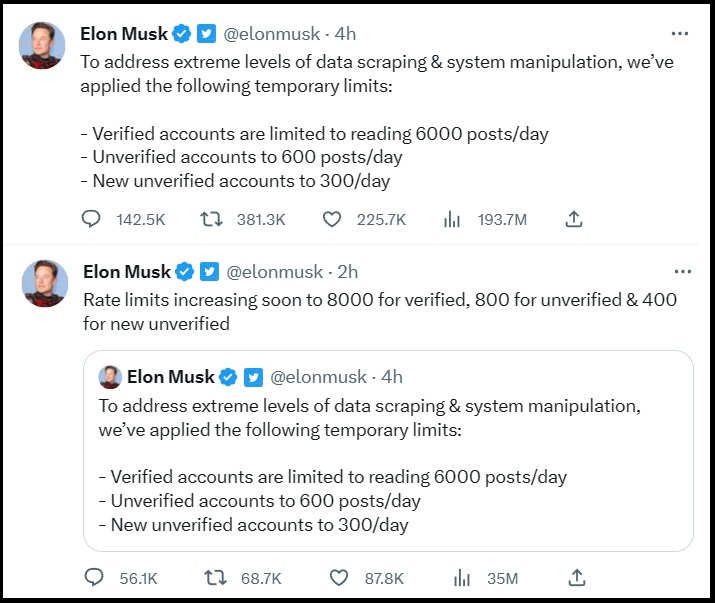
Right now, meaning literally right now, Musk is trying to reduce operational costs by limiting user engagement.

It is not an accident these solutions target the “simultaneous user” issue?

Can you see it now?

.

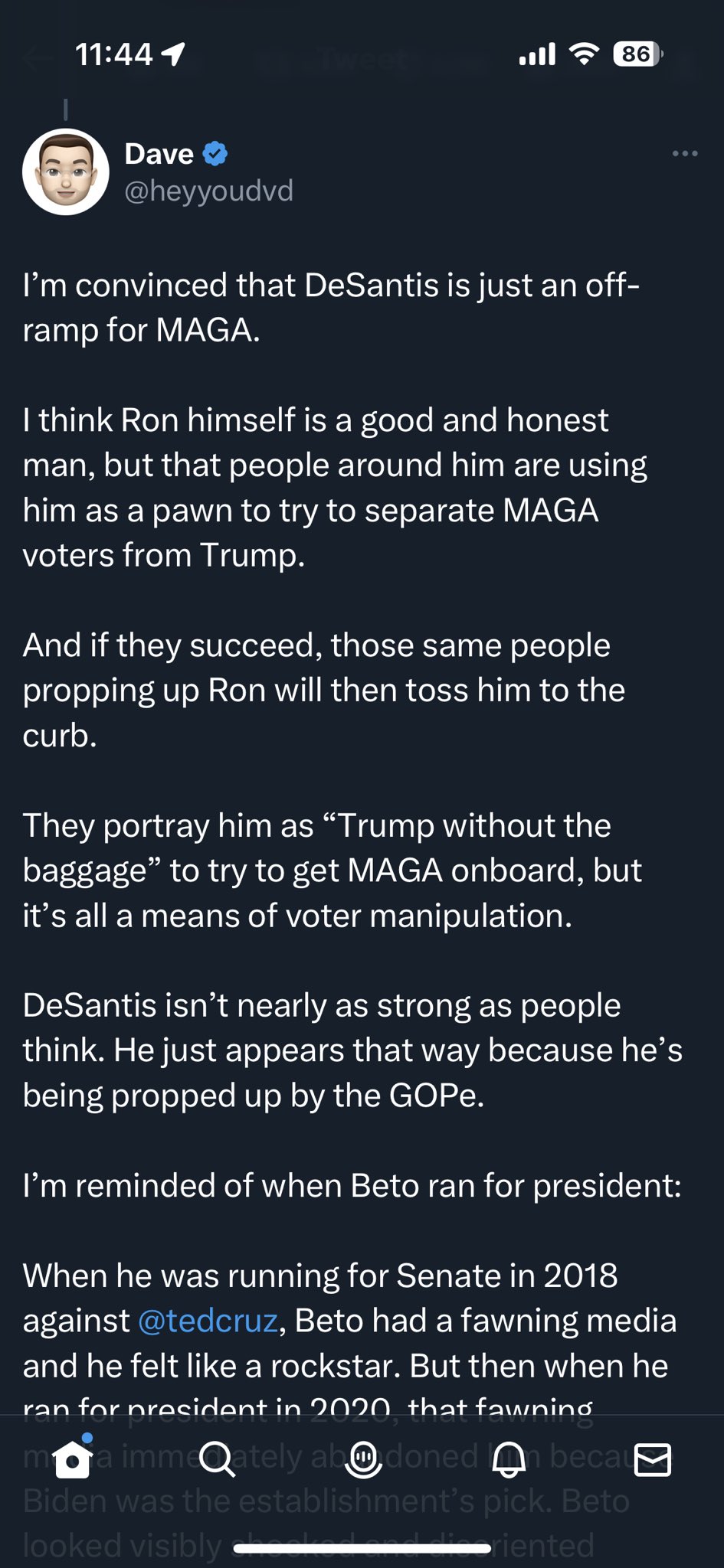
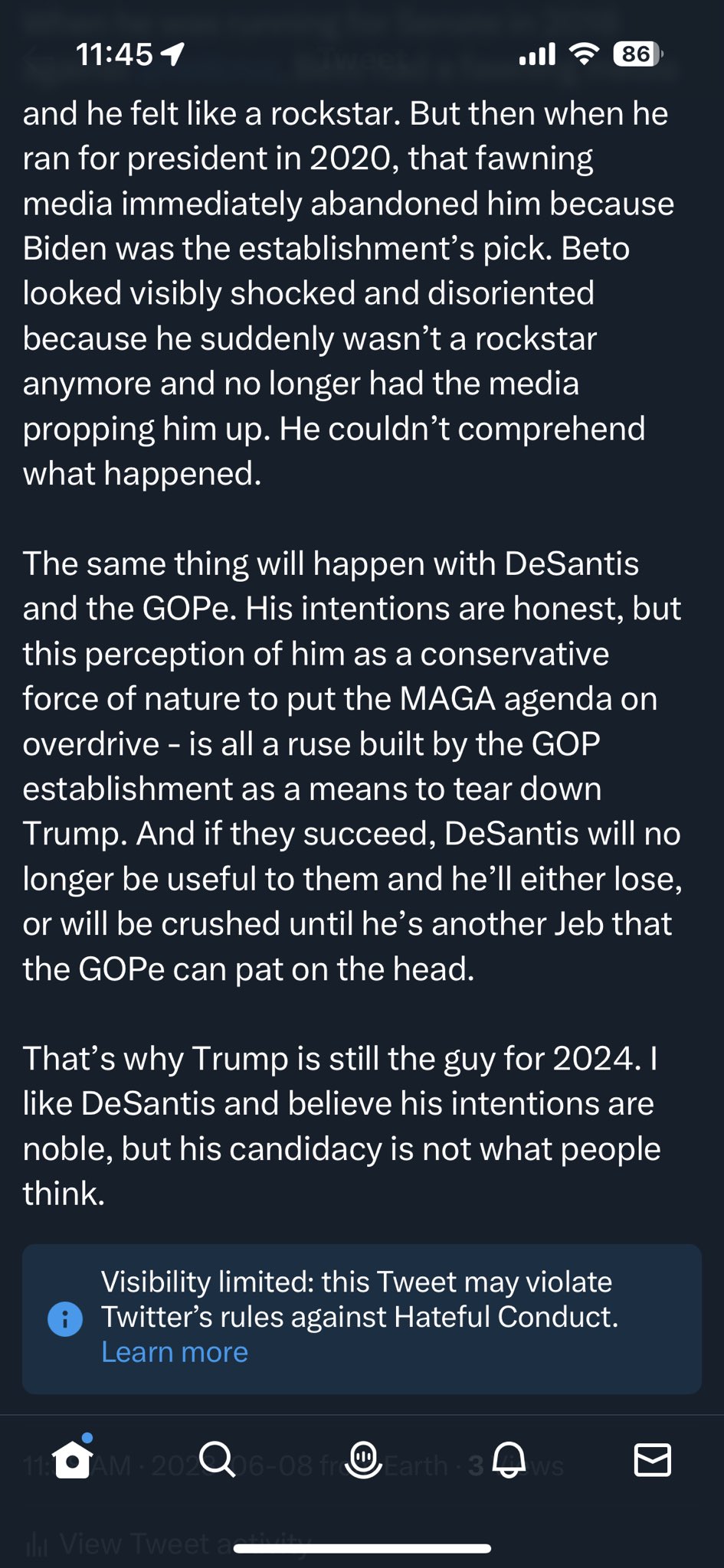
As Expected Twitter Begins Limiting Reach of Content Critical of Ron DeSantis


Posted originally on the CTH on June 8, 2023 | Sundance 

Everything is connected to the economics and financials of the thing.  This is the one guiding truth that underlines every curiosity of human nature.  If you want to understand behavior, follow the money.

An example surfaces today [SOURCE HERE] highlighting the background hands of those who seek to control public opinion.  This is the psychological operation that we see through every mechanism under the command and control of interests who have vested financial stakes.  Notice the disclaimer.:

“Visibility limited: this Tweet may violate Twitter’s rules against Hateful Conduct”

Yeah, we can’t have people sharing honest, albeit softly critical, opinion of Ron DeSantis because they become a threat – ergo, hateful conduct.

Comrade, wrong thoughts require reeducation.  In the bigger picture, this is all part of the control mechanisms operating to influence the 2024 election.  And yes, Elon Musk is very much a part of it just like the DHS operatives that controlled the platform before he arrived.

I am not going to spend time dwelling on it, but I am going to keep pointing out the strings on the puppets so that more people start to see them.  Once you see the strings on the marionettes, you cannot watch the performance and simultaneously return your brain to that moment in time before you noticed them.

Damnit Sundance! But, muh conspiracy or something. lol

The MAGA movement is one giant ‘red pill’ distribution operation.

New York Times Gains Insider Information on Twitter Revenue, Expanded Financials Look Worse Than Former Estimates


Posted originally on the CTH on June 5, 2023 | Sundance 

The New York Times has gained insider information on the current advertising revenue for the social media platform Twitter. [Article Here]  Ignoring the nonsense narrative engineering and just focusing on the data itself, the revenue side for Twitter is half what we previously estimated.  This makes the overlay for decisions on platform content even more stark.

According to the data, ad revenue for the month of April was a lackluster $88 million.  That’s a pace of just over $1 billion a year.  With a pre-Musk operating expense of $4.5 billion, and pre-Musk revenue at $4 billion cited by the Twitter owner as the backdrop, here’s the outlook.

Assuming post Musk labor cost reductions saved $500 million, a decline in revenue to $1 billion/yr would be a $3.0 billion deficit, to wit you would need to add the $1.5 billion in debt service as part of the investor buyout structure.

That puts Twitter into a $4.5 billion loss ballpark per year.

This is the high end of what Musk previously estimated in public statements.  Now we see why.

(New York Times) – Twitter’s U.S. advertising revenue for the five weeks from April 1 to the first week of May was $88 million, down 59 percent from a year earlier, according to an internal presentation obtained by The New York Times.  (read more)

$1 billion per year in advertising revenue is a whopping 75% loss from the claimed $4 billion in revenue before the Musk purchase.  Perhaps the Fidelity estimate of company value at $15 billion is closer to reality.

If the value of Twitter has dropped to the $15 billion level, that means almost all of the $30 billion in personal equity Musk put into the company has been lost.

Current investor debt is $12.5 billion, with $1.5 billion in debt service/yr. A valuation of $15 billion would only leave Musk with around $2.5 billion in equity position.  If the valuation is accurate, Musk personally would have lost around $27.5 billion in this Twitter platform purchase.

The last time I outlined the Twitter financial position, several people took exception to the data as shared.  However, the data is from Elon Musk himself, and I will again post the video at the bottom of the article.

Revenue is now Elon Musk’s #1 priority.  All other platform decisions are going through the prism of financial viability.

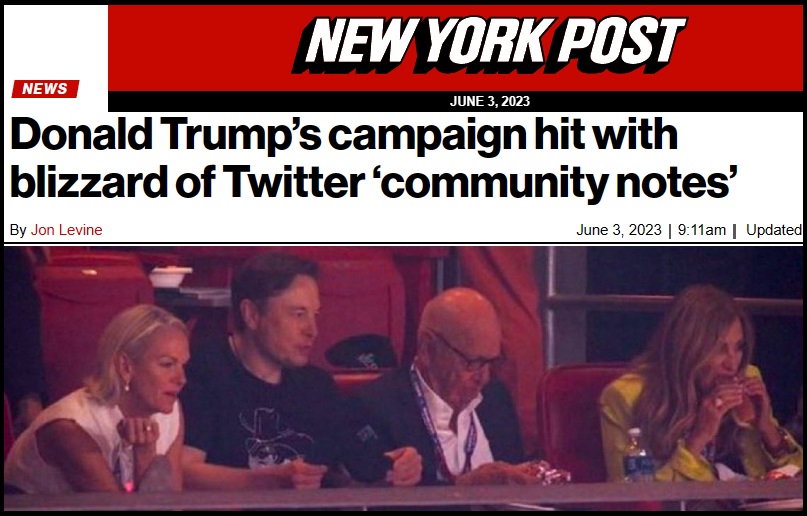
Twitter CEO Elon Musk has provided some convincing commentary about his willingness to forgo revenue in order to retain “free speech.” However, more recently he has qualified that outlook by saying, “Freedom of speech is not the same as freedom of reach.”  Musk noting Twitter will block, remove, censor, shadow ban, deboost, downrank and stop content from amplifying based on the determination of those in charge of Twitter content.

This controlled “freedom of reach” perspective, which is really shadow-banning in practice, is generally accepted and now admitted.  Against this backdrop, it becomes important to understand the priorities of the platform to understand the guidelines of the platform.  Within this context the financials are key to understanding what elements are included within “approved content.” {GO DEEP}

Twitter is now a private company, therefore understanding the financials of Twitter is a little more challenging than when they were required to post their financial statements publicly.  However, Elon Musk gave an interview with the Babylon Bee yesterday and revealed some of the internal financial challenges. [VIDEO HERE]  I am going to summarize the status of the Twitter financial position according to what Musk himself revealed.

♦ Twitter was initially purchased by Musk and his investors for around $44 billion.  The company now estimates its value around $20 billion. Last week, the mutual funds giant Fidelity, which owns shares in Twitter, valued the company at $15 billion. Bottom line, Musk grossly overpaid.

♦ Musk put roughly $30 billions of his own net worth into the purchase and financed the rest.

♦ Current outstanding debt on the financing for the purchase is around $12.5 billion. Per Musk statement.

♦ Current debt service, interest on the loans (from investors), is roughly $1.5 billion/yr.  $120.5 million per month for debt service.  Per Musk statement.

♦ Previous revenue (when public) was roughly $4 billion/yr.  Twitter was generally breaking even.

♦ Advertising revenue, as a result of changes in industry in combination with concerns about Twitter, are “half” what they were during the acquisition phase, per Musk statement.  That puts current advertising revenue around $2 billion/yr. Per NYT report that’s now $1 billion/yr.

♦ Per conversation, current status of Twitter is -$3 billion/yr and could be as high as -$4 to 5 billion/yr.

The NYT revenue leak now makes the top side of this scale make sense.  If $4 billion in revenue was generally the breakeven point (before acquisition), and now they have $2 billion $1 billion in revenue and $1.5 billion in additional debt service [as they trim operational costs (including labor) to offset].

♦♦ For the bottom line to be an operational loss of $3 to $5 billion (est) per year, Twitter is generally losing around $300 million per month.

♦ There is only so much Tesla stock Musk can sell to support Twitter.  He has limits. Per conversation.

♦ Twitter has around $1 billion in liquid cash available. Per conversation.  With a burn rate of $300+ million a month.

Twitter is in locked contracts with AWS and Google cloud services through 2025 at roughly $300 million per year for both [AWS $100 million, Goog $200 million].

Twitter Blue subscriptions are around 180,000 users, paying $11/mo.  That’s around $2 million a month; pittance in comparison to what he needs.

There’s your prism for platform content!

Elon Musk needs revenue desperately.

Twitter urgently needs advertising revenue.

Without revenue or acquisition of another platform (with assets) to offset the current status of Twitter, it is only a matter of time before some form of bankruptcy.   [Note, Twitter investors are backstopped with Tesla/SpaceX as collateral against default.]

The tightrope… Elon Musk must appease the Google advertising control agents and adhere to content rules and regulation (DEI etc.) in order to maximize his revenue.  That’s where Linda Yaccarino comes in as a critical player.

Bottom line, Musk has to make decisions through one prism, THE ECONOMICS.  Musk’s decision-making, pro freedom or not, is constrained by this financial dependency. Hence, a lot of the platform censorship elements remain (including some personnel) and now the outreach to appoint Google/WEF approved Linda Yaccarino in an effort to enhance the revenue.

When you are perplexed about Musk decision making….  THERE’S YOUR ANSWER.

The recent relationship between Elon Musk and the Rupert Murdoch media enterprise, now makes even more sense.

Musk discusses the financials:

Musk Outlines the Financials of Twitter – Platform Content Is Determined Through the Prism of Revenue


Posted originally on the CTH on June 1, 2023 | Sundance 

Twitter CEO Elon Musk has provided some convincing commentary about his willingness to forgo revenue in order to retain “free speech.” However, more recently he has qualified that outlook by saying, “Freedom of speech is not the same as freedom of reach.”  Musk noting Twitter will block, remove, censor, shadow ban, deboost, downrank and stop content from amplifying based on the determination of those in charge of Twitter content.

This controlled “freedom of reach” perspective, which is really shadow-banning in practice, is generally accepted and now admitted.  Against this backdrop, it becomes important to understand the priorities of the platform to understand the guidelines of the platform.  Within this context the financials are key to understanding what elements are included within “approved content.” {GO DEEP}

Twitter is now a private company, therefore understanding the financials of Twitter is a little more challenging than when they were required to post their financial statements publicly.  However, Elon Musk gave an interview with the Babylon Bee yesterday and revealed some of the internal financial challenges. [VIDEO HERE]  I am going to summarize the status of the Twitter financial position according to what Musk himself revealed.

♦ Twitter was initially purchased by Musk and his investors for around $44 billion.  The company now estimates its value around $20 billion.  Musk overpaid.

♦ Musk put roughly $30 billions of his own net worth into the purchase and financed the rest.

♦ Current outstanding debt on the financing for the purchase is around $12.5 billion. Per Musk statement.

♦ Current debt service, interest on the loans (from investors), is roughly $1.5 billion/yr.  $120.5 million per month for debt service.  Per Musk statement.

♦ Previous revenue (when public) was roughly $4 billion/yr.  Twitter was generally breaking even.

♦ Advertising revenue, as a result of changes in industry in combination with concerns about Twitter, are “half” what they were during the acquisition phase, per Musk statement.  That puts current advertising revenue around $2 billion/yr.

♦ Per conversation, current status of Twitter is -$3 billion/yr and could be as high as -$4 to 5 billion/yr.  This makes complete sense if $4 billion in revenue was generally the breakeven point (before acquisition), and now they have $2 billion in revenue and $1.5 billion in additional debt service [as they trim operational costs (including labor) to offset].

♦♦ For the bottom line to be an operational loss of $3 to $5 billion (est) per year, Twitter is generally losing around $300 million per month.

♦ There is only so much Tesla stock Musk can sell to support Twitter.  He has limits. Per conversation.

♦ Twitter has around $100 million/mo in liquid cash available. Per conversation.

Twitter is in locked contracts with AWS and Google cloud services through 2025 at roughly $300 million per year for both [AWS $100 million, Goog $200 million].

There’s your prism for platform content!

Elon Musk needs revenue desperately.

Twitter urgently needs advertising revenue.

Without revenue or acquisition of another platform (with assets) to offset the current status of Twitter, it is only a matter of time before bankruptcy.   [Note, Twitter investors are backstopped with Tesla/SpaceX as collateral against default.]

The tightrope… Elon Musk must appease the Google advertising control agents and adhere to content rules and regulation (DEI etc.) in order to maximize his revenue.  That’s where Linda Yaccarino comes in as a critical player.

Bottom line, Musk has to make decisions through one prism, THE ECONOMICS.  Musk’s decision-making, pro freedom or not, is constrained by this financial dependency. Hence, a lot of the platform censorship elements remain (including some personnel) and now the outreach to appoint Google/WEF approved Linda Yaccarino in an effort to enhance the revenue.

When you are perplexed about Musk decision making….  THERE’S YOUR ANSWER.

[Support CTH Research Here]

Musk Admits He Doesn’t Control Platform Censorship Decision making – Watch the Twitter Financials


Posted originally on the CTH on May 29, 2023 | Sundance 

Everything I have outlined about Twitter is going to surface as accurate over time.  There are two major elements: (1) DHS govt influence, now evidenced in the Twitter Files; and (2) the Twitter financial issues, which explain the recent hiring of Linda Yaccarino, which are soon to surface.

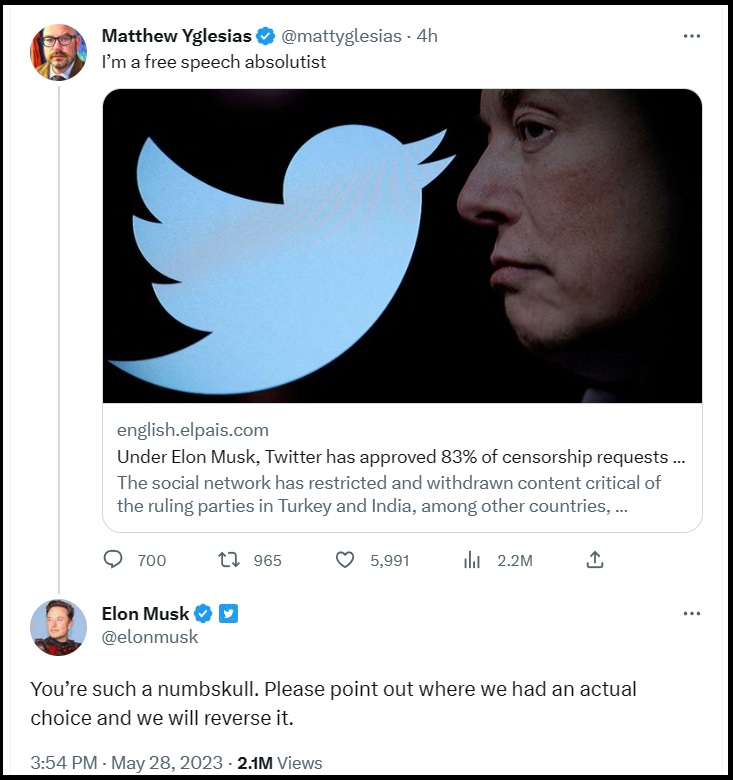
Yesterday, Elon Musk responded to criticism of Twitter censorship, vis-a-vis government demands, with this Tweet: “Please point out where we had an actual choice and we will reverse it.”

The Musk supporters are saying Musk has to comply with government demands if their national laws require it. However, that angle doesn’t take into consideration the choice that Musk/Twitter always have.

If the platform content is not approved by a government, and that govt then demands removal or censorship of that content, Twitter always has two options. One, to comply with the demand and block or restrict the user content (which is the direction they have taken); or two, stop allowing the platform to operate in the country demanding the censorship. It is the latter option that everyone always avoids mentioning.

However, the issue appears to be bigger and goes to the heart of the second aspect of Twitter we have noted.

Twitter is not viable as a business model, under the construct of its creation. Twitter operates on Amazon Web Services (AWS) cloud, and Google Cloud.

Both big tech monopoly systems are extremely expensive and as a result Musk is stuck in contracts with AWS and Google that are major financial drains. Twitter does not operate any server infrastructure; the only asset that Twitter has on the tech engineering side is the software to operate the platform.

Absent any hardware infrastructure, Musk is vulnerable to the excessive costs of AWS & Google.

Keep in mind that all cloud-based systems are arguably U.S. government subsidized and end in server farms built and owned by the U.S. govt. Send something to a cloud-based system, or operate your tech through a cloud-based system, and you are essentially operating on govt hardware.

[This is the background #2 issue to Jack’s MAgic Coffee Shop.]

As you can see from this article in March 2023 [MUST READ], Musk was behind in his payments to Jeff Bezos (Amazon, AWS) but up to date on his payments to Google.

In essence, even as the article admits, Elon Musk is making payment decisions based on determinations of how best avoid advertising revenue interruptions.  Keep this in mind.

As you can see in the article, Musk is on the hook for contracts with AWS through 2025.  As written, “AWS is not willing to renegotiate the five-and-a-half year contract it signed with Twitter in 2020.”  That is before Musk took ownership. “That contract required Twitter to pay $510m over that period. It was signed when Twitter was expecting to move its main timeline over to AWS, but that never occurred (instead it hosts Twitter Spaces and other services), meaning that Twitter is not fully making use of the contract.”  So, Jeff Bezos (AWS) has a hook into Musk for roughly $100 million a year.

Additionally, “Twitter uses Google Cloud to a greater degree, with its own five-year contract worth $1bn. While Twitter is also looking to reduce its Google Cloud costs.”  That puts Musk on the hook for $200 million a year to Google, and Google controls the vast majority of advertising revenue on the web.

Each system, AWS and Google, represents a threat vector for Twitter (Musk), insofar as Twitter cannot operate without the cloud services each provider contributes to the data processing.

Absent his own data processing systems, Musk is vulnerable to the AWS/Google demands. $300,000,000/yr just for them.   Again, keep this in mind.

This is all part of the financial section I have written about extensively, and it has an impact on the content.

With this information as the overlay, how much freedom does Musk actually have with the platform when he is dependent on Google and Amazon to operate?  The same Google who controls the majority of his revenue (advertising) controls his data processing.  See the problem?

On content, look at what AWS did to Parler as an example of what they could do to Twitter if Musk is not compliant.  On revenue, consider how Google already has influence over the monetization of any platform on the internet; combined with terms and conditions for content control they can exert through their revenue power.

♦ Amazon (AWS, CIA, U.S. Govt) then becomes the primary control lever for rules and guidelines on content, the government compliance stuff.  How does it surface?  Musk saying, he must censor Turkish political opposition parties.

♦ Google then becomes the primary control lever for Twitter revenue.  How does that surface?  Musk hiring Linda Yaccarino as CEO of Twitter.

Can you see it now?

Do the irreconcilables start to reconcile?

Does Elon Musk saying, “Please point out where we had an actual choice and we will reverse it,” start to make sense now?

Given that Musk is on the hook for $300 million/yr, and that’s just one expense, I suspect Musk is closer to bankruptcy with Twitter than most people think.

The operating costs are too extreme for the business model.  They always were; however, I suspect the USG was indirectly subsidizing Twitter through data processing when Jack Dorsey had ownership.

The subsidy would be part of the private-public partnership, where the USG was benefitting from their ability to control public information and public opinion.

With the USG control via DHS and FBI now in sunlight (Twitter Files), the financial side has always been the second -and hidden- big picture element around Jack’s Magic Coffee Shop.

Bottom line, Musk has to make decisions through one prism, THE ECONOMICS.  Musk’s decision-making, pro freedom or not, is constrained by this financial dependency. Hence, a lot of the platform censorship elements remain (including some personnel) and now the outreach to appoint Google/WEF approved Linda Yaccarino in an effort to enhance the revenue.

As the end dates of the contract terms with AWS and Google start to come closer, decisions will have to be made if Musk wants a sustainable platform.  Either he builds out new hardware (extremely costly and likely cost prohibitive) or he looks for an existing platform that he might be able to merge with and operate.

If you are a platform owner of reasonable scale, and you control your own servers and data-processing, watch out for David Sacks (repping for Elon) to tap you on the shoulder.  Twitter is in a bind, or Musk needs to sink buckets of money he doesn’t have into building something.  The financial viability is now the primary prism, not principles of free speech.

On the content side Elon Musk needs content providers, which explains the thirst for Tucker Carlson and even the DeSantis launch to gain some operational impact.  That’s likely where his key tech advisor David Sacks again comes into play.  On the type of content, that’s where Linda Jaccarino steps in as the Google/WEF bridge to approved content revenue.

[Support CTH Research Here]

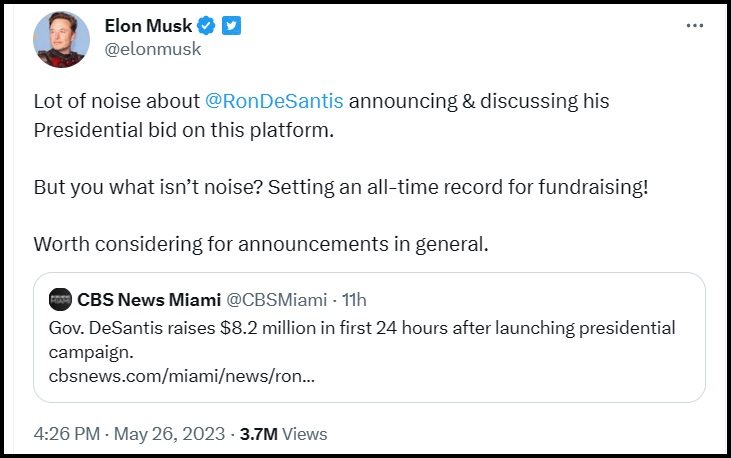
DeSantis 103 – Jack’s Magic Coffee Shop Continues, Elon Musk Makes Election Interference More Visible


Posted originally on the CTH on May 26, 2023 | Sundance 

Everything I have ever written about Jack’s Magic Coffee Shop is true, even if it takes a little longer for the more complex details about the data processing, govt subsidies and the DHS financial side of the operation to surface.   The DHS, ODNI and FBI control elements were proven in the Twitter Files before the lawyers shut down the pertinent line of inquiry. That horse left the barn as everyone stood jaw-agape.  The second aspect, the financial side of the operation, remains more elusive – but slowly even the biggest tech detractors are coming around to the realization.

Into this foray came the question of whether or not Musk knew about it.  A debate on these pages took place.  In the background, unbeknownst to the general public, the tech insiders within the rebel alliance had formulated a thesis about the takeover. The key part of their overlaid thesis was a timeline of sorts, showing the rise of Truth Social – and the partnerships therein (Rumble) – contrast against the entry of Musk into the coffee shop and the official DHS position about TikTok, – another competitor.

Was the Musk intervention timed to coincide with a rise in strategic competition against the interests of DHS?  Go back and look at the timeline and decide for yourself. It is certainly suspicious when contrast against the ‘new features‘ being advanced within the coffee shop business model.

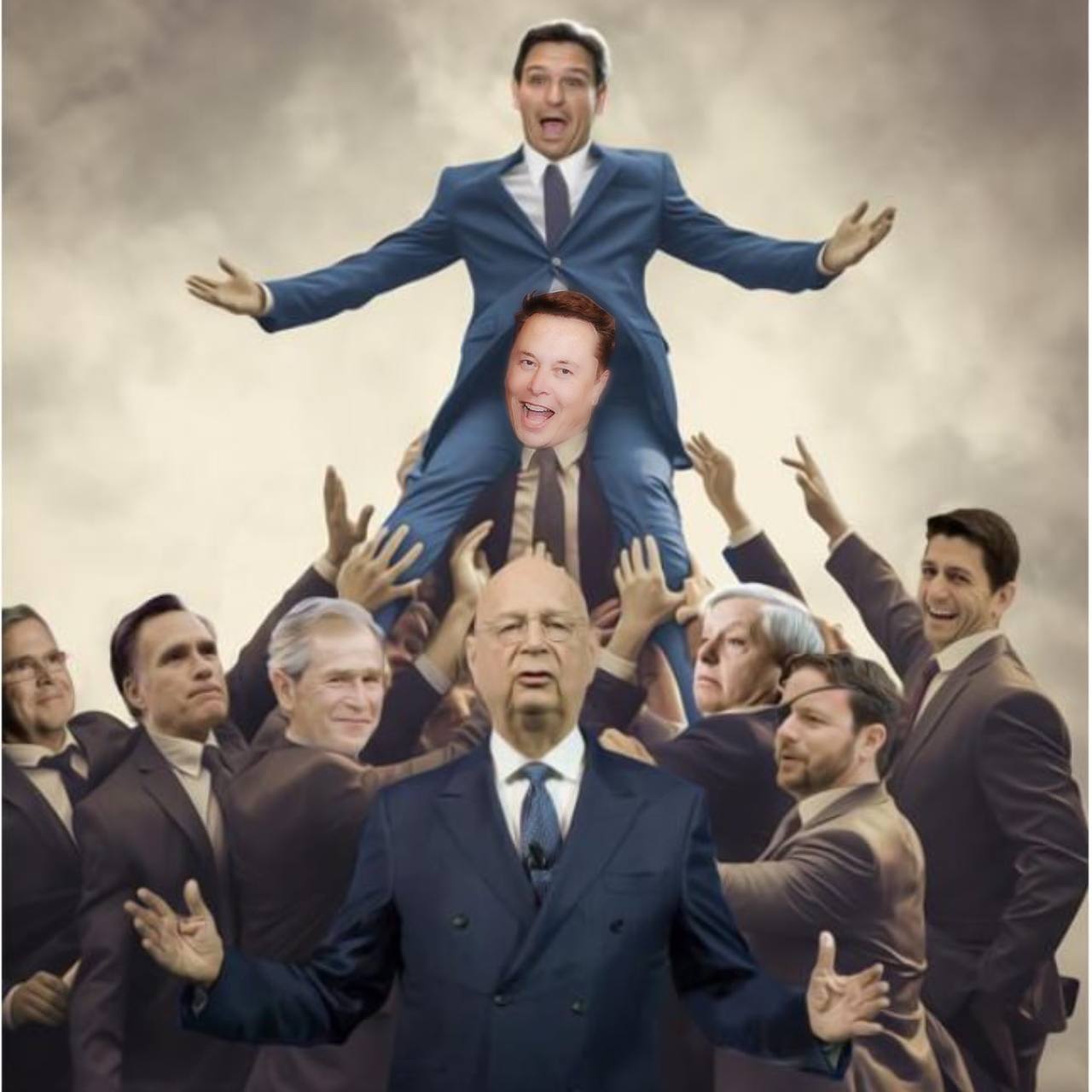
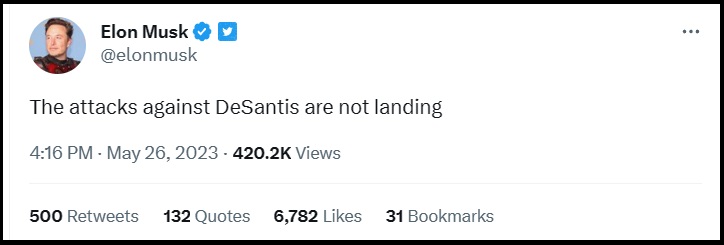
Regardless, if you overlay the recent Musk decisions, and then overlay the deployed alignment of the Musk enterprise and DeSantis presidential launch, you can make a solid argument the Trillions at Stake group, the collaboration between govt, billionaire multinationals and Big Tech, have a multi-faceted approach to control public information in advance of the 2024 election.  Subtle like a brick through a window:

Fingers placed.  Scales tipped. Interests aligned.

[SOURCE]

You are going to hear me continue repeating this, and you might get sick of it, but always ‘Trust Your Instincts’.  If you are grounded in the truthful world, the pretending doesn’t work against you.

May 25, 2023 – Florida Gov. Ron DeSantis signed a bill Thursday providing additional liability protections for public and private space companies like Elon Musk’s SpaceX and Jeff Bezos’ Blue Origin. Presidential hopeful DeSantis signed the bill one day after announcing his candidacy on a Twitter Spaces session hosted by Musk.

DeSantis approved CS/SB 1318 — Spaceflight Entity Liability and 27 other bills Thursday. The law provides liability immunity to a spaceflight entity “for an injury or death of spaceflight participant or crew resulting from a spaceflight activity,” under certain circumstances. The bill requires space companies provide a warning statement for crew members to sign. (more)

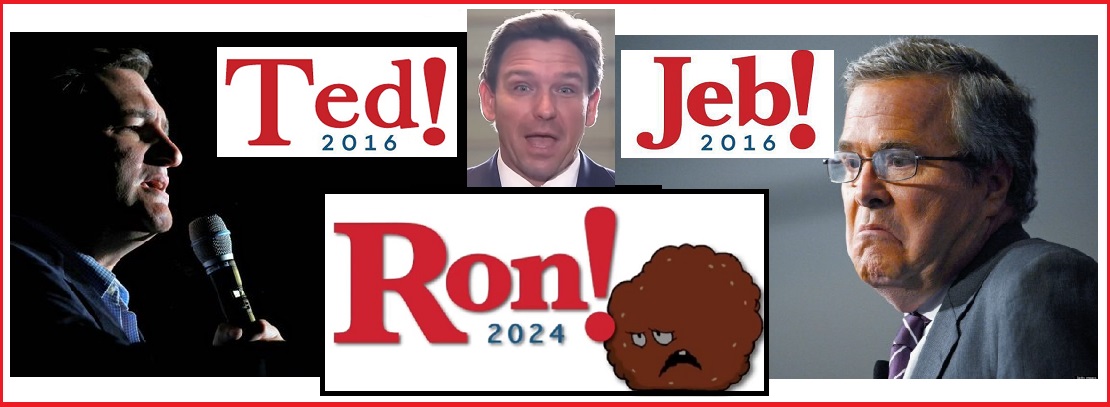
We are about to see exactly how the billionaire corporate funders control the Red State operations and manufacture the ‘illusion of choice‘.  The difference between now and the Romney era of 2012 – through the Bush era of 2016, is that the American electorate are eyes-wide-open.  We are watching the assembly in real time, and once again at CTH we have no financial affiliation to influence our sunlight.  The gang might be getting back together, but The Truth Has No Agenda.

Remember, GOPe politics is all about money, not ideology.  The ideological framework of Republican politics is a false front.  ‘Social issues’ are used as the illusion inside the theater keeping the audience entertained and distracted, while the directors who create the performances take loot out the back door.

Once you understand the real baseline of corporation run party politics inside the USA, all of the moves – past and present – make sense, and the ‘ah-ha’ moments just keep flooding in. {GO DEEP}

The boardroom of the Democrat private corporation (DNC) wants power. The boardroom of the Republican private corporation (RNC) wants money.  The Democrats use money to get power, ultimately control over people; the Republicans use power to get money, whatever happens to the people is irrelevant.

The DNC wants fundamental change; the RNC wants to be paid and control wealth while it happens.

The core issue to understand Republican politics is to look at how the people in control, the billionaires and multinational corporations, position for wealth.  This is why/how the DNC can weaponize voting systems (outcomes), while the RNC accept it and position to be paid off while voting fraud takes place.

The person with the greatest opportunity to defeat the schemes of the corrupt political elite, is the person you see in the mirror every day when you brush your teeth.  There are more of us, than them – united we cannot be defeated.

There is a great MAGA insurgency taking place at the state level, and that is also visible in the endorsements.  However, the systems – not people, systems – which operate the business end of Republican politics at a state and federal level, are still under the control of the RNC as a private corporation.  Don’t look for MAGA support from the institutions until we have MAGA people in charge of them.

Once you see the strings on the marionettes, you can never go back to that moment in the performance when you did not see them.  While we have awakened many people to the ‘illusion of choice’ system by predicting the moves in advance, the enemy is cunning, and they know how to weaponize the feeling of desperation.

We are in an abusive relationship with our government, and that cycle of abuse is truly created by the background financial institutions who control our government.

[We Shall Keep Watching]

U.S. Virgin Islands Issues Subpoena to Elon Musk Questioning Connection to Jeffrey Epstein


May 15, 2023 | Sundance 

People have been gobsmacked by a seemingly 180° change in the ideological outlook of Twitter owner Elon Musk.  The hiring of Diversity Equity and Inclusion (DEI) czar Linda Yaccarino as CEO caught everyone by surprise. {link} A Day later he conceded a free speech position to the government of Turkey, agreeing to silence the political opposition of Recep Erdogan. {link}  Perhaps some clarity can be found in a recent Bloomberg article:

Pay attention to DATES:

(Bloomberg) Elon Musk was issued a subpoena by the US Virgin Islands in its lawsuit accusing JPMorgan Chase & Co. of knowingly benefiting from Jeffrey Epstein’s sex-trafficking.

The US territory said in court papers it had reason to believe Epstein may have referred or attempted to refer Musk to JPMorgan as a client. Several other billionaires, including the Google co-founders Larry Page and Sergey Brin, have also been issued subpoenas by the USVI.

The USVI on Monday asked the judge overseeing the case to authorize alternative means of serving the April 28 subpoena on Musk. The territory said it made good-faith efforts to obtain an address for Musk, including hiring private investigators, but had been unable to locate one. 

[…] The USVI subpoena seeks documents reflecting communications or meetings between Musk and JPMorgan or Musk and Epstein relating to the two men’s accounts at the bank. It also seeks from Musk any documents “regarding Epstein’s involvement in human trafficking” or concerning fees the Tesla CEO paid to Epstein or JPMorgan in connection with his accounts at the bank. (more

On April 18, 2023, Elon Musk meets Linda Yaccarino for the first time.

April 26, Elon Musk meets Chuck ‘six-ways-to-sunday’ Schumer.
“We talked about the future,” Musk told reporters after exiting the meeting that lasted about an hour. {link}

April 28, Attorney General of USVI triggers subpoena to Musk about Epstein.

First weeks of May, USVI investigators trying to serve Epstein subpoena on Musk.

May 12, Musk hires DEI advocate Linda Yaccarino as Twitter CEO.

A curious sequence of events that preceded Musk’s recent actions.

All probably just a coincidence.

However, Suspicious Cat remains, well, suspicious…