QUESTION #1: Marty, I think your warning about the collapse of leadership in government and the private sector rings true as Ken Griffin, the founder of hedge fund Citadel, said the rescue of Silicon Valley Bank shows the U.S. economic system is “breaking down before our eyes” because they bailed out the depositors. Yet Carl Icahn seems to agree with your saying that the U.S. economy is at a breaking point because of inflation. He said, “every hegemony has been destroyed by inflation.”
Very few so-called billionaires seem to understand what’s at stake. It makes me think they were just lucky in how they made their money. After Griffin’s comment, I would not be inclined to invest in Citadel. Then a group of banks is talking about depositing $20 to $30 billion to save Republic bank.
Is there any hope for the future when leadership is absent in these times of chaos?
UT
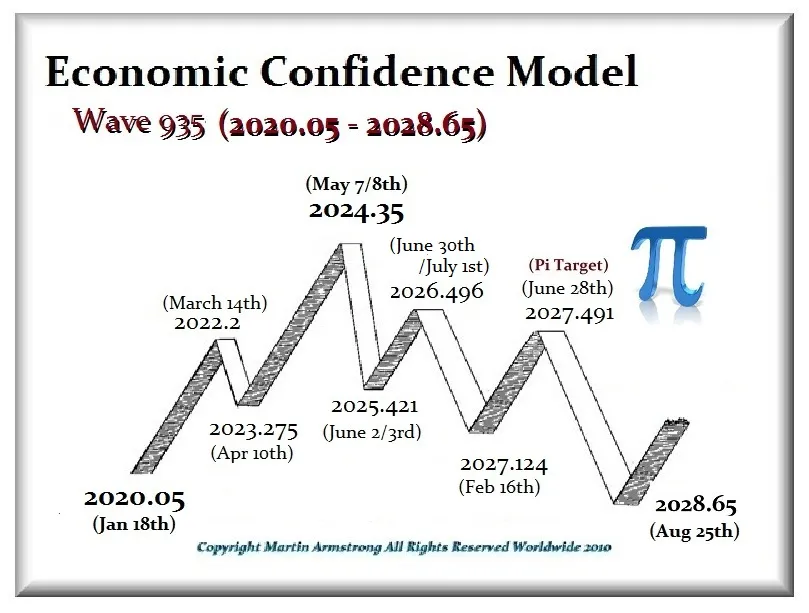
QUESTION #2: Thanks for everything you do. At the WEC, you warned about banks and even the big funds. The turning point was at the end of January here in 2023. Is it possible that this financial crisis will be the major factor even overpowering war when the ECM comes into play by April 10th?
CW
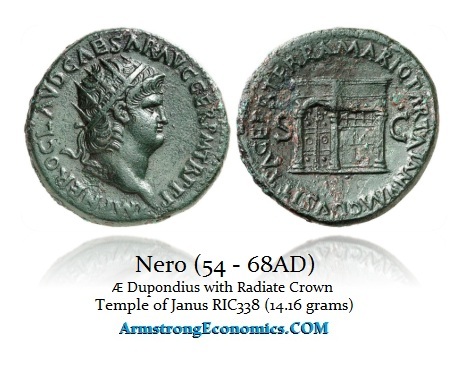
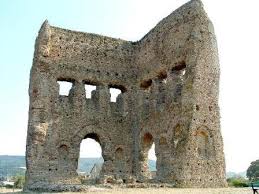
ANSWER: Anyone who does not understand that inflation is a natural occurrence when you get into a war is clearly not a student of history and has no business being the CEO of even the head local dog-catcher. The Roman deity Janus, after whom January is named, was the two face entity who looked at the past and the future. The doors to his temple would be closed when there was peace. That symbolized that nothing was at risk of changing. However, in times of war, they would leave the doors open to symbolize the uncertainty of war that the spirits could flow in and out.
Only today, do we seem to no longer respect that the cost of war is both lives lost and inflation for those who survive. This Ukrainian Proxy War serves no purpose. Winning or losing will have ZERO impact on our national security or the future of the people. This is simply a grudge match instigated by the Neocons who perpetually love war as long as someone else is dying for their personal goals. To them, it is nothing more than watching a war on CNN and cheering as if it were a football game.
I have said that this war will undermine the entire US economy and that is now manifesting in the Financial Crisis of 2023 which will be far worse than any of these people expect. The lack of experience and the stupidity of those who remark that capitalism is collapsing because they are honoring the depositors is absurd. A depositor has NO WAY of understanding the financial status of a bank until it is too late. They receive no warning and yet there are those who say they should suffer the losses because that is capitalism.
Sorry, but that has NOTHING to do with capitalism. It is no different than FRAUD soliciting money with a false pretense. Investing in a hedge fund like Citadel is different from a bank. Depositors in a hedge fund know they are investing their money and they are getting a piece of that return. That is capitalism. Someone who has a bank account where their social security check is automatically deposited took on no such risk. Sorry – that is different that a hedge fund that goes bust.
The problem we have is that the ECM turning point is April 10th. Yet it is also the Pi Target from the fall of the USSR and the birth of even Ukraine. We just had Poland losing their mind and sending jets to Ukraine. That makes Poland a viable target for war. Poland is irresponsible given the fact that the Ukrainians slaughtered over 300,000 of them and has refused to ever apologize for their WWII Nazi involvement.
We have a problem here with the Financial Crisis simultaneously with important cyclical targets regarding war. Any personal interpretation I can offer is just a personal opinion. Both trends are colliding into April and this may be a two-prong panic of unprecedented significance.
Posted originally on the CTH on March 16, 2023 | Sundance
The European Central Bank (ECB) raised interest rates again today, while simultaneously promising to support further bank bailouts that might come as an outcome of raising the rates again. In the bigger picture there are two dynamics supported by the ECB playing out.
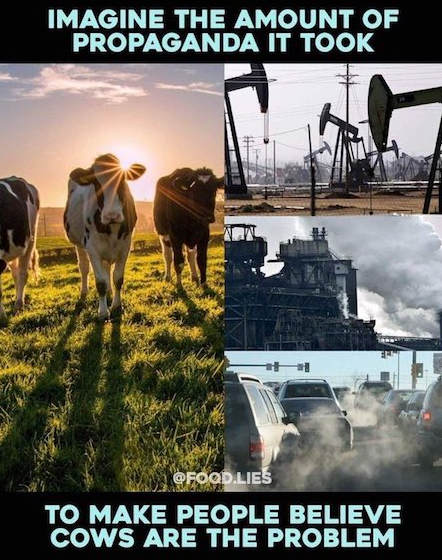
The first issue is the ideological effort to change the economic models based on climate change. The Build Back Better (Green New Deal) policy, a traditional energy production control effort, is being supported by the ECB effort to shrink the EU economy to meet the rate of diminished energy production. Make the economy smaller to meet the lower energy production rate.
Lowered energy production (oil, coal and natural gas) has raised energy prices; this is the fuel behind supply side inflation. The Western policy created energy inflation is hitting every aspect of the EU, US and western global economy. The prices of all downstream goods and services have risen dramatically as a result. The European banks are not going to stop trying to make the economy smaller just because banks are failing. That brings us to the second issue.
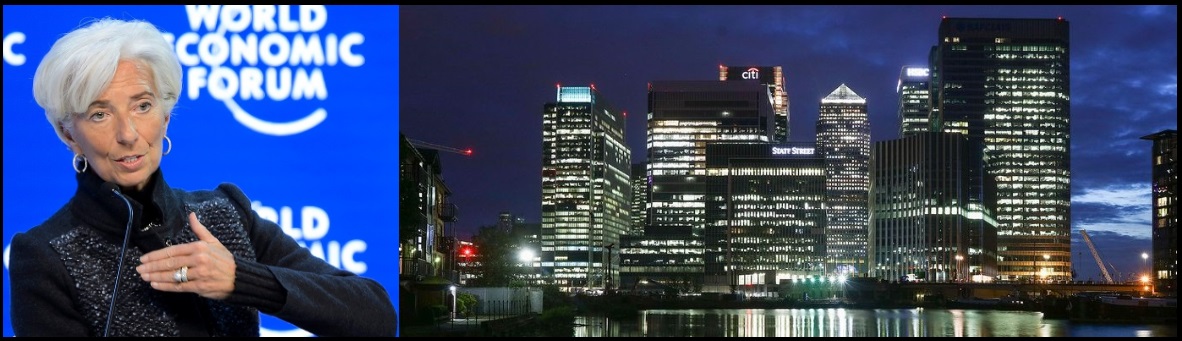
Like the first issue with BBB controls, the World Economic Forum action plan for government also includes the creation of central bank digital currencies (CBDCs). The collapsing of the traditional banking system supports the agenda to create CBDCs. Raising interest rates puts more pressure on already weak banks. This is a feature not a flaw of the intent.
Shifting the economy from traditional oil, coal and natural gas is one aspect (climate change). Shifting the banking system from traditional currency to central bank digital currencies is the second aspect (total govt financial control). The banking instability is the crisis that facilitates the CBDC solution. Ergo, continue raising rates and continue making the crisis more useful.
In the bigger picture, this is an ideological quest to fundamentally change the western economic model. Support for that change is what we are witnessing as the EU central banks continue raising rates. Ultimately, banks being controlled by government is the necessary step to achieve the second phase of the larger plan.
(Via Wall Street Journal) – FRANKFURT—The European Central Bank raised interest rates by a half-percentage point while promising emergency support for eurozone banks if needed, showing the policy makers’ balancing act as they seek to combat high inflation without aggravating strains in the financial system.
The ECB said in a statement that it would increase its key rate to 3%, following consecutive half-point rate increases in February and December. The 50 basis-point rise surprised analysts who had expected a smaller uptick given the tense market situation after the collapse of Silicon Valley Bank.
At a news conference, ECB President Christine Lagarde signaled the bank would be cautious about further rate increases, while stressing it stood ready to provide fresh liquidity to banks. Policy makers will make future rate decisions based on coming economic data, she said, a change from previously announcing plans for rate increases months in advance.
“It’s not business as usual,” Ms. Lagarde said. “It is not possible at this point in time…to determine what the path will be going forward.” (read more)
Meanwhile in the U.S., the Fed/Treasury plan is to do essentially the same thing by supporting the big banks with over $2 trillion in available backstop funding. The Fed is celebrating the big banks supporting the smaller banks. Ultimately, this is the banking system downsizing and getting more control with less players.
Washington, DC — The following statement was released by Secretary of the Treasury Janet L. Yellen, Federal Reserve Board Chair Jerome H. Powell, FDIC Chairman Martin J. Gruenberg, and Acting Comptroller of the Currency Michael J. Hsu:
Today, 11 banks announced $30 billion in deposits into First Republic Bank. This show of support by a group of large banks is most welcome, and demonstrates the resilience of the banking system. (LINK)
The implementation of a U.S. digital currency will become easier if there are fewer players in the banking system. WATCH:
I got to thinking about the raw unadjusted temperature station data. Despite the many flaws in individual weather stations making up the US Historical Climate Network (USHCN), as revealed by Anthony Watts’ SurfaceStations project, the USHCN is arguably one of the best country networks. So I thought I’d take a look at what it reveals.
The data is available here, with further information about the dataset here. The page says:
UNITED STATES HISTORICAL CLIMATOLOGY NETWORK (USHCN) Daily Dataset M.J. Menne, C.N. Williams, Jr., and R.S. Vose National Climatic Data Center, National Oceanic and Atmospheric Administration
These files comprise CDIAC’s most current version of USHCN daily data.
These appear to be the raw, unhomogenized, unadjusted daily data files. Works for me. I started by looking at the lengths of the various records.
Figure 1. Lengths of the 1,218 USHCN temperature records. The picture shows a “Stevenson Screen”, the enclosure used to protect the instruments from direct sunlight so that they are measuring actual air temperature.
This is good news. 97.4% of the temperature records are longer than 30 years, and 99.7% are longer than 20 years. So I chose to use them all.
Next, I considered the trends of the minimum and maximum temperatures. I purposely did not consider the mean (average) trend, for a simple reason. We experience the daily maximum and minimum temperatures, the warmest and coldest times of the day. But nobody ever experiences an average temperature. It’s a mathematical construct. And I wanted to look at what we actually can sense and feel.
First I considered minimum temperatures. I began by looking at which stations were warming and which were cooling. Figure 2 shows that result.
Figure 2. USHCN minimum temperature trends by station. White is cooling, red is warming.
Interesting. Clearly, “global” warming isn’t. The minimum temperature at 30% of the USHCN stations is getting colder, not warmer. However, overall, the median trend is still warming. Here’s a histogram of the minimum temperature trends.
Figure 3. Histogram of 1,218 USHCN minimum temperature trends. See Menne et al. for estimates of what the various adjustments would do to this raw data.
Overall, the daily minimum temperatures have been warming. However, they’re only warming at a median rate of 1.1°C per century … hardly noticeable. And I have to say that I’m not terrified of warmer nights, particularly since most of the warmer nights are occurring in the winter. In my youth, I spent a couple of winter nights sleeping on a piece of cardboard on the street in New York, with newspapers wrapped around my legs under my pants for warmth.
I can assure you that I would have welcomed a warmer nighttime temperature …
The truth that climate alarmists don’t want you to notice is that extreme cold kills far more people than extreme warmth. A study in the British Medical Journal The Lancet showed that from 2000 to 2019, extreme cold killed about four and a half million people per year, and extreme warmth only killed a half million.
Figure 4. Excess deaths from extreme heat and cold, 2000-2019
So I’m not worried about an increase in minimum temperatures—that can only reduce mortality for plants, animals, and humanoids alike.
But what about maximum temperatures? Here are the trends of the USHCN stations as in Figure 2, but for maximum temperatures.
Figure 5. USHCN maximum temperature trends by station. White is cooling, red is warming.
I see a lot more white. Recall from Figure 2 that 30% of minimum temperature stations are cooling. But with maximum temperatures, about half of them are cooling (49.2%).
And here is the histogram of maximum temperatures. Basically, half warming, half cooling.
Figure 6. Histogram of 1,218 USHCN maximum temperature trends.
For maximum temperatures, the overall median trend is a trivial 0.07°C per century … color me unimpressed.
Call me crazy, but I say this is not any kind of an “existential threat”, “problem of the century”, or “climate emergency” as is often claimed by climate alarmists. Instead, it is a mild warming of the nights and no warming of the days. In fact, there’s no “climate emergency” at all.
And if you are suffering from what the American Psychiatric Association describes as “the mental health consequences of events linked to a changing global climate including mild stress and distress, high-risk coping behavior such as increased alcohol use and, occasionally, mental disorders such as depression, anxiety and post-traumatic stress” … well, I’d suggest you find a new excuse for your alcoholism, anxiety, or depression. That dog won’t hunt.
My very best to everyone from a very rainy California. When we had drought over the last couple of years, people blamed evil “climate change” … and now that we’re getting lots of rain, guess what people are blaming?
Yep, you guessed it.
w.
As Always: I ask that when you comment you quote the exact words you’re discussing. This avoids endless misunderstandings.
Adjustments: This raw data I’ve used above is often subjected to several different adjustments, as discussed here. One of the largest adjustments is for the time of observation, usually referred to as TOBS. The effect of the TOBS adjustment is to increase the overall trend in maximum temperatures by about 0.15°C per century (±0.02) and in minimum temperatures by about 0.22°C per century (±0.02). So if you wish, you can add those values to the trends shown above. Me, I’m not too fussed about an adjustment of a tenth or two of a degree per century, I’m not even sure if the network can measure to that level of precision. And it certainly is not perceptible to humans.
There are also adjustments for “homogeneity”, for station moves, instrument changes, and changes in conditions surrounding the instrument site.
Are these adjustments all valid? Unknown. For example, the adjustments for “homgeneity” assume that one station’s record should be similar to a nearby station … but a look at the maps above show that’s not the case. I know that where I live, it very rarely freezes. But less than a quarter mile (1/8 km) away, on the opposite side of the hill, it freezes a half-dozen times a year or so … homogeneous? I don’t think so.
The underlying problem is that in almost all cases there is no overlap in the pre- and post-change records. This makes it very difficult to determine the effects of the changes directly, and so indirect methods have to be used. There’s a description of the method for the TOBS adjustment here.
This also makes it very hard to estimate the effect of the adjustments. For example:
To calculate the effect of the TOB adjustments on the HCN version 2 temperature trends, the monthly TOB adjusted temperatures at each HCN station were converted to an anomaly relative to the 1961–90 station mean. Anomalies were then interpolated to the nodes of a 0.25° × 0.25° latitude–longitude grid using the method described by Willmott et al. (1985). Finally, gridpoint values were area weighted into a mean anomaly for the CONUS for each month and year. The process was then repeated for the unadjusted temperature data, and a difference series was formed between the TOB adjusted and unadjusted data.
To avoid all of that uncertainty, I’ve used the raw unadjusted data.
Addendum Regarding The Title: There’s an Aesop’s Fable, #35:
“A Man had lost his way in a wood one bitter winter’s night. As he was roaming about, a Satyr came up to him, and finding that he had lost his way, promised to give him a lodging for the night, and guide him out of the forest in the morning. As he went along to the Satyr’s cell, the Man raised both his hands to his mouth and kept on blowing at them. ‘What do you do that for?’ said the Satyr. ‘My hands are numb with the cold,’ said the Man, ‘and my breath warms them.’ After this they arrived at the Satyr’s home, and soon the Satyr put a smoking dish of porridge before him. But when the Man raised his spoon to his mouth he began blowing upon it. ‘And what do you do that for?’ said the Satyr. ‘The porridge is too hot, and my breath will cool it.’ ‘Out you go,’ said the Satyr, ‘I will have nought to do with a man who can blow hot and cold with the same breath.’”
The actual moral of the story is not the usual one that people draw from the fable, that the Man is fickle and the Satyr can’t trust him.
The Man is not fickle. His breath is always the same temperature … but what’s changing are the temperatures of his surroundings, just as they have been changing since time immemorial.
The picture below is a good visual example of what those that want to rule us i.e. Klaus Schwab, Bill Gates, George Soros, Barack Obama and yes even Anthony Fauci would like it to be. I do not, for one second, think this is an exaggeration.
Obviously, this is not a picture that any one that is not a multi billionaire would want to experience but there is one person on the planet that demands that this is what our future will be. That person is Klaus Schwab the creator of the World Economic Form (WEF). So what is the WEF? The WEF is an international non-government organization (NGO) founded by Klaus Schwab on January 24, 1971and located in Switzerland. The stated goal is to improving the status of the entire world. This is accomplished by training potential Global leaders on how best to rule the world and conducting an annual meeting in Davos Switzerland.
Schwab’s goal is to have every country on the planet be a member of the United Nations (UN) and relinquish their sovereignty to the UN. The UN would then after this was achieved be run by the unelected people that Schwab has trained in his Young Leaders program; comprising tens of thousands of people today. Most of the international corporations and governments are now run by these Schwab people.
His programs can be found in two books he wrote; The Fourth Industrial Revolution published in 2016 and COVID-19: The Great Reset published in 2020. The core of Schwab’s vision is a modification of the theories of Karl Marx undated to the modern world. The basic essence of Schwab’s vision can be derived from the work of Patrick M. Woods in his book Technocracy Rising The Trojan House of Global Transformation published in 2015.
Schwab is not an uneducated man; and and has multiple degrees. And like many men of his intellect he dreams of creating the perfect world, written about for the first time by Thomas More in his book Utopia published in 1516. Since then others have tried to find the way to accomplish the lofty goal with that last serious attempt by Karl Marx in his works Capital Volumes I, II and III resulting in the deaths of hundreds of millions in the twentieth century mostly in Russia and China which all failed.
The current attempt by Schwab in creating this elusive goal of a Utopia is The Great Reset and Build Back Better program; which has been adopted by most of the countries in Western Civilization. The Great Reset was started with the planned introduction of the COVID-19 pandemic. Yes I did say planned and the two men responsible for it were Bill Gates and Anthony Fauci. The prove of it in all the initial planning for a pandemic and the work of Fauci in creating the virus (COVID-19) as identified in the book publish by Robert F. Kennedy Jr. The Real Anthony Fauci. Gates, from a family of hard core Eugenic promoters, masterminded his reduction of the world population in the late 1990’s or early 2000’s by adopting the Global Warming narrative developed by the Environmental crowd of Marxists after they took over the movement from the real scientists looking at the real environmental issues.
Patrick Moore one of the founders of Green Peace was drummed out when that changed accrued and is the only one left from that movement that truly understands what happened and how the Climate change narrative has no basis in fact as you can read about in his book Confessions of a Greenpeace Dropout. There is absolutely no truth in the current narrative that Carbon dioxide is a Clear and Present Danger to the world and must be eliminated. There is actually solid scientific evidence that Carbon dioxide is “not” a Clear and Present Danger to us or the planet.
What Schwab and Gates have done is combine the views of both of men into one master program that will be discussed in Part Two.
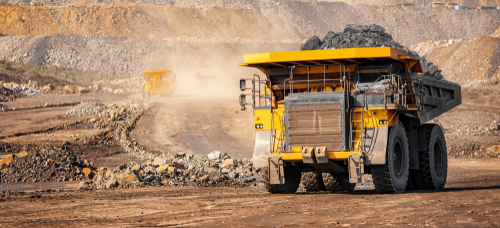
MiningWatch Canada is estimating that 3 billion tons of mined metals and minerals will be needed to power the energy transition. All of this nonsense for climate change means that mining for minerals will escalate dramatically. There will be an incredible expansion in the mining industry for six critical minerals: lithium, graphite, copper, cobalt, nickel, and rare earth minerals. What is really just insane is that even if this green energy were to last, over the next 30 years, we will have to increase the production of these minerals consuming more that all the past generations combined. Our What-If models project copper at 9-10 by 2028 shutting down fossil fuels.
Food shortages have historically contributed to revolutions more so than just international war. Poor grain harvests led to riots as far back as 1529 in the French city of Lyon. During the French Petite Rebeyne of 1436. (Great Rebellion), sparked by the high price of wheat, thousands looted and destroyed the houses of rich citizens, eventually spilling the grain from the municipal granary onto the streets. Back then, it was to go get the rich.
There was a climate change cycle at work and today’s climate zealots ignore their history altogether for it did not involve fossil fuels. The climate got worse at the bottom of the Mini Ice Age which was about 1650. It really did not warm up substantially until the mid-1800s. During the 18th century, the climate resulted in very poor crops. Since the 1760s, the king had been counseled by Physiocrats, who were a group of economists that believed that the wealth of nations was derived solely from the value of land and thereby agricultural products should be highly priced. This is why Adam Smith wrote his Wealth of Nations as a retort to the Physiocrats. It was their theory that justified imperialism – the quest to conquer more land for wealth; the days of empire-building.
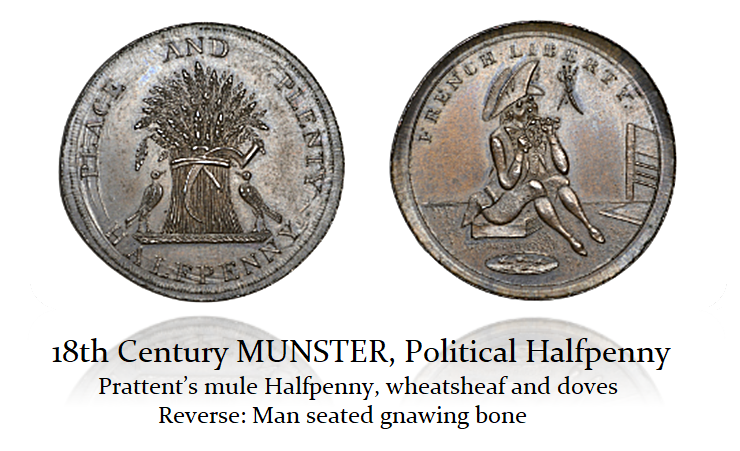
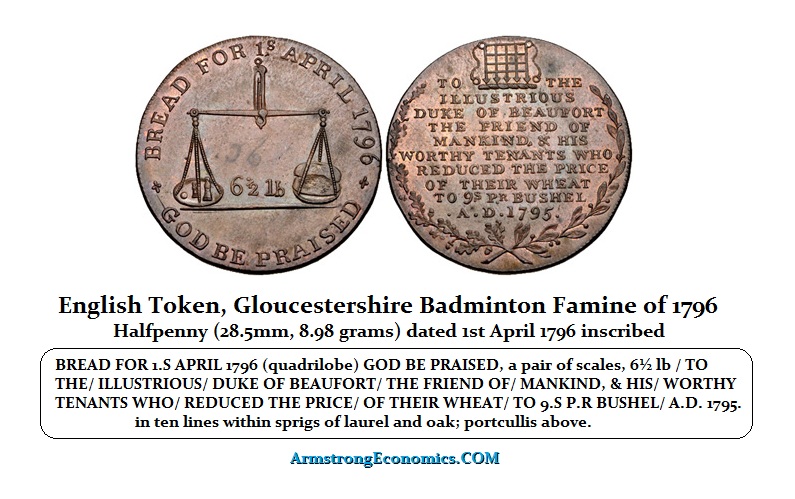
The King of France had listened to the Physiocrats who counseled him to intermittently deregulate the domestic grain trade and introduce a form of free trade. That did not go very well for there was a shortage of grain and this only led to a bidding war – hence the high price of wheat. We even see English political tokens of the era campaigning about the high price of grain and the shortage of food to where a man is gnawing on a bone.
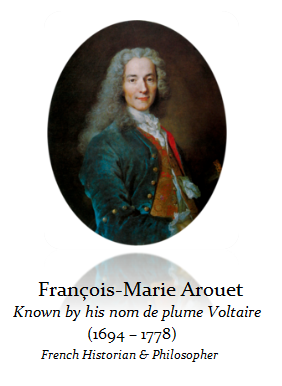
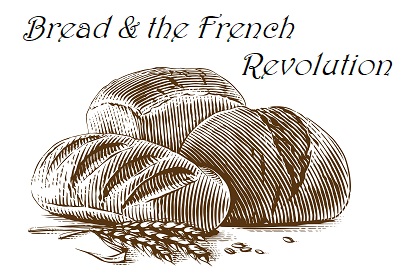
Voltaire once remarked that Parisians required only “the comic opera and white bread.” Indeed, bread has also played a very critical role in French history that is overlooked. The French Revolution that began with the storming of the Bastille on July 14th, 1789 was not just looking for guns, but also grains to make bread.
The price of bread and the shortages played a very significant role during the revolution. We must understand Marie Antoinette’s supposed quote upon hearing that her subjects had no bread: “Let them eat cake!” which was just propaganda at the time. The “cake” was not the cake as we know it today, but the crust was still left in the pan after taking the bread out. This shows the magnitude that the shortage of bread played in the revolution.
In late April and May of 1775, the food shortages and high prices of grain ignited an explosion of such popular anger in the surrounding regions of Paris. There were more than 300 riots and looking for grain over just three weeks (3.14 weeks). The historians dubbed this the Flour War. The people even stormed the place at Versailles before the riots spread into Paris and outward into the countryside.
The food shortage became so acute during the 1780s that it was exacerbated by the influx of immigration to France during that period. It was a period of changing social values where we heard similar cries for equality. Eventually, this became one of the virtues on which the French Republic was founded. Most importantly, theFrench Constitution of 1791 explicitly stipulated a right to freedom of movement. It was mostly perceived to be a food shortage and the reason was the greedy rich. Thus, a huge rise in population was also contributed in part by immigration whereas it reached around 5-6 million more people in France in 1789 than in 1720.
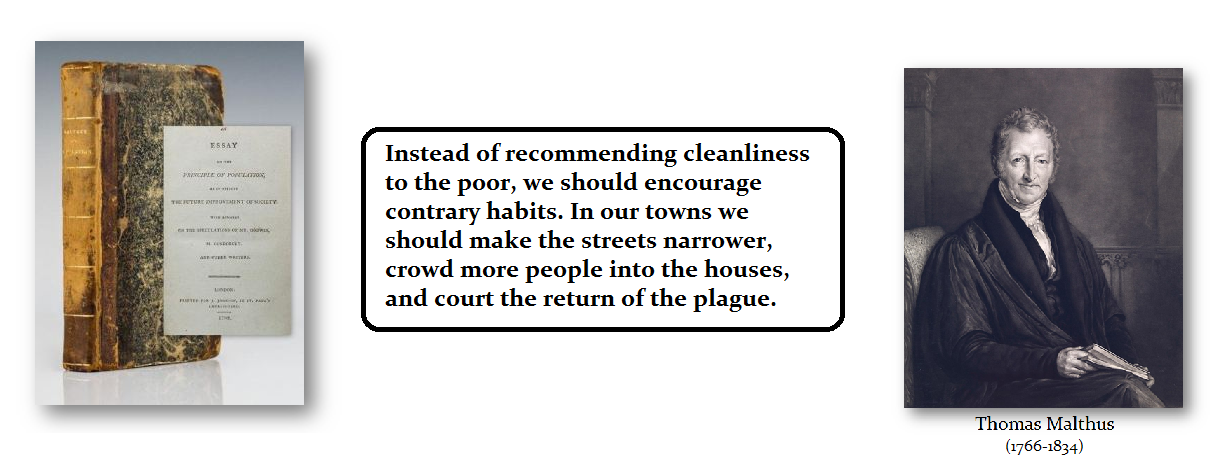
Against this backdrop, we have the publication by Thomas Malthus (1766-1834) An Essay on the Principle of Population was first published anonymously in 1798. He theorized that the population would outgrow the ability to produce food. We can see how his thinking formed because of the Mini Ice Age that bottomed in 1650. All of this was because of climate change which instigated food shortages. Therefore, it was commonly accepted that without a corresponding increase in native grain production, there would be a serious crisis.
The refusal on the part of most of the French to eat anything but a cereal-based diet was another major issue. Bread likely accounted for 60-80 percent of the budget of a wage-earner’s family at that point in time. Consequently, even a small rise in grain prices could spark political tensions. Because this was such an issue, and probably the major cause of the French Revolution among the majority, Finance Minister Jacques Necker (1732–1804) claimed that, to show solidarity with the people, King Louis XVI was eating the lower-class maslin bread. Maslin bread is from a mix of wheat and rye, rather than the elite manchet, white bread that is achieved by sifting wholemeal flour to remove the wheatgerm and bran.
That solidarity was seen as propaganda and the instigators made up the Marie Antoinette quote: Let them eat cake. . Then there was a plot drawn up at Passy in 1789 that fomented the rebellion against the crown shortly before the people stormed the Bastille. It declared “do everything in our power to ensure that the lack of bread is total, so that the bourgeoisie are forced to take up arms.”
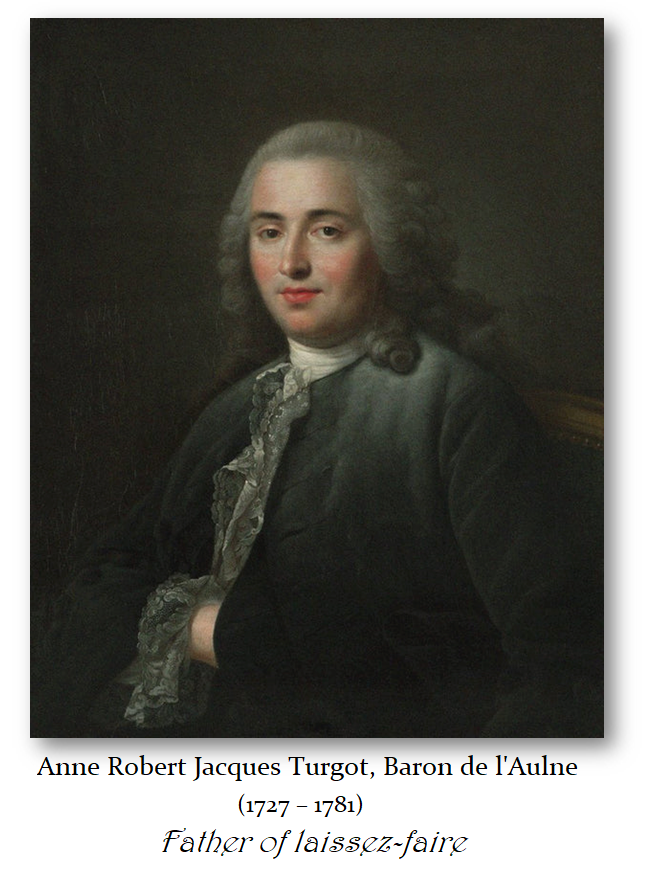
It was also at this time when Anne Robert Jacques Turgot (1727-1781), Baron de l’Aulne, was a French economist and statesman. He was originally considered a physiocrat, but he kept an open mind and became the first economist to have recognized the law of diminishing marginal returns in agriculture. He became the father of economic liberalism which we call today laissez-faire for he put it into action. He saw the overregulation of grain production was behind also contributing to the food shortages. He once said: “Ne vous mêlez pas du pain”—Do not meddle with bread.
The French Revolution overthrew the monarchy and they began beheading anyone who supported the Monarchy and confiscated their wealth as well as the land belonging to the Catholic Church. Nevertheless, the revolution did not end French anxiety over bread. On August 29th, 1789, only two days after completing the Declaration of the Rights of Man and of the Citizen, the Constituent Assembly completely deregulated domestic grain markets. The move raised fears about speculation, hoarding, and exportation.
Then on October 21st, 1789, a baker, Denis François, was accused of hiding loaves from sale as part of a conspiracy to deprive the people of bread. Despite a hearing which proved him innocent, the crowd dragged François to the Place de Grève, hanged and decapitated him, and made his pregnant wife kiss his bloodied lips. Immediately thereafter, the National Constituent Assembly instituted martial law. At first sight, this act appears as a callous lynching by the mob, yet it led to social sanctions against the general public. The deputies decided to meet popular violence with force.
So, food has often been a MAJOR factor in revolutions. We are entering a cold period. Ukraine has been the breadbasket for Europe. Escalating this war will also lead to accelerating the food shortages post-2024. It is interesting how we learn nothing from history. Wars are instigated by political leaders while revolutions are instigated by the people.
Posted originally on the CTH on January 9, 2023 | sundance
The timing here is genuinely ridiculous. It’s as if the federal government, specifically the U.S. Consumer Product Safety Commission, led by… Richard Trumka Jr (yes, that guy’s son)… doesn’t think or care that we can see the real issue is to change energy uses.
Now that Russia has been isolated from natural gas sales, the European Union needs the supply of all other natural gas markets in order to keep itself from freezing to death. Simultaneously, natural gas as an energy resource is now bad, terrible like oil and coal, amid the climate change cult.
So, they need to change the narrative and stop people from using natural gas appliances.
Suddenly, after generations of natural gas appliances existing in almost half of the kitchens, suddenly the appliances are toxic, dangerous and likely to require a ban against use.
(Bloomberg) – A federal agency says a ban on gas stoves is on the table amid rising concern about harmful indoor air pollutants emitted by the appliances.
The US Consumer Product Safety Commission plans to take action to address the pollution, which can cause health and respiratory problems. “This is a hidden hazard,” Richard Trumka Jr., an agency commissioner, said in an interview. “Any option is on the table. Products that can’t be made safe can be banned.”
Natural gas stoves, which are used in about 40% of homes in the US, emit air pollutants such as nitrogen dioxide, carbon monoxide and fine particulate matter at levels the EPA and World Health Organization have said are unsafe and linked to respiratory illness, cardiovascular problems, cancer, and other health conditions, according to reports by groups such as the Institute for Policy Integrity and the American Chemical Society. Consumer Reports, in October, urged consumers planning to buy a new range to consider going electric after tests conducted by the group found high levels of nitrogen oxide gases from gas stoves.
New peer-reviewed research published last month in the International Journal of Environmental Research and Public Health found that more than 12% of current childhood asthma cases in the US can be attributed to gas stove use. (read more)
Its peer reviewed they say. Carved in stone tablets it must be… Just like the vaccine and other health papers and studies… Swear.
Comrade citizens, you must gather twigs, carry flint rocks, eat bugs and sustainable algae cakes, and adapt your parasitic lifestyle to become the best citizen that planet earth deserves. There can be no gas appliances in your tiny house.
All good comrade citizens who care about their carbon footprint are removing gas stoves and returning to heating water atop open fires in order to comply with the permitted bathing requirement each month, while staying safely your water distribution allotment.
Posted originally on the CTH on January 9, 2023 | sundance
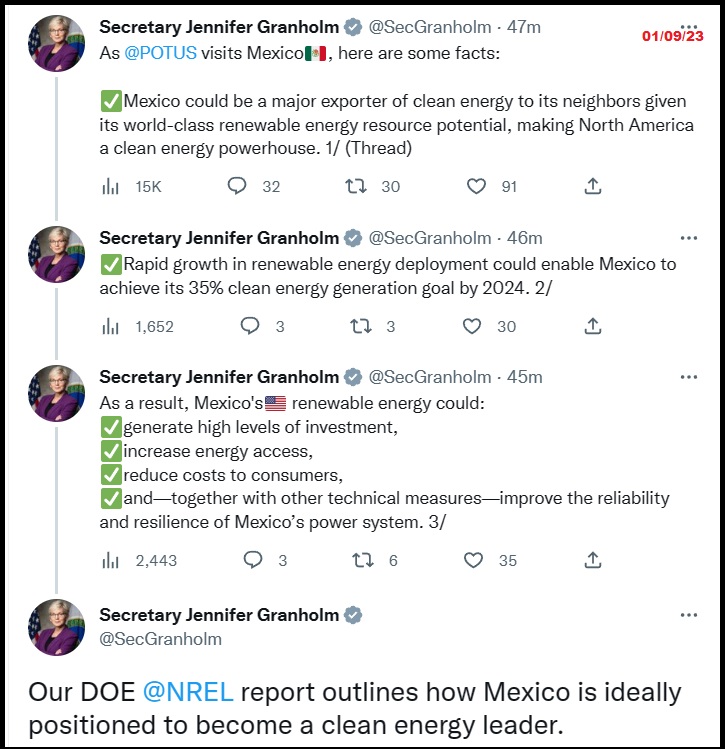
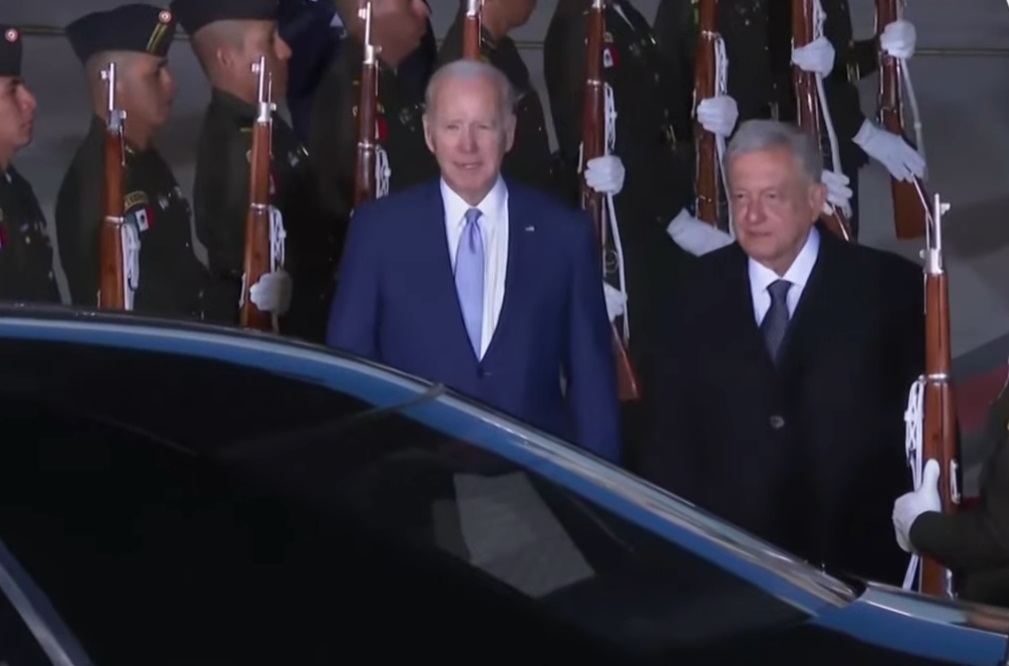
Joe Biden is in Mexico for the U.S-Mexico-Canada North American Summit, and as we have said the demands from the U.S and Canada to join the western climate change energy agenda immediately come to the forefront.
The overall effort is designed to force Mexico to join the western Build Back Better energy policy agenda, known domestically as the Green New Deal.
Previously Mexican President Andres Manuel Lopez-Obrador has pushed back against the pressure from the U.S. and told Joe Biden his nation would remain focused on economic gains, that includes the use of traditional Oil, Coal and Natural Gas resources. However, the corporations and multinational financial constructs who control the Biden and Trudeau administrations, WEF types, are not going to accept that.
It is within this very consequential economic dynamic that we begin to see a host of other ancillary geopolitical aspects start to build against the AMLO administration, to include cartel activity perhaps stimulated by covert U.S. intelligence activity. We have been outlining the importance of Mexico for several months, there are trillions at stake.
The first pressure point applied, was to demand AMLO join the Biden and Trudeau group by condemning the populist uprising in Brazil [Accomplished]. Among other geopolitical facets, this joint condemnation helps set distance between Mexico and the potential for any BRICS alliance.
With that secured, now the Biden team led by Jake Sullivan (Neocon wing of State Dept), start to apply pressure around social issues (immigration), cultural issues (fentanyl trade), humanitarian issues (human trafficking, border crisis, drugs and cartels); then building toward economic issues (worker conditions and trade) ultimately culminating with energy policy (Green New Deal).
(White House) – […] And President López Obrador and President Biden will have the opportunity to discuss questions related to supply chains, to clean energy cooperation, and to a larger economic vision of North America that involves high labor standards, high environmental standards, and as much positively reinforcing economic activity as possible that allows the United States to be the manufacturing powerhouse that President Biden has talked about but also is a win-win for Mexico and Canada, and reduces our dependencies on other countries and other parts of the world who don’t necessarily share the same values that we share with our partners here in North America.
There will be a lot of other issues on the agenda: broader law enforcement cooperation, questions related to how we move forward a common agenda to combat the climate crisis, health, people-to-people ties, and so much else.
But these areas in particular — migration, fentanyl, and integrated supply chains and the increased strength of North America’s manufacturing and innovation powerhouse in critical sectors, including in the clean energy sector — these are the areas, I think, where you will see the greatest amount of focus. The final point I would make: This trip is a good opportunity for President Biden to deepen his personal engagement with President López Obrador and Prime Minister Trudeau. Yesterday, he had the opportunity to ride with President López Obrador from the airport back into town, which gave them the chance to just have a one-on-one chat on kind of how they’re seeing the world right now, what’s on their minds. I think they both got a lot out of it.
And then, this evening, they will have the chance to all meet together with their spouses for a personal dinner. So that’s an important dimension to this as well.
[…] Q – And briefly, can you say whether the presidents discussed the dispute over Mexican energy policy, which has been a thorn in trade ties for some time, in either the limo ride — or does he plan to discuss it over the next couple of days? What is President Biden’s message to President López Obrador on that issue?
MR. SULLIVAN: I’m not going to read out the conversation in the limo because I think that was a personal conversation between the two of them. I’ll let each of them speak to it, to the extent they feel comfortable doing so.
What I will say is that the question of energy policy and the consultations over energy will be on the agenda, will come up between the two leaders on this trip. I want to leave it at that because those are sensitive conversations. They’re best done behind closed doors. But the President certainly comes with that as a key part of his economic agenda here.
Q Can I follow up? Can I follow on the — just the energy part? In talking to U.S. energy companies, they’re frustrated at the pace of these negotiations, consultations. The deadline — it expires, it’s been extended.
They are urging this White House to take the next step of calling a dispute panel, saying that there’s evidence that that is necessary. Is that something the U.S. is considering? And kind of what — what would need — what are the preconditions you would need to see in order to kind of call a dispute panel?
MR. SULLIVAN: So, I’m not going to negotiate in public or telegraph next steps in public. I’ll just say that we remain in close touch with all of those energy stakeholders. We remain in close touch with both Democrats and Republicans on the Hill. In fact, I’ve spoken with members just this morning on this issue, to keep them up to date on what we’re doing.
And as I said before, this will be a topic between the leaders here in Mexico, but I don’t want to get ahead of their opportunity to discuss this. I would just say that we think consultations have helped clarify both the nature of U.S. concerns, have identified some potential pathways forward, but we’re not there yet. And we’ll make determinations about next steps based how things unfold here in the coming days and weeks. (read more)
COMMENT: Mr. Armstrong, I just wanted to inform you as a loyal reader of your blog, it is snowing here in Kuwait for the first time in history. Your computer is the only non-passionate forecaster I have ever encountered. It relays just the facts without an agenda.
Thank you so much. You have a large group of supporters here in the Middle East.
SBB
REPLY: This entire climate change agenda is a hoax. They are not interested in the truth. This is about using climate to restructure society into the one-world order which is why they are supporting Ukrainian Nazis that follow the same beliefs as Adolf Hitler. We have turned 180 degrees from our basic fundamental values.
I am deeply concerned that by calling this global warming and now they are experimenting with shooting particlesinto the atmosphere to “cool” the planet, we may be pushing ourselves into an ice age much faster than anyone suspects. Napoleon was defeated by a Volcanic Winter. These people are risking the entire planet for several volcanoes erupting, and we may not survive by deliberately shooting particles into the atmosphere. All of this is because our current debt system cannot be sustained.
I have created this site to help people have fun in the kitchen. I write about enjoying life both in and out of my kitchen. Life is short! Make the most of it and enjoy!
This is a library of News Events not reported by the Main Stream Media documenting & connecting the dots on How the Obama Marxist Liberal agenda is destroying America




 Centinel2012